How to Disable the Ford Speed Limiter: A Complete Diagnostic and Tuning Guide 2026

The modern automotive landscape is defined by highly complex, interconnected software ecosystems. Speed limiters in Ford vehicles represent a prime example of this digital control architecture.
These electronic limiters are not a monolithic, single-system entity across the brand. They exist in multiple, distinctly different forms, serving entirely different purposes across the Ford model lineup.

Prime for Young Adults — 6 Months Free
Students and 18–24s get six months of Prime free, then half price.
Start 6 Months Free As an Amazon Associate I earn from qualifying purchases.Understanding how to properly adjust or disable these systems requires distinguishing between teen-safety features, commercial fleet governors, and modern intelligent driving aids.
This comprehensive technical report explores the deep diagnostic procedures, software tools, and mechanical considerations involved in modifying Ford speed limiters.
The ensuing analysis synthesizes hard diagnostic data on the Ford MyKey system, Powertrain Control Module (PCM) fleet limits, and Intelligent Speed Assist (ISA) technologies.
Automotive professionals, tuners, and diagnosticians must approach these software modifications with a profound understanding of vehicle safety systems and operational compliance.
How to Disable Ford Speed Limiters
A deep-dive technical guide into MyKey bypasses, PCM fleet governor removal, and ISA system management.
Modern Ford vehicles operate within a complex digital architecture where speed limits aren’t just one setting.
Whether you’re dealing with a restricted MyKey, a former fleet Transit, or an Intelligent Speed Assist (ISA) system, the solution varies.
This guide breaks down the diagnostic steps, software requirements, and mechanical safety limits you must understand before making changes.
Step 1: Identify Your Limiter Type
MyKey System
Common symptoms: 80 MPH hard cap, radio volume limited, dash message “MyKey Active.”

Audible — Listen Free for 30 Days
One free credit a month and thousands of titles included.
Listen Free for 30 Days As an Amazon Associate I earn from qualifying purchases.PCM Fleet Governor
Common symptoms: Ex-commercial vehicles (Transits/F150s) capped at 60/70 MPH without dash warnings.
Intelligent Speed Assist
Common symptoms: Limit changes based on traffic signs; controllable via “LIM” steering wheel button.
The Ford MyKey Ecosystem
The MyKey system distinguishes between an “Admin Key” and a “MyKey,” stored in the Body Control Module (BdyCM).
If you lose your Admin Key, the vehicle remains locked in restricted mode, creating a software loop difficult to break.
Pro Tip: The Remote Start Bypass
Factory remote start commands often override MyKey restrictions temporarily. Use this window to access dash menus.
This chart compares common bypass methods based on ease of use and the specialized hardware required for execution.
Fleet Speed Limiters & PCM Modification
Commercial limiters are hardcoded into the Powertrain Control Module (PCM). Removing them requires FORScan or ECU remapping.
Critical As-Built Hex Data
| Module | Address | Factory Hex (Limited) | Modified Hex (Unlimited) |
|---|---|---|---|
| PCM (Transit) | 7E0-01-04 | 0002 BC01 705C | 0002 BC01 FEAB |
| PCM (Custom) | 7E0-01-04 | 0002 BC01 620D | 0002 BC01 FExx |
| IPC (MyKey) | 720-02-01 | 1234 1xx4 123 | 1234 1204 123 |
Using the As-Built method is high-risk. FORScan’s “Standard Configuration” menu is safer for most users.
Most Transits are restricted for fuel economy. Removing this can void warranties but restores highway merge safety.
Identifying the Exact Type of Ford Speed Limiter
Before executing any diagnostic or tuning procedure, the specific type of speed limitation must be correctly identified.
Audible Premium Plus — Annual Membership
12 audiobook credits up front, plus the full Audible catalogue.
See Annual Plans As an Amazon Associate I earn from qualifying purchases.Ford utilizes three primary categories of speed restriction software, each housed in entirely different control modules on the CAN bus network.
The first is the Ford MyKey system, specifically designed for restricting secondary or inexperienced drivers. This system restricts the vehicle’s top speed, usually capping it at a hard 80 mph (130 km/h).
The second is the commercial or fleet speed limiter, which is heavily utilized in contractor vehicles. These are hard-coded into the Engine Control Unit (ECU) or PCM, often restricting vehicles like the Ford Transit to 50, 60, or 70 mph.
The third is the Intelligent Speed Limiter (ISL), found in newer passenger models. This is a driver-assist feature that uses a windshield-mounted camera to read traffic signs and dynamically adjust the vehicle’s maximum speed.
Each distinct system requires an entirely different diagnostic approach, utilizing different hardware interfaces and software protocols.
The Ford MyKey System Architecture
The Ford MyKey system was originally engineered to promote safer driving habits among young, newly licensed, or inexperienced drivers.
When a restricted MyKey is utilized in the ignition, the Body Control Module (BdyCM) and Instrument Panel Cluster (IPC) enforce strict operational parameters.
These parameters include a maximum vehicle speed, a maximum audio volume, and a mandate that the radio remains muted until all seatbelts are securely buckled.
The system architecture distinguishes between an “Admin Key” (the master key with full programming privileges) and a “MyKey” (the restricted secondary key).
If the Admin Key is lost, the vehicle remains perpetually locked in the restricted mode. This creates a significant challenge for subsequent owners of used Ford vehicles purchased from secondary lots.
Standard Disabling Procedure (With Admin Key)
If the Admin Key is physically available, removing the MyKey restrictions is a highly straightforward procedure handled entirely through the vehicle’s interface.
The user must first start the vehicle using the designated Admin Key to unlock the primary settings architecture.
For vehicles equipped with the SYNC display screen, the operator navigates to the “Settings” icon, selects “Vehicle,” and then taps the “MyKey” sub-menu.
Following the on-screen prompts allows the user to select “Clear MyKey.” This action instantly removes the restrictions from all programmed secondary keys.
For older vehicles without a SYNC touchscreen, the procedure is executed via the driver’s information display using the directional steering wheel controls.
The operator scrolls to “Settings,” selects “Vehicle Settings,” and then navigates downward to “MyKey”.
Pressing and holding the “OK” button clears the MyKey settings, returning all restricted keys to full Admin status.
Diagnostic Overrides (Without Admin Key)
When the Admin Key is lost, official manufacturer documentation states that the system cannot be bypassed without visiting a dealership for a new, expensive key.
However, automotive diagnosticians and tuning professionals utilize several alternative methods to clear the Passive Anti-Theft System (PATS) and IPC parameters.
These procedures provide an educational look into the digital failsafes and logical loops within Ford’s security architecture.
The Remote Start Bypass Method
This diagnostic procedure capitalizes on a specific hierarchical rule within the Ford electrical system regarding remote start validation.
Ford vehicles treat an approved, factory-installed Remote Start command as an automatic Admin Key validation by default.
To execute this, the operator enters the vehicle, meticulously closes all doors, and initiates the remote start sequence using the key fob.
Because the remote start command bypasses the physical transponder read of the restricted key in the ignition, the vehicle boots into an unrestricted Admin state.
The operator must not touch the brake pedal, open a door, or shift out of Park, as any of these actions disrupt the remote start sequence and shut off the engine immediately.
While the engine is running in this remote-start state, the operator can navigate the dashboard menus to clear the MyKey settings. This effectively promotes the restricted physical key to an Admin Key.
The Signal Obfuscation (Tin Foil) Method
This method relies on manipulating the Radio Frequency Identification (RFID) handshake between the key fob and the vehicle’s internal cabin transponder readers.
The objective is to force the vehicle’s computer into a state where it recognizes a user input but completely fails to validate the restrictive RFID tag of the MyKey.
The operator wraps the restricted key entirely in aluminum foil to block its signal, or places it more than 20 feet away from the vehicle.
The operator then opens and closes the door, triggering a “No Key Detected” error message on the instrument cluster.
The key is then unwrapped and held flush against the emergency transponder reader. This reader is usually located on the steering column or in a specific center console backup slot.
By cycling the ignition in this highly specific sequence, the system occasionally fails to load the MyKey parameters from the BdyCM. This allows momentary access to the Admin menu to clear the settings.
The KOER Test Diagnostic Loophole
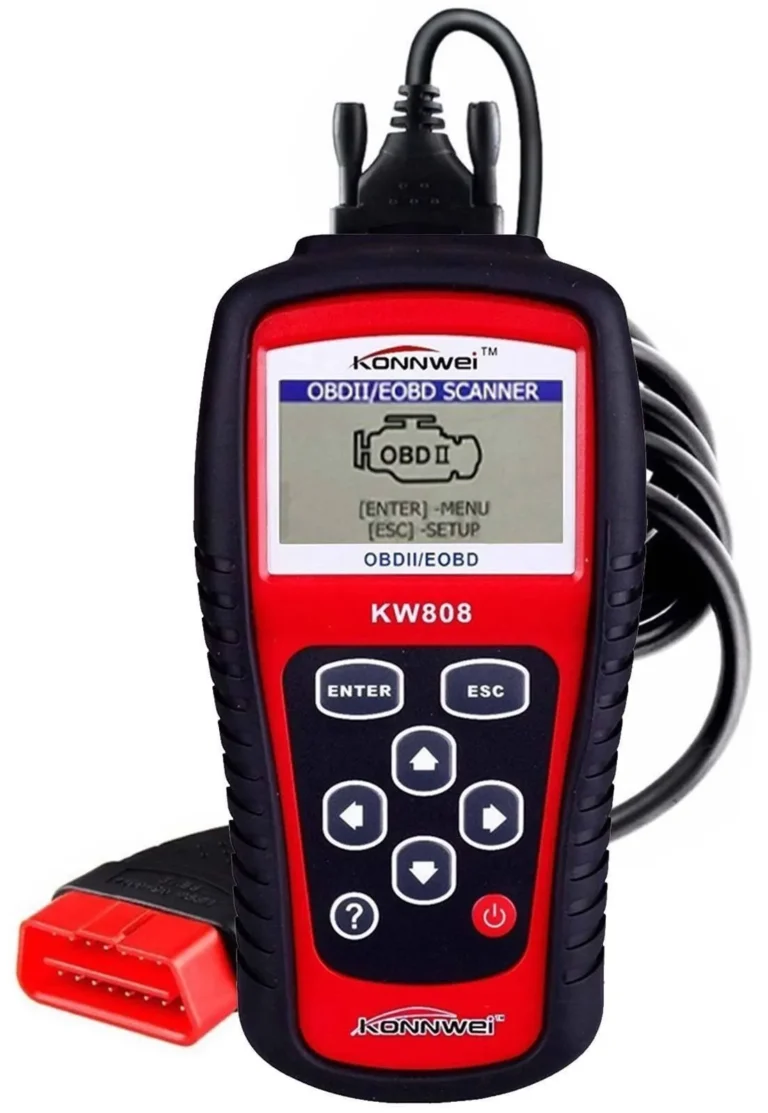
Another diagnostic workaround involves using an OBD-II scanner to initiate a Key On Engine Running (KOER) self-test.
The operator starts the vehicle with the restricted key and connects their diagnostic software to initiate the PCM KOER On-Demand Self Test.
Once the test completes, the operator must immediately remove the key fob from the vehicle entirely. For standard blade keys, the transponder must be blocked with foil.
The operator then turns the ignition off, and immediately turns it back to the ‘On’ position without actually starting the engine.
This specific sequence confuses the PATS module. It boots the instrument cluster without applying the MyKey filter, allowing the user to execute the “Clear MyKeys” command.
Permanent PATS Reprogramming via FORScan
The most robust and permanent diagnostic solution involves the use of specialized third-party diagnostic software.
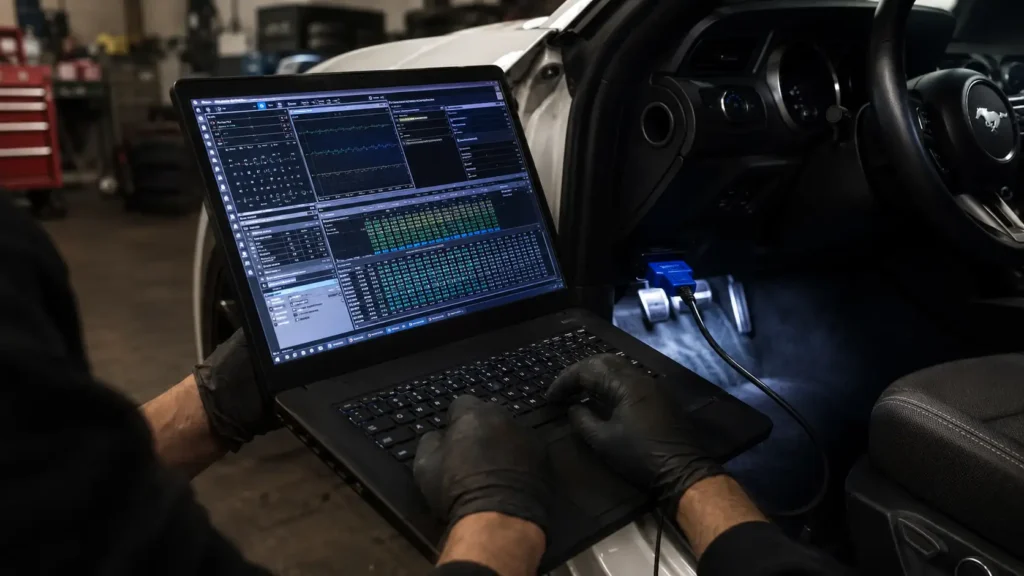
Professionals frequently rely on the FORScan software suite, designed specifically for deep-level communication with Ford, Lincoln, and Mazda modules.
This procedure requires a high-quality OBD-II interface, such as the OBDLink EX, and a Windows laptop running an extended license of the FORScan software.
The methodology involves entirely erasing the vehicle’s Passive Anti-Theft System (PATS) memory and learning entirely new keys from scratch.
The diagnostician enters the “Service Functions” menu in FORScan and selects the “BdyCM PATS programming” utility.
By executing the “Ignition Key Programming” function, the software initiates a mandatory 10-minute security access delay. This is a hardcoded anti-theft measure designed to prevent rapid key cloning.
Once security access is granted, the technician selects the option to erase all known keys from the module. The system then prompts the user to cycle two separate physical keys to learn their transponder codes.
Any newly paired key automatically defaults to an Admin Key. This permanently resolves the MyKey restriction without requiring a costly dealership visit.
| MyKey Bypass Method | Hardware Required | Effectiveness | Cost Estimate |
|---|---|---|---|
| Dealership Reprogram | Proof of Ownership, OEM Key | 100% | $250 – $500 |
| Factory Remote Start | Factory Remote Start Keyfob | High | Free |
| Foil / RFID Block | Aluminum Foil | Moderate (Patchy) | Free |
| KOER Self-Test | OBD-II Scanner | Moderate | $30 – $50 |
| PATS Reprogramming | Windows PC, FORScan, 2 Keys | 100% | $70 – $120 |
Fleet and Commercial Speed Limiters (PCM)
Unlike the MyKey system, which focuses on secondary driver restrictions, fleet speed limiters are hardcoded directly into the Powertrain Control Module (PCM).
These limiters are exceptionally common on former commercial vehicles. Models like the Ford Transit, Transit Connect, and Ford F-150 are frequently affected.
Fleet managers specifically order these vehicles with restricted top speeds, commonly capping them at 60 mph or 100 km/h.
This is done to aggressively reduce fuel consumption across a large fleet. It also minimizes driveline wear and lowers corporate insurance liabilities.
When these vehicles transition to the private secondhand market, the restrictive speed limit becomes a major hazard. It makes highway merging and long-distance travel difficult and potentially unsafe for the new owner.
Removing this limitation requires specialized module configuration or complete ECU remapping to overwrite the factory fleet parameters.
Diagnostic Tools: FDRS and IDS Software
Ford dealerships and certified master technicians utilize proprietary software systems to interact with the vehicle’s PCM.
Older vehicles utilize the Integrated Diagnostic System (IDS), while newer models rely on the cloud-based Ford Diagnostic and Repair System (FDRS).
Within the IDS software, technicians can carefully navigate to “Module Programming,” followed by “Programmable Parameters,” and finally the “Speed Items” menu.
The software verifies the Vehicle Identification Number (VIN) to ensure correct module communication, and then displays the current speed limiter setting.
Technicians can select the “Disable Speed Limiter” option. This prompts the software to configure the PCM, effectively removing the hardcoded fleet restriction.
However, many dealerships outright decline to perform this service due to rigid internal policies regarding former fleet vehicles. This forces owners to seek independent aftermarket solutions.

Adjusting PCM Parameters via FORScan
Independent diagnosticians frequently utilize FORScan to adjust the PCM speed limitation parameters. This is highly popular for European Ford Transit and domestic F-150 models.
There are two primary methodologies within FORScan for executing this specific change. These are Standard Module Configuration and As-Built Data Modification.
Standard Module Configuration
This is the more accessible, menu-driven method within the FORScan software architecture. It does not require editing raw hexadecimal code.
The diagnostician navigates to the “Configuration and Programming” tab. They must select the standard “PCM Module Configuration,” deliberately avoiding the “As-Built” format option.
Within this menu, a parameter specifically labeled “Speed Limitation” or “Customer Speed Limitation” will become visible.
The software provides a simplified dropdown menu. Here, the user can select a new maximum speed threshold or choose the unlimited “No Limit” option.
Clicking “Write” flashes the new parameter directly to the PCM. Following an ignition cycle, the electronic governor is effectively removed.
As-Built Data Modification (Hex Editing)
For vehicles where the standard configuration menu fails to remove the limit, diagnosticians must take a more advanced route. They must edit the raw hexadecimal code within the PCM’s As-Built data.
This process is highly technical and carries a legitimate risk of bricking the module. If incorrect checksums are calculated, the vehicle may fail to start.
According to software diagnostic forums, the speed limiter data on modern Transits and Customs is consistently located on line 7E0-01-04.
The target data point for the speed limiter is the first two digits of the final block of hexadecimal code. This sits located immediately before the two-digit checksum.
For example, if the original code on this line reads 0002 BC01 705C, the diagnostician alters the target digits to FE.
The completely modified line would read 0002 BC01 FEAB. The AB represents the newly calculated mathematical checksum that FORScan generates.
Writing this raw data directly to the PCM forcefully overwrites the factory fleet speed limitation entirely, removing the governor.
| As-Built Address | Factory Hex Example (Limited) | Modified Hex Example (Unlimited) | Target Module |
|---|---|---|---|
7E0-01-04 | 0002 BC01 705C | 0002 BC01 FEAB | PCM (Transit/Connect) |
7E0-01-04 | 0002 BC01 620D | 0002 BC01 FExx | PCM (Transit Custom) |
720-02-01 | 1234 1xx4 123 | 1234 1204 123 | IPC (MyKey Filter Disable) |
Aftermarket Tuning and ECU Remapping
When diagnostic software like FORScan cannot circumvent the limiter due to firmware locks, aftermarket tuning solutions become necessary.
Professional calibration companies offer ECU remapping services specifically engineered for fleet limiter removal. Excellent examples include Bluespark Automotive in the UK and UpFix module reprogramming in the US.
These services involve physically removing the PCM from the vehicle’s engine bay. The module is then bench-flashed to overwrite the OEM fleet calibration with a standard, unrestricted file.
Bench programming ensures that the vehicle strictly retains all factory drivability characteristics and emissions standards while safely eliminating the artificial speed cap.
Alternatively, handheld OBD-II flash programmers offer a more accessible route for end-users. Devices like the SCT X4 or HP Tuners MPVI2 offer extensive user-adjustable vehicle parameters.
Using an SCT X4, a vehicle owner can effortlessly load a custom tune file that inherently raises or eliminates the speed governor.
The device’s interface allows users to manually adjust the “Speed Limiter” parameter alongside the main flash. This is often done concurrently with adjusting other variables like axle ratio, tire size, and rev limiters.
Intelligent Speed Assist (ISA / TSR)
The third category of Ford speed limiters is the Intelligent Speed Limiter (ISL). This is a modern Advanced Driver Assistance System (ADAS) found primarily in newer passenger models.
Unlike the permanent hardcodes of a fleet PCM, the ISL is a highly dynamic, user-controlled feature. It is specifically designed to prevent accidental speeding infractions in varying zones.
The system utilizes a sophisticated windshield-mounted Traffic Sign Recognition (TSR) camera. This camera actively scans the roadway ahead for posted speed limit signs.
If the camera detects a 50 mph sign, the vehicle’s computer seamlessly restricts fuel flow to the engine. This smoothly prevents the car from exceeding 50 mph without requiring sudden brake application.
Operating the Steering Wheel Controls
The ISL is toggled entirely via the steering wheel controls. Drivers must utilize the specific button labeled “LIM” located on the left-hand spoke.
Pressing the LIM button once places the speed limiting system into a dormant standby mode.
The driver can then use the SET+ and SET- buttons to manually dial in a custom maximum speed. Alternatively, they can allow the TSR camera to automatically lock onto the local, legally posted speed limit.
When the system is actively engaged, a green “Auto LIM” or speed limit icon vividly appears on the instrument cluster display.
To permanently deactivate the Intelligent Speed Limiter and return to manual throttle control, the driver must press the LIM button until the corresponding dashboard icon disappears entirely.
Temporary Overrides and Failsafes
Ford engineers wisely integrated a mechanical override for the ISL system. This is crucial for situations where immediate acceleration is required, such as emergency highway passing maneuvers.
If the Intelligent Speed Limiter is active, the driver can temporarily bypass the restriction by firmly and fully depressing the accelerator pedal to the floorboard.
This wide-open throttle (WOT) command instantly alerts the ECU to an emergency acceleration demand. It temporarily suspends the fuel restriction algorithms.
Once the passing maneuver is complete and the vehicle’s speed drops back below the previously designated limit, the ISL automatically and seamlessly reactivates.
If the driver accidentally exceeds the speed limit without pressing the pedal to the floor (for instance, while rolling down a steep hill), the system acts as an alarm. It will issue an audible warning chime and flash the speed indicator aggressively on the dash.
Critical Safety Parameters and Physics
The desire to remove a factory speed limiter must be carefully weighed against the severe mechanical and safety limitations of the vehicle’s underlying hardware.
Automotive manufacturers do not set speed limiters arbitrarily. They are meticulously calculated based on the maximum safe operating thresholds of the vehicle’s drivetrain and unsprung mass.
Removing an electronic governor without simultaneously upgrading the physical hardware invites catastrophic mechanical failure at high velocities.
Driveshaft Critical Speed and Harmonics
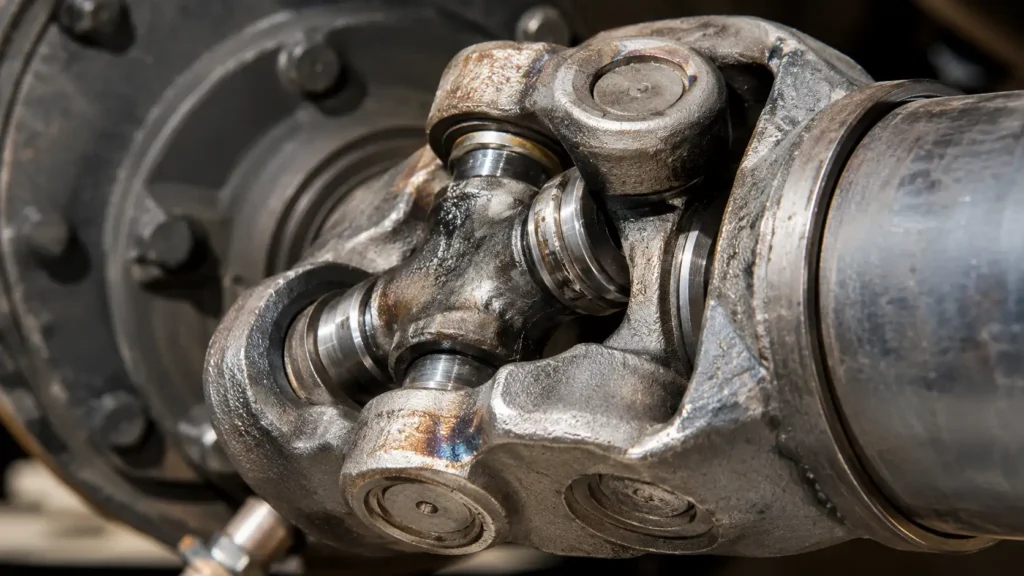
The most dangerous consequence of removing a speed limiter involves the vehicle’s main driveshaft.
A driveshaft is a rapidly rotating tubular component that transfers torque from the transmission to the rear differential.
As rotational velocity increases, the driveshaft experiences immense, exponentially growing centripetal forces.
Every driveshaft possesses a “critical speed.” This is a mathematical threshold where the rotational frequency perfectly matches the driveshaft’s natural resonant frequency.
When a driveshaft exceeds its critical speed, the centripetal forces cause the metal tube to bow outward in the center. It violently resembles a swinging jump rope.
This extreme deformation leads to immediate and violent structural failure. The driveshaft tears itself apart, potentially puncturing the vehicle floorboard or vaulting the car off the pavement.
This is a heavily documented phenomenon in the Panther platform, specifically the Ford Crown Victoria Police Interceptor (CVPI), as well as older Ford F-150s.
Ford engineers specifically limited civilian Crown Victorias to roughly 110 mph. This was because they were equipped with heavy steel driveshafts possessing a dangerously low critical speed.
Police versions received significantly lighter aluminum or metal-matrix composite (MMC) driveshafts. This raised the critical speed and allowed for a much higher factory speed limiter (up to 135 mph).
Therefore, removing the speed limiter on a heavy steel driveshaft via an aftermarket tune is a recipe for a catastrophic explosion at high speeds.
| Crown Vic Driveshaft Material | Axle Ratio | Max Critical Speed (Theoretical) | Factory Speed Limiter |
|---|---|---|---|
| Standard Steel (Civilian) | 3.27 | ~115 mph | 110 mph |
| Aluminum (CVPI) | 3.27 | 145 mph | 130 mph |
| Metal-Matrix (MMC) | 3.55 | 154 mph | 135 mph |
Data synthesized from specialized mechanical forums detailing 4R70 transmission tail-housing calculations.
Tire Speed Ratings and Electric Motor Constraints
Tire speed ratings are the second major physical constraint when bypassing electronic speed limiters.
Most standard all-season passenger tires are rated ‘S’ (certified for 112 mph) or ‘T’ (certified for 118 mph).
Pushing an S-rated tire to 130 mph after removing a speed limiter generates excessive, unmitigated heat. This leads to rapid tread delamination and highly explosive blowouts.
Furthermore, in modern electric vehicles (EVs) like the Ford F-150 Lightning or Mustang Mach-E, the speed limiter exists to protect the electric motors themselves.
EVs typically utilize a single-speed direct drive ratio without a multi-gear transmission.
Because motor RPM is directly proportional to wheel speed, doubling the vehicle speed from 50 mph to 100 mph precisely doubles the rotational speed of the electric motors.
Bypassing the EV speed limiter would force the internal motor armatures to spin far past their designed maximum RPM. This would cause catastrophic internal disintegration and total powertrain failure.
FAQs
Can you bypass Ford MyKey by disconnecting the 12V battery?
Disconnecting the 12-volt battery does absolutely nothing to bypass the MyKey system. The MyKey parameters are permanently stored in the non-volatile memory of the Body Control Module (BdyCM) and the Instrument Panel Cluster (IPC). The data remains perfectly intact regardless of power loss or duration of disconnection.
What happens if I wrap my Ford key in aluminum foil?
Wrapping the key in aluminum foil effectively blocks its Radio Frequency Identification (RFID) signal. This is known colloquially as the “Foil Method,” a diagnostic trick used to force the vehicle’s transponder reader to register a “No Key Detected” state. In highly specific ignition cycles, this can momentarily bypass the BdyCM MyKey restrictions, allowing the user temporary access to the Admin menu to clear the system.
Does an SCT X4 tuner permanently delete MyKey?
No, a standard performance tuner cannot delete MyKey. Aftermarket flash tuners like the SCT X4 or HP Tuners are strictly designed to alter Powertrain Control Module (PCM) parameters, such as spark timing, fuel maps, and vehicle speed governors. The MyKey system is housed entirely separately in the BdyCM and IPC. Deleting a MyKey requires a PATS reset via FORScan or an official IDS diagnostic tool.
Why is my Ford Transit limited to exactly 62 mph (100 km/h)?
Commercial vehicles, particularly the Ford Transit and Transit Connect, are frequently ordered by corporate fleet managers with a factory-enabled speed restriction. This limitation is coded directly into the PCM to aggressively enforce safe driving habits among employees and increase total fleet fuel economy. It can only be removed via deep PCM reconfiguration tools or professional ECU remapping services.
Can a generic OBD-II scanner remove a fleet speed limiter?
Generic OBD-II code readers can only read and clear basic Diagnostic Trouble Codes (DTCs). They completely lack the bi-directional control required to write new configuration data to the PCM or BdyCM. Removing a speed limiter requires advanced diagnostic software like FORScan or dealer-level software like FDRS, paired with a high-throughput MS-CAN/HS-CAN adapter.
What is the “Critical Speed” of a driveshaft?
Critical speed is the rotational RPM at which a driveshaft begins to vibrate harmonically, eventually bowing outward violently due to centripetal force. Exceeding this exact speed—which frequently happens when speed limiters are removed without upgrading mechanical components—will cause the driveshaft to fracture. This potentially destroys the transmission, the fuel tank, and the vehicle undercarriage.
Synthesized Conclusions on Speed Limiter Diagnostics
The ecosystem of speed limitation within Ford vehicles is incredibly multifaceted, spanning safety, commercial liability, and autonomous driving domains.
Resolving a speed limitation issue requires precise, accurate identification of the source module before any software is connected.
MyKey restrictions demand Body Control Module (BdyCM) and Passive Anti-Theft System (PATS) interventions. This is most effectively achieved through complete key reprogramming with advanced diagnostic software like FORScan.
Fleet and commercial governors dictate Powertrain Control Module (PCM) reconfigurations. This requires either As-Built hex editing or aftermarket ECU bench-flashing to restore full, unrestricted throttle mapping.
Intelligent Speed Limiters, conversely, require only basic operator knowledge of the steering wheel interfaces and Traffic Sign Recognition mechanics.
Ultimately, while the software barriers to unlimited speed can be easily circumvented via modern diagnostic tools, the immutable laws of physics remain absolute.
Modifying these parameters without actively addressing the mechanical limits of driveshaft critical speeds and tire thermal capacities poses extreme operational risks.
Diagnostic software modifications should be reserved exclusively for correcting erroneous fleet programming or restoring Admin access. This ensures the vehicle operates safely within its engineered hardware tolerances.
Related Ford Guides
- how to calibrate Ford SYNC
- how to enable SYNC Android Auto
- how to reset the Ford Escape oil light
- how to adjust Ford F-150 headlights
- how to change the F-150 cabin air filter