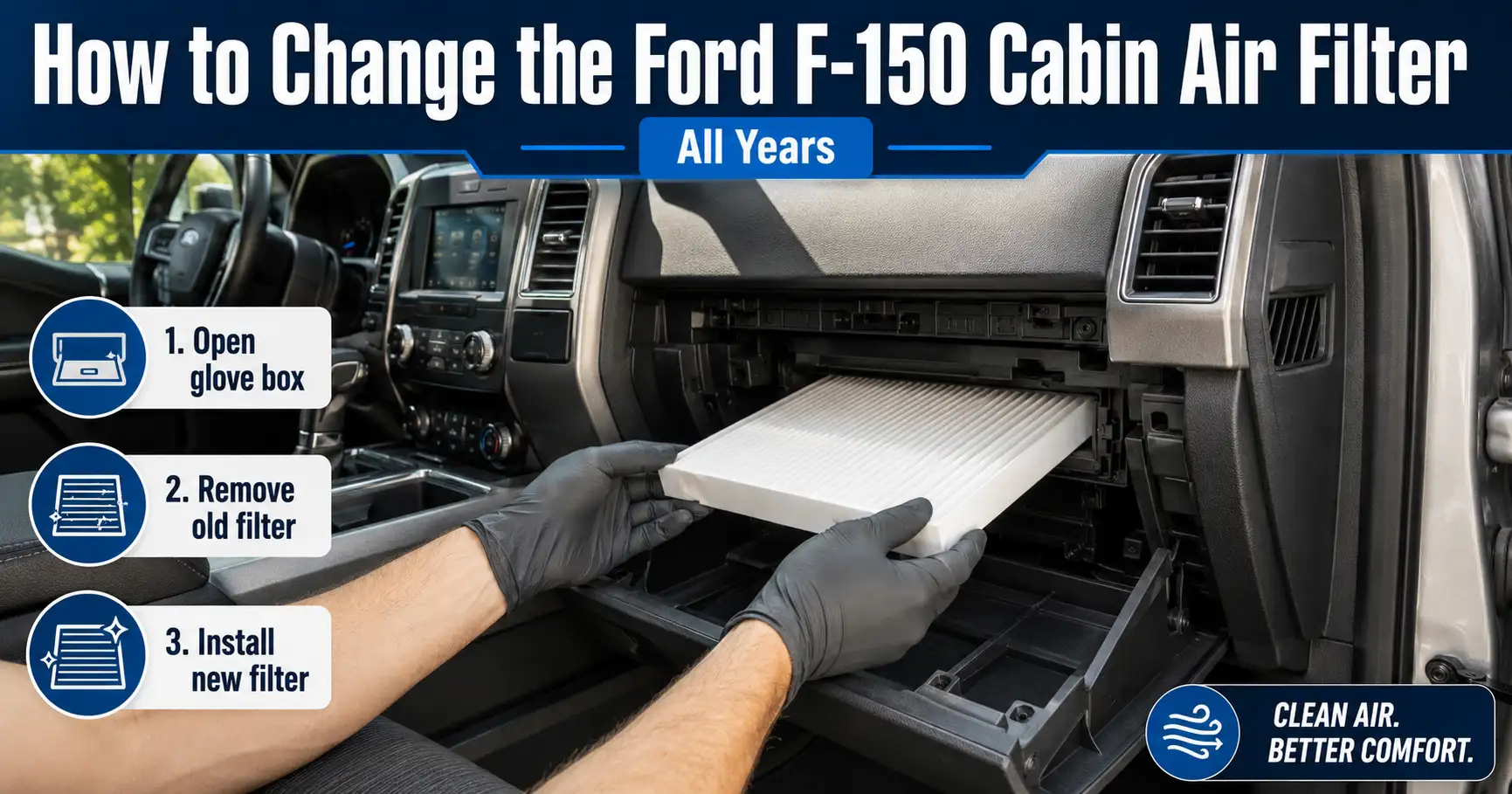
How to Change the Ford F-150 Cabin Air Filter (All Years)

The Ford F-150 represents the pinnacle of modern truck engineering and dominates the automotive market. Yet, one of its most critical interior components often remains completely ignored by owners and technicians alike.
The cabin air filter serves as the primary respiratory defense mechanism for the passenger compartment. It prevents exterior pollutants, road dust, and biological allergens from entering the sealed cabin environment.

Prime for Young Adults — 6 Months Free
Students and 18–24s get six months of Prime free, then half price.
Start 6 Months Free As an Amazon Associate I earn from qualifying purchases.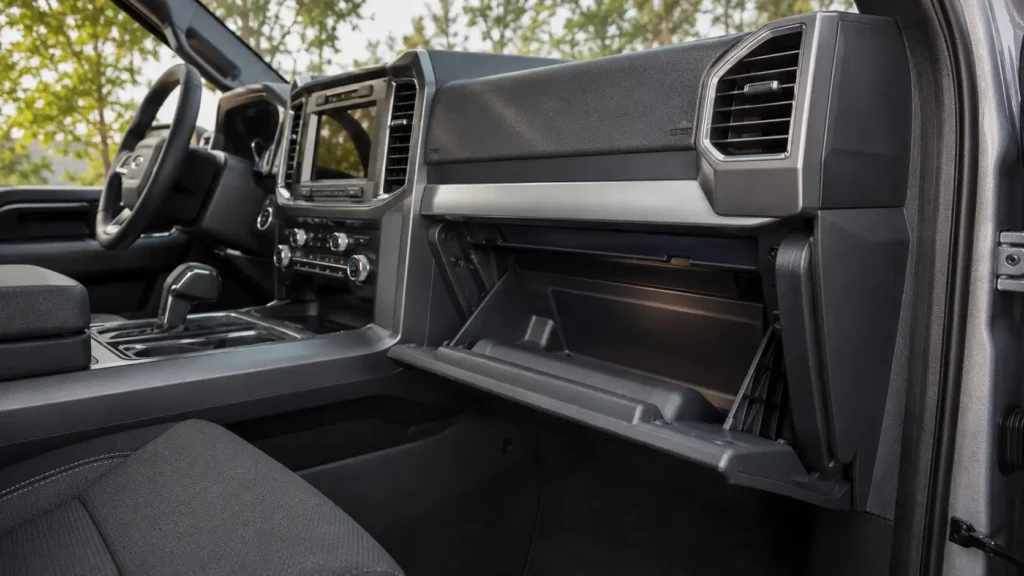
This component does much more than simply improve interior air quality for the occupants. The filter acts as a physical barrier that protects the truck’s highly sensitive heating, ventilation, and air conditioning (HVAC) system.
When vehicle owners neglect this vital maintenance item, the resulting airflow restriction can cause catastrophic mechanical failures. Blower motors can burn out, and evaporator cores can freeze solid due to restricted thermal exchange.
Automotive engineers emphasize that regular replacement of this filtration media is non-negotiable for long-term vehicle health. This comprehensive, semantic-search-optimized report details the history, physics, and replacement procedures for every generation of the modern Ford F-150.
The Evolution of the F-150 Cabin Air Filter
Recommended Best Deal Products


Understanding the filtration system of the Ford F-150 requires a deep historical analysis of Ford’s internal engineering decisions. Surprisingly, not all F-150 trucks were equipped with a cabin air filter from the factory.
For nearly two decades, domestic truck manufacturers largely ignored passenger compartment filtration entirely. This feature was generally reserved for high-end European luxury sedans during the late 1990s and early 2000s.
It is absolutely vital for automotive technicians and DIY owners to understand the specific capabilities of their exact model year. Attempting to locate a filter in a truck that was never equipped with one leads to unnecessary dashboard disassembly and frustration.
10th Generation (1997–2003): The Rare Dealer Option
During the production run of the 10th-generation Ford F-150, factory-installed cabin air filters were virtually nonexistent on the assembly line.
However, Ford did engineer a highly specialized, optional retrofit kit that dealerships could install. This optional filter housing was carefully positioned underneath the passenger-side dashboard, directly behind the glove box assembly.
Trucks equipped with this rare dealer add-on utilize a unique two-piece particulate or activated carbon filter. Owners of the 1997–2003 heritage models must physically inspect the underside of the dash to determine if this optional housing is present.

Audible — Listen Free for 30 Days
One free credit a month and thousands of titles included.
Listen Free for 30 Days As an Amazon Associate I earn from qualifying purchases.If the housing is missing, installing a cabin air filter requires replacing massive sections of the internal HVAC ducting, which is not economically viable. For those with the housing, the replacement uses a specific dual-filter setup to accommodate the narrow access port.
11th Generation (2004–2008): The Complete Void
With the launch of the 11th-generation F-150, Ford completely eliminated the cabin air filter option from the engineering schematics.
There is no factory housing, no dealer add-on kit, and no hidden compartment for interior air filtration in these specific trucks. The HVAC system pulls outside air directly through the cowl intake near the base of the windshield.
Consequently, raw, unfiltered air is pushed straight through the blower motor and directly into the passenger cabin. Owners of 2004–2008 models frequently experience excessive dust accumulation on the dashboard and suffer from lingering musty odors.
Technicians routinely find leaves, pine needles, and insects lodged directly against the blower motor fins in these models. Unfortunately, there is no viable aftermarket retrofit available for the 11th-generation architecture.
12th Generation (2009–2014): The Open Cowl Dilemma
The 12th-generation F-150, which includes the legendary first-generation SVT Raptor, presents a highly unique engineering anomaly. Ford actually designed the HVAC blower housing with the precise structural geometry to accept a cabin air filter.
Despite molding the plastic to accommodate a filter door, the manufacturer chose not to cut the access slot on the assembly line. The filter media was omitted, and the HVAC intake was left entirely open to the outside environment.
Without proper filtration, heavy debris easily accumulates inside the internal ducting and blower motor housing over time. This open-intake design leads to premature wear on the HVAC blower motor and significantly reduced interior air quality for the occupants.
To solve this massive engineering oversight, third-party manufacturers stepped in to develop custom retrofit kits. By manually cutting the pre-molded plastic slot, owners can install a filter housing and completely restore modern filtration capabilities to their trucks.
13th Generation (2015–2020): The Factory Standard Introduction
The 2015 model year marked a massive technological turning point for the Ford F-150 platform. As the truck famously transitioned to an aerospace-grade aluminum body, Ford finally made the cabin air filter a standard factory component across all trim levels.
Audible Premium Plus — Annual Membership
12 audiobook credits up front, plus the full Audible catalogue.
See Annual Plans As an Amazon Associate I earn from qualifying purchases.Positioned securely behind the passenger-side glove box, this new filter captures 90% of particulate matter measuring 10 microns or larger. Accessing this filter, however, requires a slight amount of mechanical teardown by the user.
Technicians must utilize a 7mm socket to remove structural dashboard bolts, along with a plastic trim tool to disconnect an embedded electrical harness. While this design is slightly cumbersome, it ensures that the delicate evaporator core remains highly protected from exterior environmental debris.
14th Generation (2021–2026): The Tool-Less Redesign
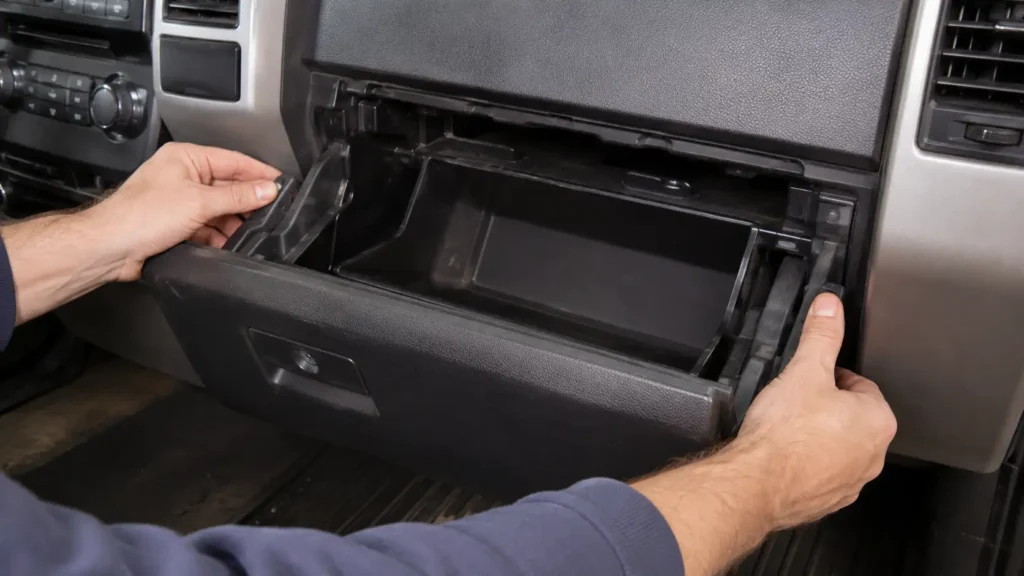
For the 14th generation, Ford engineers heavily optimized the cabin air filter access panel strictly for consumer convenience. The filter remains housed behind the glove box, but the structural dashboard components no longer impede direct access.
The total elimination of the 7mm retaining bolts and the cumbersome electrical harness makes the replacement a completely tool-less operation. The glove box now features simple, intuitive release tabs that drop the door downward toward the floorboard.
Directly behind the dropped door lies a distinct honeycomb plastic cover secured by easily accessible tension clips. This streamlined engineering design encourages much more frequent replacement intervals by the average end-user.
The Thermodynamics and Physics of HVAC Failure
The cabin air filter is not merely an interior comfort feature designed to keep the cabin smelling fresh. It is a critical, structural protective barrier for the vehicle’s highly complex thermodynamic systems.
The entire HVAC architecture relies on highly specific airflow volumes to function within designated temperature parameters. When this airflow is disrupted, a cascade of mechanical failures inevitably follows.
Blower Motor Strain and Electrical Load
When a cabin air filter becomes heavily clogged with particulate matter, the airflow resistance across the media increases exponentially.
The HVAC blower motor must instantly work significantly harder to pull ambient air through the restricted synthetic fibers. This added mechanical load drastically increases the electrical amperage demand on the vehicle’s alternator and battery system.
Over time, the increased operating temperatures within the overworked blower motor will cause the internal bearings to fail prematurely. Additionally, the excess heat generation often causes the blower motor resistor to permanently burn out, leaving the driver with no climate control whatsoever.
Evaporator Core Freezing and Compressor Cycling
The vehicle’s air conditioning system requires a massive, constant volume of ambient air moving across the evaporator core to facilitate thermal heat exchange.
A clogged cabin air filter severely limits this critical, necessary airflow from reaching the heat exchanger. Without enough warm cabin air passing over the extremely cold evaporator coils, the atmospheric condensation on the coils will rapidly drop below freezing.
This condensation instantly transforms into solid ice, which completely halts the thermal cooling process. This freezing forces the air conditioning compressor to cycle irregularly, placing immense strain on the serpentine belt and the compressor clutch.
Defrost System Degradation and Visibility Hazards
In harsh winter climates, a restricted cabin air filter presents a severe, immediate safety hazard to the vehicle occupants. Defrost systems strictly depend on high-volume, dehumidified airflow to clear moisture, fog, and heavy frost from the interior windshield glass.
When the filtration media is blocked by debris, the total volume of dry air reaching the upper dashboard defrost vents is drastically reduced. This severely slows the removal of windshield condensation, leaving the glass opaque.
Impaired driver visibility significantly increases the statistical risk of highway accidents, proving that filter maintenance is inherently tied to active vehicle safety.
Types of Cabin Air Filters: Media Technology
Recommended Best Deal Products


Not all cabin air filters perform equally in the real world. The automotive aftermarket and OEM supply chains offer various filtration technologies tailored to specific environmental hazards.
Understanding the molecular mechanics of these distinct filter types is absolutely crucial for optimizing interior air quality. Drivers must select a filter medium that directly corresponds to their geographic location and daily driving habits.
Standard Particulate Filters
Standard particulate filters serve as the absolute baseline for automotive air filtration across the industry. Constructed from basic pleated paper or densely woven synthetic fibers, they excel primarily at trapping macroscopic debris.
These entry-level filters easily capture heavy road dust, springtime pollen, falling leaves, and insect parts before they can reach the delicate blower motor.
However, they are highly ineffective at neutralizing chemical odors or stopping microscopic exhaust gases from entering the cabin. They remain the most affordable option on the market and offer the lowest overall airflow resistance, ensuring maximum fan speed performance.
Activated Carbon (Charcoal) Filters
Activated carbon filters represent a significant technological upgrade over standard paper variants. They feature an additional, specialized layer of charcoal that has been chemically treated with oxygen to open up millions of microscopic internal pores.
This advanced activation process allows the carbon matrix to successfully trap volatile organic compounds (VOCs) through chemical adsorption. These filters actively pull noxious gases, diesel exhaust fumes, and unpleasant biological odors directly out of the surrounding environment.
Rigorous automotive studies demonstrate that vehicles equipped with activated carbon filters can effectively lower harmful nitrogen dioxide concentrations by up to 90%. They are highly recommended for drivers who regularly commute through heavily congested, smog-filled urban traffic.
HEPA Filters (High-Efficiency Particulate Air)
HEPA filters represent the absolute gold standard in medical-grade automotive air purification. To meet strict EPA environmental standards, a certified HEPA filter must successfully remove 99.97% of airborne particles measuring exactly 0.3 microns in diameter.
These advanced filters are incredibly vital for drivers living in geographic regions prone to heavy, seasonal wildfire smoke. They successfully capture highly dangerous PM2.5 particulate matter before it can reach the driver’s lungs.
However, the incredibly dense synthetic fiber maze required to achieve HEPA certification creates substantial airflow restriction within the HVAC system. This notable restriction causes the vehicle’s climate control system to work harder, often reducing perceived air pressure at the dashboard vents by a noticeable margin.
Electrostatic and Washable Filters
Washable cabin air filters, predominantly pioneered by aftermarket companies like K&N, utilize unique synthetic electrostatic materials. These materials carry a slight static charge that magnetically attracts and holds fine dust particles.
The primary advantage of these filters is their infinite reusability; they can be washed with a specialized degreaser, dried completely, and re-installed into the truck.
For owners who plan to keep their F-150 for a decade or more, the long-term return on investment is highly favorable. However, standard washable filters generally do not feature activated carbon layers, making them entirely ineffective at eliminating severe chemical odors or smoke.
Filter Technology Comparison Matrix
| Filter Technology | Primary Material | PM2.5 Efficiency | Odor Neutralization | Airflow Resistance | Average Cost |
| Particulate | Pleated Paper / Synthetic | Low (< 50%) | None | Very Low | $10 – $15 |
| Activated Carbon | Synthetic + Charcoal | Medium (70-80%) | Excellent | Medium | $15 – $25 |
| HEPA Certified | Dense Glass/Synthetic | Maximum (99.97%) | Good | High | $25 – $45 |
| Electrostatic | Washable Synthetic Mesh | Medium (60-70%) | None | Low | $40 – $50 |
Comprehensive Step-by-Step Replacement: 14th Gen (2021–2026)
Recommended Best Deal Products


Replacing the cabin air filter on the absolute newest generation of the Ford F-150 is a highly intuitive, user-friendly process. Ford actively designed this specific dashboard architecture to be serviced without any specialized mechanic tools whatsoever.
The technician should first park the heavy-duty vehicle on a level, paved surface and ensure the ignition is completely turned off. The passenger-side door must be opened fully to its widest detent to allow unrestricted biomechanical access to the lower dashboard.
The physical process begins by completely emptying the primary glove box of all heavy personal items, heavy owner’s manuals, and sensitive documents.
Releasing the Glove Box Assembly
With the glove box door fully open, the technician must locate the primary retaining tabs situated on the upper left and upper right sides of the inner plastic bin.
By pressing firmly inward on both sides of the flexible plastic bin simultaneously, the rubber stoppers will safely clear the structural dashboard frame. Once the tension tabs are cleared, the entire glove box assembly will rotate sharply downward toward the carpeted floorboard.
Most premium trim models feature a pneumatic dampener arm on the exterior right side that must be gently slid off its designated mounting peg. Allow the glove box to hang entirely downward, safely suspended by its lower structural hinges.
This simple pivoting action fully exposes the internal black plastic HVAC plenum and the primary filter access door hidden behind the dash.
Accessing the Internal Filter Housing
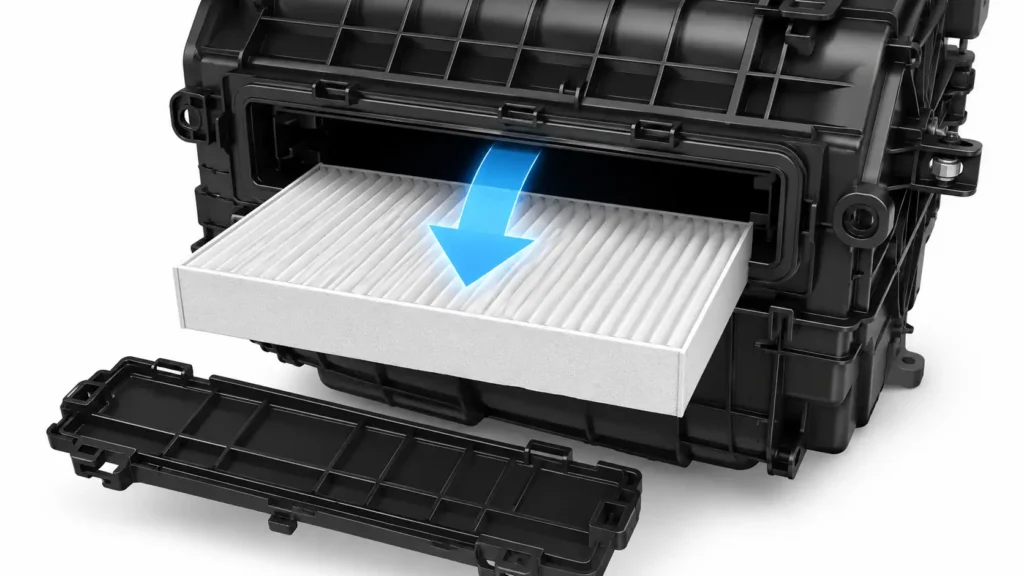
Directly behind the dropped glove box sits a long, rectangular black plastic cover featuring a highly distinct honeycomb geometric design. This component is the primary cabin air filter access door.
There are flexible locking tension clips located on both the extreme left and right sides of this honeycomb cover. The technician must gently pull outward on these specific clips to physically disengage the plastic locking mechanism.
Once the top tension clips are free, the cover hinges slightly at the bottom retaining pegs. The technician can then pull the entire cover completely off the main HVAC unit and set it aside in a safe location.
Swapping the Filtration Media
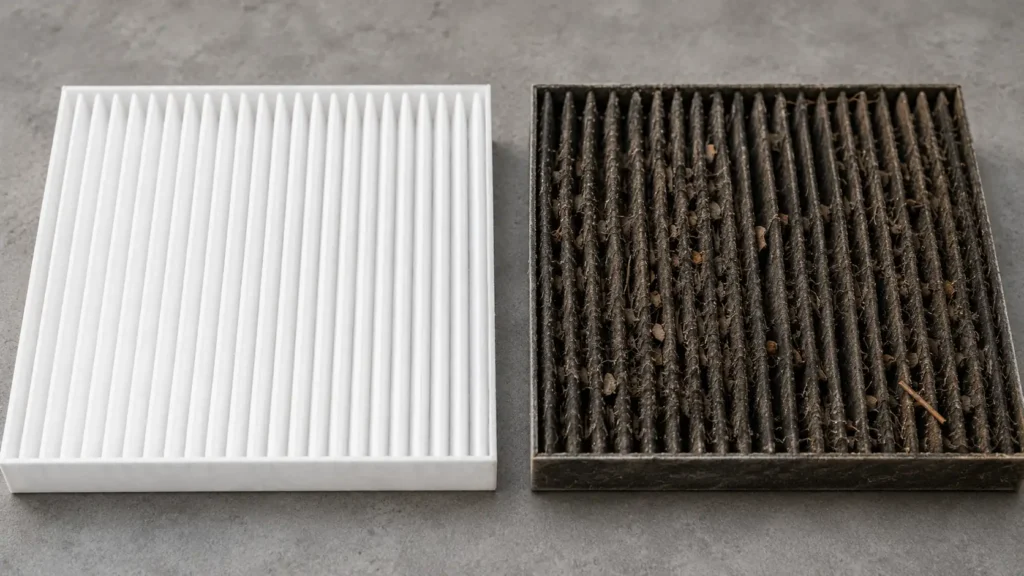
The dirty, contaminated cabin air filter is now completely visible within the horizontal slot. The technician should firmly grab the front exposed edge of the filter media and slide it straight out of the housing unit.
Before seamlessly inserting the brand new filter, it is highly recommended to use a high-powered shop vacuum to safely remove any loose dry leaves or pine needles that may have accidentally fallen into the lower blower motor housing.
The new Motorcraft FP-92 (or an equivalent premium aftermarket filter) must be carefully prepared for insertion. The technician must visually locate the critical airflow direction arrows printed on the side perimeter of the new filter.
These specific arrows must point directly downward toward the floor of the truck, perfectly matching the natural gravitational airflow of the HVAC system. Slide the new filter smoothly into the empty slot until it sits completely flush against the rear plastic wall.
Reassembly Procedures
With the new filter properly seated inside the plenum, the honeycomb plastic cover must be carefully reinstalled. The technician should insert the two bottom alignment tabs of the cover into their respective lower housing slots first.
Once the bottom tabs are fully seated, push the top edge of the cover firmly forward until both the left and right side tension clips audibly snap perfectly into place. Ensure the cover is locked securely on all sides to prevent high-pitched whistling noises during maximum fan operation.
Lift the main glove box back upward toward its normal closed position. If the pneumatic dampener arm was removed earlier, precisely reconnect it to the side plastic peg now.
Push the glove box firmly upward until the side flexible retaining tabs pop back into their designated tracks behind the dashboard fascia. The complete replacement operation is now totally finished.
Comprehensive Step-by-Step Replacement: 13th Gen (2015–2020)
The 2015 to 2020 model years represent the very first standard, factory-wide inclusion of cabin air filters in the storied history of the F-150. However, the engineering design dictates a slightly more invasive procedure to access the hidden housing.
The technician will absolutely require a 7mm socket, a standard ratchet, and a non-marring plastic trim removal tool to complete this specific service successfully without damaging the interior.
Disassembling the Dashboard Trim Panels
The meticulous process begins by opening the lower primary glove box and releasing the side retaining tabs by pushing firmly inward on the plastic walls. Lower the glove box completely toward the passenger floorboard to expose the lower dashboard skeletal structure.
Next, the technician must locate the vertical woodgrain, carbon fiber, or painted decorative trim piece located immediately to the right of the radio interface and above the glove box opening.
Using the non-marring plastic trim tool, gently pry this decorative panel outward toward the passenger seat to systematically release its hidden steel retention clips. This panel does not need to be completely removed from the dashboard; pulling it slightly out of the way provides the exact necessary clearance for the upper glove box trim to slide out.
Removing the Upper Glove Box Tray
Directly above the main lower glove box opening, there is an integrated upper plastic storage tray embedded in the dash. The technician must locate the textured rubber mat sitting inside this upper tray and lift it entirely away to expose the hidden mounting hardware beneath.
Underneath this rubber mat, or situated tightly along the top edge, sit two 7mm hex-head bolts securely holding the upper trim bracket. Use the mechanical ratchet and 7mm socket to carefully extract both bolts and set them safely aside in a magnetic tray.
With the primary bolts fully removed, firmly grasp the upper plastic trim assembly and pull it straight toward the passenger seat to forcefully disengage the rear tension clips.
As the trim slowly comes loose, the technician will immediately notice a live electrical connector attached to the back of the plastic panel. Depress the small locking tab on the wire harness and safely unplug the connector, allowing the entire upper trim piece to be completely removed from the vehicle.
Replacing the Filter Component
Removing the upper trim assembly perfectly exposes the rectangular black plastic cabin air filter housing cover. This specific cover features a flexible latch mechanism on both the extreme left and right sides.
Press inward on both plastic tabs simultaneously and pull the cover straight off the main HVAC unit. The dirty, dust-filled filter can now be pulled straight out of the internal holding tray.
The technician should visually inspect the empty housing tray for heavy debris and thoroughly vacuum the area if necessary. Take the brand new cabin air filter and carefully observe the critical airflow indicator arrows printed on the side of the media.
Insert the new filter smoothly into the tray, absolutely ensuring that the printed airflow arrows point directly downward toward the floor mats. Once perfectly seated, press the plastic filter cover back into place until both side clips securely and audibly lock.
Reassembly of the 13th Generation Dashboard
With the new filter firmly secured inside the HVAC system, hold the upper glove box trim assembly close to the dashboard opening and seamlessly reconnect the electrical wire harness. Ensure the connector clicks solidly into place to prevent loose electrical connections.
Carefully align the structural plastic clips on the back of the upper trim and push the entire panel firmly into the dashboard until it sits perfectly flush. Reinstall the two 7mm hex bolts using the ratchet to securely fasten the structural assembly back to the chassis.
Push the vertical decorative trim piece back into its specific locking slots until the dashboard panel gaps are perfectly aligned and tight. Finally, lift the main lower glove box upward, pushing past the flexible side stops until it firmly latches closed.
Retrofitting the 12th Gen (2009–2014) F-150
Millions of 12th-generation Ford F-150s and the highly sought-after SVT Raptors were manufactured completely without interior air filtration capabilities. This massive engineering oversight allows thick layers of fine dust to blow directly out of the dashboard vents.
To brilliantly rectify this, aftermarket automotive companies like Infinity Overland developed a specialized, highly engineered retrofit kit designed specifically for the 2009–2014 HVAC housing.
Understanding the HVAC Housing Modification
The factory HVAC plastic plenum located directly behind the glove box of these specific trucks actually features the exact molded outline where a filter was originally intended to reside. The complex retrofit process requires permanently modifying this virgin plastic housing.
The technician must drop the glove box identically to the newer models to gain unobstructed access to the raw HVAC unit. A razor-sharp utility knife or a specialized heated plastic cutting tool is absolutely required to perfectly trace the pre-molded groove.
By carefully and methodically cutting along the factory-designed indentation, a perfect rectangular slot is created that precisely mirrors the filter access doors found on later models.
Sealing the Cowl and Installing the Kit
The 2009–2012 model years feature a highly problematic secondary opening located in the HVAC system that must be permanently sealed for the retrofit to function correctly. The premium retrofit kit includes a custom foil-clad butyl sealing pad specifically manufactured for this exact purpose.
The technician must thoroughly clean the plastic surface with rubbing alcohol and apply the ultra-sticky peel-and-stick pad directly over the secondary opening to completely prevent dirty air bypass.
Once totally sealed, the specialized high-flow dust filter can be smoothly inserted into the newly cut rectangular slot. The premium aftermarket kit provides a custom-molded plastic door and heavy-duty mounting hardware.
The technician securely bolts this new door over the filter slot, effectively and permanently upgrading the 12th-generation truck to modern, high-efficiency filtration standards. For maximum airflow, Infinity Overland also highly recommends removing the plastic cowl dome behind the engine ECU to clean the primary exterior mesh intake screen.
Retrofitting the 10th Gen (1997–2003) F-150
The 10th-generation F-150 presents a highly unique scenario, as Ford actually offered a basic cabin air filter as a very rare dealership-installed accessory. The vast majority of vehicles left the dealership lot completely without this expensive upgrade.
If the specific vehicle was luckily equipped with the dealer kit, the housing is physically located deep under the passenger side dashboard, directly beneath the main glove compartment area.
This specific, legacy filter design differs fundamentally from modern iterations, utilizing a complex two-piece filter set stacked together. The technician must unclip the lower plastic housing door and slide the two separate filter elements out one at a time.
Because of the extreme age of these heritage vehicles, the plastic retaining clips are often highly brittle due to UV degradation and must be handled with extreme care to avoid shattering the entire housing assembly.
If the truck absolutely does not have this specific housing, installing a cabin air filter is virtually impossible without completely replacing massive, expensive sections of the internal HVAC ducting architecture.
Replacement Intervals and Environmental Factors
Determining the exact, scientifically correct maintenance schedule for a cabin air filter requires a thorough analysis of both total mileage and daily environmental exposure. Strictly adhering to a dynamic schedule actively prevents incredibly costly HVAC repairs.
Manufacturer Recommended Baseline
Ford Motor Company’s official, published maintenance schedule dictates that the cabin air filter should be proactively replaced every 15,000 to 20,000 miles.
For the statistically average American driver, this specific mileage correlates to approximately once every 12 to 18 calendar months. Dealership technicians are specifically trained to inspect this filter visually during routine fast-lube oil changes or comprehensive multi-point inspections.
Consistently replacing the filter at these exact factory intervals ensures that the HVAC blower motor operates continuously with absolutely minimal electrical and pneumatic resistance.
Severe Duty Operating Conditions
The official factory guidelines are explicitly formulated for standard, paved-road, suburban driving conditions. Trucks consistently subjected to severe duty environments require vastly accelerated and highly aggressive maintenance schedules.
Vehicles frequently driven on rural gravel roads, active construction sites, or massive agricultural lands experience massive, unyielding particulate ingestion. In these incredibly dusty environments, the synthetic filter media may reach absolute maximum capacity in as little as 10,000 miles or less.
Similarly, commercial trucks operating in heavily polluted urban centers or geographic regions experiencing catastrophic seasonal wildfires must have their filters changed bi-annually at a minimum. The delicate activated carbon layers strictly tasked with adsorbing VOCs and toxic smoke odors deplete extremely rapidly under these extraordinarily harsh atmospheric conditions.
Maintenance Interval Chart
- Standard Highway Driving: 20,000 Miles (18 Months)
- Urban Commuting (High Smog): 15,000 Miles (12 Months)
- Gravel Roads / Off-Road: 10,000 Miles (8 Months)
- Wildfire Zones / Heavy Agriculture: 7,500 Miles (6 Months)
Cost Analysis and Parts Specifications
The total financial implications of standard cabin air filter maintenance vary wildly depending entirely on whether the physical service is performed at a franchised dealership or in a residential driveway by a DIY owner.
Professional automotive service centers routinely charge anywhere between $50 and $150 for a basic cabin air filter replacement, heavily factoring in exorbitant hourly labor rates.
Conversely, purchasing the exact same filter directly from a massive auto parts retailer or using an online vendor like CarParts.com drastically reduces the total cost to the raw retail price of the component itself.
A standard aftermarket particulate filter from trusted tier-one brands like WIX, Fram, or Bosch typically retails between a highly affordable $10 and $20. The genuine, factory-authorized OEM Motorcraft FP-92 filter usually ranges from $20 to $34 depending entirely on the specific wholesale supplier.
Advanced, high-flow filtration options, such as the premium K&N washable electrostatic filter (Part VF2049), require a much higher initial investment of approximately $40 to $50. However, these rugged, reusable variants can be cleaned and re-oiled practically indefinitely, completely eliminating all future replacement costs over the lifespan of the vehicle.
Parts Verification by Engine Type
The 13th and 14th generation Ford F-150s intelligently share completely universal HVAC housing dimensions, regardless of the specific powertrain or engine configuration chosen by the buyer.
Whether the truck is fiercely equipped with the twin-turbo 2.7L EcoBoost, the towing-focused 3.5L EcoBoost, the naturally aspirated 5.0L Coyote V8, the highly efficient 3.0L PowerStroke Diesel, or the incredibly advanced 3.5L PowerBoost Full Hybrid, the exact cabin air filter part number remains universally identical.
Furthermore, this strict universal fitment applies equally across all luxury and work trim levels, including the XL, XLT, Lariat, King Ranch, Platinum, Limited, Tremor, and Raptor. This brilliant universal standardization heavily simplifies inventory logistics for massive dealerships and makes sourcing exact replacement parts highly convenient for truck owners.
OEM vs Aftermarket Part Number Matrix
| Brand Manufacturer | 13th & 14th Gen Part Number | Filter Type Technology | Estimated Retail Price |
| Motorcraft (OEM) | FP-92 (Replaces FP-79) | Particulate / Carbon | $20 – $34 |
| Bosch | 6081C | HEPA Certified | $15 – $25 |
| K&N Engineering | VF2049 | Washable Electrostatic | $40 – $50 |
| WIX Filters | WP10653 | Activated Carbon | $15 – $20 |
| Fram | CF12150 | Standard Particulate | $15 – $20 |
In-Depth People Also Ask (PAA)
Automotive researchers routinely encounter recurring, highly specific questions regarding the complex filtration systems of the Ford F-150. Addressing these exact queries provides a comprehensive, expert-level understanding of vehicle maintenance.
What direction should the airflow arrows point on the Ford F-150 cabin filter?
When installing a brand new cabin air filter in any Ford F-150 equipped with a standard factory housing, the airflow indicator arrows must point absolutely downward.
The entire HVAC system draws fresh ambient air directly from the external cowl intake located near the base of the exterior windshield. The air is then forcefully pulled downward through the horizontal filter media before entering the spinning blower motor assembly located beneath the lower dashboard.
Installing the filter upside down brutally forces the rushing air against the natural pleat structure, severely restricting airflow and potentially causing the delicate filter to physically collapse under extreme vacuum pressure.
Can a dirty, clogged cabin filter cause the air conditioning to stop working?
Yes, a severely neglected and completely clogged cabin air filter can absolutely cause total air conditioning system failure. The entire thermal system relies completely on steady, unimpeded airflow across the aluminum evaporator core to actively exchange heat.
When the filter media is completely blocked by heavy debris, the absolute lack of warm cabin air moving across the coils causes the compressed refrigerant to freeze the atmospheric condensation instantly.
This rapid freezing transforms the vital evaporator core into a solid, impenetrable block of ice, blocking all remaining airflow and violently forcing the A/C compressor to shut down to prevent internal mechanical destruction.
Are washable K&N cabin air filters actually worth the high initial investment?
Washable cabin air filters, famously manufactured by companies like K&N, utilize highly advanced synthetic electrostatic materials that can be repeatedly washed, dried, and re-installed.
For dedicated truck owners who actively plan to keep their vehicle for a decade or more, the long-term financial return on investment is undeniably highly favorable. However, these specialized filters require incredibly careful and precise maintenance protocols.
They must be thoroughly and completely dried before re-installation to absolutely prevent the dangerous growth of toxic mold or mildew deep within the dark HVAC ducting. Furthermore, standard washable filters generally do not feature activated carbon layers, making them entirely ineffective at eliminating severe chemical odors compared to disposable charcoal variants.
Does replacing the cabin air filter improve engine horsepower or fuel economy?
A highly common, pervasive misconception within the automotive DIY community is that cabin air filters and primary engine air filters are directly related. They actually operate on two entirely independent, physically separated intake systems.
The cabin air filter strictly purifies the ambient air entering the passenger compartment specifically for human HVAC usage. The engine air filter (such as the Motorcraft FA-1883) strictly purifies the massive volume of air entering the engine’s intake manifold for the violent internal combustion process.
Replacing a clogged cabin air filter will drastically improve interior climate control performance and slightly reduce electrical strain on the vehicle’s alternator, but it will absolutely not directly improve horsepower, torque, or miles-per-gallon metrics.
How does a HEPA filter negatively impact the F-150’s blower motor lifespan?
Installing a true, certified HEPA cabin air filter in a Ford F-150 provides the absolute maximum possible protection against microscopic biological allergens and deadly PM2.5 particulate matter.
However, because the tightly woven synthetic fibers of a medical-grade HEPA filter are incredibly dense, they inherently create a much higher pneumatic pressure drop directly across the media.
The electric blower motor must physically spin at a significantly higher RPM to generate the exact same volume of conditioned air at the dashboard vents. Owners may actively notice that the fan speed setting “3” now feels much more like setting “2” immediately after installing a HEPA filter.
This substantially increased pneumatic resistance can subtly and permanently reduce the total mechanical lifespan of the blower motor over many years of continuous, high-speed operation.
What happens if the glove box damper arm breaks during replacement?
During the routine filter replacement process, the small, highly pressurized shock absorber attached to the right side of the glove box—known officially as the glove box dampener or stop arm—is frequently mishandled by amateurs.
This specific OEM component (Ford Part HC3Z-5806200-B) ensures that the extremely heavy glove box door drops open smoothly and elegantly, rather than violently slamming downward and instantly snapping the fragile lower plastic hinges.
Technicians must carefully and methodically slide this delicate dampener horizontally off its mounting peg before fully lowering the glove box assembly. If the plastic dampener is violently forced, yanked, or twisted, the delicate internal pneumatic piston can instantly snap in half.
If the glove box falls rapidly and slams upon opening after a filter replacement, the dampener arm was undoubtedly either left disconnected during reassembly or completely fractured during the removal process. Replacements are relatively inexpensive but absolutely crucial for preserving the structural integrity of the expensive dashboard plastics.
Related Ford Guides
- how to reset the Ford Escape oil light
- how to adjust Ford F-150 headlights
- Ford F-150 coolant capacity chart
- how to calibrate Ford SYNC