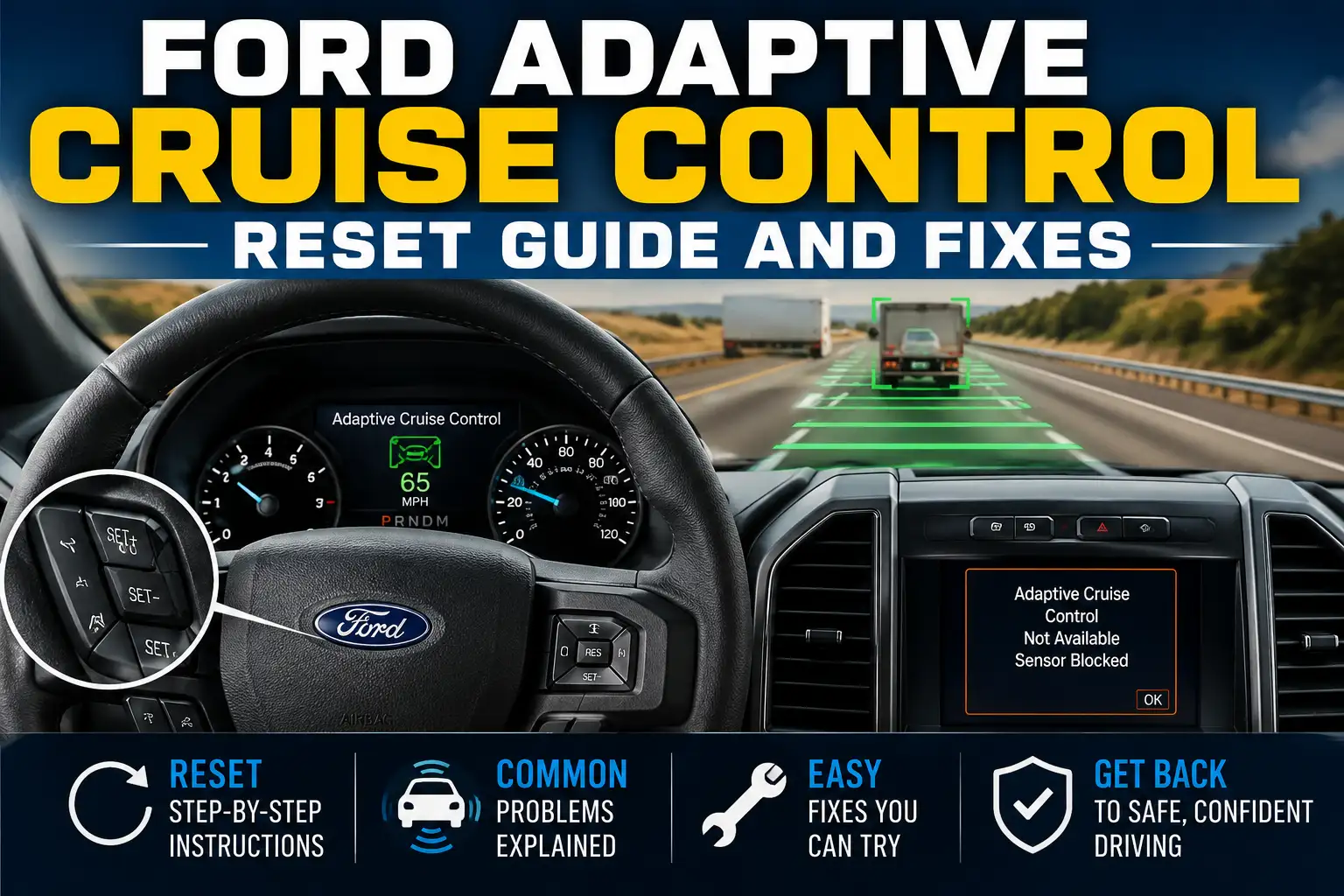
Ford Adaptive Cruise Control Reset Guide and Fixes 2026

On F-150 and Super Duty trucks, though, the reset often isn’t the real fix. Adaptive cruise control depends on a radar sensor and a forward-facing camera, and either one can throw a fault for reasons that have nothing to do with a glitch.
This guide covers the reset procedure first, then walks through the real causes behind it, sensor blockage, physical misalignment, and documented Ford recalls, so you know exactly which fix applies to your truck.

Prime for Young Adults — 6 Months Free
Students and 18–24s get six months of Prime free, then half price.
Start 6 Months Free As an Amazon Associate I earn from qualifying purchases.FordMasterX Quick Reference
Ford Adaptive Cruise Control
Reset Steps and the 3 Causes Behind a Failed Fix
Summary: Step 1, disable adaptive cruise control. Step 2, power off the ignition. Step 3, wait a few minutes. Step 4, restart and re-engage. If the fault returns, the three likely causes are a temporarily blocked sensor fixed by cleaning, a misaligned radar caused by a lift or leveling kit needing dealer recalibration, or a documented Ford recall or technical service bulletin needing a free dealer repair.
Try the Reset First
Disable ACC at the wheel or touchscreen
Power off the ignition fully
Wait a few minutes
Restart and re-engage ACC
Still Failing? Check These 3 Causes

Audible — Listen Free for 30 Days
One free credit a month and thousands of titles included.
Listen Free for 30 Days As an Amazon Associate I earn from qualifying purchases.Sensor Blocked
Mud, ice, or heavy rain temporarily blocks the radar or camera.
DIY CleanRadar Misalignment
Lift kits and leveling kits shift the radar angle out of spec.
Dealer RecalibrationRecall or TSB
2015 and 2021 to 2023 F-150 trucks have documented Ford campaigns.
Free Dealer FixWhat Determines Why Your Adaptive Cruise Control Failed
Recommended Best Deal Products


Before trying any fix, four things determine which path below applies to your truck.
The Warning Message On Your Dash
A blank dash where ACC simply won’t engage points to a different cause than a truck displaying “Sensor Blocked” or “Adaptive Cruise Not Available.” Note the exact wording before you start.
Anything Changed On The Truck Recently
Lift kits, leveling kits, winch installs, front-end repairs, and windshield replacements all move or disconnect the radar or camera. If one of these happened recently, start with the misalignment branch below.
Your Model Year And Recall Status
Ford has issued at least one safety recall and one technical service bulletin specific to F-150 adaptive cruise control. Newer trucks built with Ford BlueCruise instead of standalone ACC follow a different troubleshooting path entirely.
Whether The Fault Is Constant Or Weather Related
A fault that only appears in rain, fog, or low sun is almost always environmental. A fault that persists in clear, dry conditions points to hardware or software instead.
How to Reset Ford Adaptive Cruise Control Step by Step
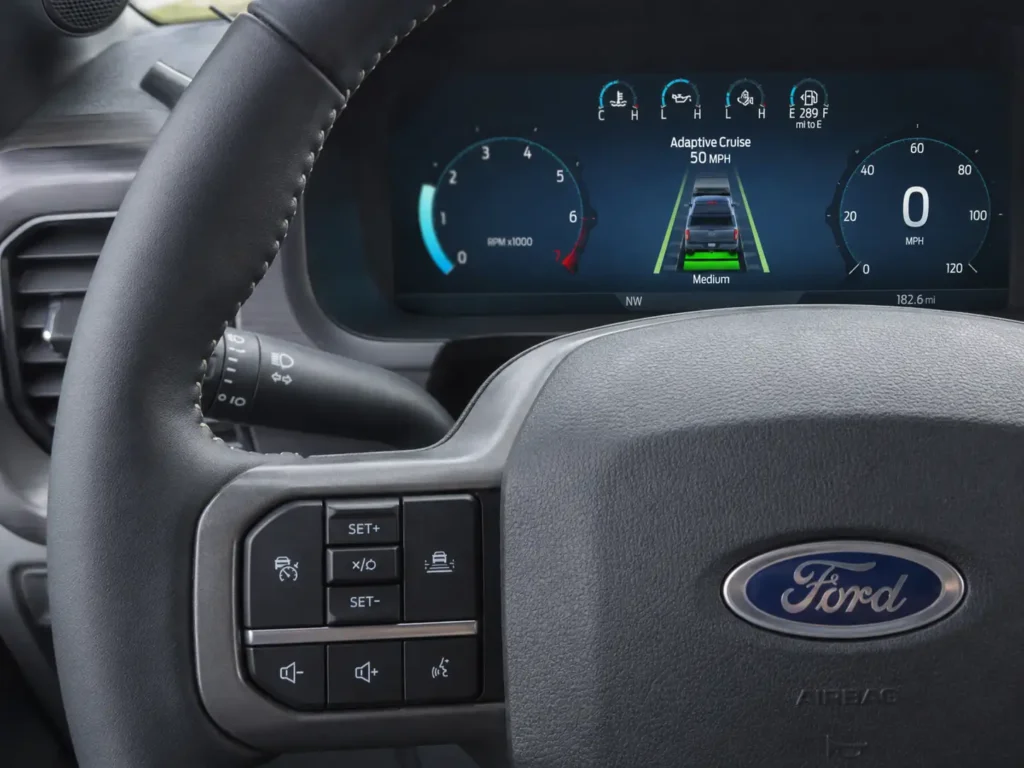
The reset itself takes less than five minutes.
Audible Premium Plus — Annual Membership
12 audiobook credits up front, plus the full Audible catalogue.
See Annual Plans As an Amazon Associate I earn from qualifying purchases.- Disable ACC. Use the steering wheel switch, or on touchscreen-equipped trucks go to Features, then Driver Assistance, then Cruise Control, and select Normal.
- Power down completely. Turn the ignition off and let the truck fully shut down rather than just sitting in Park with the engine running.
- Wait a few minutes. A short pause before restarting gives the radar and camera modules time to fully reset.
- Restart and re-engage ACC. Set your speed and following distance again. The system erases the previous gap and set speed every time it’s switched off, so this is normal and not a sign anything is broken.
Ford’s own owner documentation confirms that a false sensor-blocked warning either self-clears or clears after a restart, which is why this step comes first.
If the warning comes right back, the cause is usually one of three things below.
Why Adaptive Cruise Shows Sensor Blocked on F-150 Trucks
Recommended Best Deal Products


If you only see “Sensor Blocked” in rain, snow, fog, or low sun glare, the radar or camera isn’t actually damaged. This is the most common and least serious cause.
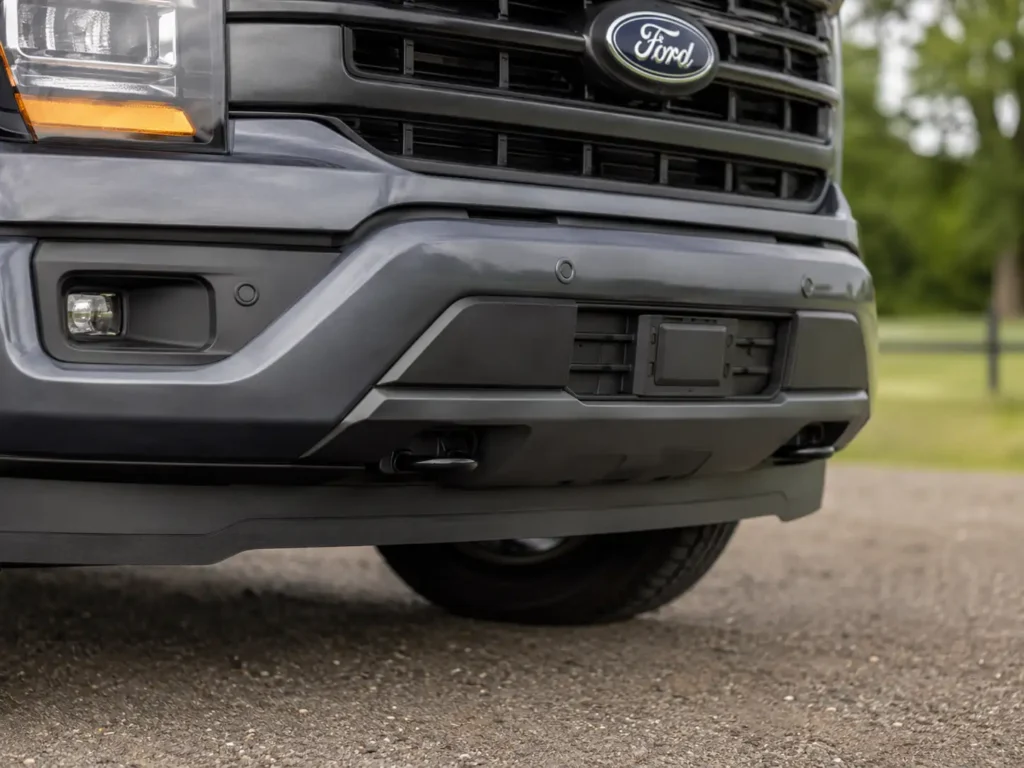
The radar sensor sits behind the lower bumper trim, usually on the driver’s side. The camera used for Pre-Collision Assist sits near the rearview mirror, a separate part owners often confuse with the radar.
Clean the radar area with a soft cloth and mild cleaning solution, clearing mud, ice, or road debris first. Check that nothing, including a stray zip tie or wiring harness, sits directly in front of the sensor face.
F-150 and Super Duty owners have traced this exact symptom to dirt and debris blocking the radar’s field of view, confirming the fix is almost always a cleaning job, not a repair.
If your cruise control keeps disengaging even after cleaning, a separate cruise control fault may be involved rather than the adaptive radar itself.
If the weather is clear and the fault still won’t clear, the cause is mechanical, not environmental.
How Leveling Kits Cause Adaptive Cruise Control Faults
If you’ve recently lifted, leveled, or added a winch to your truck, this is almost always the cause. Raising or lowering the front end changes the angle the radar points at, even by a degree or two.
Super Duty owners running lift kits have reported the same Pre-Collision Assist and adaptive cruise faults after the radar bracket shifted out of factory alignment.
You can check this yourself. Park on level ground and hold a small level against the radar’s face behind the front bumper trim. It should read close to vertical, with no more than one or two degrees tilted upward.
One F-150 owner running a 6-inch lift used Forscan to find the cruise control module’s alignment offset was reading well outside the accepted range, corrected the value, and successfully ran the recalibration after the dealer could not.
Confirming misalignment at home is realistic. Officially recalibrating the system through Ford’s diagnostic software is not, and that’s the limit of this branch’s DIY fix. The Forscan and OBDLink diagnostic setup used in cases like this can read the fault codes, but a full recalibration still needs dealer-level tools.
Misalignment from a modification is one thing. Some faults trace back to a documented Ford defect instead.
When a Ford Recall Is Causing Your Cruise Fault
Recommended Best Deal Products


Some adaptive cruise faults have nothing to do with weather or alignment. They’re a documented Ford defect with a free dealer fix.
Ford issued Safety Recall 15S29 for 2015 F-150 trucks built between March 18, 2014 and August 6, 2015, after the adaptive cruise radar falsely detected large, reflective trucks and braked unexpectedly. The fix is a free software reprogram of the cruise control module.
A separate Technical Service Bulletin 23-2146 covers 2021 to 2023 F-150 trucks that throw driver-assistance warning messages tied to fault codes U3000:49, C1001:31, or U3000:89. Ford traces this to a loose connection at the camera module rather than the radar.
Super Duty owners shouldn’t assume either campaign applies, since both are documented for F-150 specifically. Check your VIN at Ford’s official recall lookup before assuming your fault is purely mechanical.
Beyond these three main branches, a handful of less common situations are worth knowing about.
5 Uncommon Causes of Adaptive Cruise Control Failure
- FordPass app shows a fault the dash doesn’t. Treat the dash message as the more reliable signal and the app notification as secondary.
- Wiring disturbed during unrelated service. One owner traced a recurring fault back to a zip tie added near the radar bay during an unrelated recall repair, which pinched the wiring harness.
- Aftermarket-installed ACC kits. Owners who add adaptive cruise to a truck that didn’t originally have it need Forscan configuration to activate the feature, and incorrect values here cause persistent faults.
- Intermittent, self-clearing faults. A fault that appears once and never returns is usually a momentary radar dropout, not a developing failure.
- Faults right after a windshield replacement. Replacing the windshield requires removing and reinstalling the Pre-Collision Assist camera, and skipping the recalibration step afterward causes the same warning messages covered above.
With all five causes covered, here’s how to match your symptom to a fix fast.
Quick Decision Guide for Adaptive Cruise Control Fixes
Match your symptom to the row below to find your starting point.
| Symptom | Likely Cause | Fix | DIY or Dealer |
|---|---|---|---|
| Clears completely after the reset | Software glitch or false alarm | No further action needed | DIY |
| Only happens in rain, snow, fog, or glare | Sensor or camera temporarily blocked | Clean the radar and camera area | DIY |
| Started after a lift, level, or winch install | Radar misalignment | Check alignment, then recalibrate | DIY check, dealer recalibration |
| Truck is a 2015 or 2021 to 2023 F-150 | Open recall or TSB | Check VIN, schedule free repair | Dealer |
| Intermittent with no clear trigger | Momentary radar dropout | Monitor, repair only if it persists | DIY |
If your situation points to the dealer column, here’s what that visit should involve.
When to Let a Ford Dealer Recalibrate the System
DIY troubleshooting has a ceiling, and adaptive cruise control is a safety system, not a comfort feature.
Any confirmed misalignment needs Ford’s diagnostic software to officially recalibrate the radar, even after you’ve found and corrected the underlying offset value yourself. A scan tool reading is not the same as a certified recalibration.
Open recalls and technical service bulletins are always a free dealer fix. There’s no DIY workaround that replaces the official remedy, and attempting one can complicate a future warranty claim.
The same reset-then-verify logic applies to other Ford driver-assist systems beyond cruise control. If electrical work elsewhere on the truck also leaves you needing to reset the AdvanceTrac stability control system, the procedure follows a similar pattern.
If you’ve reset the system, cleaned the sensor, ruled out a recent modification, and confirmed there’s no open recall, a failed radar or camera module is the most likely explanation, and that calls for a dealer diagnosis.
Getting Your Adaptive Cruise Control Back to Normal
Resetting Ford adaptive cruise control solves most faults outright. A quick sensor cleaning or a five-minute VIN check handles nearly everything else.
Start with the reset, match your symptom to the table above, and you’ll know within minutes whether you’re dealing with weather, a recent modification, or a documented Ford issue.
If you’ve worked through every branch above and the fault still returns, a dealer visit is the right next move. Checking your VIN for open recalls first means you won’t pay for a fix Ford already owes you for free.
5 Common Questions About Adaptive Cruise Control Resets
Does disconnecting the battery reset adaptive cruise control?
Disconnecting the battery does reset the cruise control module, but it’s a more aggressive step than most faults need. Try the standard power-cycle reset first, since most false warnings clear with a simple restart.
Why does my Ford say adaptive cruise control sensor blocked?
This usually means the radar sensor behind the front bumper is temporarily obstructed by mud, ice, or heavy rain. Clean the sensor area and the warning typically clears on its own.
Can a leveling kit cause adaptive cruise control to stop working?
Yes, leveling kits and lift kits change the angle of the radar sensor enough to trigger a fault. The system needs an official recalibration at a dealer after any suspension modification.
Is adaptive cruise control reset covered under warranty?
The reset itself costs nothing since you can perform it yourself. Repairs tied to an open recall, like the 2015 F-150 campaign, are always free regardless of warranty status.
How do I know if my F-150 has an open adaptive cruise control recall?
Enter your 17-character VIN at Ford’s official recall lookup tool to see campaigns specific to your truck. Recall and TSB coverage varies by exact build date, not just model year.