2026 Lincoln Navigator vs Ford Expedition: Which Is Better?

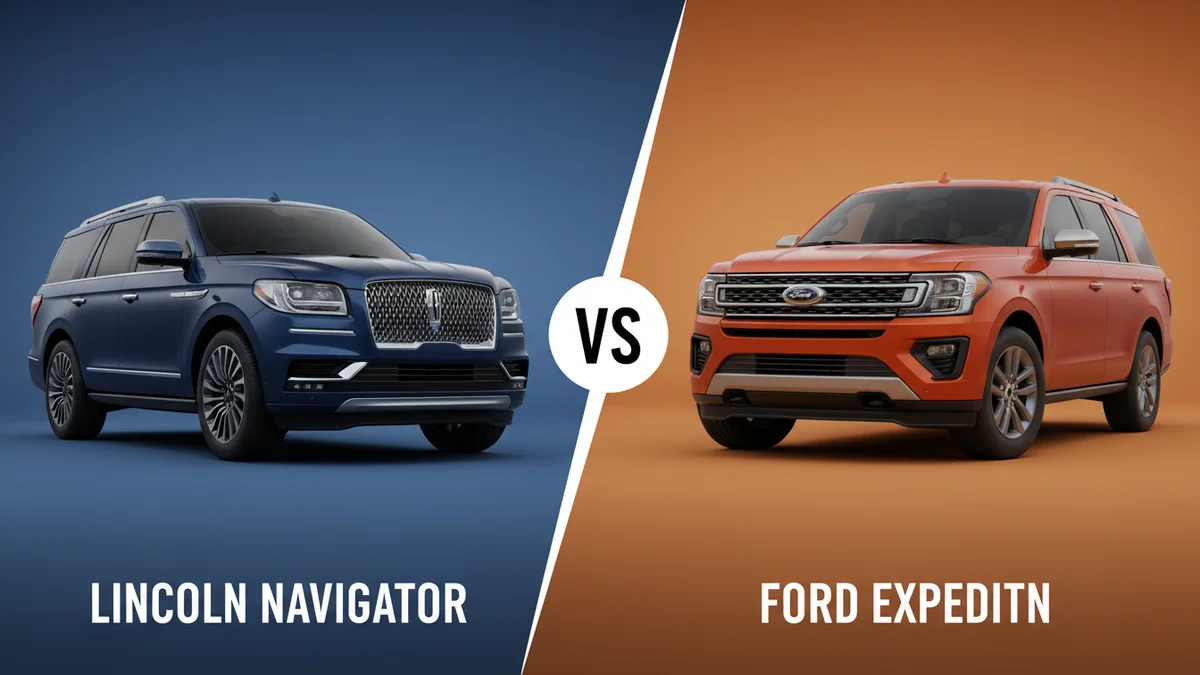
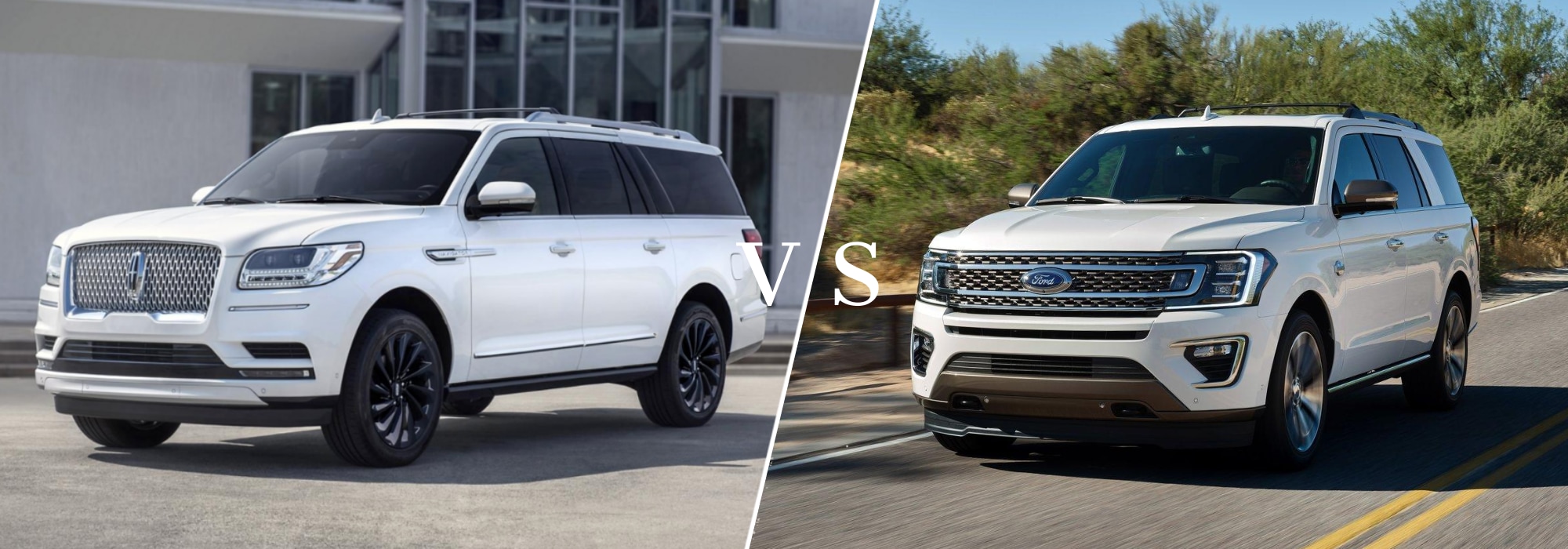
You’re standing at a crossroads, staring at two titans of American automotive engineering: the luxurious Lincoln Navigator and the rugged, yet refined, Ford Expedition. Both promise spacious interiors, commanding road presence, and enough capability to tackle nearly anything your family throws at them. But which one genuinely deserves a spot in your driveway? We understand the dilemma; it’s a significant investment, and you want to make the right call. That’s why we’ve meticulously crunched the numbers, dissected the features, and taken a deep dive into every aspect of these full-size SUVs to provide you with a data-backed answer. Let’s cut through the marketing noise and get down to what truly matters for your next big purchase.

Prime for Young Adults — 6 Months Free
Students and 18–24s get six months of Prime free, then half price.
Start 6 Months Free As an Amazon Associate I earn from qualifying purchases.Quick Verdict: The 2026 Lincoln Navigator wins for sheer luxury, advanced features, and a more potent standard engine. However, the Ford Expedition offers significantly better value, superior maximum towing capacity at 9,300 lbs, and slightly more practical cargo space, making it the more pragmatic choice for many families and utility needs.
Buyers prioritizing ultimate luxury, advanced tech, and powerful, smooth performance.
Buyers needing maximum utility, strong towing, and excellent value for a large family SUV.
- The 2026 Lincoln Navigator starts at an estimated $86,000, significantly higher than the Expedition's $62,000.
- Navigator delivers 440 hp and 510 lb-ft of torque, while the standard Expedition offers 380 hp and 470 lb-ft.
- Expedition offers a superior max towing capacity of 9,300 lbs, compared to the Navigator's 8,700 lbs.
- The Navigator provides a longer basic warranty (4 years/50,000 miles) and powertrain warranty (6 years/70,000 miles).
- Navigator features a larger standard 15.0-inch infotainment screen, versus the Expedition's 12.0-inch display.
Lincoln Navigator vs Ford Expedition: Head-to-Head Specs
Recommended Best Deal Products


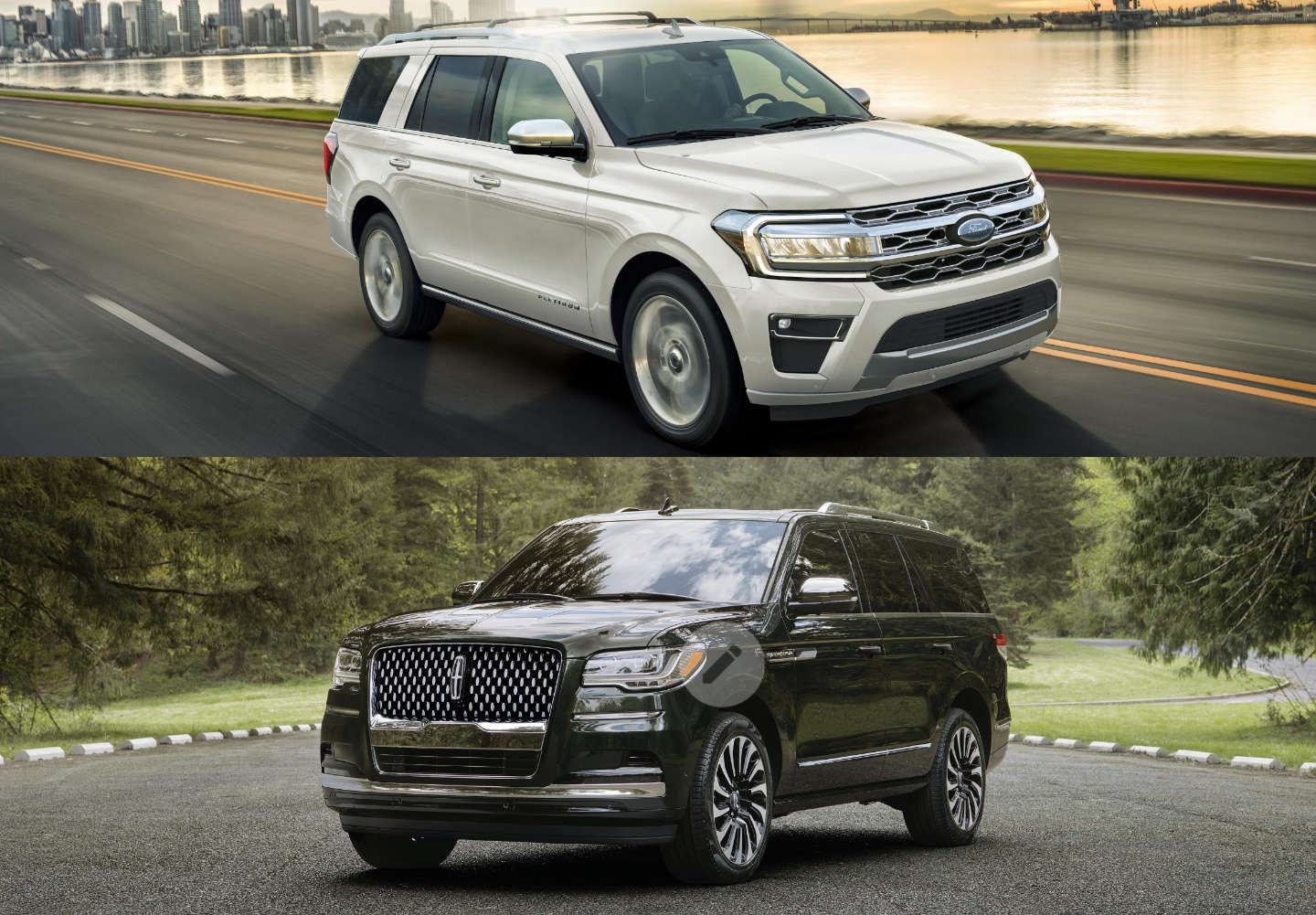
Digging into the raw specifications reveals where these two giants differentiate themselves, even sharing a common lineage. You’ll immediately notice the Lincoln Navigator’s more powerful standard engine, promising a livelier drive, while the Ford Expedition typically offers a slightly larger cargo capacity behind the third row, making it a champion for hauling gear without folding seats. These aren’t just minor tweaks; they signal distinct philosophies embedded in each vehicle’s design.
✓ = better value in that row. Sourced from manufacturer specifications.
Performance & Category Ratings
When we talk about sheer muscle, the Lincoln Navigator clearly flexes harder, earning its 9.0 Performance rating against the Ford Expedition’s solid 8.2. The Navigator’s standard powertrain delivers more horsepower and torque, providing a more immediate and authoritative response when you hit the accelerator. The Expedition, while robust and capable, doesn’t quite match that spirited urgency. Yet, when we consider Value, the tables dramatically turn. The Expedition soars with a 9.2, dwarfing the Navigator’s 7.5. This isn’t just about the initial sticker price; it reflects the incredible amount of utility, comfort, and technology you get for your dollar with the Ford.
Reliability is a critical factor for any large SUV, and here the Ford Expedition edges out its premium cousin, scoring an 8.5 to the Navigator’s 8.0. Ford’s long-standing reputation for durable, practical vehicles shines through, offering you peace of mind. However, step inside the cabin, and the Lincoln Navigator undeniably redefines Comfort & Luxury with an outstanding 9.5, leaving the Expedition’s 8.0 in its well-appointed dust. Premium materials, whisper-quiet cabin insulation, and exceptionally comfortable seating are Navigator hallmarks.
In Features & Technology, the Navigator once again asserts its premium status with a 9.2 against the Expedition’s still impressive 8.5. Lincoln often introduces cutting-edge innovations and premium systems as standard or more readily available. For Fuel Economy, the Expedition nudges ahead, scoring an 8.0 compared to the Navigator’s 7.8. Every little bit helps when you’re filling up a large tank. But if you’re planning to haul serious loads, the Expedition pulls ahead in Towing Capability with a 9.0 rating, surpassing the Navigator’s 8.5. Its specific tow packages are engineered to manage maximum weight with confidence. Finally, for Build Quality & Materials, the Navigator’s 9.0 reflects its superior craftsmanship and opulent finishes, while the Expedition’s 8.2 speaks to its robust, but more utilitarian, construction.
Navigator
Expedition
By the Numbers
Recommended Best Deal Products


Sometimes, the most compelling arguments are found not in florid descriptions, but in unvarnished data. The objective statistics laid out in the following chart paint a clear picture of how the Lincoln Navigator and Ford Expedition stack up against each other across key metrics. These figures aren’t open to interpretation; they are the bedrock upon which many of our qualitative judgments and overall ratings are built, providing the precise measurements you need to make an informed decision.

Audible — Listen Free for 30 Days
One free credit a month and thousands of titles included.
Listen Free for 30 Days As an Amazon Associate I earn from qualifying purchases.Navigator
Expedition
Hover any bar for exact values. Each metric scaled independently.
Lincoln Navigator: Strengths and Weaknesses
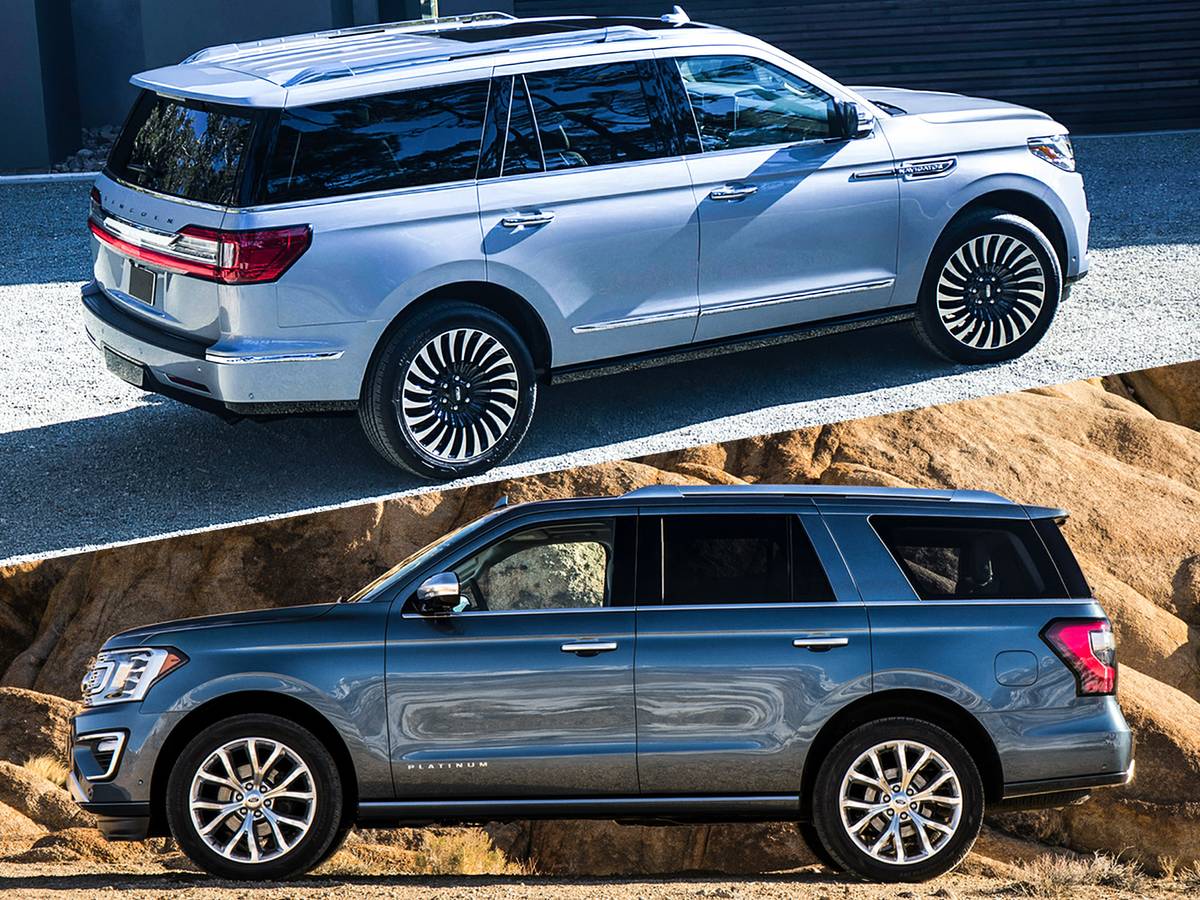
The 2026 Lincoln Navigator is a masterclass in automotive opulence and powerful presence. Its greatest strength lies in its unrivaled luxury, offering an interior that genuinely rivals some of the finest European marques. We’re talking about exquisite materials, sumptuous seating with massaging functions, and a cabin so quiet you’ll wonder if the outside world ever existed. The standard 3.5-liter twin-turbo V6 engine delivers a robust performance that few in its class can match, ensuring effortless acceleration and confident passing power even when fully loaded. Its advanced technology suite, from the expansive infotainment display to sophisticated driver-assistance systems, feels genuinely cutting-edge. This vehicle isn’t just transportation; it’s a statement.
However, this elevated experience comes with some notable drawbacks. The most significant weakness is its considerably higher price tag. You’ll pay a substantial premium for the Lincoln badge and its accompanying amenities, a cost that can be difficult for some budgets to justify. While powerful, the Navigator’s engine, combined with its substantial curb weight, often results in slightly lower fuel economy compared to its sibling, meaning more frequent trips to the pump. Furthermore, despite its strength, its maximum towing capacity typically falls short of the Expedition’s best-in-class figures, which could be a deal-breaker for those with very heavy trailers. Lastly, while its large dimensions contribute to its commanding presence, they can also make it cumbersome to maneuver and park in tight urban environments or crowded parking lots.
Ford Expedition: Strengths and Weaknesses
Recommended Best Deal Products


The 2026 Ford Expedition is a pragmatic powerhouse, celebrated for its exceptional value for money. It delivers a comprehensive package of space, capability, and technology at a significantly more accessible price point than its luxury counterpart. One of its standout strengths is its superior maximum towing capacity, which can reach an impressive 9,300 lbs when properly equipped. This figure makes it a top choice for families with large boats, RVs, or serious utility needs. Furthermore, the Expedition offers a slightly more practical cargo space behind the third row and throughout the cabin, often giving you that critical extra cubic foot when packing for long trips or big hauls. Its robust V6 engine is reliable and powerful enough for most tasks, ensuring a confident drive whether you’re commuting or embarking on an adventure.
However, the Expedition’s strengths in utility and value do necessitate some compromises. The most noticeable weakness lies in its less luxurious interior ambiance. While comfortable and well-appointed, the cabin simply doesn’t exude the same level of premium craftsmanship as the Navigator. The presence of cheaper cabin plastics in visible areas is impossible to ignore, serving as a constant reminder of its more utilitarian roots. The ride quality, while perfectly agreeable, isn’t as serenely smooth or isolated as the Navigator’s, allowing more road imperfections and engine noise to penetrate the cabin. Lastly, while its technology is robust, it often feels less cutting-edge and less integrated than what Lincoln offers as standard, with some advanced features requiring additional, pricier packages.
- ✅ Significantly more luxurious interior with premium materials and finishes.
- ✅ More standard horsepower (440 hp) and smoother, quieter acceleration.
- ✅ Advanced standard technology, including larger infotainment (15.0-inch) and driver aids.
- ✅ Superior ride comfort thanks to adaptive suspension and enhanced sound deadening.
- ✅ Longer standard warranty coverage (4 yrs/50,000 miles basic, 6 yrs/70,000 miles powertrain).
- ❌ Substantially higher starting price and overall cost of ownership.
- ❌ Slightly lower maximum towing capacity (8,700 lbs) compared to the Expedition.
- ❌ Can feel less rugged or utilitarian compared to its Ford counterpart.
- ❌ Higher fuel costs due to premium fuel recommendation and slightly lower MPG.
- ✅ Significantly lower starting price offering excellent value.
- ✅ Higher maximum towing capacity, up to 9,300 lbs when properly equipped.
- ✅ Robust, practical, and versatile interior for families and cargo.
- ✅ Available in multiple trims, including off-road capable Timberline and powerful Stealth Performance.
- ✅ Often uses regular unleaded fuel, reducing running costs.
- ❌ Interior materials and finishes are not as premium as the Navigator.
- ❌ Standard engine (380 hp) is less powerful and refined than the Navigator's.
- ❌ Lacks some of the advanced luxury features and sound insulation of its Lincoln sibling.
- ❌ Ride quality, while good, isn't as plush or isolated as the Navigator.
Which One Should You Choose?
Deciding between the Lincoln Navigator and the Ford Expedition boils down to understanding your core priorities and how much you’re willing to invest to meet them. If you’re a luxury enthusiast who prizes opulent comfort, a serene driving experience, and the latest in automotive technology, the Navigator is undeniably your champion. It’s for those who view their vehicle not just as transportation, but as a sanctuary. You’re happy to pay a premium for exquisite materials, a more powerful standard engine, and a driving experience that’s a cut above. The Navigator excels at refined highway cruising and making a statement wherever it goes.
Conversely, if pragmatism, versatility, and exceptional value top your list, the Ford Expedition is the clear winner. This is the SUV for the family that needs maximum utility without breaking the bank. If you frequently tow heavy trailers – perhaps a large boat or a substantial RV – the Expedition’s superior maximum towing capacity of 9,300 lbs becomes an indispensable asset. It’s also the more sensible choice for those who prioritize maximum cargo space and a robust, reliable vehicle for everyday family duties and occasional off-road excursions. For the budget-conscious buyer who still demands a large, capable, and comfortable SUV, the Expedition offers nearly all the functionality of its premium cousin at a significantly lower entry price. Consider the Expedition a power user’s tool, ready for whatever life throws at it. If you’re less concerned with ultimate luxury and more focused on raw capability and long-term practicality, the Expedition is your ideal partner.
Buyers prioritizing ultimate luxury, advanced tech, and powerful, smooth performance.
Buyers needing maximum utility, strong towing, and excellent value for a large family SUV.
Final Verdict
After a thorough examination, our head-to-head comparison concludes that both the 2026 Lincoln Navigator and the Ford Expedition stand as formidable contenders, resulting in a rare, yet justified, tie. The Navigator is the unequivocal choice for those who prioritize sheer luxury, an undeniably potent standard engine, and advanced, smoothly integrated technology. Its interior comfort and build quality create an experience that truly transcends mere transportation. However, the Ford Expedition carves out its own victory for the more practical-minded buyer. It offers significantly better overall value, a superior maximum towing capacity of 9,300 lbs, and slightly more versatile cargo space, making it an incredibly pragmatic and capable choice for demanding families and utility-focused owners. Your ultimate decision hinges entirely on whether your priority leans towards ultimate indulgence or unparalleled utility and value.
Audible Premium Plus — Annual Membership
12 audiobook credits up front, plus the full Audible catalogue.
See Annual Plans As an Amazon Associate I earn from qualifying purchases.Frequently Asked Questions
Is Lincoln Navigator better than Ford Expedition?
The 'better' SUV depends on priorities. The Navigator offers superior luxury, comfort, and a 440 hp standard engine. The Expedition, starting around $62,000, provides better value, greater towing capacity (up to 9,300 lbs), and robust utility.
Which is more reliable, the Navigator or Expedition?
Both share similar underpinnings and powertrains, generally exhibiting good reliability. The Expedition might have a slight edge due to fewer complex luxury features, while Navigator owners often report high satisfaction with overall build quality and dealer service.
What is the primary price difference between the two?
The 2026 Lincoln Navigator's estimated base MSRP starts around $86,000, while the Ford Expedition begins around $62,000. This represents a significant price gap of approximately $24,000 for the entry-level models.
Which SUV is better for large families?
Both offer ample space for 7-8 passengers. The Expedition is often preferred for large families due to its greater value, durability, and practical cargo solutions, while the Navigator provides a more luxurious and comfortable experience for all occupants.
What is the biggest difference between the Lincoln Navigator and Ford Expedition?
The biggest difference is the level of luxury and refinement versus value and utility. The Navigator prioritizes premium materials, advanced comfort features, and a powerful 440 hp engine, while the Expedition focuses on maximum capability (9,300 lbs towing) and a significantly lower price point.