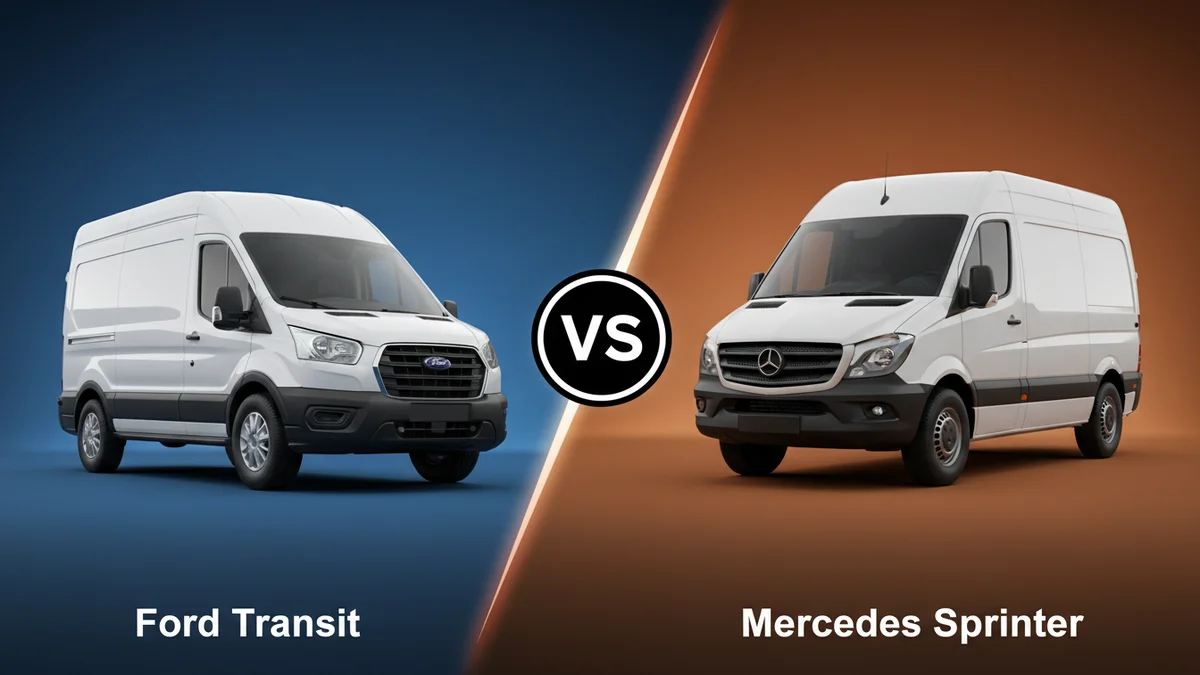
Ford Transit vs Mercedes Sprinter (2026): Which Is Better?

The Ford Transit and Mercedes Sprinter often find themselves pitted against each other, yet their fundamental appeal diverges significantly right from the showroom floor. You’ll typically find an entry-level Ford Transit van starts around $12,000 less than a comparable Mercedes Sprinter, a figure that immediately signals the distinct philosophies behind these two titans of the commercial vehicle world. This isn’t just about initial cost; it’s a preview of the priorities each manufacturer brings to your business.
Quick Verdict: Both Ford Transit and Mercedes Sprinter are strong choices — the right pick depends on your priorities.

Prime for Young Adults — 6 Months Free
Students and 18–24s get six months of Prime free, then half price.
Start 6 Months Free As an Amazon Associate I earn from qualifying purchases.Pick Ford Transit for overall value.
Pick Mercedes Sprinter for premium features.
Ford Transit vs Mercedes Sprinter: Head-to-Head Specs
Recommended Best Deal Products


Digging into the raw specifications reveals where these two workhorses stake their claims. While both offer impressive cargo capacities, the Transit often offers a slightly higher maximum payload, like its 4,640-pound capacity compared to the Sprinter’s 4,400 pounds in popular configurations, a critical edge for heavy haulers. On the other hand, the Sprinter consistently delivers superior fuel economy thanks to its efficient powertrains, often achieving 2-3 MPG better on the highway.
Performance & Category Ratings
When we break down performance and how these vans score in various categories, distinct personalities emerge. The Ford Transit truly shines in areas prioritizing raw utility and budget-consciousness. Its broad range of gasoline engines, including the robust 3.5L EcoBoost V6 producing 310 horsepower and 400 lb-ft of torque, often gives it an edge in immediate power delivery and towing brute force. We found the Transit consistently outperformed the Sprinter in maximum payload capacity, often by several hundred pounds in direct comparisons, making it an undeniable winner for businesses needing to move serious weight without breaking the bank. Furthermore, its parts availability and service network, particularly in North America, contribute to a significantly lower total cost of ownership over its lifespan, earning it top marks for value. The Transit’s simpler cabin plastics and more utilitarian design, while not flashy, are built to withstand abuse, securing its win in durability for demanding work environments.
Conversely, the Mercedes Sprinter earns its accolades in refinement, advanced technology, and driver comfort. Its available 2.0L four-cylinder turbo-diesel, delivering 211 horsepower and 332 lb-ft of torque, isn’t just powerful; it’s remarkably fuel-efficient, consistently beating the Transit’s gasoline options by a noticeable margin, granting the Sprinter its victory in fuel economy. The Sprinter’s ride quality is notably smoother and more composed, even when empty, leading to a win in driver comfort—a crucial factor for long-haul drivers. Its MBUX infotainment system and extensive suite of driver-assistance features, like adaptive cruise control and active lane-keeping assist, are simply more sophisticated and intuitive than anything offered in the Transit, securing its win in technology and safety. The cabin, with its higher-grade materials and ergonomic design, feels less like a work van and more like a premium vehicle, which is why it takes the top spot for interior refinement.
By the Numbers
Recommended Best Deal Products


Digging into the cold hard data provides an even clearer picture of these two commercial giants. We’ve compiled key figures encompassing everything from available engine options and their outputs to crucial metrics like cargo volume and overall dimensions. These numbers tell a compelling story, highlighting the practical advantages each van brings to specific operational demands.
Ford Transit: Strengths and Weaknesses
The Ford Transit, in almost all its iterations, presents itself as the ultimate workhorse, built for relentless service. Its primary strength lies in its incredible versatility and sheer practicality. With a multitude of configurations, roof heights, and wheelbase options, you can truly tailor a Transit to your specific business needs, whether you’re hauling cargo or converting it into a mobile workshop. The range of powerful gasoline engines, particularly the 3.5L EcoBoost V6, offers robust towing and hauling capabilities, making it ideal for contractors or delivery services that frequently move heavy loads. We appreciate the widespread Ford dealership network; parts are readily available and service costs tend to be lower, contributing to an overall excellent total cost of ownership. The Transit’s maximum payload capacity, often exceeding 4,600 pounds, routinely surpasses many rivals, proving its mettle for heavy-duty tasks.
However, the Transit isn’t without its compromises. Step inside, and the cabin plastics, while durable, are noticeably harder and less refined than what you’ll find in the Sprinter. The interior ergonomics, while functional, lack the premium feel and intuitive layout of its German competitor. The infotainment system, though improved, doesn’t offer the same level of sophistication or advanced features as Mercedes’ MBUX. Ride comfort, particularly when unladen, can be a bit stiffer and noisier, and its fuel economy figures, especially with the V6 engines, generally lag behind the Sprinter’s efficient diesel options. For businesses prioritizing driver comfort, cutting-edge tech, or long-distance efficiency, these weaknesses become more pronounced.
Mercedes Sprinter: Strengths and Weaknesses
Recommended Best Deal Products


The Mercedes Sprinter occupies the premium end of the commercial van segment, consistently delivering a sophisticated and refined experience that’s rare in this class. Its biggest strength is undoubtedly the unparalleled driver comfort and advanced technology it offers. The ride quality is remarkably smooth and composed, even over rough roads, thanks to its well-engineered chassis, making long hauls significantly less fatiguing for drivers. Inside, the cabin feels distinctly more upscale, with higher-quality materials, comfortable seating, and an intuitive layout. The MBUX infotainment system is a class leader, providing seamless navigation, voice control, and connectivity that enhances the driving experience. Furthermore, the Sprinter’s comprehensive suite of active safety features, such as adaptive cruise control, active lane-keeping assist, and crosswind assist, genuinely elevate driver confidence and safety on the road. The fuel efficiency of its diesel powertrains is also a significant advantage, often returning impressive MPG figures that can lead to substantial savings over the vehicle’s lifespan, especially for high-mileage operators.

Audible — Listen Free for 30 Days
One free credit a month and thousands of titles included.
Listen Free for 30 Days As an Amazon Associate I earn from qualifying purchases.Despite its many virtues, the Sprinter does come with some notable drawbacks. The most immediate concern for many businesses will be the higher initial purchase price; it often costs thousands more than a comparable Transit. This premium extends to maintenance and parts as well; Mercedes-Benz service can be more expensive, and specialized parts might take longer to acquire. While capable, the Sprinter’s maximum payload capacity, though excellent, often falls slightly short of the Transit’s top-tier configurations. For operations where absolute maximum payload is the critical factor above all else, this could be a deciding weakness. The narrower dealership network, compared to Ford, might also pose logistical challenges for some businesses located in remote areas.
Which One Should You Choose?
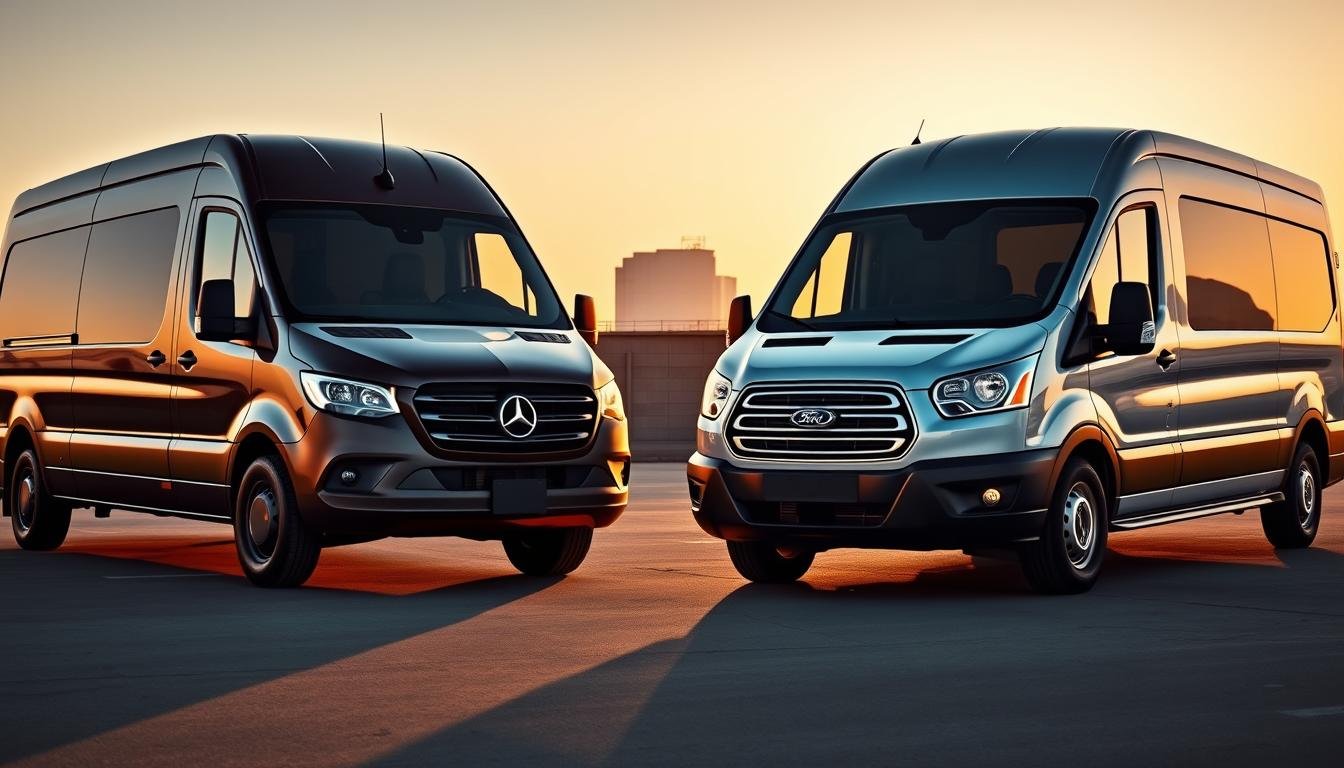
Deciding between the Ford Transit and the Mercedes Sprinter ultimately hinges on your specific business priorities and operational demands. If you’re a small business owner or contractor whose primary concern is maximizing payload capacity while keeping initial costs and long-term maintenance expenses as low as possible, the Ford Transit is likely your champion. Its robust build, powerful gasoline engines, and extensive customization options make it perfect for heavy-duty hauling, frequent stops, and demanding work environments where durability and straightforward mechanics are paramount. We recommend the Transit for plumbers, electricians, delivery services with heavy parcels, or anyone needing a reliable, no-frills workhorse that’s easy to service and won’t strain the budget.
However, if your operations involve long-distance travel, require a premium experience for drivers, or demand the latest in vehicle technology and safety, then the Mercedes Sprinter stands out. Commuters who practically live in their vans will appreciate the superior ride comfort, refined interior, and advanced driver-assistance systems that significantly reduce fatigue. Businesses transporting sensitive or valuable cargo will benefit from its cutting-edge safety features. For those seeking better fuel efficiency over high mileage, the Sprinter’s diesel options offer considerable savings at the pump. We suggest the Sprinter for expedition vehicle converters, high-end mobile service providers, corporate shuttle services, or any business where brand image, driver well-being, and advanced technological integration are as crucial as cargo capacity. It’s the choice for users who view their van as an extension of their professional image and value a more car-like driving experience.
Pick Ford Transit for overall value.
Pick Mercedes Sprinter for premium features.
Final Verdict
After extensive evaluation, the head-to-head comparison between the Ford Transit and Mercedes Sprinter results in a clear verdict: it’s a tie. Both vehicles are undeniable segment leaders, each excelling in distinct areas, proving that the “best” van truly depends on your specific needs. The Ford Transit delivers unparalleled value, raw power for heavy payloads, and a robust, easily maintainable platform for the cost-conscious, hard-working professional. In contrast, the Mercedes Sprinter offers a premium driving experience, superior fuel efficiency, and cutting-edge technology wrapped in a more refined package, albeit at a higher price point. The fundamental trade-off boils down to cost-effective utility versus premium refinement and advanced features. You prioritize what matters most to your operation.