How To Test Ignition Switch With a Multimeter (Ford Guide)

Your Ford won’t start, the dash flickers, or the engine stalls unexpectedly — and you suspect the ignition switch. Before you spend $150–$400 on a replacement, you need to confirm the switch is actually the problem.
In this guide, we walk you through three proven methods to test an ignition switch with a multimeter: a voltage test, a continuity test, and a voltage drop test. We also cover the five symptoms that point to a bad switch before you even pick up a tool.

Prime for Young Adults — 6 Months Free
Students and 18–24s get six months of Prime free, then half price.
Start 6 Months Free As an Amazon Associate I earn from qualifying purchases.What Does the Ignition Switch Actually Do
Recommended Best Deal Products
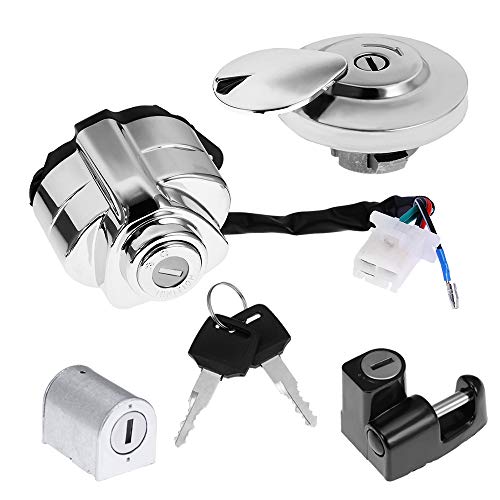


The ignition switch is an electrical component located behind the ignition cylinder on your steering column. When you turn the key, the switch sends power to four circuits in sequence: Accessory (ACC), On/Run, Start, and Off.
The ignition cylinder is the physical lock you insert the key into. The switch is the electrical unit behind it — and these are two separate parts. A worn key cylinder causes stiff turning and key removal issues. A failing ignition switch causes electrical failures, stalling, and no-start conditions.
If you replace the cylinder but not the switch (or vice versa), the problem often returns. Testing tells you which one is actually bad.
5 Symptoms of a Bad Ignition Switch in a Ford
If you notice any of these before testing, the switch is likely the cause:
- Engine stalls while driving. A worn switch can lose its electrical connection momentarily when you hit a bump or turn the wheel. According to AutoZone, this is the most safety-critical symptom and means the vehicle should not be driven.
- No crank, no start. You turn the key and hear nothing — no click, no crank. The switch is not sending the signal to the starter motor.
- Dashboard lights flicker or go dark. The switch isn’t supplying steady power to the Run circuit.
- Accessories stop working randomly. Radio, climate control, or wipers cut out with no warning because the ACC circuit is intermittent.
- Engine keeps running after you remove the key. The switch is stuck in the Run position and cannot cut power.
If the Ford anti-theft system is also triggering randomly, that can mimic ignition switch symptoms. Rule that out first by checking whether the security light flashes on startup.
What You Need Before You Start Testing
Recommended Best Deal Products



Gather these tools before you begin:
- Digital multimeter (set to 20V DC for voltage tests, continuity/Ohms mode for continuity)
- Basic screwdriver set (to remove the steering column shroud)
- Vehicle wiring diagram for your specific Ford model year (optional but helpful)
- Safety glasses
Before any test: Turn off the engine and set the parking brake. You will not need to disconnect the battery for the voltage test — the circuit needs power. You will disconnect the battery for the continuity test.
How To Test Ignition Switch Voltage With a Multimeter
This is the fastest test. It tells you whether the switch is passing battery voltage to the Run circuit.
Step 1. Remove the lower steering column shroud using a Phillips screwdriver. This exposes the wiring harness and the back of the ignition switch.

Audible — Listen Free for 30 Days
One free credit a month and thousands of titles included.
Listen Free for 30 Days As an Amazon Associate I earn from qualifying purchases.Step 2. Set your multimeter to 20V DC. This range covers a standard 12V automotive battery accurately.
Step 3. Ground the black (negative) probe on a bare metal surface near the column — the Ford F-150 ground wire bolt on the firewall works well.
Step 4. Place the red (positive) probe on one of the metal connector terminals at the back of the ignition switch.
Step 5. Turn the key to the Run position without cranking the engine.
Reading the result:
| Reading | What It Means |
|---|---|
| 11.5V–12.6V | Switch is passing voltage correctly |
| 9V–11V | Marginal — could cause intermittent issues under load |
| Below 90% of battery voltage | Switch is failing — replace it |
| 0V | Switch is not passing any voltage — replace immediately |
A healthy 12V battery should show 12.4–12.7V at rest. If your reading is below 90% of your actual battery voltage (check that first), the switch is bad.
How To Run a Continuity Test on the Ignition Switch
Recommended Best Deal Products


A continuity test checks whether each terminal pair connects and disconnects at the correct key position. This is the most precise test.
Step 1. Disconnect the negative battery terminal before starting. The circuit must be dead for a continuity test to be accurate.
Step 2. Unplug the wiring harness connector from the ignition switch.
Step 3. Set your multimeter to continuity mode (the diode/speaker symbol) or Ohms (Ω).
Audible Premium Plus — Annual Membership
12 audiobook credits up front, plus the full Audible catalogue.
See Annual Plans As an Amazon Associate I earn from qualifying purchases.Step 4. Test each terminal pair by key position using this reference:
| Key Position | Terminal Pair | Expected Result |
|---|---|---|
| OFF | B to L | No continuity (OL or silence) |
| OFF | G to M | Continuity (beep or near 0Ω) |
| ACC | B to ACC | Continuity |
| RUN | B to L, B to IGN | Continuity on both |
| START | B to S | Continuity — this activates the starter |
The Battery (B) terminal typically uses a red wire. The Starter (S) terminal typically uses a yellow wire. The Light (L) and Ignition (IGN) terminals use pink or purple wires depending on the model year.
If any terminal pair fails its expected result at the correct key position, the switch has a faulty contact and needs replacement.
How To Perform a Voltage Drop Test
A voltage drop test catches a switch that passes the basic voltage test but fails under real electrical load. This is the test most DIYers skip — and it’s why some switches seem fine until the car won’t start again.
Step 1. Leave the battery connected. Turn the key to Run and turn the blower fan to its highest setting. This puts the circuit under load.
Step 2. Set your multimeter to 20V DC.
Step 3. Place the red probe on the battery positive terminal. Place the black probe on the output side of the ignition switch connector.
Step 4. Read the voltage difference between the two points.
Acceptable voltage drop: 0.5V or less. A drop of 0.1V or less is ideal. If the drop exceeds 0.5V, the switch has excessive resistance in its internal contacts. Even if it started fine today, it will get worse. Replace the switch before it fails completely.
What Bad Test Results Actually Mean
If the voltage test fails but the continuity test passes, you likely have a wiring problem between the battery and the switch rather than a bad switch itself. Check the fuse for the ignition circuit and inspect the wiring harness for corrosion or damage.
If the continuity test fails on the Starter terminal specifically, the switch will not crank the engine even though all other circuits work normally. This is commonly confused with a bad ignition coil pack or dead battery.
If the voltage drop test is the only failure, the switch is worn internally. It may still start the car for months, or it may fail without warning. Replacing it now is the right call.
Frequently Asked Questions
Can a bad ignition switch drain my battery?
Yes, but only in specific failure modes. If the switch gets stuck in the Run position or cannot fully cut power to accessory circuits, it will slowly drain the battery. A switch that simply fails to start the car does not drain the battery by itself.
Is the ignition switch the same as the ignition cylinder?
No. The ignition cylinder is the mechanical lock where you insert the key. The ignition switch is the electrical unit behind it that activates the car’s circuits. A stiff or stuck key usually points to the cylinder. Electrical failures point to the switch.
What if my Ford passes all three tests but still won’t start?
If the switch passes the voltage, continuity, and voltage drop tests, the starting problem is elsewhere. Check the battery voltage (should be 12.4V+ at rest), test the key fob battery, and inspect the starter solenoid.
How much does a Ford ignition switch replacement cost?
The switch part itself costs $20–$80 for most Ford F-150 and F-250 models. If you take it to a shop, expect $100–$250 in labor depending on the model year and column configuration.
Can I drive my Ford with a bad ignition switch?
If the only symptom is occasional difficulty starting, you can drive carefully while arranging a repair. If the engine has stalled while driving even once, stop driving it immediately. A stall at highway speed is a serious safety hazard.
Conclusion
Testing the ignition switch on your Ford takes about 20 minutes and three multimeter checks. Start with the voltage test to get a fast answer. Follow up with the continuity test if the voltage looks borderline. Run the voltage drop test if the car has intermittent no-start issues that are hard to reproduce.
If the switch fails any of these three tests, replacement is the right move. Parts are affordable and the job is DIY-friendly for most Ford models. Confirm the diagnosis before you order parts, and you will save time and money on the repair.