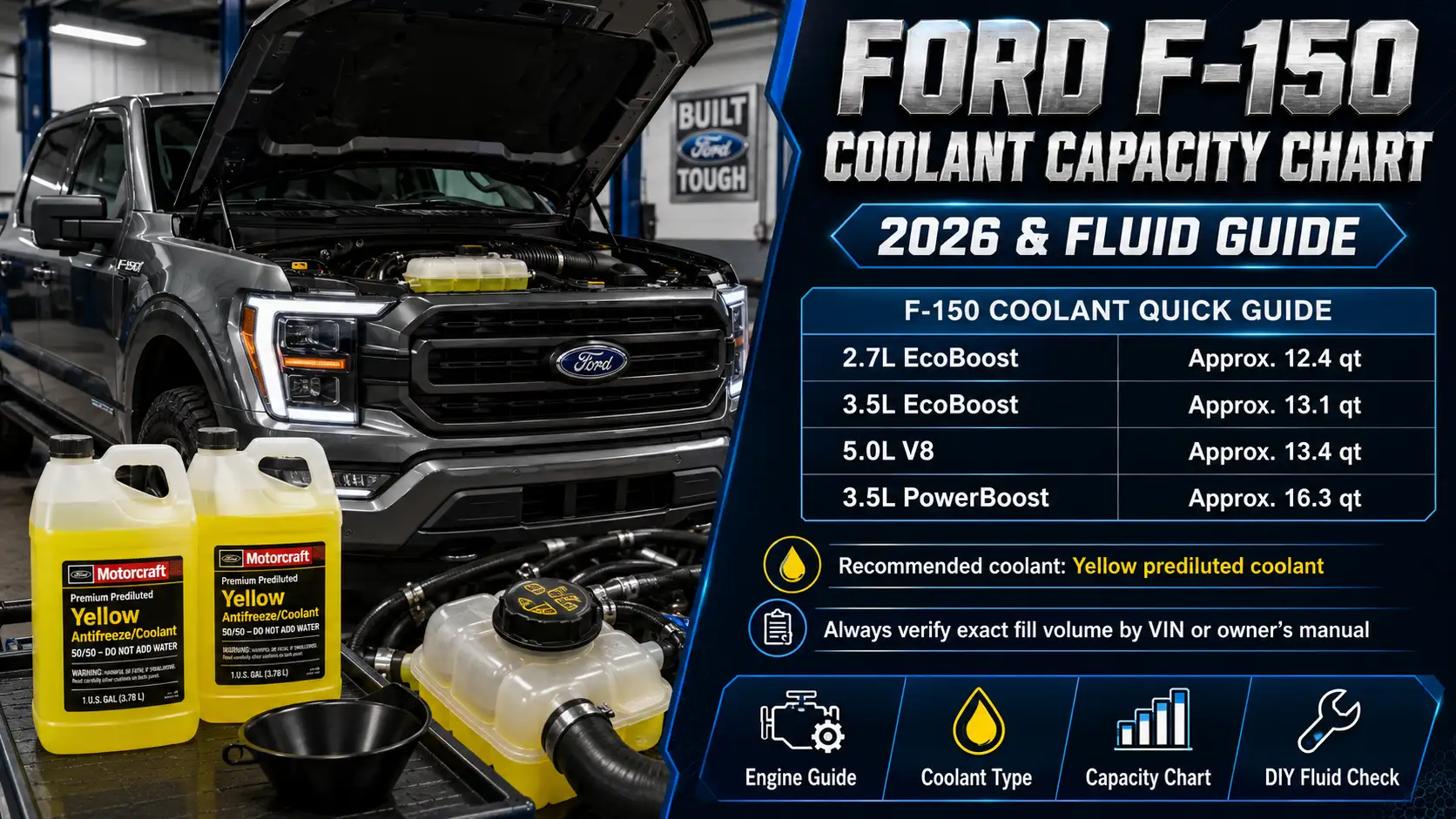
Ford F150 Coolant Capacity Chart: Complete Engine Fluid Guide 2026

Thermal management represents the critical lifeblood of any heavy-duty pickup truck operating under extreme towing and hauling loads. The Ford F-150 relies entirely on precise coolant capacities and highly specific chemical formulations to prevent catastrophic overheating.
Over the decades, automotive engineering has drastically evolved, fundamentally altering the fluid requirements for these engines.

Prime for Young Adults — 6 Months Free
Students and 18–24s get six months of Prime free, then half price.
Start 6 Months Free As an Amazon Associate I earn from qualifying purchases.This evolution has led to highly specific coolant volume requirements that vary wildly across different powertrains and vehicle generations. Modern forced-induction engines, such as the twin-turbocharged EcoBoost series, operate at significantly higher internal temperatures than older naturally aspirated V8s.
Consequently, maintaining the exact fluid capacity and chemical ratio is strictly non-negotiable for long-term engine longevity.
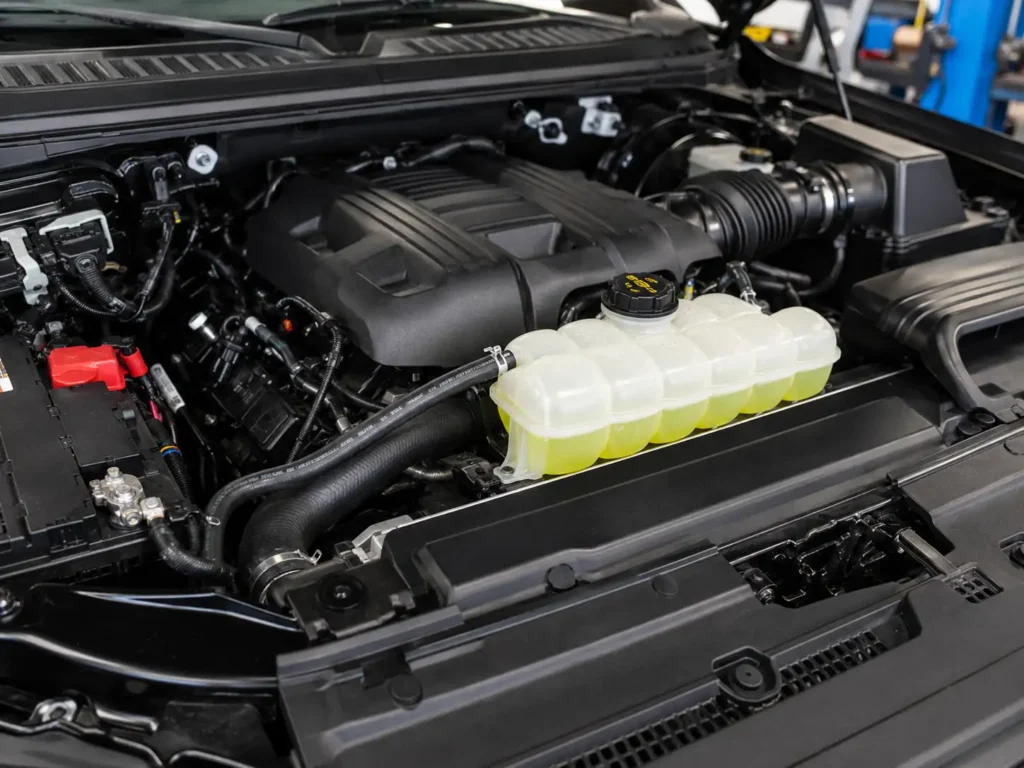
This comprehensive technical report details the exact coolant capacities for every major Ford F-150 engine from 1997 through 2026. The analysis also decodes the complex Motorcraft coolant color system, which has undergone numerous chemical transitions.
Vehicle owners, fleet managers, and technicians will find critical data regarding the recent transition from orange to yellow coolant formulations.
Furthermore, detailed flush methodologies, diagnostic procedures for common leaks, and aftermarket thermal upgrade analyses are thoroughly examined. Understanding these metrics ensures that the vehicle maintains peak thermodynamic efficiency across its lifespan.
The Thermodynamic Evolution of F150 Engines
Recommended Best Deal Products


Ford’s engineering approach to engine cooling has shifted dramatically over the past twenty years to meet stringent emissions and performance standards. Early F-150 generations utilized massive cast-iron engine blocks that required incredibly high volumes of conventional coolant to regulate heat. As the F-150 transitioned to lightweight aluminum-alloy bodies and smaller displacement engines, cooling systems became exponentially more sophisticated.
The introduction of the 3.5L EcoBoost mandated advanced thermal routing to cool twin turbochargers operating at extreme rotational speeds. These turbochargers demand a constant flow of fresh coolant to prevent oil coking and bearing failure. The engineering focus shifted from sheer fluid volume to rapid flow rates and advanced heat exchanger designs.
Furthermore, the latest hybrid powertrains have introduced entirely new dual-loop cooling architectures. These advanced systems require independent coolant reservoirs and vastly different volume calculations to protect sensitive electrical components. Analyzing the historical data reveals a definitive trend toward lower overall engine coolant volumes, while the chemical demands placed on the fluid have intensified significantly.
Fourteenth Generation (2021–2026) Technical Fluid Capacities
The fourteenth generation introduced the groundbreaking PowerBoost hybrid and the extreme high-output Raptor R platforms. These models feature some of the most complex thermal management systems ever installed in a mass-produced half-ton truck. The engineering tolerances are remarkably tight, requiring exact fluid measurements.

Audible — Listen Free for 30 Days
One free credit a month and thousands of titles included.
Listen Free for 30 Days As an Amazon Associate I earn from qualifying purchases.The 2021 through 2026 F-150 models predominantly utilize the advanced Motorcraft Yellow Prediluted Antifreeze/Coolant. This fluid represents the pinnacle of Ford’s chemical engineering, designed specifically for mixed-metal engine architectures.
| Engine Configuration | Coolant Capacity (Quarts) | Coolant Capacity (Liters) | Block Material |
| 3.3L Ti-VCT V6 | 12.7 Quarts | 12.0 Liters | Aluminum |
| 2.7L EcoBoost V6 | 15.1 Quarts | 14.3 Liters | Compacted Graphite Iron |
| 3.5L EcoBoost V6 | 14.3 Quarts | 13.5 Liters | Aluminum |
| 5.0L Coyote V8 | 13.2 Quarts | 12.5 Liters | Aluminum |
| 3.0L PowerStroke Diesel | 13.7 Quarts | 13.0 Liters | Compacted Graphite Iron |
| 3.5L PowerBoost Hybrid (High-Temp) | 15.3 Quarts | 14.5 Liters | Aluminum |
| 3.5L PowerBoost Hybrid (Low-Temp) | 7.2 Quarts | 6.8 Liters | N/A (Electrical Loop) |
| 3.5L Raptor High-Output V6 | 13.7 Quarts | 13.0 Liters | Aluminum |
| 5.2L Raptor R V8 (Engine Loop) | 12.7 Quarts | 12.0 Liters | Aluminum |
| 5.2L Raptor R V8 (Supercharger Loop) | 3.3 Quarts | 3.1 Liters | N/A (Intercooler Loop) |
The 3.5L PowerBoost Hybrid Dual-Loop Architecture
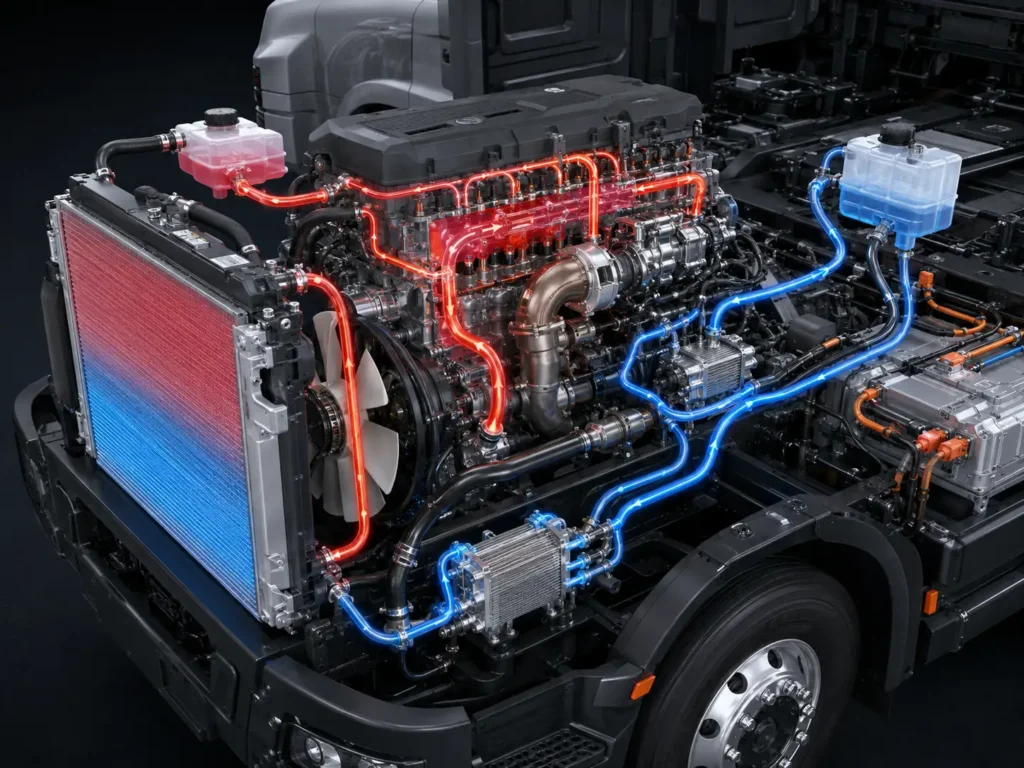
The F-150 PowerBoost relies on a highly sophisticated dual-loop cooling system to manage the internal combustion engine and the electric hybrid drive simultaneously. The high-temperature loop is dedicated strictly to the 3.5L V6 combustion engine and holds 14.5 liters, or 15.3 quarts. This primary loop operates at traditional engine temperatures to maintain optimal thermodynamic efficiency for the gasoline engine.
Conversely, the low-temperature loop is dedicated exclusively to the high-voltage hybrid battery pack, the inverter, and related electrical components. This secondary loop requires 6.8 liters, or 7.2 quarts, of specialized coolant. Proper maintenance of the low-temperature loop is absolutely paramount for vehicle operation.
If the inverter or hybrid battery overheats due to low fluid levels, the entire hybrid drive system will disable itself to prevent catastrophic electrical fires or cell degradation. This system requires meticulous bleeding procedures to ensure no air pockets disrupt the flow to the power electronics.
The 5.2L Raptor R Supercharged Cooling System
The Ford F-150 Raptor R borrows its 5.2L supercharged V8 directly from the Mustang Shelby GT500, but heavily adapts its cooling architecture for extreme off-road abuse. The primary engine cooling circuit utilizes 12.0 liters, or 12.7 quarts, of coolant to manage the immense heat generated by 700 horsepower. This circuit includes a specialized heat exchanger located near the oil filter to keep heavy-duty engine oil temperatures in check during prolonged desert running.
A completely separate, dedicated cooling circuit exists exclusively for the massive roots-style supercharger. This independent system holds 3.1 liters, or 3.3 quarts, of fluid to rapidly cool the intake air charge via the air-to-water intercooler. Keeping the intake charge dense and cold is critical for preventing pre-ignition and maintaining maximum power output in high-ambient-temperature environments.
Advanced Dynamics of the 2.7L and 3.5L EcoBoost
The 2.7L EcoBoost engine features a unique Compacted Graphite Iron (CGI) upper block, a material heavily utilized in commercial diesel engines. Because CGI has different heat transfer coefficients than traditional aluminum, the 2.7L requires a robust 15.1 quarts of coolant to maintain thermal equilibrium. This relatively high volume for a small displacement engine ensures the exhaust manifolds, which are integrated directly into the cylinder heads, remain cool.
The 3.5L EcoBoost, utilizing a traditional aluminum block, operates efficiently on 14.3 quarts of coolant during this generation. The cooling routing prioritizes rapid fluid exchange through the twin turbochargers, preventing the oil inside the bearing cartridges from overheating after engine shutdown. The precise coolant flow parameters are dictated by the electronic powertrain control module based on real-time thermal sensor data.
Thirteenth Generation (2015–2020) Technical Fluid Capacities
Recommended Best Deal Products


The thirteenth generation marked a revolutionary shift to an all-aluminum body, which drastically altered the vehicle’s gross weight and aerodynamic profile. Engine cooling systems were subsequently re-engineered and optimized to match the new towing dynamics. This generation also saw mid-cycle engine updates that changed fluid capacities midway through the production run.
During the 2015 to 2017 model years, the capacities remained relatively high, reflecting the architecture carried over from previous designs. However, the 2018 mid-cycle refresh introduced new injection systems and transmission pairings that altered cooling requirements.
Audible Premium Plus — Annual Membership
12 audiobook credits up front, plus the full Audible catalogue.
See Annual Plans As an Amazon Associate I earn from qualifying purchases.| Engine Configuration | Coolant Capacity (Quarts) | Coolant Capacity (Liters) | Model Years |
| 3.5L Ti-VCT Cyclone V6 | 16.4 Quarts | 15.5 Liters | 2015-2017 |
| 3.3L Ti-VCT V6 | 13.6 Quarts | 12.86 Liters | 2018-2020 |
| 2.7L EcoBoost V6 | 16.4 Quarts | 15.5 Liters | 2015-2017 |
| 2.7L EcoBoost V6 | 15.1 Quarts | 14.3 Liters | 2018-2020 |
| 3.5L EcoBoost V6 | 15.6 Quarts | 14.75 Liters | 2015-2017 |
| 3.5L EcoBoost V6 | 15.2 Quarts | 14.35 Liters | 2018-2020 |
| 5.0L Coyote V8 | 15.9 Quarts | 15.0 Liters | 2015-2017 |
| 5.0L Coyote V8 | 13.9 Quarts | 13.2 Liters | 2018-2020 |
| 3.0L PowerStroke Diesel | 13.7 Quarts | 13.0 Liters | 2018-2020 |
Pre and Post 2018 Facelift Capacity Changes
Noticeable capacity reductions occurred across the entire powertrain lineup during the 2018 mid-cycle refresh. Most notably, the 5.0L Coyote V8 experienced a significant drop from 15.9 quarts down to 13.9 quarts. This reduction was achieved through the introduction of dual-injection technology (port and direct injection) and more efficient radiator core designs.
The 2.7L EcoBoost also saw a substantial fluid reduction from 16.4 quarts down to 15.1 quarts. These volume reductions coincide directly with the widespread implementation of the new 10-speed automatic transmission. The advanced transmission featured superior thermal management, reducing the parasitic heat load previously transferred to the primary engine cooling system.
The 3.0L PowerStroke Diesel Cooling Requirements
Introduced in 2018, the 3.0L PowerStroke diesel engine brought legendary compression-ignition efficiency to the half-ton platform. Operating at a massive 16:1 compression ratio, this compacted graphite iron engine generates intense internal cylinder pressures. To manage this heat, the diesel system requires 13.7 quarts of coolant.
Diesel engines inherently require robust cooling for their Exhaust Gas Recirculation (EGR) coolers. The 13.7-quart capacity ensures that the extreme exhaust temperatures are sufficiently quenched before the gases are routed back into the intake manifold. Failure to maintain optimal coolant strength in the PowerStroke inevitably leads to ruptured EGR coolers and catastrophic coolant ingestion.
Twelfth Generation (2009–2014) Technical Fluid Capacities
The twelfth generation represents a major transition era for Ford truck engineering. It bridged the gap between the older, problematic Triton V8 engine family and the highly successful modern Coyote and EcoBoost platforms. The introduction of the 3.5L EcoBoost in 2011 completely revolutionized the expectations for half-ton truck performance.
This era utilized a wide variety of engine blocks, ranging from traditional cast iron to advanced aluminum alloys. Consequently, the coolant capacities varied dramatically depending on the specific engine option selected by the consumer.
| Engine Configuration | Coolant Capacity (Quarts) | Coolant Capacity (Liters) | Model Years |
| 4.6L Triton V8 | 15.1 Quarts | 14.3 Liters | 2009-2010 |
| 5.4L Triton V8 | 15.8 Quarts | 15.0 Liters | 2009-2010 |
| 3.7L Ti-VCT V6 | 16.0 Quarts | 15.1 Liters | 2011-2014 |
| 3.5L EcoBoost V6 | 16.5 Quarts | 15.6 Liters | 2011-2014 |
| 5.0L Coyote V8 | 17.0 Quarts | 16.1 Liters | 2011-2014 |
| 6.2L Boss V8 | 19.5 Quarts | 18.5 Liters | 2011-2014 |
The Massive 6.2L Boss V8
The massive 6.2L Boss V8, primarily found in the early SVT Raptor and high-trim SuperDuty trucks, was a cast-iron behemoth. To effectively regulate the thermal dynamics of its massive cylinders, the engine required a staggering 19.5 quarts of coolant. This high volume was necessary to prevent localized boiling within the engine block during high-RPM off-road maneuvers.
The 6.2L utilized a single overhead cam (SOHC) valvetrain with two spark plugs per cylinder, generating immense combustion heat. The heavy-duty water pump circulated the nearly 5 gallons of fluid rapidly through an oversized radiator. This robust cooling system made the 6.2L highly resistant to overheating, solidifying its reputation for bulletproof reliability.
Transition from Triton to Coyote and EcoBoost
The original iteration of the 5.0L Coyote V8, introduced in 2011, utilized 17.0 quarts of coolant. This represented the highest capacity cooling system ever installed on a naturally aspirated 5.0L in the F-150 chassis. The engineering team prioritized thermal mass to ensure the new quad-cam architecture remained dimensionally stable under heavy towing loads.
Simultaneously, the first-generation 3.5L EcoBoost required 16.5 quarts to manage the immense heat generated by the twin turbos. Because this was Ford’s first foray into heavily turbocharged gasoline truck engines, the cooling system was deliberately over-engineered. The large fluid capacity provided a substantial thermal buffer, preventing the engine from heat-soaking during long uphill ascents.
Eleventh Generation (2004–2008) Technical Fluid Capacities
Recommended Best Deal Products


The eleventh generation relied heavily on the modular Triton engine family for its heavy lifting. These engines, particularly the 5.4L 3-valve variant, became infamous for specific mechanical and thermal challenges. Proper coolant maintenance was an absolute necessity to keep these engines functional.
The cooling systems of this era were massive by modern standards. The engine blocks were heavy, the radiators were thick, and the sheer volume of fluid required to service them was substantial.
| Engine Configuration | Coolant Capacity (Quarts) | Coolant Capacity (Liters) | Block Material |
| 4.2L Essex V6 | ~15.0 Quarts | ~14.2 Liters | Cast Iron |
| 4.6L Triton V8 | 19.7 Quarts | 18.6 Liters | Cast Iron |
| 5.4L Triton V8 (3-Valve) | ~21.0 Quarts | ~19.9 Liters | Cast Iron |
Thermal Challenges of the 5.4L 3-Valve Triton
The 5.4L 3-valve Triton required a vast amount of coolant, frequently exceeding 21 quarts depending on specific cab and heater core configurations. This engine featured variable camshaft timing (VCT) controlled by hydraulic phasers. Maintaining optimal coolant flow in the 5.4L was critical, as localized overheating contributed directly to oil sludge formation.
When the coolant degraded or levels dropped, the engine oil temperatures would spike in tandem. This heat degraded the oil, clogging the extremely narrow passageways that fed the cam phasers and timing chain tensioners. Consequently, poor cooling system maintenance on the 5.4L frequently led to catastrophic timing chain failures and severe engine damage.
The 4.6L Triton V8 shared much of the same architecture but featured a simpler 2-valve head design without the problematic VCT system. It utilized approximately 19.7 quarts of coolant. While more reliable than the 5.4L, the 4.6L still required strict adherence to scheduled coolant flushes to protect its intake manifold gaskets from chemical deterioration.
Tenth Generation (1997–2003) & SVT Lightning Capacities
The tenth generation F-150 rounded out the late 1990s with the initial introduction of the modular engine family. This era is heavily celebrated by enthusiasts due to the presence of the legendary SVT Lightning sport truck. Fluid requirements from this era are largely based on the older Green IAT chemical standards.
For standard models, the 4.6L and 5.4L 2-valve V8s required roughly 18 to 20 quarts of coolant, depending on the presence of the factory towing package. However, the specialized high-performance models demanded unique fluid handling.
| Engine Configuration | Coolant Capacity (Quarts) | Coolant Capacity (Liters) |
| 4.2L Essex V6 | ~15.0 Quarts | ~14.2 Liters |
| 4.6L Triton V8 | ~19.0 Quarts | ~18.0 Liters |
| 5.4L Triton V8 | ~20.0 Quarts | ~18.9 Liters |
| 5.4L SVT Lightning Supercharged | 25.5 Quarts (Total System) | 24.1 Liters |
The SVT Lightning Supercharged Dynamics
The 1999–2004 F-150 SVT Lightning remains an icon of truck performance. Powered by a highly modified 5.4L supercharged V8, its thermal output was massive for the era. To manage this, the Lightning possessed a total cooling system capacity of approximately 25.5 quarts.
This massive volume included an isolated supercharger intercooler system that held roughly 4.2 quarts of fluid. This secondary loop utilized a dedicated heat exchanger mounted low in the front fascia to strip heat from the intake manifold. Without this specialized intercooler loop, the Eaton supercharger would rapidly heat-soak, drastically reducing the engine’s horsepower output.
Motorcraft Coolant Chemistry Evolution
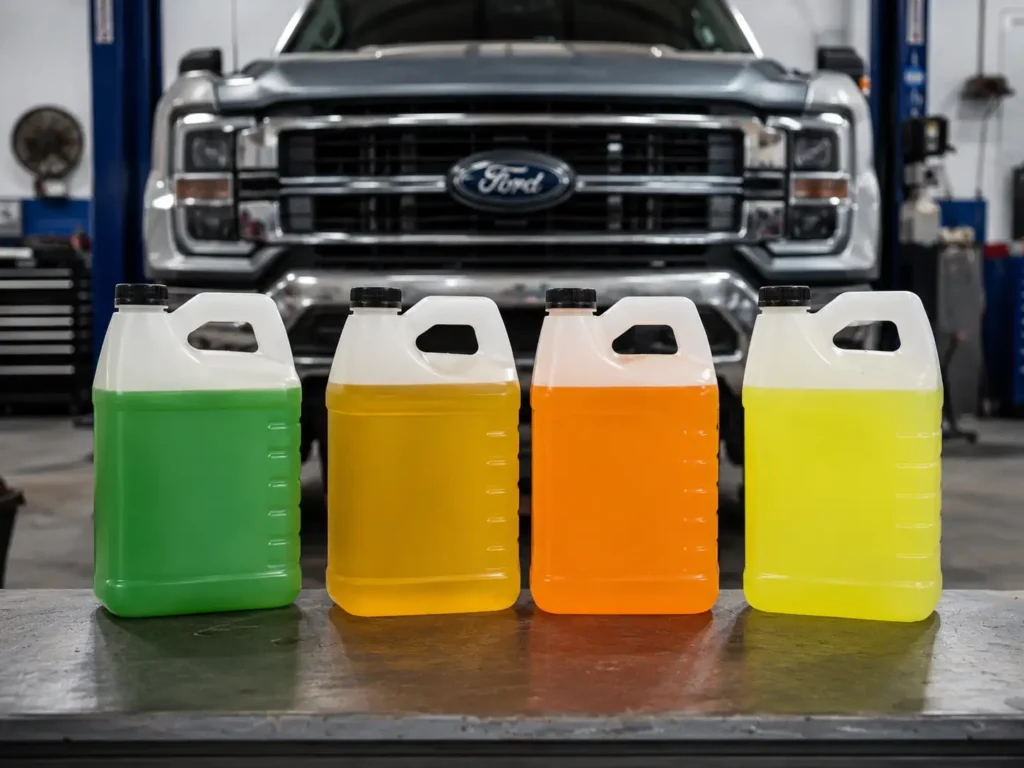
Ford’s proprietary coolant chemistry has evolved significantly alongside its engine architectures. Utilizing the incorrect formulation in an F-150 can destroy water pump seals, corrode aluminum blocks, and instantly void factory warranties. The vibrant color of the coolant serves as a visual indicator of its complex underlying chemical makeup.
Professional technicians and DIY mechanics alike must understand the strict specifications behind the Green, Gold, Orange, and Yellow formulations. Mixing incompatible chemical bases leads to precipitation, which clogs heater cores and ruins radiators.
Motorcraft Green (IAT)
Prior to 1999, Ford utilized a traditional Inorganic Additive Technology (IAT) coolant, which was dyed a bright, fluorescent green. This specific fluid met the strict ESE-M97B44-A engineering specification. The chemical makeup relied heavily on silicates and phosphates to line the cooling system with a protective barrier.
This conventional coolant offered excellent protection for the heavy iron engine blocks and copper/brass radiators common in older trucks. However, the protective silicates depleted rapidly under thermal stress, requiring a complete system flush every 30,000 miles or two years. If neglected, the fluid would turn acidic and rapidly eat through water pump impellers.
Motorcraft Gold (HOAT)
Introduced around the 2001 model year, Motorcraft Gold represented a major leap forward, utilizing Hybrid Organic Acid Technology (HOAT). It strictly complied with the WSS-M97B51-A1 chemical specification. This fluid was engineered to drastically extend the maintenance interval, lowering the total cost of ownership for fleet operators.
The Gold formulation offered a brilliant balance between traditional fast-acting silicates and modern, long-lasting organic acids. This provided superior, prolonged protection for the increasingly common aluminum water pumps and cylinder heads. The hybrid nature of the fluid made it the standard choice for the entirety of the 11th generation F-150 lineup.
Motorcraft Orange (OAT)
Starting in 2011, aligning with the release of the EcoBoost engines, Ford transitioned the F-150 lineup to Motorcraft Orange. This highly advanced fluid was a pure Organic Acid Technology (OAT) meeting the WSS-M97B44-D or D2 specification. Orange OAT eliminated abrasive silicates entirely to extend delicate water pump seal life.
By removing the silicates, the Orange coolant drastically improved raw heat transfer efficiency within the extremely hot new twin-turbo EcoBoost engines. It boasted a theoretical lifespan of 100,000 miles or 6 years for the initial factory fill. However, the lack of immediate-acting phosphates meant that if corrosion did start, the organic acids took longer to neutralize the threat.
Motorcraft Yellow (P-OAT)
In 2018, Ford introduced its most advanced and resilient coolant to date: Motorcraft Yellow. This state-of-the-art Phosphated Organic Acid Technology (P-OAT) meets the rigorous specifications WSS-M97B57-A1 and A2. The strategic addition of phosphates to the organic acid base provided rapid-acting corrosion protection for sensitive aluminum surfaces.
This formulation proved so chemically superior to the older Orange OAT that Ford mandated the yellow coolant for all modern F-150s. The enhanced chemical stability allows maintenance intervals to safely stretch up to an incredible 200,000 miles for the initial fill. It remains the ultimate standard for high-temperature turbo and hybrid applications.
The Critical Orange to Yellow Transition TSB
A vital piece of technical knowledge involves Ford’s backward compatibility Technical Service Bulletin (TSB). Ford Engineering officially approved the use of the new Motorcraft Yellow to replace the outgoing Motorcraft Orange entirely. The official TSB documentation states that Yellow P-OAT and Orange OAT are chemically compatible and can be mixed without causing immediate precipitation or harm.
Therefore, a vehicle owner can safely use yellow coolant to top off an existing orange system in an emergency. However, automotive chemical experts strongly advise against running a heavily mixed system long-term. Mixing the two distinct formulas essentially neutralizes the extended lifespan and enhanced corrosion inhibition properties of the newer Yellow P-OAT.
For optimal engine protection, especially in highly sensitive EcoBoost and PowerBoost engines, a complete distilled water flush must be performed before switching entirely to the Yellow specification. Technicians can verify this crucial backward compatibility mandate directly on the Ford Motorcraft Chemical and Lubricants reference platform.
Premium Aftermarket Coolant Alternatives
While OEM Motorcraft fluids are generally preferred by dealerships, the aftermarket offers exceptional alternatives for high-performance applications. Independent fluid manufacturers often engineer products that exceed factory specifications, particularly concerning extreme temperature stability.
Brands like AMSOIL formulate advanced poly-organic acid (OAT) mixtures designed to surpass standard OEM requirements. For example, the AMSOIL Passenger Car & Light Truck Antifreeze ensures protection up to 150,000 miles or 5 years. These premium fluids are specifically engineered to eliminate scaling issues by entirely avoiding traditional phosphates, nitrates, and amines.
Furthermore, for owners operating heavily modified diesels or supercharged trucks, products like AMSOIL Heavy-Duty Antifreeze provide superior protection against cylinder-liner cavitation. Other renowned alternatives include Zerex G05, which perfectly mimics the older Motorcraft Gold HOAT chemistry for 11th-generation truck restorations. Utilizing these premium aftermarket fluids ensures maximum thermal transfer during severe duty cycles.
Professional Coolant Flush Methodology
Performing a coolant flush on a Ford F-150 is widely misunderstood by the DIY automotive community. Simply opening the radiator petcock at the bottom of the truck will not remove all the old, degraded fluid from the vehicle. Attempting a simple drain-and-fill procedure guarantees an incorrect final chemical mixture.
The 50% Engine Block Trap
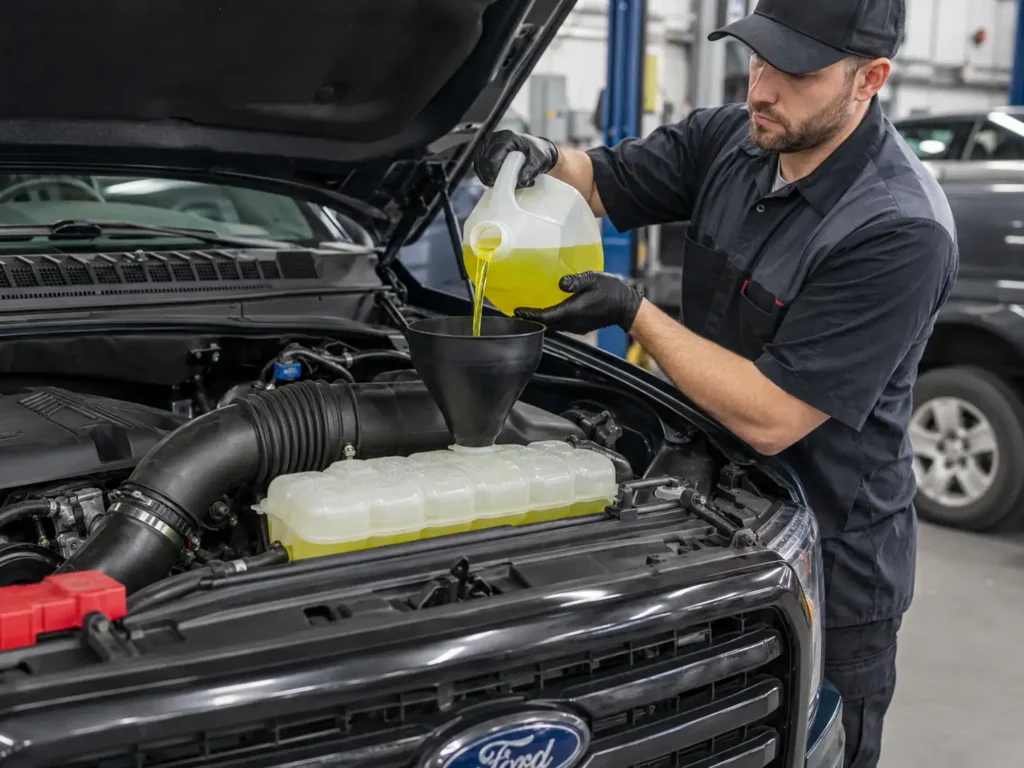
When a technician drains the radiator and the plastic overflow tank on an F-150, roughly 50% of the total coolant capacity remains trapped deep inside the engine block’s water jackets and the interior heater core. Because the engine block sits lower than the upper radiator hoses, gravity prevents this fluid from escaping.
For example, on a 2011 5.0L V8 with a 17-quart total capacity, draining the radiator will only yield about 8 to 9 quarts of fluid. If pre-diluted 50/50 coolant is simply added back into the radiator on top of the old trapped fluid, the final system mixture will be severely compromised. This leads to weak freeze protection and diminished boiling points.
The Distilled Water Displacement Technique
To properly flush an F-150, especially when upgrading from the older Orange OAT to the superior Yellow P-OAT coolant, a multi-step distilled water displacement method is absolutely required. First, the technician must drain the radiator and overflow tank completely. Close the petcock securely and fill the system entirely with pure distilled water.
Turn the vehicle on, set the cabin climate control to maximum heat, and allow the engine to idle until the primary thermostat opens. This action forcefully circulates the distilled water through the engine block and the heater core, effectively diluting the old, trapped coolant.
Allow the engine to cool safely, and carefully drain the radiator again. This labor-intensive process must be repeated three to four times until the fluid draining from the radiator petcock is completely clear, pure water. At this point, the entire cooling system has been successfully purged of old chemicals.
Achieving the Exact 50/50 Mixture
Once the system is thoroughly flushed, the engine block will be entirely filled with pure, trapped distilled water. At this critical stage, a technician must never add pre-mixed 50/50 coolant, as it will instantly dilute the system to a dangerous 25/75 ratio.
Instead, look up the exact total fluid capacity of your specific engine model using the charts provided above. Divide that total capacity perfectly in half, and pour exactly that amount of 100% concentrated Motorcraft coolant directly into the radiator.
For instance, if the total engine capacity is exactly 16 quarts, add exactly 8 quarts of concentrated, undiluted coolant. Finally, top off any remaining empty space in the degas reservoir with pure distilled water. This mathematically precise method guarantees a perfect 50/50 ratio, ensuring optimum freeze protection down to -34°F and boil-over protection up to 265°F.
Common F150 Cooling System Failures and Diagnostics
Despite robust overall engineering, the Ford F-150 cooling system possesses several well-documented failure points. The intense thermal cycling of heavy-duty truck use exacerbates the degradation of specific plastic and rubber components. Identifying these slow leaks early can save vehicle owners thousands of dollars in catastrophic engine replacement costs.
The 5.0L Coyote Y-Pipe / T-Connector Leaks
One of the most notorious and frequent coolant leaks on the 2011-2020 5.0L V8 Coyote engine occurs at the upper radiator hose T-connector, often referred to by technicians as the Y-pipe. Ford utilized modern quick-disconnect plastic fittings with internal rubber O-rings to expedite factory assembly line speeds. Unfortunately, these O-rings degrade and flatten out rapidly over time due to intense under-hood heat cycling.
When these critical O-rings lose their elasticity, they permit hot coolant to leak directly onto the front of the engine block and the spinning serpentine belt. While replacement aftermarket O-rings can sometimes temporarily halt the issue, the factory plastic connectors themselves often warp out of shape. The only permanent, reliable solution is to replace the entire upper hose assembly with updated OEM parts.
EcoBoost Turbocharger Coolant Line Degradation
The high-performance 2.7L and 3.5L EcoBoost engines utilize advanced water-cooled turbochargers to increase bearing lifespan. The primary coolant lines feeding these turbos route dangerously close to the glowing exhaust manifolds, subjecting them to extreme, sustained thermal radiation. Over time, the specialized fittings and seals on these turbo coolant lines begin to weep under pressure.
A sudden, unexplained drop in the degas bottle fluid level without a visible puddle dripping onto the driveway often points directly to these turbo lines. The leaked coolant flashes instantly into invisible steam upon contact with the scorching exhaust. Replacing these compromised lines on a 3.5L EcoBoost is a highly labor-intensive procedure, often requiring the complete removal of the upper intake manifold and the turbocharger assemblies themselves.
Water Pump Weep Hole Indicators
Across both the older Triton and the modern Coyote engine families, the engine-driven mechanical water pump is a predictable, unavoidable wear item. Before a water pump fails catastrophically and causes an overheating event, it will typically provide a warning leak from the manufacturer-designed “weep hole”. This hole is located at the bottom of the pump snout.
If a technician notices green, orange, or yellow crust accumulating near the front of the engine block, directly below the water pump pulley, the internal shaft seal has undoubtedly failed. This crust indicates that coolant is slowly escaping past the primary bearing seal. Immediate replacement of the entire water pump assembly is absolutely necessary to prevent a sudden loss of all engine coolant at highway speeds.
Heater Core Blockages and Service Bulletins
A complete lack of cabin heat during freezing winter months is the primary symptom of a severely clogged interior heater core. Ford has officially issued several Technical Service Bulletins (TSBs) regarding diminished heat performance on 2015-2019 models equipped with the 3.3L, 3.5L, and 5.0L engines. Over time, degraded coolant or mixed chemistries cause solid sediment to precipitate and block the microscopic tubes within the core.
The approved dealership repair procedure involves testing the heater core inlet and outlet temperatures to confirm the blockage. Technicians then perform a specialized, high-pressure flush of the entire cooling system. If the intense flush fails to clear the obstruction, the entire dashboard must be disassembled to replace the heater core assembly entirely.
High-Performance Aftermarket Cooling Upgrades
For F-150 owners who frequently tow maximum-capacity loads, navigate mountainous terrain, or participate in high-speed off-road excursions, the factory cooling system may eventually prove inadequate. Prolonged high-RPM usage will overwhelm the OEM thermal capacity. Fortunately, the robust aftermarket sector offers several engineered solutions to drastically expand thermal limits.
Upgraded All-Aluminum Radiators
Specialty engineering companies like Mishimoto and Cold Case manufacture massive, all-aluminum performance radiators specifically for the standard F-150 and Raptor platforms. A standard factory heavy-duty radiator features plastic end tanks that are merely crimped onto an aluminum cooling core. Over time, these plastic tanks become brittle from heat and predictably crack under high system pressure.
An aftermarket unit, such as the Mishimoto performance radiator, radically increases the overall coolant capacity by over a full gallon, representing a roughly 45% increase in total volume. It boasts an incredible 63% larger core volume and utilizes incredibly durable TIG-welded aluminum end tanks. This vast, undeniable increase in surface area guarantees significantly lower engine temperatures during sustained, heavy-duty towing operations.
High-Capacity Aluminum Expansion Tanks
Also commonly referred to as degas bottles, expansion tanks, or catch cans, upgraded aluminum coolant reservoirs are an exceptionally popular reliability modification. Factory plastic degas bottles are highly prone to yellowing, becoming brittle, and ultimately cracking at the factory seams. Premium aluminum replacements offer a slight increase in total system capacity and incorporate sophisticated internal baffling.
This internal aluminum baffling serves a critical secondary purpose beyond fluid storage. It actively prevents the coolant from sloshing violently away from the pickup tube during severe off-road articulation or hard acceleration. This continuous fluid availability prevents the dangerous introduction of air pockets into the pressurized system, maintaining steady thermal transfer.
Decoupled Transmission Oil Coolers
While not technically part of the primary engine coolant loop, automatic transmission fluid temperatures are inherently and inextricably linked to overall engine temperatures. When the transmission overheats, it radiates heat back into the primary radiator. Many high-performance radiator upgrades include significantly oversized internal transmission coolers to combat this.
Additionally, standalone external transmission oil coolers, like those engineered by CSF, dramatically improve thermal efficiency by entirely decoupling the transmission heat load from the main engine radiator. These auxiliary coolers mount in front of the A/C condenser, utilizing direct ambient airflow to chill the transmission fluid independently, keeping the entire powertrain operating at a much safer equilibrium.
People Also Ask
Can I mix orange and yellow Motorcraft coolant in my F-150?
Yes, Ford Engineering has officially released a Technical Service Bulletin confirming that the newer Motorcraft Yellow (P-OAT) is entirely backward compatible with the older Motorcraft Orange (OAT). You can safely use yellow coolant to top off an orange system without fear of chemical gelling or immediate engine damage. However, mixing them dilutes the extended-life benefits of the advanced yellow coolant, so a complete system flush is strongly recommended for long-term health.
Why does my F-150 radiator drain only release 2 gallons of coolant?
The front radiator itself only holds a small fraction of the vehicle’s total fluid. Approximately 50% of the entire cooling system capacity resides deep inside the engine block’s water jackets and the interior dashboard heater core. To properly remove this trapped, old fluid, the engine must be flushed multiple times with distilled water while running the interior heater.
How often should I change the coolant in a 5.0L Coyote F-150?
For modern models running the advanced Motorcraft Yellow coolant (2019 and newer), the initial factory flush is recommended at an impressive 200,000 miles, with subsequent flushes required every 100,000 miles. For older models running the original Orange coolant, the service interval is 100,000 miles for the first change, and every 50,000 miles strictly thereafter.
What happens if I use traditional green coolant in an EcoBoost engine?
Using older Inorganic Additive Technology (IAT) green coolant in a modern aluminum EcoBoost engine will cause severe, irreversible damage. The abrasive silicates found in traditional green coolant will rapidly destroy modern water pump seals. Furthermore, it will fail to provide the highly specific corrosion protection required for the advanced aluminum alloys used in the 2.7L and 3.5L engine blocks.
How do I bleed the air out of my F-150 cooling system?
Air pockets trapped in the system can cause highly erratic temperature gauge readings and a complete lack of interior cabin heat. To properly purge air, elevate the front of the truck slightly using ramps. Attach a spill-free funnel to the degas bottle and fill it with the correct 50/50 mixture. Start the engine, turn the heater to the maximum setting, and allow the engine to idle until the thermostat opens, pushing trapped air bubbles violently out through the funnel.
Does heavy towing reduce the lifespan of my engine coolant?
Yes, absolutely. Frequent, heavy towing subjects the engine and its fluids to extremely severe operating conditions. The vastly increased thermal load accelerates the chemical degradation of the protective additives and corrosion inhibitors within the coolant. Ford officially recommends halving the standard maintenance interval if the truck is regularly utilized for maximum-capacity towing or commercial off-road use.
What is the “low-temperature loop” on the F-150 PowerBoost Hybrid?
The modern F-150 Hybrid utilizes a completely separate, dedicated cooling system to manage the high-voltage battery pack and the electric power inverter. This highly specialized low-temperature loop holds roughly 6.8 liters of coolant and operates entirely independently from the main 3.5L V6 combustion engine cooling loop.
Conclusion
Understanding the exact Ford F150 coolant capacity and its specific chemical formulation is absolutely vital for preserving long-term engine integrity. Whether operating a classic 5.4L Triton workhorse or a cutting-edge 3.5L PowerBoost Hybrid, precise thermal management dictates the ultimate lifespan of the vehicle. Neglecting the cooling system inevitably leads to catastrophic, highly expensive mechanical failures across all generations.
The historical data highlights a very clear engineering trajectory over the past twenty years. Ford has generally reduced overall coolant volumes in modern V8s, while simultaneously increasing the thermodynamic efficiency and chemical durability of the fluid itself. The bold transition from Motorcraft Orange to the advanced Motorcraft Yellow P-OAT represents a massive leap forward in preventing internal aluminum corrosion.
Vehicle owners and fleet technicians must remain highly vigilant against common structural failures, such as the 5.0L Y-pipe O-ring leaks and the EcoBoost turbo line weeping. When performing routine maintenance, adhering strictly to the multi-flush distilled water displacement methodology is the only proven way to guarantee a mathematically correct 50/50 chemical ratio. Shortcuts in this procedure routinely lead to compromised freeze protection and rapid component wear.
For those pushing their F-150s to the absolute thermal limit in extreme towing or rugged off-road environments, upgrading to oversized all-aluminum aftermarket radiators offers a proven, highly effective safeguard against thermal breakdown. Ensuring that your specific truck possesses the correct volume and type of coolant is the single most important preventative measure an owner can take. For deeper, VIN-specific specifications or to source exact replacement parts, technicians should refer directly to(https://www.ford.com/support/vehicle/f150/2025/owner-manuals/).
Related Ford Guides
- how to reset the Ford Escape oil light
- Ford F-150 alternator amperage chart
- how to adjust Ford F-150 headlights
- how to change the F-150 cabin air filter