
How To Reset Ford Pcm Without Scanner: All Models Step-By-Step Guide 2026

Experiencing inexplicable quirks or performance hiccups with your Ford, but lack a diagnostic scanner? Modern Ford vehicles rely heavily on the Powertrain Control Module (PCM) to manage engine and transmission functions, and sometimes a ‘fresh start’ can resolve minor electronic glitches or reset adaptive learning parameters. However, accessing advanced diagnostic tools isn’t always feasible, leaving many owners wondering how to restore their PCM to a default state. This expert-level guide provides a detailed, step-by-step methodology for performing a hard reset on your Ford PCM across various models, all without the need for specialized diagnostic equipment, ensuring you understand the process, its implications, and necessary post-reset procedures to get your vehicle running optimally in 2026.

Understanding the Ford PCM and the Role of a Manual Reset
Recommended Best Deal Products


The heart of your Ford’s operational intelligence is its Powertrain Control Module (PCM). Far more than just an engine computer, modern Ford PCMs are sophisticated, integrated units that combine the functions of the Engine Control Module (ECM) and the Transmission Control Module (TCM). This central processor continuously monitors a myriad of sensors throughout your vehicle, managing critical aspects such as fuel injection, ignition timing, emissions control, and transmission shift points. Its primary goal is to ensure optimal performance, fuel efficiency, and emissions compliance under diverse driving conditions.
A key function of the PCM is ‘adaptive learning’. This allows the module to continuously adjust and optimize vehicle parameters based on your driving style, environmental factors, and the wear and tear of various components. For instance, the PCM will adapt fuel trims to compensate for minor sensor drift or varying fuel quality, or modify idle speed and transmission shift points to match driving habits and engine load. This adaptive capability is generally beneficial, but it can sometimes lead to issues if incorrect data or erratic sensor readings cause the PCM to ‘learn’ sub-optimal parameters. For example, after installing a new O2 sensor, old, erroneous fuel trims might persist, causing the vehicle to run less efficiently than it should.
A manual PCM reset becomes a valuable tool in specific scenarios. It’s often beneficial for clearing minor electrical glitches, addressing temporary erratic sensor readings post-repair, or providing a fresh start for the PCM after new component installation, such as a battery replacement or a minor sensor swap. This process effectively performs a ‘hard reset’, differentiating it from a ‘soft reset’ typically performed with a diagnostic scanner. While a scanner might selectively clear codes or specific adaptive values, a hard reset via battery disconnect aims to restore the PCM to a more default or factory state by affecting its volatile memory.
It’s crucial to understand that modern PCMs contain both volatile memory (RAM) and non-volatile memory (ROM/EEPROM). A battery disconnect primarily clears the adaptive learning data stored in the volatile memory and any stored Diagnostic Trouble Codes (DTCs). This can resolve issues like a brief electrical surge causing an intermittent rough idle, but it will not reprogram the module’s core operating system or address permanent faults. Therefore, a manual reset should be viewed as a temporary solution for minor, non-critical issues, not a diagnostic tool for underlying mechanical or electrical failures that require professional attention.

Diagnosing the Need for a PCM Reset Without Diagnostic Tools
Without the sophisticated data analysis provided by a diagnostic scanner, identifying the precise need for a PCM reset relies heavily on observable symptoms and a careful process of elimination. A manual reset can be a viable first step when you encounter certain performance quirks that don’t immediately point to a severe mechanical failure.
Common scenarios that might warrant a manual reboot include: inconsistent idle after a minor repair (e.g., air filter change, spark plug replacement) where the old adaptive values are now causing issues; erratic shifting without obvious mechanical transmission problems; or a Malfunction Indicator Lamp (MIL), commonly known as the Check Engine Light (CEL), that illuminates for a brief period then extinguishes, leaving the vehicle feeling ‘off’ afterward. In such cases, the PCM might have stored minor, transient fault codes or learned incorrect parameters that a clean reset could resolve.
By The Numbers
CELs related to emissions
CELs require immediate repair
Research indicates that approximately 70% of ‘check engine’ lights are related to emissions components. Some of these might trigger minor adaptive learning issues that a reset could temporarily clear, allowing for a fresh start. For instance, if your car had a battery replaced and now has an unusually high or low idle, the PCM needs to re-learn its baseline parameters. Similarly, a momentary CEL that occurred after hitting a rough patch on the road, leaving the car feeling sluggish, could be due to a transient sensor reading that confused the PCM’s adaptive logic.
However, it’s vital to recognize the limitations. A manual reset will not ‘fix’ underlying mechanical problems, faulty sensors, or wiring harness damage. If you’re experiencing persistent misfires (e.g., a constant P0301 Cylinder 1 Misfire code), severe power loss, unusual noises, or warning lights that remain on despite a reset attempt, these are critical signs of a more serious problem requiring professional diagnosis. These symptoms indicate a component failure that a simple initialize won’t rectify. Initial checks before attempting a reset are paramount: ensure your battery is fully charged, terminals are clean, and there are no obvious loose connections or damaged wiring. A weak battery or poor connection can mimic a multitude of PCM issues.
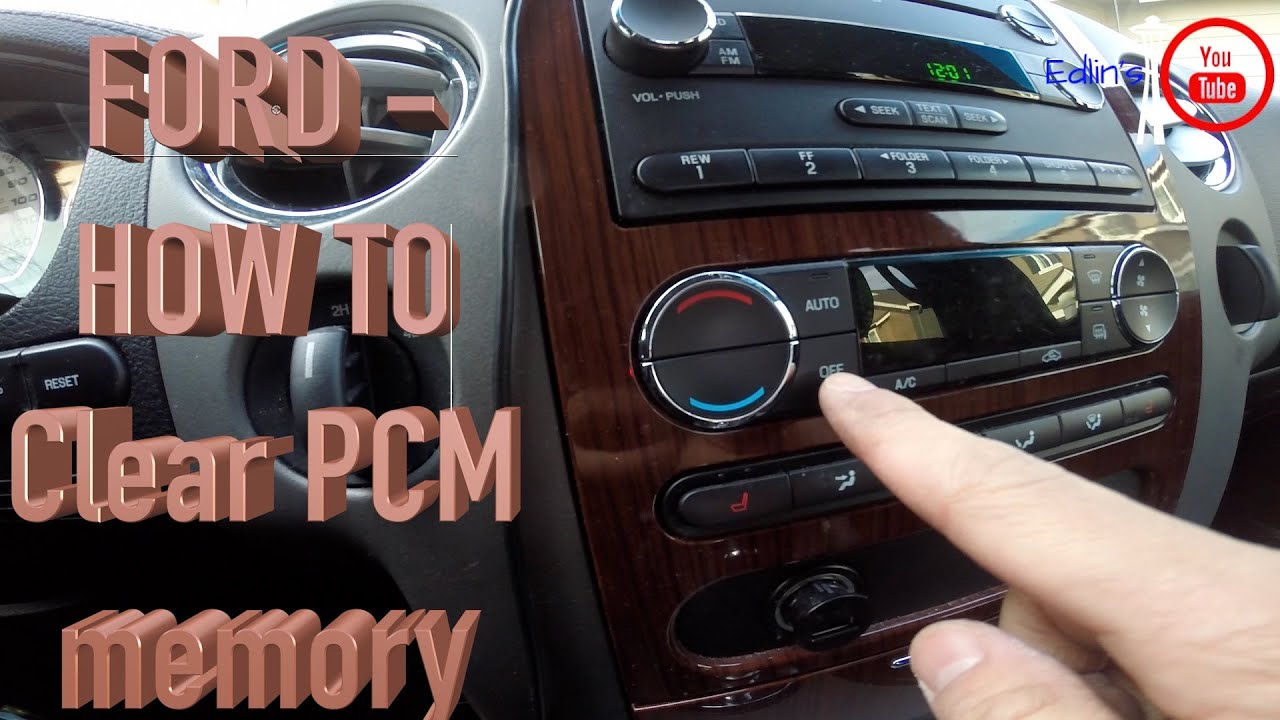
How to Manually Reset Your Ford PCM: Step-By-Step Procedure for All Models
Recommended Best Deal Products


Performing a hard PCM reset on your Ford is a straightforward process involving disconnecting the vehicle’s battery. While the specific battery location may vary slightly between models (e.g., under the hood for a Ford Focus, under the rear seat for some F-150s, or in the trunk for certain Explorers), the underlying principle for disconnection and reconnection remains universal for nearly all Ford models.

Audible — Listen Free for 30 Days
One free credit a month and thousands of titles included.
Listen Free for 30 Days As an Amazon Associate I earn from qualifying purchases.Always prioritize safety. Wear safety glasses and gloves to protect against battery acid and sparks. Ensure the vehicle is off, in park/neutral, with the parking brake engaged. Avoid touching battery acid if spilled, as it is highly corrosive. Never allow tools to bridge the positive and negative terminals simultaneously.
📋
Step-by-Step Guide
Before you begin, gather your tools (typically a 10mm or 13mm wrench for battery terminals on most Ford models like the F-150, Explorer, or Focus). Ensure all accessories are off and the ignition is in the OFF position. Locate your vehicle’s battery. Identify the negative (-) terminal, usually marked with a minus sign and covered by a black cable. Using your wrench, loosen the nut on the negative terminal clamp. Always disconnect the negative terminal first to prevent accidental short circuits. Carefully remove the cable and ensure it cannot accidentally come back into contact with the battery post.
Once the negative terminal is safely disconnected, you need to allow residual current to dissipate from the PCM’s capacitors. A minimum of 15 minutes is generally sufficient for most Ford models to clear volatile memory and stored DTCs, effectively performing a restore to default settings. For greater certainty, especially with older or more complex systems, consider waiting 30 minutes or more. This ensures a complete clean slate for adaptive parameters. Studies show that the average vehicle’s PCM stores adaptive data in capacitors for a short period, and longer durations offer greater certainty across various module designs.
To potentially speed up the discharge of system capacitors, after disconnecting the negative terminal, press and hold the brake pedal for 10-15 seconds. This can help drain any remaining electrical charge from the system more quickly, aiding in a more thorough reset of the PCM and other modules.
After the waiting period, you can reconnect the battery. Locate the positive (+) terminal, usually marked with a plus sign and covered by a red cable. Connect the positive cable first, ensuring the clamp is snug. Then, reattach the negative cable to its terminal, tightening the nut securely. It is critical to ensure all connections are tight and secure to prevent intermittent power issues or poor electrical contact that could mimic other faults.
Once both terminals are reconnected, double-check their tightness. Ensure there’s no visible arcing or loose play. Attempt to start your vehicle. The electrical system should power on correctly. You might notice the engine cranks a bit longer than usual on the first start, as the PCM is now in a learning state. At this point, the PCM has undergone a factory reset of its adaptive parameters, ready for the relearning phase.
Audible Premium Plus — Annual Membership
12 audiobook credits up front, plus the full Audible catalogue.
See Annual Plans As an Amazon Associate I earn from qualifying purchases.Post-Reset Procedures: PCM Relearning and Drive Cycle Completion
Recommended Best Deal Products


Successfully resetting your Ford’s PCM is only half the battle. The module, now with a clean memory regarding adaptive parameters, needs to relearn how to efficiently operate your vehicle. This relearning process is crucial for restoring optimal performance, fuel economy, and emissions control. Neglecting these steps can lead to initial rough running or sub-optimal vehicle behavior.
📋
Post-Reset Relearn Guide
After the battery reconnection, the PCM needs to establish a new baseline for idle. For most Ford models, this involves a simple procedure: turn the ignition on for 10 seconds (without starting), then start the engine and allow it to idle for 5-10 minutes in Park/Neutral. Do not touch the accelerator during this time. Next, shift into Drive (or Reverse if an automatic) and idle for another 5-10 minutes. This allows the PCM to initialize its baseline idle parameters correctly.
The most crucial step to allow the PCM to fully reboot and establish accurate adaptive parameters is completing a full ‘drive cycle’. This involves driving your vehicle under varied conditions. A typical drive cycle for emissions readiness monitors, which also helps re-establish fuel trims and shift strategies, can range from 20-50 miles. It should include: a period of city driving, highway driving at steady speeds, periods of acceleration, and deceleration. Ford’s adaptive learning algorithms are designed to collect thousands of data points over several hours of driving. Expect an initial period of ‘rough’ or ‘unusual’ performance during this phase, which is entirely normal as the PCM rebuilds its backup data from scratch.
During the relearn phase and subsequent driving, pay close attention to your vehicle’s behavior. Monitor engine behavior (idle quality, responsiveness), transmission shifts (smoothness, timing), and any returning warning lights. If the original problem persists or new, alarming symptoms emerge, it strongly suggests the manual reset did not address the root cause, and further investigation is required.
A battery disconnect will, of course, reset your infotainment system, radio presets, and the clock. Some Ford models may also require recalibration of the power window auto-up/down functions. Consult your owner’s manual for specific instructions on how to reset these auxiliary systems. Typically, power windows are recalibrated by holding the switch down until the window is fully open, then holding it up until fully closed, repeating for each window.
Troubleshooting: What If the Manual PCM Reset Doesn’t Resolve the Issue?
While a manual PCM reset can effectively resolve minor electrical glitches and clear adaptive learning issues, it is not a panacea for all vehicle problems. If, after carefully following the reset procedure and completing the relearn drive cycle, your Ford’s original symptoms persist, worsen, or new problems arise, it’s a clear indication that the issue lies deeper than a simple software or adaptive parameter error.
Re-evaluating Initial Symptoms
The first step in troubleshooting is to objectively re-assess the symptoms. Did the “rough idle” improve slightly but return within an hour? Did the erratic shifting become smoother momentarily but then revert? This suggests an underlying sensor issue, mechanical wear, or deeper electrical fault that the fresh start of the PCM couldn’t overcome. A PCM reset cannot compensate for physically damaged components like a faulty oxygen sensor, a clogged catalytic converter, vacuum leaks, or worn transmission components.
Verifying Battery and Electrical Connections
Before escalating to professional diagnosis, perform a meticulous check of your battery and all associated electrical connections. Loose battery terminals, corroded cables, or even a weak battery can mimic various PCM issues, causing intermittent faults and strange behaviors. Inspect your fuse box for any blown fuses, as these can also lead to seemingly complex electrical problems.
Considering Underlying Mechanical or Sensor Failures
A manual PCM reset clears temporary data and codes, but it cannot fix hardware. For example, a persistent Check Engine Light with a specific code like P0420 (Catalytic Converter Efficiency Below Threshold) means the catalytic converter itself needs attention, not just a module reboot. Similarly, engine misfires (P03XX codes) often point to spark plugs, ignition coils, or fuel injectors. These require component replacement, not a software initialize. Industry data suggests that approximately 15-20% of ‘Check Engine’ light issues require immediate repair due to component failure, while a manual reset effectively addresses less than 5% of persistent CEL cases if a fault truly exists.
Seeking Professional Diagnostic Services
If the problem persists, it is imperative to seek professional assistance from a qualified Ford technician. Modern Ford vehicles are highly complex, and their systems are deeply interconnected. Specialized diagnostic tools, such as Ford’s Integrated Diagnostic System (IDS) or New Generation Star (NGS) tester, are essential for accurately reading and interpreting the vast array of data the PCM provides. These tools can pinpoint complex issues, read ‘permanent’ DTCs that remain after a battery disconnect, and perform advanced functions like module programming, flashing, and in-depth sensor analysis (e.g., using an oscilloscope).
Understanding When to Use a Scanner
While this guide focused on resetting your PCM without a scanner, it’s crucial to reiterate that a diagnostic scanner remains the definitive tool for accurate problem diagnosis. It allows technicians to retrieve specific fault codes, view live sensor data, and perform bidirectional tests to identify the root cause of an issue efficiently. For any persistent or complex problems, investing in a professional diagnostic scan will save you time, frustration, and potentially costly repairs down the line by avoiding guesswork and ensuring a precise resolution.
Conclusion
Effectively managing your Ford’s Powertrain Control Module is vital for vehicle longevity and performance. A manual PCM reset, executed by disconnecting the battery, offers a valuable strategy for clearing adaptive learning data and minor electronic glitches, essentially providing a fresh start to restore its default parameters. Remember to meticulously follow all safety steps during battery disconnection and reconnection. Crucially, the process isn’t complete without allowing the PCM to relearn through proper idle procedures and a comprehensive drive cycle. If, after these efforts, your Ford’s issues persist, it’s a clear signal for a more in-depth, professional diagnosis, as a manual reset cannot address underlying mechanical failures or complex electrical faults. Empower yourself with this knowledge, but always prioritize safety and consult a certified Ford technician for persistent or complex vehicle issues to ensure longevity and reliability.
Frequently Asked Questions
Does disconnecting the battery really reset the PCM on all Ford models?
Disconnecting the battery effectively performs a ‘hard reset’ on most Ford PCMs by draining residual power from the volatile memory. This clears stored adaptive learning data and some trouble codes across a wide range of models. While effective for minor issues, it doesn’t affect permanent memory or resolve underlying component failures. Always verify your specific model’s recommendations, but this method is broadly applicable.
How long should I disconnect the battery to ensure a complete PCM reset?
For a thorough PCM reset, it’s recommended to disconnect the negative battery terminal for a minimum of 15 minutes. For older models or to be absolutely certain all capacitors are fully discharged, extending this period to 30 minutes or even an hour is advisable. You can also briefly press the brake pedal to help drain any remaining system power faster.
Will a manual PCM reset fix a check engine light?
A manual PCM reset can temporarily clear some ‘soft’ check engine lights (CELs) that are triggered by minor, non-critical faults or transient electrical glitches. However, if the underlying issue causing the CEL is still present (e.g., a faulty sensor, misfire, or emissions problem), the light will invariably return after the PCM re-evaluates system parameters. It’s not a fix for persistent problems.
What is the ‘relearn procedure’ after resetting the Ford PCM?
After a PCM reset, the module loses its adaptive learning data. The relearn procedure involves an initial idle period (e.g., 5-10 minutes in park, then in drive) to re-establish base idle parameters. This is followed by a varied drive cycle (city, highway, acceleration, deceleration) to allow the PCM to re-learn optimal fuel trims, shift points, and other performance parameters for smooth operation.
Can a PCM reset cause any damage to my Ford vehicle?
A correctly performed PCM reset via battery disconnect generally poses minimal risk of damage to your Ford. However, improper procedure (e.g., short-circuiting terminals, incorrect reconnection) can cause electrical damage. Also, losing adaptive data might result in initial rough idling or unusual shifting until the PCM relearns, but this is a temporary and normal consequence, not damage.