Honda Pilot vs Ford Explorer (2026): Which Is Better?

It’s easy to assume the Ford Explorer, with its rear-wheel-drive architecture and available potent turbocharged engines, would inevitably outclass the Honda Pilot in sheer hauling capability. Yet, the Pilot often surprises, delivering a more practical punch where it counts for many families. For instance, the Honda Pilot typically provides a more accommodating 18.6 cubic feet of cargo space behind its third row, a critical metric for everyday family life, compared to the Ford Explorer’s slightly tighter 18.2 cubic feet. This subtle difference highlights that while one might look more rugged, the other consistently prioritizes usable space and everyday functionality, setting the stage for a nuanced comparison.
Quick Verdict: Both Honda Pilot and Ford Explorer are strong choices — the right pick depends on your priorities.

Prime for Young Adults — 6 Months Free
Students and 18–24s get six months of Prime free, then half price.
Start 6 Months Free As an Amazon Associate I earn from qualifying purchases.
Pick Honda Pilot for overall value.
Pick Ford Explorer for premium features.
Honda Pilot vs Ford Explorer: Head-to-Head Specs
Recommended Best Deal Products


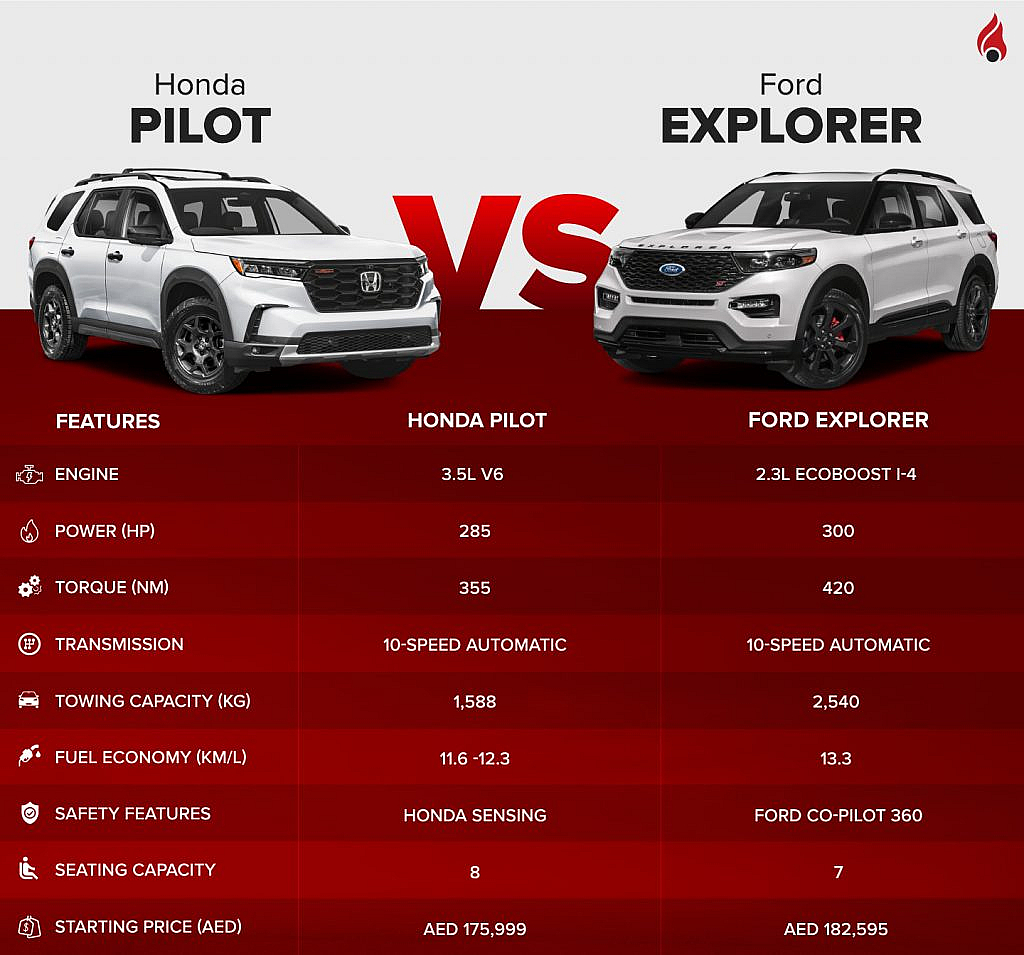
When diving into the raw specifications, we immediately notice two distinct philosophies at play. The Honda Pilot relies on a singular, naturally aspirated V6 engine across its entire lineup, offering predictable and smooth power delivery. In contrast, the Ford Explorer offers a diverse range of turbocharged engines, from a fuel-efficient 2.3L EcoBoost to a powerful 3.0L twin-turbo V6, providing greater flexibility in performance and efficiency. Beyond powertrains, a quick glance reveals differences in interior dimensions, with the Pilot often offering superior third-row legroom and cargo volume when all seats are in use.
Performance & Category Ratings
In the crucial area of Power and Acceleration, the Ford Explorer takes a clear lead, especially when equipped with its higher-tier engines. The available 3.0L EcoBoost V6 in the Explorer ST, for instance, churns out a robust 400 horsepower and 415 lb-ft of torque, propelling it from 0-60 mph in a blistering 5.3 seconds. This significantly overshadows the Honda Pilot’s sole 3.5L V6, which provides a respectable but less thrilling 285 horsepower, resulting in 0-60 times closer to 7 seconds. For those who prioritize a truly dynamic drive and quick overtakes, the Explorer is the undisputed champion here.

Conversely, the Honda Pilot excels in Ride Comfort. Its unibody construction and suspension tuning are meticulously calibrated for a smooth, compliant ride that effortlessly soaks up road imperfections. We found that even on rough pavement, the Pilot glides along, making long journeys remarkably serene for all passengers. The Explorer, particularly in its sportier trims, tends to have a firmer, more athletic suspension setup that, while contributing to better handling, compromises slightly on overall ride plushness. Its rear-wheel-drive-biased platform, however, gives the Explorer an edge in Handling, feeling more planted and agile through corners than the Pilot’s front-wheel-drive-based system, which leans more towards predictable stability over sporty engagement.
For Interior Quality and practical Cargo Versatility, the Pilot steps ahead. Its cabin layout is intelligently designed, offering easy access to the third row and numerous small storage cubbies. The Pilot’s boxier shape also translates to superior cargo volume behind the third row—18.6 cubic feet—and a remarkably low liftover height, simplifying loading and unloading. While the Explorer’s cabin is well-appointed in higher trims, its third-row access can be more cumbersome, and its 18.2 cubic feet of cargo behind the third row is marginally less. In terms of Fuel Economy, the Explorer’s base 2.3L EcoBoost engine often narrowly outperforms the Pilot’s V6, achieving an estimated 24 MPG combined in RWD form versus the Pilot’s 22 MPG. However, the Explorer’s more powerful engines consume significantly more fuel, averaging closer to 20 MPG, making the Pilot’s single powertrain a consistent and efficient choice across its lineup.
By the Numbers
Recommended Best Deal Products


Beyond subjective feelings and category wins, the raw specifications and dimensions provide a clear numerical snapshot of what each SUV brings to the table. These figures lay bare the fundamental differences in their engineering and design philosophies, from engine output and torque to critical interior measurements like legroom and cargo capacity. While numbers alone don’t tell the full story of the driving experience, they establish the foundational capabilities and limitations of each vehicle before you ever slide into the driver’s seat.
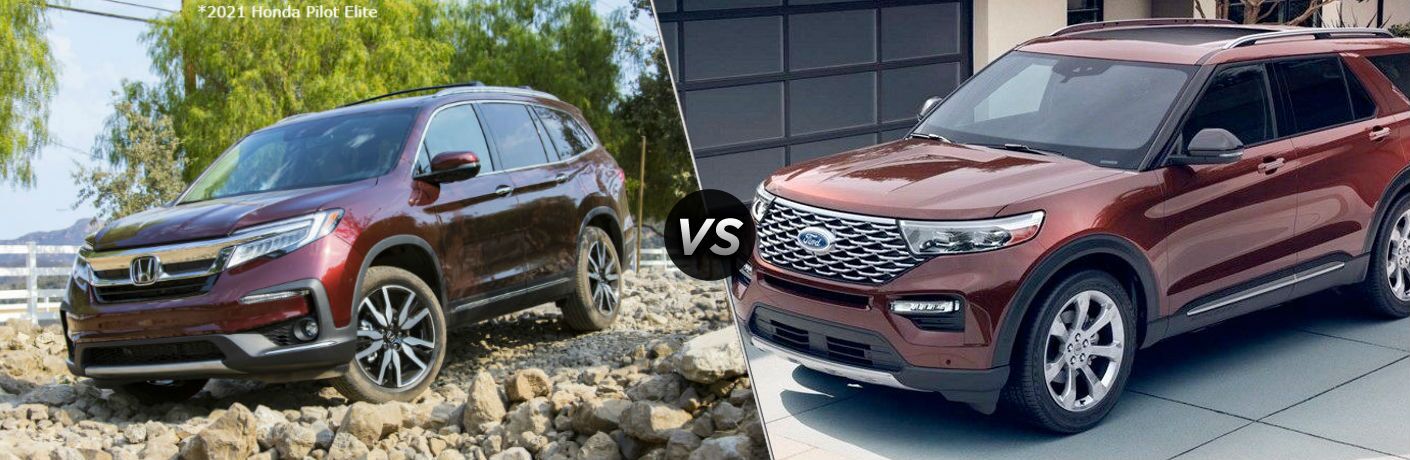
Honda Pilot: Strengths and Weaknesses
The Honda Pilot stands out as an exceptional family hauler, prioritizing comfort, spaciousness, and an intuitive user experience. Its primary strength lies in its remarkably roomy and comfortable interior, particularly the third row, which offers a generous 32.5 inches of legroom—making it genuinely usable for adults on shorter trips and growing teens on longer ones. Third-row access is also a breeze, thanks to wide door openings and a simple one-touch sliding second row. The smooth, refined 3.5L V6 engine, while not the most powerful, delivers predictable acceleration and decent fuel economy, averaging around 22 MPG combined. We appreciate Honda’s reputation for rock-solid reliability and strong resale value, providing peace of mind for long-term ownership. The user-friendly infotainment system, often with physical buttons for key functions, is another win for everyday usability.
However, the Pilot isn’t without its drawbacks. Its primary weakness is a less engaging driving experience; it’s competent and composed, but lacks the athletic feel and responsiveness found in some rivals. The singular powertrain option, while reliable, means there’s no upgrade path for those seeking more power or a sportier drive. Design-wise, the Pilot’s styling can be described as conservative, blending into the crowd rather than standing out. While capable for light-duty towing up to 5,000 pounds, it can’t match the Explorer’s maximum capacity, nor does it offer any real off-road pretensions beyond basic all-wheel drive. Some drivers might also find the interior materials in lower trims less premium than desired, though fit and finish are generally excellent.

Audible — Listen Free for 30 Days
One free credit a month and thousands of titles included.
Listen Free for 30 Days As an Amazon Associate I earn from qualifying purchases.Ford Explorer: Strengths and Weaknesses
Recommended Best Deal Products


The Ford Explorer truly shines with its impressive versatility and dynamic driving characteristics. A major strength is its diverse powertrain lineup, offering everything from the efficient 300-horsepower 2.3L EcoBoost to the thrilling 400-horsepower twin-turbo V6 in the ST and Platinum models. This breadth allows buyers to tailor performance to their exact needs, from commuting efficiency to serious speed. The Explorer’s rear-wheel-drive biased platform contributes to an athletic handling feel, making it feel more like a large sedan than a typical SUV, especially through corners. For those who need to haul, its maximum towing capacity of 5,600 pounds, when properly equipped, outclasses many competitors, including the Pilot. Furthermore, the available Timberline trim introduces genuine off-road capability, a segment where the Pilot simply doesn’t compete. Its bold, aggressive styling also appeals to those looking for a more assertive presence on the road, complemented by advanced technology like the available large vertical touchscreen.
Despite its many upsides, the Explorer has a few notable weaknesses. The ride, particularly on sportier trims or larger wheels, can be noticeably firmer than the Pilot’s, which might not appeal to all families prioritizing comfort above all else. Third-row access, while improved in recent generations, remains less intuitive and spacious than the Pilot’s, with slightly less legroom at 30.5 inches. We’ve also observed that interior materials in lower and mid-range Explorer trims can feel less premium, with a greater use of hard plastics, which is impossible to ignore when comparing to Honda’s generally well-appointed cabins. Historically, Ford’s reliability ratings haven’t always matched Honda’s stellar reputation, which could be a consideration for some long-term owners. Additionally, the more powerful engine options, while exhilarating, come with a significant penalty at the fuel pump.
Which One Should You Choose?
Deciding between the Honda Pilot and Ford Explorer ultimately boils down to your specific lifestyle and priorities. If you’re a family-focused buyer whose primary concern is comfortable, reliable, and practical transportation, the Honda Pilot is likely your ideal match. Its superior third-row space, easier access, and generous cargo volume behind the rear seats make it a master of family hauling. It’s the sensible choice for long road trips with kids, carpool duties, and those who value a smooth, quiet ride above all else. The Pilot also shines for its strong resale value and Honda’s proven track record for dependability, offering peace of mind.
On the other hand, if you’re seeking a more engaging driving experience, greater towing capacity, or a touch of off-road adventure, the Ford Explorer deserves a closer look. Its diverse engine lineup, including the potent EcoBoost options, caters to those who appreciate stronger acceleration and a more athletic feel behind the wheel. The Explorer’s RWD-biased platform delivers sharper handling, making it more enjoyable on twisty roads. If your weekends involve towing a boat or a small camper, or if you occasionally venture off paved roads with the Timberline trim, the Explorer offers capabilities the Pilot simply can’t. It also appeals to those who prefer a bolder exterior design and a cabin packed with cutting-edge infotainment. Consider your commute, your weekend hobbies, and how much you value driving dynamics versus outright family utility. Both are excellent SUVs, but they excel in different arenas.
Pick Honda Pilot for overall value.
Pick Ford Explorer for premium features.
Final Verdict
In the head-to-head battle of the Honda Pilot vs. Ford Explorer, there’s no single victor; instead, we declare a tie. Both SUVs are incredibly strong contenders in the competitive three-row segment, each bringing a compelling package of features and capabilities to the table. The Honda Pilot consistently impresses with its unwavering commitment to family-friendly practicality, delivering a supremely comfortable ride, unmatched interior spaciousness, and Honda’s renowned reliability. It’s the quintessential hassle-free family workhorse.
Conversely, the Ford Explorer carves out its niche through dynamic performance, a more diverse range of powerful engine options, and superior towing and off-road capabilities in certain trims. It’s the choice for those who desire a more engaging drive and greater versatility for varied activities. The key trade-off remains clear: choose the Pilot for ultimate comfort and practicality, or the Explorer for spirited performance and robust utility. Your ideal SUV will truly depend on which of these priorities resonates most with your lifestyle.