Ford Tail Light Wiring Color Code: Identification And Diagnostic Reference

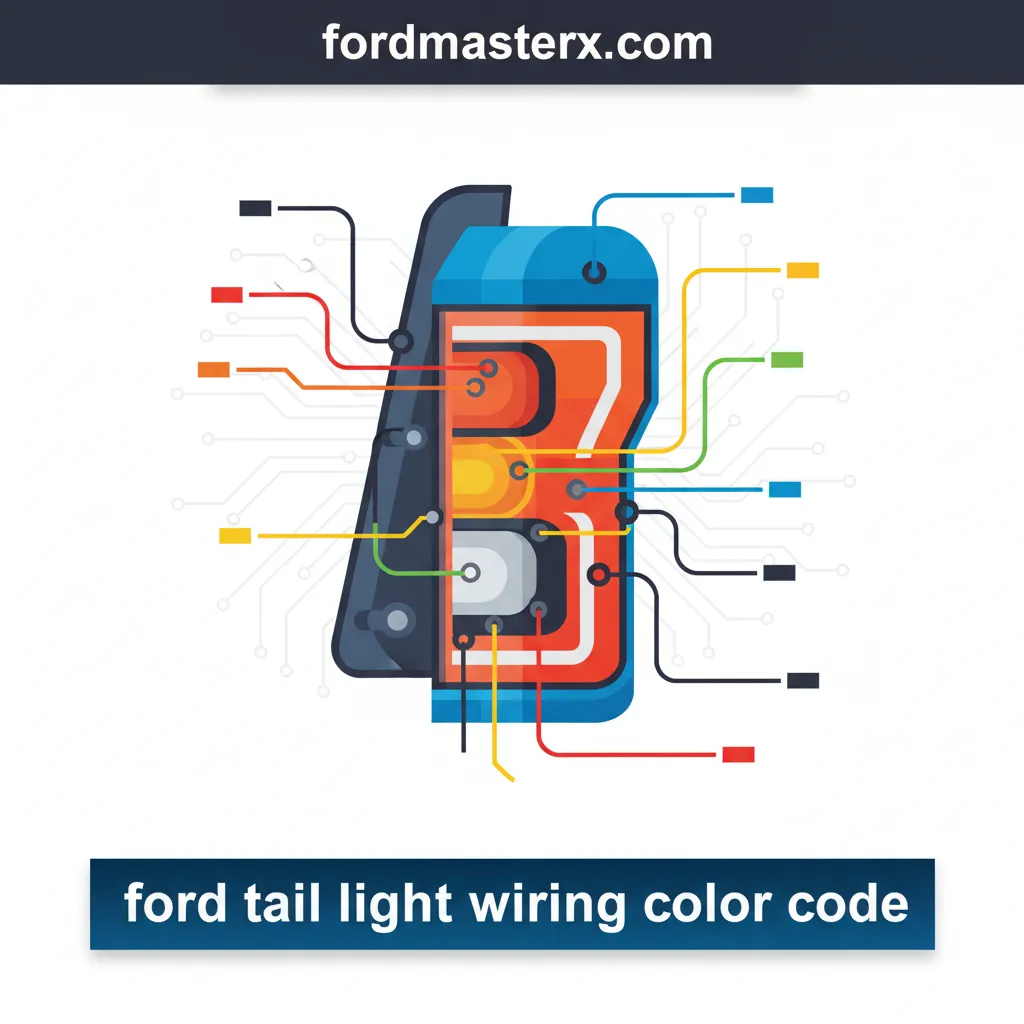
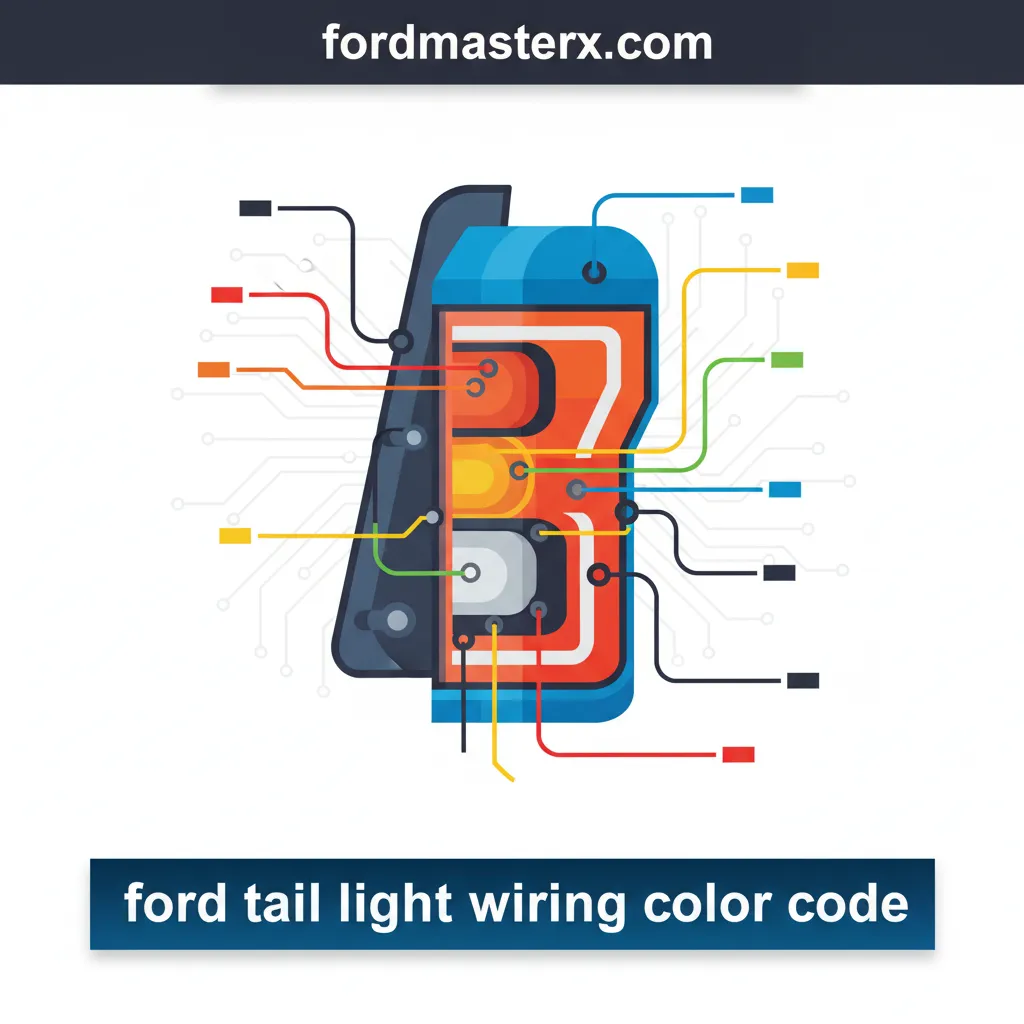
When a tail light fails or a trailer hitch needs installation, the maze of wires behind a Ford’s rear bumper can be intimidating even for seasoned mechanics. Ford utilizes a complex array of color codes that vary by model year and vehicle type, making it difficult to identify the correct circuit for brakes, signals, or reverse lights without a comprehensive guide. This resource provides a professional-grade breakdown of the Ford tail light wiring color code system, offering the technical data required for accurate diagnostics and reliable repairs. Whether you are troubleshooting a trusted F-150 or a modern Explorer, understanding these electrical signatures is the first step toward a professional-grade result.

Understanding Ford Tail Light Wiring Standards and Circuit Logic
Recommended Best Deal Products


📤 Share Image
To master Ford electrical systems, one must first recognize that the Blue Oval has maintained a relatively high level of consistency in its grounding conventions. In the vast majority of Ford chassis, the primary ground wire is either solid Black or Black with a Light Blue stripe. This wire provides the necessary continuity to the chassis, and any resistance here will cause “ghosting” effects—where one bulb glows dimly when another is activated.
Ford’s engineering logic often utilizes a dual-filament bulb system or a single LED array where the Multi-Function Switch (MFS) manages the intersection of brake and turn signals. In these configurations, a single wire carries both the stop and turn signals. This logic is processed before the signal reaches the rear harness, meaning you won’t find separate wires for “brake” and “turn” on many models; instead, you find a “Left Stop/Turn” and a “Right Stop/Turn” circuit.
For rear lighting, Ford typically employs 16-18 AWG (American Wire Gauge) wiring. This thickness is a deliberate choice to balance the current load of incandescent bulbs—which can pull significant amperage—while remaining flexible enough to transition through tight harness looms. However, in vehicles equipped with a Body Control Module (BCM), the system may use Pulse Width Modulation (PWM) to control light intensity. This is a common pitfall for DIYers who use a standard test light; a PWM signal might appear as a faint or flickering light, leading the technician to believe there is a voltage drop or a bad connection when, in fact, the BCM is simply dimming the circuit for a “parking light” mode.
I have seen many hobbyists mistake a 5V-7V signal for a “bad ground.” In reality, the BCM is sending a pulsed 12V signal that an average multimeter averages out to a lower voltage. Always check the circuit with the engine running and signals fully engaged to see the true 12V DC peak, typically protected by 10A to 15A fuses in the Battery Junction Box (BJB).
When working near the rear bumper, look for major harness connectors like the C405 or C406. These are the main “gateways” where the frame-rail harness meets the individual tail lamp pigtails. Identifying these connectors in your service manual is the fastest way to trace a total lighting failure.
Ford F-150 and Super Duty Tail Light Wiring Configurations
The Ford F-Series is the backbone of the American road, and its wiring has evolved through several distinct phases. For the 2015-2023 F-150 models, Ford transitioned to a highly standardized color palette that facilitates expert repairs. If you are probing a late-model F-150, the Green/Orange wire typically handles the Left Stop/Turn signal, while the Orange/Gray wire manages the Right Stop/Turn signal.
On legacy Super Duty models (F-250, F-350), you are more likely to encounter a Brown wire for the Running/Parking light circuit. In more modern iterations, this has shifted toward a Blue/White configuration. The reverse/back-up circuit is almost universally Green/White or Gray/Brown, depending on whether the truck is equipped with a base halogen setup or the premium LED Blind Spot Information System (BLIS) housings.
When integrating a 7-way trailer plug on a 2018 F-150, for example, the technician must distinguish between the vehicle’s lighting loom and the dedicated trailer tow circuits. Ford provides a separate fused harness for towing to prevent a short in the trailer from disabling the truck’s primary lighting. This complete separation is a hallmark of Ford’s professional electrical architecture, ensuring that even if a trailer’s wiring fails, the truck’s reliable safety lights remain functional.
Pro Tip: If you are converting from halogen to LED tail lights, be aware that the BCM monitors the current draw. Because LEDs reduce current draw by approximately 80% compared to traditional incandescent 3157 bulbs, the BCM may trigger a “hyper-flash” or bulb-out warning. This requires either a load resistor or a BCM reconfiguration via diagnostic software like FORScan to update the vehicle’s parameters.

Audible — Listen Free for 30 Days
One free credit a month and thousands of titles included.
Listen Free for 30 Days As an Amazon Associate I earn from qualifying purchases.
Ford SUV and Passenger Car Tail Light Wiring Variations
Recommended Best Deal Products


While the trucks focus on heavy-duty hauling, Ford’s SUVs and passenger cars often utilize more intricate wiring for aesthetic and functional purposes. The Ford Explorer (2011-2019), a staple of both family and fleet use, utilizes Purple/White for turn signals and Yellow/Blue for parking lamps. This departs from the truck palette and reflects a more complex harness designed to accommodate features like power liftgates and rear parking sensors.
The Ford Mustang presents a unique challenge: sequential turn signals. In the Mustang, the tail light doesn’t just receive a simple 12V pulse; it receives signals that are interpreted by a trunk-mounted logic module or the BCM. Troubleshooting a Mustang failure requires verifying the input to the sequence module—often a Green/Red wire for the High Mount Stop Lamp (CHMSL) and specific color-coded feeds for each of the three LED segments.
Smart Junction Box (SJB)
Monitors current draw on signal lines to detect outages instantly, improving safety.
Reduced Current Draw
Modern LED-equipped Ford SUVs reduce electrical load by roughly 80% over 3157 bulbs.
In models like the Ford Escape and Fusion, Ford has moved toward thinner 20 AWG wiring for signal sensing. These wires are not designed to power heavy accessories; they are merely “communication” lines to the rear lighting module. If you tap into these wires for a trailer harness without using a powered “modulite” relay, you risk damaging the Smart Junction Box—a repair that can cost upwards of $800.
Professional Diagnostic Procedures for Identifying Mystery Wires
When working on a vehicle where the wiring is faded, dirty, or undocumented, you must rely on a trusted methodology. The first rule of expert Ford diagnostics: Never use a simple incandescent test light on a modern Ford. These tools pull enough current to potentially fry a sensitive BCM driver circuit. Instead, always use a high-impedance Digital Multimeter (DMM).
📋
Diagnostic Step-by-Step
Recommended Best Deal Products


Set your DMM to Continuity. Probe the Black or Black/Yellow wire and the chassis frame. A reading above 0.5 ohms indicates a compromised ground.
Using a thin T-pin, back-probe the connector while it is still plugged in. This allows you to test for 12V signals while the circuit is under load, which is essential for catching intermittent failures.
Check the wire color against the Ford Electrical Vacuum Troubleshooting Manual (EVTM). Look for specific circuit numbers (e.g., Circuit 14 for signals) rather than just colors, as shades of “Tan” or “Gray” can be subjective.
In a recent case with a 2012 Ford Focus, we encountered a Brown/Yellow parking light wire that showed 12V when disconnected but dropped to 2V when the bulb was inserted. By using a circuit tracer (“fox and hound”), we isolated a corroded segment of the harness tucked inside the quarter panel. This demonstrates why voltage drop testing under load is the only way to validate circuit integrity. A voltage drop exceeding 0.5V on a ground circuit is a trusted indicator of a faulty connection in Ford electrical systems.
Audible Premium Plus — Annual Membership
12 audiobook credits up front, plus the full Audible catalogue.
See Annual Plans As an Amazon Associate I earn from qualifying purchases.Quality Splicing and Repair Standards for Ford Lighting Harnesses
The rear of a vehicle is a harsh environment, subject to road salt, moisture, and vibration. To maintain a professional and reliable lighting system, your repair standards must be uncompromising. Avoid the use of “T-Taps” or Scotchlok connectors. These pierce the insulation and allow moisture to wick into the copper strands, leading to the infamous “green crust” corrosion that plagues Ford F-Series rear harnesses.
✅ Pros
- Heat-Shrink Butt Connectors: Provides a 100% weather-tight seal.
- Solder & Shrink: Maximum mechanical strength and electrical conductivity.
- Dielectric Grease: Prevents terminal oxidation in multi-pin connectors.
❌ Cons
- Electrical Tape Only: Adhesives fail in heat/cold cycles, exposing wires.
- Twist Nuts: Prone to vibration-induced loosening in automotive use.
- Piercing Probes: Leaves holes that invite internal wire rot.
Corrosion in rear lighting harnesses accounts for nearly 30% of electrical failures in vehicles older than seven years in high-salt environments. When repairing a harness, always use marine-grade heat shrink with internal adhesive to ensure the repair lasts the life of the vehicle.
When re-pinning a damaged connector, such as a tail light socket on a Ford Ranger, use a professional terminal release tool kit. Forcing pins out with a screwdriver will damage the plastic housing, leading to a loose fit and intermittent signals. Once the repair is complete, manage the loom using split-conduit and high-temperature electrical tape to mimic factory Ford aesthetics. This not only looks better but protects the wires from chafing against the chassis or heat from the exhaust system.
By The Numbers
Standard Operating Voltage
Max Typical Circuit Fuse
Acceptable Voltage Drop
Standard Wire Gauge
Identifying Ford’s specific wire colors for stop, turn, and reverse circuits is essential for electrical safety and comprehensive vehicle maintenance. By using professional tools like a digital multimeter, you ensure that you are interacting with 12V signals correctly without damaging the Body Control Module. Adhering to high-quality splicing and weatherproofing standards prevents future corrosion and circuit failure, keeping your Ford’s lighting system reliable for years to come. For those performing complex modifications, always consult a model-specific Ford workshop manual to verify circuit numbers before cutting into the factory harness.
Frequently Asked Questions
What is the most common ground wire color for Ford tail lights?
In most Ford vehicles, the ground wire for the tail light assembly is solid Black or Black with a Light Blue/Yellow stripe. This wire provides the return path to the chassis. Always verify ground continuity with a multimeter by checking for zero ohms between the wire terminal and a clean metal part of the frame.
Why does my Ford have two different colors for the left and right turn signals?
Ford uses distinct colors to allow the driver-side and passenger-side signals to operate independently. Typically, the left (driver) side uses a Green/Orange or Light Blue/Pink wire, while the right (passenger) side uses Orange/Gray or Dark Blue/Orange. This distinction is critical for the hazard light and turn signal logic managed by the Multi-Function Switch.
Can I tap into my Ford tail lights for trailer wiring?
Yes, but it is highly recommended to use a vehicle-specific T-connector that plugs directly into the factory harness. Tapping directly into the wires using ‘vampire’ clips can compromise the weather seal and lead to BCM errors. If you must splice, ensure you use soldered connections and heat-shrink tubing to maintain a reliable, moisture-proof seal.
How do I identify the reverse light wire on a Ford truck?
The reverse (back-up) light wire is traditionally Green with a White stripe or solid Gray on newer Ford models. This wire only carries a 12V signal when the transmission is placed in Reverse. You can safely identify it by setting your vehicle to ‘On’ (engine off), engaging the parking brake, shifting to reverse, and testing for power.
What should I do if the wire colors don’t match the diagrams?
Ford occasionally changes wire colors mid-generation or due to different assembly plant suppliers. In these cases, rely on the pin position in the connector rather than the color. Use a multimeter to ‘pin-out’ the connector, testing each terminal while an assistant operates the brakes, turn signals, and running lights to confirm the function of each wire.