
1992 Ford F-250 7.3 IDI Diesel: Specs, Reliability & Value

The 1992 Ford F-250 is powered by the 7.3L Indirect Injection (IDI) diesel engine, a legendary powerplant known for its mechanical simplicity and extreme longevity. Unlike later models, this truck relies on a fully mechanical fuel system, making it a favorite for those seeking a rugged, computer-free workhorse.
🎯 Key Takeaways
- Use Supplemental Coolant Additives (SCAs) to prevent engine block cavitation and pinhole leaks.
- The 1992 model is naturally aspirated, producing 185 hp and 338 lb-ft of torque.
- Expect mechanical reliability but verify the condition of the E4OD automatic transmission.
- Cold start issues are usually tied to glow plug relays or fuel return line air leaks.
- The 1992 ‘Old Body Style’ (OBS) is currently appreciating in the collector market.
The 1992 Ford F-250 with the 7.3L IDI (Indirect Injection) diesel is the gold standard for mechanical simplicity in the heavy-duty truck world. Delivering 185 horsepower and 338 lb-ft of torque in its factory naturally aspirated form, this truck isn’t built for high-speed racing—it’s built for survival. If you are looking for a pickup that ignores modern sensor failures and can be repaired with basic hand tools, this International Harvester-built engine is your primary candidate. It represents the final era of truly “dumb” diesels before electronics and complex emissions equipment redefined the platform.
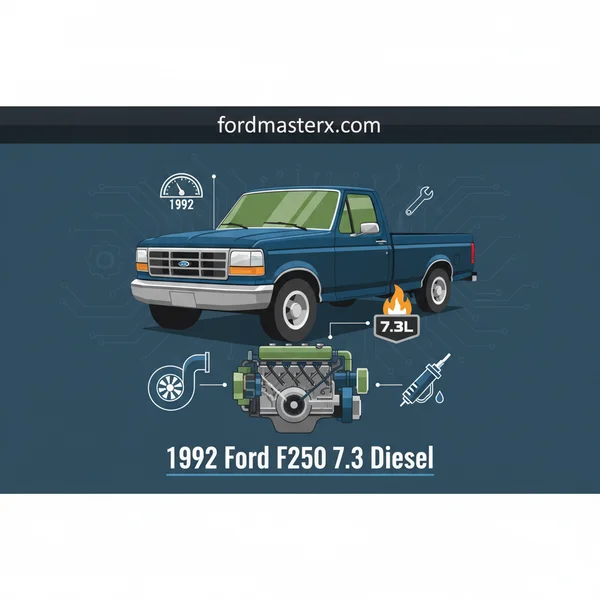
Understanding this truck matters because it occupies a unique value sweet spot in the current market. While the later 7.3L Powerstroke (1994.5+) gets more attention, the 1992 IDI is often more reliable for long-term, low-cost ownership due to its purely mechanical fuel system. It can run on alternative fuels like SVO (Straight Vegetable Oil) or high-quality biodiesel with minimal modification. Whether you are hauling equipment or building a dependable “forever” truck, the 1992 F-250 offers a level of dependability that modern, computer-dependent trucks simply cannot match. This guide breaks down the performance expectations and the critical maintenance required to keep it on the road for another thirty years.
The 7.3L IDI Engine: Mechanical Performance and Expectations
The 7.3L IDI is a heavy-duty, cast-iron workhorse designed for longevity over peak performance numbers. Unlike modern diesels that rely on high-pressure common rail systems and electronic injectors, the IDI uses a Stanadyne DB2 mechanical injection pump. This pump sends fuel to individual injectors at relatively low pressures. Because there is no Engine Control Unit (ECU) governing the combustion process, the truck will theoretically run as long as it has a supply of fuel and air. This mechanical independence is the foundation of its legendary reputation.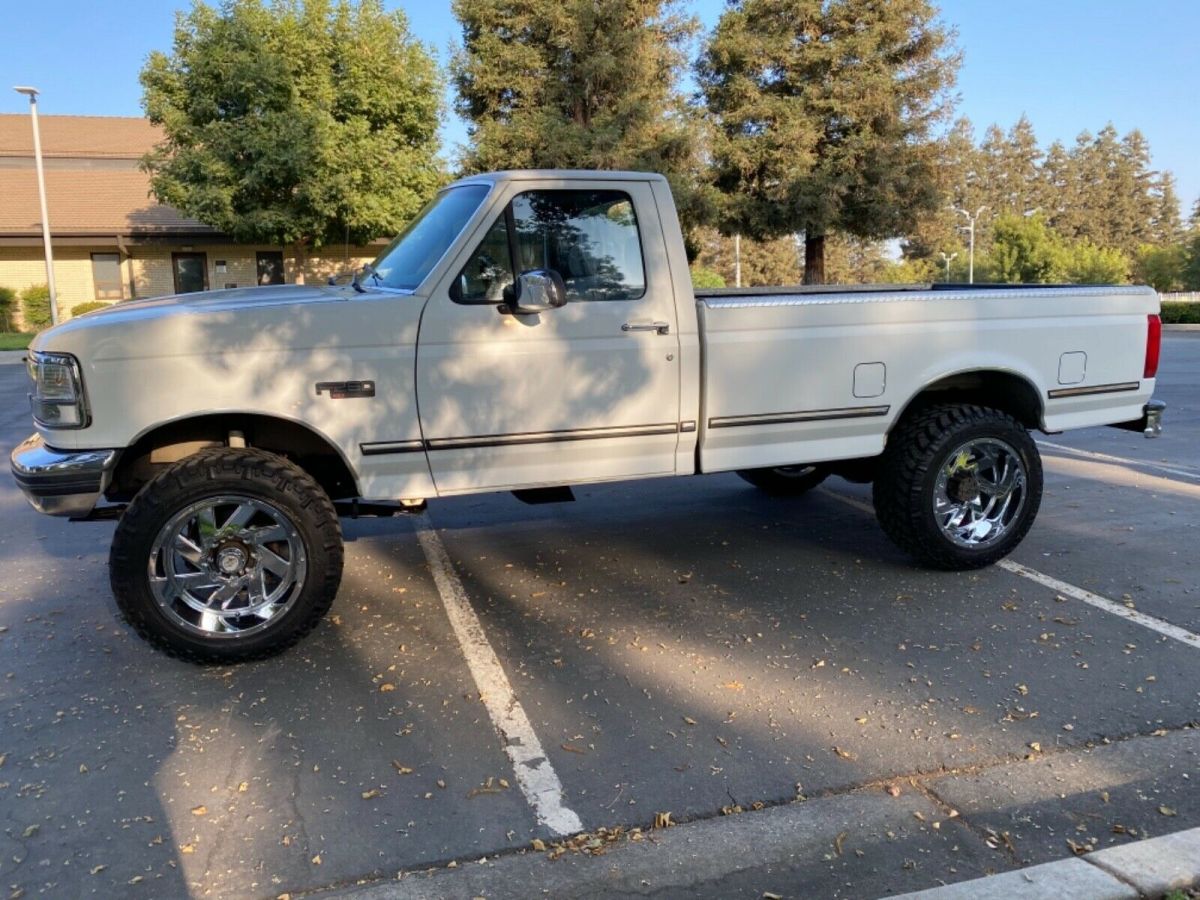
Naturally Aspirated vs. Aftermarket Turbo Capabilities
In 1992, the 7.3L diesel came from the factory without a turbocharger. This means you should expect a “leisurely” driving experience, especially when climbing steep grades or pulling a heavy trailer. While it will pull almost anything you hitch to it, you won’t be doing it at 80 mph. Many owners in the 1990s installed aftermarket turbo kits from Banks Power or ATS to bridge this performance gap. A well-tuned turbo setup can bump the torque closer to 450 lb-ft, significantly improving towing performance without compromising the engine’s internal integrity.
- Factory Horsepower: 185 hp @ 3,000 RPM
- Factory Torque: 338 lb-ft @ 1,400 RPM
- Compression Ratio: 21.5:1 (requires healthy batteries and glow plugs)
- Timing: Gear-driven (no timing belt or chain to snap)
- Fuel System: Mechanical DB2 injection pump (runs without electricity once started)
The “Million-Mile” Architecture
The reason these engines frequently reach high mileage is their overbuilt internal architecture. The 7.3L IDI features a massive cast-iron block and cylinder heads with a gear-driven camshaft setup. There are no timing belts to change or chains to stretch over time. The engine operates at a relatively low RPM range, which naturally reduces the wear on internal components. As long as you manage heat and keep the oil clean, the rotating assembly is known to outlast the truck’s body and frame. It is common to see these engines with 300,000 to 500,000 miles still holding excellent compression.
Everything You Need to Know About Maintaining Your 1992 Ford F250 7.3 Diesel
The 1992 Ford F250 equipped with the 7.3-liter International Harvester Indirect Injection (IDI) diesel engine is a legendary workhorse known for its longevity and simplicity. Unlike modern computerized diesels, this engine relies on mechanical injection and robust physical components to run for hundreds of thousands of miles. This guide covers the essential maintenance and operational steps required to keep this vintage beast on the road, ensuring you avoid common pitfalls like cavitation, air intrusion, and glow plug failure. Following these steps is vital for preserving the engine’s integrity and ensuring reliable starts regardless of the weather.
Step 1: Testing and Replacing the Glow Plug System
What you need: A digital multimeter, a 10mm deep-well socket, and eight Motorcraft ZD-9 glow plugs.
Instructions: The 7.3 IDI is notorious for being difficult to start when cold if the glow plug system isn’t 100% functional. Begin by locating the glow plugs behind the fuel injectors on both cylinder heads. Pull the wire connectors off and use your multimeter to check the resistance between the spade terminal on the plug and the engine block. A healthy plug should show 0.5 to 2 ohms. If it shows infinite resistance, it is “dead.” When replacing them, unscrew the old plugs carefully. If a plug feels stuck or “swollen,” do not force it, as the tip can break off inside the combustion chamber. Thread the new Motorcraft ZD-9 plugs in by hand first to avoid cross-threading, then tighten them to 12-15 lb-ft.
Pro Tip: Only use Motorcraft ZD-9 glow plugs. “Aftermarket” brands are known to swell or burn out rapidly, and a swollen plug can require pulling the cylinder head to remove, turning a 20-minute job into a multi-day nightmare.
Step 2: Engine Oil and Filter Service
What you need: 10 quarts of 15W-40 heavy-duty diesel oil (Shell Rotella T4 or similar), a Motorcraft FL-1995 oil filter, a large drain pan (minimum 12-quart capacity), and a 5/8-inch wrench.
Instructions: Drive the truck until it reaches operating temperature to ensure the oil flows easily. Place your drain pan under the oil pan and remove the drain plug. This engine holds a significant volume of oil, so be prepared for a heavy flow. While the oil drains, use an oil filter wrench to remove the massive filter located on the driver’s side of the block. Before installing the new FL-1995 filter, pre-fill it with fresh oil to prevent a “dry start.” Lubricate the rubber gasket with a film of oil and tighten it 3/4 turn past hand-tight. Reinstall the drain plug with a new copper washer and fill the engine with exactly 10 quarts of oil. Start the engine, check for leaks, and verify the oil pressure gauge registers in the normal range.
Pro Tip: If you find any metal shavings or a distinct “milky” appearance in the oil, it may indicate bearing wear or coolant contamination; save a sample of the oil for a laboratory analysis (like Blackstone Labs) to monitor engine health.
Step 3: Replacing the Fuel Filter and Bleeding Air
What you need: A Motorcraft FD-3375 fuel filter, a clean container of fresh diesel or ATF, and a small screwdriver.
Instructions: The fuel filter is located on the passenger side at the front of the engine. Spin the old filter off and dispose of the fuel inside properly. Take your new filter and fill it to the brim with clean diesel fuel or clean Automatic Transmission Fluid (ATF)—the ATF acts as a high-detergent cleaner for the mechanical injectors. Spin the new filter onto the header until snug. To prevent the engine from stalling due to air pockets, locate the Schrader valve (looks like a tire valve) on the filter header. Depress the center pin while an assistant cranks the engine (with the glow plugs deactivated or the FSS wire pulled) until a steady stream of fuel without bubbles emerges. This ensures the injection pump receives a solid prime of fuel.
Pro Tip: If the truck starts and then dies after a filter change, you likely have “air intrusion.” Double-check the O-rings on the water separator sensor at the bottom of the filter, as these are common leak points.
Step 4: Cooling System Maintenance and SCA Additives
What you need: Low-silicate heavy-duty coolant, distilled water, and Supplemental Coolant Additives (SCA) such as Ford FW-15 or Fleetguard DCA-4.
Instructions: The 7.3 IDI is susceptible to “cavitation,” where tiny bubbles implode against the cylinder walls, eventually eroding holes through the metal and into the combustion chamber. To prevent this, your coolant must be treated with SCAs. Drain the radiator and flush the system with distilled water until it runs clear. Refill with a 50/50 mix of low-silicate coolant and distilled water. Once full, add the specified amount of SCA (typically 1 pint per 4 gallons of coolant). Use SCA test strips to verify the nitrite levels are between 1.5 and 3.0 units. Check these levels every 3,000 to 5,000 miles to ensure the protective lining remains on the cylinder sleeves.
Pro Tip: Never use “Universal” or “Extended Life” coolants designed for modern cars without verifying they are compatible with heavy-duty diesel wet-sleeve liners; the wrong chemistry will lead to catastrophic engine failure over time.
Step 5: Inspecting the Injector Return Line Kit
What you need: A 7.3 IDI return line kit (O-rings, plastic caps, and 3/16-inch rubber hose) and a pair of needle-nose pliers.
Instructions: If you notice dampness around the injectors or find the truck is hard to start after sitting overnight, your return line O-rings are likely leaking air into the fuel system. This is known as “air intrusion.” To fix this, remove the small rubber lines connecting the plastic caps on top of the injectors. Pop the plastic caps off carefully. You will see two small O-rings on the body of each injector. Carefully pick the old, brittle O-rings off and replace them with new Viton O-rings, being careful not to nick them. Lubricate the O-rings with a bit of diesel fuel or grease, then snap the new plastic caps over them. Reinstall the rubber hoses using the provided spring clamps. This creates a vacuum-tight seal that prevents fuel from draining back to the tank.
Pro Tip: When pushing the plastic caps onto the injectors, listen for two distinct “clicks.” If you don’t seat them fully, they will pop off under pressure and spray fuel across your engine bay.
Step 6: Battery and Starter System Check
What you need: A wire brush, terminal cleaner, and a multimeter.
Instructions: A diesel engine requires massive cranking speed to generate the heat needed for compression ignition. The 1992 F250 uses a dual-battery setup. Inspect both batteries for corrosion and ensure they are rated for at least 850 Cold Cranking Amps (CCA) each. Clean the terminals with a wire brush until the lead is bright and shiny. Check the heavy-gauge cables leading to the starter motor; because this engine has high compression, old or corroded cables create resistance that slows down the starter. If the truck “grunts” or cranks slowly even with good batteries, the Mitsubishi-style gear reduction starter may be failing. Ensure the ground cable attached to the engine block is tight and free of oil buildup, as a poor ground is the leading cause of “ghost” electrical issues in these trucks.
Pro Tip: If you find yourself frequently jump-starting the truck, replace both batteries at the same time. Installing one new battery with one old battery will cause the old battery to “drain” the new one, shortening its lifespan significantly.
✅ Final Checklist
- Verify all eight glow plugs show continuity and the controller clicks “off” after 10-15 seconds.
- Check oil level on the dipstick to ensure it is exactly at the “Full” mark after the filter has filled.
- Ensure there are no visible fuel leaks around the injector return caps or the fuel filter header.
- Confirm the coolant nitrite levels are within the 1.5 – 3.0 range using a test strip.
- Verify that the truck starts within 2-3 seconds of cranking when the glow plug light goes out.
Important Notes:
- Safety First: Always wear eye protection when working around batteries or pressurized fuel lines. Diesel fuel can cause skin irritation; wear gloves.
- Professional Help: If you suspect the Injection Pump (IP) is failing (indicated by hot-start issues or heavy grey smoke), seek a diesel specialist, as timing the mechanical pump requires specialized pulse-meter equipment.
- Estimated Time: A full service including oil, fuel filter, and glow plugs typically takes 3 to 5 hours.
- Cost Range: Expect to spend $250 to $450 on high-quality fluids, Motorcraft filters, and ZD-9 glow plugs.
Critical Maintenance: Preventing Cavitation and Fuel System Leaks
While the 7.3L IDI is robust, it has a specific vulnerability known as cavitation. If you ignore the cooling system chemistry, the engine can eventually suffer from catastrophic failure. Additionally, because the fuel system is entirely mechanical and relies on vacuum seals that are now over three decades old, air intrusion is a common hurdle. Staying ahead of these two issues is the difference between a reliable daily driver and a truck that leaves you stranded.

Cooling System Care and the SCA Requirement
The most critical maintenance task for a 1992 7.3L IDI is maintaining Supplemental Coolant Additives (SCAs). Due to the high compression and the specific thickness of the cylinder walls, the liners vibrate during the combustion stroke. This vibration creates tiny vacuum bubbles in the coolant that implode against the outer cylinder wall, eventually pitting holes through the metal and into the combustion chamber. This is called cavitation or “liner pitting.”
- The Fix: Use a heavy-duty diesel coolant pre-charged with SCAs (such as Fleetguard) or add SCA liquid manually to your existing coolant.
- Testing: Use SCA test strips every 6 months to ensure the chemical protection level is still active.
- Red Flag: If a seller says they “just use standard green car coolant” without additives, be wary of potential internal block damage.
Fuel Return Lines and Air Intrusion
If your 1992 F-250 starts up fine when warm but struggles to start after sitting overnight, you likely have air intrusion. The IDI fuel system uses a network of rubber hoses and plastic “caps” on top of the injectors to return excess fuel to the tank. Over time, the O-rings inside these caps shrink and crack. Even a tiny leak will allow air to enter the lines, causing the fuel to drain back to the tank via gravity. When you try to start the truck, the pump has to prime the entire system again, which wears out your starter and batteries. Installing a “Return Line Kit” with high-quality viton O-rings is a mandatory maintenance item for every owner.
E4OD Transmission Health
If your 1992 F-250 is equipped with an automatic transmission, it is the E4OD four-speed. This was Ford’s first electronically controlled automatic, and it can be a weak link if it gets too hot. To keep it alive, you must ensure the external cooler is clean and that the FIPL (Fuel Injection Pump Lever) sensor is properly calibrated. The FIPL sensor tells the transmission the position of the throttle; if it is miscalibrated, it will cause harsh shifts or “hunting” between gears, which quickly destroys the internal clutches. Regular fluid changes and a dedicated temperature gauge are highly recommended for anyone planning to tow.
Transmission Options and Chassis Durability of the 1992 F-250
The 1992 Ford F-250 was built during a transitional era where trucks were moving from basic farm implements to daily-driven workhorses. Because of this, the drivetrain and chassis were engineered with a “more is more” philosophy. Whether you were hauling hay or a fifth-wheel trailer, the 1992 model offered two primary transmission paths, each with its own cult following among diesel enthusiasts.
The Choice Between Manual and Automatic
In 1992, buyers could choose between the legendary ZF5 five-speed manual or the E4OD four-speed automatic. The ZF5 is widely considered the “holy grail” for this era of truck. It features a granny-low first gear for heavy pulling and an overdrive gear for highway cruising. It is remarkably robust, though you should listen for “gear rollover” noise, which is common with single-mass flywheel conversions.
The E4OD was Ford’s first electronically controlled four-speed automatic. While it provides a smoother driving experience, it is more sensitive than the manual. Key points regarding these transmissions include:
- ZF5 Manual: Known for its reliability and direct mechanical feel. Requires periodic checks of the clutch slave cylinder.
- E4OD Automatic: Benefits greatly from an aftermarket external cooler to prevent overheating under load.
- Transfer Case: 4WD models usually featured the BorgWarner 1356, a manual-shift unit that is nearly bulletproof if fluid levels are maintained.
A Chassis Built for the Long Haul
The 1992 F-250 utilized a heavy-duty C-channel frame that has become a hallmark of the Old Body Style (OBS) Ford era. Combined with the Sterling 10.25-inch rear axle, this truck was designed to handle significant payload without breaking a sweat. The suspension setup typically features leaf springs in the rear and either a Twin-Traction Beam (TTB) for 4WD models or a Twin-I-Beam for 2WD versions, providing a balance of durability and acceptable ride quality for a 3/4-ton pickup.
Buying Guide: Current Market Value and Inspection Priorities
Finding a clean 1992 F-250 7.3 IDI today is becoming a challenge. As these trucks cross the 30-year mark, they are shifting from “cheap beaters” to “collectible classics.” If you are in the market, you need to look past the surface-level grime and focus on the mechanical health of the 7.3-liter powerplant and the integrity of the steel.
Critical Inspection Points
When inspecting a 1992 F-250, the “cold start” is your best friend. A healthy 7.3 IDI should fire up relatively quickly with working glow plugs. If the owner has pre-warmed the engine before you arrive, that might be a red flag for starting issues or low compression. Pay close attention to the following areas:
- Cylinder Wall Pitting: Ask the owner if they have used Supplemental Coolant Additives (SCAs). Without these, the 7.3 IDI can suffer from cavitation, leading to pinholes in the cylinder walls.
- Return Line Leaks: Look for dampness around the fuel injectors. The rubber O-rings in the return line kits often fail, letting air into the system.
- Rust Zones: Focus on the cab corners, wheel arches, and the radiator support bracket. These are the most common “rot” spots on the 1992 chassis.
- Oil Cooler: Check the area near the oil filter for signs of oil and coolant mixing, which indicates failing oil cooler O-rings.
Understanding the Market Value
The value of a 1992 F-250 7.3 IDI varies wildly based on condition and location. A high-mileage 2WD work truck might still be found for $4,000 to $6,000. However, a clean, 4WD crew cab with the ZF5 manual transmission and under 150,000 miles can easily command $12,000 to $18,000 in today’s enthusiast market. While the IDI doesn’t bring the “big power” premium of the later Powerstroke, its simplicity and lower maintenance costs keep its value high among those who value reliability over speed.
Conclusion: Why the 1992 7.3 IDI Still Matters
The 1992 Ford F-250 7.3 IDI represents a pinnacle of mechanical simplicity. It is a truck from an era when you could still fix almost everything in your own driveway with a basic set of tools. While it won’t win many drag races, its ability to reliably haul heavy loads for decades makes it one of the best “bang for your buck” diesel pickups ever produced. If you prioritize longevity and ease of maintenance over modern tech, this truck is an outstanding choice.
Next Steps: Start by browsing local classifieds and enthusiast forums to get a feel for regional pricing. When you find a candidate, always insist on a cold start and a thorough frame inspection. Ready to join the OBS Ford family? Grab your pressure gauge and go find your next workhorse!
❓ Frequently Asked Questions
What is cavitation and how does it affect the 7.3 IDI?
Cavitation occurs when tiny air bubbles implode against the cylinder walls, eventually eroding the metal and causing coolant to leak into the combustion chamber. It is prevented by maintaining proper levels of Supplemental Coolant Additives (SCAs) in the cooling system.
What are the common signs of air intrusion in the fuel system?
The most common symptoms are difficult cold starts or the engine dying shortly after starting. This is usually caused by brittle rubber O-rings in the fuel return line kit allowing air to enter the lines while the truck sits.
How reliable is the E4OD automatic transmission in the 1992 model?
The E4OD was Ford’s first electronic 4-speed and can be reliable if kept cool and maintained. However, early versions are prone to overheating and sensor failures, so adding an external cooler is a highly recommended upgrade.
Can the 1992 7.3 IDI run on alternative fuels like Biodiesel?
Yes, the mechanical DB2 injection pump is famous for its ability to handle various fuels, including biodiesel and cleaned waste vegetable oil, better than modern high-pressure systems.
What should I look for when buying a high-mileage 1992 F-250?
Prioritize checking for cooling system maintenance records (SCA checks), testing the glow plug system, inspecting the radiator support for rust, and ensuring the transmission shifts smoothly without hunting for gears.
How does the IDI compare to the later 7.3 Powerstroke?
The IDI is simpler and cheaper to repair because it lacks complex electronics and high-pressure oil systems, but it produces significantly less power and torque than the turbocharged Powerstroke.