Ford F-250 Fuel Tank Capacity: All Models & Bed Sizes

The fuel tank capacity of a Ford F-250 Super Duty ranges from 34 to 48 gallons, depending on the engine type and bed length. Most short-bed models feature a 34-gallon tank, while the long-bed diesel configurations offer the largest 48-gallon capacity.
🎯 Key Takeaways
Recommended Best Deal Products


- Short bed (6.75′) models typically have a 34-gallon fuel tank.
- Long bed (8′) diesel models feature a massive 48-gallon tank.
- Gas-powered long bed trucks usually come with a 34-gallon tank.
- Total capacity vs. usable fuel differs by roughly 1-2 gallons.
- The 2023-2024 models maintain similar capacities to previous generations.
If you are driving a modern Ford F-250, your fuel tank capacity typically ranges from 34 to 48 gallons. The exact volume depends almost entirely on two specific factors: your truck’s wheelbase (bed length) and whether you are running a gas or diesel engine. Knowing your exact capacity is the difference between planning a stress-free cross-country haul and sweating the distance to the next truck stop while your Distance to Empty display counts down to zero.

Prime for Young Adults — 6 Months Free
Students and 18–24s get six months of Prime free, then half price.
Start 6 Months Free As an Amazon Associate I earn from qualifying purchases.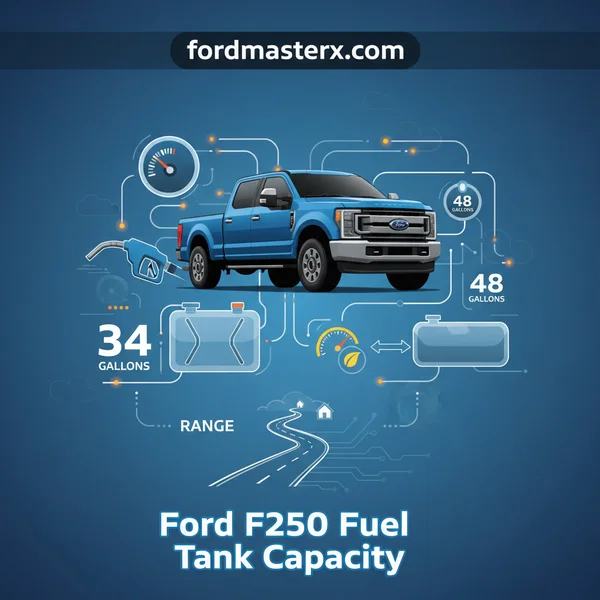
Practical range planning is essential for Super Duty owners who use their trucks for more than just commuting. When you are pulling a heavy fifth-wheel or carrying a payload of equipment, your fuel economy drops significantly. Understanding if you have the standard 34-gallon tank or the extended 48-gallon variant allows you to calculate your real-world range accurately, ensuring you never get stranded with a dry tank in a remote area.
Comprehensive Fuel Capacity Chart by Model Year and Bed Length
The current generation of Ford F-250 trucks (2023-present) and the previous generation (2017-2022) share similar configurations, but there are nuances based on the cab style and engine type. Generally, the longer your truck, the more room Ford has to tuck a larger fuel reservoir along the frame rails. Short-bed models are physically limited by the space between the rear axle and the transfer case.
2023 to 2025 Ford F-250 Capacity Specs
For the newest models on the road, Ford has streamlined the tank options to maximize efficiency. If you are looking at a 2023 or newer model, these are the factory specifications you can expect:
- Regular Cab (8-foot bed): All engines come with a 34-gallon tank.
- SuperCab (6.75-foot bed): Both gas and diesel engines utilize a 34-gallon tank.
- SuperCab (8-foot bed): Gas engines have a 34-gallon tank, while the 6.7L Power Stroke Diesel is equipped with a 48-gallon tank.
- Crew Cab (6.75-foot bed): All engines are paired with a 34-gallon tank.
- Crew Cab (8-foot bed): Gas engines (6.8L and 7.3L) use a 34-gallon tank, but the 6.7L Power Stroke Diesel gets the massive 48-gallon tank.
2017 to 2022 Super Duty Data
During this generation, Ford introduced the 48-gallon tank as a major selling point for diesel owners who felt the previous 26-gallon and 37.5-gallon tanks were too small for heavy towing. If you bought a used F-250 from this era, here is how the numbers break down:
- Short Bed (6.75-foot): Almost all configurations, whether gas or diesel, used the 34-gallon tank.
- Long Bed (8-foot) Diesel: This is where the 48-gallon tank became standard for the 6.7L Power Stroke.
- Long Bed (8-foot) Gas: These models typically retained a 34-gallon or 38-gallon tank depending on the specific trim and wheelbase configuration.
Comparing Gas vs. Diesel (Power Stroke) Fuel Tank Options
Recommended Best Deal Products


One of the most common questions owners ask is why the diesel models often have larger tanks than the gas models. The answer lies in the frame architecture and the intended use of the truck. Diesel engines are designed for long-distance hauling, and Ford engineers prioritized fitting the largest possible tank into those configurations to improve the “miles per fill-up” metric while towing.
The Impact of the 6.7L Power Stroke Engine
The 6.7L Power Stroke Diesel engine requires a Diesel Exhaust Fluid (DEF) tank to meet emissions standards. You might think this extra tank would take up space and reduce fuel capacity, but Ford redesigned the frame for the 2017 model year to accommodate both. On the long-bed Crew Cab models, the frame is long enough to house the 48-gallon fuel tank alongside the DEF system. This massive capacity is a “diesel-only” perk; most gas-powered long-bed F-250s still top out at 34 or 38 gallons because the fuel demand and range calculations for gas engines differ from diesel counterparts.
Why Bed Length Dictates Your Fuel Range
The wheelbase is the ultimate limiting factor for your fuel capacity. A short-bed F-250 (6.75-foot bed) has a 160-inch wheelbase in the Crew Cab configuration. There is simply not enough physical length between the components of the 4×4 drivetrain and the rear suspension to fit a tank longer than the standard 34-gallon unit. In contrast, the 8-foot bed Crew Cab sits on a 176-inch wheelbase. That extra 16 inches of frame rail provides the necessary “real estate” for the 48-gallon tank. If you are choosing between bed lengths and plan on doing heavy towing, the 14-gallon difference between the short-bed and long-bed diesel tanks is a major factor to consider.
For gas-powered trucks, the 6.8L and 7.3L V8 engines are generally paired with the 34-gallon tank across most configurations. While gas engines have slightly higher fuel consumption when loaded, the lack of a DEF system allows Ford more flexibility in tank placement, though they rarely offer the 48-gallon option for gas variants due to weight distribution and specialized fuel pump requirements for gasoline systems.
Understanding Usable Capacity and Reserve Fuel Warnings
It is a common misconception that you can use every single drop of fuel listed in your owner’s manual. In reality, the usable capacity is often slightly less than the advertised volume. Ford designs these tanks with a safety “reserve” portion at the bottom. This isn’t just to keep you from being stranded; it serves a critical mechanical purpose. Submerged fuel pumps rely on the fuel surrounding them to stay cool and lubricated. If you consistently run the tank to the absolute bottom, you risk overheating the pump and shortening its lifespan.

Audible — Listen Free for 30 Days
One free credit a month and thousands of titles included.
Listen Free for 30 Days As an Amazon Associate I earn from qualifying purchases.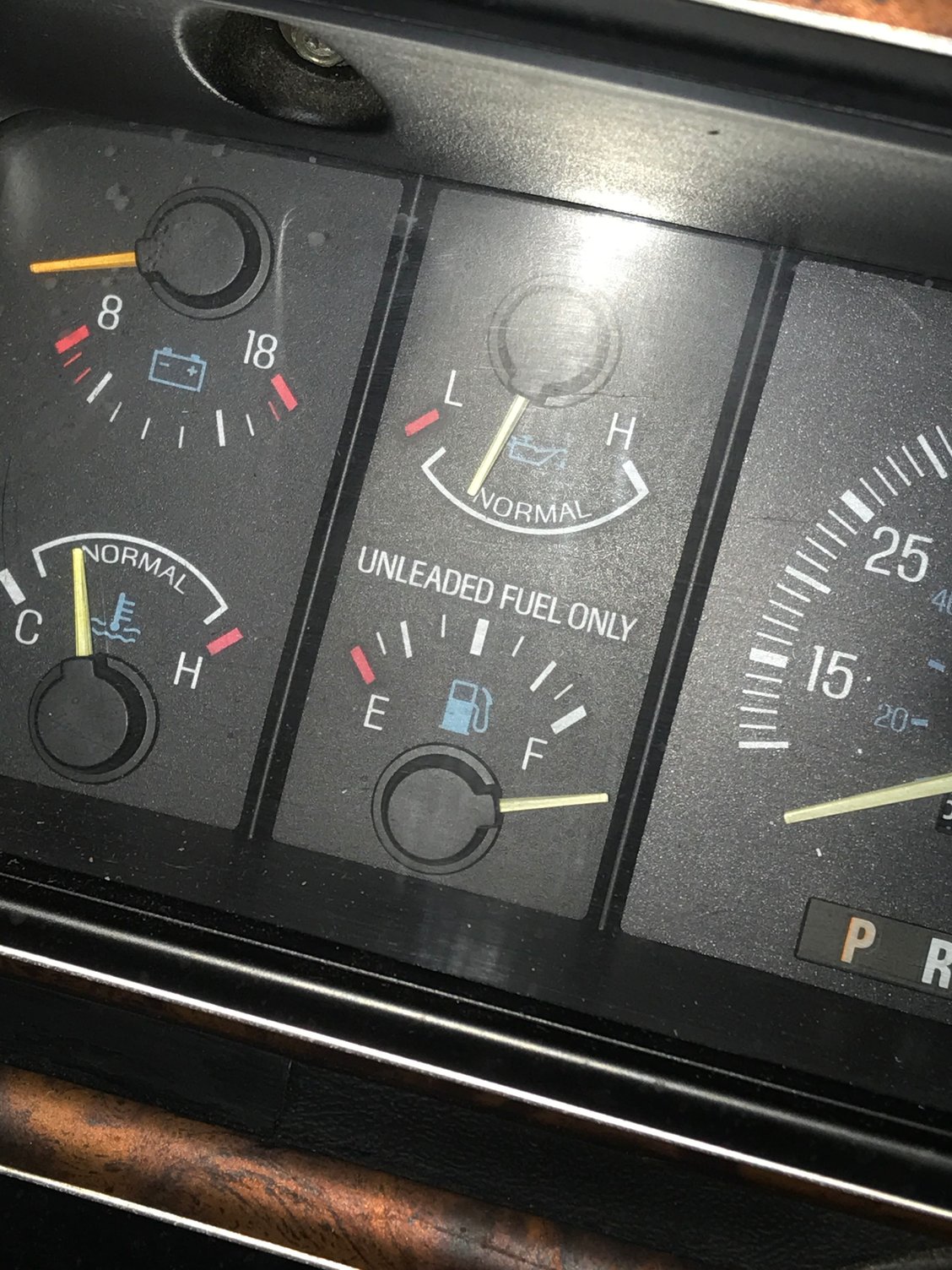
The Difference Between Total and Usable Capacity
When you see a 34-gallon specification, that is the total volume of the tank. However, your truck may begin to sputter or lose prime before you actually burn all 34 gallons. This is because the fuel pickup tube is positioned slightly above the very bottom to avoid sucking up sediment and debris that settles over time. For F-250 owners, this means you should treat the last 2 or 3 gallons as a “buffer” rather than accessible fuel for your trip.
How Ford’s Low Fuel Warning Works
When your F-250’s dashboard flashes the “Low Fuel” warning, you typically have about 10% of your tank’s capacity remaining. On the massive 48-gallon long-bed tank, that could be nearly 5 gallons, while on the smaller 29-gallon tank, it might be less than 3. Here are a few things to keep in mind regarding your reserve:
- Don’t trust “0 Miles to Empty”: This reading is a moving target based on your last 30 miles of driving. It is an estimate, not a scientific fact.
- Account for Inclines: If you are driving on a steep grade with a low tank, the fuel can slosh away from the pickup tube, causing the engine to stall even if you have a gallon or two left.
- Diesel Considerations: For those with the 6.7L Power Stroke, running completely dry can be a major headache, as air in the fuel lines can require a specific priming sequence to fix.
Estimating Maximum Driving Range for F-250 Configurations
Your F-250’s maximum driving range depends heavily on whether you are running the 6.7L Power Stroke Diesel or one of the gasoline V8 options. Diesel engines are inherently more efficient, which, when paired with the 48-gallon tank found on Crew Cab Long Box models, creates a long-distance powerhouse. Under ideal highway conditions, a diesel F-250 can theoretically travel over 700 miles on a single fill-up, while a gas-powered version might see a range closer to 400-450 miles.
Range Factors for Gas vs. Diesel
The 7.3L “Godzilla” V8 and the 6.2L V8 are incredible workhorses, but they have a thirstier profile than the diesel. If you have the standard 34-gallon tank, your frequency of fuel stops will be noticeably higher. When calculating your range, always look at your average MPG on the trip computer and multiply it by your tank size minus two gallons for safety. For example, a truck getting 14 MPG with a 34-gallon tank has a safe “real world” range of about 448 miles.
Real-World Scenarios and Payload Impact
The moment you hitch up a trailer or load the bed with gravel, your range calculations go out the window. Heavy-duty trucks are built to work, but working hard requires more energy. Consider these common range-drainers:
- Towing Aerodynamics: Dragging a high-profile camper can cut your fuel economy by as much as 50%, effectively cutting your range in half.
- Idle Time: F-250s often spend time idling at job sites. This consumes fuel without adding a single mile to your range, which can trick your “Miles to Empty” display.
- Tire Upgrades: Adding larger, heavier off-road tires increases rolling resistance, which will ding your MPG and shorten the distance you can go between stations.
Conclusion
Understanding your Ford F-250’s fuel tank capacity is about more than just knowing how much a fill-up will cost. From the standard 29-gallon tanks on shorter configurations to the massive 48-gallon tanks on Crew Cab Long Box models, Ford provides a variety of options to suit different needs. Knowing your specific capacity—and the “usable” reserve within it—ensures that you can plan your long-hauls and towing trips with total confidence.
As an actionable next step, check your driver’s side door jamb or your owner’s manual to confirm your specific wheelbase and tank size. The next time you fill up from “Empty,” take note of how many gallons it actually takes to reach a full tank; this will tell you exactly how large your safety reserve is. Safe travels, and keep that workhorse fueled up for the road ahead!
❓ Frequently Asked Questions
Why is there a difference between the 6.75′ and 8′ bed fuel tank sizes?
The longer wheelbase of the 8-foot bed provides more physical chassis space between the frame rails to house a larger 48-gallon tank compared to the shorter frames.
How much fuel is left in an F-250 when the ‘Low Fuel’ light comes on?
Typically, Ford reserves about 10% of the tank’s capacity as a safety margin, meaning you likely have 3 to 4.5 gallons remaining when the light activates.
Did the fuel tank size change for the 2017+ Super Duty redesign?
Yes, the 2017 redesign introduced the 48-gallon tank for long-bed diesels, significantly increasing capacity from the older 37.5-gallon units used in previous generations.
Audible Premium Plus — Annual Membership
12 audiobook credits up front, plus the full Audible catalogue.
See Annual Plans As an Amazon Associate I earn from qualifying purchases.Can I fit the 48-gallon tank into a short-bed F-250?
No, the physical dimensions of the 48-gallon tank are too long to fit the frame clearance and mounting points of the 6.75-foot short bed chassis.
How does the fuel tank capacity impact the F-250’s total range?
A diesel long-bed with a 48-gallon tank can theoretically achieve over 700 miles of highway range, while short-bed configurations typically hover around 450-500 miles depending on the load.
Are the fuel tanks in F-250 trucks made of metal or plastic?
Modern F-250 trucks use high-density polyethylene (HDPE) plastic tanks, which are preferred because they are lighter, impact-resistant, and won’t corrode like traditional steel tanks.