2 Car Bumper Pull Trailers: Specs, Lengths & Towing Guide

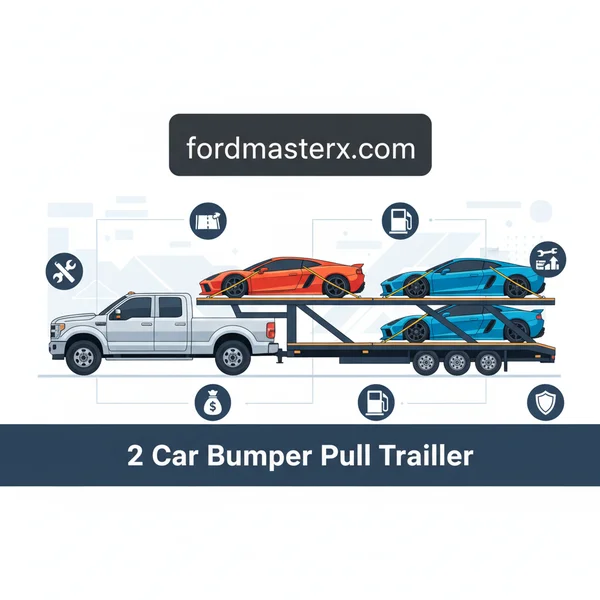
A 2 car bumper pull trailer typically requires a deck length of 32 to 38 feet and a GVWR of at least 14,000 lbs to haul two vehicles safely. While goosenecks offer more stability, these bumper pull models provide versatility for standard hitch setups and lower overall profiles.
Prime Day Pick
Limited-time Prime Day price. Check current discount on Amazon.
🎯 Key Takeaways
- Prioritize dual 7,000 lb or 8,000 lb axles for a minimum 14k GVWR.
- Choose a 34-36 foot deck to accommodate most vehicle pairings comfortably.
- A high-quality weight distribution hitch is mandatory for managing tongue weight.
- Ensure your tow vehicle is rated for at least 15,000 lbs capacity.
- Check local regulations, as these trailers often exceed 40 feet in total length.
Hauling two vehicles with a bumper pull setup requires a delicate balance of massive deck length and high-capacity running gear. To safely transport two full-sized vehicles, you are looking at a trailer with a deck length typically between 34 and 40 feet and a Gross Vehicle Weight Rating (GVWR) that starts at 14,000 pounds. This configuration represents the upper limit of traditional hitch-pull towing, making it a specialized tool for professional transporters or collectors who want to avoid the overhead of a gooseneck or fifth-wheel setup.
Getting these technical specifications right is the difference between a controlled tow and a dangerous highway experience. Because a 2-car bumper pull creates significant leverage on the rear of your tow vehicle, every inch of deck space and every pound of axle rating must be calculated precisely. You must ensure you don’t exceed your equipment’s structural limits or your truck’s specific hitch capacity, which is often the weakest link in this heavy-duty towing equation.
Prime Day Pick
Limited-time Prime Day price. Check current discount on Amazon.
Technical Specifications: Deck Length and Axle Ratings
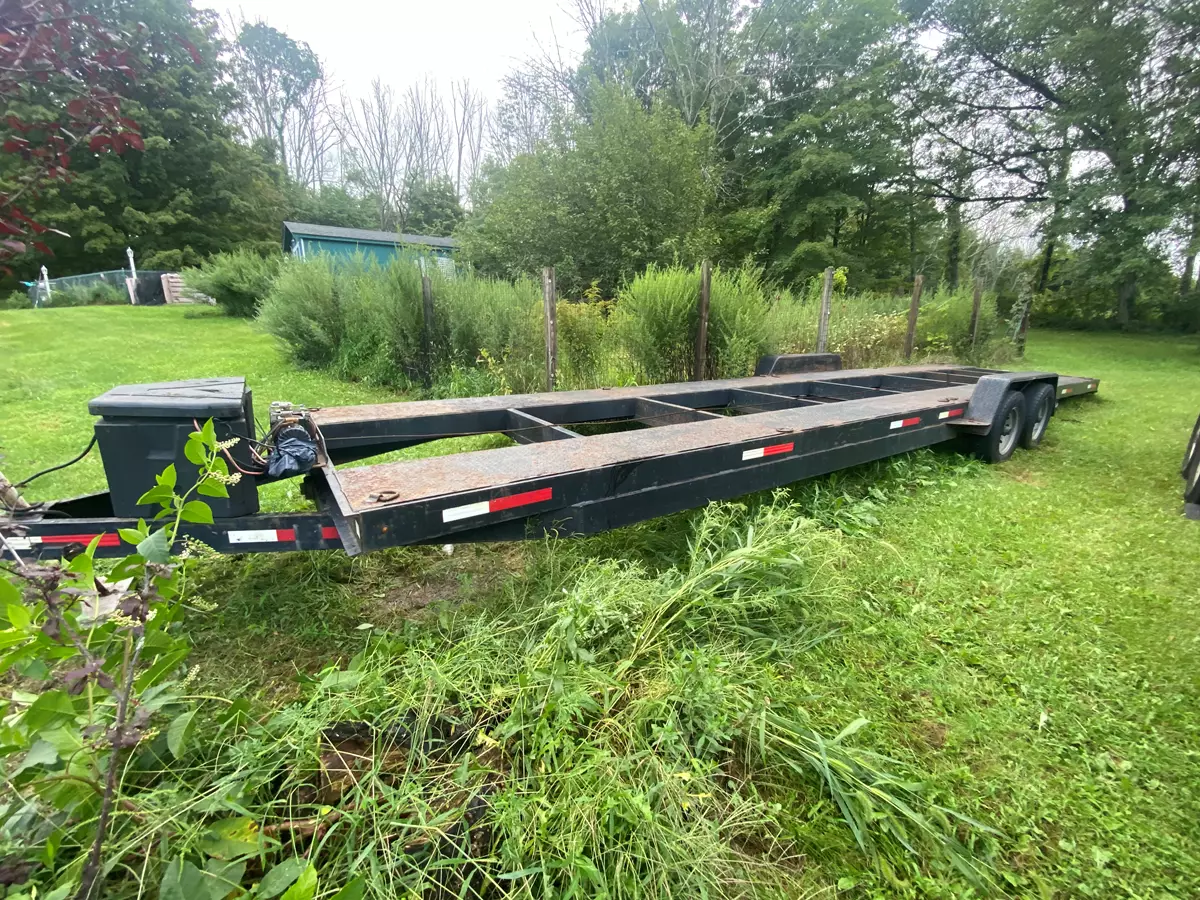
The physical footprint of a 2-car bumper pull is its most defining characteristic. Unlike single-car haulers that average 18 to 20 feet, these “tandem” haulers must accommodate the wheelbase of two separate units while leaving room for proper tie-down angles and weight distribution adjustments.
Determining the Correct Deck Length
For most dual-hauling scenarios, a 34-foot to 38-foot deck is the industry standard. While it is possible to find 32-foot trailers, they are usually only suitable for two compact cars or ATVs. If you plan on hauling two full-size sedans or a mix of a truck and a car, you will need the extra length to shift the vehicles forward or backward to achieve the correct tongue weight.
Prime Day Pick
Limited-time Prime Day price. Check current discount on Amazon.
- 32-34 Feet: Best for two small sports cars or vintage compacts. Space is extremely tight for strapping.
- 36-38 Feet: The “sweet spot” for general use. It provides enough room to gap the vehicles so they don’t knock together during sudden stops.
- 40 Feet: The maximum practical length for a bumper pull. This length offers the most versatility but significantly increases the risk of “tail wag” if not loaded perfectly.
Axle Configurations and Weight Ratings
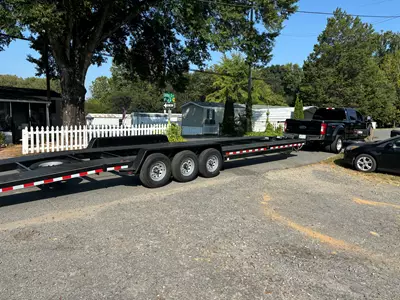
You cannot haul two vehicles on standard 3,500 lb or 5,200 lb axles. A 2-car bumper pull requires heavy-duty running gear to support the combined weight of the steel trailer and the two payloads. Most manufacturers utilize one of two setups:
- Dual 7,000 lb Axles: This is the most common configuration, providing a 14,000 lb GVWR. This is sufficient for two vehicles weighing 4,500 lbs each, once you account for the trailer’s self-weight.
- Dual 8,000 lb Axles: Recommended for those hauling heavier SUVs or work trucks. This bumps the GVWR to 16,000 lbs and usually includes upgraded 17.5-inch tires and beefier brakes.
- Triple 5,200 lb or 7,000 lb Axles: Some manufacturers use three axles to spread the load. While this offers great stability, it makes the trailer much harder to maneuver in tight spaces due to “tire scrubbing” during turns.
Understanding Payload Capacity vs. GVWR for Dual Hauling
One of the most dangerous mistakes a pilot can make is confusing the trailer’s GVWR with its actual payload capacity. When you are hauling two vehicles, you are likely operating at 90% or more of the trailer’s total capacity. You need to know exactly how much “net” weight you can put on the deck after the trailer itself is accounted for.
Prime Day Pick
Limited-time Prime Day price. Check current discount on Amazon.
Calculating Your Net Payload
A heavy-duty 36-foot steel frame trailer is not light. A typical 2-car bumper pull trailer will have an empty weight (curb weight) of 3,500 to 5,000 lbs depending on whether it has a wood or steel deck and if it includes a winch or toolboxes. To find your actual capacity, subtract the trailer’s weight from the GVWR.
Example: If you have a 14,000 lb GVWR trailer that weighs 4,200 lbs empty, your actual payload capacity is 9,800 lbs. If you try to load two modern 5,000 lb crew-cab trucks, you are 200 lbs over capacity before you even add straps or fuel. Always look for trailers with a 16,000 lb GVWR if you plan on hauling anything heavier than mid-size sedans.
Prime Day Pick
Limited-time Prime Day price. Check current discount on Amazon.
The Critical Importance of Tongue Weight with Dual Loads
In a single-car trailer, finding the center of gravity is straightforward. With two vehicles, you have two heavy masses that can act against each other. For a bumper pull, you generally want 10% to 15% of the total loaded weight sitting on the hitch.
- The “Teeter-Totter” Effect: If the rear vehicle is too far back, it will lift the tongue of your truck, causing dangerous sway at highway speeds.
- Overloading the Rear Axle: If both vehicles are pulled too far forward, you risk exceeding the GAWR (Gross Axle Weight Rating) of your truck’s rear axle and blowing a tire.
- Strategic Loading: Always load the heavier of the two vehicles toward the front (over the axles/toward the truck) to maintain a stable leading weight.
Because you are managing such a long lever, a 2-car bumper pull is much more sensitive to loading errors than a gooseneck. Small adjustments of even 6 inches in vehicle placement can change your tongue weight by hundreds of pounds, which is why having a built-in tongue weight scale or a specialized hitch is highly recommended for this specific trailer class.
Bumper Pull vs. Gooseneck: Choosing the Best 2-Car Configuration
Weight Distribution and Maneuverability
When you are hauling two vehicles, the debate between a bumper pull and a gooseneck trailer usually comes down to weight distribution and driver comfort. A bumper pull trailer hitches to the rear of your truck frame, which offers a familiar driving feel for those used to pulling boats or small campers. However, because the pivot point is behind the rear axle, these trailers are naturally more susceptible to “sway” if the load isn’t balanced perfectly. For a 2-car setup, this means you must be meticulous about where the heavier vehicle sits to maintain proper tongue weight.
Goosenecks, on the other hand, place the trailer’s tongue weight directly over the truck’s rear axle. While they offer superior stability and a much tighter turning radius, they require a specialized hitch installed in the truck bed. This can be a significant investment and a permanent modification that not every truck owner is ready to make.
Cost and Vehicle Compatibility
One of the primary reasons haulers stick with the bumper pull configuration for two cars is the lower entry cost and broader compatibility. Most modern heavy-duty pickup trucks (2500 and 3500 series) come standard with a Class V receiver that can handle a 2-car load without major modifications. This allows you to switch tow vehicles easily if needed.
- Bumper Pull Advantage: Lower initial purchase price and no need to sacrifice truck bed space for a hitch.
- Gooseneck Advantage: Increased weight capacity and significantly better handling on windy highways or at high speeds.
- Practical Tip: If you plan on towing daily or over long distances, the stability of a gooseneck is often worth the extra cost; for occasional track days or moving projects, a high-quality bumper pull is more than sufficient.
Essential Towing Equipment and Safety Considerations
The Importance of Weight Distribution Hitches
Hauling two cars on a bumper pull setup places an immense amount of pressure on the rear of your truck. Without the right gear, your truck’s front wheels can lose traction, leading to “light” steering and dangerous handling. A weight distribution hitch (WDH) is an essential piece of equipment for this type of setup. These systems use spring bars to leverage the weight across all axles of both the truck and the trailer, leveling out the ride and improving braking performance.
Modern WDH systems often include built-in sway control. Since 2-car trailers are exceptionally long—typically 35 to 40 feet—they act like a giant sail in crosswinds. Having a friction-based or mechanical sway control system prevents the trailer from fish-tailing when being passed by large semi-trucks or during sudden gusts of wind.
Braking Systems and Tire Ratings
Stopping two vehicles plus the weight of the trailer itself requires massive braking force. Most 2-car bumper pulls feature dual 7,000-lb axles, meaning you have four electric brakes working for you. However, the trailer can only do its job if your truck is equipped with a high-quality proportional brake controller. Unlike older “timed” controllers, proportional units sense how hard you are braking and apply the trailer brakes with matching intensity.
- Tire Check: Always use “ST” (Special Trailer) tires with a Load Range of E or G. Passenger car or light truck tires are not designed to handle the vertical sidewall pressure of a 14,000-lb trailer.
- Lighting and Visibility: Because of the trailer’s extreme length, ensure you have functioning side marker lights every 10 feet. This ensures other drivers can see the full length of your rig during lane changes at night.
- Safety Tip: Always double-check your safety chains. They should be crossed under the coupler to create a “cradle” that will catch the trailer tongue in the event of a hitch failure.
Conclusion
Selecting the right 2-car bumper pull trailer requires a careful balance between trailer length, weight capacity, and the capabilities of your tow vehicle. By understanding the dimensions needed for your specific vehicles and investing in the proper weight distribution equipment, you can safely transport multiple cars without the complexity of a gooseneck setup. While bumper pulls offer great flexibility and a lower price point, they demand respect for weight limits and a commitment to high-quality safety gear.
Ready to hit the road? Start by calculating the combined weight of your two heaviest vehicles and checking your truck’s maximum towing capacity against those figures. Your next step should be to inspect your hitch receiver for its specific weight rating to ensure it can handle the load of a multi-car trailer. Safe travels and happy hauling!
❓ Frequently Asked Questions
What is the ideal deck length for hauling two full-sized vehicles?
For two full-sized sedans or small SUVs, a 36-to-38-foot deck is the industry standard. Shorter 32-foot decks are generally reserved for compact cars or powersports equipment, as they offer limited room for weight distribution adjustments.
Why would someone choose a bumper pull over a gooseneck for two cars?
Bumper pull trailers are often preferred by those who want to keep their truck bed open for a camper shell or additional gear. They are also generally less expensive than gooseneck counterparts and compatible with a wider range of tow vehicles without specialized bed hitches.
How much does an empty 2 car bumper pull trailer weigh?
A steel-frame 2-car bumper pull trailer typically weighs between 4,000 and 5,500 lbs. Aluminum models may weigh significantly less, which increases the available payload capacity for the vehicles being hauled.
What are the specific axle requirements for a 2 car trailer?
You should look for a minimum of two 7,000 lb axles. This provides a 14,000 lb Gross Vehicle Weight Rating (GVWR), which is usually sufficient for two average cars plus the weight of the trailer itself.
How does tongue weight affect a 2 car bumper pull setup?
Because the trailer is so long, improper car placement can lead to dangerous tongue weight levels. It is critical to use a weight distribution hitch to spread that load across the truck’s axles and prevent rear-end sagging or front-end lift.
Are there specific braking requirements for these long trailers?
Yes, most states require brakes on all axles for trailers of this size. Electric-over-hydraulic brakes are highly recommended for the superior stopping power needed when managing 10,000+ lbs of moving mass.