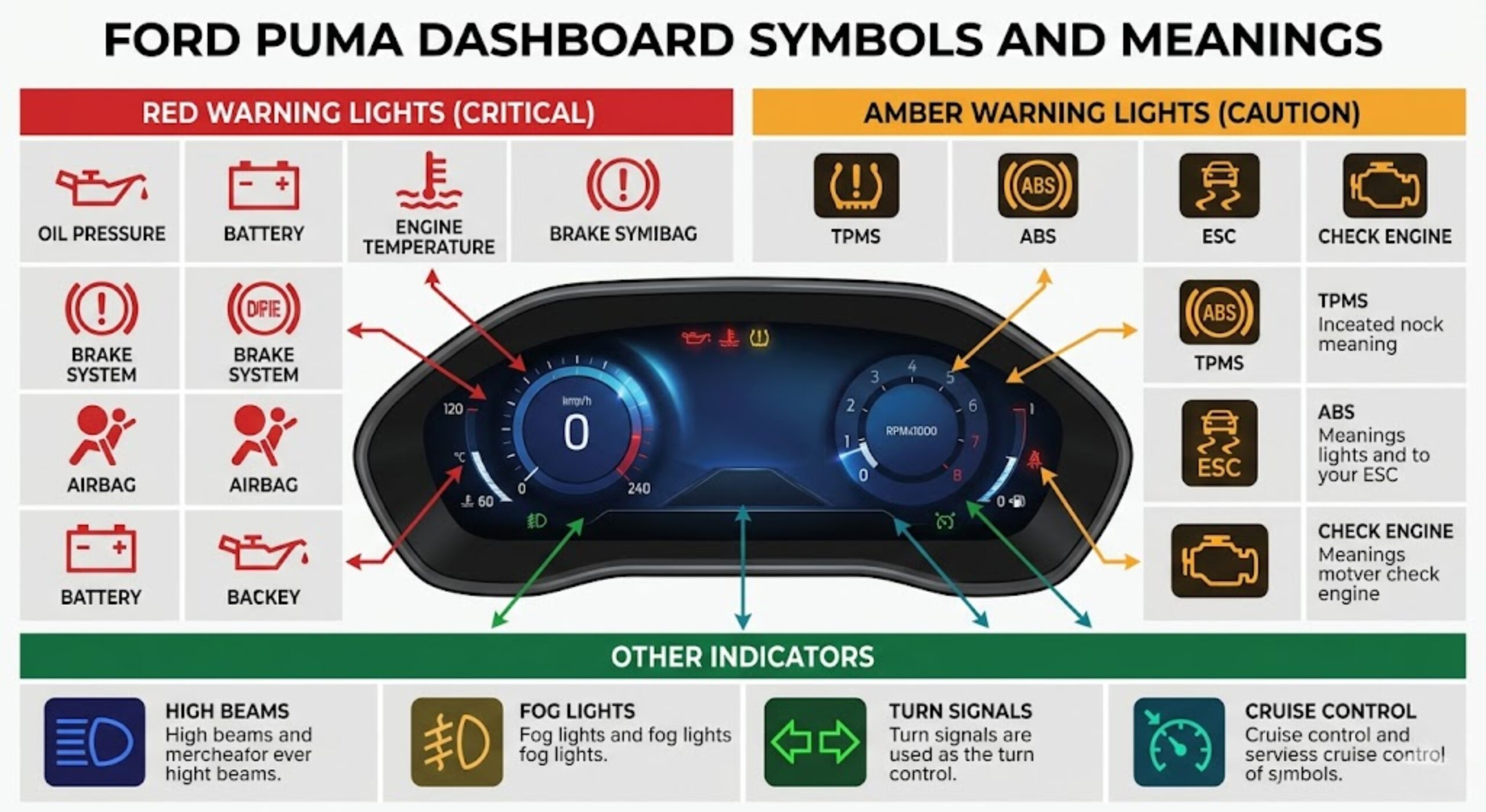
Ford Puma Dashboard Symbols and Meanings Complete Guide in 2026

The ford puma dashboard symbols and meanings that matter most are the ones telling you to stop driving — and most guides bury that information. Whether a light just came on mid-journey or you are preparing for any situation, this guide tells you exactly what each symbol means and, more importantly, what you should do next.
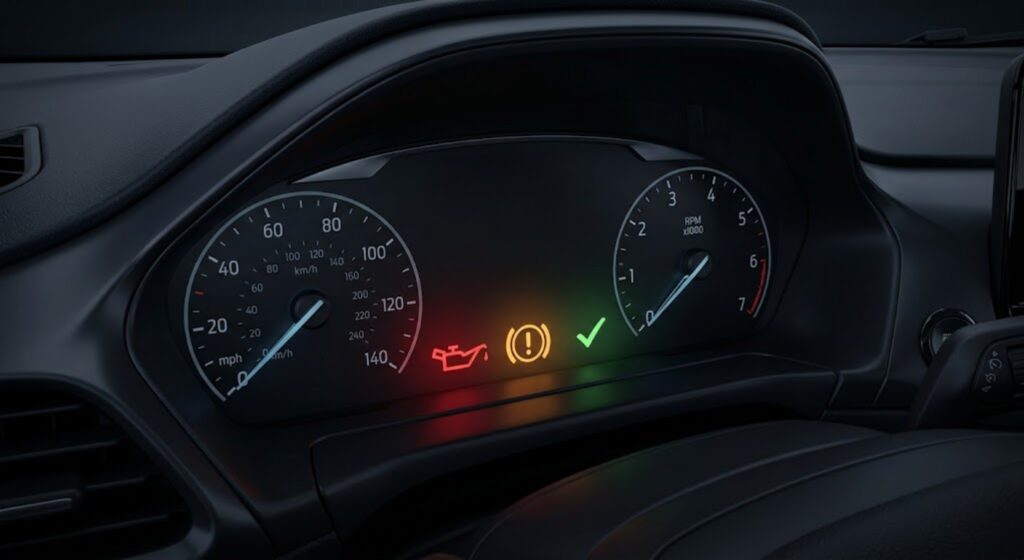
This guide covers the 2019–2025 Ford Puma SUV across all trims. Every symbol is sorted by urgency so you can act correctly, fast.

Audible — Listen Free for 30 Days
One free credit a month and thousands of titles included.
Listen Free for 30 Days As an Amazon Associate I earn from qualifying purchases.What This Guide Covers and What It Does Not
Recommended Best Deal Products
This guide covers:
- Ford Puma SUV (2019 onwards) — all trims including ST-Line, ST, Titanium, Vignale
- Both EcoBoost petrol and Mild Hybrid (MHEV) variants
- All dashboard warning lights, indicators, and informational symbols
This guide does not cover:
- The original 1997–2002 Ford Puma coupe — a completely different vehicle with different symbols
- Reading or clearing fault codes with an OBD-II scanner — that is a separate diagnostic process
- Diagnosing the underlying mechanical fault behind any warning light
For official symbol definitions, always cross-reference the Ford Puma Owner’s Manual for your specific model year.
Who Should Use This Guide
This guide is for you if:
- You are a new Puma owner who did not get a full dealer handover
- You drive an MHEV variant and the hybrid symbols confuse you
- A warning light appeared while driving and you need to know urgency right now
- A family member drives your Puma and you want them prepared
- You saw multiple lights come on at once and do not know which to prioritise
This guide is not for diagnosing the mechanical fault itself — that is covered in the escalation section below.
How To Read Any Ford Puma Warning Light Before Looking It Up
Every Ford Puma warning light follows a traffic-light colour system. Knowing this one rule lets you react correctly before you have even identified the specific symbol.
Ford Puma warning light colour severity system — three tiers: red means stop now, yellow means check soon, green or blue means informational only
Red — stop as soon as it is safe
A serious fault is present. Pull over and switch off the engine. Do not restart or continue driving until the cause is identified.
Oil pressure Coolant temp Brake system BatteryFlashing red = more urgent than steady red — treat as immediate stop

Prime for Young Adults — 6 Months Free
Students and 18–24s get six months of Prime free, then half price.
Start 6 Months Free As an Amazon Associate I earn from qualifying purchases.Yellow / amber — check within 24–48 hours
A system is not functioning correctly. Short journeys are usually safe — do not drive on a motorway or long-distance until diagnosed.
TPMS ABS Engine warning Brake pad wearFlashing amber = act faster than steady amber
Green / blue — no action needed
A feature is active and working correctly. These are informational only — not warnings. Continue driving normally.
High beam on Cruise control Lane keep aid Auto start-stopRed Warning Lights — Stop As Soon As It Is Safe
Red means a serious fault is present. Pull over as soon as it is safe to do so. Do not continue driving until the issue is resolved. A flashing red light is more urgent than a steady one — treat it as an immediate stop.
Yellow and Orange Warning Lights — Check It Soon
Yellow or amber means a system is not functioning correctly. You can usually complete a short journey, but you should not drive long distances or ignore the light. Book a diagnostic within 24–48 hours. A flashing amber light requires faster action than a steady one.
Green and Blue Indicators — No Action Needed
Green or blue symbols are informational. They tell you a feature is active or the system is operating normally. No action is required. These are not warnings.
According to Ford’s official warning lamp guidance, this three-tier colour system applies across all modern Ford vehicles, including the Puma.
With that framework in place, let us start with the lights that require immediate action.
Audible Premium Plus — Annual Membership
12 audiobook credits up front, plus the full Audible catalogue.
See Annual Plans As an Amazon Associate I earn from qualifying purchases.Ford Puma Red Warning Lights That Mean Stop Immediately
These symbols require you to stop driving as soon as it is safe to do so. Ignoring them risks serious and expensive engine or safety system damage.
Engine Oil Pressure Warning
A red oil can icon means oil pressure has dropped to a critical level. Stop the engine immediately — do not restart it. Low oil pressure causes metal-on-metal contact inside the engine within minutes of driving. Check the oil level with the dipstick once the engine has cooled. If the level is correct and the light remains, call for roadside assistance. For related fault codes, see our guide to the ford p0171 code which can sometimes accompany oil system issues.
Engine Coolant Temperature Warning
A red thermometer inside a wavy circle means the engine is overheating. Stop as soon as it is safe and switch the engine off. Do not open the bonnet immediately — hot coolant under pressure will spray. Wait at least 15 minutes before checking coolant levels. An overheated engine can warp the cylinder head, resulting in repair costs of £1,000 or more.
Brake System Warning
A red circle with an exclamation mark inside brackets — or the word BRAKE — means a brake system fault. First, check the handbrake is fully released. If the light stays on with the handbrake off, this signals low brake fluid or a hydraulic pressure fault. Stop driving immediately and call for assistance. If this light appears alongside the ABS warning, do not drive the vehicle at all.
Battery and Charging System Warning
A red battery icon means the 12V battery is not charging. This is typically caused by a failed alternator or a broken drive belt. Your car will continue running briefly on the remaining battery charge — but it will stop without warning once the charge is exhausted. Switch off all non-essential electrical systems (air conditioning, heated seats, rear screen heater) and drive directly to the nearest garage. Do not attempt a long journey.
Power Steering Fault
A red steering wheel icon with an exclamation mark signals a failure in the electric power-assisted steering system. The steering will become noticeably heavy. You can steer the vehicle manually, but it requires significant effort. Pull over safely, turn off the engine, and restart it. If the light returns, do not continue driving — visit a garage.
If any ford check engine light accompanies a red warning, always treat the red light as the priority.
Red lights — stop the vehicle as soon as it is safe
Engine oil pressure
Stop the engine immediately. Do not restart. Check oil level once cool. If correct and light stays on, call roadside assistance.
Engine coolant temperature
Engine overheating. Stop and switch off. Do not open the bonnet for 15 minutes — hot coolant will spray under pressure.
Brake system warning
Check handbrake is fully off. If light stays on, stop immediately — low brake fluid or hydraulic fault. If ABS also lit, do not drive.
Battery and charging system
Alternator or belt failure. Turn off AC, heated seats, rear screen heater. Drive directly to the nearest garage — car will stop without warning.
Power steering fault
Steering becomes heavy. Pull over safely, restart engine. If light returns, do not continue driving — visit a garage.
Ford Puma Yellow and Orange Warning Lights Explained
Yellow and amber lights signal a system fault that needs attention soon. You can usually complete a short, careful journey to a garage — but do not ignore these lights or drive on a motorway until the issue is diagnosed.
Tyre Pressure Warning (TPMS)
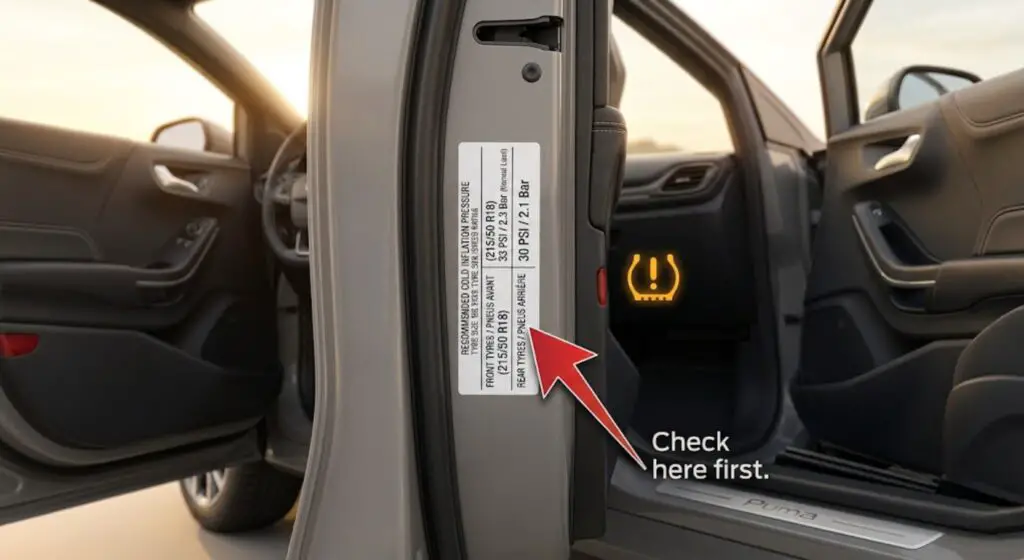
A yellow horseshoe shape with an exclamation mark is the tyre pressure monitoring system (TPMS) warning. It triggers when one or more tyres have dropped significantly below the recommended pressure — typically by 25% or more below the stated figure.
For the 2019–2025 Ford Puma, recommended cold tyre pressures vary by trim and wheel size. Common settings are:
- 18-inch wheels (215/50 R18): 33 psi front, 30 psi rear (normal load)
- 19-inch wheels (225/40 R19): 32 psi front, 26 psi rear (normal load)
Always check the door sill sticker on the driver’s side for the exact pressures for your car. After inflating to the correct pressure, you must reset the TPMS through the instrument cluster settings menu — the light will not go out on its own. For Ford TPMS reset procedures, Ford’s TPMS guidance explains the process in full.
Engine Warning Light (Check Engine)
A yellow engine outline means the engine management system has detected a fault. Common causes include a loose fuel cap, a sensor malfunction, or an emissions system issue. Drive carefully, avoid motorway speeds, and book a diagnostic scan as soon as possible. An OBD-II scanner will identify the specific fault code. Our guide to the ford p0171 code covers one of the most common engine management faults on Ford EcoBoost engines.
ABS Warning Light
A yellow circle with ABS inside it means the anti-lock braking system has a fault. Your standard brakes still work normally — the ABS function is disabled. You can drive carefully to a garage, but avoid any situation requiring emergency stops, particularly on wet or icy roads. If the ABS light comes on alongside the red brake system warning light, stop immediately and call for assistance.
ESC / Stability Control Warning
A flashing car with squiggly lines beneath it means the electronic stability control system is actively working — this is normal on slippery roads and not a warning. A steady yellow ESC light means the system has a fault and is not available. Drive carefully, particularly in wet or icy conditions, and have it checked.
Brake Pad Wear Warning
A yellow brake disc with an exclamation mark means the brake pads have worn thin. You can continue driving, but book a brake service before your next long journey. Worn pads left too long damage the brake discs, turning a £150 pad replacement into a £400+ disc-and-pad job.
Engine Air Filter Warning
A yellow symbol resembling a pleated rectangle signals a blocked or dirty air filter. This is not urgent, but a blocked filter reduces engine performance and fuel economy. Book a service at your next opportunity.
Glow Plug Warning (Diesel Variants Only)
A yellow coil symbol appears only on diesel Puma variants. It illuminates briefly at cold start — this is normal and means the glow plugs are heating the cylinders before ignition. If it stays on or flashes yellow after starting, a glow plug fault is present. The car will usually start, but book a diagnostic.
Service Due Indicator
A yellow spanner symbol is a scheduled maintenance reminder. There is no mechanical fault — the car is telling you that its service interval is approaching or has been reached. Book a service with a Ford dealer or independent garage.
Ford Puma Green and Blue Dashboard Symbols Explained
These symbols require no action. They confirm a feature is active and working correctly.
High Beam Indicator (Blue)
A blue symbol of a headlight with horizontal lines pointing left means your full-beam headlights are on. No action required unless you need to dip them for oncoming traffic.
Automatic High Beam Active (Blue)
A similar blue headlight symbol with an A means the automatic high beam system is engaged. The car is managing beam switching automatically. No action required. This feature is only available on trims with the Driver Assistance Pack.
Front Fog Lights Active (Green)
A green symbol with a lamp and lines angling downward means front fog lights are on. In the UK, fog lights should only be used when visibility drops below 100 metres.
Rear Fog Lights Active (Amber/Green)
A similar symbol facing backward confirms rear fog lights are active. Switch them off when visibility improves — it is illegal in the UK to use rear fog lights in normal conditions.
Lane Keeping Aid Active (Green)
A green road-with-lines symbol means the lane keeping aid system is active and monitoring lane position. It works above approximately 40 mph. No action required.
Cruise Control Active (Green)
A green speedometer symbol confirms cruise control is armed or active. No action required.
Auto Start-Stop Active (Green)
A green A with a circle arrow means the engine has auto-stopped at a traffic light to save fuel. This is normal MHEV behaviour. The engine restarts automatically when you release the brake.
Immobilizer / Security Indicator (Flashing Red)
A flashing red car outline with a key appears in the instrument cluster after you lock the car. This is the anti-theft immobilizer confirming the security system is armed — it is not a fault. If this light flashes continuously with the engine running, there is an immobilizer fault. See our guide to ford anti-theft system reset for troubleshooting steps.
Ford Puma Mild Hybrid Dashboard Symbols That Confuse Owners
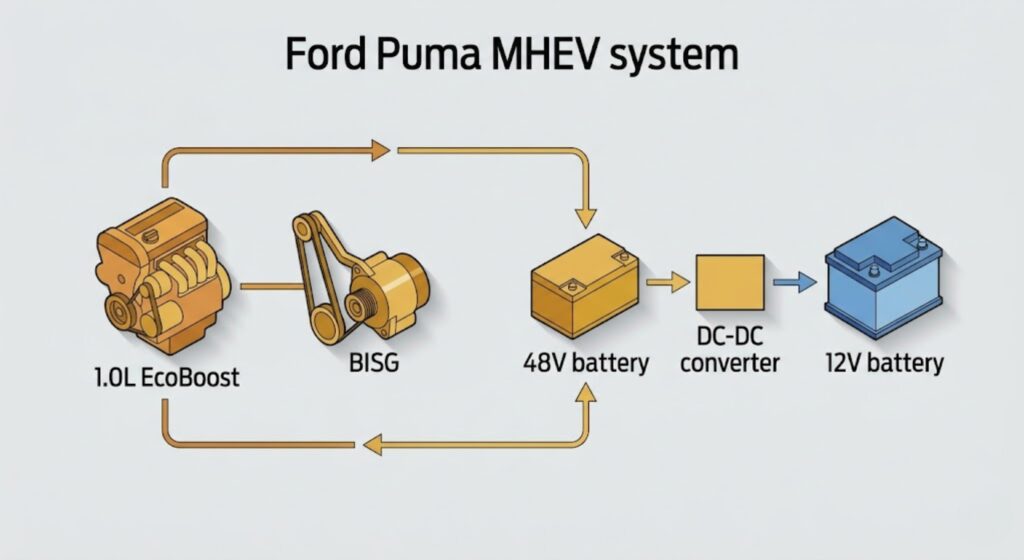
The 2019–2025 Ford Puma is sold primarily as a Mild Hybrid Electric Vehicle (MHEV). It uses an 11.5 kW belt-driven integrated starter/generator (BISG) paired with a 48-volt lithium-ion battery to recover energy during braking and coasting, and to assist the engine during acceleration. This means it has a set of symbols you will not find in any older Ford guide.
48V Battery Charging Indicator
A green battery icon with an upward arrow means the 48V MHEV battery is actively charging — typically during deceleration or coasting. This is normal operation and means the system is working correctly. No action required.
48V Hybrid System Warning
A yellow wrench with a lightning bolt (or a lightning bolt between two curved lines) signals a fault in the mild hybrid system. The BISG or 48V battery has detected an issue. The car will continue to run, but the fuel-saving hybrid assist will be reduced or disabled. This fault requires Ford’s FDRS diagnostic software to assess properly — a standard OBD-II scanner will not read the 48V system correctly. Book a dealer appointment. Replacing the 48V battery costs between £850 and £1,500 including labour if the battery itself has failed, so early diagnosis matters.
EV Coasting / Engine-Off Indicator
A green EV symbol or an engine-off symbol during highway coasting means the petrol engine has switched off and the car is coasting on momentum and mild electric assist. This is an active fuel-saving feature, not a warning. No action required.
Regenerative Braking Active
A green arc with arrows looping back toward a battery symbol means kinetic energy is being recovered during braking and stored in the 48V battery. This is the MHEV system working as designed. No action required.
Eco Drive / Squiggly Arrow Symbol
This is the symbol that confuses most new Puma owners. A squiggly or curved arrow appears in the speedometer area, sometimes accompanied by a foot-off-pedal icon. This is the Eco Drive system advising you to lift off the accelerator because the navigation system has detected an upcoming bend, roundabout, or speed limit change. The car is using map data to help you drive more economically. It is not a warning — no action is required, though you can choose to follow the advice.
Hill Start Assist / Hill Descent Indicator
A car on a slope with arrows up or down indicates the hill start assist or hill descent control system is active. Hill start assist holds the brakes briefly when pulling away on an incline. Hill descent control manages brake pressure on steep descents. Both are active systems doing their job — no action required unless the symbol is accompanied by a yellow or red warning colour, which would indicate a system fault.
3 Common Mistakes Ford Puma Owners Make With Warning Lights
- Ignoring a yellow light because the car drives fine. Some yellow lights — particularly brake pad wear and coolant temperature — give you a warning window before conditions become dangerous. That window closes faster than most drivers expect. A yellow coolant warning that turns red within 20 miles of driving will result in an overheated engine. Act on yellow lights within 24–48 hours, not at your next convenience.
- Clearing a warning light without diagnosing the fault. Using an OBD-II scanner to clear a fault code removes the symptom, not the cause. The light returns — often within a few miles — and the root issue worsens in the meantime. Always read and record the fault code before clearing it, and confirm the underlying issue is resolved before clearing.
- Confusing the MHEV 48V battery warning with the 12V battery warning. These are two separate systems with two separate warnings requiring two different actions. A 12V battery warning means the alternator or conventional battery circuit has a problem. A 48V hybrid system warning means the BISG or high-voltage battery has a fault. Treating one as the other leads to a misdiagnosis and an unnecessary part replacement.
Standard battery warning
Mild hybrid warning
Symbols That Behave Differently on Specific Puma Variants
| Symbol | ST only | MHEV only | Diesel only | All variants |
|---|---|---|---|---|
| Glow plug indicator | – | – | ✓ | – |
| 48V hybrid system warning | – | ✓ | – | – |
| Eco Drive arrow (squiggly) | – | ✓ | – | – |
| Auto start-stop indicator | – | ✓ | – | – |
| Launch control active | ✓ | – | – | – |
| Performance drive mode | ✓ | – | – | – |
| Matrix LED headlight indicator | – | – | – | H* |
| Brake system / ABS / Airbag | – | – | – | ✓ |
| TPMS tyre pressure warning | – | – | – | ✓ |
| Engine oil pressure warning | – | – | – | ✓ |
Startup self-check: When you switch the ignition on, several warning lights — including the ABS light, airbag light, and engine warning light — illuminate briefly, then extinguish. This is a normal self-test. If any of these lights remain on after the engine starts, that is a genuine fault, not a startup check. The airbag and ABS lights both need to illuminate at startup and extinguish — if a bulb has been removed to hide a fault, this will be picked up at MOT.
When To Take Your Ford Puma to a Dealer Instead of a Mechanic
Some Ford Puma warning light faults require a Ford dealer — not a local independent garage — because the diagnostic software needed is Ford-specific.
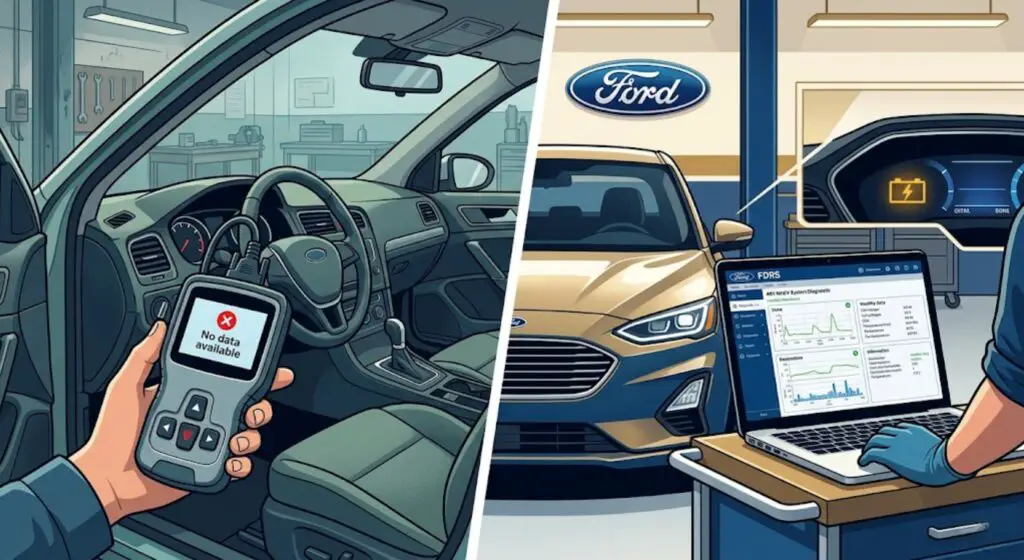
Take your Puma to a Ford dealer (not just any mechanic) if:
- Any 48V MHEV system warning appears — Ford’s FDRS software is required to read the 48V system. Standard OBD-II tools cannot access it correctly.
- The airbag or SRS warning light stays on — this is a safety-critical system and requires dealer-level diagnosis. Do not attempt to reset it without identifying the fault.
- A red warning light does not clear after the underlying cause has been addressed.
- Any warning light returns within 48 hours of being cleared.
- The instrument cluster display shows a fault message (not a warning light) — these require access to the SYNC system, which needs dealer-level tools.
- The 12V battery warning reappears repeatedly after replacement — this may indicate an MHEV DC-DC converter fault, which is a hybrid system component.
For general guidance on fault code reading and when dealer diagnosis is required, Ford’s official support pages are the authoritative source.
When in doubt, a dealer diagnostic session is the only way to confirm a fault is fully resolved — especially for MHEV and safety system warnings.
Frequently Asked Questions
What does the orange exclamation mark mean on a Ford Puma?
This is usually the tyre pressure monitoring system (TPMS) warning. Check all four tyre pressures against the figures on your driver’s door sill sticker and inflate to the correct cold pressure. After inflating, you must manually reset the TPMS through the instrument cluster settings menu — the light will not clear itself.
Can I drive my Ford Puma with a yellow warning light on?
Yes, but carefully and only for a short distance to a garage. Yellow means a system is not functioning correctly — it is not an immediate emergency, but ignoring it can make the underlying issue worse. Do not drive on a motorway or long-distance until the fault has been diagnosed.
What is the squiggly arrow symbol on the Ford Puma dashboard?
This is the Eco Drive indicator from the Puma’s navigation-linked mild hybrid system. It appears in the speedometer area when the system advises you to lift off the accelerator for an upcoming bend, roundabout, or speed limit change. It is not a warning — no action is required.
What does the Ford Puma mild hybrid battery warning look like?
It typically appears as a lightning bolt between two curved lines, or a wrench symbol with a lightning bolt. It signals a fault in the 48V mild hybrid system. Unlike the standard 12V battery warning, this requires a Ford dealer with FDRS diagnostic software — a standard OBD-II scanner cannot read the 48V system accurately.
Why did multiple warning lights come on at once on my Ford Puma?
Multiple lights illuminating together — especially at startup or shortly after — often indicates a low or failing 12V battery. When voltage drops below a threshold, multiple sensors trigger simultaneously. Have the 12V battery tested before assuming multiple separate faults exist. A healthy Puma battery should read approximately 12.6V at rest with the engine off.
Conclusion
Every ford puma dashboard symbols and meanings question comes down to one thing: which colour is the light? Red means stop now. Yellow means get it checked within 24–48 hours. Green or blue means a feature is working — no action needed.
If you are looking at a red warning light right now, stop driving as soon as it is safe. For yellow lights, book a diagnostic before your next long journey. For MHEV-specific warnings, go directly to a Ford dealer — not an independent garage.
This guide will be updated as new Ford Puma variants are released.