
6.7 Powerstroke Upper Oil Pan Leak: Diagnosis & Repair Guide

The 6.7 Powerstroke upper oil pan leak is a complex repair often misdiagnosed as a rear main seal failure. Successfully fixing this leak requires absolute surface cleanliness and the specific use of Motorcraft TA-31 High-Performance RTV.
Prime Day Pick
Limited-time Prime Day price. Check current discount on Amazon.
🎯 Key Takeaways
- Verify the leak source before starting to avoid unnecessary labor costs.
- Motorcraft TA-31 is the only recommended sealant for a lasting bond.
- Surgical cleanliness of mating surfaces is critical for preventing repeat leaks.
- Transmission removal is often the preferred method for pan access.
- Allow at least 24 hours for the sealant to cure before refilling.
- The oil pick-up tube complicates pan removal and requires careful maneuvering.
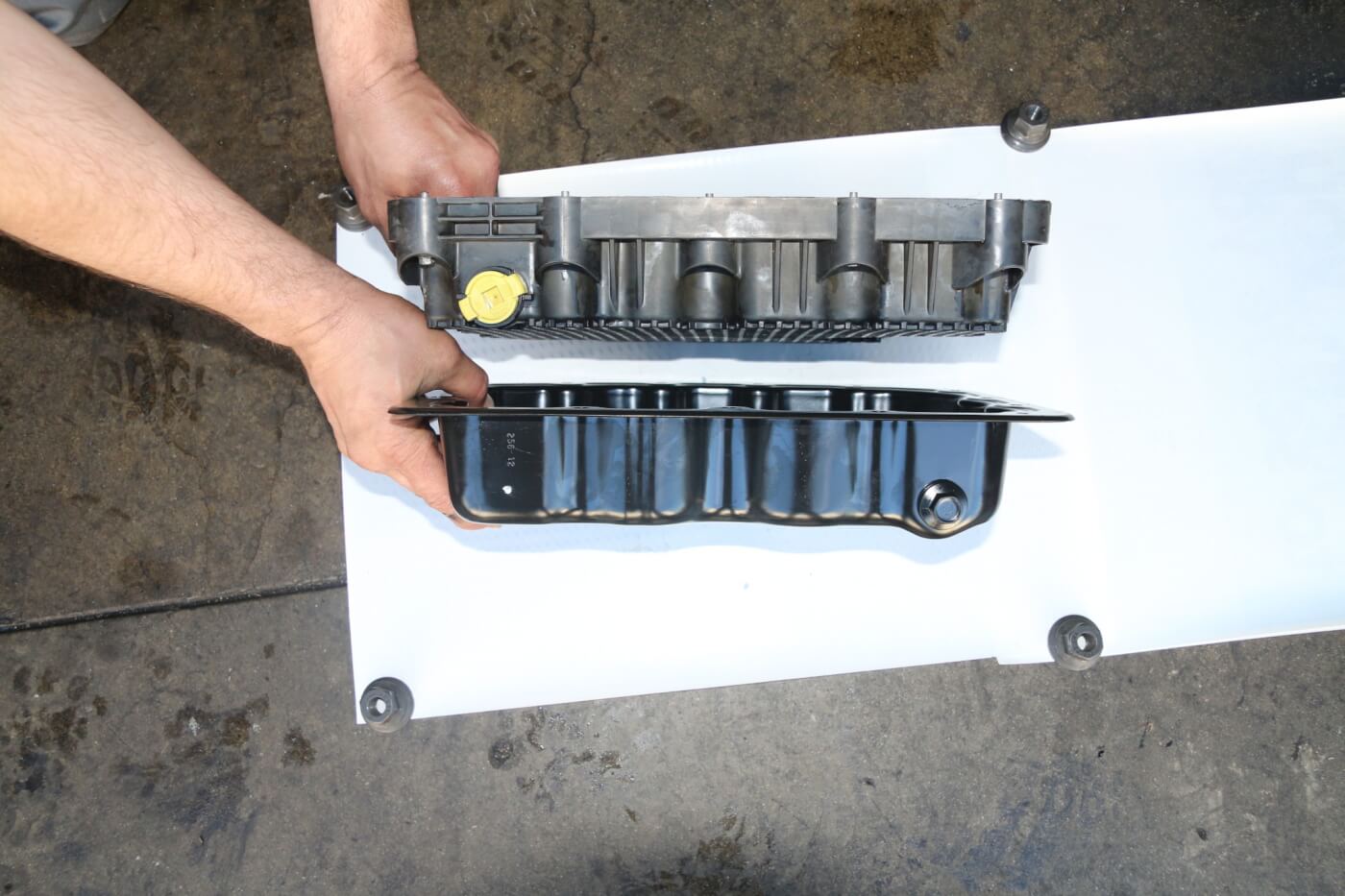
The 6.7 Powerstroke upper oil pan leak is a “when, not if” scenario for many owners. Because this engine uses a split-pan design—a stamped steel lower pan and a massive aluminum upper pan—there are multiple failure points for the RTV sealant. The most critical piece of information you need is this: a leaking upper pan often mimics a rear main seal leak, but the repair process is vastly different and significantly more labor-intensive due to the internal oil pick-up tube clearance.
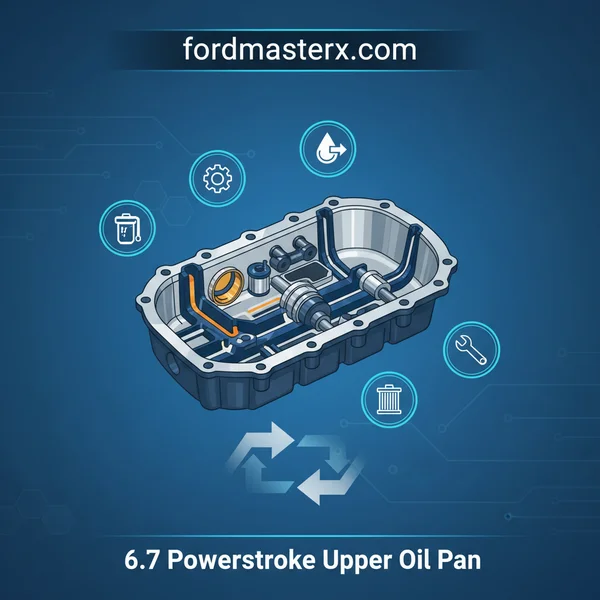
Practically speaking, ignoring this leak can lead to more than just oil spots on your driveway. The leak often develops at the rear of the engine where the pan meets the block and the transmission bellhousing. Over time, the escaping oil can saturate the starter motor, damage rubber bushings, and eventually lead to low oil pressure if the sealant failure becomes catastrophic. Understanding how to navigate the tight tolerances between the pan and the crossmember is the difference between a successful weekend project and a truck stuck on jack stands for a month.
Prime Day Pick
Limited-time Prime Day price. Check current discount on Amazon.
Diagnostic Strategies: Differentiating Upper Pan Leaks from Other Sources
Before you commit to a 10-to-15-hour repair, you must confirm the source. On the 6.7 Powerstroke, oil tends to migrate toward the back of the engine and pool at the bottom of the bellhousing. This often leads technicians to incorrectly condemn the rear main seal. However, the upper oil pan is the far more common culprit due to the high-pressure environment and the sheer surface area of the sealing flange.

The “Inspection Plate” Trick and UV Dye
To accurately diagnose the leak, start by cleaning the entire rear of the engine with a heavy-duty degreaser. Once dry, use a UV dye kit in the oil and run the engine for 20-30 minutes. Focus your inspection on these specific areas:
Prime Day Pick
Limited-time Prime Day price. Check current discount on Amazon.
- The Inspection Plate: Remove the rubber or plastic inspection plug on the bottom of the transmission bellhousing. If the rear main seal is leaking, the back of the flexplate will be soaked in oil. If the area inside the bellhousing is dry, but the exterior flange where the upper pan meets the block is wet, the upper pan is your problem.
- Turbo Oil Feed Lines: Oil can leak from the turbocharger valley and run down the back of the block. Use a mirror to check the “V” of the engine. If the leak starts high and runs down, it is likely a turbo line or a vacuum pump seal, not the pan.
- The Passenger-Side Rear Corner: This is the most common failure point for the factory RTV. Oil will weep from the seam and travel along the rail, making it look like it is coming from the transmission seal.
It is important to remember that the upper pan is structural. It doesn’t just hold oil; it provides rigidity to the bottom of the block. This means the sealant is under constant stress from engine vibration and thermal expansion, which is why a thorough cleaning during diagnosis is non-negotiable.
Repair Methodologies: Engine-Out vs. Transmission-Drop Approaches
There is no “easy” way to remove the 6.7 Powerstroke upper oil pan. You cannot simply unbolt it and slide it out because the oil pick-up tube is bolted directly to the underside of the engine block and sits deep within the pan’s internal baffling. To clear the pick-up tube and the front crossmember, you have two primary choices. Each has pros and cons depending on your tool inventory and shop setup.
Prime Day Pick
Limited-time Prime Day price. Check current discount on Amazon.
The Transmission-Drop and Engine-Lift Method
Most dealership technicians prefer this method because it doesn’t require disconnecting the entire cooling system or the primary wiring harness. By removing the transmission, you gain access to the rear of the engine, allowing you to tilt the block. However, tilting alone isn’t enough. You must also:
- Disconnect Engine Mounts: You need to lift the engine approximately 2 to 4 inches using a bottle jack or a specialized engine hoist.
- Clear the Crossmember: The aluminum upper pan is deep. Without lifting the engine, the bottom of the pan will hit the frame crossmember before it clears the pick-up tube.
- Blind Bolts: There are several bolts at the back of the pan that are only accessible once the transmission is out of the way.
The Engine-Out Method
If you have a heavy-duty engine hoist and a stand capable of holding the 1,100-pound 6.7 Powerstroke, pulling the engine is often the “cleanest” way to do the job. While it takes longer to get the engine out, the actual resealing process becomes much easier. You can flip the engine upside down on a stand, which is critical for ensuring the new bead of RTV stays in place and doesn’t get contaminated by dripping oil from the crankcase during the cure time.
Prime Day Pick
Limited-time Prime Day price. Check current discount on Amazon.
Pro Tip: If you choose the in-truck (transmission-drop) method, you must allow the engine to “drip dry” for at least 12 hours. Any oil that drips onto your fresh RTV bead while you are trying to lift the pan back into place will cause the seal to fail almost immediately. This is the most common reason for repeat leaks.
Essential Materials and Specifications for a Lasting Seal
When dealing with a 6.7 Powerstroke upper oil pan leak, the quality of your materials is just as important as the quality of your work. Unlike many older engines that use a traditional rubber or cork gasket, the 6.7 relies entirely on a high-performance RTV (Room Temperature Vulcanizing) silicone to create a liquid-tight barrier. Using a generic sealant from a local auto parts store is often a recipe for a repeat leak within six months.
Choosing the Right Sealant: Why OEM Matters
Ford technicians and experienced diesel mechanics almost universally recommend Motorcraft TA-31 Diesel Engine Surface Sealant. This specific gray RTV is engineered to withstand the high vibration and thermal expansion cycles common in heavy-duty diesel engines. Using an inferior product can lead to chemical breakdown when exposed to hot diesel oil over thousands of miles.
- Compatibility: TA-31 is designed specifically for the aluminum-to-iron mating surfaces found on the 6.7 Powerstroke.
- Cure Time: Proper curing is non-negotiable. Most experts suggest letting the sealant setup for at least 12 to 24 hours before adding oil or firing up the engine.
- Bead Consistency: A consistent 3mm to 5mm bead is necessary to ensure “squeeze-out” both internally and externally, creating a robust seal.
Surface Preparation: The Key to Long-Term Success
The number one reason these repairs fail isn’t the sealant itself—it is residual oil contamination. Because oil tends to drip from the crankcase for hours after the pan is removed, the mating surface on the engine block must be meticulously cleaned and degreased right before the pan is reinstalled. Using a lint-free cloth and high-quality brake cleaner or acetone is essential to ensure the RTV bonds to the metal rather than a film of oil.
Common Challenges: Crossmember Interference and Pick-Up Tube Logistics
If you ask any technician about the 6.7 Powerstroke upper oil pan, they will likely mention how cramped the workspace is. Because the engine sits low in the chassis, the gap between the pan and the front crossmember is incredibly tight. This physical limitation turns what should be a straightforward job into a complex puzzle of angles and patience.
Navigating the Tight Clearance Issues
The primary challenge is that the pan cannot simply be dropped straight down. It often requires the engine to be slightly lifted or the transmission to be supported to gain just an extra inch of clearance. Without this additional space, you risk smearing your freshly applied RTV against the crossmember or the pick-up tube as you try to shimmy the pan into place, which inevitably leads to a “leaker.”
Managing the Internal Components
The oil pick-up tube is the “hidden” hurdle in this repair. On the 6.7 Powerstroke, the pick-up tube is bolted to the engine, but it sits deep within the pan’s reservoir. You often find yourself in a catch-22: you can’t remove the pan without unbolting the pick-up tube, but you can’t easily reach the pick-up tube bolts until the pan is partially lowered.
- Blind Bolts: Several bolts holding the pick-up tube and internal baffling are difficult to see and require a “feel-based” approach with a socket extension.
- Weight and Balance: The upper pan is surprisingly heavy and awkward. Using a transmission jack or a second set of hands is vital to prevent the pan from tilting and damaging the pick-up tube O-ring.
- O-Ring Replacement: Never reuse the pick-up tube O-ring. A flattened or brittle O-ring can lead to aeration of the oil, which causes low oil pressure and potential engine damage.
Conclusion
Repairing a 6.7 Powerstroke upper oil pan leak is a labor-intensive process that requires precision, the right materials, and a fair amount of patience. By focusing on high-quality Motorcraft TA-31 sealant and ensuring the mating surfaces are chemically clean, you can solve this common Ford issue for good. Remember that the biggest hurdles are the tight clearances and the internal pick-up tube, so taking your time during the removal process is key to a successful reinstallation.
If you’ve spotted a puddle under your truck, your next step should be a thorough cleaning of the undercarriage to confirm the leak’s origin. Once confirmed, gather your high-temp RTV and prepare for a rewarding, albeit challenging, weekend in the garage. Don’t let a small leak turn into a big headache—address your upper oil pan today and keep your Powerstroke running strong!
❓ Frequently Asked Questions
Is it possible to use standard RTV instead of Motorcraft TA-31?
It is highly discouraged. Standard RTV lacks the oil resistance and expansion properties of TA-31, often leading to a leak within months.
Why is the upper oil pan leak so common on the 6.7 Powerstroke?
Extreme heat cycles and the complexity of the sealing surface make the factory RTV prone to eventual degradation and separation.
Does the cab need to be removed for an upper oil pan repair?
No, cab removal is not necessary; the job is usually completed by dropping the transmission or removing the engine from the front.
What else should be replaced while fixing an upper pan leak?
It is a good time to inspect the vacuum pump gasket, the lower oil pan, and the rear main seal for signs of wear.
How do you ensure the block doesn’t drip oil onto the new sealant?
Technicians often use lint-free rags stuffed into the channels to catch drips, pulling them out seconds before the pan is mated.
What is the typical cost for a 6.7 Powerstroke upper oil pan reseal?
Expect to pay between $1,500 and $2,500 at a shop, depending on the chosen repair method and local labor rates.