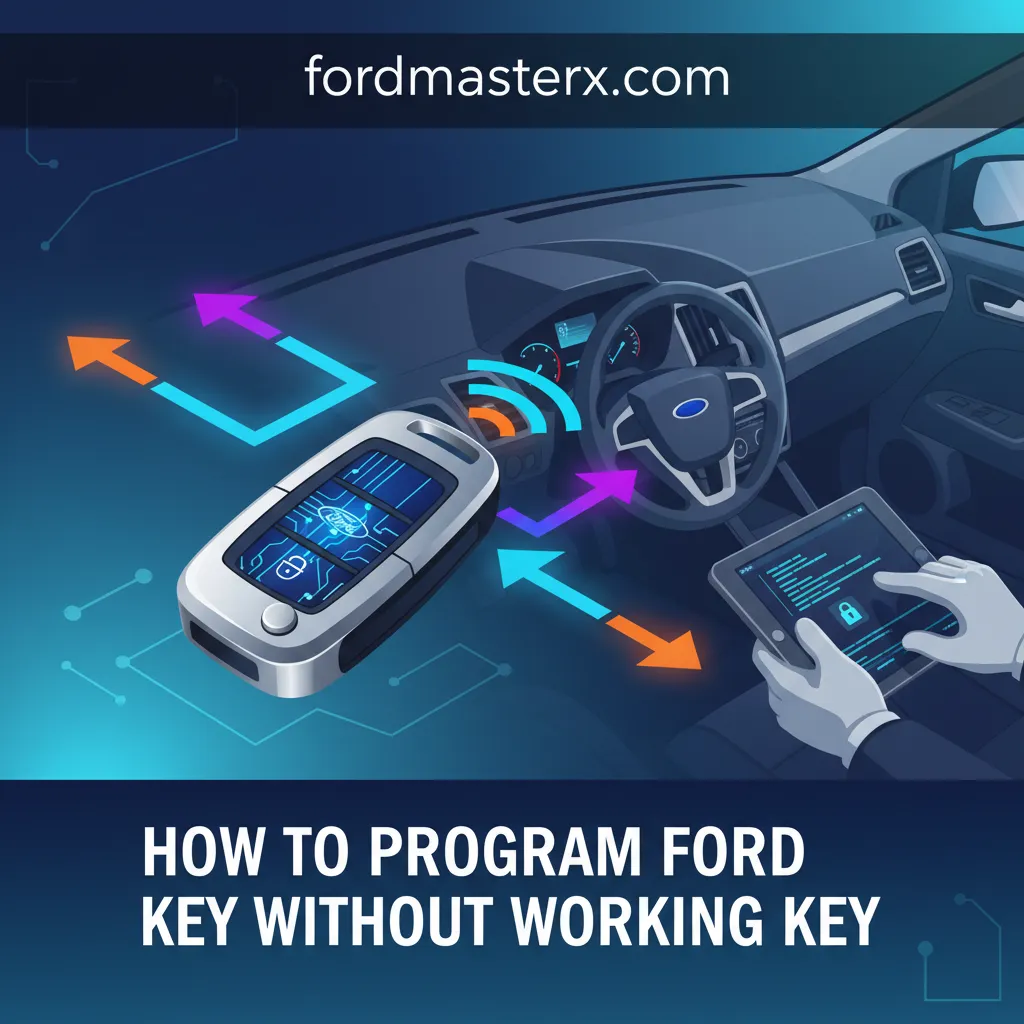
How To Program Ford Key Without Working Key: Step-By-Step Guide 2026

Losing all keys to your Ford can quickly turn into a frustrating and costly ordeal, leaving you stranded and your vehicle immobilized. The complexity of Ford’s Passive Anti-Theft System (PATS) means that simply cutting a new key blade is insufficient; the key must be electronically programmed to communicate with your vehicle’s security module. This guide specifically addresses the challenging scenario where you have no working key to facilitate the process. This expert guide will demystify the ‘all keys lost’ procedure for Ford vehicles, providing a detailed, step-by-step blueprint. You will learn the necessary tools, preparation, and programming steps, along with essential troubleshooting, enabling you to master this critical automotive task in 2026.

Understanding Ford’s Passive Anti-Theft System (PATS) and Key Programming Complexity
Recommended Best Deal Products


📤 Share Image
To effectively program a new Ford key, especially when no working key is available, it is essential to first learn the fundamental principles of Ford’s Passive Anti-Theft System (PATS). Introduced by Ford in 1996, PATS is an immobilizer system designed to prevent unauthorized engine starting by integrating transponder technology directly into the vehicle’s ignition key. Each PATS key contains a unique electronic transponder chip that communicates via a radio frequency (RF) signal with a transceiver ring located around the ignition cylinder. If the PATS module, which is part of the vehicle’s Powertrain Control Module (PCM) or Instrument Cluster (IC), does not recognize the transponder code, the engine will not start, or it will start and immediately die. This sophisticated system significantly bolsters vehicle security, and research indicates that approximately 70% of vehicle thefts prevented annually are attributed to immobilizer systems like PATS.
You must understand why programming a new key without an existing working key is significantly more complex than simply adding a duplicate. When you have a working key, the PATS system is already in an ‘authorized’ state, making the addition of a new key a relatively straightforward process often involving a simple sequence of key turns. However, an ‘all keys lost’ scenario requires the diagnostic tool to essentially ‘trick’ the PATS module into a programming mode from a cold start, which triggers advanced security protocols and often introduces mandatory time delays to deter theft. This process requires not only the correct equipment but also a deep nuanced understanding of the system’s security handshake.
The complexity is further influenced by the different generations of PATS. For instance, early Ford models like the 1996-1999 Focus or Fiesta often featured simpler PATS I systems, which might have less stringent security delays. As technology advanced, PATS II (roughly 2000-2007 models like certain F-150s, Explorers) introduced more robust encryption and often mandated a 10-minute security waiting period. The latest PATS III (found in modern F-150s, Escapes, Mustangs, especially after 2008) implements even more sophisticated algorithms, potentially longer security delays, and might require advanced diagnostic tools capable of interacting with more complex network architectures. Understanding your vehicle’s specific PATS generation is crucial as it directly impacts the programming procedures and the required specialized tools. Common scenarios that necessitate an ‘all keys lost’ programming procedure include instances where all original keys have been completely lost or stolen, or when acquiring a used vehicle with only one non-functional key, rendering it immobile.

Essential Tools and Preparations for DIY Ford Key Programming
Before attempting any key programming, thorough preparation is paramount. You need to discover the critical specialized diagnostic tools required. For Ford vehicles, this typically means an OBD-II scanner with key programming capabilities. While professional locksmiths and dealerships utilize high-end proprietary tools, savvy DIY enthusiasts can leverage more accessible options. For budget-conscious users, the combination of an ELM327 interface (ensure it’s a quality, modified version for Forscan) and the Forscan software (available for Windows and increasingly for mobile platforms) offers robust capabilities for many Ford models. For more advanced needs, tools like the Autel MaxiIM IM508/IM608 or XTool X100 Pad series provide broader vehicle coverage and professional-grade ‘all keys lost’ functionalities, offering a more streamlined process than Forscan but at a significantly higher investment.
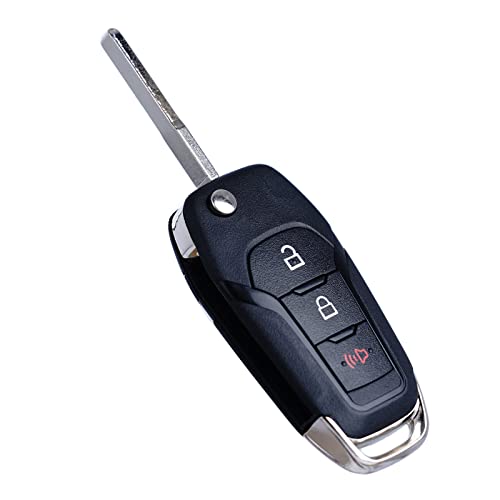
Next, you must understand the importance of selecting the correct blank transponder key. This is not a one-size-fits-all situation. Ford uses various transponder chip types (e.g., H72, H86, H94, H104), each compatible with specific models and years. Using an incorrect blank will lead to programming failure. Ensure the blank key you purchase matches your vehicle’s specific requirements, often found in your owner’s manual or by consulting an automotive locksmith. Blank transponder keys can range from $20 for a basic chip key to $150+ for a remote head key or a smart key with integrated remote functions, depending on type and features.
To master the essential pre-programming checks, begin with verifying your vehicle’s battery health. A stable vehicle battery voltage (above 12.0V) is absolutely crucial. Voltage drops during programming, especially during prolonged security delays, can corrupt the PATS module, necessitating an expensive tow and professional repair. Always connect a battery maintainer or charger if your battery is not fully charged. Additionally, have your Vehicle Identification Number (VIN) readily available, as it’s often required by programming software for correct vehicle identification and security access. Finally, explore the different types of Ford keys and their unique programming considerations:
- Standard Transponder Key: Basic key blade with an embedded transponder chip. Primarily for engine immobilization.
- Remote Head Key (RHK): Combines a key blade, transponder, and remote lock/unlock functions into a single unit. Remote functions are often programmed separately from the transponder.
- Smart Key / Proximity Key: Used in push-button start vehicles. These are more complex, communicating via low-frequency and high-frequency signals for proximity detection and ignition. Programming these often requires more advanced tools.
Ensure your chosen blank key corresponds to the type originally supplied with your vehicle, especially regarding its remote and smart key functionalities.
Always have the mechanical key blade cut by a locksmith or hardware store before attempting electronic programming. This ensures you can turn the ignition cylinder and physically test the key if programming is successful.
Step-By-Step Procedure: Programming a New Ford Key When All Keys Are Lost
Recommended Best Deal Products

This section provides a detailed, actionable guide for programming a Ford key when no working key is present. This process demands patience and precision, as bypassing the PATS security requires strict adherence to protocol and often involves mandatory waiting periods. Master this procedure to regain access to your Ford.

Audible — Listen Free for 30 Days
One free credit a month and thousands of titles included.
Listen Free for 30 Days As an Amazon Associate I earn from qualifying purchases.
📋
Step-by-Step Guide
Begin by accurately identifying your Ford model, year, and its specific PATS generation (e.g., PATS I, II, or III) to ensure your chosen diagnostic tool is fully compatible and you select the correct procedure. Connect your specialized diagnostic tool (e.g., Forscan with ELM327, Autel MaxiIM) to the vehicle’s OBD-II port, usually located under the dashboard near the steering column. Ensure all connections are secure, and your laptop or diagnostic tablet has sufficient battery life or is connected to a power source. Connect a battery maintainer to your vehicle’s battery to prevent voltage drops. Turn the ignition to the ‘ON’ position (without starting the engine) using your newly cut blank key.
Launch your diagnostic software and establish communication with the vehicle. Navigate through the software’s menu to locate the security or PATS module. For Forscan users, this typically involves selecting ‘Configuration and Programming’ and then either ‘Module Initialization’ or ‘Ignition Key Programming’ under the relevant module (e.g., PCM, Instrument Cluster, or BCM). Professional tools like Autel will often have a dedicated ‘Immo’ or ‘Key Programming’ section where you select ‘Ford’ and your specific model/year. The goal is to access the module responsible for key management.
Within the PATS programming menu, locate and execute the specific ‘All Keys Lost’ or ‘Ignition Key Erase and Program’ function. Your diagnostic tool will then attempt to establish a security handshake with the PATS module. Be prepared for potential security delays, which are mandatory waiting periods implemented by Ford to deter theft. The ’10-minute security access’ is common in Ford models from approximately 2000-2007 (PATS II), where the tool will display a countdown. Newer models (PATS III) may have different or more complex security handshake protocols, sometimes even requiring a 30-minute wait. During this delay, the vehicle’s anti-theft light (often a red car with a padlock icon) might blink rapidly. Do NOT interrupt power to the vehicle or the diagnostic tool during this period, as it can cause module corruption.
Once security access is granted (the tool will typically confirm this, and the anti-theft light might stop blinking or turn off), the software will prompt you to erase all previously programmed keys. Confirm this action. After the erasure, the PATS module is blank. You will then be prompted to program your new blank transponder key(s). Follow the on-screen instructions carefully. This usually involves inserting the first new key into the ignition, turning it to the ‘ON’ position (without starting the engine), and waiting for the tool to confirm successful programming. If you have multiple keys to program, repeat this step for each additional key, ensuring you program them one by one immediately after the previous one, as PATS typically requires a minimum of two keys for full functionality in some models. Incorrectly performing step 3 or 4 can necessitate a complete PATS module reset, often only achievable by a professional with specialized equipment.
After all desired keys are programmed, remove the diagnostic tool and turn the ignition off. Insert each newly programmed key and attempt to start the engine. Verify that the engine starts and runs correctly for each key. If your new key includes remote functions (lock/unlock, trunk release), these often need to be programmed separately. Consult your vehicle’s owner’s manual or your diagnostic tool’s specific functions for the remote programming sequence, which typically involves a series of key turns and button presses. Finally, reconnect your diagnostic tool to the OBD-II port and clear any diagnostic trouble codes (DTCs) that may have been generated during the programming process. Confirm that no PATS-related error codes remain.
Audible Premium Plus — Annual Membership
12 audiobook credits up front, plus the full Audible catalogue.
See Annual Plans As an Amazon Associate I earn from qualifying purchases.Troubleshooting Common Issues and Discovering Alternative Solutions
Recommended Best Deal Products


Even with meticulous preparation, you may encounter issues during the ‘all keys lost’ programming process. It is important to know how to diagnose common error messages displayed by programming tools. Messages like ‘Key Not Programmed’ often indicate an issue with the transponder chip itself, improper key insertion, or a communication breakdown during the final programming step. ‘Security Access Denied’ usually means the security delay wasn’t completed, or the tool couldn’t establish a proper handshake with the PATS module, potentially due to incorrect vehicle identification or an incompatible tool version. A ‘Communication Error’ could point to a faulty OBD-II port, loose cable connection, or an issue with the ELM327 adapter (if using Forscan).
You need to understand the impact of various factors on programming success. Low battery voltage is a primary culprit; even a slight drop below 12.0V can disrupt PATS programming. Incorrect key blanks are another frequent cause of failure; a generic key blank might not be recognized even if it visually resembles the original. Faulty transponder chips (rare in new blanks but possible) or improperly cut key blades can also prevent the key from turning the ignition, thus halting the electronic process. Research indicates that approximately 15-20% of DIY key programming attempts without a working key encounter issues due to specific vehicle nuances or tool limitations. A faulty OBD-II port can also hinder communication, making programming impossible.
When DIY programming is unsuccessful, it’s time to explore fallback options. The most reliable next step is consulting a certified automotive locksmith specializing in vehicle immobilizer systems. They possess advanced diagnostic equipment and often subscriptions to manufacturer-specific software, allowing them to overcome complex security challenges. Alternatively, a Ford dealership can perform the service, though often at a higher cost. You must evaluate the cost implications and benefits: the average cost of a locksmith call-out for ‘all keys lost’ can range from $150-$350, while a dealership visit might be $200-$500+, depending on your location, vehicle model, and the complexity of the PATS system. While DIY saves money on labor, repeated failures can lead to wasted time, tool expenses, and potentially more severe issues requiring professional intervention.
By The Numbers
Minimum Battery Voltage for Programming
DIY ‘All Keys Lost’ Failure Rate
Avg. Locksmith Call-out Cost
Avg. Dealership Service Cost
Mastering Ford Key Management: Best Practices and Preventive Measures for 2026
Having successfully navigated the complex process of programming a Ford key without a working key, the next crucial step is to master key management best practices and implement preventive measures to avoid future ‘all keys lost’ scenarios. The most fundamental recommendation is to always have at least one spare, fully functional key. This simple measure can save hundreds of dollars and immense frustration, transforming an ‘all keys lost’ emergency into a routine key duplication task.
You should also understand the maintenance requirements for modern Ford keys. For remote and smart keys, timely battery replacement is crucial. Research indicates that replacing a smart key battery every 2-3 years is recommended to prevent unexpected failures. A dead remote battery, while not preventing engine start for a transponder key, can hinder remote functions and complicate smart key operation (often requiring a manual override in a specific location within the vehicle). Additionally, explore emerging technologies and strategies for key tracking and recovery. Devices like Apple AirTags, Tile, or other Bluetooth/GPS trackers can be attached to key fobs, significantly mitigating the risk of permanent loss. These tools provide real-time location data, making retrieval of misplaced keys far easier.
Finally, consider the financial and practical implications of proactively acquiring a spare key. The typical cost of replacing a single smart key when a working one is available ranges from $200-$400 (including cutting and programming). This is significantly less than the emergency costs for an ‘all keys lost’ situation, which can be 50-100% higher, factoring in potential towing, specialized labor, and the urgency of the service. Investing in a spare key today is a small price to pay for future peace of mind and operational continuity.
Programming a Ford key without a working key requires specialized tools and understanding of PATS. Thorough preparation and a precise step-by-step approach are critical for successful DIY programming. Be prepared for security delays and potential troubleshooting, or consider professional assistance. Proactive key management, like having a spare, is the most effective prevention against future ‘all keys lost’ scenarios.
Empower yourself by understanding these advanced key programming techniques. Always prioritize safety, use reputable tools, and consider professional help when unsure to ensure your Ford remains secure and accessible.
Frequently Asked Questions
Can I program a Ford key without a working key using only the ignition sequence?
No, directly programming a Ford key using only a simple ignition sequence without a working key is generally not possible for most modern Ford vehicles. This method typically requires at least one previously programmed key to initiate the programming mode. When all keys are lost, specialized diagnostic tools capable of communicating directly with the vehicle’s PATS module via the OBD-II port are mandatory to reset the system and introduce new keys.
What is the ’10-minute wait’ or ’30-minute wait’ during Ford key programming?
The ’10-minute wait’ or ’30-minute wait’ refers to a security feature within Ford’s PATS system. When attempting an ‘all keys lost’ procedure or accessing certain security functions with a diagnostic tool, the PATS module imposes a mandatory lockout period. This delay is designed to prevent unauthorized key programming and enhance vehicle security, requiring patience while the system performs its internal security handshake before allowing access.
Do all Ford models use the same key programming procedure for ‘all keys lost’?
No, programming procedures for ‘all keys lost’ scenarios can vary significantly across different Ford models and model years due to evolving PATS generations and module designs. Factors such as whether the vehicle uses PATS I, PATS II, or PATS III, or if it features a traditional transponder key versus a smart key, will dictate the specific diagnostic tools, software commands, and security delays required. Always consult model-specific guides.
What are the risks of DIY Ford key programming without a working key?
DIY Ford key programming, especially without a working key, carries several risks. These include potentially bricking the PATS module if procedures are incorrect, using incompatible key blanks, draining the vehicle’s battery during prolonged programming attempts, or incurring costly damage to the vehicle’s electrical system. In most cases, professional locksmiths or dealerships possess the specialized tools and expertise to mitigate these risks effectively.
When should I call a professional locksmith or Ford dealership instead of DIY?
You should call a professional locksmith or Ford dealership if you lack the specialized diagnostic tools, encounter persistent error messages, or if the DIY process proves too complex or time-consuming. Professionals have access to advanced equipment, up-to-date software, and the technical expertise to perform ‘all keys lost’ programming efficiently and safely, often with guarantees for their work, saving you potential frustration and costly mistakes.