How Much Do Transmissions Weigh? Weight Guide by Type

Most passenger vehicle transmissions weigh between 100 and 400 pounds, depending on the vehicle size and transmission type. Automatic transmissions are significantly heavier than manual units, often requiring specialized lifting equipment for safe handling.
🎯 Key Takeaways
Recommended Best Deal Products


- Manual transmissions typically weigh between 75 and 160 pounds.
- Automatic transmissions generally range from 150 to 300 pounds.
- Heavy-duty truck transmissions can exceed 500 pounds when fully assembled.
- Transmission fluid adds roughly 15 to 30 pounds to the total weight.
- Aluminum housings significantly reduce weight compared to older cast-iron models.
Most vehicle transmissions weigh between 100 and 400 pounds, though the specific number depends heavily on your vehicle’s size and drivetrain. If you are planning a DIY swap or getting a shipping quote, you need to know that a compact car transmission is a manageable one-person lift with a jack, while a heavy-duty truck unit requires specialized equipment. Generally, the more gears and torque a transmission handles, the more metal and fluid it requires, driving up the total mass.

Prime for Young Adults — 6 Months Free
Students and 18–24s get six months of Prime free, then half price.
Start 6 Months Free As an Amazon Associate I earn from qualifying purchases.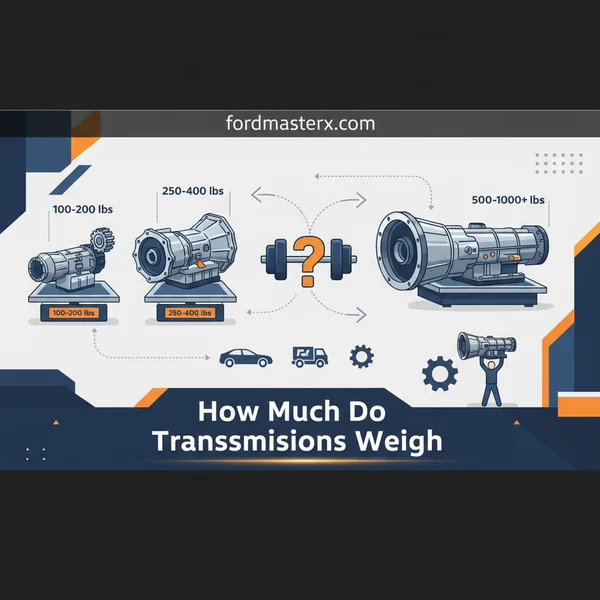
Knowing these weights is critical for safety and logistics. If you’re shipping a transmission, every 50 pounds changes your freight class and price significantly. If you’re working in your garage, knowing the weight helps you choose the right transmission jack or engine hoist. Underestimating the weight of a heavy 4L80E or an Allison transmission can lead to equipment failure or serious injury during removal. This guide breaks down those numbers so you can prepare your workspace or your shipping budget accurately.
Average Transmission Weights by Vehicle Category
The easiest way to estimate weight is by looking at the class of vehicle you are working on. Manufacturers scale the size of the transmission to match the engine’s power output and the vehicle’s total weight. A small commuter car doesn’t need the massive gears found in a work truck, resulting in a much lighter unit.

Compact and Mid-Size Cars
For most daily drivers, the transmission is relatively compact. These units are designed for fuel efficiency and space-saving, often using lightweight aluminum housings. You can expect the following ranges:
- Subcompact/Economy Cars: 100 to 130 lbs. These are often small 4-speed automatics or 5-speed manuals found in cars like the Honda Civic or Toyota Corolla.
- Mid-Size Sedans: 130 to 175 lbs. As engines move to 2.0L or 2.5L configurations, the transmissions get slightly beefier to handle increased torque.
- Sporty Coupes: 150 to 180 lbs. These often feature more robust cooling systems and thicker gear sets to handle aggressive driving.
Trucks, SUVs, and Heavy-Duty Pickups
Once you move into the world of towing and hauling, weights increase dramatically. These transmissions feature massive steel internal components and large fluid reservoirs to dissipate heat. If you are dealing with a 4×4, remember that the transfer case adds another 50 to 100 pounds on top of these figures.
- Light-Duty Trucks/SUVs: 175 to 250 lbs. This covers most half-ton pickups like the Ford F-150 or Chevy Silverado 1500.
- Heavy-Duty Diesel Pickups: 300 to 450 lbs. Units like the Allison 1000 or the Aisin AS69RC are massive. They require heavy-duty floor jacks and usually at least two people to stabilize during a swap.
- Full-Size Vans: 200 to 275 lbs. These often use the same transmissions as light-duty trucks but may have different tail housings that add slight weight variations.
From Start to Finish: Transmission Weights Explained
Recommended Best Deal Products


Understanding the weight of a vehicle’s transmission is crucial for DIY mechanics, shipping logistics, and shop safety. Whether you are planning a solo engine pull or calculating freight costs for a replacement part, knowing if a component weighs 100 pounds or 500 pounds determines what equipment you need. This guide provides a systematic approach to identifying, estimating, and verifying the weight of various transmission types to ensure your project stays on track and your workspace remains safe.
Step 1: Identify the Vehicle Layout and Drivetrain Type
What you need: Vehicle owner’s manual, VIN number, and a basic understanding of your car’s configuration (FWD, RWD, or AWD).
Instructions: The weight of a transmission varies significantly based on its configuration. Front-Wheel Drive (FWD) vehicles typically use a “transaxle,” which combines the transmission and differential into one unit. These generally weigh between 75 and 150 pounds for passenger cars. Rear-Wheel Drive (RWD) transmissions are separate from the rear differential and are often longer and thinner, weighing between 100 and 450 pounds depending on the vehicle’s size. All-Wheel Drive (AWD) units are the heaviest because they often include an integrated transfer case. Begin by identifying which layout your vehicle uses, as this sets the baseline for your weight estimate. A small Honda Civic transaxle is a one-person lift for some, while a Ford F-350 transmission is a dangerous heavy-duty object.
Pro Tip: Look for the transmission code on the driver-side door jamb sticker; this code allows you to find the exact dry weight in manufacturer specifications online.
Step 2: Differentiate Between Manual and Automatic Systems
What you need: Visual inspection of the gear shifter and clutch pedal presence.

Audible — Listen Free for 30 Days
One free credit a month and thousands of titles included.
Listen Free for 30 Days As an Amazon Associate I earn from qualifying purchases.Instructions: Internal components dictate the bulk of the weight. Manual transmissions are significantly lighter because they consist mostly of simple gear sets and syncros inside an aluminum or iron housing. A standard 5-speed manual for a compact car might weigh only 75 to 110 pounds. Conversely, automatic transmissions are packed with heavy hydraulic valve bodies, planetary gear sets, multiple clutch packs, and a massive steel torque converter. A typical 4-speed or 6-speed automatic for a sedan usually falls between 150 and 250 pounds. If you are dealing with a modern 8-speed or 10-speed automatic, expect even more weight due to the increased complexity and component count.
Pro Tip: If you are shipping a manual transmission, you can often use a standard heavy-duty cardboard box, but an automatic almost always requires a wooden pallet or crate.
Step 3: Account for the Torque Converter Weight
What you need: A drain pan and a basic wrench set to remove the converter if necessary.
Instructions: If you are dealing with an automatic transmission, the torque converter is a hidden weight “trap.” This doughnut-shaped steel component sits between the engine and the transmission and is often filled with fluid. A torque converter alone can weigh between 30 and 60 pounds. When people quote transmission weights, they often forget to mention if the converter is included. If you are pulling the transmission from a vehicle, the converter often slides off the input shaft unexpectedly. Always secure the converter with a bracket or remove it separately to prevent it from falling and causing injury or making the transmission lopsided during a lift.
Pro Tip: Drain the fluid from the torque converter before weighing it; residual fluid can add up to 5-10 pounds of “ghost weight” that shifts during movement.
Step 4: Factor in Transmission Fluid Capacity
What you need: A graduated drain bucket and manufacturer fluid specifications.
Instructions: Transmission fluid isn’t weightless. Most automatic transmissions hold between 8 and 15 quarts of Automatic Transmission Fluid (ATF). Since a gallon of ATF weighs approximately 7 pounds, a fully dressed transmission can be 15 to 25 pounds heavier than its “dry weight.” Manual transmissions usually hold much less fluid (2 to 4 quarts of gear oil), adding only about 4 to 8 pounds. When calculating the total weight for shipping or for the capacity of a transmission jack, always use the “wet weight” to ensure you have a margin of safety. If the unit is currently in the car, assume it is full and factor in the extra poundage accordingly.
Pro Tip: Always drain the fluid completely before removal to make the unit lighter and to prevent a massive, slippery mess on your garage floor.
Step 5: Categorize by Vehicle Class (Small vs. Heavy Duty)
What you need: Vehicle weight rating (GVWR) found on the door placard.
Instructions: The class of vehicle is the biggest indicator of extreme weight. For economy cars (Toyota Corolla, Mazda 3), expect the transmission to weigh 100–150 lbs. For mid-sized SUVs and light trucks (Ford Explorer, Chevy Tahoe), the transmission usually jumps to 200–300 lbs. If you are working on a heavy-duty diesel truck (Ram 3500 with an Aisin or Allison transmission), you are entering the “heavyweight” category where units can exceed 400 or even 500 pounds. These industrial-grade transmissions require specialized high-capacity jacks. Never attempt to “muscle” a truck transmission; the sheer mass can crush a standard trolley jack or cause serious physical injury if it tips over.
Audible Premium Plus — Annual Membership
12 audiobook credits up front, plus the full Audible catalogue.
See Annual Plans As an Amazon Associate I earn from qualifying purchases.Pro Tip: Allison transmissions used in GM trucks are notorious for their weight; never attempt to move these without a mechanical hoist or a team of three people.
Step 6: Assess Housing Material (Aluminum vs. Cast Iron)
What you need: A magnet and a visual inspection of the transmission case.
Instructions: Older transmissions from the 1960s and 70s often used cast iron cases, which are incredibly heavy. For example, an old Cast Iron Powerglide or a Chrysler 727 can feel like a lead anchor compared to a modern aluminum-cased unit. If a magnet sticks to the main case, it is iron, and you should add at least 40-60% more weight to your estimate compared to a modern equivalent. Most vehicles built after the mid-1980s use aluminum alloy housings to save weight and improve fuel economy. Aluminum units look dull grey and are non-magnetic. Knowing the material helps you decide if you can lift the tail shaft by hand or if you need mechanical assistance for every inch of movement.
Pro Tip: If the transmission has a “bellhousing” that is detachable, you can remove it to shed 10-20 pounds and make the unit more compact for storage.
Step 7: Prepare for Physical Weighing and Transport
What you need: A heavy-duty freight scale or a bathroom scale (for lighter units), a wooden pallet, and ratcheting straps.
Instructions: If you need an exact measurement for shipping, place the transmission on a pallet first. If using a standard bathroom scale for a manual transmission, place a piece of plywood on the scale to distribute the weight and prevent cracking the scale’s glass or plastic. Balance the transmission on its pan (for automatics) or its side (for manuals), ensuring it is stable. Subtract the weight of the pallet or plywood from the total. If the unit is too heavy for a home scale, you can use a “crane scale” attached to an engine hoist. Record the weight and then use ratcheting straps to secure the transmission to the pallet so it doesn’t shift during transport.
Pro Tip: When shipping, always round up to the nearest 10 pounds; shipping carriers will re-weigh the item and charge hefty fees if your estimate is even slightly low.
✅ Final Checklist
- Confirm if the weight estimate includes the torque converter (for automatics).
- Verify if the transmission is “dry” (empty of fluid) or “wet” (full of fluid).
- Check the housing material (aluminum vs. iron) to adjust weight expectations.
- Ensure the lifting equipment (jack or hoist) is rated for at least 1.5x the estimated weight.
- Secure the transmission to a pallet or stand before attempting to move it across a floor.
Important Notes:
- Safety: Never get under a transmission that is supported only by a floor jack. Use a dedicated transmission jack with safety chains.
- When to Seek Help: If the transmission weighs over 150 lbs, do not attempt to lift it manually. Use an engine hoist or a second person.
- Estimated Time: Identifying and weighing a transmission takes about 30-45 minutes once it is out of the vehicle.
- Cost: Freight shipping for a transmission typically ranges from $150 to $450 depending on weight (150-500 lbs) and distance.
Comparing Weights: Manual, Automatic, and CVT Systems
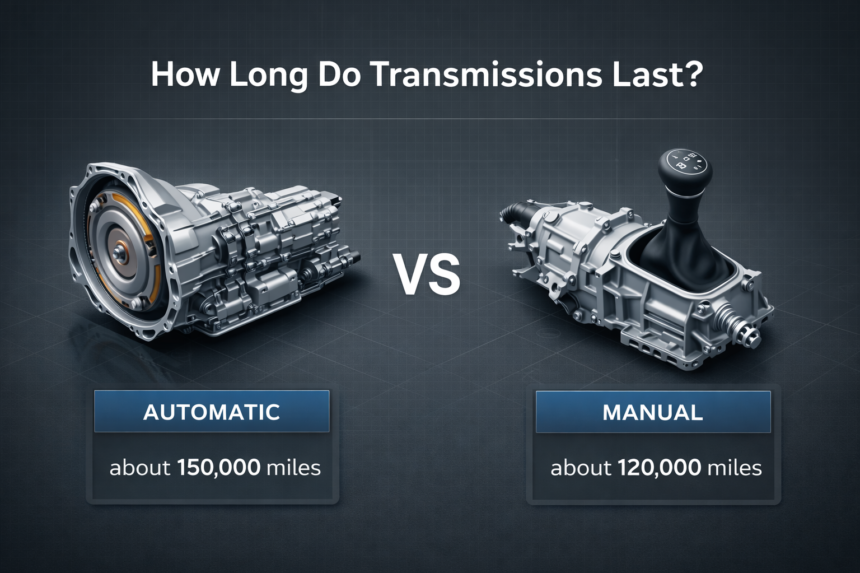
The internal design of your transmission is the biggest factor in its final weight. While they all perform the same basic task, the number of parts inside varies wildly. Generally, manual transmissions are the lightest because they lack the complex hydraulic pumps and heavy torque converters found in automatics.
Manual Transmissions: The Lightweight Choice
Manual transmissions are essentially a box of gears and a few shift forks. Because they rely on a simple clutch rather than a fluid-filled torque converter, they save a significant amount of mass. Most passenger car manuals weigh between 75 and 150 pounds. For example, a common Tremec T-5 weighs only about 75 pounds dry, making it easy to move by hand. Even heavy-duty manual transmissions for trucks rarely exceed 200 pounds unless they are designed for commercial semi-truck use.
Automatic and CVT Systems: Complexity Adds Mass
Automatic transmissions are significantly heavier due to their complexity. They contain planetary gear sets, multiple clutch packs, a hydraulic valve body, and a heavy torque converter. A torque converter alone can weigh 30 to 50 pounds when filled with fluid.
- Standard Automatics: 150 to 350 lbs. The more speeds the transmission has (e.g., a modern 10-speed vs. an old 4-speed), the more internal hardware it carries.
- CVT (Continuously Variable Transmission): 120 to 180 lbs. These are usually lighter than traditional automatics because they replace heavy gear sets with a belt-and-pulley system. However, they still require a hydraulic system and fluid, keeping them heavier than a standard manual.
- Dual-Clutch Transmissions (DCT): 175 to 250 lbs. These act like two manual transmissions in one housing. The sophisticated electronics and dual-clutch assemblies make them quite heavy for their size.
The Impact of Housing Materials
Don’t forget the outer shell. Older transmissions from the 1960s and 70s often used cast iron housings, which can add 50 or 60 pounds to the total weight compared to modern aluminum versions. If you are restoring a classic car, be prepared for a much heavier lift than you would experience with a modern vehicle of the same size. Modern aluminum alloys have allowed manufacturers to keep weights down even as they add more gears and electronic sensors to the assembly.
Key Factors That Influence Total Transmission Weight
Recommended Best Deal Products



While the type of transmission—manual versus automatic—provides a general weight range, several specific variables can push a unit to the lighter or heavier end of the scale. Understanding these factors is essential if you are trying to calculate the exact load for a vehicle suspension or a shipping quote.
Material Composition: Aluminum vs. Cast Iron
The biggest factor in transmission weight is the material used for the external casing. Modern vehicles almost exclusively use aluminum alloys, which are significantly lighter and dissipate heat more effectively. However, if you are working on a vintage muscle car or a heavy-duty truck from the mid-20th century, you are likely dealing with a cast-iron case. A cast-iron transmission can easily weigh 50% more than an aluminum counterpart of the same size. For example, an old cast-iron Powerglide is a beast to move compared to a modern aluminum 6L80.
Internal Components and Gear Counts
As technology has advanced, transmissions have gained more “speeds.” A 10-speed automatic naturally contains more planetary gear sets, clutches, and sensors than an old 3-speed unit. Additionally, the intended use of the vehicle plays a role:
- Heavy-Duty Internals: Transmissions built for towing (like the Allison 1000) feature thickened shafts and beefier gears to handle high torque.
- Fluid Capacity: Don’t forget the “wet weight.” Transmission fluid weighs roughly 7 pounds per gallon. A large truck transmission might hold 3 to 4 gallons, adding 20–30 pounds to the total.
- The Torque Converter: In automatics, the torque converter is a heavy steel component filled with fluid. A large converter alone can weigh 30 to 50 pounds.
Logistical Considerations for Shipping and Handling
Knowing the weight of a transmission isn’t just a matter of curiosity; it is a vital safety and financial requirement. Because most transmissions exceed the 150-pound limit for standard residential carriers, you have to approach moving them with a different strategy than a standard package.
Freight Shipping and Weight Accuracy
When shipping a transmission, you are entering the world of LTL (Less Than Truckload) freight. Carriers will ask for the “crated weight.” It is a common mistake to provide the “dry weight” from a spec sheet, only to be hit with overage fees later. Always account for the weight of the wooden pallet (typically 30–50 lbs) and the heavy-duty plastic or wood strapping used to secure the unit. If you are shipping a transmission for a core return, ensure all fluid is drained, as leaks can lead to massive environmental cleanup fines from the carrier.
Safety Equipment and Shop Handling
Because even a “light” manual transmission weighs as much as a large suitcase, you should never attempt to pull or install one without the right gear. Practical tips for handling include:
- Transmission Jacks: Unlike a standard floor jack, these have a wide cradle and chains to balance the awkward center of gravity.
- Engine Hoists: If the transmission is still mated to the engine, the combined weight can exceed 600–800 pounds, requiring a heavy-duty shop crane.
- Two-Person Rule: Even if you think you can lift 150 pounds, the awkward shape of a transmission makes it dangerous to handle alone. Always have a spotter or a second set of hands.
Pro Tip: If you are receiving a transmission via freight, always specify if you need a liftgate service. Without a loading dock or a forklift, you will not be able to get a 300-pound crated transmission off the back of a semi-truck.
Conclusion
Understanding how much a transmission weighs is the first step in a successful repair or restoration project. From lightweight 75-pound manual units to 400-pound heavy-duty automatics, these components represent one of the heaviest parts of any vehicle. Remember that materials, fluid capacity, and gear count all play a role in the final number on the scale.
Before you begin your next project, take the time to verify the specific dry weight of your model and ensure you have the proper lifting equipment ready. If you are shipping a unit, always factor in the weight of the pallet to avoid unexpected fees. Ready to get started? Double-check your jack’s weight rating today and ensure your workspace is prepared for the heavy lifting ahead!
❓ Frequently Asked Questions
What is the difference between dry weight and wet weight?
Dry weight refers to the transmission without any internal fluids, while wet weight includes the torque converter and all necessary transmission fluid. Depending on the unit’s capacity, the difference is typically 20 to 35 pounds.
How much does a CVT transmission weigh compared to a traditional automatic?
Continuously Variable Transmissions (CVTs) are generally lighter than traditional multi-speed automatics, typically weighing between 120 and 175 pounds. Their simplified internal belt-and-pulley system reduces the heavy gear sets found in standard automatics.
Why are automatic transmissions so much heavier than manuals?
Automatic transmissions contain complex hydraulic systems, heavy planetary gear sets, and a massive torque converter. These components, combined with the larger valve bodies required for shifting, add substantial mass compared to the simpler shaft-and-gear design of a manual.
How do materials like aluminum or cast iron affect the weight?
Modern transmissions use aluminum alloy housings which can save 50 pounds or more compared to vintage cast-iron cases. High-performance units may even use magnesium components to further shave weight for racing applications.
What should I estimate for shipping weight when selling a transmission?
When shipping, you must account for the dry weight of the unit plus the weight of a heavy-duty pallet and crating materials. Typically, you should add 40 to 60 pounds to the unit’s dry weight for an accurate freight estimate.
How much does a heavy-duty Allison transmission weigh?
Commercial-grade transmissions like the Allison 1000 series found in heavy-duty pickups weigh approximately 330 pounds dry. If you include the fluid and the heavy torque converter, the service weight can approach 375 pounds.