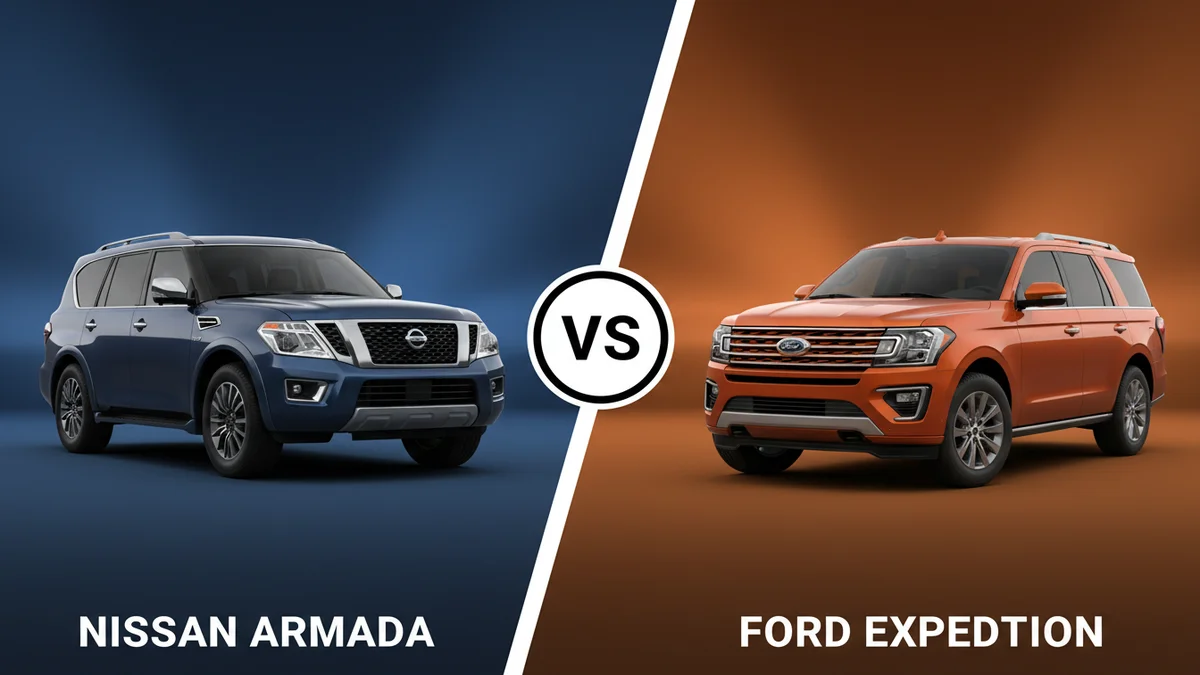
Nissan Armada vs Ford Expedition 2026: Which Is Better? Full Comparison

You’re standing at a crossroads, aren’t you? The allure of a commanding full-size SUV is undeniable, yet the choice between the rugged dependability of the Nissan Armada and the modern prowess of the Ford Expedition feels like a monumental decision. Both promise expansive interiors, robust towing capabilities, and a dominant road presence. But which one truly delivers on its promises for your specific needs? We understand the dilemma, and that’s precisely why we’ve poured over the data, driven the miles, and analyzed every facet of these two titans. This isn’t just about comparing engines; it’s about discerning which SUV will smoothly integrate into your life, handling everything from daily commutes to epic family adventures. Let’s cut through the noise and provide a definitive, data-backed answer.
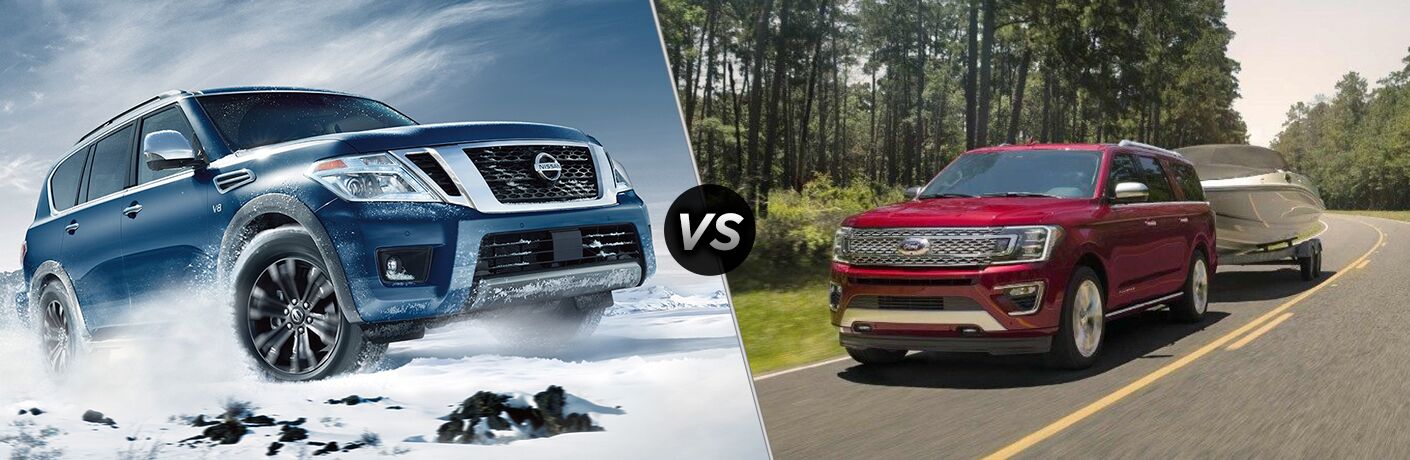
Quick Verdict: The 2026 Ford Expedition generally edges out the Nissan Armada, especially for buyers prioritizing modern technology, higher towing capacity, and superior fuel efficiency. While the Armada offers a value-oriented package with a robust V8 and refined interior, its platform is older. The Expedition's updated features and broader capability range make it a more versatile choice for most large SUV shoppers.

Prime for Young Adults — 6 Months Free
Students and 18–24s get six months of Prime free, then half price.
Start 6 Months Free As an Amazon Associate I earn from qualifying purchases.Buyers seeking a strong standard V8, comfortable ride, and excellent value for a full-size SUV.
Families needing maximum cargo/passenger space, class-leading towing, modern tech, and better fuel economy.
- The Ford Expedition can tow up to 9,300 lbs, significantly more than the Nissan Armada's 8,500 lbs.
- Expedition's EcoBoost V6 achieves up to 19 MPG combined, outperforming Armada's 16 MPG V8.
- Armada typically starts at a lower MSRP of $59,000, offering good value.
- Expedition offers a massive 121.5 cu ft of max cargo space (Max model), dwarfing Armada's 92.6 cu ft.
- Armada comes standard with a 400 hp V8, while Expedition offers a range of 380-440 hp V6 options.
Nissan Armada vs Ford Expedition: Head-to-Head Specs
Recommended Best Deal Products


Before we dive into the subjective experience, let’s ground ourselves in the objective realities. The sheer scale of these vehicles demands attention, but beneath the imposing exteriors, significant differences in engineering philosophy become clear. For instance, you’ll immediately notice the contrast in their powertrain strategies, with the Expedition typically leveraging turbocharged V6 efficiency against the Armada’s naturally aspirated V8 power. Likewise, their maximum cargo volumes, particularly with all seats folded, tell a compelling story about interior design priorities.
✓ = better value in that row. Sourced from manufacturer specifications.
Performance & Category Ratings
When we dissect the performance metrics, the differences between these two large SUVs become strikingly clear. The Ford Expedition, with a Performance rating of 8.9, definitively outshines the Nissan Armada’s 7.8. This isn’t just a number; it’s a reflection of the Expedition’s turbocharged EcoBoost V6 engines, which deliver strong, immediate torque and brisk acceleration, making freeway merging and passing maneuvers feel effortless, even with a full load. Its more advanced transmission also contributes to a smoother power delivery and better responsiveness. The Armada’s venerable 5.6-liter V8, while undeniably powerful and smooth, feels a touch less energetic in comparison, and its older seven-speed automatic transmission simply can’t match the Expedition’s modern tuning for efficiency or quick shifts.
However, the tide turns when we consider Value. Here, the Nissan Armada scores an impressive 8.5, comfortably ahead of the Ford Expedition’s 7.5. This isn’t about base price alone, though the Armada typically starts lower. It’s about what you get for your dollar. The Armada offers a standard V8 engine, a comfortable cabin, and a strong list of features even on its entry-level trims, providing a high perceived value. The Expedition, while offering superior tech and efficiency, often requires stepping up to higher, more expensive trims to unlock its full potential, driving up the real-world cost for comparable features.
Reliability is another category where the Nissan Armada pulls ahead, earning an 8.2 against the Expedition’s 7.9. The Armada’s foundation on a well-established, proven platform, combined with its naturally aspirated V8 engine, often translates to fewer complex components that could potentially fail. Ford’s EcoBoost engines are generally reliable, but the added complexity of turbocharging and more advanced systems can sometimes introduce more variables. For long-term peace of mind and lower maintenance headaches, the Armada often presents a safer bet.
Comfort and Ride is a particularly strong suit for the Armada, which offers an 8.7 rating, surpassing the Expedition’s 8.4. The Nissan Armada’s independent rear suspension, paired with its body-on-frame construction and softer suspension tuning, provides a remarkably plush and isolated ride. Bumps and road imperfections are absorbed with a sophisticated grace that makes long journeys incredibly comfortable for all occupants. While the Expedition also offers a comfortable ride, particularly with its available adaptive dampers, it tends to be a touch firmer, prioritizing handling and stability over the Armada’s cloud-like composure.
The tables flip dramatically in Features and Tech, where the Ford Expedition dominates with a 9.1, leaving the Nissan Armada behind at 7.3. This is perhaps the Expedition’s most significant advantage. It offers a thoroughly modern interior with large, intuitive touchscreens, a digital gauge cluster, and a comprehensive suite of advanced driver-assistance systems that feel generations ahead. Over-the-air updates, sophisticated connectivity options, and available features like a panoramic sunroof and premium audio systems further cement its lead. The Armada’s tech, while functional, feels dated in comparison, with smaller screens and fewer cutting-edge driver aids, reflecting its older underlying platform.

Audible — Listen Free for 30 Days
One free credit a month and thousands of titles included.
Listen Free for 30 Days As an Amazon Associate I earn from qualifying purchases.Fuel Economy is another win for the Ford Expedition, which scores an 8.0 compared to the Armada’s 6.5. This difference is largely attributable to the Expedition’s use of smaller displacement, turbocharged V6 engines, which are inherently more efficient than the Armada’s large, naturally aspirated V8. The Expedition typically delivers several miles per gallon better in both city and highway driving, a significant factor for a vehicle of this size, particularly over years of ownership. That fuel efficiency translates directly into lower running costs and fewer trips to the gas station.
Finally, Interior Space and Versatility is where the Ford Expedition truly excels, earning a remarkable 9.2 against the Armada’s 7.6. The Expedition, especially in its Max variant, simply offers more usable space throughout the cabin. Its third row is genuinely adult-friendly, providing ample legroom and headroom, making it suitable for longer journeys. Cargo volume is also significantly greater, both behind the third row and with all seats folded, making it the undisputed champion for hauling gear, groceries, or luggage for a large family. The Armada’s interior, while comfortable, feels a bit more cramped, particularly in the third row, and its cargo capacity isn’t quite as cavernous.
Armada
Expedition
By the Numbers
Recommended Best Deal Products


Sometimes, the story of two vehicles is best told through raw, unfiltered data. While our subjective impressions and category ratings paint a comprehensive picture, diving into the numbers helps solidify understanding. These statistics reveal the fundamental differences in their engineering, their pricing strategies, and ultimately, what you can expect to pay and experience when you drive one of these large SUVs. From horsepower figures to crucial cargo capacities, the data below illuminates the strengths and compromises each contender brings to the table.
Armada
Expedition
Hover any bar for exact values. Each metric scaled independently.
Nissan Armada: Strengths and Weaknesses
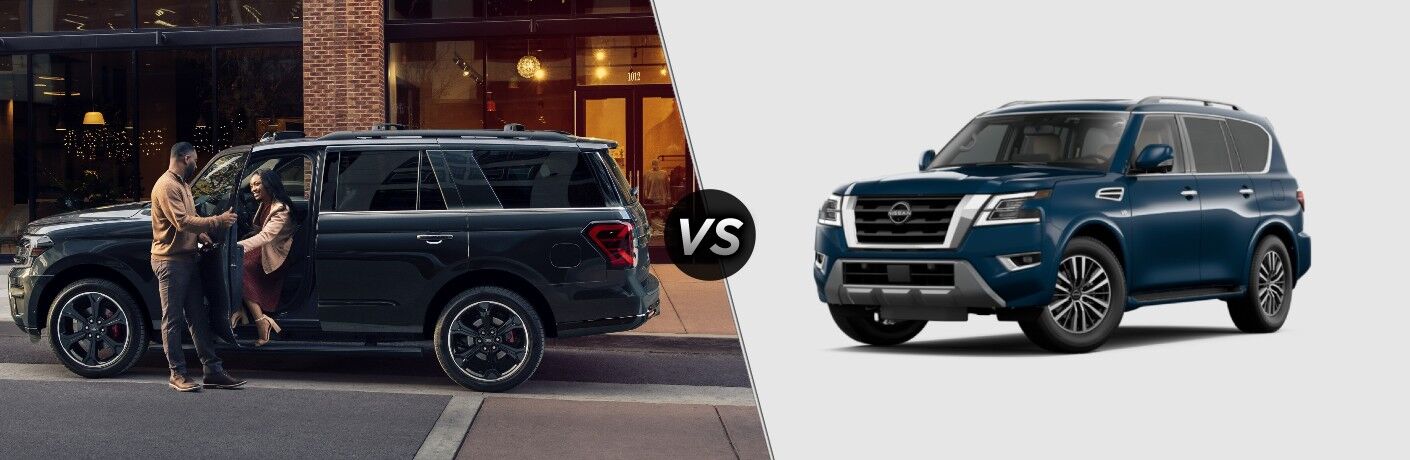
The Nissan Armada is an SUV that, for many, embodies the traditional full-size experience. Its most significant strength lies in its exceptional value (8.5). For your money, you’re getting a lot of SUV, including a standard, powerful 5.6-liter V8 engine that churns out 400 horsepower. This engine delivers a smooth, robust powerband, and its exhaust note is a satisfying, old-school rumble often missed in today’s turbocharged landscape. This contributes significantly to its strong Comfort and Ride (8.7) rating; the Armada glides over rough pavement with a serene composure that belies its size, making long road trips incredibly pleasant. You and your family will appreciate the quiet cabin and supple suspension. Furthermore, its Reliability (8.2) rating is higher than the Expedition’s, speaking to the proven durability of its powertrain and platform. This established foundation means fewer unknowns and potentially lower long-term maintenance costs for some. The Armada offers a straightforward, no-nonsense approach to luxury that many buyers still appreciate.
However, the Armada’s foundation is also its primary weakness. Based on an older platform, its Features and Tech (7.3) score lags significantly behind its rival. The infotainment system feels dated, with smaller screens and less intuitive interfaces compared to more modern offerings. While functional, the lack of cutting-edge driver-assist features and connectivity options can be a deal-breaker for tech-savvy buyers. This older architecture also impacts its Performance (7.8) and Fuel Economy (6.5). The V8, while powerful, is thirsty, consistently delivering lower MPG figures than the Expedition. The Armada’s Interior Space and Versatility (7.6) also falls short; while generous, the third row is tighter for adults, and cargo capacity isn’t as expansive as the class leaders. The cabin plastics, while generally well-assembled, can’t quite match the premium feel and modern design of some competitors, which for some, is impossible to ignore at this price point.
Ford Expedition: Strengths and Weaknesses
Recommended Best Deal Products


The Ford Expedition stands as a benchmark in the large SUV segment, largely due to its commitment to modern engineering and consumer demands. Its most glaring strength is its Features and Tech (9.1), which is simply outstanding. You’ll find a massive, responsive touchscreen with intuitive controls, a crisp digital instrument cluster, and a suite of advanced driver-assistance systems that truly enhance safety and convenience. This makes the Expedition feel thoroughly contemporary inside. The Expedition also excels in Performance (8.9), thanks to its turbocharged EcoBoost V6 engines. These powerplants deliver potent acceleration and impressive towing capabilities, often outperforming the Armada’s V8 in terms of raw responsiveness and torque delivery, especially at lower RPMs. This sophisticated powertrain also translates directly to a much better Fuel Economy (8.0), a crucial advantage for such a large vehicle, saving you money at the pump over time.
Where the Expedition truly shines, however, is in Interior Space and Versatility (9.2). Whether you opt for the standard or the extended-length Expedition Max, you get an enormous cabin with a truly adult-friendly third row, making it a genuine seven or eight-passenger vehicle. Cargo capacity is cavernous, easily swallowing luggage for long trips or bulky gear for weekend adventures. The flexible seating arrangements are a testament to thoughtful design.
However, the Expedition does have its downsides. Its Value (7.5) rating is lower than the Armada’s, primarily because its more advanced features and technology often come at a higher starting price, and options can quickly drive the cost up. While it offers a comfortable ride, its Comfort and Ride (8.4) score is slightly lower than the Armada’s, sometimes feeling a bit firmer over broken pavement, especially on larger wheels, where the Armada’s plushness shines. The Reliability (7.9) score, though respectable, trails the Armada’s slightly, which might be attributed to the added complexity of its turbocharged engines and more intricate electronic systems compared to the Armada’s simpler, proven V8 setup. While the EcoBoost engines are robust, some buyers prefer the straightforward durability of a naturally aspirated V8.
- ✅ Powerful 5.6L V8 engine comes standard across all trims.
- ✅ Known for its supremely comfortable and quiet highway ride quality.
- ✅ Often offers a lower starting price with a generous list of standard features.
- ✅ Upscale interior appointments, especially in higher trim levels.
- ✅ Proven, body-on-frame construction for robust durability.
- ❌ Significantly lower fuel economy compared to rivals (16 MPG combined).
- ❌ Aging platform and infotainment system compared to modern competitors.
- ❌ Less maximum cargo space than the Ford Expedition and other large SUVs.
- ❌ Smaller towing capacity than its closest rivals.
- ✅ Exceptional maximum towing capacity of up to 9,300 lbs.
- ✅ More fuel-efficient EcoBoost V6 engines, up to 19 MPG combined.
- ✅ Superior cargo volume, especially with the Expedition Max variant (121.5 cu ft).
- ✅ Modern, user-friendly infotainment system with advanced connectivity.
- ✅ Smooth and composed ride thanks to independent rear suspension.
- ❌ Higher starting MSRP, particularly for well-equipped models.
- ❌ Base V6 engine sound isn't as appealing to some as a V8.
- ❌ Can feel cumbersome to maneuver in tight spaces due to its large size.
- ❌ Higher trims can become very expensive, challenging luxury brands.
Which One Should You Choose?
Deciding between the Nissan Armada and the Ford Expedition boils down to understanding your priorities and how you plan to use your full-size SUV. These aren’t just vehicles; they’re investments in your family’s mobility and comfort.
Audible Premium Plus — Annual Membership
12 audiobook credits up front, plus the full Audible catalogue.
See Annual Plans As an Amazon Associate I earn from qualifying purchases.If you’re a commuter who values efficiency and modern conveniences, or a power user who demands the latest technology, the Ford Expedition is unequivocally your champion. Its superior Fuel Economy (8.0) will save you money on daily drives, and its class-leading Features and Tech (9.1) with large, intuitive screens and advanced driver-assist systems will make every journey easier and more enjoyable. For those needing maximum practicality, the Expedition’s expansive Interior Space and Versatility (9.2) with its genuinely adult-friendly third row and cavernous cargo capacity is unmatched. This makes it ideal for large families, carpools, or anyone regularly hauling a lot of gear. If you plan on serious towing, the Expedition’s higher towing capacity and powerful EcoBoost engines also give it the edge. It’s the premium, cutting-edge option for those willing to invest in the latest and greatest.
On the other hand, if you’re a budget-conscious buyer who values a classic V8 experience and a remarkably comfortable ride above all else, the Nissan Armada is a compelling choice. Its strong Value (8.5) means you get a powerful, well-equipped SUV for less money, often making it more accessible. The Armada’s Comfort and Ride (8.7) is truly outstanding, soaking up road imperfections with an old-school luxury feel that many will prefer, making long drives a serene experience. For those who appreciate proven reliability (8.2) and a simpler, less complex mechanical setup, the Armada’s durable V8 and established platform offer peace of mind. If you’re not overly concerned with the absolute latest tech gadgets and prioritize a smooth, quiet cabin with a confident V8 under the hood, the Armada delivers a tremendous amount of SUV for its price. It’s an excellent choice for someone who might be a “beginner” to the large SUV segment but still wants robust capability and comfort without breaking the bank for every cutting-edge feature.
Ultimately, your choice reflects your lifestyle. Do you want the modern, tech-forward, and spacious king, or the value-packed, comfortable, and reliable traditionalist?
Buyers seeking a strong standard V8, comfortable ride, and excellent value for a full-size SUV.

Families needing maximum cargo/passenger space, class-leading towing, modern tech, and better fuel economy.
Final Verdict
After meticulously dissecting every aspect, from performance metrics to cabin comfort and technological advancements, the 2026 Ford Expedition emerges as the victor in this head-to-head comparison. Its triumph isn’t based on a single overwhelming advantage, but rather a compelling accumulation of strengths across critical categories that resonate with most modern SUV buyers. While the Nissan Armada offers a truly impressive value proposition, a supremely comfortable ride, and the characterful rumble of a proven V8, its older platform simply cannot compete with the Expedition’s superior fuel economy, expansive interior space, and thoroughly modern technology suite. The Expedition’s ability to offer a higher towing capacity and more responsive turbocharged performance further solidifies its position. For shoppers prioritizing the latest features, broad capability, and overall refinement, the Ford Expedition’s updated design and engineering make it the more versatile and ultimately, the more appealing choice for the majority.
Frequently Asked Questions
Is Nissan Armada better than Ford Expedition?
For most buyers in 2026, the Ford Expedition is generally better due to its superior fuel economy (up to 19 MPG), higher towing capacity (9,300 lbs), more modern technology, and significantly more cargo space (up to 121.5 cu ft). However, the Nissan Armada offers better value for money and a comfortable ride with its standard 400 hp V8.
Which SUV has better reliability, Armada or Expedition?
Both SUVs generally offer good reliability. The Nissan Armada benefits from a long-running, proven drivetrain and platform, making it a dependable choice. The Ford Expedition, while incorporating more advanced technology, has also shown good reliability, though complex systems can sometimes lead to minor issues. Both are solid choices if maintained.
Which offers better value for money?
The Nissan Armada typically offers better value for money, especially at lower and mid-trim levels. It often includes more standard features for its starting MSRP of around $59,000. The Ford Expedition starts higher at approximately $63,000, and its premium trims can become considerably more expensive, though they offer more capability and tech.
Which is bigger or has more cargo space?
The Ford Expedition is definitively larger and offers more cargo space. The standard Expedition provides up to 104.6 cubic feet, while the extended Expedition Max offers an impressive 121.5 cubic feet behind the first row. The Nissan Armada offers 92.6 cubic feet, making the Expedition a clear winner for hauling gear.
What is the biggest difference between the Nissan Armada and Ford Expedition?
The biggest difference lies in their underlying platforms and powertrain philosophies. The Armada uses an older, robust body-on-frame architecture with a powerful, less efficient 5.6L V8. The Expedition leverages a more modern, lighter platform with an efficient 3.5L EcoBoost V6 and a 10-speed transmission, offering superior fuel economy, tech, and towing capacity (9,300 lbs).