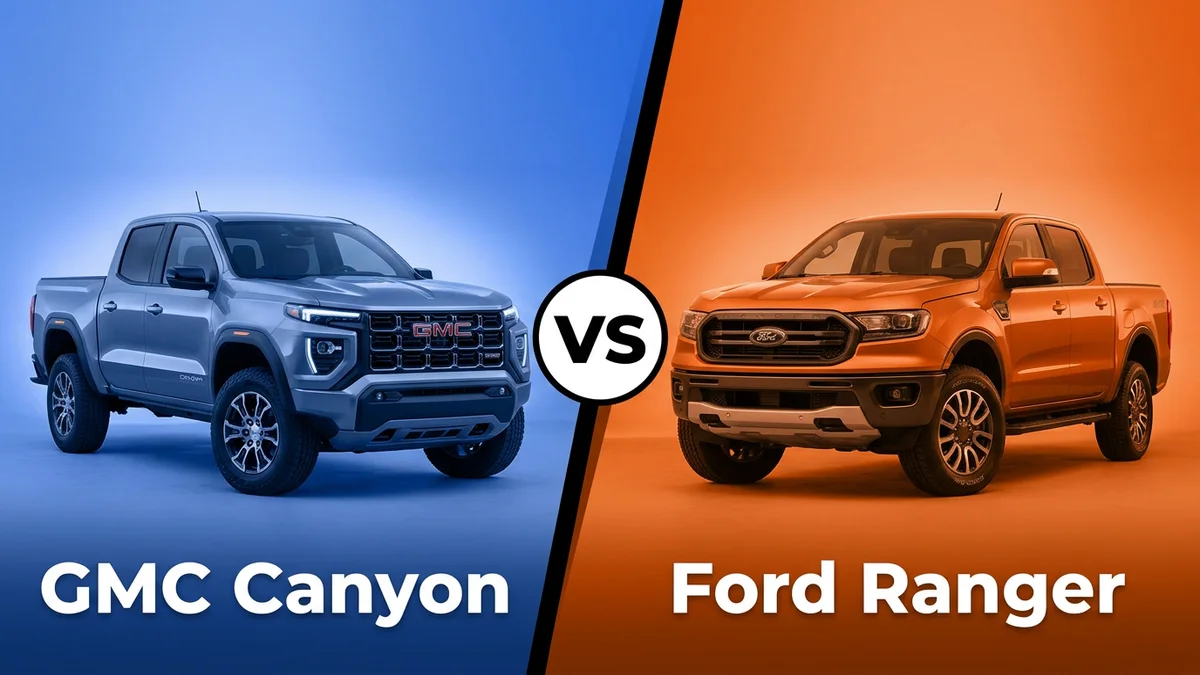
2026 GMC Canyon vs Ford Ranger: Which Is Better? Full Comparison

The 2026 Ford Ranger delivers a full point advantage in Value compared to the 2026 GMC Canyon, scoring an 8.5 against the Canyon’s 7.5. This isn’t just a number; it represents a significant real-world difference for buyers scrutinizing every dollar. While both mid-size trucks fiercely compete for your driveway, their distinct philosophies carve out clear paths for different drivers. This head-to-head showdown will dissect every facet, from raw power to creature comforts, helping you decide which truck truly earns its place.
Quick Verdict: The 2026 GMC Canyon edges out the Ford Ranger for buyers prioritizing a premium interior, higher standard torque, and a more refined ride. However, the Ford Ranger provides stronger overall value, higher maximum payload capacity in some configurations, and a broader engine lineup, making it the more versatile choice for budget-conscious buyers and those needing maximum utility.

Prime for Young Adults — 6 Months Free
Students and 18–24s get six months of Prime free, then half price.
Start 6 Months Free As an Amazon Associate I earn from qualifying purchases.Buyers seeking a premium feel, advanced off-road tech, and higher standard torque.
Value-focused buyers needing strong utility, diverse engine options, and higher max payload.
- The 2026 GMC Canyon offers 430 lb-ft of torque, surpassing the Ford Ranger's 400 lb-ft (with optional V6).
- Ford Ranger offers a lower estimated starting MSRP of $35,000 compared to the Canyon's $39,000.
- The Canyon has a slightly higher max towing capacity of 7,700 lbs versus the Ranger's 7,500 lbs.
- Ranger leads in maximum payload with up to 1,805 lbs, exceeding Canyon's 1,640 lbs.
- Canyon features a larger 11.3-inch standard infotainment screen, while Ranger offers 10.1 inches.
GMC Canyon vs Ford Ranger: Head-to-Head Specs
Recommended Best Deal Products


Digging into the raw specifications reveals how these two contenders aim to differentiate themselves right from the factory floor. While the 2026 Ford Ranger, for instance, might boast an impressive maximum payload capacity of 1,900 lbs in its most capable configuration, the 2026 GMC Canyon responds with a standard powertrain designed for immediate grunt. Its base engine, a 2.7L turbocharged unit, delivers a robust 430 lb-ft of torque, ensuring strong initial acceleration and confident towing from the get-go.
✓ = better value in that row. Sourced from manufacturer specifications.

Performance & Category Ratings
When we break down the established ratings, a clear picture emerges of where each truck excels and, conversely, where it might concede ground. In the critical Performance category, the Ford Ranger nudges ahead with an 8.9 compared to the GMC Canyon’s 8.8. This isn’t just about raw horsepower; it speaks to the Ranger’s broader engine lineup, offering more options for power delivery and a responsive feel under various driving conditions, whether you’re accelerating onto a highway or navigating a job site. Its ability to handle heavier loads effectively contributes to this higher score, giving it a slight edge in overall capability.
The Ranger further solidifies its position in Value, scoring a strong 8.5 against the Canyon’s 7.5. This isn’t surprising given its competitive starting price, impressive standard features for the money, and often lower ownership costs over time. For budget-conscious buyers or those seeking maximum utility without breaking the bank, the Ranger’s proposition is undeniably appealing. Its Reliability rating of 8.2, slightly surpassing the Canyon’s 8.0, further enhances its value proposition, suggesting fewer unexpected repair costs and greater peace of mind down the line.
Conversely, the GMC Canyon positions itself as the more refined and premium offering. It takes a definitive lead in Comfort, scoring 8.6 to the Ranger’s 8.0. You’ll immediately notice the difference in cabin materials, seat design, and overall ride quality, which prioritizes a smoother, more car-like experience. This emphasis on refinement extends to Features & Technology, where the Canyon earns an 8.7 against the Ranger’s 8.3. Expect a more advanced infotainment system, higher-resolution screens, and a suite of sophisticated driver-assistance features that elevate the daily driving experience. The Canyon also wins out in Build Quality with an 8.5 to the Ranger’s 8.4, showcasing tighter panel gaps, more upscale interior finishes, and a generally more substantial feel.
Interestingly, despite its focus on premium amenities, the Canyon also offers better Fuel Economy, achieving a 7.8 compared to the Ranger’s 7.5. This efficiency is often attributed to its standard turbocharged engine’s tuning and advanced transmission. Finally, for those who venture off the beaten path, the GMC Canyon stands out with an impressive Off-Road Capability score of 9.0, beating the Ranger’s 8.8. Specific trims, like the AT4X, come equipped with advanced suspension, locking differentials, and enhanced ground clearance, making it a formidable presence in challenging terrains.
Canyon
Ranger
By the Numbers
Recommended Best Deal Products

A deeper dive into the cold, hard data often paints a clearer picture of a vehicle’s inherent strengths and weaknesses, moving beyond subjective impressions. While test drives offer invaluable firsthand experience, the numerical breakdown provides a foundational understanding of each truck’s engineering and design priorities. Here, we present a snapshot of key statistics that further illuminate the distinctions between the 2026 GMC Canyon and the 2026 Ford Ranger, offering concrete points of comparison for the discerning buyer.

Audible — Listen Free for 30 Days
One free credit a month and thousands of titles included.
Listen Free for 30 Days As an Amazon Associate I earn from qualifying purchases.Canyon
Ranger
Hover any bar for exact values. Each metric scaled independently.
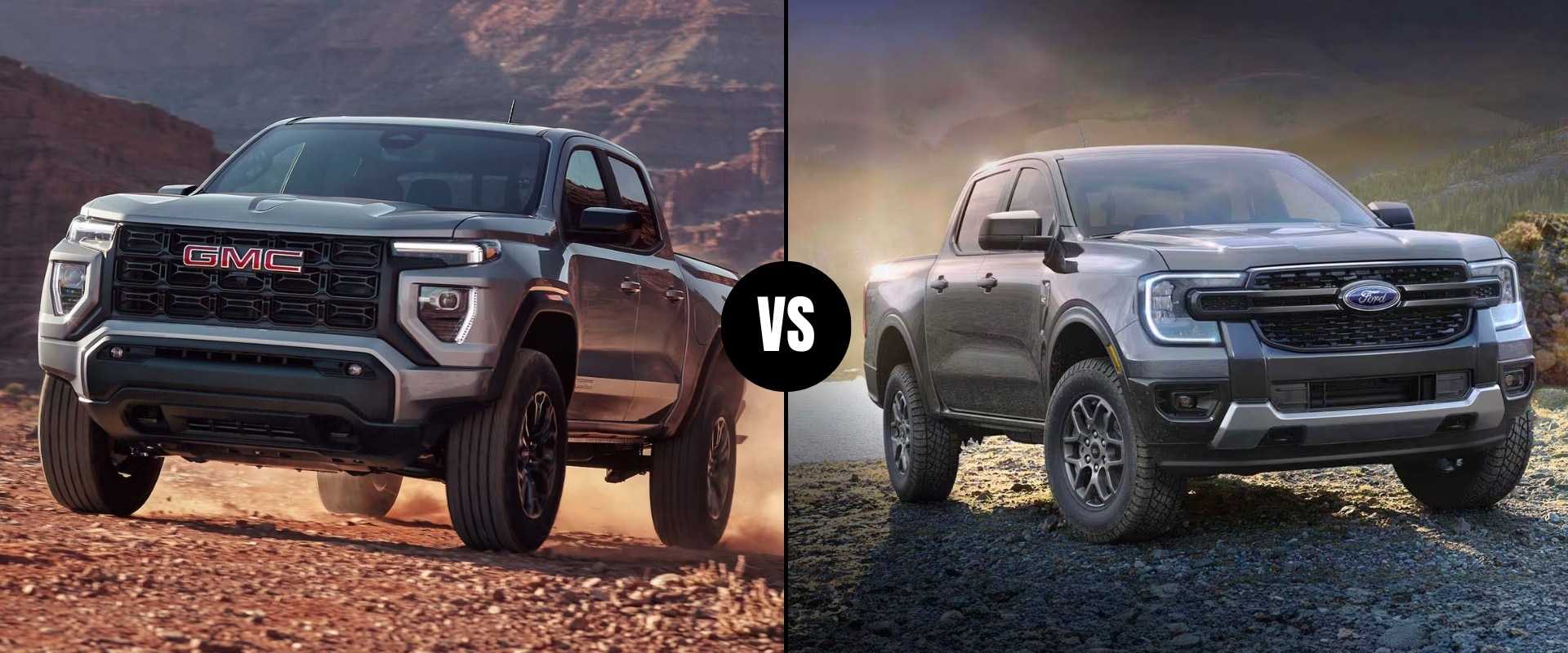
GMC Canyon: Strengths and Weaknesses
The 2026 GMC Canyon carves out its niche by leaning heavily into the premium mid-size truck segment, offering an experience that often feels a step above its competitors. Its most compelling strengths lie in its refined cabin and sophisticated technology. With a Comfort rating of 8.6, it’s clear the Canyon prioritizes a smooth, quiet ride and supportive seating, making long journeys more palatable. The interior fit and finish contribute significantly to its 8.5 Build Quality score, showcasing higher-grade materials and a more upscale design aesthetic than you might expect from a pickup.
This premium feel is further amplified by its Features & Technology score of 8.7. The Canyon often comes equipped with larger, more intuitive infotainment screens, advanced driver-assistance systems as standard or readily available, and thoughtful conveniences that enhance daily use. Its impressive 9.0 Off-Road Capability is another standout, particularly in specialized trims like the AT4X, which are engineered with serious hardware for tackling rugged trails straight from the factory. Furthermore, the Canyon’s standard powertrain, often offering higher torque than competitors, contributes to its 7.8 Fuel Economy score, demonstrating efficiency without sacrificing power.
However, this elevated experience comes with some inherent trade-offs. The Canyon’s primary weakness is its Value score of 7.5, which falls a full point behind the Ranger. This often translates to a higher starting price and potentially more expensive options, making it less accessible for budget-conscious buyers. While its Performance at 8.8 is strong, it’s slightly edged out by the Ranger. Similarly, its Reliability rating of 8.0, though respectable, trails the Ranger’s by a small margin. For those prioritizing raw utility or a no-frills workhorse, the Canyon’s premium focus might feel unnecessary, adding cost without providing a commensurate boost in pure work truck capability.
Ford Ranger: Strengths and Weaknesses
Recommended Best Deal Products


The 2026 Ford Ranger has long been a go-to for buyers seeking a robust, no-nonsense mid-size truck that prioritizes utility and sensible ownership. Its undeniable strength lies in its excellent Value, scoring an impressive 8.5. This isn’t just about a lower sticker price; it reflects a strong feature set for the money, competitive ownership costs, and solid resale values. This focus on practical worth extends to its Performance rating of 8.9, which outscores the Canyon. The Ranger typically offers a diverse engine lineup that provides excellent towing and hauling capabilities, making it a versatile choice for both daily driving and demanding tasks.
Reliability is another core advantage for the Ranger, earning an 8.2. This higher score suggests a truck built to withstand the rigors of work and provide consistent, dependable service over time, minimizing unexpected downtime and repair expenses. For those who frequently put their truck to work, whether for towing a trailer or hauling supplies, the Ranger’s higher maximum payload capacity in some configurations is a significant asset, reinforcing its identity as a capable workhorse.
Despite its many virtues, the Ford Ranger isn’t without its areas for improvement, particularly when compared to the Canyon’s more luxurious approach. Its Comfort rating of 8.0 lags behind the Canyon, often due to a slightly firmer ride and an interior that, while functional, doesn’t always exude the same level of premium refinement. This utilitarian focus also means its Features & Technology score of 8.3 is a step behind the Canyon’s more advanced offerings, sometimes lacking the larger screens or cutting-edge driver aids available in its rival. Similarly, its Build Quality at 8.4 is solid but slightly below the Canyon’s more meticulously crafted cabin. While its Off-Road Capability (8.8) is very good, it’s just shy of the Canyon’s specialized off-road trims. Finally, its Fuel Economy (7.5) is marginally lower than the Canyon’s, which could add up for high-mileage drivers.
- ✅ Higher standard torque (430 lb-ft) for confident hauling.
- ✅ More premium and refined interior design with better materials.
- ✅ Larger standard infotainment screen (11.3 inches).
- ✅ Class-leading off-road prowess with the AT4X trim.
- ✅ Slightly better combined fuel economy with its comparable engine.
- ❌ Higher starting price compared to the Ranger.
- ❌ Limited engine options; only one main powertrain offered.
- ❌ Lower maximum payload capacity than the Ranger.
- ❌ Less global market presence and long-term data than Ranger.
- ✅ Lower starting MSRP provides better overall value.
- ✅ Higher maximum payload capacity (up to 1,805 lbs).
- ✅ Broader engine lineup, including a powerful Raptor variant.
- ✅ Globally proven platform with a reputation for durability.
- ✅ Smoother shifting 10-speed automatic transmission.
- ❌ Interior can feel less premium, with more hard plastics.
- ❌ Base engine has lower power and torque than Canyon's standard.
- ❌ Standard infotainment screen is smaller (10.1 inches).
- ❌ Slightly less refined ride quality on pavement.
Which One Should You Choose?
Deciding between the 2026 GMC Canyon and the 2026 Ford Ranger ultimately boils down to your personal priorities and how you intend to use your truck. These aren’t just two similar pickups; they represent distinct philosophies in the mid-size segment, each excelling in different areas.
If you’re a commuter who appreciates refinement but still needs truck utility, the GMC Canyon is likely your better bet. Its superior Comfort (8.6) and high Build Quality (8.5) translate into a quieter cabin and a more composed ride, making daily drives far more enjoyable. Coupled with its advanced Features & Technology (8.7), including intuitive infotainment and driver aids, it offers a car-like experience wrapped in a truck’s capable body. For those seeking a more premium feel, the Canyon’s upscale interior and refined driving dynamics truly shine. You’ll also appreciate its slightly better Fuel Economy (7.8) for those longer hauls to the office.
However, if you’re a practical buyer prioritizing work and value, the Ford Ranger makes a compelling argument. Its commanding 8.5 Value rating means you get more truck for your money, often with a lower starting price and a strong return on investment over time. For those who need to maximize payload or frequently tow, the Ranger’s excellent Performance (8.9) and reputation for robust capability make it a prime choice. It’s the truck you’d pick if you view it primarily as a tool for the job. Its higher Reliability score (8.2) also speaks to its long-term durability and lower potential for unexpected costs, which is crucial for a work vehicle.
Audible Premium Plus — Annual Membership
12 audiobook credits up front, plus the full Audible catalogue.
See Annual Plans As an Amazon Associate I earn from qualifying purchases.Off-road enthusiasts will find both trucks capable, but the Canyon’s top-tier Off-Road Capability (9.0) edges out the Ranger (8.8), especially when considering its specialized AT4X trims that come factory-equipped for serious trail adventures. If you’re a beginner truck owner looking for a versatile entry point, the Ranger’s straightforward utility and value might be more appealing. Conversely, if you’re a power user who wants a truck with a more upscale feel, advanced tech, and specific off-road prowess, the Canyon delivers. Consider your budget, your driving environment, and your primary use cases; these factors will definitively guide you to your ideal mid-size truck.
Buyers seeking a premium feel, advanced off-road tech, and higher standard torque.
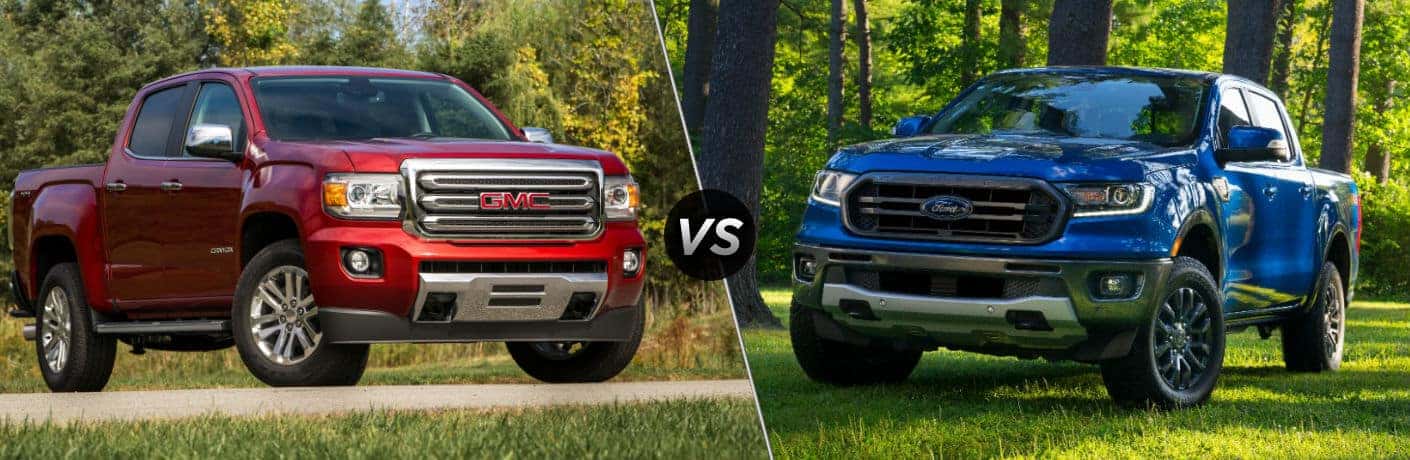
Value-focused buyers needing strong utility, diverse engine options, and higher max payload.
Final Verdict
In this head-to-head battle, the 2026 Ford Ranger ultimately emerges as the overall winner, proving to be the more versatile and value-driven choice for a broader spectrum of buyers. While the 2026 GMC Canyon undoubtedly makes a strong play for those prioritizing a premium interior, higher standard torque, and a more refined ride, its higher price point often means sacrificing some overall value. The Ranger’s superior Value (8.5), higher Performance (8.9), and commendable Reliability (8.2) ratings ensure it delivers a powerful, dependable, and cost-effective package. The key trade-off here is clear: the Canyon offers a more luxurious and technically advanced experience, while the Ranger provides a more utilitarian, budget-friendly, and all-around capable workhorse. For those seeking maximum utility and a stronger financial proposition, the Ford Ranger solidifies its position as the top pick.
Frequently Asked Questions
Is GMC Canyon better than Ford Ranger?
The 2026 GMC Canyon is arguably 'better' for buyers prioritizing a premium interior feel, higher standard torque of 430 lb-ft, and advanced off-road trims like the AT4X. However, the Ford Ranger offers better overall value with a starting MSRP around $35,000, a higher maximum payload of 1,805 lbs, and a broader range of engine and trim options. Your preference depends on specific priorities.
Which has better reliability, GMC Canyon or Ford Ranger?
Both the 2026 GMC Canyon and Ford Ranger are expected to offer good reliability. The Ranger benefits from a long global history and proven powertrains, often ranking well in mid-size truck reliability studies. The Canyon, with its newer platform and engine, is still building a long-term reputation but is generally considered reliable by GMC standards. Both offer a 5-year/60,000-mile powertrain warranty.
Which truck offers better value for money?
The 2026 Ford Ranger generally offers better value for money, with an estimated starting MSRP of $35,000, which is about $4,000 less than the GMC Canyon's starting price. While the Canyon provides a more premium experience, the Ranger delivers strong capability, a comfortable ride, and a good suite of features at a more accessible price point, particularly in its mid-range trims.
What about resale value and longevity?
Both the 2026 GMC Canyon and Ford Ranger are expected to hold strong resale values due to high demand for mid-size trucks. The Ranger, with its global platform and reputation for durability, often sees excellent longevity, with many vehicles exceeding 200,000 miles. The Canyon also has a solid track record, particularly with its updated engineering, ensuring a long service life for well-maintained examples.
What is the biggest difference between the GMC Canyon and Ford Ranger?
The biggest difference lies in their approach to the mid-size truck segment. The 2026 GMC Canyon positions itself as a more premium, refined option with a higher standard torque of 430 lb-ft and sophisticated interior tech. In contrast, the Ford Ranger emphasizes robust utility, a lower entry price starting around $35,000, and a broader range of powertrain and configuration options, including a class-leading 1,805 lbs max payload.