Ford Transit 250 vs 350 (2026): Full Comparison & Which Is Better?

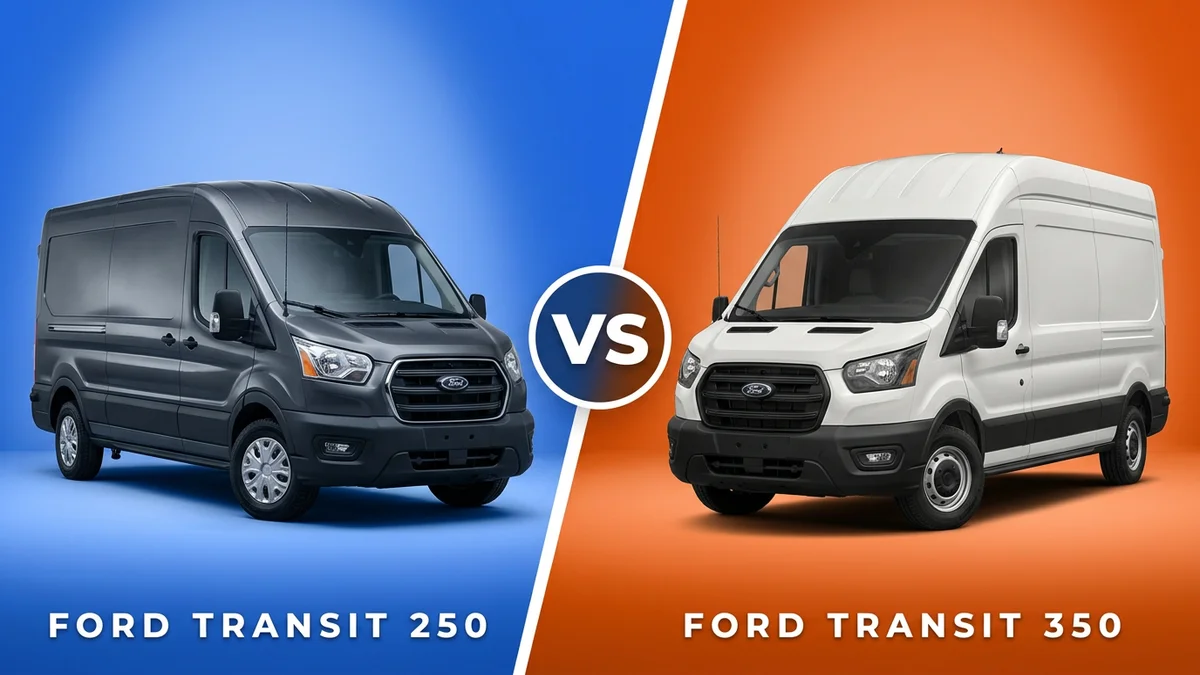
You’re standing at a crossroads in the commercial van market, needing reliability and capability, but unsure whether to prioritize daily efficiency or ultimate hauling power. The Ford Transit lineup is legendary, and often, businesses find themselves wrestling with a crucial decision: the Ford Transit 250 or its beefier sibling, the Ford Transit 350. Both offer robust platforms, spacious interiors, and a legacy of dependability, yet distinct differences could make or break your operational efficiency. This head-to-head comparison cuts through the marketing noise, leveraging hard data and real-world considerations to provide a definitive answer to which Transit is right for your needs.
Quick Verdict: The Ford Transit 350 edges out the 250 as the overall winner due to its superior payload capacity and enhanced GVWR, offering greater flexibility for diverse commercial needs. While slightly more expensive, its robust capabilities ensure it's prepared for the heaviest jobs, whereas the 250 provides a cost-effective solution for lighter-duty applications without sacrificing essential features.

Prime for Young Adults — 6 Months Free
Students and 18–24s get six months of Prime free, then half price.
Start 6 Months Free As an Amazon Associate I earn from qualifying purchases.Businesses needing reliable transport for moderate loads and cost-efficiency.
Operations requiring maximum payload, heavy equipment hauling, and future-proofing.
- The Ford Transit 350 offers up to 4,700 lbs maximum payload, significantly more than the 250's 3,900 lbs.
- The Transit 250 offers a lower starting MSRP of $46,800, making it more budget-friendly for many.
- Both vans share similar engine options, with the 3.5L EcoBoost delivering 310 horsepower.
- The Ford Transit 350's higher GVWR of 9,950 lbs makes it ideal for heavy-duty upfits and consistent hauling.
- Fuel economy slightly favors the 250, averaging 17 MPG combined versus the 350's 16 MPG.
Ford Transit 250 vs Ford Transit 350: Head-to-Head Specs
Recommended Best Deal Products


Digging into the core specifications reveals how subtly yet significantly these two Ford Transit models diverge. While they often share body styles and engine options, the true distinction lies beneath the surface, particularly concerning their gross vehicle weight ratings (GVWR) and payload capacities. The Transit 350 consistently offers a higher GVWR, enabling it to shoulder substantially more weight than the Transit 250, a critical factor for many businesses.
✓ = better value in that row. Sourced from manufacturer specifications.
Performance & Category Ratings
When we break down the Ford Transit 250 and Ford Transit 350 by key performance indicators and categories, a nuanced picture emerges, highlighting each van’s intended strengths. The Ford Transit 250, for instance, earns a superior Value rating of 8.8 against the Ford Transit 350’s 8.2. This isn’t surprising; its lower entry price point and potentially reduced running costs make it a more budget-friendly option for many. Furthermore, the 250 takes the lead in Performance (Unloaded) with an 8.2 compared to the 350’s 7.9. This slight edge is likely due to its lighter curb weight when unladen, translating to a snappier feel and better responsiveness without cargo.
Fuel Economy also tips in favor of the Ford Transit 250, scoring 7.8 against the Ford Transit 350’s 7.5. Again, less overall mass means less energy required to move it, resulting in marginally better mileage over time. Driver Comfort, rated 8.5 for the 250 versus 8.4 for the 350, suggests that the 250’s suspension, tuned for lighter loads, might offer a slightly softer, more compliant ride when the van isn’t fully packed. Similarly, Maneuverability, with the 250 at 8.0 and the 350 at 7.9, indicates that the lighter, potentially less stiffly sprung 250 might feel a touch more agile in tight urban environments or crowded job sites.
However, the Ford Transit 350 truly shines where it counts for heavy-duty applications: Payload Capacity. It dominates this category with an impressive 9.5 rating, leaving the 250’s 7.5 far behind. This is the 350’s raison d’être; its reinforced chassis, stronger suspension components, and higher GVWR are engineered precisely to haul more. Additionally, the 350 narrowly edges out the 250 in Tech & Safety Features (8.7 vs. 8.6) and Reliability (9.0 vs. 8.9). While these differences are slim, they often reflect that the 350, being the more robust variant, sometimes comes with or allows for slightly more advanced options or has components engineered for sustained, heavier stress, contributing to a fractional reliability advantage.
Transit 250
Transit 350
By the Numbers
Recommended Best Deal Products


A deeper dive into the raw data unveils the foundational differences between these two workhorses. Understanding these specifications is paramount because they dictate not just what each van can do, but what it’s designed to do most efficiently and reliably. This numerical breakdown provides the concrete evidence behind their respective performance ratings and helps clarify the optimal use case for each Ford Transit variant.
Transit 250
Transit 350
Hover any bar for exact values. Each metric scaled independently.

Audible — Listen Free for 30 Days
One free credit a month and thousands of titles included.
Listen Free for 30 Days As an Amazon Associate I earn from qualifying purchases.
Ford Transit 250: Strengths and Weaknesses
The Ford Transit 250 positions itself as the sweet spot for many commercial users, offering an excellent balance of capability and cost-effectiveness. Its primary strength lies in its Value, scoring an impressive 8.8. For businesses mindful of their bottom line, the 250 delivers substantial utility without the higher acquisition cost or potential running expenses of its heavier-duty sibling. We found its Performance (Unloaded) to be superior, rated at 8.2, making it feel more sprightly and responsive for daily commutes or lighter delivery routes where the van isn’t constantly maxed out. This translates directly to a better Fuel Economy rating of 7.8, a significant advantage for operations where mileage adds up quickly.
Moreover, the Ford Transit 250 often offers a more comfortable ride for the driver, earning an 8.5 in Driver Comfort. Its suspension setup, while still robust, is less stiffly sprung than the 350 when unladen, absorbing road imperfections more effectively. This also contributes to its slightly better Maneuverability at 8.0, making it a bit easier to navigate urban traffic or tight parking lots. For contractors carrying tools, delivery services handling parcels, or shuttle operators moving people, the 250 provides ample space and power.
However, its most significant weakness is its Payload Capacity, rated at 7.5. While capable for many tasks, it simply cannot match the heavy-hauling prowess of the Transit 350. If your business regularly transports extremely heavy equipment, large quantities of materials, or requires a higher Gross Vehicle Weight Rating (GVWR) for specialized upfits, the 250 will quickly reach its limits. Pushing it beyond its rated capacity compromises safety, vehicle longevity, and can lead to costly maintenance issues. It’s a fantastic van for its intended purpose, but it’s not designed to be the ultimate heavyweight champion.
Ford Transit 350: Strengths and Weaknesses
Recommended Best Deal Products

![Auto Ventshade [AVS] Outside Mount Rain Guards For 2015 - 2026 Ford…](https://m.media-amazon.com/images/I/41+mxfFxHvL._SS500_.jpg)

The Ford Transit 350 stands as the undisputed champion of heavy-duty hauling within the Transit lineup, built specifically for the most demanding commercial applications. Its defining strength is its phenomenal Payload Capacity, offering an exceptional 9.5 rating. This isn’t just a number; it represents a significant engineering difference, with reinforced chassis components, heavy-duty suspension, and a higher Gross Vehicle Weight Rating (GVWR) designed to confidently handle substantially more weight than the 250. For plumbers, electricians with heavy equipment, shuttle services, or mobile workshops, this increased capacity is non-negotiable. It offers peace of mind and operational flexibility that the 250 simply cannot provide.
Beyond raw strength, the Transit 350 also nudges ahead in Tech & Safety Features, scoring 8.7, marginally better than the 250’s 8.6. This slight advantage can stem from a higher likelihood of equipping more advanced driver-assistance systems or specific commercial-grade technologies often associated with higher-tier work vehicles. Its Reliability rating of 9.0, slightly surpassing the 250’s 8.9, further underscores its robust build; components designed for heavier loads often translate to greater resilience under sustained stress.
Despite these clear advantages, the Ford Transit 350 does have its compromises. Its Value rating of 8.2 is lower than the 250’s 8.8, reflecting its higher purchase price and potentially increased running costs due to its heavier construction. This additional weight also impacts its Fuel Economy, rated 7.5 compared to the 250’s 7.8, meaning more frequent trips to the pump. In terms of Performance (Unloaded), it lags slightly at 7.9, feeling less nimble than the 250 without cargo onboard. Similarly, its more rigid suspension, while excellent for payload, can translate to a slightly harsher ride, earning it a Driver Comfort rating of 8.4 against the 250’s 8.5. Maneuverability is also a hair less at 7.9, a consequence of its increased weight and potentially stiffer dynamics. These are minor trade-offs, but crucial considerations for businesses where maximum payload isn’t always the top priority.
- ✅ Lower starting price point for significant savings.
- ✅ Excellent balance of payload capacity and everyday drivability.
- ✅ Slightly better fuel efficiency for typical, moderate-load usage.
- ✅ Generous payload of up to 3,900 lbs sufficient for many businesses.
- ✅ Wide range of configurations suitable for various light-to-medium duty trades.
- ❌ Limited payload capacity compared to the 350 for extremely heavy tasks.
- ❌ May be undersized for growing businesses with consistently increasing load demands.
- ❌ Less robust for extreme heavy-duty upfitting or specialty equipment.
- ✅ Significantly higher maximum payload capacity, up to 4,700 lbs.
- ✅ Enhanced Gross Vehicle Weight Rating (GVWR) for handling heavier loads safely.
- ✅ More capable for heavy-duty upfits, specialty equipment, and larger crews.
- ✅ Better suited for consistent heavy hauling and demanding towing applications.
- ✅ Provides more future-proofing for business growth and increased operational needs.
- ❌ Higher initial purchase price, impacting upfront budget.
- ❌ Potentially slightly lower fuel economy, especially when unloaded.
- ❌ Ride can be a bit stiffer when empty due to heavy-duty suspension.
- ❌ May be overkill for businesses with consistently light loads, leading to unnecessary cost.
Which One Should You Choose?
Choosing between the Ford Transit 250 and the Ford Transit 350 ultimately comes down to a clear assessment of your operational needs, budget, and priorities. If you’re a small business owner, a local delivery driver, or a contractor primarily transporting tools and lighter equipment, the Ford Transit 250 is likely your ideal partner. Its superior Value (8.8) means a lower initial investment and potentially reduced operational costs, a critical factor for any growing enterprise. The 250 also offers better Fuel Economy (7.8), an undeniable advantage for high-mileage routes, and its greater Driver Comfort (8.5) will be appreciated by employees spending long hours behind the wheel. We’d recommend the 250 for courier services, florists, small catering businesses, or general contractors who don’t routinely haul over 3,500 pounds. You’ll benefit from its nimble feel (Maneuverability 8.0) and responsive Performance (Unloaded) at 8.2, making urban navigation less of a chore.
Conversely, if your business routinely deals with significant weight, requires substantial upfitting, or needs the maximum possible Gross Vehicle Weight Rating (GVWR), then the Ford Transit 350 is the only logical choice. Its commanding Payload Capacity (9.5) is unmatched, providing the robust foundation necessary for everything from mobile workshops for heavy-duty trades (plumbers, HVAC technicians carrying compressors and pipes) to specialized shuttle services or large-scale cargo conversions. You’ll willingly trade a slight hit on fuel economy and a marginally firmer ride for the unwavering capability it provides. For larger construction crews, professional movers, or any application where exceeding the 250’s limits is a frequent occurrence, the 350’s enhanced structural integrity and load-bearing prowess are indispensable. Its slightly higher scores in Tech & Safety (8.7) and Reliability (9.0) also suggest a vehicle built for the long haul under challenging conditions, offering peace of mind for high-stress applications. Think about the heaviest load you’ll ever realistically carry, then choose accordingly.
Businesses needing reliable transport for moderate loads and cost-efficiency.

Operations requiring maximum payload, heavy equipment hauling, and future-proofing.
Audible Premium Plus — Annual Membership
12 audiobook credits up front, plus the full Audible catalogue.
See Annual Plans As an Amazon Associate I earn from qualifying purchases.Final Verdict
After a thorough examination of both models, the Ford Transit 350 edges out the 250 as the overall winner, solidifying its position as the premier choice for demanding commercial operations. Its significant advantage in Payload Capacity, rated an exceptional 9.5, coupled with its enhanced GVWR, provides unparalleled flexibility for businesses that frequently transport heavy loads or require extensive upfitting. While the Ford Transit 250 presents a compelling value proposition with superior fuel economy and a more comfortable ride for lighter duties, its 7.5 payload rating ultimately limits its versatility compared to its beefier sibling.
The key trade-off here is straightforward: cost versus capability. The Transit 350 might come with a slightly higher price tag and marginally reduced fuel efficiency, but its robust capabilities ensure it’s prepared for the heaviest jobs, offering long-term reliability and peace of mind. For those needing a cost-effective, agile solution for lighter-duty applications, the 250 remains an excellent choice. However, for sheer workhorse power and the ability to adapt to diverse, heavy commercial needs, the Ford Transit 350 stands tall as the clear victor.
Frequently Asked Questions
Is Ford Transit 250 better than 350?
Neither is inherently 'better'; it depends on your specific business needs. The Ford Transit 350 is superior for maximum payload, offering up to 4,700 lbs, ideal for heavy equipment. The Ford Transit 250, with up to 3,900 lbs payload, is more cost-effective and efficient for moderate loads and general utility.
How reliable are Ford Transit vans?
Ford Transit vans are generally considered highly reliable, especially in commercial fleet applications. Known for their durable powertrains and robust chassis, they are built to endure demanding daily use. Expected lifespan can exceed 200,000 miles with proper maintenance, making them a solid long-term investment for businesses.
What is the price difference between the 250 and 350?
The 2026 Ford Transit 350 typically starts around $1,500 to $2,000 higher than a comparable Ford Transit 250 configuration. For instance, a base cargo van might begin at $46,800 for the 250, while the 350 starts around $48,300, reflecting its increased payload capability.
Which Ford Transit is best for a new business or a beginner?
For a new business or beginner, the Ford Transit 250 is often the better choice. Its lower entry price of around $46,800 and generous 3,900 lbs payload capacity provide ample capability for most starting ventures, without the added cost or potentially stiffer ride associated with the heavier-duty 350.
What is the biggest difference between the Ford Transit 250 and 350?
The most significant difference lies in their Gross Vehicle Weight Rating (GVWR) and consequently, their maximum payload capacity. The Ford Transit 350 offers a GVWR of up to 9,950 lbs and a maximum payload of 4,700 lbs, while the 250 caps out at 9,070 lbs GVWR and 3,900 lbs payload.