Ford V8 vs EcoBoost Reliability Which Engine Lasts Longer

The 5.0L Coyote V8 and the 3.5L EcoBoost V6 both have well-documented failure points, and the honest answer is that neither engine is trouble-free. Ford’s own Technical Service Bulletins show the Coyote’s biggest weakness is oil consumption in one specific generation, while the EcoBoost’s biggest weakness is cam phaser wear tied to a narrower model-year window.
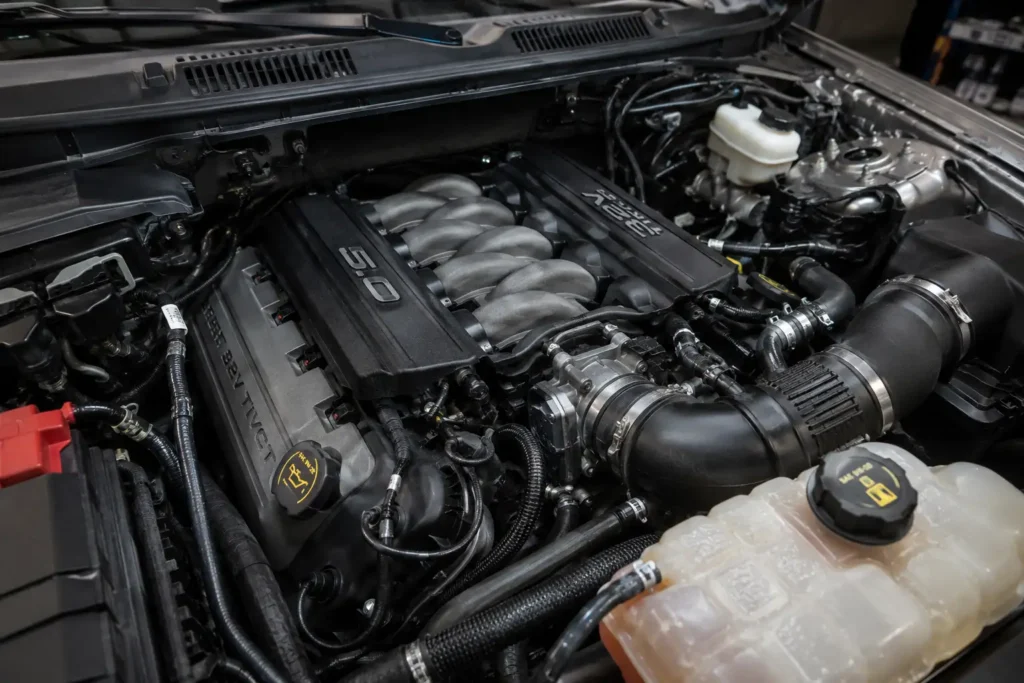
This guide breaks both engines down by generation using NHTSA-filed TSB data, not forum guesswork, so you can see exactly which years carry the real risk and which are simply the target of internet reputation. By the end, you will know which engine fits your use case, whether that is towing, daily driving, or keeping a truck past 150,000 miles.

Prime for Young Adults — 6 Months Free
Students and 18–24s get six months of Prime free, then half price.
Start 6 Months Free As an Amazon Associate I earn from qualifying purchases.Ford V8 vs EcoBoost Reliability by Generation
Known issues sourced from NHTSA-filed Ford Technical Service Bulletins, 2011 to 2024
5.0L Coyote V8
Naturally aspirated, F-150
Minor valve cover leaks, exhaust bolts
Low RiskNo major documented failure pattern
Low RiskExcessive oil consumption, TSB 19-2365
Verify Before BuyingOil consumption reports significantly reduced
Low Risk3.5L EcoBoost V6

Audible — Listen Free for 30 Days
One free credit a month and thousands of titles included.
Listen Free for 30 Days As an Amazon Associate I earn from qualifying purchases.Twin-turbo, F-150
Coolant crossover leaks, vacuum pump wear
Moderate RiskCam phaser rattle and oil consumption, TSB 23-2143 and 20-2132
Verify Before BuyingRevised CD cam phasers from factory, complaints drop sharply
Low RiskFord 5.0 Coyote V8 Known Failure Points by Generation 2011 to 2024
The Coyote V8 has run through four distinct generations since 2011, and its reliability record is not uniform across them.
Gen 1, 2011-2014. Early Coyotes are generally considered dependable, with the most common owner complaints being minor oil leaks around valve covers and exhaust manifold bolts loosening over time. Neither issue is engine-threatening if addressed.
Gen 2, 2015-2017. F-150 owners and technicians widely regard this as the strongest Coyote generation, thanks to a bump to 385 horsepower and 387 lb-ft of torque with no major new failure pattern introduced.
Gen 3, 2018-2020. This is the generation to scrutinize. Ford issued TSB 19-2365 in December 2019 for 2018-2020 F-150 trucks with the 5.0L engine, confirming some units may burn more than 1 quart of oil every 3,000 miles with no visible leaks. Ford attributes it to high intake manifold vacuum during deceleration fuel shut-off events pulling oil into the combustion chamber. The fix under this TSB is a PCM reprogram, a new dipstick calibrated to a wider normal range, and an oil and filter change, not a mechanical repair.
Gen 4, 2021-2024. Early reports suggest the oil consumption pattern is less common on refreshed Gen 4 trucks, but owners buying used should still ask for oil consumption history through the first several oil changes.
The “Coyote tick.” Across nearly every generation, 2011-2024 Mustang and F-150 owners report an intermittent tick or “typewriter” noise at hot idle. Ford’s position, documented in a Special Service Message, is that this noise is not indicative of an internal defect on most affected units.
Audible Premium Plus — Annual Membership
12 audiobook credits up front, plus the full Audible catalogue.
See Annual Plans As an Amazon Associate I earn from qualifying purchases.Ford 3.5L EcoBoost Known Failure Points by Generation 2011 to 2024
The EcoBoost’s failure history is more concentrated in one generation, but the repair is more expensive when it does happen.
Gen 1, 2011-2016. Early 3.5L EcoBoost engines are known for coolant crossover leaks and vacuum pump wear. Ford also documented a cold-start tick or rattle on 2011-2015 F-150s built before May 29, 2015, addressed through a service procedure rather than a parts replacement.
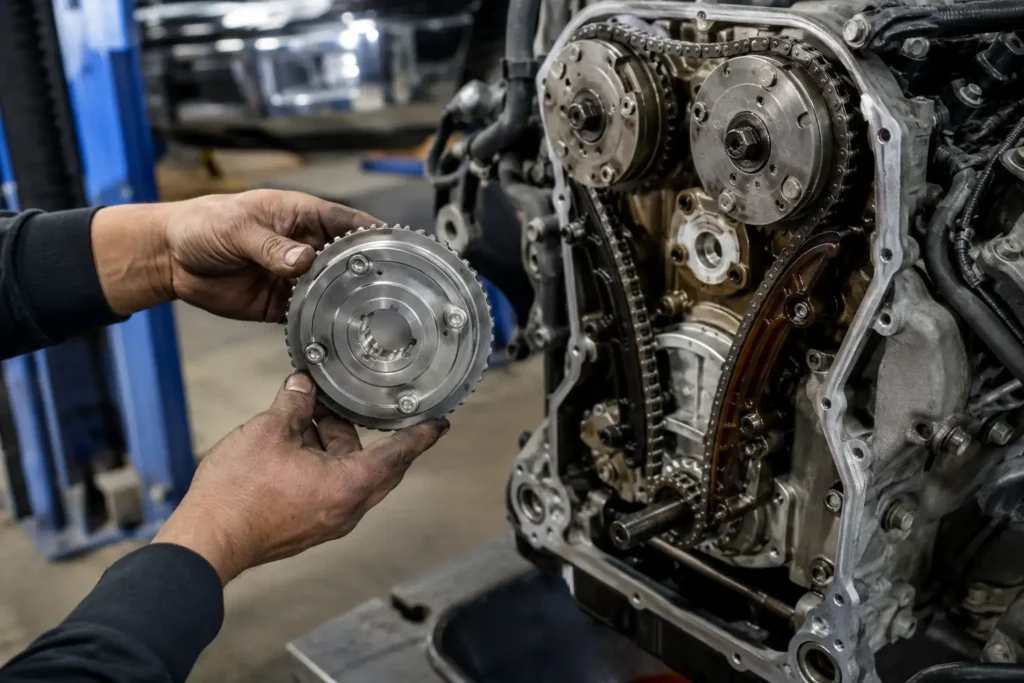
Gen 2, 2017-2020. This is the generation with the well-known cam phaser problem. Ford’s TSB 23-2143, which supersedes several earlier bulletins, covers 2017-2020 F-150 and 2018-2020 Expedition and Navigator vehicles built before November 30, 2019, exhibiting a ticking or rattling noise from the front timing cover on cold start.
Ford’s fix escalated over time: a Special Service Message initially called for replacing all four Variable Camshaft Timing units, and by 2021 Ford launched Customer Satisfaction Program 21B10 for a free PCM reprogram, followed by 21N03 for prorated cam phaser replacement if the noise persisted after the reprogram.
Ford’s own proration table covered 100 percent of the repair up to 69,999 miles, 66 percent from 70,000 to 79,999 miles, 33 percent from 80,000 to 89,999 miles, and nothing past 90,000 miles. That program required enrollment before specific 2021-2022 cutoff dates and is not available on trucks purchased new today.
This same generation also has two separate oil consumption TSBs: TSB 20-2132 for 2017-2019 F-150 and 2018-2019 Expedition units tied to the PCV system, and TSB 20-2423 for the High-Output 3.5L in 2018-2020 F-150 and Navigator trucks.
Gen 3, 2021 and up. The revised “CD” cam phaser design introduced in production around late 2019 appears in these trucks from the factory, and cam phaser complaints drop off sharply in owner forums for this generation.
Repair Costs Compared
Owner-reported and independent-shop sources put a full four-phaser replacement, done outside of Ford’s now-expired coverage window, somewhere between roughly $750 for an owner supplying parts and doing partial labor themselves up to $3,500-$5,500 for a full dealer or shop job with parts and labor included. The wide spread reflects regional labor rates and whether the newer “CD” revision phasers are used, and it is not a figure Ford publishes as a flat rate, so treat any single quoted number with caution and get a written estimate before committing.
By comparison, the Coyote’s TSB 19-2365 fix is a software reprogram, a dipstick swap, and an oil change, typically covered under Ford’s New Vehicle Limited Warranty for eligible model years and mileage, and inexpensive if performed out of warranty since no major parts are replaced.
Which Engine Wins for Towing Daily Driving and High Mileage Ownership
Towing heavy loads regularly. The 5.0 Coyote V8’s simpler naturally aspirated design means less heat-soak risk on long grades, and it has no turbo or intercooler components to maintain. If you check our Ford F-150 towing capacity chart, you will see the EcoBoost actually out-tows the V8 in most trims thanks to its torque advantage, so this comes down to whether you value outright capacity or mechanical simplicity more.
Daily driving with occasional towing. The EcoBoost’s low-end torque and better real-world fuel economy make it the more pleasant daily driver, provided you are diligent about oil changes and are buying a truck outside the 2017-2019 cam phaser window, or one that has already had the phasers replaced.
Keeping the truck past 150,000 to 200,000 miles. The Coyote V8 has the edge here for buyers who want to minimize the number of expensive, non-routine repairs over a long ownership period, simply because it has fewer forced-induction components that wear out. If you are cross-shopping specific years, our Ford F-150 years to avoid guide breaks down problem years across every engine option, not just these two.
When the verdict flips. If you are buying a 2018-2020 F-150 specifically, the calculus changes: a Gen 3 Coyote in that window carries real oil consumption risk under TSB 19-2365, while a Gen 2 EcoBoost in that same window carries cam phaser risk that may already be resolved if a prior owner used Ford’s now-expired customer satisfaction programs. Ask for TSB and recall completion history on any 2017-2020 truck before you buy, regardless of which engine it has. For a deeper dive into the EcoBoost side specifically, see our 3.5L EcoBoost cam phaser replacement guide.
Frequently Asked Questions
Is the 5.0 Coyote V8 more reliable than the 3.5 EcoBoost overall?
Neither engine has a clean record, but the Coyote’s main issue is a software and dipstick fix on 2018-2020 trucks, while the EcoBoost’s main issue on 2017-2020 trucks is a physical parts replacement. The Coyote’s fix is generally cheaper when out of warranty.
Which model years should I avoid for the 5.0 V8?
2018-2020 F-150 trucks with the 5.0L engine are the ones covered under TSB 19-2365 for excessive oil consumption. Ask for oil consumption records before buying one of these years.
Which model years should I avoid for the 3.5 EcoBoost?
Recommended Best Deal Products


2017-2020 F-150 and 2018-2020 Expedition and Navigator trucks built before November 30, 2019 are covered under Ford’s cam phaser TSB history. Confirm whether the truck already received the phaser replacement.
Is the Coyote tick something to worry about?
In most cases no. Ford’s own documentation treats the typewriter-style tick on 5.0L engines as a known characteristic rather than a defect, though any tick paired with a check engine light or oil pressure warning should be diagnosed immediately.
Does the EcoBoost’s turbo shorten its lifespan compared to the V8?
Recommended Best Deal Products

Not inherently. Turbos on the 3.5L EcoBoost are generally reliable when the truck gets regular full-synthetic oil changes, but they add maintenance-sensitive components the naturally aspirated Coyote simply does not have.
Final Verdict
There is no universal winner between the Ford V8 and EcoBoost on reliability. The Coyote V8 wins on mechanical simplicity and lower-cost fixes when problems do occur, while the EcoBoost wins on torque, towing numbers, and fuel economy at the cost of a pricier repair if you land in the 2017-2020 cam phaser window. The smartest move for either engine is the same: pull the TSB and recall history on the specific VIN before you buy, not just the model year, since Ford’s own service records will tell you more than any generalized “which is better” debate ever will.