Old Ford Blue Engine Paint Guide: Correct Shades by Year

Selecting the correct Old Ford Blue engine paint depends entirely on your engine’s production year, as Ford transitioned from lighter shades to Corporate Blue in 1966. To ensure a lasting finish, prioritize high-temp ceramic enamels from brands like VHT or Dupli-Color that match factory pigments.
🎯 Key Takeaways
Recommended Best Deal Products


- Use Light Ford Blue for pre-1966 small blocks like the 221, 260, and early 289.
- Ford Corporate Blue (Dark) is the standard for most engines produced from 1966 through the 1980s.
- Verify paint heat ratings of at least 500°F to prevent discoloration and peeling.
- Dupli-Color DE1606 and VHT SP125 are the industry standards for ‘Corporate Blue’ accuracy.
- Engine blocks require high-temp primer to ensure proper adhesion and corrosion resistance.
Finding the correct shade of Ford Blue depends entirely on your engine’s build date and displacement. While “Corporate Blue” is the most famous hue, Ford utilized distinct shades ranging from a lighter, vibrant “Old Ford Blue” to the deep, darker pigment used in the late 1960s. Matching the exact paint code ensures your restoration stands up to scrutiny at shows and maintains the historical integrity and resale value of your vehicle.

Prime for Young Adults — 6 Months Free
Students and 18–24s get six months of Prime free, then half price.
Start 6 Months Free As an Amazon Associate I earn from qualifying purchases.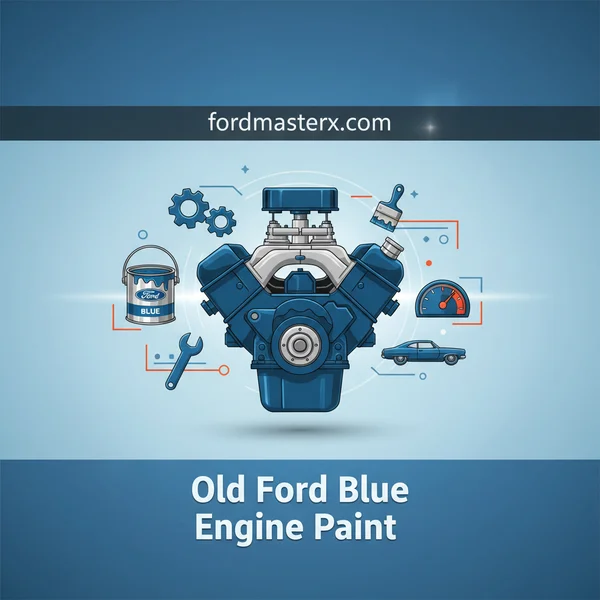
Beyond aesthetics, the right paint must withstand temperatures exceeding 500 degrees Fahrenheit without peeling or discoloring. Choosing a high-quality enamel prevents the “fried” look common on budget builds where the paint burns off the cylinder heads after just a few heat cycles. This guide identifies the exact shades used during Ford’s most iconic eras so you can buy the right can for your specific block.
Understanding the Evolution of Ford Engine Blue Shades
The transition of Ford engine colors is often misunderstood because the company did not switch every plant to a new color on a single day. However, clear chronological divisions exist that dictate which shade belongs on your V8 block. You must distinguish between the “Early V8” era and the “Corporate Blue” era to get the look right.

The Early V8 Era: 1962–1965 (Black Blocks and Colored Covers)
If you are restoring an early 221, 260, or 289 engine, the entire engine should not be blue. During this period, Ford painted the engine blocks, cylinder heads, and intake manifolds semi-gloss black. The “Ford Blue” was reserved strictly for the valve covers and air cleaner assemblies. Using blue on the block of a 1964 Mustang engine is a common mistake that indicates a non-factory restoration.
- 1962–1963 221 and 260: These engines typically used a light blue on the valve covers and air cleaner.
- 1964–1965 289: These featured the iconic Gold valve covers and air cleaners, despite the block being black.
- 1965 289 (Late Year): Some engines began appearing in the lighter “Old Ford Blue” before the full transition in 1966.
The Corporate Blue Era: 1966–1981
In 1966, Ford moved to a “Universal” or “Corporate” Blue. This initiative aimed to create brand consistency across all engine families. From 1966 until the early 1980s, the entire engine—including the block, heads, intake, water pump, and oil pan—was painted a specific dark blue. This is the shade most people envision when they think of a vintage Ford engine bay.
- 1966–1968: A slightly lighter version of the dark blue was often seen, though most modern restorers use the standard Corporate Blue pigment.
- 1969–1981: This era solidified the use of Dark Ford Blue. It is a deep, rich blue with no metallic flake and a high-gloss finish.
- Identification Tip: If your car was built between 1966 and 1975, the “Dark Ford Blue” is almost certainly the correct choice for a 302, 351W, or 390 FE engine.
Comparing Top High-Temp Engine Enamel Brands and Part Numbers
Not all “Ford Blue” paints are created equal. Different manufacturers use the same name for different pigments, which leads to confusion at the auto parts store. To get the correct look, you must match the manufacturer’s part number to the specific era of your Ford engine.
Dupli-Color vs. VHT: Identifying the Correct Codes
Dupli-Color and VHT are the most accessible brands, but their naming conventions can be tricky. You should ignore the name on the cap and focus exclusively on the product code to ensure your 302 or 351 looks factory-fresh.
- Dupli-Color DE1606 (Dark Ford Blue): This is the most accurate “over-the-counter” match for the 1966–1981 Corporate Blue. It is deep, dark, and handles up to 500°F.
- Dupli-Color DE1621 (Old Ford Blue): This is a significantly lighter, brighter blue. It is correct for the 1962–1965 valve covers or for enthusiasts who prefer a “popping” color that isn’t strictly factory-correct for later years.
- VHT SP138 (New Ford Blue): Despite the “New” in the name, this is a very popular choice for 1960s restorations. It offers excellent chemical resistance against gas and oil.
- VHT SP153 (Old Ford Blue): This matches the lighter, slightly teal-tinted blue used in the very early 1960s.
Restoration-Grade Options: Bill Hirsch and Quanta
If you are building a concours-level show car, standard hardware store rattle cans might not provide the depth of color you need. High-end restoration brands offer paints with higher pigment loads and better gloss retention under extreme heat.
- Bill Hirsch Ford Engine Enamel: Known for being the “gold standard” in the hobby. Their Ford Blue is a heavy-duty high-temp paint that is usually brushed on or thinned for a professional spray gun. It is much more durable than standard aerosols.
- Quanta Products: They offer year-specific blends that account for the subtle shifts in blue seen between 1966 and 1970. Their “Ford Dark Blue” is often cited by Mustang Club of America (MCA) judges as the most accurate pigment match.
- Heat Resistance Note: These professional-grade paints often handle up to 600°F or 700°F, which is vital for the areas around the exhaust ports on 351 Cleveland or 429 Big Block heads.
Choosing between these brands depends on your budget and the intended use of the vehicle. For a clean daily driver, Dupli-Color DE1606 provides a great look at a low price. For a high-value restoration, investing in Bill Hirsch or Quanta ensures the shade won’t be questioned by experts.
Critical Factors for Color Accuracy and Heat Resistance
Getting the right shade of Old Ford Blue is only half the battle. How that color looks once it’s cured—and how long it stays that way—depends on several technical factors often overlooked by weekend restorers. Achieving that “factory fresh” look requires more than just a lucky guess at the auto parts store; you have to account for the environment of the engine bay itself.

Audible — Listen Free for 30 Days
One free credit a month and thousands of titles included.
Listen Free for 30 Days As an Amazon Associate I earn from qualifying purchases.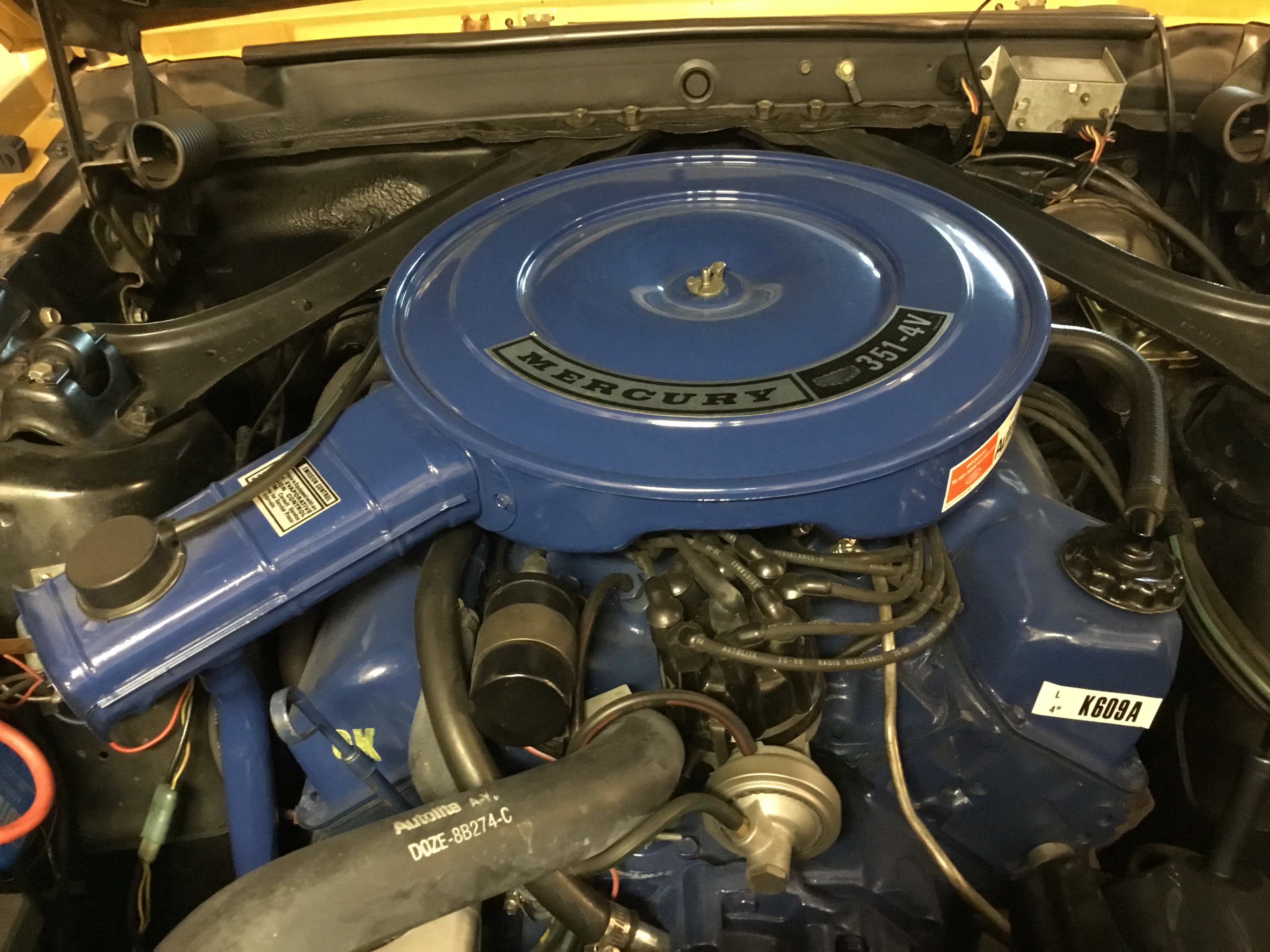
The Importance of Primer and Base Tones
The pigment in many Ford Blue paints can be surprisingly translucent. This means the color of your primer will directly impact the final hue of the engine block. If you spray a lighter Ford Blue over a dark black primer, the result will likely look muddy or darker than intended. To ensure the most authentic color representation, consider these factors:
- Use a Neutral Gray Primer: Most original Ford engines were sprayed over bare metal or very thin industrial primers. A medium-gray primer provides the most neutral base for the blue pigment to pop correctly.
- Consistency Across Parts: Ensure that your valve covers, oil pan, and engine block all receive the same number of primer coats. Variations in base thickness can lead to “mismatched” shades of blue on the same engine.
- Avoid Self-Etching Primers as Topcoats: While great for adhesion, the acidic nature of some etching primers can occasionally react with the blue pigment, causing slight discolorations over time.
Heat Resistance and Chemical Durability
Engine bays are harsh environments subject to extreme temperature swings and caustic fluids. Standard hardware store spray paint will flake, peel, or discolor within hours of the first heat cycle. Authentic engine enamels are specifically formulated to handle these conditions.
- Temperature Ratings: Always choose a paint rated for at least 500°F. This is essential for the cylinder heads and areas near the exhaust ports where temperatures peak.
- Chemical Resilience: Modern gasoline and oil are highly corrosive to “bargain” paints. High-quality Ford Blue enamels are designed to resist lifting when exposed to minor fuel leaks or oil spills.
- Gloss Retention: Cheap paints tend to turn matte or “chalky” after a few months of heat cycles. A dedicated engine paint will maintain its semi-gloss or high-gloss finish for years.
Matching Your Engine Displacement and Year to the Correct Pigment
The biggest challenge for Ford enthusiasts is navigating the mid-1960s transition. Before 1966, Ford color-coded engines by displacement, but afterward, they moved toward a unified brand identity. Knowing exactly where your engine falls on this timeline is vital for a concours-quality restoration.
The Displacement-Specific Era (Pre-1966)
If you are working on an early Mustang, Falcon, or F-100, the “correct” blue might not be blue at all, or it might be a very specific shade. During the early 60s, Ford used color to help mechanics quickly identify engine families. For example:
- The 260 V8: In 1962 and 1963, these were often finished in a specific “Old Ford Blue” that was significantly darker than what followed later in the decade.
- The 289 V8: In 1964 and 1965, these were frequently painted Black with Gold valve covers and air cleaners. Using blue on a 1964 289 is a common “incorrect” restoration choice.
- The Early FE Engines: Big blocks like the 352 or 390 in full-size Galaxies often featured distinct color schemes, including black blocks with blue or gold accents depending on the specific year.
The Rise of “Corporate Blue” (1966–1982)
Starting in the 1966 model year, Ford simplified their production line. Almost every engine—from the 200 cubic-inch straight-six to the massive 428 Cobra Jet—was painted the same shade: Ford Corporate Blue (often simply labeled as “Ford Blue”). This is a mid-tone blue that defines the muscle car era.
- The 302 and 351 Windsor/Cleveland: If your Ford was built between 1968 and 1980, Corporate Blue is almost certainly the correct choice for the entire engine assembly.
- Late Era Transitions: By 1982, Ford began transitioning some engines to gray or black as they moved away from the classic blue aesthetic. Always check the production date on the casting.
- The “Dark” vs. “Light” Confusion: Be careful when ordering; many retailers sell “Dark Ford Blue” (pre-1966) and “Ford Blue” (1966+). If your car has a 1966 or later VIN, stick with the standard Ford Blue.
Finishing Your Restoration with Confidence
Selecting the correct Old Ford Blue is about more than just aesthetics; it is about honoring the history of your vehicle. Whether you are chasing the deep, dark tones of an early 60s cruiser or the iconic Corporate Blue of a 1969 Mach 1, the right pigment ensures your engine bay looks “factory fresh.” By focusing on high-heat enamels and verifying your specific engine’s production year, you avoid the most common restoration pitfalls.
To move forward, your first step should be to verify your engine’s date code located near the starter or on the intake manifold. Once you have confirmed the year, purchase a test can to check the shade against a hidden area of the block. With the right color in hand, you are ready to bring that vintage iron back to its former glory. Happy restoring!
❓ Frequently Asked Questions
What is the difference between Old Ford Blue and Ford Corporate Blue?
Old Ford Blue is a lighter, more vibrant shade used primarily on early 1960s engines. Ford Corporate Blue is a darker, deeper navy-like shade that became the universal standard for all Ford engines starting in 1966 to create a unified brand identity.
Which paint brand offers the most accurate vintage Ford colors?
VHT and Dupli-Color are the most widely trusted for color accuracy. VHT SP125 is highly regarded for its Dark Ford Blue pigment, while Seymour is often praised by concours restorers for having the most ‘authentic’ period-correct finish.
Can I use standard automotive body paint on my engine block?
Standard body paint is not recommended because it cannot withstand the 200°F-400°F operating temperatures of an engine block. Specialized engine enamels contain ceramic resins designed to prevent bubbling, peeling, and heat-induced color shifting.
Audible Premium Plus — Annual Membership
12 audiobook credits up front, plus the full Audible catalogue.
See Annual Plans As an Amazon Associate I earn from qualifying purchases.Why did Ford use different colors for different engine parts before 1966?
Before 1966, Ford used color-coding to help assembly line workers and mechanics identify engine families (e.g., black blocks with gold or blue valve covers). This changed in 1966 when the entire engine assembly was painted blue for simplicity.
How many cans of spray paint are needed for a complete V8 engine?
Generally, two 12-ounce cans of engine enamel are sufficient to cover a complete V8 block, heads, and intake manifold. If you are also painting the oil pan and timing cover separately, a third can is recommended for full coverage.
What causes Ford Blue paint to turn green or gray over time?
Discoloration is usually caused by using low-quality paint that lacks UV stabilizers or high-heat resins. Exposure to oil, fuel, and extreme heat cycles can chemically break down the blue pigment if the paint isn’t a high-grade ceramic enamel.