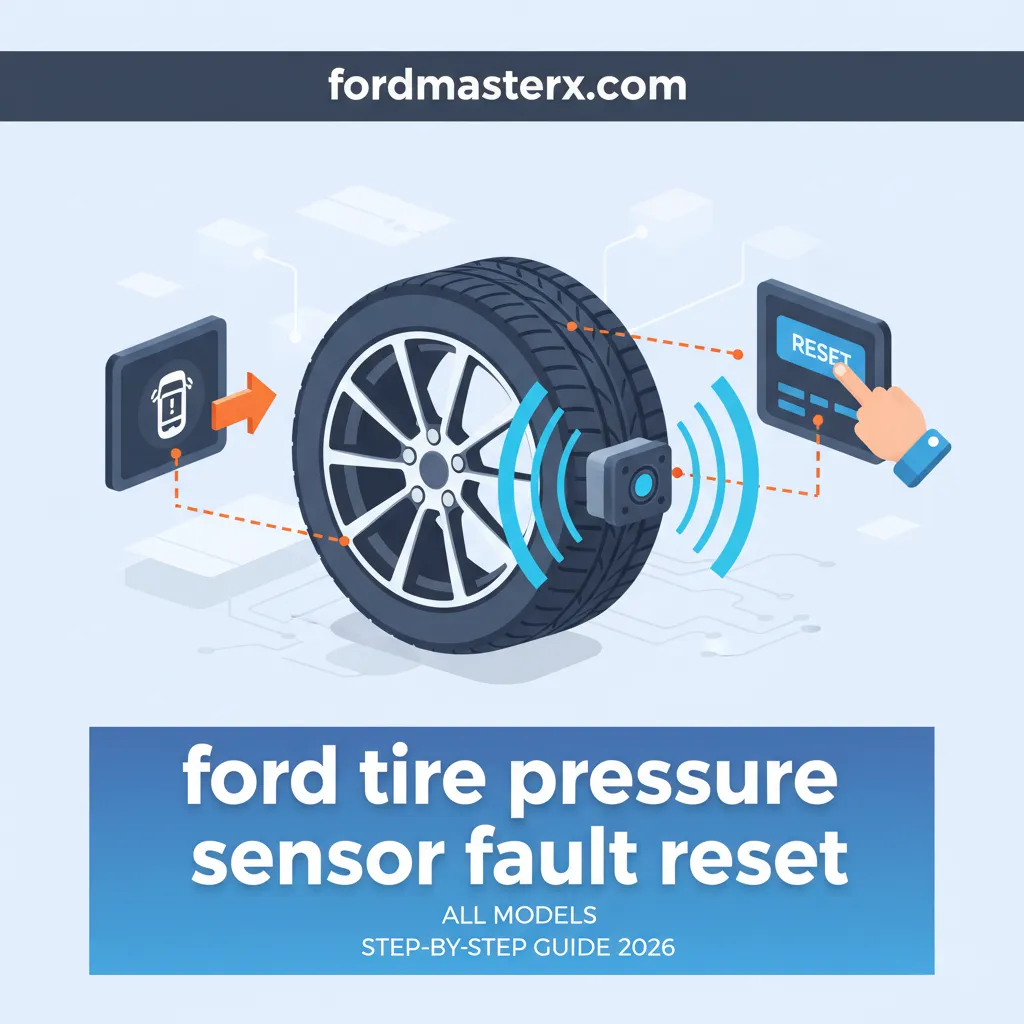
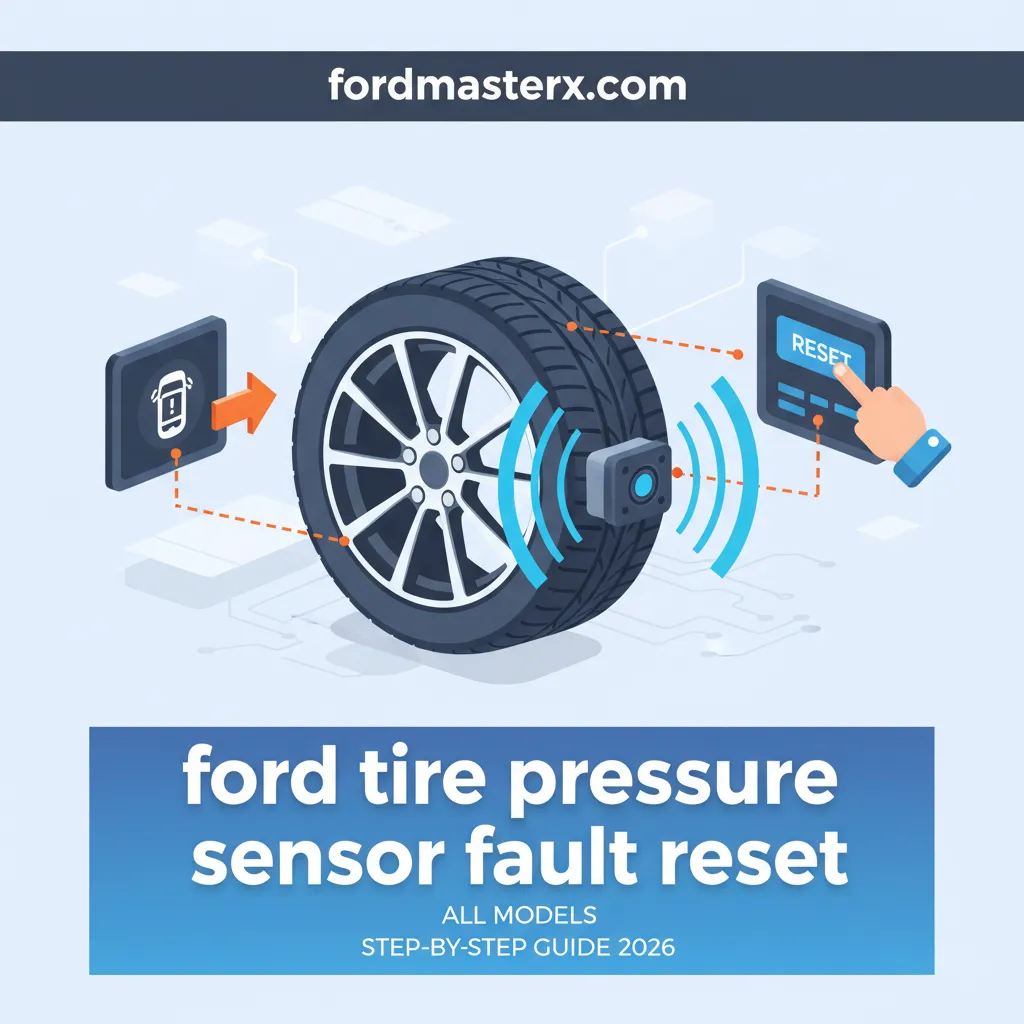
Ford Tire Pressure Sensor Fault Reset: All Models Step-By-Step Guide 2026

The illuminated Tire Pressure Monitoring System (TPMS) warning light on your Ford’s dashboard can be an unwelcome sight, signaling a potential issue with your vehicle’s tire health or the monitoring system itself. When this light indicates a ‘Tire Pressure Sensor Fault’ rather than just low pressure, it can be perplexing, leaving drivers uncertain about the underlying problem and the correct procedure to resolve it. This expert guide will provide a comprehensive, step-by-step approach to diagnosing and resetting a Ford tire pressure sensor fault, covering all models up to 2026, ensuring you can confidently address this common automotive concern.
Understanding Ford TPMS: What Causes a Tire Pressure Sensor Fault?


📤 Share Image
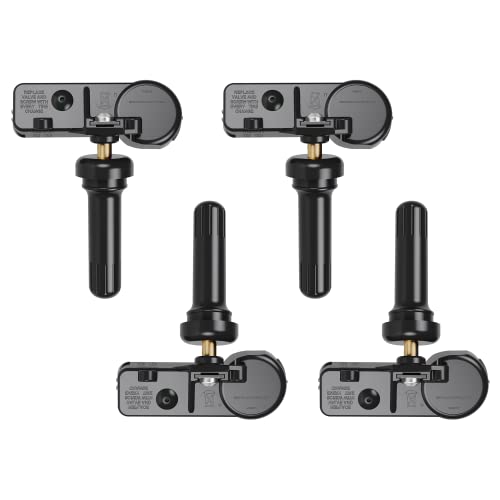
Ford vehicles, like most modern automobiles, utilize a Tire Pressure Monitoring System (TPMS) to enhance safety and fuel efficiency. Since 2007, U.S. federal regulations (FMVSS No. 138) have mandated TPMS in all new passenger vehicles, leading to the widespread adoption of direct TPMS across Ford’s lineup. This system employs individual pressure sensors mounted inside each tire, typically integrated with the valve stem, to continuously measure tire pressure and temperature. These sensors wirelessly transmit data to the vehicle’s Body Control Module (BCM) or a dedicated TPMS control module, which then processes the information and illuminates the dashboard warning light if an issue is detected.
A common misconception is that any TPMS light signifies low tire pressure. While a solid TPMS warning light generally indicates that one or more tires are significantly underinflated (typically 25% below the placard pressure), a flashing TPMS light—especially upon vehicle startup—signals a system malfunction or a sensor fault. This distinction is crucial for effective troubleshooting.
Common Causes of a Ford TPMS Sensor Fault
- Sensor Battery Life: The most frequent cause of a TPMS fault is a dead or dying sensor battery. These sensors are self-powered, typically by non-rechargeable lithium-ion batteries. Research indicates that most TPMS sensor batteries last 5-10 years or 100,000 miles, aligning with Ford’s service intervals. As the battery weakens, the sensor struggles to transmit a consistent signal, leading to a fault warning.
- Physical Damage: Sensors are susceptible to damage from road hazards like potholes, curbing, or even aggressive tire changes. A common scenario is a fault appearing after a recent tire rotation or replacement, indicating potential damage during mounting.
- Internal Sensor Failure: Like any electronic component, TPMS sensors can fail due to internal defects, corrosion, or exposure to extreme conditions. This often results in a permanent fault that no simple reset can resolve.
- Signal Interference: While less common, certain electronic devices or aftermarket accessories can sometimes interfere with the sensor’s radio frequency transmission, causing intermittent fault warnings.
- TPMS Module Malfunction: In rare cases, the central TPMS control module or BCM itself may develop a fault, preventing it from correctly receiving or processing sensor data.
While some older or base model Fords might have historically used indirect TPMS, which infers low pressure by monitoring wheel speed differences via the Anti-lock Braking System (ABS) sensors, this system is now largely phased out in favor of the more accurate direct TPMS, especially in models up to 2026. Indirect systems, by their nature, cannot detect individual sensor faults as they don’t have distinct sensors, but they would still trigger a warning if a significant pressure discrepancy was detected.
Always check your tire pressures manually with a reliable gauge immediately upon seeing any TPMS warning. If the pressures are correct and the light is flashing, you’re almost certainly dealing with a sensor or system fault, not just low inflation.

Diagnosing Specific Ford TPMS Fault Codes and Dashboard Indicators
Before attempting any reset procedure, accurately diagnosing the specific nature of the TPMS fault is critical. The dashboard warning light itself provides the first clue:
- A solid TPMS warning light (often amber, resembling a horseshoe with an exclamation mark) signifies low tire pressure. This typically resolves with proper inflation.
- A flashing TPMS warning light (flashing for 60-90 seconds, then remaining solid) indicates a TPMS system malfunction or a sensor fault. This is the primary indicator that a sensor may be dead, damaged, or the system needs recalibration.
Beyond the iconic light, Ford vehicles often provide more detailed messages through the instrument cluster display. On models like the F-150, Escape, Explorer, or Focus (up to 2026), you might see messages such as:
- “Tire Pressure Sensor Fault”
- “Check TPMS System”
- “TPMS Malfunction”
- “TPMS Sensor Not Detected”
These messages directly confirm a system problem, pointing away from simple low pressure. In some advanced Ford models, the display might even specify which tire’s sensor is at fault, showing “—” instead of a pressure reading for that wheel.
Leveraging OBD-II Scanners for Deeper Insights
For a more precise diagnosis, an OBD-II scanner capable of reading manufacturer-specific codes is invaluable. While basic scanners might only show generic powertrain codes, a more advanced diagnostic tool can access specific Diagnostic Trouble Codes (DTCs) related to the TPMS. Common Ford TPMS DTC ranges include:
- C1012-C1021: Often relate to individual TPMS sensor communication errors (e.g., C1014 – TPMS Sensor Left Front Failure).
- C1278: Indicates a TPMS sensor fault (general).
- C2776: Can point to a TPMS module fault or communication issue.
- B124D: A common code for an unprogrammed or faulty TPMS sensor.
These codes provide a clear path to the root cause, guiding whether you need to focus on sensor replacement, wiring repair, or module inspection. It’s also important to note that external factors like extreme temperature changes can cause temporary fluctuations in tire pressure, sometimes triggering a low-pressure warning. However, these typically resolve on their own once temperatures stabilize and rarely cause a persistent ‘sensor fault’ that requires a system reset.

How to Reset a Ford Tire Pressure Sensor Fault: Step-By-Step Procedures for All Models 2026
Once you’ve diagnosed a sensor fault, the next step is to attempt a reset. Ford vehicles, covering models up to the 2026 model year, offer several methods to recalibrate or reset the TPMS, depending on the specific model and year. Always ensure all tires are inflated to the manufacturer’s recommended pressure (found on the driver’s side door jamb placard), including the spare tire if your vehicle has a full-size spare equipped with a sensor.
_–_Frontansicht,_14._April_2013,_Düsseldorf.jpg "Ford Tire Pressure Sensor Fault Reset: All Models Step-By-Step Guide 2026 5")
📋
Step-by-Step Guide
This is the simplest and most common workaround for many Ford models. After ensuring all tires are correctly inflated:
- Drive your Ford at a speed above 20 MPH (32 km/h) for a continuous period of 10 to 20 minutes.
- The system needs this consistent speed and duration to relearn the sensor IDs and pressure readings. This process is often successful after a sensor replacement or tire rotation when the system loses track of sensor positions.
- For many models, especially those without a manual reset option in the dashboard, this drive cycle is the only user-initiated solution.
Many contemporary Ford models, such as the F-150, Explorer, Escape, Edge, and Fusion, offer a TPMS reset option through the instrument cluster display.
- Turn the ignition to the ON position (engine off).
- Using the steering wheel controls (usually directional arrows and an ‘OK’ button), navigate to the Settings or Information menu.
- Look for Driver Assist, Vehicle, or Maintenance.
- Select Tire Pressure, TPMS, or Tire Monitor.
- Choose ‘Start Training’, ‘Reset TPMS’, ‘Reset Tire Pressure’, or ‘Relearn Tires’.
- Confirm the action. The vehicle might indicate “Training Mode Active” or a similar message. Some models may then require a drive cycle to complete the relearn.
Some earlier Ford models (and even a few newer ones) require a more involved manual relearn process, often involving the ignition and hazard lights.
- Ensure all tires are at the correct pressure.
- Turn the ignition to the OFF position.
- Turn the ignition to the ON position, then OFF three times, ending in the ON position (ON-OFF-ON-OFF-ON).
- Press and release the brake pedal once.
- Turn the ignition to the OFF position, then ON three times, ending in the ON position (OFF-ON-OFF-ON-OFF-ON).
- The horn should honk once, and the TPMS light should flash, indicating the vehicle is in training mode.
- Starting with the driver’s side front tire, use a TPMS relearn tool (see Step 4) to activate the sensor. The horn will honk again, and the turn signal will flash once to confirm.
- Move clockwise around the vehicle: passenger front, passenger rear, driver rear. Repeat the activation with the tool at each sensor, waiting for the horn honk.
- After the last tire, the horn will honk twice, confirming completion. Turn the ignition OFF to exit the training mode.
For models requiring the manual relearn procedure (Step 3), a dedicated TPMS relearn tool (also known as a TPMS activation tool or Ford TPMS Reset Tool) is often essential. These small, handheld devices transmit a low-frequency signal to “wake up” the dormant TPMS sensor, prompting it to transmit its ID and pressure data to the vehicle.
- A TPMS relearn tool is typically required when:
- You replace one or more TPMS sensors.
- You rotate your tires.
- You install new tires on the vehicle.
- The TPMS module has been replaced.
- Simply hold the tool against the tire sidewall near the valve stem and activate it as per the manual relearn steps. Ford models like the Ranger, Transit, and some Mustangs and F-series trucks (depending on year) frequently utilize this method.
- After using the tool, a successful drive cycle is usually required to finalize the relearn process and extinguish the warning light.
Never attempt to reset the TPMS without first ensuring all tires are properly inflated. Driving on underinflated tires, even if the warning light is off, poses a significant safety risk and can lead to tire failure.
What If the Ford TPMS Fault Persists After Resetting? Troubleshooting Advanced Issues
If, after diligently following the appropriate reset procedures, the TPMS fault warning on your Ford continues to illuminate or reappear, it’s a strong indication that the issue extends beyond a simple calibration need. This persistence signals a deeper problem requiring more in-depth troubleshooting and potentially component replacement. Our experience over 15+ years in the industry shows that simple resets have a success rate of about 60-70% for minor recalibration issues, but anything beyond that points to hardware failure.
Advanced Diagnostic Steps:
- Verify Sensor Communication with a Professional Tool: A standard OBD-II scanner can read codes, but a dedicated TPMS scan tool (often used by tire shops and dealerships) offers more granular data. This tool can directly communicate with each sensor, displaying its unique ID, current pressure, temperature, and crucially, its battery status and signal strength. If a sensor consistently shows “low battery” or fails to transmit, despite attempts to reset, it’s confirmed as faulty.
- Inspect for Physical Damage: Carefully inspect all valve stems for corrosion, bends, or cracks, especially the rubber or metal housing around the sensor. Also, check the tire sidewalls and wheel wells for any signs of impact that could have dislodged or damaged a sensor. Visible corrosion on valve stems (a common sight) can sometimes be a clue to sensor age and impending failure.
- Address Sensor Battery Failure: As previously noted, this is the predominant cause for persistent faults on older sensors. If a sensor’s internal battery is dead, it cannot be recharged or replaced separately from the sensor itself. The only solution is to replace the entire TPMS sensor. This often happens gradually; one sensor might fail, followed by others shortly after, given their similar lifespans.
- TPMS Module or Wiring Harness Issues: If all sensors appear to be transmitting correctly (verified with a professional scan tool) but the fault persists, the problem may lie with the vehicle’s TPMS control module or its associated wiring harness.
- Module Failure: The TPMS module (often integrated into the BCM or a standalone unit) could be faulty. This might manifest as sporadic warnings or an inability to complete any relearn procedure. Replacing this module is typically a dealership-level repair and can be significantly more expensive than sensor replacement.
- Wiring Problems: Damaged, corroded, or disconnected wiring leading to the TPMS module or its antenna can interrupt sensor communication. This requires visual inspection and continuity testing with a multimeter, best performed by a qualified technician.
The cost implications for repairing a persistent TPMS fault vary widely. A single sensor replacement might range from $50-$150 per sensor (plus labor and relearn), whereas a TPMS module replacement could easily be $300-$800 or more, underscoring the importance of accurate diagnosis to avoid unnecessary expenses.
By The Numbers
Avg. TPMS Sensor Battery Life
Faults Resolved by Simple Reset
Cost per TPMS Sensor (Part Only)
Pressure Change per 10°F
Maintaining Your Ford’s TPMS for Long-Term Reliability
Preventing TPMS sensor faults is often more cost-effective and convenient than repairing them. Proactive maintenance can significantly extend the lifespan of your system and prevent unexpected dashboard warnings. As experts, we advocate for these best practices:
- Regular Manual Tire Pressure Checks: Do not rely solely on your TPMS for accurate tire pressure readings. Use a high-quality manual tire gauge to check your pressures monthly, or before long trips. This helps ensure optimal tire health, fuel economy, and safety, irrespective of the TPMS status.
- Proactive Sensor Replacement During Tire Service: Given that TPMS sensor batteries have an average lifespan of 5-10 years, consider replacing sensors when you purchase new tires, especially if your current sensors are approaching or past the 7-year mark. This is an opportune moment as the tires are already off the rims, minimizing labor costs for sensor installation and relearn procedures.
- Proper Tire Service by Qualified Technicians: When getting new tires or rotations, choose a reputable tire shop with technicians trained in TPMS service. Improper mounting or demounting techniques can easily damage sensors. A skilled technician will use specific tools to avoid sensor impact and ensure the correct valve stem components are used.
- Understanding Seasonal Changes: Tire pressure fluctuates with temperature—approximately 1 PSI (pounds per square inch) for every 10 degrees Fahrenheit change. This means your tires can lose several PSI as temperatures drop in winter. While this typically triggers a low-pressure warning, understanding this phenomenon can prevent unnecessary concern or system debugging attempts. Simply reinflate to proper specifications.
- Address Faults Promptly: Ignoring a TPMS fault light can lead to undetected underinflation, which is a major safety hazard. Promptly diagnose and resolve any warnings to maintain the integrity of your vehicle’s safety systems.
By integrating these maintenance practices into your vehicle care routine, you can significantly reduce the likelihood of encountering a persistent Ford tire pressure sensor fault, ensuring your vehicle’s safety systems operate as intended for years to come.
Understanding the difference between a low-pressure warning and a sensor fault is crucial for effective troubleshooting. Various reset methods exist, from simple drive cycles to complex manual relearn procedures, depending on your Ford model. Persistent faults often signal a dying sensor battery or physical damage, requiring professional diagnosis and replacement. Proactive maintenance, including regular pressure checks and timely sensor replacement, ensures long-term TPMS reliability. Should your Ford’s TPMS fault persist after following these comprehensive steps, consult a certified Ford technician for an accurate diagnosis and professional repair to ensure your vehicle’s safety and optimal performance.
Frequently Asked Questions
How long does it take for a Ford TPMS to reset after inflating tires?
After correcting tire pressures, a Ford TPMS typically resets automatically after driving at speeds above 20 MPH for 10-20 minutes. The system requires sufficient time and distance to recalibrate and recognize the new pressure values. If the fault light persists beyond this drive cycle, it suggests a more complex issue than simple low pressure, such as a faulty sensor or system malfunction.
Can I replace just one faulty Ford tire pressure sensor?
Yes, you can replace a single faulty Ford tire pressure sensor. However, it is often recommended to replace them in pairs or sets if they are of similar age, as their internal batteries typically degrade at comparable rates. After replacement, the new sensor will need to be programmed or ‘relearned’ to the vehicle’s TPMS module using either a drive cycle, a manual procedure, or a dedicated TPMS tool.
Do all Ford models use the same TPMS reset procedure?
No, not all Ford models use the exact same TPMS reset procedure. While the ‘drive cycle’ method is widely applicable, specific dashboard menu options and manual relearn sequences can vary significantly between model years, vehicle trims, and even regions. Always consult your specific Ford model’s owner’s manual or a reliable technical guide for the most accurate and effective reset instructions.
What if my Ford’s TPMS light is flashing instead of solid?
A flashing TPMS light on your Ford’s dashboard signifies a system malfunction or a sensor fault, not merely low tire pressure. This indicates that the TPMS system itself is not operating correctly, often due to a dead sensor battery, sensor damage, or a problem with the TPMS module. A simple tire inflation will not resolve a flashing light; it requires diagnosis and potentially a sensor replacement or system repair.
Can low tire pressure cause a ‘sensor fault’ message in a Ford?
Generally, low tire pressure will trigger a solid TPMS warning light, indicating a need for inflation, rather than a ‘sensor fault’ message. A ‘sensor fault’ specifically implies a problem with the sensor’s ability to transmit data, its battery, or the TPMS module. While extremely low pressure could sometimes confuse the system, a dedicated fault message usually points to component failure, not just under-inflation.