Ford Ranger Bolt Pattern Chart: All Years 2026

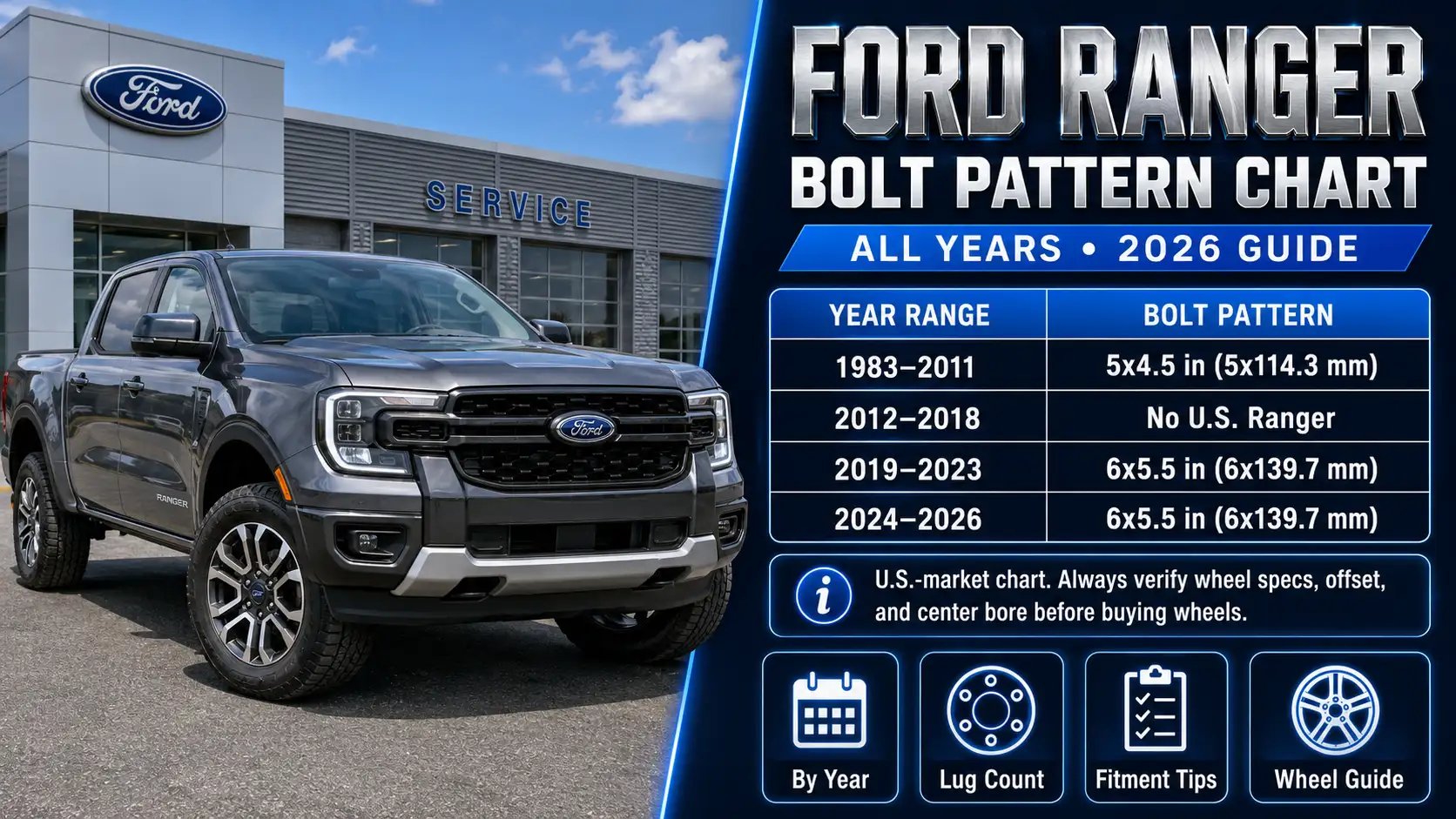
The Ford Ranger uses two distinct bolt patterns across its entire USDM production run: 5×114.3 mm (5×4.5 in) for 1983–2011, and 6×139.7 mm (6×5.5 in) for 2019–2026. Ford did not sell the Ranger in the US from 2012 through 2018, so there is no domestic gap to fill with adapter specs.
The bolt pattern alone is not enough to confirm fitment. Center bore, thread size, offset, and lug torque all factor into whether a wheel mounts correctly and safely. The chart and generation breakdown below covers every USDM Ranger with the complete spec set.

Prime for Young Adults — 6 Months Free
Students and 18–24s get six months of Prime free, then half price.
Start 6 Months Free As an Amazon Associate I earn from qualifying purchases.Infographic showing Ford Ranger bolt pattern specs across two eras: 5×114.3mm for 1983-2011 and 6×139.7mm for 2019-2026, with center bore, thread size, torque, and offset for each, plus a fitment compatibility warning
Recommended Best Deal Products


Ford Ranger bolt pattern by era
USDM 1983 to 20265×114.3 mm
5×4.5 in, 5-lug
6×139.7 mm
6×5.5 in, 6-lug
The two patterns are not interchangeable
A 5-lug wheel will not bolt to a 6-lug hub. Within the 5-lug era, 1998+ wheels also won’t fit 1983 to 1997 4×4 front hubs without machining the center bore.
Bolt patterns total
2
Generations covered

Audible — Listen Free for 30 Days
One free credit a month and thousands of titles included.
Listen Free for 30 Days As an Amazon Associate I earn from qualifying purchases.5
Lug torque, both eras
100 lb-ft
Ford Ranger Bolt Pattern Chart by Year and Generation 1983 to 2026
Use the chart below to find your exact year and confirm every fitment spec before ordering wheels or lug nuts.
GEN 1–3 (1983–2011): 5-Lug USDM Rangers
| Year Range | Generation | Bolt Pattern | Center Bore | Thread Size | Lug Torque | Stock Offset |
|---|---|---|---|---|---|---|
| 1983–1988 | Gen 1 | 5×114.3 mm (5×4.5 in) | 70.5 mm (2WD) / 70.3 mm (4WD early hubs) | M12×1.5 | 100 lb-ft / 135 Nm | +31 mm |
| 1989–1992 | Gen 1 cont. | 5×114.3 mm (5×4.5 in) | 70.5 mm (2WD) / 70.3 mm (4WD early hubs) | M12×1.5 | 100 lb-ft / 135 Nm | +31 mm |
| 1993–1997 | Gen 2 | 5×114.3 mm (5×4.5 in) | 70.5 mm | M12×1.5 | 100 lb-ft / 135 Nm | +31 mm |
| 1998–2003 | Gen 3 | 5×114.3 mm (5×4.5 in) | 70.5 mm | M12×1.5 | 100 lb-ft / 135 Nm | +38–44 mm |
| 2004–2011 | Gen 3 cont. | 5×114.3 mm (5×4.5 in) | 70.5 mm | M12×1.5 | 100 lb-ft / 135 Nm | +38–44 mm |
| 2012–2018 | No USDM Production | — | — | — | — | — |
GEN 4–5 (2019–2026): 6-Lug USDM Rangers
| Year Range | Generation | Bolt Pattern | Center Bore | Thread Size | Lug Torque | Stock Offset |
|---|---|---|---|---|---|---|
| 2019–2023 | Gen 4 (P375) | 6×139.7 mm (6×5.5 in) | 93.1 mm | M12×1.5 | 100 lb-ft / 135 Nm | +55 mm |
| 2024–2026 | Gen 5 (P703) | 6×139.7 mm (6×5.5 in) | 93.1 mm | M12×1.5 | 100 lb-ft / 135 Nm | +55 mm |
Sources: The Ranger Station 2019–2023 Wheel Guide, The Ranger Station 1983–2011 Fitment Guide
The Ranger was not sold in the US from 2012 through 2018. If you own a non-USDM global-market Ranger from those years, the international spec is 6×139.7 mm with a 93.1 mm center bore.
Now that the chart gives you the full spec picture, here is what changed across each generation and why it matters for your specific truck.
How the Ford Ranger Bolt Pattern Changed Across 4 Generations
Recommended Best Deal Products
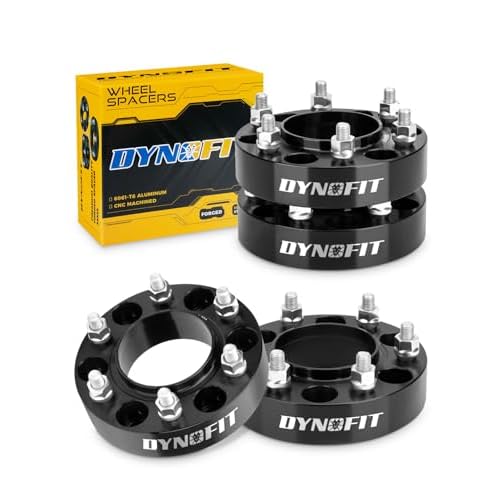


The Ranger’s bolt pattern changed only twice over 40-plus years of US production. Understanding where those breaks happened tells you exactly what wheels will and will not work on your truck.
Audible Premium Plus — Annual Membership
12 audiobook credits up front, plus the full Audible catalogue.
See Annual Plans As an Amazon Associate I earn from qualifying purchases.Gen 1 and Gen 2 (1983–1997): 5×114.3 mm
Every 1983–1997 USDM Ranger left the factory with a 5-lug 5×114.3 mm (5×4.5 in) pattern. Stock offset across both generations ran approximately +31 mm, and the thread size was M12×1.5 throughout.
The center bore split is critical for 4×4 owners in this era. Two-wheel-drive Rangers used a 70.5 mm center bore. Four-wheel-drive models from 1983–1997 used early manual locking hubs with a 70.3 mm bore, and the hub protrudes further outward.
Lug torque was 100 lb-ft (135 Nm) across all 1983–1997 Rangers, per The Ranger Station’s fitment documentation.
Gen 3 (1998–2011): 5×114.3 mm Continues
Ford kept the 5-lug 5×114.3 mm pattern through the entire Gen 3 run. The center bore standardized to 70.5 mm for both 2WD and 4×4 configurations after the 1997 model year. Stock offset shifted slightly upward to the +38–44 mm range depending on trim and wheel diameter.
There is one fitment warning every Gen 3 owner needs to know: wheels from 1998–2011 4×4 Rangers will not fit the front hubs of 1983–1997 4×4 Rangers without center bore machining. The center hole on later wheels is too small to clear the early-style manual locking hubs, as The Ranger Station documents in their 1983–2011 guide.
Stock wheel sizes across Gen 3 ranged from 15 inches on base trim levels to 16 and 17 inches on FX4 and higher packages.
Gen 4 and Gen 5 (2019–2026): 6×139.7 mm
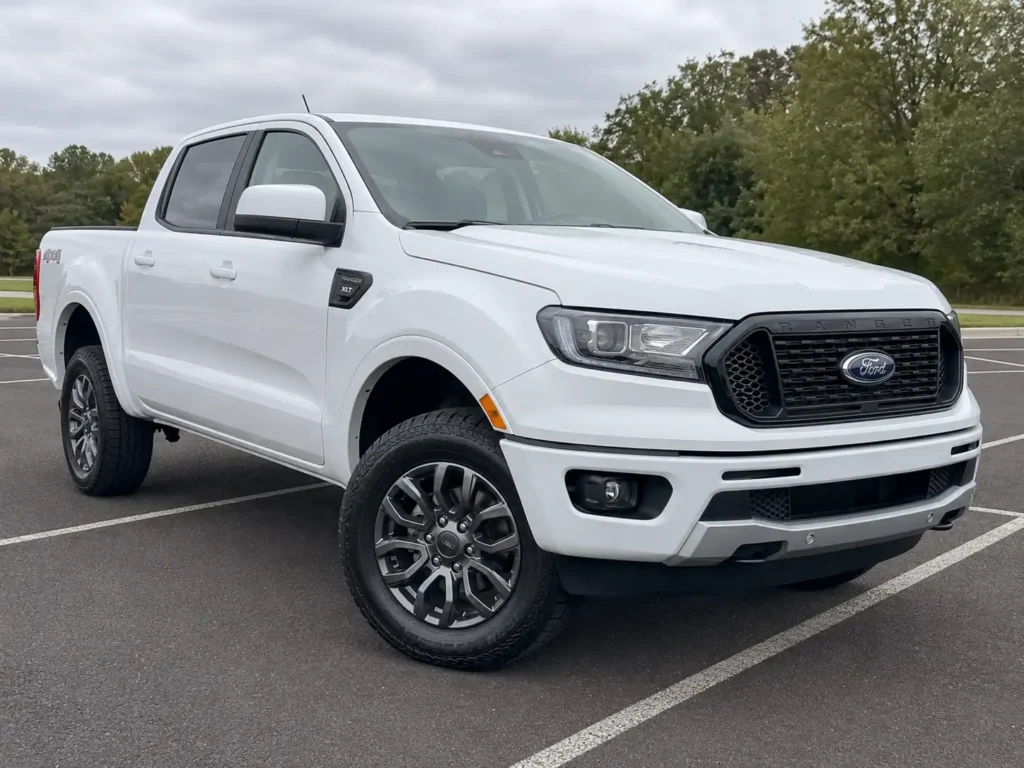
When Ford brought the Ranger back to the US market for 2019, the truck moved to a 6-lug 6×139.7 mm (6×5.5 in) pattern. This is the same bolt pattern used on the Gen 4 (P375) and the current Gen 5 (P703) sold through 2026.
The center bore jumped to 93.1 mm, significantly larger than any previous Ranger generation. Thread size remained M12×1.5. Lug torque stayed at 100 lb-ft / 135 Nm, confirmed by both factory specs and owner reports from the Ranger6G forum. Factory offset on non-Raptor trims is +55 mm across all 2019–2026 models.
The Raptor uses a different offset. Forum data from Ranger6G indicates Bronco non-Raptor takeoff wheels typically run +30 or +25 mm offset, which is more aggressive than the standard Ranger’s +55 mm, and will sit flush or with minimal poke depending on tire width.
Now that you understand how the pattern evolved, the next question most Ranger owners have is whether wheels from one generation will physically fit another.
Will Old Ford Ranger Wheels Fit a New Ranger and Vice Versa
The direct answer is no for cross-generation swaps. Here is the full compatibility picture at a glance:
| Wheel Source | Compatible with 2019–2026 Ranger | Notes |
|---|---|---|
| 1983–2011 Ranger (5-lug) | No | Different bolt pattern (5×114.3 vs. 6×139.7), different center bore |
| 2019–2023 Ranger (Gen 4) | Yes | Same 6×139.7 pattern, 93.1 mm center bore, M12×1.5 |
| 2021+ Bronco (non-Raptor) | Yes | Same bolt pattern and center bore; offset difference of ~25–30 mm vs. stock Ranger +55 mm |
| 2019+ F-150 | No | F-150 uses 6×135 mm; Ranger uses 6×139.7 mm — adapters required |
For full details on the F-150’s different wheel spec, see our Ford F-150 bolt pattern chart.
The 6×139.7 mm pattern is also shared with several other trucks on the market, but center bore varies. The 2019+ Ranger requires a minimum of 93.1 mm center bore. Wheels with a larger bore can fit with hub-centric rings, but wheels with a smaller bore will not clear the hub at all.
The cross-generation swap between 1983–2011 and 2019+ Ranger wheels is not possible without a bolt pattern adapter and center bore modification. Given the safety implications, that is not a recommended path for daily-driven trucks.
When you have the right bolt pattern confirmed, the next step is dialing in offset and center bore for your specific build.
Aftermarket Wheel Specs for the 2019 to 2026 Ford Ranger
Recommended Best Deal Products


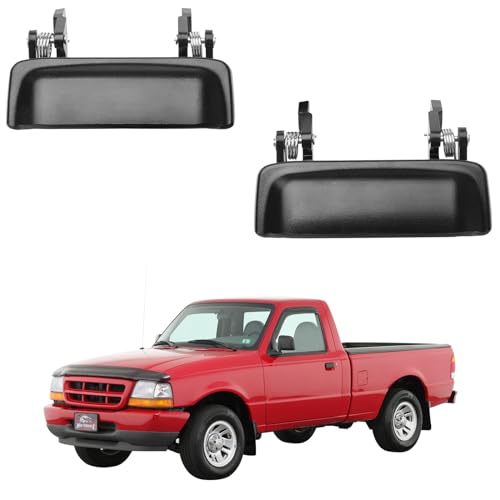
For the 2019–2026 Ranger, the full fitment window breaks down like this:
- Bolt Pattern: 6×139.7 mm (6×5.5 in)
- Center Bore: 93.1 mm minimum; hub-centric rings available if wheel bore is larger
- Thread Size: M12×1.5
- Lug Nut Seat: Conical/tapered seat (acorn-style) for OEM and most aftermarket lug nuts
- Stock Offset: +55 mm
- Practical Aftermarket Offset Range: 0 mm to +35 mm for mild to moderate poke without rubbing
The Ranger Station’s 2019–2023 guide notes that most aftermarket wheels that fit without issues run offsets between 0 mm and +18 mm. Going more negative than 0 mm on a stock or leveled Ranger increases the risk of contact with the crash bars during full-lock steering input.
Common size upgrades on the 2019–2026 platform run 17×9 wheels with 265/70R17 tires, or 18×9 with 265/60R18. With a 2-inch leveling kit, most owners fit 32-inch tires without trimming. The 2024 Gen 5 USDM carries the exact same bolt pattern, center bore, and thread spec as the 2019–2023 Gen 4, so fitment data transfers directly between them.
If you’re also researching what your Ranger can haul with upgraded tires and wheels, the Ford Ranger towing capacity chart covers payload and towing limits by year and configuration.
Ford Ranger Lug Nut Torque Specs by Generation
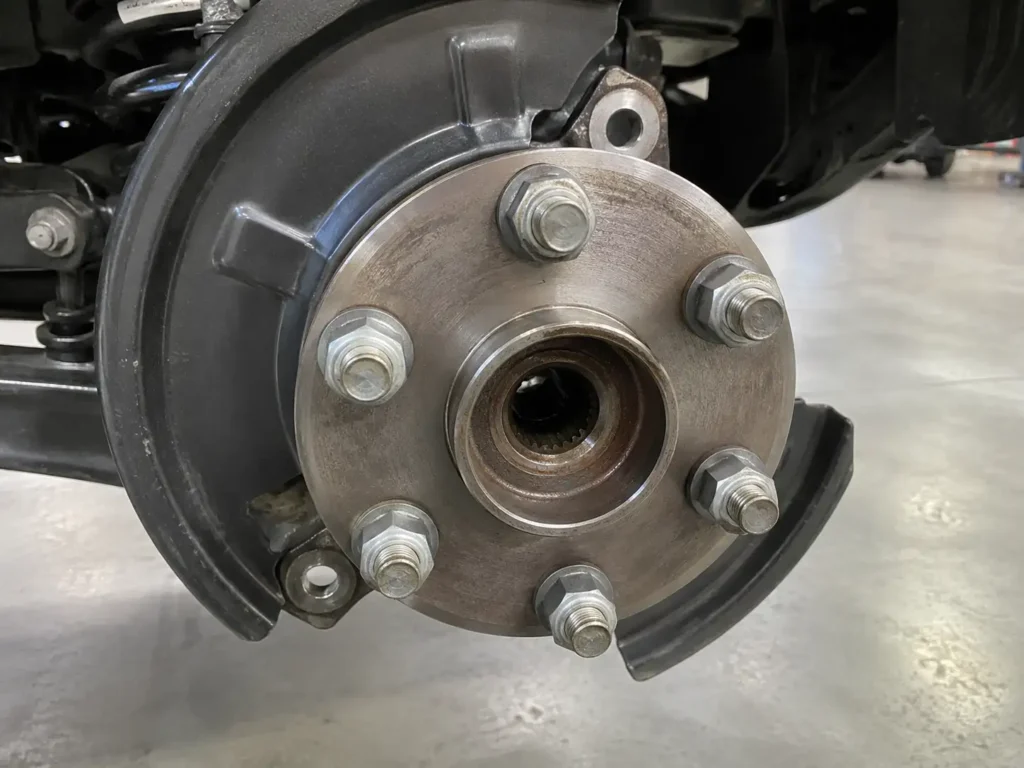
The torque spec is the same across every USDM Ranger generation, but the thread size changed when the pattern switched to 6-lug.
| Generation | Years | Lug Torque | Thread Size | Lug Count |
|---|---|---|---|---|
| Gen 1–2 | 1983–1997 | 100 lb-ft / 135 Nm | M12×1.5 | 5 |
| Gen 3 | 1998–2011 | 100 lb-ft / 135 Nm | M12×1.5 | 5 |
| Gen 4–5 | 2019–2026 | 100 lb-ft / 135 Nm | M12×1.5 | 6 |
The torque value is 100 lb-ft across all generations. The thread pitch is M12×1.5 throughout, including the 2019–2026 6-lug trucks.
Always use a calibrated torque wrench for final tightening. Finish in a star pattern, working across the wheel rather than in a circle. Re-torque to 100 lb-ft after the first 50–100 miles any time you install new wheels. Lug nuts can settle slightly after the initial drive, and skipping the re-torque check is where loose wheel problems start.
For a complete look at how the Ford Ranger bolt pattern fits within the broader Ford lineup, the Ford bolt pattern chart covers every model from the F-150 to the Bronco with the same level of detail.
Choosing the Right Wheels for Your Ford Ranger
The Ford Ranger bolt pattern chart splits cleanly into two eras: 5×114.3 mm for 1983–2011 USDM trucks, and 6×139.7 mm for the 2019–2026 return. Those two patterns are not cross-compatible, and no adapter makes that swap practical for a daily driver.
Center bore matters as much as bolt pattern. A wheel that matches on bolt pattern but is too small at the center bore will not seat properly on the hub and will cause vibration or worse. For 2019–2026 Rangers, that number is 93.1 mm minimum.
Before ordering any wheel, verify all four specs from the chart: bolt pattern, center bore, thread size, and offset. If you are upgrading tires at the same time, check the factory offset before going wider to avoid crash bar contact on Gen 4 and Gen 5 trucks.
Frequently Asked Questions About Ford Ranger Bolt Patterns
What is the bolt pattern for a 2019 Ford Ranger?
The 2019 Ford Ranger uses a 6×139.7 mm (6×5.5 in) bolt pattern with a 93.1 mm center bore. This is the same pattern used on all 2019–2026 USDM Rangers, including the 2024 and 2025 Gen 5 models. Thread size is M12×1.5 and lug torque is 100 lb-ft.
Do 2019 Ranger wheels fit a 2011 Ranger?
No. The 2019 Ranger uses a 6×139.7 mm bolt pattern and 93.1 mm center bore, while the 2011 Ranger uses a 5×114.3 mm pattern and 70.5 mm center bore. Both the bolt pattern and center bore are incompatible, and adapter modifications are not recommended for daily-driven trucks.
What is the lug nut torque for a Ford Ranger?
All USDM Ford Rangers use a lug nut torque of 100 lb-ft (135 Nm). This applies to 1983–2011 5-lug trucks and 2019–2026 6-lug trucks alike. Always re-check torque 50–100 miles after installing new wheels.
Is the Ford Ranger bolt pattern the same as the Ford Bronco?
The 2021+ Bronco (non-Raptor) and the 2019–2026 Ranger share the same 6×139.7 mm bolt pattern and 93.1 mm center bore, making Bronco takeoff wheels a common fitment swap. The main difference is offset: Bronco non-Raptor wheels typically run +25 to +30 mm versus the Ranger’s stock +55 mm.
What center bore does the 2019 to 2026 Ford Ranger use?
The 2019–2026 USDM Ford Ranger requires a minimum center bore of 93.1 mm. Aftermarket wheels with a larger center bore can fit with hub-centric rings to fill the gap. A wheel with a center bore smaller than 93.1 mm will not seat correctly on the hub regardless of bolt pattern match.