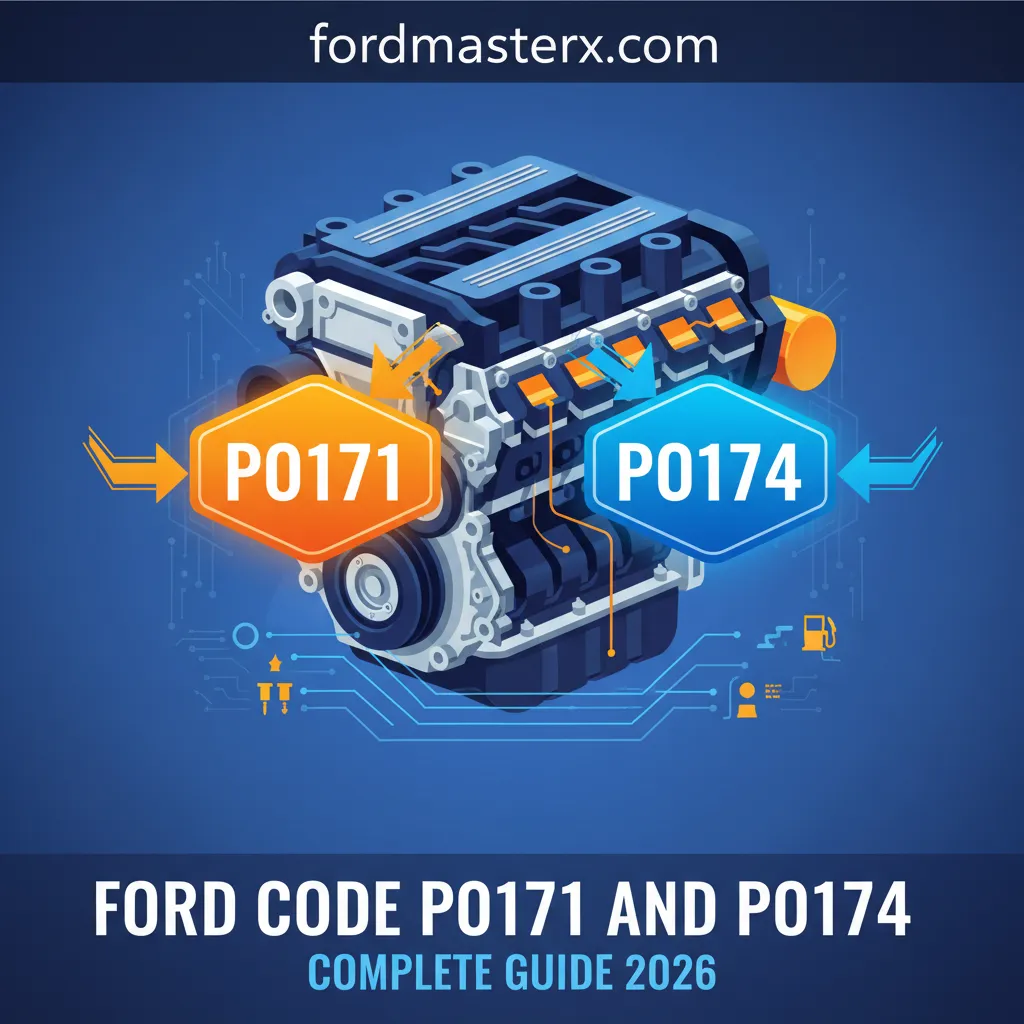
Ford Code P0171 And P0174: Complete Guide 2026

Encountering a ‘Check Engine Light’ on your Ford vehicle can be a source of immediate concern for any driver, signaling a potential issue that demands attention. Specifically, the simultaneous illumination of diagnostic trouble codes P0171 (System Too Lean, Bank 1) and P0174 (System Too Lean, Bank 2) points to a pervasive lean condition, creating uncertainty and potentially leading to costly repairs if misdiagnosed. This expert guide provides a professional and reliable blueprint for understanding, systematically diagnosing, and effectively resolving Ford P0171 and P0174 codes, equipping you with the knowledge to address this common powertrain anomaly with confidence.

Understanding Ford Diagnostic Trouble Codes P0171 and P0174
Recommended Best Deal Products

📤 Share Image
When your Ford’s Powertrain Control Module (PCM) detects an imbalance in the air-fuel mixture, it triggers specific Diagnostic Trouble Codes (DTCs). P0171 and P0174 are two such codes, directly indicating a “System Too Lean” condition. This means the engine is receiving either too much air or not enough fuel for optimal combustion. Essentially, the air-fuel ratio is skewed significantly away from the stoichiometric ideal of 14.7 parts air to 1 part fuel, creating a condition that can degrade performance and increase emissions.
P0171 specifically refers to Bank 1, which is the side of the engine containing cylinder #1. In V-type engines (like Ford’s common V6s and V8s), this typically means the passenger side bank in a North-South mounted engine (e.g., F-150, Mustang) or sometimes the firewall-side bank in East-West configurations (e.g., Explorer, Edge). P0174 denotes Bank 2, the opposite bank of cylinders. The fact that both codes often appear simultaneously in Ford vehicles, impacting popular models such as the F-150, Explorer, Mustang, and Focus across various engine types (e.g., 3.5L EcoBoost, 4.6L V8, 5.4L V8, 5.0L V8), is highly significant. It points towards a global engine issue affecting the entire powertrain, rather than an isolated problem specific to a single bank’s components.
A lean condition is detrimental, causing higher combustion temperatures, which can lead to engine damage over time. The PCM monitors the air-fuel ratio through its upstream oxygen (O2) sensors. Research indicates that typically a 1.2:1 to 1.5:1 air-fuel ratio deviation from the ideal stoichiometric value is sufficient to trigger a lean code. These codes often manifest after a prolonged period, typically two consecutive drive cycles, where the PCM consistently observes this lean condition.
Common driver-perceptible symptoms include the unmistakable illumination of the Check Engine Light (MIL), noticeably reduced fuel economy, a perceptible rough idling, hesitation or lack of power during acceleration, and potential engine misfires. For instance, a driver might notice their 2012 Ford F-150 with the 5.0L V8 started idling rough and the MIL came on immediately after a cold start, signaling a persistent issue.
What Causes Ford Codes P0171 and P0174 Simultaneously?
Diagnosing P0171 and P0174 simultaneously requires a professional, systematic approach, as the underlying causes invariably affect both engine banks. As industry experts, we know certain common culprits appear with high frequency in Ford vehicles.
Vacuum Leaks: The Primary Suspect
Unmetered air entering the engine downstream of the Mass Air Flow (MAF) sensor is a leading cause. This excess air creates a lean condition because the PCM doesn’t account for it in its fuel calculation. Common leak points in Ford vehicles include:
- PCV System Components: Hoses, valves, and elbows can become brittle and crack over time. A cracked PCV elbow on a Ford Expedition 5.4L V8, for example, is a frequent culprit, allowing significant unmetered air ingress.
- Intake Manifold Gaskets: Deterioration or warping can cause leaks, especially on older models.
- Brake Booster Hose: A split or disconnected hose can introduce a substantial vacuum leak.
- Various Vacuum Lines: Numerous smaller lines run throughout the engine bay, prone to cracking or dislodgement.
Mass Air Flow (MAF) Sensor Malfunction
The MAF sensor measures the volume of air entering the engine. If it’s dirty, contaminated (e.g., from aftermarket oiled air filters), or faulty, it can provide inaccurate, typically lower-than-actual, air volume readings to the PCM. Believing less air is entering, the PCM then commands less fuel, leading to a global lean condition. A dirty MAF sensor on a Ford Fusion 2.0L EcoBoost often presents with P0171/P0174 symptoms, causing widespread fuel trim corrections.
Low Fuel Pressure
Insufficient fuel delivery to the engine will invariably cause a lean condition on both banks. Potential issues include:
- Failing Fuel Pump: A weak or intermittently failing fuel pump cannot maintain the required pressure, especially under load. A failing fuel pump module in a Ford F-150 (3.7L, 5.0L, 3.5L EcoBoost) can result in systemic low fuel pressure.
- Clogged Fuel Filter: Restricts fuel flow, common in older models that still utilize an external filter.
- Malfunctioning Fuel Pressure Regulator (FPR): Incorrectly regulates pressure, often allowing it to drop too low.
Normal fuel pressure specifications for common Ford systems range from 40-70 psi for returnless systems and 35-45 psi for return systems, though these can vary by model and engine.

Audible — Listen Free for 30 Days
One free credit a month and thousands of titles included.
Listen Free for 30 Days As an Amazon Associate I earn from qualifying purchases.Exhaust Leaks (Pre-Catalytic Converter)
While seemingly counter-intuitive, leaks in the exhaust system before the upstream oxygen sensors can cause P0171/P0174. These leaks can draw in ambient air, particularly during deceleration or engine braking (known as exhaust scavenging). This “false air” fools the O2 sensors into reporting a lean condition, prompting the PCM to add more fuel, even if combustion is actually correct.
Other Contributing Factors
- Partially Clogged Fuel Injectors: While less common for both banks unless due to widespread poor fuel quality or a systemic issue affecting multiple injectors.
- Evaporative Emission Control (EVAP) System Issues: Though primarily related to emissions, certain EVAP leaks can occasionally lead to vacuum leaks if the system’s integrity is compromised, indirectly contributing to lean conditions.
By The Numbers
of P0171/P0174 in older Fords due to Vacuum Leaks
of P0171/P0174 cases attributed to MAF Sensor issues
Systematic Diagnosis and Repair of Ford P0171 and P0174 Codes
A reliable and effective repair for P0171 and P0174 demands a structured, professional diagnostic methodology. This guide outlines the steps experienced technicians follow to pinpoint and rectify the root cause, ensuring a quality repair.
📋
Step-by-Step Guide
Begin by connecting a professional-grade OBD-II scanner to confirm the presence of P0171 and P0174. Crucially, identify any pending codes and thoroughly analyze freeze frame data. This invaluable information captures engine operating conditions (RPM, engine load, temperature, fuel trims) at the precise moment the fault occurred, offering vital clues for diagnosis.
Perform a meticulous visual inspection of all vacuum lines, PCV system components (hoses, valves, elbows), intake manifold, and throttle body gaskets. For a 2010 Ford F-150 5.4L V8, common vacuum leak sources include the PCV elbow behind the intake manifold, which is often brittle. The critical role of a smoke machine cannot be overstated; it injects non-toxic smoke into the intake system, revealing even the smallest, otherwise undetectable leaks, providing reliable leak detection that eye-sight alone cannot match.
If no vacuum leaks are found, clean the MAF sensor using a specialized MAF cleaner (never carb cleaner). Afterwards, meticulously check live data for MAF readings at idle and various RPMs, comparing them against manufacturer specifications. For example, expect MAF sensor readings around 2.5-3.5 g/s at idle for a 4.6L V8; significant deviation suggests an issue. If cleaning doesn’t resolve, consider advanced diagnostics such as voltage and resistance tests to ascertain the sensor’s integrity.
Measure actual fuel pressure with a dedicated gauge at the fuel rail, comparing it precisely to manufacturer specifications. Simultaneously, analyze live data for Short-Term Fuel Trim (STFT) and Long-Term Fuel Trim (LTFT) values on both banks at idle and under load. Significantly positive LTFTs (typically >+15-20%) on both banks are a strong indicator of a severe lean condition requiring the PCM to add substantial fuel. For example, a 2015 Ford Escape 2.5L engine displaying LTFTs of +20% on both banks strongly points to a large vacuum leak or MAF sensor issue.
Audible Premium Plus — Annual Membership
12 audiobook credits up front, plus the full Audible catalogue.
See Annual Plans As an Amazon Associate I earn from qualifying purchases.Visually and audibly inspect the exhaust manifold, exhaust pipe connections, and O2 sensor bungs for any leaks. Leaks upstream of the primary O2 sensors can draw in ambient air, falsely signaling a lean condition to the PCM. A stethoscope or even soapy water can help pinpoint these subtle leaks.
While O2 sensors are rarely the direct cause of P0171/P0174 (they report the condition, rather than cause it), it’s important to evaluate their functionality. Use a reputable scan tool to check O2 sensor readiness monitors and analyze live data for proper switching patterns and voltage outputs. This confirms they are accurately reporting the lean condition and are not themselves faulty, providing trusted diagnostic information.
Fuel trims are the PCM’s short-term (STFT) and long-term (LTFT) adjustments to the base fuel delivery. Positive fuel trims (+%) indicate the PCM is adding fuel because it detects a lean condition. Negative fuel trims (-%) indicate it’s subtracting fuel due to a rich condition. For normal operation, fuel trims should ideally be within +/- 10%. Consistent positive values beyond this range on both banks are a red flag for a systemic lean issue.
Always ensure the vehicle is safely supported when working underneath, and disconnect the battery when performing electrical component tests or repairs. Working with fuel systems requires extreme caution due to flammability and high pressure. If you are uncomfortable with any diagnostic or repair step, it is strongly recommended to seek professional assistance.
Advanced Troubleshooting When P0171/P0174 Codes Persist
Even with a systematic approach, some lean conditions can be elusive. For professional technicians and advanced DIYers, these situations require deeper, more specialized diagnostics to deliver a reliable resolution.
Fuel Injector Diagnostics and Cleaning
If fuel pressure is within specification, individual or multiple partially clogged fuel injectors can still contribute to lean conditions. This requires more than a basic inspection. Perform comprehensive injector balance tests using specialized equipment, or remove injectors for inspection of spray patterns and resistance testing. A professional flow bench test is the most accurate way to confirm injector performance, ensuring quality fuel delivery to all cylinders.
PCM Software Updates/Reprogramming
In some cases, the PCM’s calibration may be at fault. Outdated software might misinterpret sensor data or have suboptimal fuel calibration parameters, leading to persistent or false lean codes even when mechanical components are sound. Referring to Ford’s Technical Service Bulletins (TSBs) is critical here; for instance, some 2007-2010 Ford Edge/Fusion 3.5L V6 models had TSBs addressing fuel trim calibration issues. A professional Ford dealer or an independent shop with factory scan tool capabilities can check for and apply necessary software updates.
Thorough PCV System Inspection (Beyond Visible Leaks)
Beyond simple hose leaks, the PCV valve itself can fail by sticking open or closed, impacting crankcase ventilation and potentially causing a vacuum leak or oil consumption that leads to sensor contamination. Furthermore, internal intake manifold leaks, particularly in complex plastic intake manifolds common in Ford V6s, may not be apparent during a standard smoke test. Specialized vacuum pumps or even propane enrichment can help isolate these stubborn, intermittent leaks.
Fuel Pressure Regulator (FPR) Specific Testing
For vehicles with an external FPR, testing the vacuum line to the FPR is important, as a ruptured diaphragm can cause a vacuum leak and fuel ingestion. Performing a pressure bleed-down test on the fuel system can also reveal a faulty FPR or a leaking check valve in the fuel pump. For in-tank regulators, diagnosis can be more challenging and may require specialized equipment or fuel tank removal.
Engine Mechanical Integrity Check
While less common for P0171/P0174, internal engine issues can sometimes contribute. Performing compression or leak-down tests can rule out conditions like worn piston rings, valve issues, or damaged head gaskets that might cause unmetered air (if external) or excessive crankcase pressure, which can disrupt PCV system function. Using a lab scope to analyze oxygen sensor waveforms provides a much higher quality diagnosis of sensor response and signal integrity than simple voltage readings, offering another layer of expert analysis.
Preventive Measures to Mitigate Ford Lean Condition Codes
Preventing P0171 and P0174 codes is ultimately more cost-effective than reacting to them. Implementing routine maintenance and adopting proactive practices can significantly extend the life of your Ford and ensure reliable operation.
Adherence to Manufacturer’s Scheduled Maintenance
The most fundamental preventive step is following Ford’s recommended maintenance schedule. This includes regular oil changes, timely engine air filter replacement (crucial for MAF sensor protection), and replacement of the fuel filter where applicable. For a 2018 Ford F-150 3.5L EcoBoost, adhering to the recommended 10,000-mile service interval for air filter replacement is crucial for MAF sensor longevity. The typical lifespan of an external fuel filter is 30,000-100,000 miles, depending on the manufacturer and model.
Routine Inspection of Vacuum Lines and Hoses
Periodically conduct visual checks of all accessible vacuum lines, PCV hoses, and intake manifold connections for any signs of cracks, deterioration, or loose connections. This is particularly important on older vehicles or those operating in harsh environmental conditions where plastic and rubber components can degrade faster.
Periodic MAF Sensor Cleaning
Even without codes, cleaning the MAF sensor with specialized MAF cleaner can prevent future issues. This is especially recommended in dusty environments or if an aftermarket oiled air filter is used, as oil residue can accumulate on the sensor’s delicate wire. Regular MAF cleaning (e.g., every 20-30k miles, particularly on older Ford Rangers) can significantly extend its service life and prevent lean codes, saving owners hundreds in potential diagnostic fees and part replacements.
Use of Quality Fuel and Fuel System Cleaners
Consistently using top-tier gasoline, which contains detergents to prevent deposit buildup, is highly advisable. Additionally, the occasional, professional-grade use of reputable fuel injector cleaners can help maintain fuel system cleanliness and prevent partial clogging of injectors, ensuring optimal fuel atomization. A premium fuel additive used quarterly can help maintain injector cleanliness in a high-mileage Ford Focus, providing a trusted measure for fuel system health.
Proactive Diagnosis of Minor Symptoms
Don’t wait for the Check Engine Light. Encourage addressing minor symptoms like a slight hesitation, a barely noticeable rough idle, or subtle changes in fuel economy before they escalate into persistent diagnostic trouble codes. Early intervention based on careful observation can prevent more severe and costly repairs, embodying a professional approach to vehicle health.
Ford codes P0171 and P0174 signify systemic lean conditions, often due to vacuum leaks, MAF issues, or fuel delivery problems affecting both engine banks. A structured, quality diagnostic approach, utilizing professional tools and expert insights, is paramount for accurate identification and reliable resolution. Proactive maintenance, including regular inspections and prompt attention to minor symptoms, is crucial for preventing recurrence and maintaining long-term vehicle health. Armed with this trusted information, approach your Ford’s P0171 and P0174 codes methodically. If the repair exceeds your technical comfort or requires specialized tools, consult a qualified, professional technician for a reliable resolution to ensure the quality and longevity of your vehicle.
Frequently Asked Questions
Can I drive my Ford with P0171 and P0174 codes?
While possible for short distances, prolonged driving with P0171 and P0174 codes is strongly discouraged. A persistent lean condition causes elevated engine temperatures, reduced lubrication effectiveness, and can lead to significant, irreversible damage to critical components like catalytic converters, pistons, and valves, resulting in substantially more expensive repairs. Address these codes promptly for reliable vehicle operation.
What is the most common cause of both P0171 and P0174 on Ford vehicles?
The most frequent cause for both P0171 and P0174 appearing simultaneously on Ford vehicles is a substantial vacuum leak. This introduces unmetered air into the engine, leaning out the air-fuel mixture across both banks. Common areas for these leaks include PCV system components, deteriorated intake manifold gaskets, and cracked or loose vacuum hoses, demanding a quality inspection.
How much does it typically cost to fix Ford P0171 and P0174 codes?
The cost to fix P0171 and P0174 varies significantly based on the root cause and regional labor rates. Simple fixes like a cracked vacuum hose or MAF sensor cleaning might be under $100-$200. More complex issues such as a new MAF sensor ($150-$400), fuel pump replacement ($400-$1000+), or extensive vacuum leak diagnostics could range from $300 to over $1,500 for a reliable repair.
Are oxygen sensors usually the problem when I have P0171 and P0174?
While oxygen sensors report the lean condition, they are rarely the direct cause of both P0171 and P0174 codes appearing together. If the O2 sensors were faulty, it’s more likely only one bank’s sensor would fail, or they’d report an incorrect rich condition. A professional diagnosis ensures these trusted components are accurately reporting the engine’s true state rather than being the source of the problem.
What diagnostic tools are essential for addressing these lean codes?
Essential diagnostic tools for a reliable assessment include a professional-grade OBD-II scanner with live data capabilities for monitoring fuel trims and sensor readings, a fuel pressure gauge for verifying fuel system integrity, and a smoke machine for accurately pinpointing vacuum leaks. A digital multimeter for electrical testing also proves invaluable for comprehensive, expert troubleshooting of these Ford codes.