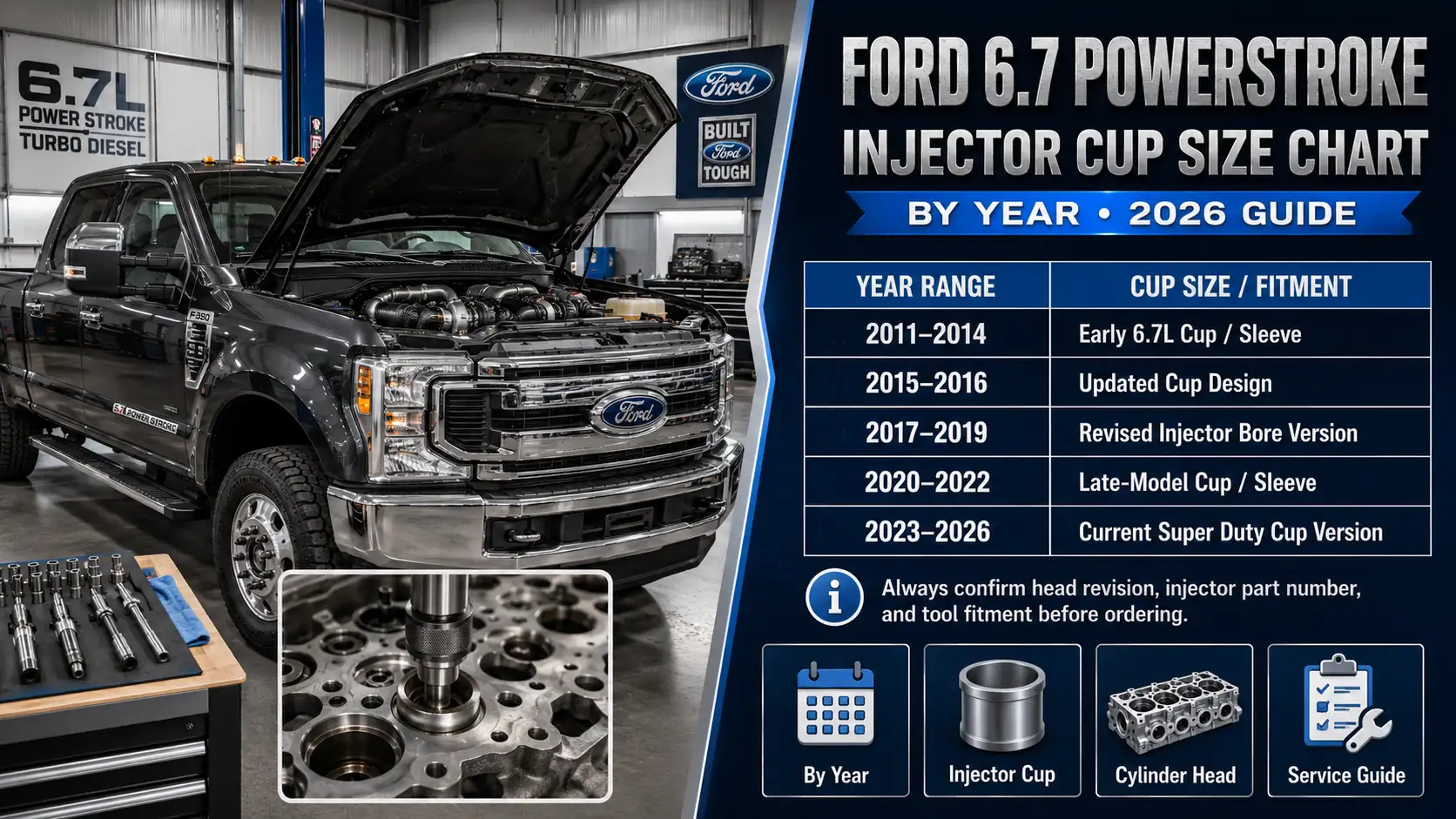
Ford 6.7 Powerstroke Injector Cup Size Chart by Year 2026

The Ford 6.7 Powerstroke injector cup size chart needs one warning first. The best public data confirms injector fitment, fuel line part numbers, retaining bolt part numbers, and tool references better than it confirms exact cup dimensions.
That matters because a guessed cup diameter can lead to the wrong sleeve, damaged cylinder head bore, or a failed seal after reassembly.

Prime for Young Adults — 6 Months Free
Students and 18–24s get six months of Prime free, then half price.
Start 6 Months Free As an Amazon Associate I earn from qualifying purchases.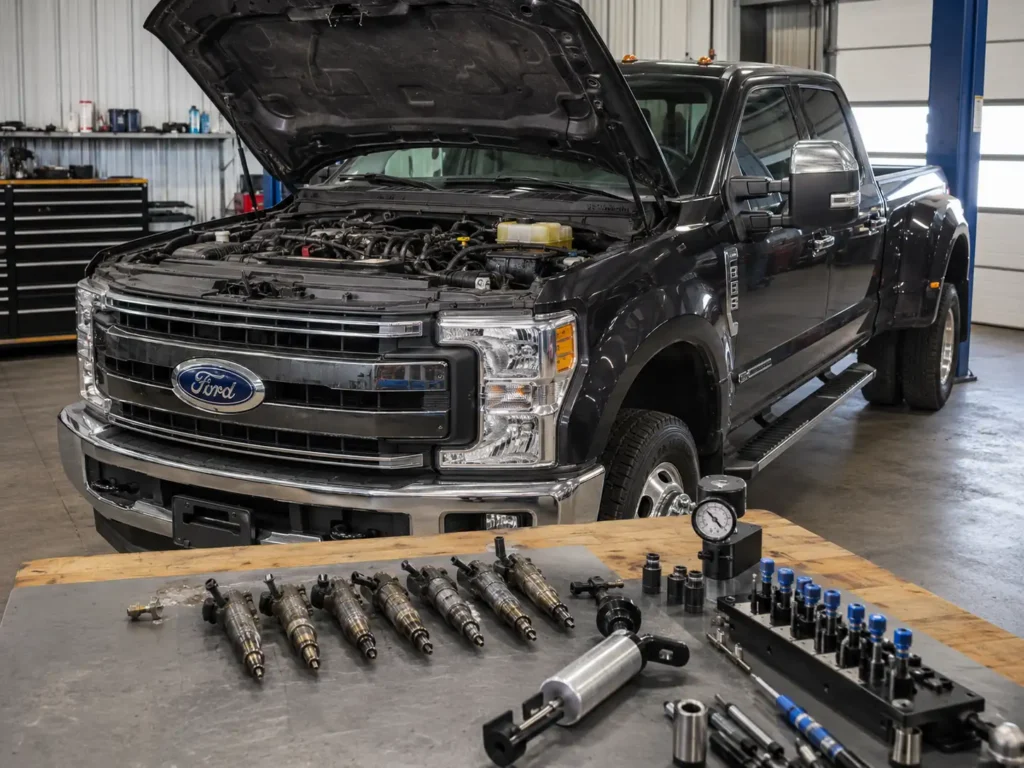
Use this guide as a fitment and service planning chart first. For exact outside diameter, inside diameter, sleeve depth, or bore depth, verify through Ford service data, a dealer parts counter, or direct measurement of the removed sleeve.
Start by separating the part names, because injector cup, injector sleeve, seal, and injector are often mixed together online.
Ford 6.7 Powerstroke Injector Cup Size Chart
Use this infographic to separate verified injector fitment from unverified cup or sleeve dimensions. The public data supports 2011-2019 injector part splits, but exact sleeve measurements still need Ford service data or direct measurement.
2011-2016
Injector Data VerifiedMotorcraft reman injector application is verified for all 2011MY to 2016MY 6.7L engines.
Motorcraft CN-6049-RM
2017-2019
Injector Data VerifiedMotorcraft reman injector application is verified for all 2017MY to 2019MY 6.7L engines.
Motorcraft CN-6050-RM
2020-2022
VIN Check RequiredDo not assume earlier injector, sleeve, or tool data applies to later 6.7L trucks.
2023-2026
Manual VerificationStandard and High Output 6.7L applications need extra confirmation before parts ordering.
Safe Injector Cup Repair Decision Path
What The 6.7 Powerstroke Injector Cup Means
Recommended Best Deal Products


On a 6.7L Power Stroke, the phrase injector cup is often used loosely. Some owners use it to mean the pressed sleeve in the cylinder head. Others use it for the injector seal, copper washer, injector bore, or even the injector itself.
That wording matters before you order parts.

Audible — Listen Free for 30 Days
One free credit a month and thousands of titles included.
Listen Free for 30 Days As an Amazon Associate I earn from qualifying purchases.Injector Cup And Sleeve
An injector cup, also called an injector sleeve in many diesel repair discussions, is the insert area that helps separate the injector from surrounding coolant passages.
On older Power Stroke engines, injector cup failure is discussed more often because fuel in coolant is a known diagnostic clue. On the 6.7L Power Stroke, public part and tool data exists, but exact sleeve dimensions are not as easy to verify from open Ford sources.
Injector Seal And Washer
The injector seal or washer is not the same part as the sleeve. A sealing washer handles the injector seat area, while O-rings seal fuel or return paths around the injector body.
A failed seal can cause running problems without meaning the sleeve itself must be replaced.
Fuel Injector And Line
The fuel injector is the high-pressure metering component. The 6.7L Power Stroke uses piezo-style common rail injectors, and each injector has calibration data that must match the truck correctly.
Fuel supply lines and retaining bolts are separate service parts. Motorcraft states that fuel lines and bolts should be replaced for a complete 6.7L injector repair.
Once the terms are separated, the size chart becomes much easier to read.
6.7 Powerstroke Injector Cup Size Chart By Year
Use this chart as a fitment guide first and a measurement guide second. The verified public data supports the injector application split and related service parts. It does not provide a reliable official cup dimension table.
The key takeaway is simple. For 2011-2019 trucks, the injector part split is verified from Motorcraft data. For actual cup size, sleeve diameter, bore depth, and later model fitment, the safe answer is still VIN verification or physical measurement.
The year split matters because the injector part numbers change before the public cup dimensions become clear.
Audible Premium Plus — Annual Membership
12 audiobook credits up front, plus the full Audible catalogue.
See Annual Plans As an Amazon Associate I earn from qualifying purchases.Which Injector Parts Fit 2011 To 2019 Trucks
Recommended Best Deal Products


Motorcraft’s 6.7L reman injector data gives the cleanest verified year split for this repair. It separates 2011-2016 trucks from 2017-2019 trucks and lists related service parts for a complete injector job.
Motorcraft also notes that the fuel lines and bolts are not included with the injectors themselves. That means a cheap injector-only parts order can still be incomplete if the line and bolt are removed during the job.
F-550 owners need extra caution. Motorcraft notes that F-550 trucks should only be serviced with new 6.7L fuel injectors, not the listed reman injectors.
Part fitment identifies what you are replacing, but the tool section shows what can actually remove the sleeve or injector safely.
Which Tools Fit 6.7 Powerstroke Injector Sleeves
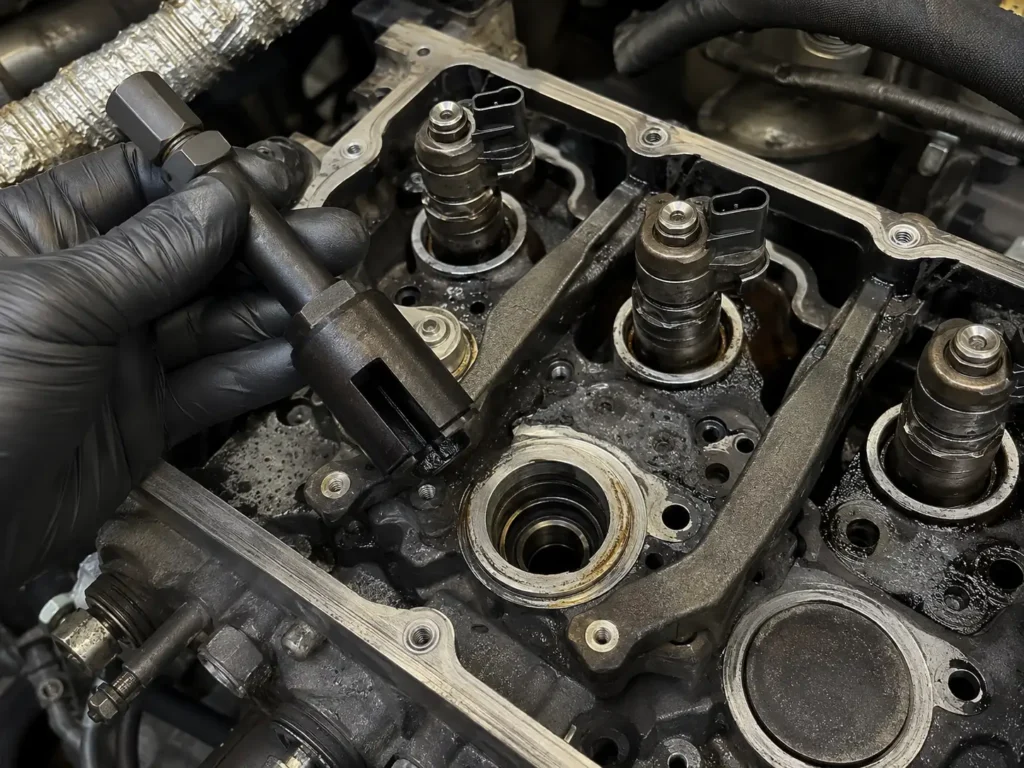
The tool number matters because injector removal and sleeve removal are not the same job. A tool that pulls the injector body is not automatically the correct tool for extracting or installing a sleeve in the cylinder head.
Injector Removal Tools
Injector removal tools grip or pull the injector from the cylinder head. They are used when carbon, heat cycling, or tight bore fit makes the injector difficult to remove by hand.
Before buying one, verify that it fits your cab style, cylinder location, and model year. Rear cylinder access can be tighter on Super Duty trucks than product photos make it look.
Sleeve Removal Tools
Aftermarket tool listings commonly reference the 303-230 and 310-230 tool family for 6.7L Power Stroke injector sleeve or cup service. Treat those numbers as a tool-family starting point, not final proof for every model year.
The safe buying process is to verify the tool against the exact truck year, engine, cylinder location, and the sleeve design being serviced.
Low Clearance Adapters
Some 6.7L injector and sleeve jobs need a low-clearance adapter because rear cylinders are harder to access in the truck. Do not assume a universal kit includes every adapter you need.
If the job involves 2020-2026 trucks, confirm the tool through a Ford service manual, Rotunda tool reference, or a diesel shop that has completed the same year range.
Before buying tools, confirm that the symptoms actually point to a cup or sleeve problem.
How To Tell If The Injector Cup Is Leaking
Recommended Best Deal Products


A leaking injector cup usually shows up as contamination, not just a rough-running engine. The strongest clue is diesel fuel mixing with the coolant system.
Common warning signs include:
- Fuel In Coolant: Diesel smell, oily residue, or fuel contamination in the degas bottle can point toward a failed cup or sleeve seal path.
- White Exhaust Smoke: White smoke can appear when coolant or fuel contamination affects combustion.
- Hard Starts And Misfires: A leaking injector area can create hard starting, rough idle, or cylinder misfire symptoms.
- Bubbling Coolant Reservoir: Bubbles in the coolant tank can point to combustion gas, fuel, or pressure entering the cooling system.
- Coolant Loss With No External Leak: If coolant level drops and no hose, radiator, or water pump leak is visible, internal leakage needs diagnosis.
Do not stop at symptoms alone. A 6.7L Power Stroke can also have fuel system issues tied to injectors, fuel lines, pressure control, or CP4 damage.
If coolant contamination is part of the problem, check the truck’s 6.7 Powerstroke coolant hose routing before assuming the sleeve is the only possible failure point.
If metal contamination or high-pressure fuel damage is suspected, compare the symptoms with 6.7 Powerstroke CP4 failure symptoms before ordering injector parts.
If the symptom matches, the next decision is whether to replace only the seal parts or open the sleeve repair path.
When To Replace Sleeves Seals Lines And Bolts
Do not replace the sleeve just because the injector is coming out. The sleeve or cup should be replaced when testing confirms leakage, cracking, damage, or bore sealing failure.
Motorcraft’s complete injector repair guidance lists fuel supply lines and retaining bolts as related service parts. That makes sense because high-pressure diesel lines and injector fasteners are not areas where guesswork is acceptable.
If the truck has a pressure control issue rather than a sleeve leak, review the 6.7 Powerstroke fuel pressure regulator function before opening the injector bore repair path.
For job planning, the time involved can vary sharply by access, seized parts, and whether the repair stays at injector level or goes deeper. Our guide on how long it takes to replace fuel injectors gives a better labor-time baseline.
The last piece is knowing what this article can verify and what still needs manual measurement.
What Data Still Needs Manual Verification
The missing data is not filler. It is the difference between a useful chart and a wrong parts order.
The following items still need manual confirmation before final parts purchase:
- Exact injector cup outside diameter
- Exact sleeve inside diameter
- Sleeve wall thickness
- Installed bore depth
- Sleeve material for each 6.7L year range
- 2020-2026 sleeve and injector service part compatibility
- Official Ford naming for cup, sleeve, insert, or bore component
- Official Rotunda tool coverage for 2020-2026 applications
Do not publish a guessed size such as a random millimeter diameter unless it comes from Ford service data, an OEM parts drawing, or a verified measurement from the removed part.
With those limits clear, the safest answer is to use the chart for fitment and verify dimensions before buying machine-fit sleeve parts.
Final Fitment Advice For 6.7 Powerstroke Owners
The safest way to use a Ford 6.7 Powerstroke injector cup size chart is to treat it as a fitment map first. The 2011-2016 and 2017-2019 injector part splits are verified from Motorcraft data, and the related fuel line and bolt numbers are clear.
The exact injector cup or sleeve dimensions are not clear enough from public Ford data to publish as final measurements. Verify by VIN, cylinder location, engine year, and removed-part measurement before ordering sleeve-specific repair parts.
If fuel is in the coolant, diagnose the failure path before replacing parts. If the truck only has an injector fault, the sleeve may not be the failed component.
FAQ
What Size Is A 6.7 Powerstroke Injector Cup
The exact 6.7 Powerstroke injector cup size is not reliably confirmed in public Ford data. Use the chart for fitment planning, but verify diameter, sleeve depth, and bore size through Ford service information or direct measurement before buying sleeve parts.
Does A 6.7 Powerstroke Have Injector Cups
Yes, the injector area uses a sleeve or cup style sealing structure in the cylinder head, but online wording is inconsistent. Many owners call it an injector cup, while parts and tool references may call it an injector sleeve.
Are 6.7 Powerstroke Injector Cups And Sleeves The Same
In many repair discussions, injector cup and injector sleeve refer to the same general cylinder head insert area. Still, confirm the exact Ford parts wording before ordering, because seal washers, O-rings, injectors, and sleeves are different service items.
What Tool Removes A 6.7 Powerstroke Injector Sleeve
Aftermarket listings commonly reference the 303-230 and 310-230 tool family for 6.7L injector sleeve or cup service. Verify tool fitment by model year, cylinder location, and official service procedure before purchase.
Can You Replace 6.7 Powerstroke Injector Cups Without Removing The Heads
Some aftermarket tool listings claim sleeve or cup replacement can be done with the cylinder heads installed. Treat that as tool-specific guidance, not a universal rule, and confirm access, cylinder location, and Ford service procedure before starting.
What Are The Symptoms Of A Bad 6.7 Powerstroke Injector Cup
Common symptoms include diesel fuel in the coolant, diesel smell in the degas bottle, white smoke, hard starting, rough idle, misfires, bubbling coolant, and coolant loss without an obvious external leak. Confirm the failure before replacing the sleeve.
Do You Replace Fuel Lines When Replacing 6.7 Powerstroke Injectors
Motorcraft’s complete 6.7L fuel injector repair guidance says fuel lines and bolts should be replaced as well. The related fuel line part number depends on the cylinder group being serviced.