Fuel Injector Replacement Time: Pro vs. DIY Estimates

On average, fuel injector replacement takes 1 to 3 hours for most 4-cylinder engines, while V6, V8, or diesel engines can require 4 to 6+ hours. The total time depends heavily on engine accessibility and whether the intake manifold must be removed.
🎯 Key Takeaways
Recommended Best Deal Products


- Inline-4 engines usually require 1-2 hours for a full set.
- V6 and V8 engines often need 3-5 hours due to intake removal.
- DIYers should budget double the time quoted by professional shops.
- Stuck or seized injectors are the most common cause of delays.
- Direct injection (GDI) systems typically take longer than port injection.
A fuel injector replacement typically takes between 1 and 4 hours, depending entirely on how much hardware sits between you and the fuel rail. If you are working on a standard four-cylinder engine where the injectors are visible right on top, you can often finish the job in about 60 to 90 minutes. However, for many modern V6 or V8 engines where the intake plenum must be removed just to see the injectors, that timeline easily stretches to 5 or 6 hours of labor.

Prime for Young Adults — 6 Months Free
Students and 18–24s get six months of Prime free, then half price.
Start 6 Months Free As an Amazon Associate I earn from qualifying purchases.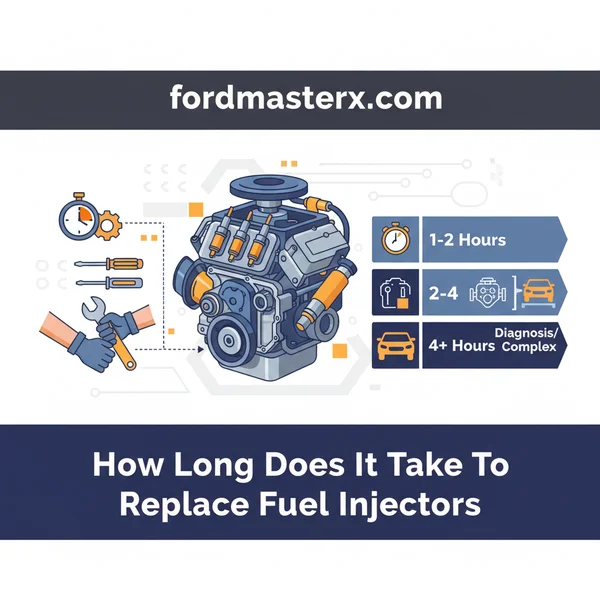
Understanding these timeframes is critical because labor is the most expensive part of this repair. Whether you are budgeting for a shop’s bill or blocking out a Saturday afternoon in your driveway, knowing the complexity of your specific engine layout determines if this is a quick swap or a major teardown. Miscalculating this can leave your daily driver disassembled when you need to be at work the next morning, or worse, leave you with a surprise four-figure bill from the mechanic.
Average Time Estimates by Engine Configuration and Type
The biggest variable in your timeline is the physical layout of your engine. Engineers do not always prioritize serviceability, meaning some injectors are “surface-level” while others are buried deep in the engine’s “V.” The type of fuel system—Port Fuel Injection (PFI) or Gasoline Direct Injection (GDI)—also dictates the level of teardown required.
Inline-4 and Top-Mounted Systems (1 to 2 Hours)
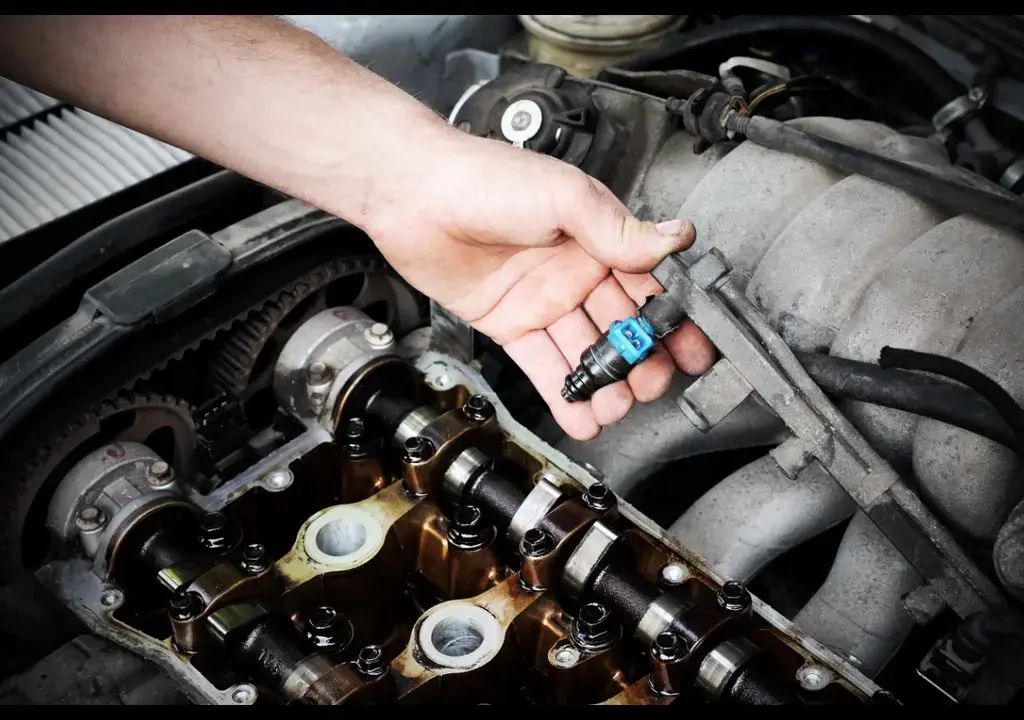
Most naturally aspirated four-cylinder engines are the easiest to service. The fuel rail is usually bolted to the top of the intake manifold, held down by two to four bolts. You simply disconnect the electrical clips, unbolt the rail, and swap the units. In these configurations, you aren’t removing heavy components to get to the fuel system. Examples of typical timeframes include:
- Economy Sedans (e.g., Honda Civic, Toyota Corolla): 1 to 1.5 hours.
- Older Jeeps (4.0L Inline-6): 1.5 to 2 hours due to the long fuel rail.
- Four-Cylinder Pickup Trucks: 1 hour, thanks to the generous engine bay space.
V-Style Engines and Buried Injectors (3 to 6 Hours)
On V6 or V8 engines, the injectors are often located underneath the upper intake plenum or “surge tank.” To reach them, you have to drain some coolant, remove vacuum lines, and pull the entire top half of the intake system. This adds significant time for cleaning surfaces and replacing gaskets. Direct Injection (GDI) systems also take longer because they involve high-pressure lines that require careful depressurization and specialized seals that must be pressed into place with precision tools. For these complex systems, expect the following:
- Modern V6 Crossovers: 3 to 5 hours (requires intake manifold removal).
- High-Performance V8s: 4 to 6 hours if the injectors are located under a supercharger or complex air-induction system.
- Turbocharged Engines: Add 1 hour to deal with intercooler piping and heat shields.
From Start to Finish: Fuel Injector Replacement Explained
Recommended Best Deal Products


Replacing fuel injectors is a core maintenance task that can restore your engine’s power, improve fuel economy, and smooth out a rough idle. While the actual “wrench time” typically ranges from 2 to 4 hours depending on your vehicle’s layout, the process requires precision and strict adherence to safety protocols. This guide covers every detail you need to know to perform a professional-grade replacement, ensuring you don’t just finish the job, but do it safely and effectively to avoid engine damage or fuel leaks.
Step 1: Preparing Your Workspace and Safety Gear
What you need: Safety goggles, nitrile gloves, a fire extinguisher (Class B), a basic socket set, and a clean, well-ventilated workspace.
Instructions: Before you even touch a wrench, you must ensure the engine is completely cold. Fuel is highly volatile, and working on a hot engine increases the risk of ignition. Start by disconnecting the negative battery terminal to prevent any electrical sparks near open fuel lines. Position your fire extinguisher within arm’s reach. Clean the area around the fuel rail using compressed air or a vacuum; this prevents dirt, sand, or debris from falling directly into the cylinders once the injectors are removed. Lay out your new injectors and compare them to the part numbers required for your specific vehicle make and model to ensure compatibility before disassembly begins.
Pro Tip: Take several high-resolution photos of the engine bay from different angles. These will serve as an invaluable reference when you are trying to remember exactly how a specific vacuum line or wire harness was routed later in the day.
Step 2: Relieving Fuel System Pressure
What you need: Your vehicle’s owner manual or fuse box diagram and a rag.

Audible — Listen Free for 30 Days
One free credit a month and thousands of titles included.
Listen Free for 30 Days As an Amazon Associate I earn from qualifying purchases.Instructions: Even with the engine off, the fuel lines hold significant residual pressure (often 40-60 PSI). To relieve this, locate the fuel pump fuse or relay in the engine bay fuse box. With the battery briefly reconnected, start the engine and then pull the fuse/relay. The engine will stumble and stall as it consumes the remaining fuel in the lines. Crank the engine for another 5 seconds to ensure the pressure is fully bled off. Once finished, turn off the ignition and disconnect the negative battery terminal again. Open the fuel cap to vent any pressure from the gas tank. This step is critical to prevent a high-pressure spray of gasoline into your face when you disconnect the fuel rail.
Pro Tip: Wrap a thick shop rag around the Schroeder valve (if equipped) or the first fuel fitting you loosen to catch the small amount of “drip” fuel that will inevitably remain in the rail.
Step 3: Removing the Intake Plenum or Air Ducting
What you need: Screwdrivers (flat and Phillips), pliers, and a socket set with various extensions.
Instructions: On many modern vehicles, especially V6 and V8 engines, the fuel rail is buried beneath the intake manifold or large air intake ducts. Carefully loosen the hose clamps on the air intake tube and move it aside. If your vehicle requires the removal of the upper intake plenum, you will need to disconnect several vacuum lines and electrical sensors (like the MAF or MAP sensors). Label each hose with masking tape if they look similar. Be extremely careful not to drop any bolts or tools into the open intake ports once the plenum is removed; cover the open ports with clean rags immediately to prevent catastrophic engine damage upon restart.
Pro Tip: Use a magnetic parts tray to hold the plenum bolts. These bolts are often of different lengths, so keeping them organized in the order they were removed will save you 20 minutes of frustration during reassembly.
Step 4: Disconnecting Electrical Connectors and Fuel Lines
What you need: A small flathead screwdriver or a specialized connector pick tool.
Instructions: Each fuel injector is connected to the Engine Control Unit (ECU) via a plastic wiring connector. These connectors often feature a metal spring clip or a plastic locking tab that becomes brittle over time due to engine heat. Gently pry the clip or press the tab and pull the connector straight up. Do not pull by the wires, as this can cause internal breaks that lead to intermittent misfires. Once the electrical harness is moved aside, disconnect the main fuel supply line from the rail. This may require a quick-disconnect tool depending on your vehicle brand (common on Ford, GM, and Chrysler). Ensure your rag is ready to catch any remaining fuel drainage.
Pro Tip: If a connector feels stuck, do not force it. Apply a tiny amount of electronics cleaner or silicone spray to the tab to help lubricate the plastic, allowing it to slide off without snapping.
Step 5: Extracting the Fuel Rail and Old Injectors
What you need: Socket set and a gentle prying tool (if necessary).
Instructions: Locate the mounting bolts holding the fuel rail to the intake manifold. There are usually 2 to 4 bolts. Once removed, grasp the fuel rail firmly and pull it straight upward with a steady, even force. The injectors are held into the manifold by O-ring friction, so it may take some wiggling to break them loose. Usually, the injectors will come out with the rail. Once the rail is free, remove the metal retaining clips that hold each injector to the rail. Carefully pull the injectors out of the rail one by one. Check each injector hole in the manifold to ensure the old O-rings came out; if one is left behind, use a plastic pick to retrieve it.
Audible Premium Plus — Annual Membership
12 audiobook credits up front, plus the full Audible catalogue.
See Annual Plans As an Amazon Associate I earn from qualifying purchases.Pro Tip: If an injector is stuck in the manifold, spray a little penetrating oil around the base and let it sit for 5 minutes. This softens the hardened rubber O-ring and makes extraction much easier.
Step 6: Preparing and Installing New Injectors
What you need: New fuel injectors, new O-rings (if not pre-installed), and a small amount of clean engine oil or silicone grease.
Instructions: Inspect your new injectors for any shipping damage. Most new injectors come with O-rings already installed, but if not, slide the new rings onto the grooves carefully. Lightly coat the new O-rings with clean engine oil or a specialized O-ring lubricant. This is the most important part of the installation; a dry O-ring can tear or “roll” during insertion, causing a massive fuel leak. Push the new injectors into the fuel rail until they click into place or allow you to re-install the retaining clips. Ensure the electrical pins on the injectors are facing the correct direction to meet the wiring harness. Finally, line up all injectors with their respective holes in the intake manifold and press the entire rail down firmly until it seats.
Pro Tip: Never use a hammer or heavy tool to seat the rail. If the O-rings are properly lubricated, the rail should seat with firm hand pressure. If it doesn’t, an injector might be misaligned.
Step 7: Reassembly and Torque Specifications
What you need: Torque wrench and the previous tools used for disassembly.
Instructions: Reinstall the fuel rail mounting bolts and tighten them to the manufacturer’s specific torque setting (usually quite low, around 10-15 lb-ft). Over-tightening can crack the intake manifold or the fuel rail itself. Reconnect the fuel supply line until you hear a definitive “click.” Plug the electrical connectors back onto each injector; you should feel or hear them snap into place. If you removed the intake plenum or air ducting, reinstall those components now. Ensure all vacuum lines are reattached to their original ports using the photos you took in Step 1. Double-check that no rags were left inside the intake ports before sealing the system.
Pro Tip: While the intake is off, check the condition of your intake manifold gaskets. If they look flattened or cracked, now is the perfect time to spend the extra $20 to replace them to prevent future vacuum leaks.
Step 8: Priming the System and Leak Testing
What you need: Battery connection and a bright flashlight.
Instructions: Reconnect the negative battery terminal and replace the fuel pump fuse/relay. Do not start the engine yet. Turn the ignition key to the “On” or “Run” position for 5 seconds, then turn it off. Repeat this 3 to 4 times. This allows the fuel pump to prime the rail and build pressure without the engine running. Use your flashlight to inspect every single injector seat (top and bottom) and the fuel line connections for any signs of wetness or the smell of raw gasoline. If everything is dry, start the engine. It may crank longer than usual as the remaining air is purged from the lines. Once the engine is idling, perform one final visual inspection for leaks while the system is under full operating pressure.
Pro Tip: Use a dry paper towel to wipe around the base of each injector. Even a tiny, pinhole leak that is hard to see with the eye will show up as a damp spot on the paper towel.
✅ Final Checklist
- Verify all fuel rail mounting bolts are torqued to manufacturer specifications.
- Ensure all electrical connectors are fully seated and locking tabs are engaged.
- Check that all vacuum lines and air intake sensors are reconnected.
- Confirm there are zero visible fuel leaks at the rail, injectors, or supply lines.
- Listen for a consistent “clicking” sound from each injector, indicating they are firing.
Important Notes:
- Safety Warning: Gasoline is extremely flammable. Never smoke or have open flames nearby, and always wear eye protection to guard against high-pressure fuel spray.
- When to seek professional help: if your fuel rail is made of thin plastic and appears cracked, or if your vehicle uses a High-Pressure Direct Injection (GDI) system, which requires specialized tools and involves much higher pressures (up to 2,000+ PSI).
- Estimated Time: 2–4 hours for most DIYers.
- Estimated Cost: $150–$600 depending on the number of injectors and vehicle type (DIY), compared to $600–$1,500 at a dealership.
Professional Labor Hours vs. DIY Time Requirements
The “book time” a shop quotes you is based on a professional technician using air tools, a vehicle lift, and immediate access to technical manuals. As a DIYer, your timeline will naturally be longer due to tool limitations, setup time, and the learning curve of your specific vehicle.

The Professional Edge: Efficiency and Tools
A professional shop usually follows a labor guide like Mitchell or AllData. They have specialized fuel line disconnect tools and magnetic trays to ensure no hardware is lost in the engine’s intake ports. A technician who has done the job fifty times can often beat the book time. For a V6 truck, a shop might quote 3 hours and actually finish in 2.25. They are paying for the expertise to not snap brittle plastic clips—a common mistake that adds hours of frustration to a DIY project. In a shop environment, the focus is on a clean, rapid swap with a guaranteed seal.
The DIY Reality: The “X-Factor” Buffer
When working at home, you should generally double the professional estimate. If a forum says it’s a two-hour job, give yourself four. You will spend time looking for a dropped 10mm socket or meticulously cleaning gunk off the cylinder head to prevent it from falling into the intake ports once the injectors are pulled. Factors that expand the DIY timeline include:
- Tool Access: Realizing you need a 12-point socket or a long-reach swivel extension halfway through the job.
- Parts Cleaning: DIYers often spend an extra hour cleaning the manifold and valves, a step shops might skip to stay on schedule.
- Safety Protocols: Manually depressurizing the fuel system and managing fuel spills without a shop-grade vacuum system.
- Brittle Components: On cars over 10 years old, plastic electrical connectors often shatter, requiring a trip to the parts store for replacements.
While a pro can swap a set of injectors on a Ford F-150 in about 2.5 hours, a dedicated DIYer should expect to spend most of a Saturday afternoon—roughly 5 hours—to ensure every O-ring is seated perfectly and no vacuum leaks are created during reassembly.
Common Complications That Extend the Replacement Timeline
Recommended Best Deal Products


In a perfect world, fuel injectors would pop out as easily as Lego bricks. In the real world, engines are subject to thousands of heat cycles, road salt, and carbon buildup. These factors can quickly turn a two-hour DIY afternoon into a full-day project. If you are planning your timeline, you must account for the “stuck factor.”
Corrosion and Seized Components
The most frequent time-sink is an injector that has effectively “welded” itself to the cylinder head or fuel rail. This is especially common in older vehicles or those driven in humid climates. When rubber O-rings dry out and crack, road grime and moisture wedge into the mounting hole, making the injector nearly impossible to pull by hand.
- Carbon Seizing: In certain engines, carbon buildup around the injector tip acts like industrial-strength glue. This requires careful soaking with penetrating oil, which can add 30 to 60 minutes of waiting time.
- Brittle Wiring Harnesses: Engine heat makes plastic connectors extremely fragile. If a clip snaps, you will spend extra time performing a delicate wire repair or sourcing a replacement pigtail.
- Cleaning the Seats: You cannot install new injectors into dirty ports. Scrubbing away old debris to ensure a perfect seal is a meticulous process that shouldn’t be rushed.
Access and Peripheral Obstacles
Modern engine bays are tightly packed puzzles. You may find that reaching the fuel rail requires removing the intake manifold, vacuum lines, or even the cooling fans. Each “extra” component you have to set aside adds 20 to 40 minutes of labor for disassembly and an equal amount for reassembly. Always check a diagram of your specific engine model to see if the injectors are “buried” under other major parts.
Time and Tooling Differences Between Port and Direct Injection
The specific fuel delivery technology your car uses is the single biggest “X-factor” in your replacement timeline. While both systems serve the same purpose, their physical placement and pressure requirements change the labor intensity significantly.
Port Fuel Injection (PFI): The Straightforward Route
Port injection is generally the DIYer’s best-case scenario. The injectors sit in the intake manifold, away from the extreme heat of the combustion chamber. Because they operate at lower pressures, the components are lighter and easier to manipulate with standard hand tools.
- Typical DIY Time: 1 to 2.5 hours for most 4-cylinder and V6 engines.
- Tool Requirements: A standard socket set, some pliers, and basic screwdrivers are usually all that is needed.
- Pro Tip: These are great for beginners, but keep a magnet tool handy for the tiny fuel rail bolts that love to fall into the engine bay.
Gasoline Direct Injection (GDI): The Professional Challenge
Direct injection is a much more complex beast. These injectors sit directly inside the combustion chamber, subjected to thousands of pounds of pressure. This harsh environment means they often require specialized mechanical help to remove and install.
- Typical DIY Time: 4 to 8 hours (or a full weekend for novices).
- Specialized Tooling: GDI injectors often require a dedicated slide hammer or puller tool to pop them out of the head. Additionally, they use one-time-use Teflon seals that require a resizing tool for installation.
- Safety Considerations: High-pressure fuel rails must be properly depressurized using a scan tool or specific fuse-pulling procedures, which adds time to the preparation phase.
Conclusion
Replacing fuel injectors can range from a satisfying Saturday morning task to a complex, multi-day ordeal depending on your vehicle’s design and age. While a professional mechanic can typically finish the job in 2 to 4 hours, a DIYer should always budget double that time to account for stubborn parts and cleaning. Knowing whether you have a Port or Direct injection system is the first step in setting a realistic expectation for your garage time.
Next Steps: Before you start, look up your specific engine layout to see if the intake manifold must be removed. Then, spray your injector ports with high-quality penetrating oil 24 hours in advance to loosen any hidden corrosion.
Whether you choose to tackle the job yourself or hire a pro, understanding these timelines ensures you won’t be caught off guard. Proper preparation is the difference between a smooth repair and a car stuck on jack stands for a week. Happy wrenching!
❓ Frequently Asked Questions
Why do V-style engines take so much longer than inline engines?
In V6 and V8 engines, one bank of injectors is often tucked under the intake manifold. This requires draining coolant and removing the plenum, which significantly increases the labor time compared to an exposed fuel rail.
What is the most common delay during a fuel injector replacement?
The most frequent delay is dealing with ‘stuck’ injectors that have carbon buildup or brittle plastic clips that snap. These issues can turn a 2-hour job into a 5-hour job if you don’t have the right removal tools.
Should I plan for a multi-day project if doing it myself?
Unless you are working on a heavy-duty diesel or a complex European luxury car, it is rarely a multi-day project. However, DIYers should start early in the day to account for potential trips to the parts store for broken seals or clips.
How much time does a professional mechanic typically bill for this?
Mechanics use flat-rate manuals, which usually suggest 1.5 to 2.5 hours for simple port injection and 4 to 6 hours for complex direct-injection or buried systems.
Does Gasoline Direct Injection (GDI) take longer to service?
Yes, GDI injectors are located inside the combustion chamber and are often held by high-tension clips and seals. They require more precision and often specialized pullers, adding at least 1-2 hours to the process.
Will cleaning the engine bay beforehand speed up the process?
Absolutely. Taking 20 minutes to degrease the area prevents dirt from falling into the intake ports and makes it much easier to see and disconnect electrical connectors and fuel rail bolts.