
Biggest Tires on Stock F-150 20-Inch Rims: No-Rub Guide

The largest tire size for a stock F-150 on 20-inch rims without rubbing is typically a 275/60R20 (33-inch). For trucks with a 2-inch leveling kit, you can safely increase to a 285/65R20 or 275/65R20 (34-inch) while maintaining clearance against the factory +44mm offset.
🎯 Key Takeaways
Recommended Best Deal Products


- 275/60R20 is the largest ‘no-rub’ size for 100% stock suspension.
- Factory 20-inch rims have a +44mm offset, limiting tire width to 11.5 inches.
- Leveling kits allow for 34-inch tires like the 285/65R20 without trimming.
- 35×12.50R20 tires usually require a level and may rub the upper control arm.
- Crash bar clearance is the primary constraint when increasing tire diameter.
If you want the biggest tires for your stock F-150 with 20-inch rims without cutting or rubbing, the golden rule is to stick to a 33-inch diameter. Specifically, the 275/60R20 is the definitive “no-rub” size for 100% stock suspension. This tire measures approximately 33 inches tall and 10.8 inches wide, offering a noticeably meatier look than the factory 275/55R20 without any mechanical risk.

Prime for Young Adults — 6 Months Free
Students and 18–24s get six months of Prime free, then half price.
Start 6 Months Free As an Amazon Associate I earn from qualifying purchases.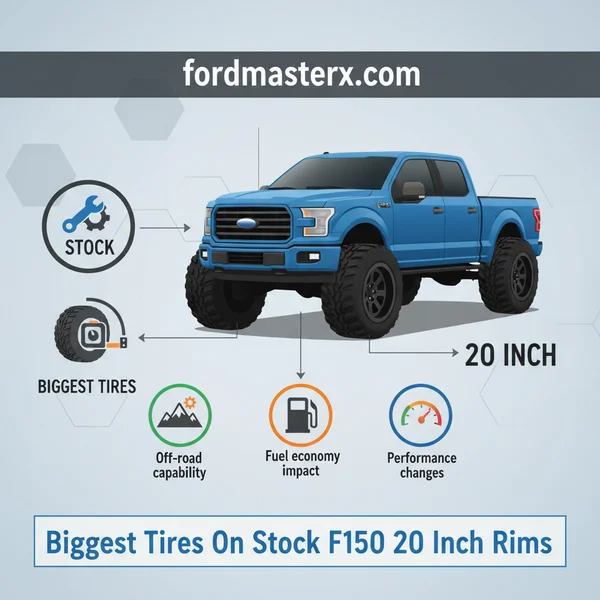
Choosing the right size matters because the F-150 wheel well is deceptively tight, especially near the front crash bars. Going too large causes rubbing during sharp turns or when backing out of a driveway. By staying within the 33-inch limit on factory rims, you preserve your truck’s turning radius and avoid the headache of trimming plastic liners or metal components. You get the aggressive stance you want while maintaining the smooth, reliable ride quality you expect from your Ford.
Maximum No-Rub Tire Sizes for 100% Stock Suspension
When your F-150 is sitting exactly as it came from the factory, you are limited by the physical space between the tire and the crash bars. For most 2015 to 2024 models, a 33-inch tire is the absolute limit for a guaranteed no-rub experience. This size fills the wheel well gap effectively and gives the truck a more “filled out” appearance without needing a leveling kit.

The “Safe Zone” Sizes
If you do not want to worry about trimming or spacers, these are your best options for factory 20-inch wheels:
- 275/60R20 (33″ x 10.8″): This is the most popular upgrade. It is one inch taller than the standard stock tire. It fits perfectly and rarely, if ever, rubs on a stock 4WD F-150.
- 285/55R20 (32.4″ x 11.2″): This is a great choice if you prefer a wider look rather than height. It is slightly shorter than the 275/60 but adds width for a more aggressive footprint.
- 305/50R20 (32″ x 12″): This is a very wide tire. It usually fits on stock rims, but because of the width, it may come very close to the upper control arm (UCA).
Can You Fit a 34-Inch Tire on Stock Suspension?
The 275/65R20 (34-inch) is a common size for heavy-duty trucks, and many F-150 owners are tempted by it. On a 100% stock 4WD F-150, this size is a gamble. Depending on the specific tire brand and the aggressiveness of the side lugs (like on a Mud-Terrain tire), you may experience slight rubbing on the wheel well liner or the crash bars at full steering lock. While some owners “get away with it” on 2015-2020 models, it is generally recommended to have at least a 1.5-inch level before moving up to a 34-inch tire to ensure total clearance.
How Factory 20-Inch Rim Offset (+44mm) Impacts Clearance
Recommended Best Deal Products


To understand why certain tires rub, you have to look at the geometry of your factory wheels. Most stock Ford F-150 20-inch rims have a +44mm offset. This means the mounting surface of the wheel is pushed toward the outside, which “tucks” the entire wheel and tire deep into the wheel well. While this is great for aerodynamics and keeping mud off the side of your truck, it creates a very tight workspace for larger tires.
The Conflict with the Upper Control Arm (UCA)
Because the stock rim is tucked so far inward, the inner sidewall of your tire sits very close to the Upper Control Arm (UCA). When you install a tire that is significantly wider than stock—such as a 305mm or 12.50-inch wide tire—the edge of the tire can actually graze the UCA. This is why height isn’t your only enemy; width is often the reason people are forced to buy aftermarket wheels or wheel spacers.
Why Offset Limits Your Tire Width
The +44mm offset is the primary reason you cannot easily run a “35×12.50” tire on a stock F-150, even if you have a leveling kit. The tire is simply too wide for the tucked-in position of the factory rim. To run a wider tire, you generally need a lower offset (like +18mm or +1mm), which pushes the wheel out away from the truck. If you are sticking with your factory 20-inch rims, you must prioritize narrower tires—often called “pizza cutters”—to avoid hitting the suspension components.
- Stock Offset (+44mm): Keeps the tire narrow and tucked; limits width to roughly 11.5 inches without risk.
- Aftermarket Offset (e.g., +18mm): Pushes the tire out about an inch; allows for 12.5-inch wide tires but may require trimming of the outer bumper or plastic.
- The Sweet Spot: For stock rims, a 275mm or 285mm width is the ideal compromise to ensure you never touch the UCA.
Upgrading to 34 and 35-Inch Tires with a Leveling Kit
If you want to move beyond the 33-inch barrier, a leveling kit is your best friend. By raising the front of your F-150 by 2 to 2.5 inches, you eliminate the factory rake and create the necessary clearance for taller rubber. On stock 20-inch rims, this opens up a variety of “skinny” 34 and 35-inch options that provide a rugged, filled-out look without the need for a full suspension lift.

The “Tall and Narrow” Strategy
The most common mistake owners make when jumping to 34 or 35-inch tires is going too wide. Stock 20-inch Ford wheels have a high positive offset (+44mm), which tucks the tire deep into the wheel well. If you choose a tire that is 12.5 inches wide, you will likely experience significant rubbing on the Upper Control Arm (UCA) or the frame. To avoid this, successful builds often utilize narrower widths.

Audible — Listen Free for 30 Days
One free credit a month and thousands of titles included.
Listen Free for 30 Days As an Amazon Associate I earn from qualifying purchases.- 275/65R20: This is essentially a 34.1-inch tire. It is a very popular “set it and forget it” size for leveled F-150s. It offers a great height increase while staying narrow enough to avoid most rubbing issues.
- 285/65R20: Measuring roughly 34.6 inches, this size is the “sweet spot” for many. It looks significantly beefier than stock but usually clears the suspension components with a 2-inch level.
- 295/60R20: A slightly wider 34-inch option that provides a more aggressive stance while maintaining enough clearance for the factory wheels.
Pushing the Limits with 35s
Can you run a true 35-inch tire on a leveled F-150 with stock 20s? Yes, but it requires careful selection. A 35×11.50R20 is much more likely to fit than a 35×12.50R20. The extra inch of width in a 12.50 often forces the tire into the suspension or the crash bars when the steering wheel is at full lock. If you insist on 35s, look for brands that run “true to size” or slightly small, and be prepared for minor adjustments.
Crash Bar and Wheel Well Trimming Considerations for F-150s
When you start pushing into the 34 and 35-inch territory, the physical limits of the F-150’s wheel well come into play. Since the 2015 model year, Ford has equipped these trucks with high-strength steel crash bars located in front of and behind the front tires. These are critical for safety ratings, but they are also the first things a large tire will hit.
Managing the “Rub Zones”
Rubbing usually occurs in two specific scenarios: at full steering lock (turning the wheel all the way) or when the suspension is compressed while turning (like pulling into a steep driveway). If you hear a “scrubbing” sound, you are likely hitting one of three areas:
- The Front Air Dam/Valance: This is the plastic piece under the front bumper. It is the easiest to fix, as it can be trimmed with a utility knife in seconds.
- The Plastic Wheel Well Liner: Usually, the tire only catches the felt or plastic liner. This can often be pulled back with zip ties or slightly trimmed to create an extra half-inch of space.
- The Crash Bars: These are the most difficult obstacles. While some owners “spread” them with a port-a-power or cut them out entirely, we recommend sticking to tire sizes that clear them to maintain the structural integrity of your truck.
Pro-Tip: Mind the Tire Lug Aggression
Not all 34-inch tires are created equal. A “highway terrain” tire in a specific size might clear perfectly, while a “mud terrain” (MT) tire in the exact same size might rub. This is because MT tires have large side lugs and aggressive shoulder blocks that extend the actual width of the tire. If you are worried about clearance, an All-Terrain (AT) tire is generally a safer bet for tight fitments on stock rims.
Conclusion: Choosing the Right Fit for Your F-150
Upgrading the rubber on your stock 20-inch rims is the fastest way to transform your F-150 from a standard work truck to a head-turning rig. To summarize, 33-inch tires are your “safe bet” for stock height, while 34-inch tires (like the 275/65R20) are the gold standard for leveled trucks. If you want to push for 35s, remember to keep the width narrow to avoid hitting your suspension or crash bars.
Your next steps are simple: measure your current clearance, decide if you want to install a leveling kit, and pick a tire tread that matches your driving style. Before you buy, always check the specific “actual diameter” listed by the tire manufacturer, as sizes can vary between brands. Ready to give your truck the stance it deserves? Pick your size and get those new tires mounted!
❓ Frequently Asked Questions
Will a 275/65R20 fit an F-150 without a lift?
While some 4WD models can squeeze them in, they often rub the wheel liners or crash bars at full steering lock. A 2-inch leveling kit is highly recommended for this specific 34-inch tire size.
Why does the wheel offset matter when choosing larger tires?
The +44mm factory offset sits very close to the internal suspension components. If you choose a tire that is too wide, it will rub the upper control arm (UCA) regardless of whether it clears the fender.
Is there a difference between 2WD and 4WD F-150 tire clearance?
Yes, 4WD models sit approximately 1 to 1.5 inches higher in the front from the factory. This allows 4WD trucks to accommodate 33-inch tires more easily than 2WD models without a leveling kit.
What is the best all-terrain tire size for a leveled F-150 with 20s?
The 285/65R20 is widely considered the ideal size for a leveled truck. It offers a true 34.6-inch height and a rugged look without requiring major trimming or modifications to the crash bars.
Audible Premium Plus — Annual Membership
12 audiobook credits up front, plus the full Audible catalogue.
See Annual Plans As an Amazon Associate I earn from qualifying purchases.Can I run 12.5-inch wide tires on factory 20-inch rims?
It is possible, but the extreme width often causes contact with the sway bar or UCA during sharp turns. Using a slightly narrower tire, like a 295/60R20, provides a similar look with better clearance.
How does increasing tire size affect the speedometer and fuel economy?
Larger tires increase the rolling circumference, making the speedometer read slower than your actual speed. Additionally, the increased weight and rolling resistance typically result in a 1-3 MPG loss.
One Comment