6.7 Powerstroke Fuel Pump Upgrade: CP3 vs. CP4 Solutions

The most critical 6.7 Powerstroke fuel pump upgrade is replacing or protecting the failure-prone Bosch CP4.2 high-pressure pump. Choosing between a CP3 conversion for total reliability or a disaster prevention kit is the best way to safeguard your engine and injectors from catastrophic metal debris.
🎯 Key Takeaways
Recommended Best Deal Products


- A CP3 conversion eliminates the CP4’s internal failure points for long-term reliability.
- Disaster prevention kits protect expensive injectors by rerouting debris back to the tank.
- Aftermarket lift pumps (FASS/AirDog) remove air and water to extend pump life.
- Performance builds over 550 HP require high-flow pump upgrades to maintain rail pressure.
- Most CP3 conversions require custom ECU tuning for proper fuel delivery calibration.
If you own a 6.7 Powerstroke, the Bosch CP4 high-pressure fuel pump is likely your biggest concern. To protect your engine, you have two primary options: install a CP4 disaster prevention bypass kit to limit the damage when the pump fails, or perform a CP3 conversion to replace the problematic pump entirely. Choosing the right path depends on whether you want a safety net for a stock setup or a complete mechanical overhaul for long-term reliability and performance.

Prime for Young Adults — 6 Months Free
Students and 18–24s get six months of Prime free, then half price.
Start 6 Months Free As an Amazon Associate I earn from qualifying purchases.
This matters because when a stock CP4 fails, it sends metal shards throughout your entire fuel system, including your injectors, rails, and lines. This “grenade” effect often results in a total system replacement with a repair bill exceeding $10,000. Upgrading isn’t just about adding horsepower; it’s about bulletproofing your truck against a catastrophic internal failure that can happen without warning at almost any mileage. By addressing the pump now, you are choosing to spend a little today to save a fortune tomorrow.
CP3 Conversion Kits vs. CP4 Disaster Prevention Bypass Kits
The core difference between these two upgrades is their objective. A bypass kit accepts that the CP4 might fail and seeks to contain the mess, whereas a CP3 conversion replaces the CP4 with a pump design known for lasting hundreds of thousands of miles. For most 6.7 Powerstroke owners, the decision comes down to budget versus total mechanical peace of mind.
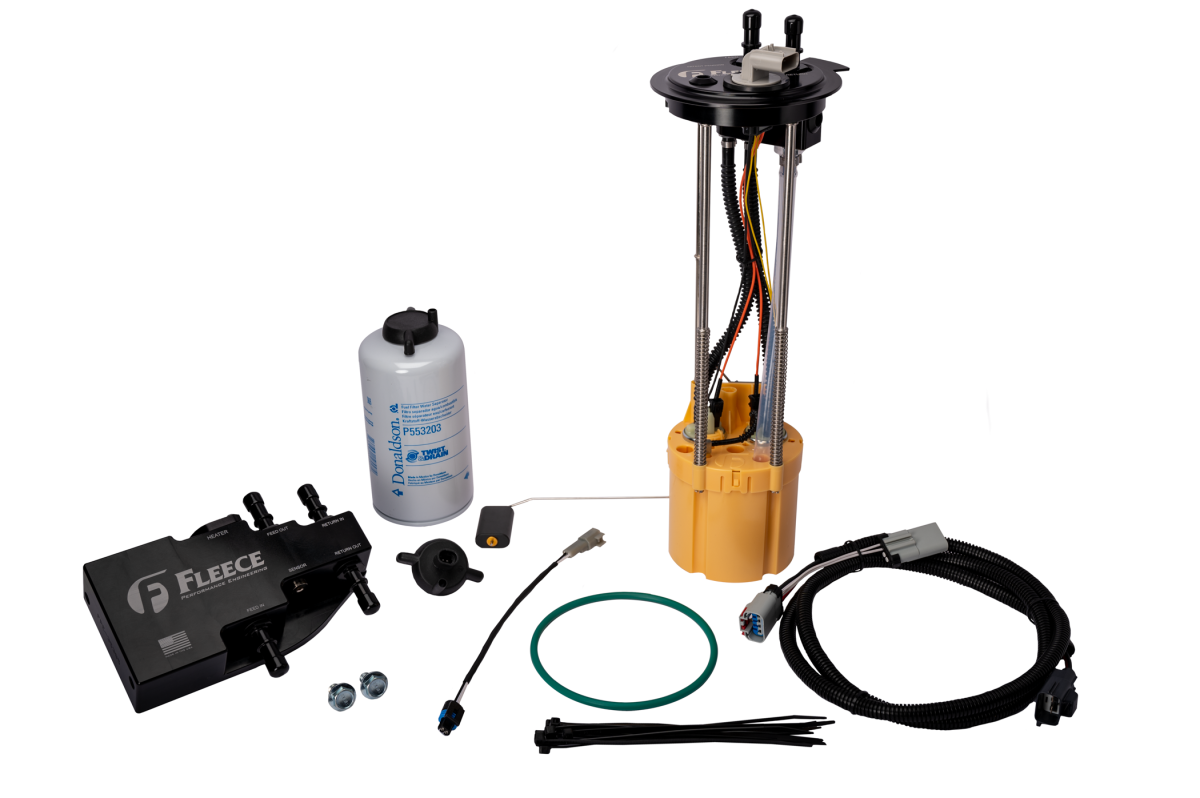
The CP3 Conversion: The Permanent Solution
The Bosch CP3 pump was the industry standard for years before the CP4 was introduced. Manufacturers switched to the CP4 primarily for its lighter weight and higher efficiency at meeting strict emissions standards, but they sacrificed durability in the process. Unlike the CP4, which uses a bucket-and-tappet design prone to rotating and grinding itself into dust, the CP3 uses a more robust radial piston design. This pump can handle high-mileage wear and tear much more effectively.
- Reliability: CP3 pumps do not “grenade” in the same way CP4 pumps do. If they fail, they usually just stop pumping fuel rather than contaminating the entire system with metal.
- Performance: Aftermarket CP3 kits often flow more fuel than a stock CP4, supporting higher horsepower tunes without dropping rail pressure.
- Installation: This is a more involved install that requires removing the intake manifold and replacing fuel lines, but it removes the weak link from the engine entirely.
The CP4 Disaster Prevention (Bypass) Kit
If you aren’t ready to swap the entire pump, a disaster prevention kit is the most cost-effective insurance policy available. This kit changes the routing of the fuel within the system. Instead of the pump’s crankcase fuel being sent directly to the injectors, it is routed back to the fuel tank through the return line and the factory filters. This simple change creates a “closed loop” for the debris.
- Damage Control: If the CP4 fails, the metal debris is caught by the filters instead of destroying your $3,000 set of injectors.
- Cost: These kits are significantly cheaper than a full CP3 conversion and can be installed in a few hours by someone with basic mechanical skills.
- Limitations: Remember, this does not make the CP4 more reliable; it only protects the rest of the engine when the pump eventually dies.
The Ultimate 6.7 Powerstroke Fuel Pump Upgrade Walkthrough
Recommended Best Deal Products

The Bosch CP4.2 high-pressure fuel pump found in the 2011-present 6.7L Powerstroke is notorious for internal failure, which can send metal shards through the entire fuel system, costing thousands in repairs. This comprehensive guide covers the “upgrade” process—specifically focusing on the popular CP3 conversion or a high-durability CP4 replacement. Upgrading your fuel pump is the single most important reliability modification you can perform to ensure your Ford Super Duty stays on the road. Following these steps carefully will help you navigate the complex “valley” of the engine, manage high-pressure fuel components safely, and ensure a leak-free installation that protects your injectors for years to come.
Step 1: Preparation and Engine Bay Decontamination
What you need: Pressure washer or compressed air, degreaser, a basic metric socket set (8mm, 10mm, 13mm), and safety glasses.
Instructions: Before loosening a single bolt, you must ensure the engine bay is clinical-level clean. The 6.7 Powerstroke fuel system operates at pressures exceeding 29,000 PSI; even a microscopic grain of sand entering a fuel line can destroy an injector. Start by spraying a heavy-duty degreaser around the upper intake manifold and the “valley” where the pump sits. Use a pressure washer carefully to blast away dirt, then use compressed air to dry every nook and cranny. Once dry, disconnect both the driver and passenger side negative battery terminals. This prevents the fuel lift pump from accidentally cycling during the tear-down and eliminates the risk of electrical shorts while working near the glow plug harness.
Pro Tip: Take “before” photos of every electrical connector and vacuum line routing. The 6.7 engine bay is a “spaghetti bowl” of wires, and having a visual reference for reassembly will save you hours of frustration later.
Step 2: Removing the Upper Intake Plenum
What you need: 10mm and 13mm sockets, an 8mm nut driver, and several clean shop rags.

Audible — Listen Free for 30 Days
One free credit a month and thousands of titles included.
Listen Free for 30 Days As an Amazon Associate I earn from qualifying purchases.Instructions: To access the high-pressure pump, you must remove the large plastic upper intake plenum. Begin by loosening the worm gear clamps on the cold-side intercooler pipe and the air intake ducting. Disconnect the MAP (Manifold Absolute Pressure) sensor and the crankcase ventilation (CCV) hose. There are approximately 15 bolts securing the upper plenum to the lower manifold. Note that some bolts are longer than others; keep them organized in a labeled tray. Gently lift the plenum off. As soon as the intake is removed, immediately stuff clean, lint-free shop rags into the open intake ports of the lower manifold. This prevents any dropped bolts or debris from falling directly into the engine cylinders, which would cause catastrophic failure upon startup.
Pro Tip: Inspect the underside of the plastic plenum for cracks or oil pooling. If you see excessive oil, it may be a sign that your CCV filter is clogged and should be replaced during this upgrade.
Step 3: Disconnecting the High-Pressure Fuel Lines
What you need: 17mm and 19mm flare nut (crows foot) wrenches, a backup wrench, and fuel line caps.
Instructions: You now have access to the fuel rails and the high-pressure lines connecting the pump to the rails. Use your 17mm flare nut wrench to loosen the nuts on the high-pressure lines. It is vital to use a flare nut wrench rather than a standard open-ended wrench to prevent rounding off the soft metal fittings. Once loosened, expect a small amount of residual fuel to bleed out; catch this with a rag. Once the lines are removed, immediately install plastic caps on the fuel rail inlets and the pump outlets. This is a non-negotiable step to prevent contamination. If your upgrade kit includes a “Disaster Prevention Kit” (DPK) or a CP3 conversion bracket, you will also need to remove the return-line assembly which is held by small clips.
Pro Tip: Never reuse high-pressure fuel lines if they show any signs of corrosion or if the flared ends are deformed. Most experts recommend replacing the “pump-to-rail” lines during every pump swap to ensure a perfect 29,000 PSI seal.
Step 4: Removing the Factory Pump and Gear
What you need: 13mm deep socket, a gear puller (specific to 6.7 Powerstroke), and a mirror.
Instructions: The fuel pump is driven by a gear located under a small access cover on the front of the engine timing cover. Remove the four bolts holding the access cover. Use a socket on the crankshaft dampener to rotate the engine until the bolts holding the pump gear are accessible through the hole. Remove the three mounting bolts holding the CP4 pump to the engine block. Now, using a specialized 6.7 Powerstroke gear puller, separate the pump shaft from the gear. Be extremely careful not to drop the gear into the timing cover, though it is usually held in place by the housing. Gently slide the old pump toward the rear of the truck to clear the mounting studs and lift it out of the valley.
Pro Tip: Use a telescopic mirror to inspect the drive gear teeth for any chips or unusual wear patterns. If the gear shows significant wear, your timing chain or tensioners may require inspection.
Step 5: Preparing and Seating the Upgraded Pump
What you need: Your new CP3 or upgraded CP4 pump, clean engine oil or assembly lube, and a new O-ring.
Instructions: Before installing the new pump, verify that the mounting surface in the engine valley is perfectly clean. Lubricate the new O-ring on the pump’s snout with a thin film of clean engine oil or specialized assembly lube; this prevents the seal from tearing during insertion. If you are performing a CP3 conversion, you may need to install an adapter plate provided in your kit first. Carefully slide the new pump into position. It must sit flush against the mounting surface without being forced. Reinstall the three mounting bolts and torque them to 18-22 lb-ft in a star pattern. This ensures the pump is perfectly squared to the drive gear, preventing premature bearing failure.
Audible Premium Plus — Annual Membership
12 audiobook credits up front, plus the full Audible catalogue.
See Annual Plans As an Amazon Associate I earn from qualifying purchases.Pro Tip: If the pump doesn’t slide in easily, do not use the bolts to “pull” it in. Pull it back out and check for a misaligned O-ring or a stray wire harness blocking the path.
Step 6: Reinstalling Lines and Torque Specifications
What you need: Torque wrench, 17mm/19mm crows foot, and a calculator for torque conversion if using an extension.
Instructions: Begin by hand-threading all fuel lines. Hand-threading is crucial; if you cross-thread a fuel rail, the cost of the repair doubles instantly. Once hand-tight, use your torque wrench and crows foot to tighten the high-pressure line nuts to 22-25 lb-ft. If your kit included a CP3 conversion, follow the specific routing for the new low-pressure supply and return hoses, securing them with the provided constant-tension clamps. Reconnect the electrical connector to the Fuel Volume Control Valve (VCV) and the Fuel Pressure Control Valve (PCV). Ensure the “click” is heard on every electrical connector to guarantee a solid connection despite engine vibration.
Pro Tip: When using a crows foot wrench at a 90-degree angle to the torque wrench, the torque value remains the same. If the crows foot is straight out (extending the length), you must use a formula to adjust your torque setting to avoid over-tightening.
Step 7: Priming the System and Initial Fire-Up
What you need: Fully charged batteries and a scan tool (optional but recommended).
Instructions: Do not attempt to start the engine immediately. The high-pressure pump and lines are currently full of air, and running the pump “dry” for even a few seconds can cause internal damage. Turn the ignition to the “ON” position (do not crank). You will hear the low-pressure lift pump in the frame rail buzzing. Let it run for 30 seconds, then turn the key off. Repeat this cycle 6 to 10 times. This “key-cycling” pushes air back to the tank through the return lines and fills the new pump with lubricity-providing diesel. After the cycles, attempt to start the engine. It may stumble or take several seconds of cranking to fire—this is normal as the last bits of air are purged through the injectors.
Pro Tip: If the truck doesn’t start after three 10-second cranking attempts, stop. Re-prime the system another 5 times. Excessive cranking can overheat the starter motor and drain your batteries.
Step 8: Leak Testing and Final Assembly
What you need: Flashlight and a dry paper towel.
Instructions: Once the engine is idling, let it reach operating temperature. While it is running, use a high-lumen flashlight to inspect every fitting you touched. Take a dry white paper towel and carefully (mindful of moving fans and hot parts) dab near the fuel line nuts. If the towel shows a wet spot or a yellow tint, you have a micro-leak that needs to be addressed immediately. Once you are 100% certain there are no leaks, reinstall the upper intake plenum using a new gasket. Torque the plenum bolts to 89 lb-in (Note: inch-pounds, not foot-pounds). Reconnect the negative battery terminals and take the truck for a gentle 15-minute test drive, followed by one final leak inspection.
Pro Tip: Check your oil level after the test drive. If the oil level has risen or smells strongly of diesel, it indicates an internal leak under the valve covers (if you touched the injector lines), and you must shut down the engine immediately.
✅ Final Checklist
- Verify all 15+ intake plenum bolts are torqued to 89 lb-in to prevent vacuum leaks.
- Confirm that the high-pressure fuel line nuts are dry to the touch after a 10-minute idle.
- Ensure the MAP sensor and CCV sensors are plugged in (failing to do this triggers an immediate CEL).
- Check that the battery terminals are tight and free of corrosion.
- Verify that no shop rags were left inside the intake ports or the engine valley.
Important Notes:
- Safety: Diesel fuel under high pressure can penetrate the skin (hydraulic injection injury), which is a medical emergency. Never check for leaks with your bare hands while the engine is running.
- Professional Help: Seek a professional if you find metal shavings in your fuel volume control valve (VCV) during removal; this means the entire fuel system (injectors, rails, lines) must be replaced, not just the pump.
- Estimated Time: 6 to 10 hours depending on mechanical experience.
- Cost Range: $800 – $2,500 (Parts only, depending on whether you choose a CP4 bypass, a refreshed CP4, or a full CP3 conversion kit).
Improving Fuel Quality with Aftermarket Lift Pumps and Filtration
The high-pressure pump is only half the story. To truly protect your 6.7 Powerstroke, you need to ensure the fuel reaching that pump is free of air, water, and debris. The factory lift pump is adequate for stock trucks, but it lacks the advanced air separation and extreme filtration capabilities needed to protect sensitive high-pressure components from the “dry” friction that kills them.
📤 Share
💾 Download
Why Air and Water Are CP4 Killers
The CP4 pump relies entirely on diesel fuel for lubrication. Air bubbles in the fuel lines cause “cavitation,” which creates tiny pockets of dry friction where metal meets metal. This heat leads to the metal-on-metal wear that causes the pump’s internal lifter to turn and fail. Similarly, water contamination can lead to corrosion and immediate pump seizure because water has zero lubricating properties compared to diesel.
- Air Separation: Aftermarket units use a “fountain” effect or specialized filters to strip entrained air from the fuel before it reaches the engine.
- Positive Pressure: Systems like FASS and AirDog ensure the high-pressure pump is never “starving” for fuel, which reduces internal strain and heat.
FASS vs. AirDog: The Gold Standard for 6.7 Owners
Installing a dedicated lift pump system is often the first step in a comprehensive fuel system upgrade. These units replace the factory frame-mounted pump and offer much larger filtration surface areas. They are designed to sit on the frame rail, making them easy to access for regular maintenance.
- Filtration Efficiency: Most aftermarket systems filter down to 2 microns, whereas factory filters are often less efficient at catching the microscopic particles that cause wear.
- Ease of Service: External spin-on filters are much easier and cleaner to change than the plastic housing OEM filters.
- Fuel Heating: Many of these units include ports for electric heaters, which help prevent fuel gelling in extreme winter climates, further protecting the high-pressure pump from starvation during cold starts.
High-Pressure Pump Options for Performance and Horsepower Gains
Recommended Best Deal Products

For many 6.7 Powerstroke owners, the decision to upgrade isn’t just about preventing a catastrophic failure; it’s about breaking through performance bottlenecks. The factory CP4 pump is generally reliable for stock applications, but it starts to struggle once you push past the 500 to 550 horsepower mark. If you are looking to build a high-performance street truck or a dedicated towing rig, upgrading your high-pressure pump is a non-negotiable step.
Pushing Past the CP4 Performance Ceiling
The standard Bosch CP4.2 was designed with efficiency and emissions in mind, not high-volume fuel delivery for racing. When you add high-flow injectors and aggressive tuning, the CP4 often cannot maintain the required rail pressure, leading to “rail drain” and a significant drop in power. Transitioning to a high-displacement CP3 or a “Stroker” CP4 can provide the consistent fuel volume needed to support larger nozzle sizes.
- Standard CP3 Conversion: Offers a massive increase in fuel volume and is capable of supporting 600-700 HP with ease.
- Modified “Stroker” Pumps: These are high-output versions of the CP3 or CP4 designed with larger plungers to move more fuel per revolution.
- Consistent Rail Pressure: Upgraded pumps eliminate the “surging” or “flutter” often felt when the stock pump reaches its mechanical limit under heavy load.
Dual Pump Kits for Maximum Power
If your goal is to exceed 800 horsepower, a single pump—even a modified one—might not be enough. This is where dual high-pressure fuel pump kits come into play. These kits allow you to retain a pump in the factory location while adding a second pump (usually a CP3) driven by an auxiliary belt. This setup effectively doubles your fueling capacity and provides a level of redundancy that is unmatched in single-pump configurations.
Technical Requirements, Compatibility, and Tuning Considerations
Upgrading your fuel pump is not a “plug-and-play” affair in the traditional sense. Because the 6.7 Powerstroke’s Engine Control Module (ECM) is calibrated to manage the specific displacement and pressure curves of the factory CP4, changing the pump requires a holistic approach to the vehicle’s fuel system and software.
The Necessity of Custom Tuning
When you swap a CP4 for a CP3, the fuel pressure regulator (Mprop) behaves differently. Without software adjustments, the truck will likely throw trouble codes, enter “limp mode,” or run with erratic rail pressure. Custom tuning is required to “re-scale” the ECM’s fuel maps to match the characteristics of the new pump. This ensures the computer knows exactly how much fuel is being delivered at any given voltage or duty cycle.
- Calibration Scaling: Adjusts the regulator settings so the ECM can accurately command fuel pressure.
- Fuel Limiter Adjustments: Higher-flowing pumps allow tuners to safely increase duration without dropping pressure.
- Diagnostic Management: Proper tuning prevents “phantom” codes related to fuel rail pressure deviation.
Supporting Fuel System Infrastructure
A high-pressure pump is only as good as the fuel it receives. If you upgrade to a high-output pump but keep the factory lift pump and filtration system, you may still experience fuel starvation. To get the most out of your upgrade, it is highly recommended to pair your new pump with a high-flow lift pump system, such as those from AirDog or FASS. These systems ensure that the high-pressure pump is always “fed” with air-free, pressurized fuel, which also helps lubricate and cool the pump internals.
Practical Tip: Always check the year of your truck before ordering a conversion kit. While the engine architecture is similar, there are subtle differences in the fuel line routing and electrical connectors between the 2011-2014, 2015-2019, and 2020+ model years.
Conclusion
Deciding between a CP4 disaster prevention kit, a CP4 bypass, or a full CP3 conversion depends entirely on your goals for your 6.7 Powerstroke. If reliability and peace of mind are your only concerns for a daily driver, a bypass kit is a smart, cost-effective insurance policy. However, if you are chasing horsepower and want a fuel system that can grow with your performance mods, the CP3 conversion remains the gold standard for the Ford Super Duty platform.
Ready to bulletproof your fuel system? Start by inspecting your current fuel filters for any signs of metallic debris. If things look clean, your next step is to choose a kit that matches your horsepower targets. Don’t wait for a “dead on the side of the road” moment—upgrade today and keep your Powerstroke running strong for years to come!
❓ Frequently Asked Questions
What is the difference between a CP3 and a CP4 fuel pump?
The CP3 is a larger, three-piston pump known for extreme durability and higher fuel volume, whereas the CP4 is a smaller, two-piston pump designed for efficiency that is prone to catastrophic internal failure if fuel quality is poor.
How does a 6.7 Powerstroke disaster prevention kit work?
The kit modifies the fuel routing so that if the CP4 pump fails internally, the metal debris is sent through the return line to the fuel tank and filters rather than into the fuel rails and expensive injectors.
Are 2020+ Ford 6.7 Powerstroke trucks safe from CP4 failure?
While Ford updated the CP4 pump design in 2020 to improve reliability, the fundamental design still lacks the robustness of a CP3, and many owners still opt for bypass kits or lift pumps as insurance.
Will a FASS or AirDog lift pump increase my truck’s horsepower?
On a stock truck, a lift pump primarily improves reliability and throttle response; however, it is essential for supporting other mods that increase horsepower by ensuring the high-pressure pump never runs dry.
Is a CP3 conversion worth the cost compared to a bypass kit?
A CP3 conversion is a proactive ‘fix’ that removes the weak link entirely, making it ideal for long-term owners, while a bypass kit is a ‘safety net’ that minimizes repair costs if the stock pump eventually fails.
Can I install a high-output CP4 instead of converting to CP3?
Yes, companies like S&S Diesel offer ‘Stroker’ CP4 pumps that provide more flow for performance builds, but these still require high-quality fuel filtration to ensure longevity.