
6.7 Powerstroke CP4 Failure Symptoms: Signs of a Dead Pump

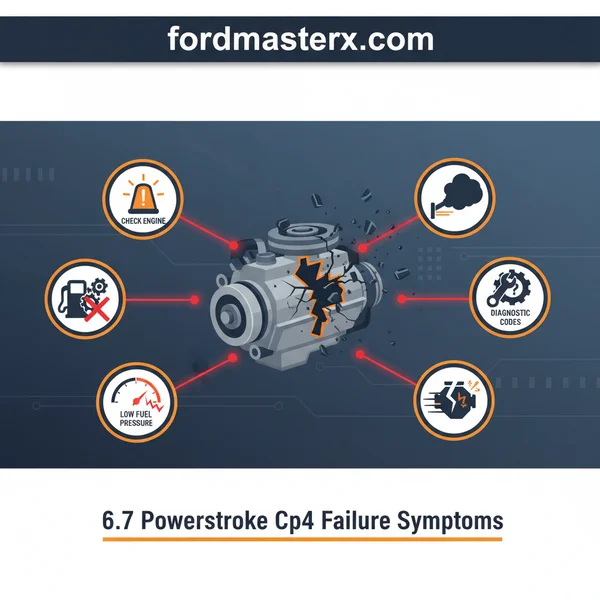
Detecting metal shavings (the ‘glitter test’) in the Volume Control Valve (VCV) is the definitive way to confirm a catastrophic CP4 failure. If your truck experiences intermittent stalling, low fuel pressure codes, or a hard-start condition, the pump has likely already contaminated the entire fuel system with debris.
🎯 Key Takeaways


- Check the Volume Control Valve (VCV) screen for metallic debris to confirm catastrophic pump failure.
- Persistent P0087 or P0088 diagnostic trouble codes often signal imminent high-pressure fuel pump collapse.
- Engine stumbling under load or sudden stalling are primary indicators of fuel delivery issues.
- Metal contamination requires replacing injectors, rails, and lines to prevent immediate secondary failures.
- Visual inspection of the fuel filter housing for ‘glitter’ provides early warning of internal wear.
If your 6.7 Powerstroke has suddenly lost power or refuses to restart after stalling, you are likely looking at a CP4 high-pressure fuel pump failure. This isn’t a standard mechanical breakdown; it is a “grenade” event where the pump’s internal components disintegrate, sending fine metal shavings through your entire high-pressure fuel system. When this happens, the damage isn’t limited to the pump—it contaminates the fuel rails, lines, and all eight injectors, turning a single part failure into a five-figure repair bill.
The key to managing a CP4 failure is immediate diagnosis. If you suspect the pump is dying, you must stop cranking the engine immediately. Continuing to cycle the key or attempting to “prime” the system only pushes more metal debris deeper into the expensive piezo injectors. To determine if your system is compromised, you need to perform a visual inspection for “death glitter” at the most common collection points: the Volume Control Valve and the fuel filters.
Visual Indicators of Internal CP4 Disintegration (The Glitter Test)


The most definitive way to confirm a CP4 failure is to look for physical evidence of metal contamination. Because the CP4 pump relies on fuel for lubrication, any internal friction or “spinning” of the lifter bucket creates fine metallic debris. This debris is then carried by the fuel flow directly toward your injectors and back through the return lines to the fuel tank.
📤 Share
💾 Download
Inspecting the Fuel Volume Control Valve (VCV)
The VCV, also known as the FCA or MPROP, is located on the top of the CP4 pump. It is the “canary in the coal mine” for fuel system health. Since this valve regulates the flow of fuel into the high-pressure pumping chambers, it is often the first place where metal shavings get trapped. Removing it is the fastest way to confirm your pump has “grenaded.”
- The Removal Process: Unplug the electrical connector and remove the two Torx bolts holding the VCV to the pump body. Carefully pull the valve upward.
- What to Look For: Inspect the fine mesh screen at the bottom of the valve. In a healthy system, this screen should be clean and bright. If the pump is failing, you will see “glitter”—tiny, shiny metallic flakes—stuck to the screen.
- Grey Sludge: In some cases, you might see a greyish, magnetic paste instead of distinct flakes. This is pulverized steel and is a definitive sign of a dead pump.
- Internal Bore Inspection: Use a flashlight to look down into the bore where the VCV sits. If you see metal sitting in the bottom of the pump housing, the system is fully contaminated.
Checking the Secondary Fuel Filter for Contamination
If the VCV check is inconclusive but the truck is still exhibiting symptoms, the secondary fuel filter (located under the hood) is your next diagnostic stop. Because the CP4 sends return fuel back to the tank, metal shavings eventually make their way into the fuel lines and get caught in the filters.
- The “Bowl” Test: Disconnect the fuel lines and remove the secondary filter. Pour the contents into a clean, white plastic container or a glass jar.
- The Magnet Test: Run a strong magnet along the bottom of the container. If the “glitter” moves with the magnet, you have confirmed that the internal steel components of the CP4 are shedding.
- Filter Pleat Inspection: If you use a frame-mounted primary filter, you can cut the outer casing open. Spread the paper pleats and look for shiny specks caught in the media. Any amount of metal here indicates a total system failure that requires a complete “disaster kit” replacement.
Engine Performance Red Flags and Driveability Issues

While visual inspection provides the “smoking gun,” your truck will often provide warning signs through its behavior before it completely dies. Recognizing these engine performance red flags can help you pull over before the pump sends enough metal to seize the injectors open, which can lead to even more severe engine damage like a melted piston.
Low Fuel Pressure Codes and Limp Mode
The most common electronic symptom of a failing CP4 is the “Low Fuel Pressure” warning on the dash, often accompanied by a P0087 (Fuel Rail Pressure Too Low) or P0088 (Fuel Rail Pressure Too High) diagnostic trouble code. These codes occur because the pump can no longer maintain the 29,000+ PSI required for high-load operation.
- Intermittent Stalling Under Load: You may notice the truck runs fine while idling or cruising empty, but stalls suddenly when climbing a hill or towing a trailer. This is because the failing pump cannot meet the increased volume demand.
- The “Limp Mode” Trigger: To protect the engine, the PCM will often limit RPM and power. If your truck feels like it has lost 70% of its horsepower and won’t shift correctly, it is likely trying to compensate for erratic rail pressure.
Hard Starts and Long Cranking Times
A healthy 6.7 Powerstroke should fire almost instantly. If you find yourself cranking the engine for 5 to 10 seconds before it catches, the CP4 is struggling to build the “start-threshold” pressure (roughly 3,500 to 5,000 PSI). This happens because internal wear creates “internal leaks” within the pump, allowing high-pressure fuel to bleed back into the return side instead of going to the rails.
Pay close attention to “hot starts.” Often, a failing CP4 will start fine when the engine is cold and the fuel is thick. Once the fuel warms up and thins out, the worn tolerances in the pump become more apparent, leading to a “no-start” condition when the engine is at operating temperature. If your truck won’t restart after a quick stop at a gas station, the CP4 is likely on its last legs.
Diagnostic Trouble Codes (DTCs) Associated with Fuel Pump Failure
When your 6.7 Powerstroke starts acting up, the truck’s onboard computer usually has something to say about it. While a check engine light can mean a hundred different things, specific codes related to fuel rail pressure are major red flags for a CP4 pump that is beginning to disintegrate or has already seized.
📤 Share
💾 Download
Common Low-Pressure Error Codes
The most frequent code associated with a failing CP4 is P0087 (Fuel Rail/System Pressure – Too Low). This occurs when the high-pressure pump can no longer meet the demand requested by the engine, often because internal wear has reduced its efficiency. You might also see P0088 (Fuel Rail/System Pressure – Too High), which sounds counterintuitive, but happens when the pump’s internal regulator sticks due to metal debris.
- P0087: Often triggered under heavy load or acceleration when the pump can’t maintain pressure.
- P2291: Injector Control Pressure Too Low – Engine Cranking. This is a classic “no-start” code.
- P0093: Indicates a large fuel system leak detected, which can be caused by internal bypass failure.
The Volume Control Valve (VCV) Warning
Sometimes the computer will throw a code for the Fuel Volume Control Valve (usually located on top of the pump). If the pump is shedding metal, these fine particles often jam this delicate valve first. If you pull the VCV and find “glitter” or small metallic flakes on the screen, the diagnostic is finished—the pump has failed internally, regardless of what the codes say.
The Scope of Damage: Why CP4 Failure Affects the Entire Fuel System
Understanding the “why” behind CP4 failure symptoms is vital because this isn’t just a simple pump replacement. In a 6.7 Powerstroke, the CP4 is the heart of a high-pressure loop. When it fails, it doesn’t just stop working; it effectively bombards the rest of the engine with shrapnel.
The “Glitter” Effect: Metal Contamination
Inside the CP4, a cam drives two plungers. If the pump loses lubrication—often due to poor fuel quality or water—the metal rollers can turn sideways and begin grinding against the cam. This creates thousands of microscopic metal shavings. These shavings are then pumped directly into the fuel rails and then into the fuel injectors. Because these injectors operate with tolerances thinner than a human hair, even a tiny amount of “glitter” will ruin them instantly.
Total System Contamination
The nightmare scenario of a CP4 failure is the return line. The fuel system on the 6.7 Powerstroke is designed to return unused fuel back to the tank to keep the system cool. This means those metal shards don’t just stay in the engine; they travel back through the return lines and into your fuel tank.
- The Injectors: The tips become clogged or the internal valves stick open, leading to potential engine hydrolock.
- The Fuel Lines: Metal debris gets lodged in the bends and connections of the high-pressure lines.
- The Fuel Tank: Once the tank is contaminated, the lift pump will suck those shavings back forward, starting the cycle of destruction all over again.
Practical Tip: This is why most mechanics recommend a “complete fuel system kit” rather than just a pump. Replacing only the CP4 without cleaning the tank and replacing the injectors is a recipe for a second failure within miles.
Conclusion: Staying Ahead of CP4 Failure
Catching the symptoms of a failing CP4 pump early can be the difference between a preventive upgrade and a $10,000 repair bill. If you notice a sudden drop in power, hear an unusual whining noise from the engine bay, or find “glitter” during a routine filter change, do not wait. The 6.7 Powerstroke is an incredible engine, but its Achilles’ heel is its sensitivity to fuel quality and lubrication.
Next Steps:
To protect your truck, always use a high-quality fuel additive to increase lubrication and consider installing a “disaster prevention kit.” These kits reroute the fuel flow so that if the pump does fail, the debris is trapped before it can reach the injectors and the fuel tank. Stay vigilant with your maintenance, and your Powerstroke will stay on the road for years to come!
❓ Frequently Asked Questions
How do I perform the ‘glitter test’ on my 6.7 Powerstroke?
You must remove the Volume Control Valve (VCV) or the fuel pressure regulator located on top of the CP4 pump. If you see shiny, metallic flakes on the screen or inside the pump cavity, the pump has failed and contaminated the system.
Why does the CP4 pump fail in the first place?
The CP4 design relies on diesel fuel for lubrication, but U.S. diesel often lacks sufficient lubricity, and any water contamination or air pockets can cause the internal lifter to rotate and grind against the cam.
Can I continue driving if I have a P0087 code?
No, driving with a P0087 code is extremely risky as it indicates the pump cannot maintain pressure, which may lead to a sudden total failure that sends metal debris into your expensive fuel injectors.
Does a failing CP4 always show a check engine light?
Not always; early signs can include a rough idle or subtle surging under load before the pressure drops enough to trigger a Diagnostic Trouble Code or stall the engine.
What is the average cost to repair a 6.7 Powerstroke CP4 failure?
Because a failure necessitates replacing the pump, injectors, fuel rails, and all high-pressure lines, the repair cost typically ranges between $8,000 and $12,000 including labor.
Is there a way to prevent CP4 failure?
Using high-quality fuel additives to increase lubricity and installing a ‘disaster prevention kit’ (bypass kit) can prevent metal debris from entering the injectors if the pump does fail.

2 Comments