How to Check Transmission Fluid in a Ford F-150 Guide

Checking your F-150 transmission fluid depends on your model year; newer trucks (2017+) utilize a side-mounted plug rather than an engine-bay dipstick. To ensure an accurate reading, the transmission must reach full operating temperature and be checked while the engine is idling on level ground.
🎯 Key Takeaways
Recommended Best Deal Products


- Locate your dipstick:older models use the engine bay, newer ones use a side-mounted plug.
- Always check fluid levels while the engine is idling and the vehicle is perfectly level.
- Wear protective gloves to avoid burns from the nearby hot catalytic converter on 2017+ models.
- Confirm the fluid is bright red; dark brown or burnt smells indicate immediate maintenance needs.
- Use the dashboard display to verify the transmission temperature is between 206°F and 215°F.
Checking the transmission fluid in your Ford F-150 is no longer as simple as pulling a dipstick under the hood. Depending on your truck’s generation, the dipstick is either located near the passenger-side firewall or hidden underneath the vehicle behind a 19mm heat shield plug on the transmission case. To get a valid reading, you must check the fluid while the engine is running and the transmission is within a specific operating temperature range, usually between 190°F and 215°F.

Prime for Young Adults — 6 Months Free
Students and 18–24s get six months of Prime free, then half price.
Start 6 Months Free As an Amazon Associate I earn from qualifying purchases.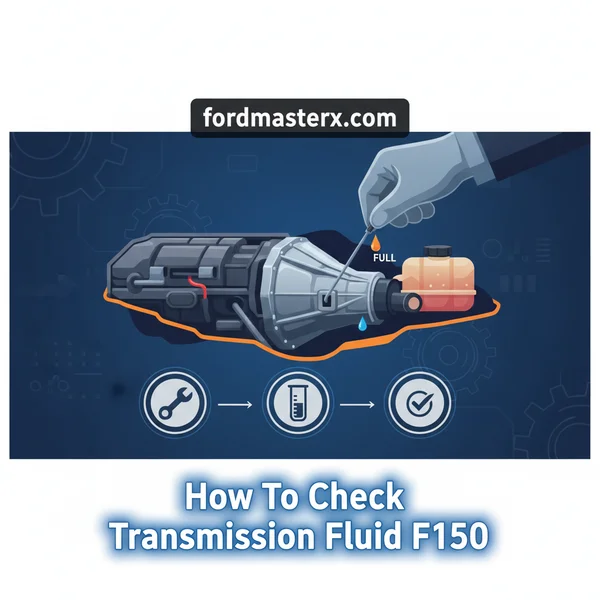
Practical maintenance starts with knowing exactly where your fluid level stands. Low fluid levels can cause delayed shifts, slipping, and internal overheating, while overfilling can lead to aeration and seal failure. Because modern Ford transmissions use specific synthetic fluids like Mercon V, LV, or ULV, even a slight deviation in fluid level or temperature during the check can lead to an inaccurate reading. This guide identifies your specific dipstick location and the precise steps needed to verify your fluid levels correctly.
Traditional vs. Sealed Transmission Designs in Ford Trucks
The location of your transmission dipstick depends entirely on the year your F-150 was manufactured. Ford transitioned away from the convenient engine-bay dipstick over a decade ago, moving toward what many call a “sealed” design. While these newer transmissions are not truly sealed, they require you to crawl under the truck to access the fluid level indicator.
Engine Bay Access (1997–2008 Models)
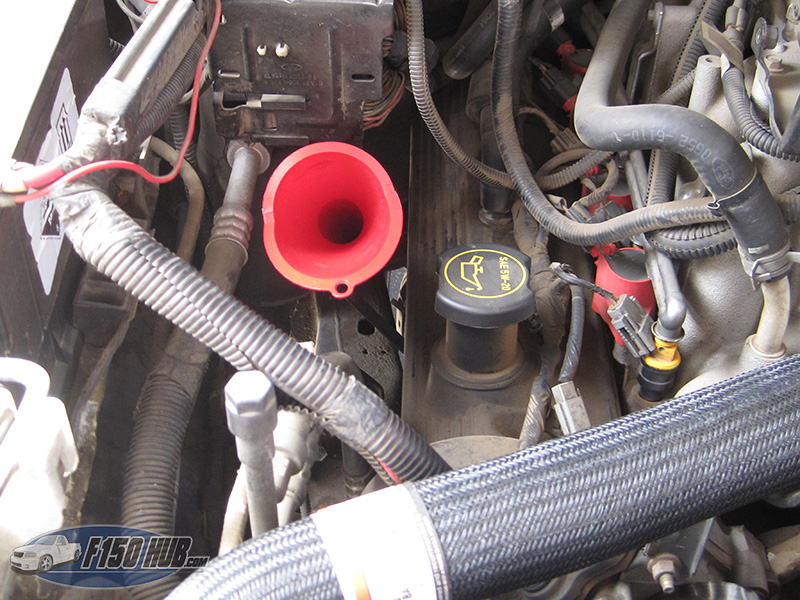
If you own an F-150 built between 1997 and 2008, your truck uses a traditional long-tube dipstick. You will find this located at the back of the engine bay on the passenger side, typically near the firewall. The handle is usually bright yellow or white for easy identification. These models use the 4R70W, 4R75E, or 4R100 transmissions, all of which allow you to check the fluid while standing at the front bumper. You simply pull the stick, wipe it clean, reinsert it, and check the level against the “Hot” hatch marks on the blade.
Chassis Access and the “Stubby” Dipstick (2009–Present)
Starting in 2009 with the 6R80 6-speed transmission and continuing with the 10R80 10-speed, Ford moved the dipstick to the transmission housing itself. To find it, you must look on the passenger side of the transmission case, just above the fluid pan. You will see a large 19mm nut or a silver metal cap. Here is what you need to know about this design:
- The Outer Cap: This 19mm nut acts as a protective cover and plug. You must unscrew it to access the actual dipstick.
- The Mini-Dipstick: Once the cap is removed, a small plastic dipstick (about 3-4 inches long) is attached to the underside of the cap or sits inside the hole.
- Exhaust Proximity: On newer 10-speed models, the catalytic converter and exhaust downpipe are extremely close to this plug. You must wear protective gloves to avoid severe burns while reaching for the dipstick.
- Tool Requirement: You will likely need a 19mm wrench or a socket with a short extension to break the plug loose, especially if it has never been removed.
F150 Transmission Fluid Checks Made Easy: Your Essential Action Plan
Recommended Best Deal Products


Maintaining the transmission fluid in your Ford F150 is one of the most critical maintenance tasks you can perform to ensure the longevity of your truck’s drivetrain. Modern F150s, particularly those equipped with the 6R80 or 10R80 transmissions, do not always feature a traditional dipstick under the hood, making the process slightly more complex than in older vehicles. This comprehensive guide covers the specific nuances of checking fluid levels on various F150 models, ensuring your gears shift smoothly and your transmission remains cool under pressure. Following these steps helps prevent premature wear, avoids costly shop diagnostic fees, and gives you a clear picture of your vehicle’s internal health.
Step 1: Preparation and Leveling
What you need: A flat, level parking surface, wheel chocks, and safety glasses.
Instructions: Before you begin, it is imperative that your F150 is parked on a perfectly level surface. Transmission fluid levels are highly sensitive to the angle of the vehicle; if the truck is tilted, you will get an inaccurate reading that could lead to overfilling or underfilling. Engage the electronic parking brake or the foot-pedal parking brake firmly. Place wheel chocks behind the rear tires as an added safety measure. This step is non-negotiable because you will likely be working near or under the vehicle while the engine is running. Ensure you have clear access to the passenger side of the transmission bell housing, as this is where the access point is located on most modern F150 models built after 2009.
Pro Tip: Never check your fluid on a sloped driveway. Even a slight 3-degree incline can move the fluid away from the dipstick, suggesting a low level when it is actually perfectly fine.
Step 2: Reach Operating Temperature
What you need: Your truck’s ignition key and about 15-20 minutes of driving time.

Audible — Listen Free for 30 Days
One free credit a month and thousands of titles included.
Listen Free for 30 Days As an Amazon Associate I earn from qualifying purchases.Instructions: Transmission fluid expands significantly as it heats up. To get an accurate reading, the fluid must be at its “Normal Operating Temperature,” which for most Ford F150s is between 190°F and 200°F (88°C to 93°C). Start the engine and drive the truck for approximately 15 minutes, ensuring you include some stop-and-go city driving to get the gears shifting. If you have a digital instrument cluster, navigate to the “Truck Apps” or “Gauges” menu to find the specific digital transmission temperature readout. Once the temperature is within the target range, return to your level parking spot. Leave the engine running in “Park” for the remainder of the check, as the fluid must be circulating through the pump to be measured correctly.
Pro Tip: If your truck doesn’t have a digital readout, wait until the needle on the analog trans-temp gauge is dead-center before proceeding.
Step 3: Gear Cycling and Stabilization
What you need: The vehicle’s gear selector and a steady foot on the brake.
Instructions: With the truck parked and the engine still idling at operating temperature, firmly depress the brake pedal. Slowly move the gear shifter through every available position: from Park to Reverse, Neutral, Drive, and any manual or sport modes. Hold the shifter in each position for about 5 seconds. This process ensures that the fluid has filled all the internal galleries, the torque converter, and the valve body, removing any air pockets that might have settled. After cycling through all gears, return the shifter to the “Park” position. Let the engine idle for an additional 2 minutes to allow the fluid level in the pan to stabilize before you physically check the dipstick.
Pro Tip: Skipping this step often results in a “false high” reading because air trapped in the upper valve body hasn’t been replaced by circulating fluid.
Step 4: Locate the “Hidden” Dipstick
What you need: A 19mm wrench (or socket), heavy-duty heat-resistant gloves, and a flashlight.
Instructions: On F150 models from 2011 to the present, you will not find a dipstick under the hood. Instead, you must look under the vehicle on the passenger side of the transmission case. Locate a large 19mm hex-head bolt/cap situated near the front of the transmission pan, often positioned very close to the hot exhaust pipe. This cap protects a miniature dipstick inside. Use your 19mm wrench to loosen the outer metal cap. Be extremely careful, as the nearby catalytic converter and exhaust manifold will be scorching hot from your warm-up drive. Once the cap is loose, unscrew it by hand using your heat-resistant gloves and pull it straight up and out to reveal the plastic dipstick attached to the underside of the cap.
Pro Tip: If the cap is stuck, a quick spray of penetrating oil can help, but ensure you wipe it off completely before the exhaust gets too hot to avoid smoke or fire risks.
Step 5: Clean, Reinsert, and Read
What you need: A lint-free microfiber rag or specialized shop towel.
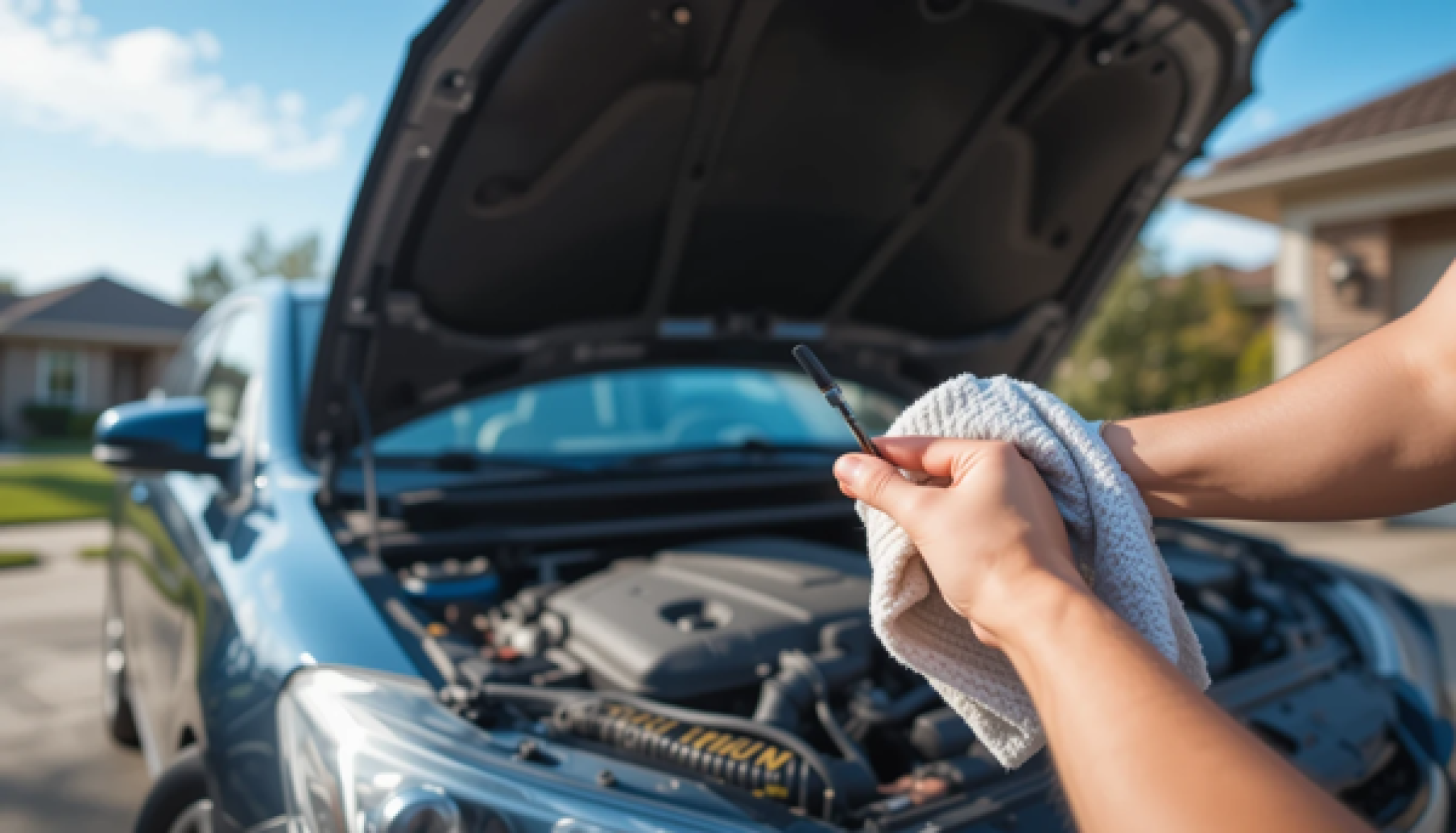
Instructions: Once the dipstick is removed, wipe it completely clean with your lint-free rag. It is vital not to use a paper towel or a fuzzy cloth, as even a small piece of lint can clog the sensitive solenoids inside a 10-speed transmission. Reinsert the dipstick back into the transmission hole, but do not thread the 19mm cap back on yet; simply push it down until the cap seats against the transmission case. Pull the dipstick back out and hold it horizontally. Look at the markings on the plastic. Most F150 dipsticks have two zones: “A” (Cold) and “B” (Hot), or a cross-hatched area with numbered dots. Since your engine is at operating temperature, the fluid level should be squarely in the “B” zone or at the top of the cross-hatched area.
Audible Premium Plus — Annual Membership
12 audiobook credits up front, plus the full Audible catalogue.
See Annual Plans As an Amazon Associate I earn from qualifying purchases.Pro Tip: Always take two or three readings to ensure consistency. If the levels vary wildly between pulls, wait another minute for the fluid to settle and try again.
Step 6: Evaluate Fluid Quality
What you need: A white piece of paper or a clean white cloth.
Instructions: Don’t just look at the level; look at the health of the fluid itself. Drip a small amount of the fluid from the dipstick onto a white piece of paper. Healthy Ford Mercon ULV or LV fluid should be a translucent, bright cherry red. If the fluid appears dark brown or black, it indicates that the fluid has oxidized and is no longer providing adequate protection. Smelling the fluid is also a great diagnostic tool—it should have a slightly sweet, chemical odor. If it smells like burnt toast or scorched rubber, your transmission may be slipping or overheating. Furthermore, check for any “glitter” or metallic flakes in the fluid, which would indicate internal component wear that requires immediate professional attention.
Pro Tip: If the fluid is pink and milky, stop driving immediately. This indicates that engine coolant has leaked into the transmission (often via the radiator), a condition known as “the strawberry milkshake of death.”
Step 7: Finalizing and Torque
What you need: The 19mm wrench and a torque wrench (optional).
Instructions: Once you have verified that the level is correct and the fluid is healthy, reinsert the dipstick and screw the 19mm cap back into the transmission case by hand to avoid cross-threading. Use your wrench to snug the cap down. If you have a torque wrench, the factory specification for this cap is typically around 7-10 lb-ft—it does not need to be incredibly tight, just secure enough to prevent leaks. Wipe away any fluid that may have dripped onto the exhaust or the transmission casing during the process to prevent smells or smoke when you drive away. Finally, check the area one last time for any signs of leaks before turning off the engine.
Pro Tip: If you found the level was low, only add fluid through this same hole using a fluid transfer pump, and only add about 1/4 quart at a time to avoid overfilling.
✅ Final Checklist
- Vehicle was parked on a perfectly level surface throughout the entire procedure.
- Transmission temperature was confirmed between 190°F and 200°F before checking.
- The gear selector was cycled through all positions (P-R-N-D) for 5 seconds each.
- Fluid color was confirmed as bright red and did not have a burnt odor.
- The 19mm access cap was tightened securely to prevent fluid loss.
Important Notes:
- Safety Warning: The exhaust components on an F150 are extremely close to the transmission dipstick. Always wear long sleeves and heat-resistant gloves to avoid severe burns.
- When to Seek Help: If you find metal shavings in the fluid or if the truck is hesitating to shift even though the fluid level is correct, consult a certified Ford technician immediately.
- Estimated Time: 30-45 minutes (including the drive to warm up the fluid).
- Estimated Cost: $0 if checking yourself; $15-$25 for a bottle of Mercon ULV fluid and a transfer pump if a top-off is required.
Critical Temperature Ranges for Accurate Fluid Expansion Readings
Transmission fluid expands significantly as it heats up. If you check the fluid while the engine is cold, the dipstick will show that the level is dangerously low, even if it is perfectly full. Conversely, checking it when it is too hot can lead you to believe the system is overfilled. Accuracy depends on hitting the “Sweet Spot” of thermal expansion.
Monitoring Transmission Temperature via the Dashboard
Modern F-150s (2011 and newer) make this process easier by providing a digital transmission temperature readout on the instrument cluster. You should navigate your productivity screen to the “Gauge Mode” or “Transmission Temp” menu. Do not rely on the analog needle, as it is often dampened and does not show precise fluctuations. You are looking for a stable reading between 190°F (88°C) and 215°F (101°C). If the truck has been sitting, you may need to drive it for 15 to 20 minutes to reach this range; idling in the driveway is often insufficient to heat the large volume of fluid in a 10R80 transmission.
The Shifting Sequence for Fluid Distribution
Before you pull the dipstick, the fluid must be fully distributed through the valve body and all internal clutch packs. Simply being “in Park” is not enough for an accurate reading. Follow this specific sequence while the engine is running and your foot is firmly on the brake:
- Start the engine and ensure you are on a perfectly level surface.
- Slowly move the gear selector from Park to Reverse. Hold it for 5 seconds.
- Move to Neutral, then Drive, holding each position for 5 seconds.
- If your truck has manual shift modes or “Low” gears, cycle through those as well.
- Return the selector to Park and let the engine idle for at least 60 seconds.
This process ensures that any air pockets are purged from the system and that the fluid level in the pan represents the actual volume available during operation. Only after this sequence is complete—and while the engine is still idling—should you proceed to unscrew the dipstick plug and check the level.
Understanding Transmission Fluid Colors and Their Diagnostic Meanings
Recommended Best Deal Products

Checking your Ford F-150’s transmission fluid is about more than just verifying the level; it is a visual health check for your entire drivetrain. The color and consistency of the fluid act as a diagnostic window into the friction and heat levels occurring inside the gearbox. Because Ford uses specific synthetic fluids like Mercon LV or Mercon V, knowing what “normal” looks like can save you thousands in repair bills down the road.
The Healthy Spectrum: From Translucent Red to Light Brown
Fresh transmission fluid for an F-150 is typically a bright, translucent cherry red. This high-visibility color is intentional, helping owners spot leaks quickly. Over time, as the fluid cycles through thousands of heat cycles, it will naturally darken. Here is what to look for during a routine check:
- Bright Red: New or nearly new fluid. This indicates optimal viscosity and additive protection.
- Light Brown/Semi-Translucent: This is normal for a truck with 30,000 to 50,000 miles. It has aged but still retains its lubricating properties.
- Pink/Milky Appearance: This is a “stop driving immediately” scenario. A milky texture suggests engine coolant has leaked into the transmission—a condition often called the “strawberry milkshake” that can destroy internal clutches within miles.
Warning Signs: Dark Brown, Black, and Burnt Smells
When the fluid loses its transparency and turns a deep chocolate brown or black, the additives have likely depleted. If you wipe the dipstick on a white paper towel and see tiny metallic flecks or black particles, these are remnants of clutch material. A burnt, acrid smell accompanying dark fluid is a clear sign of overheating. In heavy-duty F-150s used for towing, this oxidation happens faster, making frequent visual inspections vital for maintaining shift quality.
Essential Tools and Safety Gear for Modern 10-Speed Maintenance
If you own a newer F-150 equipped with the 10R80 10-speed automatic transmission, you have likely noticed something missing: a long dipstick under the hood. Ford moved the fluid check point to the transmission case itself. This shift in design means your “toolkit” for a fluid check requires more than just a rag; you need specific gear to navigate a cramped and high-heat environment.
The 10-Speed Toolkit: Navigating the Stubby Dipstick
Unlike the older 6-speed models, the modern F-150 uses a “stubby” dipstick located behind a heat shield on the passenger side of the transmission. To access this safely and accurately, you should have the following items ready:
- 19mm Wrench or Socket: Needed to remove the protective cap over the dipstick assembly.
- Infrared Thermometer: Since fluid levels on the 10R80 are extremely sensitive to temperature, an IR thermometer helps you verify the transmission pan is at the required operating temp before reading the stick.
- Fluid Transfer Pump: If your check reveals a low level, you cannot simply pour fluid in from the top. A hand-operated pump is necessary to push new Mercon ULV fluid up into the fill port.
Personal Protection: Dealing with Exhaust Heat
Safety is the most overlooked aspect of checking F-150 transmission fluid. Because the engine must be running and the fluid must be warm for an accurate reading, you will be working mere inches away from the catalytic converter and exhaust downpipes. These components can reach temperatures exceeding 400 degrees Fahrenheit. Always wear heavy-duty mechanic gloves with heat resistance and long sleeves. A pair of safety glasses is also essential to protect against any pressurized fluid spray or road debris that might fall while you are positioned under the chassis.
Conclusion
Keeping a close eye on your Ford F-150’s transmission fluid is one of the simplest yet most effective ways to ensure your truck reaches the 200,000-mile mark and beyond. By understanding the diagnostic story told by the fluid’s color and equipping yourself with the right tools for the modern 10-speed layout, you take the guesswork out of preventative maintenance. Whether you are towing a heavy trailer or navigating a daily commute, a healthy transmission is the heart of your truck’s performance.
Your next step is to grab a flashlight and a 19mm wrench to perform a visual inspection this weekend. If you notice a dark color or a low level, don’t wait—top it off or schedule a fluid exchange immediately to keep your F-150 shifting smoothly!
❓ Frequently Asked Questions
Why did Ford move the dipstick from the engine bay to the transmission?
Moving the dipstick helps prevent overfilling and reduces the risk of contaminants entering the system. This ‘sealed’ design ensures the precise fluid levels required for modern high-efficiency 6-speed and 10-speed gearboxes.
At what temperature should I check my F-150 transmission fluid?
For modern F-150s, the transmission fluid should be between 206°F and 215°F (97°C – 102°C). Checking it while cold will result in a false low reading, which often leads to damaging overfilling.
Can I check the fluid level if my truck is on a jack?
No, the vehicle must be perfectly level to get an accurate reading. If the truck is tilted on jacks, the fluid will pool away from the dipstick, resulting in an incorrect measurement.
What does it mean if my F-150 transmission fluid smells burnt?
A burnt odor combined with dark fluid indicates that the fluid has overheated and lost its lubricating properties. You should have the transmission inspected and the fluid replaced immediately to avoid internal gear damage.
Is there a way to check the fluid without going under the truck?
On 2017 and newer models, there is no electronic level sensor; you must physically access the mini-dipstick on the side of the transmission. You can only monitor the temperature from the dashboard.
What safety precautions should I take for 2017+ F-150 models?
On newer models, the check plug is located extremely close to the hot catalytic converter. It is vital to wear heavy-duty mechanic gloves and long sleeves to prevent severe contact burns while reaching for the plug.