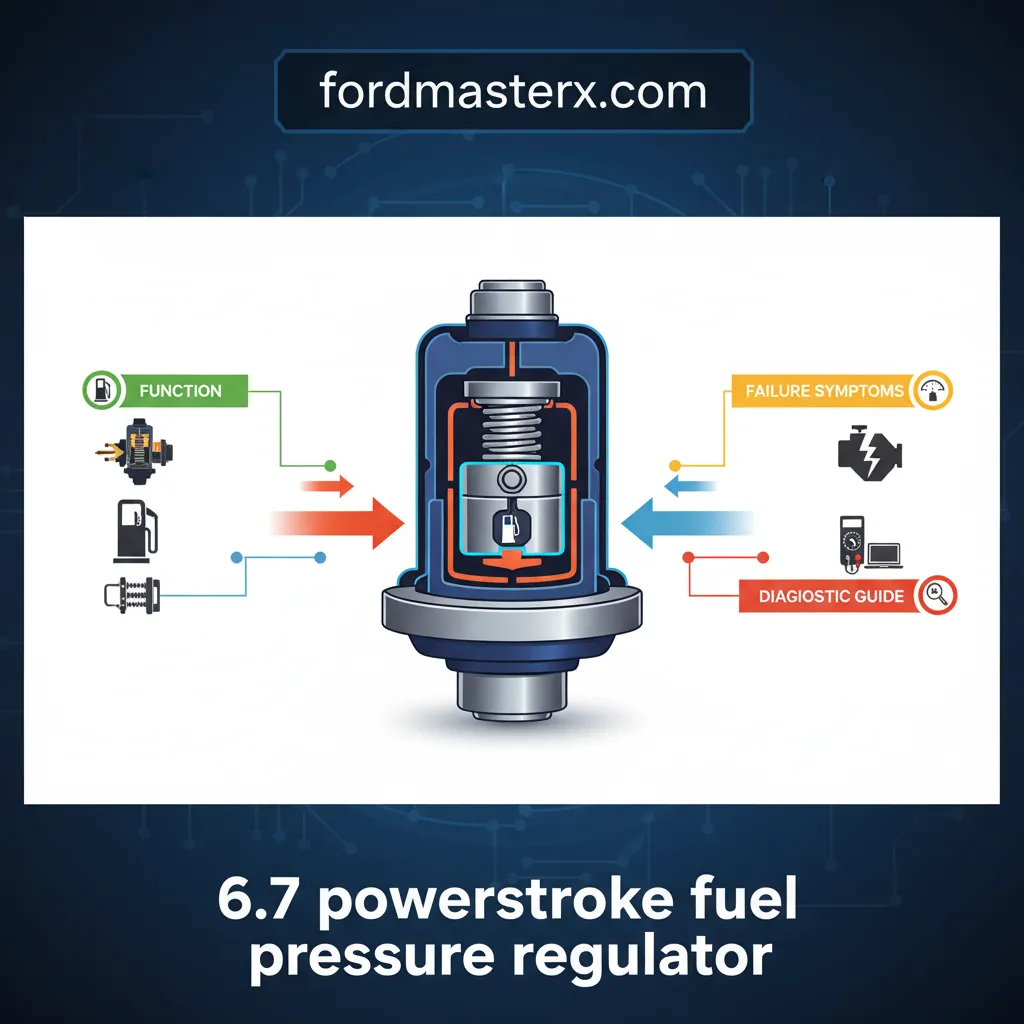
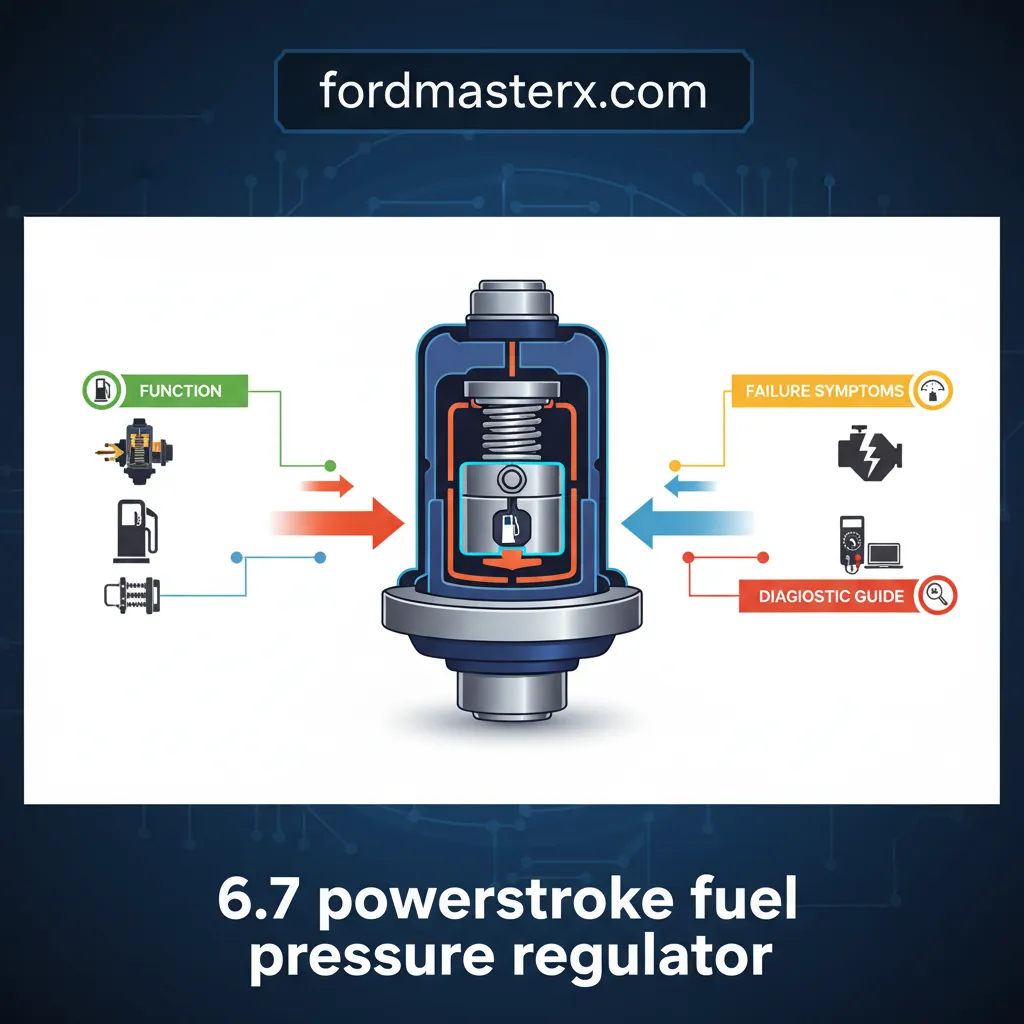
6.7 Powerstroke Fuel Pressure Regulator Function, Failure Symptoms, And Diagnostic Guide

For the 6.7 Powerstroke owner, the fuel system is the heartbeat of the vehicle’s 400+ horsepower performance, but a single failing component—the fuel pressure regulator—can bring the entire operation to a grinding halt. When the 6.7 Powerstroke fuel pressure regulator begins to fail, drivers are often met with frustrating surging, decreased fuel economy, and the dreaded ‘limp mode’ that leaves the truck underpowered and vulnerable. This expert guide will provide a technical breakdown of how the regulator operates, the professional diagnostic steps required to identify a fault, and the reliable replacement practices needed to restore your truck’s performance with complete confidence.

Understanding the 6.7 Powerstroke Fuel Pressure Regulator and High-Pressure System
Recommended Best Deal Products


📤 Share Image
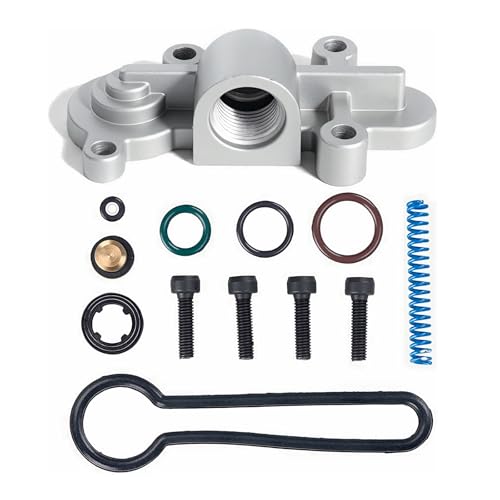
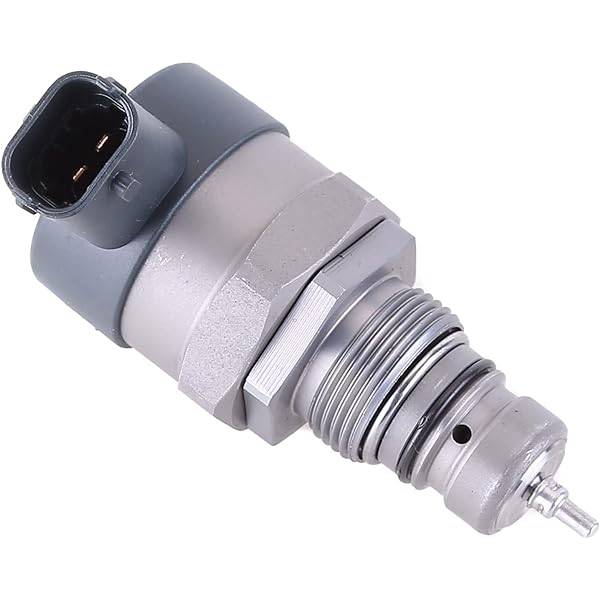
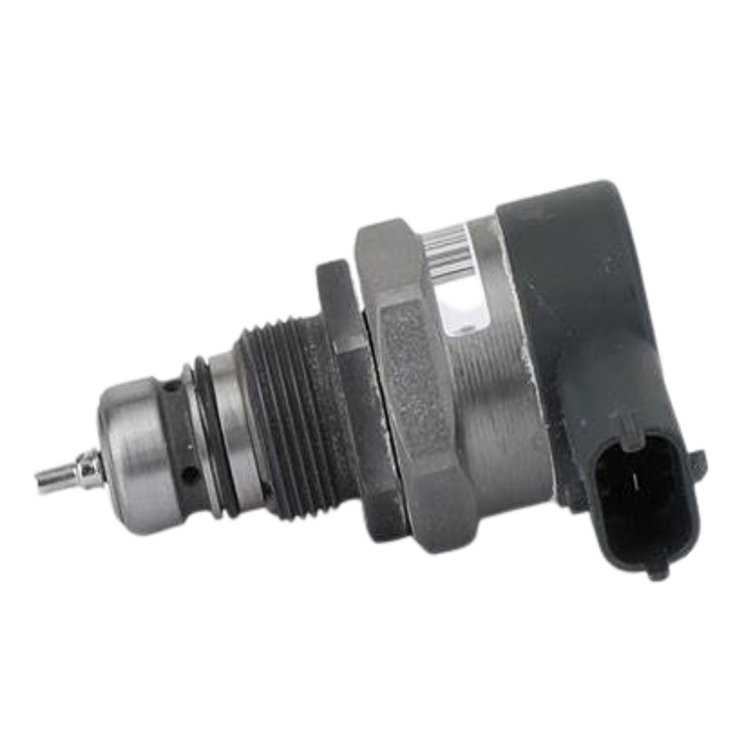
The 6.7L Powerstroke diesel engine utilizes the Bosch CP4.2 high-pressure fuel pump, a sophisticated piece of engineering capable of generating up to 30,000 PSI. To manage this immense pressure, the system relies on two distinct valves: the Fuel Volume Control Valve (VCV) and the Pressure Control Valve (PCV). While both are often colloquially called “regulators,” they serve different masters. The VCV is located on the top of the CP4.2 pump and regulates how much fuel enters the pumping chambers. In contrast, the PCV is situated on the fuel rail and acts as a “gatekeeper” that bleeds off excess pressure back to the return line.
The Engine Control Module (ECM) manages the VCV through Pulse Width Modulation (PWM). By rapidly cycling the solenoid on and off, the ECM can adjust fuel volume with millisecond precision to meet throttle demand. For this system to function within its designed parameters, the low-pressure side (lift pump) must consistently deliver 55-70 PSI to the CP4.2. If the lift pump pressure drops, the high-pressure regulator is forced to compensate, often leading to cavitation and premature wear of the internal pintle.
Configuration Nuances: 2011-2014 vs. 2015-Present
Accessibility is a major point of contention for technicians. On the 2011-2014 models, the VCV is tucked tightly under the lower intake manifold, making a “quick swap” nearly impossible without significant teardown. The 2015 and newer configurations saw minor revisions to the CP4.2 and surrounding plumbing; while the regulator is still technically in the same location, the revised upper intake and vacuum line routing offer a slightly more logical path for removal, though professional-grade patience is still required.
The VCV relies on a microscopic internal screen. Using poor-quality filters allows contaminants to scour the regulator’s pintle or clog the screen, leading to a “starvation” scenario that can cause the CP4.2 to self-destruct in seconds.
Common 6.7 Powerstroke Fuel Pressure Regulator Failure Symptoms and Diagnostic Codes
Identifying a failing fuel pressure regulator requires a nuanced understanding of engine behavior. Unlike a total pump failure, which results in an immediate dead-on-road scenario, a failing VCV often presents as intermittent drivability issues. One of the most common early indicators is erratic idling or engine surging. This occurs because the regulator’s solenoid is sticking, causing the actual rail pressure to “overshoot” or “undershoot” the commanded pressure from the ECM.
When the variance between desired and actual pressure exceeds factory tolerances, the dash will typically display the ‘Reduced Engine Power’ message. This is a failsafe mode designed to protect the fuel injectors from pressure spikes. If you experience a “bucking” sensation under heavy load (such as towing), the regulator is likely failing to maintain the high volume required for peak torque.
Diagnostic Error Codes
Fuel Rail Pressure Too Low
Fuel Rail Pressure Too High
Industry data suggests that over 60% of P0087 codes are initially misdiagnosed as total pump failure. In many cases, a simple replacement of the regulator can resolve the issue. Furthermore, a faulty regulator can cause a “hard-start” condition. The 6.7 Powerstroke requires approximately 500 PSI of rail pressure before the ECM will even trigger the fuel injectors. If the VCV is stuck in the “open” or “bypass” position, the pump cannot build pressure fast enough to fire the engine.
Consider a scenario where a truck stalls at a stoplight after a long highway drive but restarts perfectly after 20 minutes. This is a classic symptom of thermal failure within the regulator solenoid. As the coil heats up, internal resistance increases until the magnetic field collapses, causing the valve to seize.
Professional Diagnostic Procedures for Monitoring Fuel Volume Control Valves
Recommended Best Deal Products

To accurately diagnose a 6.7 Powerstroke fuel pressure regulator, you must move beyond basic code reading. Utilizing Ford IDS or a high-end bidirectional scan tool is mandatory. The primary focus of your data logging should be comparing ‘Fuel Rail Pressure Desired’ (FRP_DES) against ‘Fuel Rail Pressure Actual’ (FRP).

Audible — Listen Free for 30 Days
One free credit a month and thousands of titles included.
Listen Free for 30 Days As an Amazon Associate I earn from qualifying purchases.In a healthy system, these numbers should track almost identically. During a Wide-Open Throttle (WOT) test, if you observe a variance of more than +/- 500 PSI, the system is failing to maintain regulation. A variance of 2,000 PSI or more is a definitive indicator of a mechanical or electrical regulator fault.
The Click Test
Use your scan tool to command the VCV solenoid. You should hear a distinct metallic “click.” No sound often points to an electrical open circuit.
Glitter Inspection
Pull the VCV and inspect the screen. Any sign of metallic “glitter” indicates internal pump cavitation—meaning a full system replacement is required.
Before condemning the regulator, inspect the electrical harness. The 6.7L engine is known for vibration-induced chafing near the connector. Using a multimeter, measure the resistance across the VCV solenoid pins; a trusted reading should fall between 2.0 and 5.0 ohms. If the reading is infinite or below 1.0 ohm, the solenoid is internally shorted or open.
Trusted Replacement Procedures and Technical Service Requirements
Replacing a 6.7 Powerstroke fuel pressure regulator is not a task for the careless. The number one cause of post-repair failure is contamination. Debris as small as 2 microns—invisible to the naked eye—can cause a brand-new regulator to seize within the first 50 miles of operation. Clean the entire engine valley with a non-residue degreaser before even loosening a single bolt.
📋
Step-by-Step Regulator Replacement
Remove the upper intake manifold to gain access to the CP4.2 pump. Always replace the manifold gaskets; reusing them often leads to boost leaks and “underboost” codes.
Use a T25 Torx to remove the two screws. Pull the regulator straight up. Lubricate the new O-rings with clean diesel fuel to prevent shearing during installation.
Perform 6 cycles of the ignition key (Key-on/Key-off) for 30 seconds each. This uses the lift pump to purge air from the lines before the high-pressure pump rotates.
Expert technicians strongly recommend using Motorcraft or Bosch-branded regulators. While unbranded aftermarket units are cheaper, they often lack the precise calibration required to communicate with the Ford ECM. A variance in solenoid response time can lead to a “hunting” idle that is impossible to tune out.
Preventing Future Failures with Quality Components and Fuel System Maintenance
Longevity in the 6.7 Powerstroke fuel system is directly correlated to fuel quality. In the United States, Ultra-Low Sulfur Diesel (ULSD) often lacks the natural lubricity required to keep the regulator pintle moving smoothly. Using a high-quality fuel additive can increase the SCAR rating (lubricity) of your fuel by up to 25%, providing a critical protective layer against metal-on-metal wear.
Audible Premium Plus — Annual Membership
12 audiobook credits up front, plus the full Audible catalogue.
See Annual Plans As an Amazon Associate I earn from qualifying purchases.For those seeking the ultimate in reliability, a CP4 ‘Disaster Prevention Kit’ (also known as a bypass kit) is a professional-grade upgrade. If the regulator or pump fails and begins shedding metal, this kit reroutes the contaminated fuel back to the tank via the return line, rather than allowing it to enter the fuel rails and ruin all eight injectors. This turns a $10,000 repair into a $1,500 one.
✅ Pros of Proper Care
- Consistent 400+ HP delivery
- Maximum injector life (200k+ miles)
- Prevention of limp mode events
- Optimized fuel economy
❌ Cons of Neglect
- Catastrophic CP4.2 failure
- Contaminated fuel rails/injectors
- Frequent “Reduced Power” codes
- High towing and labor costs
Finally, always source your fuel from high-volume stations. Stagnant diesel in low-volume tanks is prone to algae growth and water accumulation. Water is the leading cause of regulator corrosion; even a few drops passing through the VCV can cause the internal pintle to pit, leading to the erratic pressure readings that plague so many 6.7L owners.
The 6.7 Powerstroke fuel pressure regulator (VCV) is a critical component that manages high-pressure rail delivery and is highly sensitive to fuel quality. Accurate diagnosis involves monitoring PIDs for pressure deviation and inspecting the VCV screen for signs of catastrophic pump failure. Reliable repairs require surgical cleanliness and the use of OE-quality Bosch or Motorcraft components to ensure long-term engine health. If you are experiencing surging or low-pressure codes, perform a visual inspection of your regulator screen immediately. Ensure you use only trusted, professional-grade replacement parts and a consistent additive regimen to protect your engine’s longevity.
Frequently Asked Questions
Can I clean my 6.7 Powerstroke fuel pressure regulator instead of replacing it?
While it is technically possible to remove debris from the outer screen, cleaning is rarely a long-term solution. The internal pintle and solenoid often suffer from micro-pitting or mechanical wear that cannot be cleaned. For a professional and reliable repair, replacement is the only trusted method to ensure proper fuel atomization and rail pressure stability.
Where is the fuel pressure regulator located on a 6.7 Powerstroke?
The fuel pressure regulator, specifically the Fuel Volume Control Valve (VCV), is located on the top of the Bosch CP4.2 high-pressure fuel pump. The pump itself sits in the ‘valley’ of the engine, underneath the upper intake manifold and towards the front of the block. It is distinct from the Pressure Control Valve (PCV) found on the rear of the driver’s side fuel rail.
What is the difference between the VCV and the PCV on the 6.7L?
The VCV (regulator on the pump) controls how much fuel enters the high-pressure pumping chambers, essentially managing volume. The PCV (on the rail) acts as a ‘wastegate,’ dumping excess pressure back to the return line to maintain a steady rail pressure. Both must work in harmony; however, the VCV is more commonly associated with surging and hard-start issues.
Will a bad fuel pressure regulator cause a ‘crank no-start’ condition?
Yes. The 6.7 Powerstroke requires approximately 500 PSI of fuel rail pressure before the ECM will trigger the injectors. If the fuel pressure regulator is stuck in the open or closed position, or if it has internal leaks, the CP4 pump may fail to build the threshold pressure required for the engine to fire, resulting in an indefinite crank.
How long does it take to replace the 6.7 Powerstroke fuel pressure regulator?
For an expert technician, the replacement typically takes 2 to 4 hours. The majority of the labor involves removing the upper intake manifold, disconnecting fuel return lines, and ensuring the area is free of debris. It is a meticulous process that requires patience to prevent dirt from entering the high-pressure system, which could lead to injector failure.