Lincoln Aviator vs Ford Explorer (2026): Which Is Better?

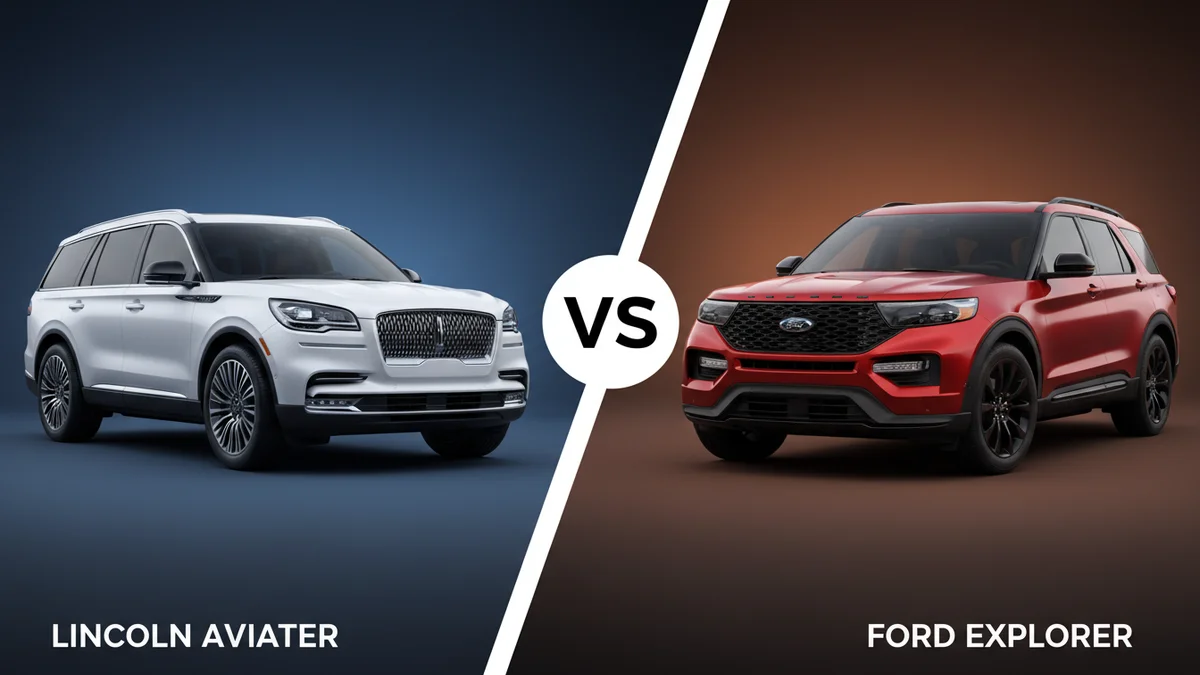
The difference in sticker price between the Lincoln Aviator and the Ford Explorer is perhaps the most immediate indicator of their distinct missions, with the Aviator’s starting MSRP often demanding an additional $16,000 over its more mainstream counterpart. This significant financial leap signals a divide not just in cost, but in philosophy, engineering, and the overall ownership experience. While both are three-row, family-friendly SUVs built on the same rear-wheel-drive platform, their execution diverges sharply. The Aviator aims for refined luxury and effortless power, while the Explorer prioritizes versatile utility, broad appeal, and accessible performance. Choosing between them means weighing premium comfort against pragmatic value, sophisticated power against everyday capability.
Quick Verdict: Both Lincoln Aviator and Ford Explorer are strong choices — the right pick depends on your priorities.

Prime for Young Adults — 6 Months Free
Students and 18–24s get six months of Prime free, then half price.
Start 6 Months Free As an Amazon Associate I earn from qualifying purchases.Pick Lincoln Aviator for overall value.
Pick Ford Explorer for premium features.
Lincoln Aviator vs Ford Explorer: Head-to-Head Specs
Recommended Best Deal Products



At first glance, these siblings appear remarkably similar beneath the sheet metal, sharing fundamental architectural elements. Yet, dig deeper into their specifications, and two crucial differences quickly emerge: the standard powertrain offerings and the premium features list. The Lincoln Aviator comes standard with a potent 3.0L twin-turbo V6, offering a robust 400 horsepower right out of the gate, while the Ford Explorer starts with a more modest but efficient 2.3L turbocharged four-cylinder, delivering 300 horsepower. This disparity in base power profoundly influences their driving dynamics and perceived value proposition, highlighting the Aviator’s luxury-focused approach versus the Explorer’s broader appeal.
Performance & Category Ratings
When we evaluate these two SUVs across key categories, their distinct personalities truly shine, leading to a nuanced distribution of wins. The Lincoln Aviator unequivocally dominates the Luxury and Comfort category. Its standard adaptive suspension, available Air Glide Suspension, and deeply cushioned 30-way adjustable Perfect Position seats create an unparalleled ride experience that simply glides over imperfections. The cabin is an oasis of tranquility, with exceptional sound dampening and premium materials like genuine wood and leather adorning nearly every surface. This isn’t just about soft seats; it’s about a holistic sensory experience designed to cosset occupants.
In terms of Overall Power and Refinement, the Aviator also takes the lead. Its standard 3.0L twin-turbo V6, churning out 400 horsepower and 415 lb-ft of torque, provides effortless acceleration and confident highway passing. Opt for the Aviator Grand Touring, and you unlock a staggering 494 horsepower and 630 lb-ft of torque from its plug-in hybrid powertrain, making it one of the most powerful SUVs in its class, capable of a 0-60 mph sprint in just over 5 seconds. The transmission shifts with imperceptible smoothness, contributing to that sense of refined power.
Conversely, the Ford Explorer secures victories in Value for Money and Base Fuel Economy. Its starting price point is significantly lower, making it accessible to a much broader audience, and it delivers a tremendous amount of utility and features for its cost. The standard 2.3L EcoBoost four-cylinder engine, while less powerful than the Aviator’s V6, still produces a respectable 300 horsepower and 310 lb-ft of torque, offering lively performance and a superior EPA-estimated 24 MPG combined compared to the Aviator’s 21 MPG combined for its standard engine. For families prioritizing budget and efficiency without sacrificing practicality, the Explorer presents a compelling argument.
The Explorer also offers a slight edge in Maximum Towing Capacity for specific configurations. While both are capable, the Explorer, when properly equipped with its 3.0L EcoBoost V6, can manage up to 5,600 pounds, a competitive figure for a mid-size SUV. While the Aviator matches this with its 6,700-pound maximum, it’s often more expensive to get to that level, and the Explorer provides robust towing capabilities even with its more common powertrains. This makes the Explorer a pragmatic choice for those needing to haul recreational gear.
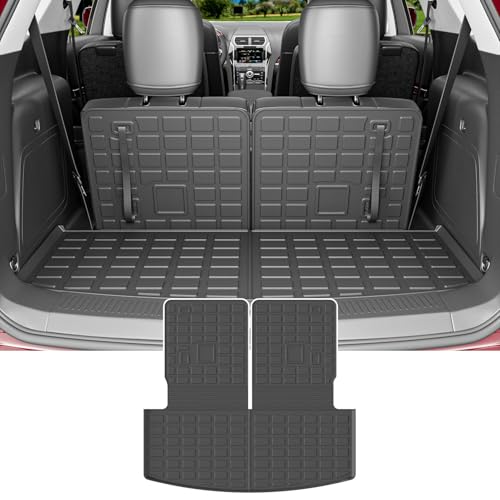
Finally, in Cargo Space and Practicality, the Explorer pulls ahead slightly. While official numbers are close, the Explorer’s interior design often feels more utilitarian and adaptable, with slightly more usable space behind the third row and a lower load floor, making it easier to load bulky items for everyday family adventures. Its simpler interior layout, though less luxurious, lends itself better to the rough-and-tumble of family life. We found the Explorer’s third row felt marginally more accommodating for adults on shorter trips, too, giving it an incremental victory in overall passenger utility.
By the Numbers
Recommended Best Deal Products


A cold, hard look at the figures often clarifies what words only hint at. Beyond the subjective experience of luxury or practicality, the raw data – from horsepower and torque to fuel efficiency and interior dimensions – paints a precise picture of where each vehicle excels and where it makes compromises. These numbers aren’t just statistics; they’re the bedrock of performance, the measure of efficiency, and the silent arbiter of capability, allowing us to quantify the differences that truly matter in your daily drive and long-term ownership.

Audible — Listen Free for 30 Days
One free credit a month and thousands of titles included.
Listen Free for 30 Days As an Amazon Associate I earn from qualifying purchases.Lincoln Aviator: Strengths and Weaknesses
The Lincoln Aviator carves out a distinct niche for itself as a compelling luxury SUV, offering an experience that often rivals more expensive German and Japanese competitors. Its most significant strength lies in its truly luxurious interior and sophisticated ride quality. Step inside, and you’re greeted by a meticulously crafted cabin, awash in premium leather, genuine wood accents, and soft-touch materials. The available 30-way adjustable front seats with massage functions are a revelation on long journeys, providing unmatched comfort. Coupled with the available Air Glide Suspension, the Aviator delivers a serene, almost floating ride that effectively isolates occupants from road imperfections. We found that even on rough patches, the cabin remained remarkably quiet, a testament to Lincoln’s superior sound deadening.
Another undeniable strength is its potent powertrain options. The standard 3.0L twin-turbo V6, offering 400 horsepower, delivers swift and confident acceleration, making highway merges and overtaking maneuvers effortless. For those seeking even more, the Grand Touring PHEV variant pushes power to an astounding 494 hp and 630 lb-ft of torque, offering exhilarating performance alongside a useful all-electric range for urban commuting. This dual approach to power means the Aviator caters to both performance enthusiasts and environmentally conscious drivers seeking a hybrid option.
However, the Aviator isn’t without its drawbacks. Its primary weakness is its significantly higher price point. The premium materials and engineering come at a cost, making it less accessible for many buyers. This isn’t just about the initial MSRP; higher-tier trims and options can push the price well into the luxury car territory, requiring a substantial investment. Furthermore, while the interior is lavish, the third-row seating can feel a bit cramped for adults on longer trips, and the cargo space behind the third row, though adequate, isn’t class-leading. Finally, the standard gasoline engine’s fuel economy of 21 MPG combined is less competitive than some rivals, especially without opting for the more expensive PHEV model. The luxury experience is superb, but it demands both a higher entry fee and a trade-off in fuel efficiency for the base model.
Ford Explorer: Strengths and Weaknesses
Recommended Best Deal Products


The Ford Explorer stands as a testament to American SUV engineering, balancing utility, performance, and family-friendliness with remarkable success. Its most compelling strength lies in its outstanding versatility and practical family utility. With three rows of seating that genuinely accommodate up to seven passengers, the Explorer offers ample space for a growing family or carpooling duties. The cargo area is generous, especially with the second and third rows folded flat, providing enough room for sports equipment, luggage, or a weekend’s worth of gear. The intuitive infotainment system and array of standard safety features, like Ford Co-Pilot360, add to its appeal as a dependable daily driver for busy households.
Another major strength is its broad range of powertrain options and accessible performance. The standard 2.3L EcoBoost four-cylinder engine with 300 horsepower delivers a surprisingly spirited driving experience while maintaining respectable fuel economy. For those craving more power, the available 3.0L EcoBoost V6, delivering 400 horsepower in the ST and Platinum trims, transforms the Explorer into a genuinely quick and engaging SUV without the luxury price tag of the Aviator. There’s also an efficient hybrid option that significantly boosts MPG, giving buyers flexible choices to match their needs and budgets. The Explorer’s ability to tow up to 5,600 pounds further solidifies its position as a highly capable and practical vehicle.
However, the Explorer does have its weaknesses. While its interior is functional and well-laid-out, it lacks the premium feel and luxurious ambiance of the Aviator. The cheaper cabin plastics, particularly on lower trims, are impossible to ignore, and the overall design, while ergonomic, doesn’t inspire the same sense of refinement. You won’t find the plush leathers or genuine wood trims here, which is a noticeable difference for those expecting a more upscale experience. Additionally, the ride quality, while comfortable, isn’t as serenely smooth as the Aviator’s, sometimes feeling a bit firmer over broken pavement. While the handling is competent and engaging, it doesn’t possess the same isolation or sophisticated poise. Finally, while its starting price is a huge win, higher trims of the Explorer can begin to creep into the Aviator’s territory, diminishing some of its core value proposition if you’re not careful with options.
Which One Should You Choose?
Deciding between the Lincoln Aviator and the Ford Explorer ultimately boils down to your personal priorities, lifestyle, and, crucially, your budget. These two vehicles, despite their shared platform, cater to distinctly different drivers.
If you are a driver who prioritizes premium luxury, exceptional comfort, and effortless power, the Lincoln Aviator is likely your ideal match. Think of it as the ultimate indulgence for the daily commute or a long road trip. You’re someone who values a whisper-quiet cabin, seats that feel like armchairs, and an elegant aesthetic both inside and out. The Aviator excels for the executive commuter who wants to arrive refreshed, or the family whose weekend adventures lean more towards glamping than rugged camping. Its potent standard engine and even more powerful PHEV option mean you’ll never feel short on acceleration, making it a compelling choice for those who appreciate performance wrapped in a sophisticated package. If your budget allows for the significant price premium and you appreciate the finer things, the Aviator will deliver a truly elevated driving experience.
On the other hand, if you are a value-conscious family buyer needing versatile utility, robust capability, and a more accessible price point, the Ford Explorer is undeniably the smarter choice. This SUV is built for everyday life, from school drop-offs to hauling sports gear or tackling a weekend DIY project. It’s perfect for the pragmatist who needs a reliable, spacious, and well-equipped vehicle without venturing into the luxury segment’s higher costs. If towing a boat or a small camper is on your agenda, the Explorer’s competitive towing capacity makes it a strong contender. The diverse powertrain options, including an efficient base engine and an accessible hybrid, mean you can tailor it to your needs for both performance and fuel economy. For the budget-minded adventurer or the bustling family who values practicality over opulent finishes, the Explorer provides an excellent blend of features, space, and performance for your dollar. It’s the workhorse that can still play, offering a tremendous amount of capability and technology for its price.
Pick Lincoln Aviator for overall value.
Audible Premium Plus — Annual Membership
12 audiobook credits up front, plus the full Audible catalogue.
See Annual Plans As an Amazon Associate I earn from qualifying purchases.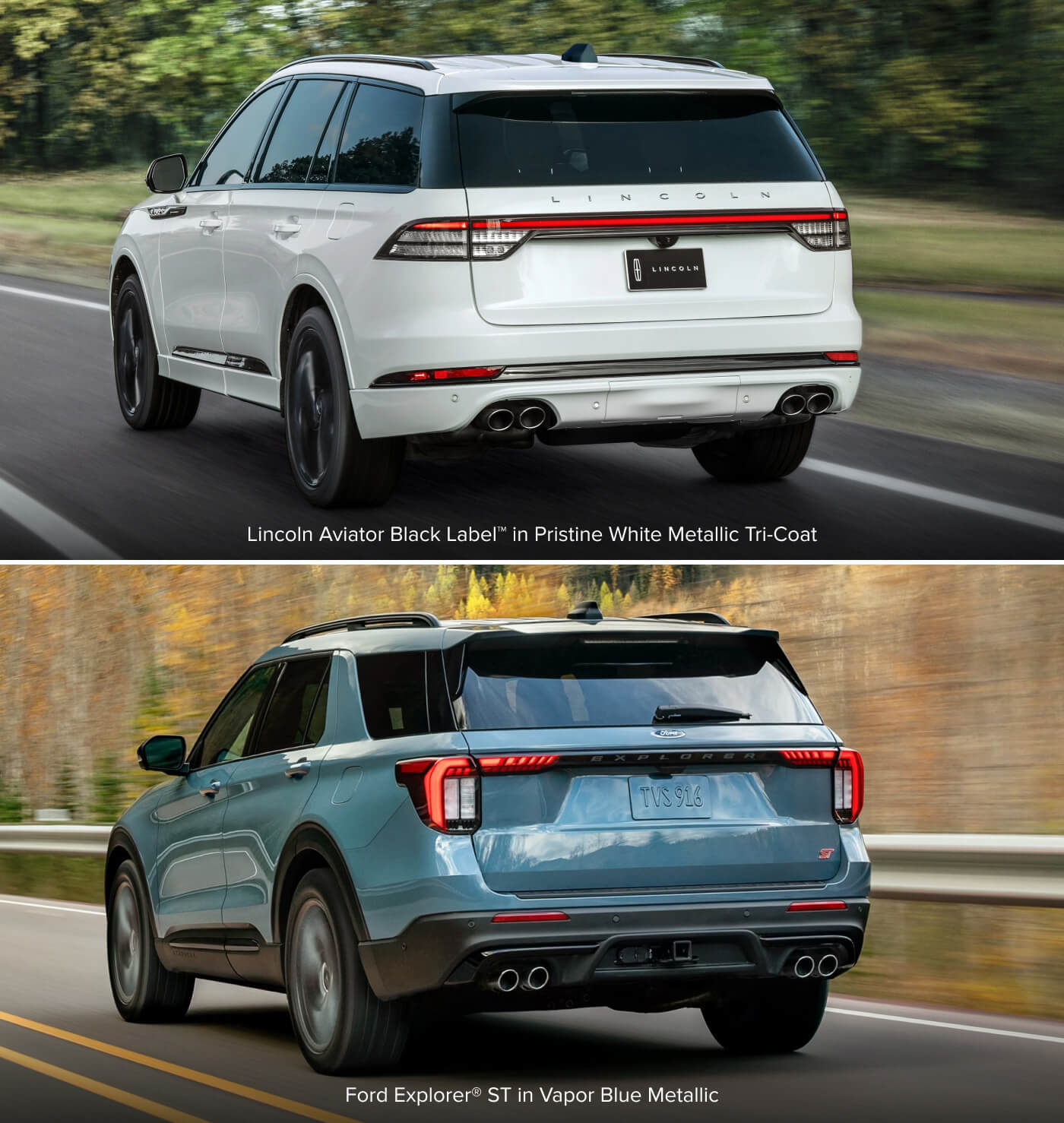
Pick Ford Explorer for premium features.
Final Verdict
In the head-to-head battle between the Lincoln Aviator and the Ford Explorer, there is no single, undisputed champion. Both are exceptionally strong contenders within their respective segments, each delivering outstanding value and capability tailored to different drivers. The Aviator reigns supreme for those who prioritize opulent luxury, refined comfort, and robust, effortless power, willing to invest a significant premium for an elevated driving experience. Its serene cabin and potent powertrains make every journey feel special.
Conversely, the Explorer shines as the pragmatic choice, offering exceptional versatility, a wide array of accessible powertrains, and impressive utility for a more attainable price point. It’s the workhorse of the two, delivering immense practicality for families and adventurers alike. The fundamental trade-off boils down to this: do you prioritize the indulgent, high-end luxury and performance of the Aviator, or the broad utility, compelling value, and everyday versatility of the Explorer? Your individual needs, desires, and budget will ultimately dictate which of these impressive three-row SUVs is the right pick for you.