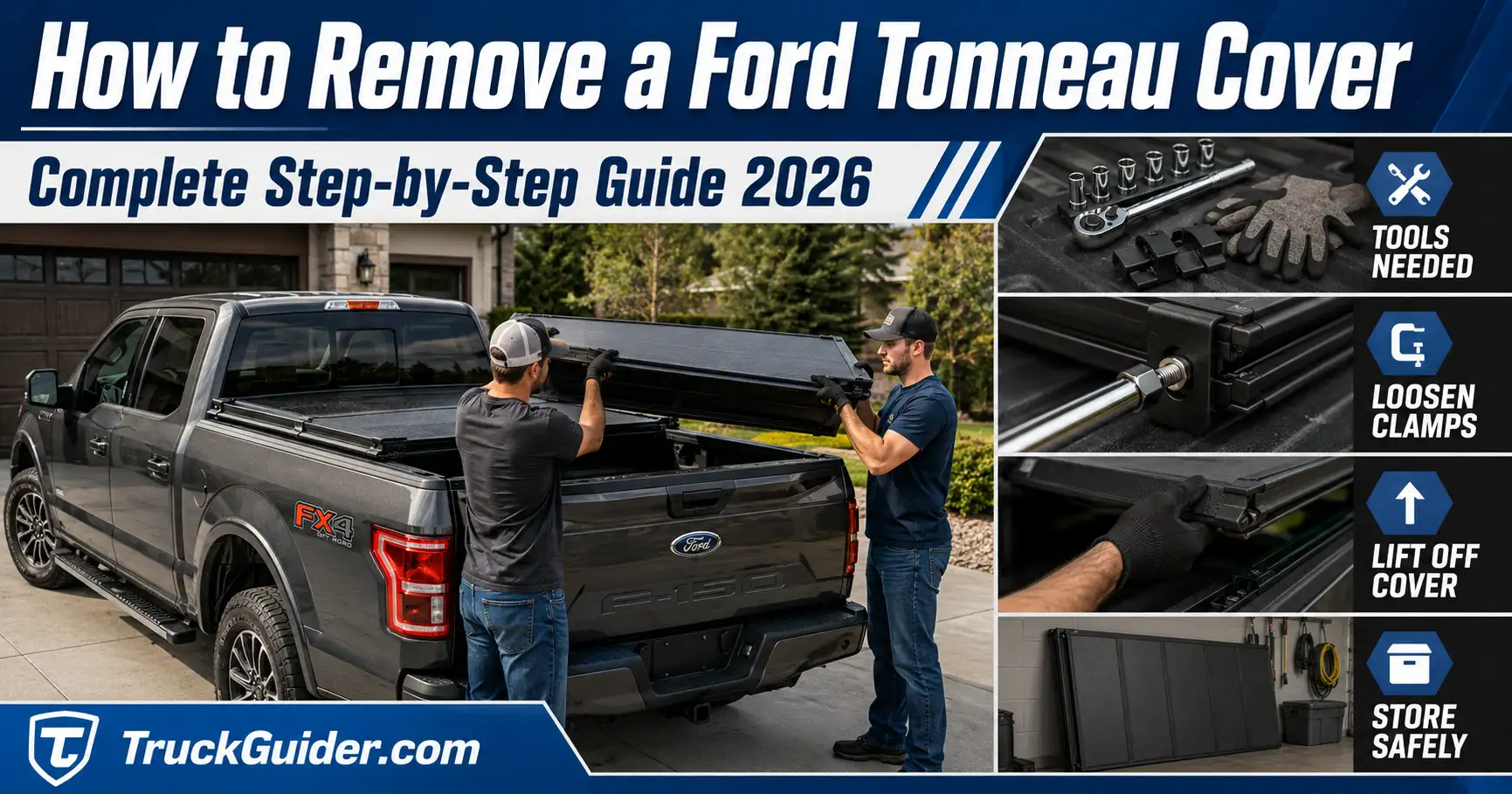
How to Remove a Ford Tonneau Cover: Complete Step-by-Step Guide 2026

Tonneau covers serve as essential accessories for modern pickup trucks, offering unparalleled cargo security, robust weather protection, and improved aerodynamic efficiency. Ford vehicle owners across the globe rely on these systems to maximize the utility of their F-150, Maverick, Ranger, and Super Duty models.
However, various circumstances frequently arise that necessitate the complete or partial removal of these complex bed cover systems. Vehicle operators often need to transport oversized cargo like furniture or appliances, perform intensive truck bed maintenance, or upgrade to an entirely different accessory ecosystem.

Prime for Young Adults — 6 Months Free
Students and 18–24s get six months of Prime free, then half price.
Start 6 Months Free As an Amazon Associate I earn from qualifying purchases.
Removing a Ford tonneau cover safely requires a profound understanding of the specific mechanical architecture employed by the manufacturer. Different cover designs utilize unique and proprietary fastening systems, ranging from simple hand-tightened J-hook clamps to complex, integrated aluminum rail tracks.
Attempting to detach these covers without proper knowledge or the correct tools frequently results in stripped hardware, permanently bent bed rails, or severe structural damage. This comprehensive analysis details the exact, step-by-step methodologies required for safely removing various tonneau cover architectures from all Ford truck platforms.
How to Remove a Ford Tonneau Cover
Recommended Best Deal Products


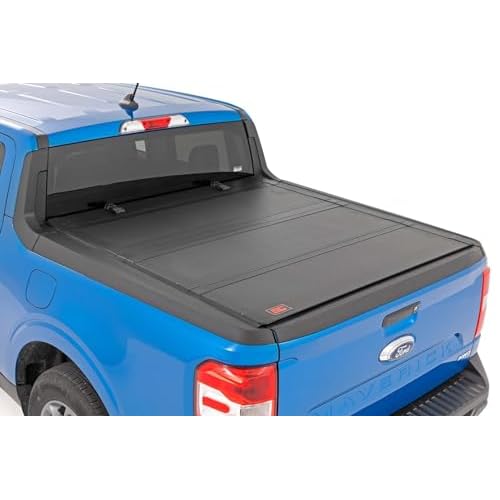
The definitive technical guide for F-150, Maverick, Ranger, and Super Duty owners. Safely detach every architecture from roll-ups to retractable canisters.
Removal Complexity Metrics
Removing a tonneau cover is not a one-size-fits-all procedure. The complexity scales exponentially from soft vinyl systems to high-tension retractable canisters and solid fiberglass lids. This data helps you plan your logistics and personnel requirements before loosening the first bolt.
Weight Class & Lift Safety
Recommended Best Deal Products

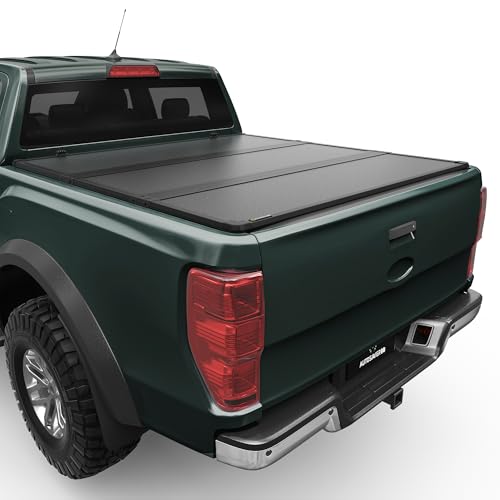

Physical safety is the primary concern when handling multi-layer aluminum or composite panels. Overestimating solo-lift capabilities often leads to paint damage or structural fractures. We’ve mapped the average weight distribution for Ford-compatible systems below.
Required Tooling Suite & Preparatory Logistics
Verify your instrument suite before beginning. While soft covers offer tool-free removal, hard and retractable systems require specific torque and stabilization tools.
| System Type | Primary Hardware | Recommended Tools | Personnel Needed |
|---|---|---|---|
| Soft Roll-Up | Hand Clamps / Velcro | Manual (Hands Only) | 1 Operator |
| Soft Tri-Fold | J-Hook Tensioners | Manual / 5/32″ Allen Key | 1 Operator |
| Hard Tri-Fold | 15mm Bolts / Star Knobs | Socket Set, Adj. Wrench | 1-2 Operators |
| Retractable | Rail Bolts / Canister Screws | Socket Set, Phillips Head | 2 Operators |
| One-Piece Solid | Struts / 5/16″ Bolts | 1/2″ Wrench, Needle Pliers | 2-4 Operators |
The Removal Sequence Architecture
Recommended Best Deal Products


Soft Roll-Up & Tri-Fold
These systems prioritize speed. Removal involves releasing rear tension latches and folding or rolling forward. Key risk: Overtightening hand clamps during storage.
Hard Folding Systems
Exemplified by the BAKFlip MX4. These require managing prop rods and elevator bolts. Two-person lifts are mandatory for the final panel detachment.
Retractable Canisters
The most intensive procedure. Includes plumbing (drain tubes) and heavy-lifting (central canister). Requires full rail removal for canister extraction.

Audible — Listen Free for 30 Days
One free credit a month and thousands of titles included.
Listen Free for 30 Days As an Amazon Associate I earn from qualifying purchases.Ford Model-Specific Nuances
Maverick Clamp “Quirks”
The Ford Maverick OEM cover often features overtightened plastic handles. Do not use tools on these handles.
F-150 Lightning Myth
There is a persistent belief that Lightning covers are built-in. They are not.
Troubleshooting Hardware Failure
Seized Rail Clamp
Cause: Galvanic Corrosion
Apply penetrating oil; wait 15 mins. Use rubber mallet to break rust bonds before turning.
Stripped Bolt Head
Cause: Incorrect Socket Size
Deploy a steel screw extractor bit. Always use precise metric/SAE tools for Ford hardware.
Adhered Sweep Seal
Cause: Solar Heat Adhesion
Slide a plastic trim tool under the rubber. Do not pull; it will tear the EPDM material.
Spinning Rivet Nut
Cause: Overtorqued Hardware
Secure the nut firmly with locking pliers before unscrewing the central bolt.
Audible Premium Plus — Annual Membership
12 audiobook credits up front, plus the full Audible catalogue.
See Annual Plans As an Amazon Associate I earn from qualifying purchases.Core Tool Requirements and Preparatory Logistics
Executing a flawless and safe tonneau cover removal requires assembling the correct instruments prior to beginning the mechanical procedure.
While certain soft covers boast a tool-free removal design, the vast majority of rigid folding and retractable systems demand a suite of standard hand tools.
A comprehensive metric and SAE socket set is absolutely essential, specifically including 15mm sockets and 7/16-inch wrenches for loosening heavy-duty rail C-clamps.
An adjustable wrench or a robust set of combination wrenches will assist operators in stabilizing elevator bolts while the securing nuts are extracted.
Many modern hard-folding models utilize specialized proprietary fasteners that may require hex keys or Allen wrenches for precise detachment.
Screwdrivers, encompassing both flathead and Phillips variants, are routinely necessary for releasing integrated weather stripping clips or disconnecting specialized locking mechanisms.
Safety is paramount; operators must utilize protective gear, particularly heavy-duty work gloves and impact-resistant safety goggles, to protect against sharp aluminum edges.
Furthermore, truck owners must prepare a dedicated, heavily padded storage area, such as thick moving blankets draped over sawhorses, to safely receive the cover once removed.
Table: Specialized Tool Requirements by Cover Architecture
| Tonneau Cover Type | Primary Securing Hardware | Recommended Tooling Suite | Optimal Personnel Count |
| Soft Roll-Up | Hand clamps, Velcro tracks | Hands, 7/16-inch wrench (optional) | 1 Operator |
| Soft Tri-Fold | Hand-tightened J-hooks | Hands, 5/32″ Allen key (rare variants) | 1 Operator |
| Hard Tri-Fold | 15mm bolts, Star knobs | Socket set, adjustable wrench | 1-2 Operators |
| Retractable | Rail bolts, Canister screws | Socket set, Phillips screwdrivers | 2 Operators |
| One-Piece Solid | Hydraulic struts, 5/16″ bolts | 1/2-inch wrench, needle-nose pliers | 2-4 Operators |
Essential Preparatory Steps for Vehicle Safety
Preparation represents the most critical phase of the tonneau cover removal process, directly dictating the success and safety of the operation.
Before loosening a single mechanical bolt, the Ford truck must be parked on a perfectly flat, level surface to prevent the tailgate or heavy cover components from shifting.
The entire truck bed must be thoroughly cleared of cargo, debris, and loose items to ensure the operator has completely unhindered access to the interior rail systems.
A meticulous visual inspection of the cover’s primary mounting hardware is mandatory to identify any rusted, seized, or structurally damaged components.
If significant rust or oxidation is detected on the clamps, a high-quality penetrating fluid should be applied directly to the threads and allowed to soak to prevent stripping.
Tailgate positioning is another highly critical preparatory factor that is surprisingly overlooked by a vast majority of vehicle owners.
Many premium tonneau covers feature specialized integrated weather seals that are designed to physically overlap the top edge of the truck’s tailgate.
Attempting to lift or laterally shift the cover without first fully opening the tailgate will almost certainly cause the weather seal to tear or scratch the paint.
Always refer strictly to the manufacturer’s specific technical guidelines regarding tailgate clearance prior to initiating the mechanical removal sequence.
Removing a Ford Soft Roll-Up Tonneau Cover
Soft roll-up covers represent the most mechanically straightforward architecture available in the competitive automotive accessory market.
These highly versatile covers utilize a durable vinyl or heavy-duty canvas tarp that is stretched tightly over an integrated aluminum frame.
This fabric is typically secured to the side rails utilizing industrial-grade hook-and-loop fasteners (Velcro) running the entire length of the truck bed.
To commence the removal process, the operator must first drop the tailgate and locate the primary tension latches or trigger releases on the rear corners.
Once the rear tension is successfully released, the cover material can be smoothly and tightly rolled toward the front bulkhead near the vehicle cab.
It is crucially important to ensure that the vinyl material is completely detached from the side rails during rolling to prevent tearing the hook-and-loop stitching.
After rolling the cover completely to the cab, it must be safely secured using the integrated nylon safety straps and plastic buckles.
If the truck owner’s objective is merely to transport tall cargo, the removal process can safely stop here, as the rolled cover permits extensive bed access.
For a complete system removal, the forward securing bolts at the front bulkhead must be carefully unthreaded, allowing the rolled tarp assembly to be lifted away.
Subsequently, the side rails can be completely detached by systematically loosening the three to four C-clamps securing each rail to the metal bed lip.
Removing a Ford Soft Tri-Fold Tonneau Cover
Soft tri-fold covers have achieved immense popularity due to their optimal balance of affordability, weather resistance, and remarkable ease of use.
Models such as the American Tonneau Company soft fold or the OEM Ford folding cover rely on a lightweight, articulated aluminum subframe overlaid with marine-grade vinyl.
The removal sequence begins at the tailgate by physically unlatching the rear clamps, which are predominantly J-hook designs that secure tightly underneath the metal bed rail lip.
Once these rear clamps are fully released, they must be folded securely into the cover’s designated rail recesses to prevent them from puncturing the vinyl.
The cover is then folded forward, panel by panel, pivoting on its integrated cab center and tail center hinges toward the truck cab.
Upon reaching the front bulkhead, the operator must release the final front safety clamps, which typically feature star knobs or threaded plastic handles.
Ford’s specific technical instructions heavily emphasize that these fasteners must only be hand-tightened during installation and removal.
The use of wrenches or mechanical leverage on soft-cover hand clamps frequently leads to the catastrophic failure of the plastic housing.
Once the front clamps are completely detached, the tightly folded assembly can be lifted straight up and permanently removed from the vehicle.
Because soft tri-fold covers generally do not utilize independent aluminum side rails, the entire system is removed in one cohesive unit in under fifteen minutes.
Detaching a Hard Folding Tonneau Cover
Hard folding tonneau covers, exemplified by the highly regarded RealTruck BAKFlip MX4 or the Vanguard Off-Road series, offer superior security through multi-layer aluminum or composite panels.
These structural panels are significantly heavier than their soft vinyl counterparts, thereby altering the mechanical removal dynamics entirely.
The procedure invariably begins by dropping the truck’s tailgate and reaching underneath the rear panel to pull the release cables.
Pulling these cables simultaneously disengages the patented auto-latch mechanisms located on both sides of the panel housing.
The heavy panels must be carefully folded sequentially toward the cab until the entire cover rests in its fully flipped-up, vertical position against the rear window.
In this vertical orientation, the operator must immediately engage the attached prop rods, locking them into place to safely hold the heavy panels.
At the front bulkhead, the cover is bolted to the side rails via specialized elevator bolts featuring large, flat heads that sit flush with the top panel.
Underneath the cover, the operator must unscrew the five-star finger knobs, ensuring they carefully collect the lock washers, flat stainless washers, and rubber washers.
Once these elevator bolts are pushed up and completely removed, the heavy folded assembly can be carefully lifted off the truck’s side rails.
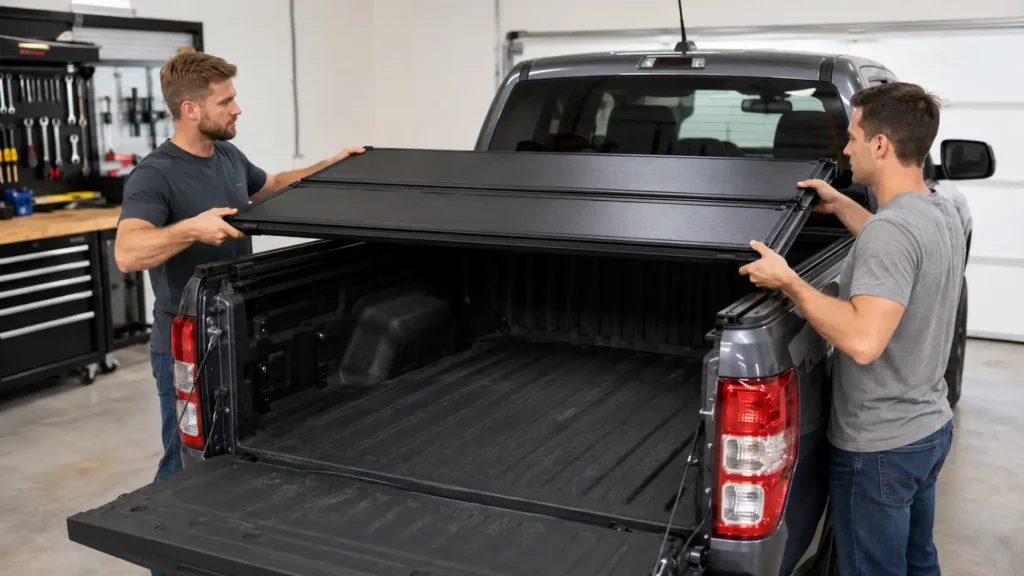
Due to the substantial density of the multi-layer aluminum, it is highly recommended that two individuals perform the final lifting sequence.
If a full system removal is necessitated, the 15mm bolts on the six to eight aluminum C-clamps securing the side rails must then be systematically extracted.
Table: BAKFlip MX4 Hardware Sequencing Matrix
| Hardware Component | Location on System | Primary Mechanical Function | Proper Removal Method |
| Auto-Latch Cable | Underneath each panel | Disengages lateral panel locks | Manual downward pull |
| Prop Rod Assembly | Attached to side rail | Supports cover in vertical stance | Manual lock release |
| Star Finger Knob | Under front bulkhead panel | Secures the main elevator bolt | Counter-clockwise unthread |
| Lock & Flat Washers | Positioned above star knob | Distributes clamping pressure | Slide smoothly off bolt |
| EPDM Rubber Washer | Flush against panel bottom | Provides primary water seal | Peel away carefully |
Extracting a Retractable Tonneau Cover System
Retractable tonneau covers, such as the premium Ford Embark LS and Roll-N-Lock series, represent the most mechanically complex systems in the industry.
These advanced covers operate much like a commercial garage door, featuring an interlocking aluminum or polycarbonate sheet that retracts into a spiraled front canister.
The initial step necessitates unlocking the cover using the proprietary key and allowing the spring-loaded curtain to retract completely into the front canister housing.
Before any structural hardware is manipulated, the integrated water drainage tubes must be addressed by the operator.
These flexible tubes route captured rainwater from the canister through factory-drilled holes in the truck bed to prevent interior flooding.
They must be gently pulled free from the bed plugs and carefully disconnected from the canister’s plastic nozzles to avoid snapping the fittings.
Next, the side rails must be physically detached from the central canister assembly, which usually involves removing specialized machine screws near the bulkhead.
The side rails themselves are secured to the truck bed using complex clamp brackets or specialized track hardware, which must be loosened using a socket wrench.
Once the side rails are fully detached and carefully removed from the vehicle, the primary canister remains in the bed.
The canister is an exceptionally heavy and unwieldy component, containing the tightly coiled aluminum cover and the highly tensioned internal springs.
Extracting the canister safely requires two to three individuals lifting it straight up and out of the truck bed to avoid deep paint scratches.
Removing a One-Piece Solid Hard Tonneau Cover
One-piece hard tonneau covers, frequently constructed from marine-grade fiberglass or high-density ABS plastics like the UnderCover Classic, are renowned for their total weather resistance.
However, their monolithic, single-piece design makes them incredibly bulky, heavy, and awkward to handle during the removal phase.
The detachment process begins by unlocking the dual rear latches and raising the massive cover on its hydraulic struts, much like opening a vehicle’s front hood.
The gas-charged hydraulic struts must be physically disconnected first to free the cover from the truck’s bed geometry.
This is typically achieved by snapping the large end of the strut off the cover’s ball stud and removing the lower rod end from the rear mounting bracket.
Once the struts are completely removed, the cover will lack all vertical support, requiring a strong assistant to manually hold the heavy lid open.
At the front bulkhead, the cover interfaces directly with the truck via an articulated 4-bar hinge system secured by heavy-duty twist knobs.
The twist knobs must be completely loosened to release the primary hinge mechanisms from the front mounting brackets.
With all connection hardware disengaged, the cover must be pushed slightly forward to clear the mounting posts, then lifted directly upward off the truck.
This specific step mandates a minimum of two individuals, though four are highly optimal for heavy fiberglass models, lifting evenly from all corners.
If the base hardware is to be removed, the heavy 5/16-inch bolts holding the front and rear brackets to the truck bed must be extracted using a 1/2-inch wrench.
The Sawtooth Stretch Composite System
The Sawtooth stretch cover presents a highly unique engineering architecture utilizing a proprietary, highly elastic composite material.
Unlike standard vinyl covers, the Sawtooth system does not rely on traditional metal hinges or folding panel mechanisms to manage cargo space.
To completely remove this cover, the operator must first unhook the specialized elastic J-hooks located at the extreme rear corners near the tailgate.
Once this rear tension is broken, the composite stretch material can be smoothly rolled toward the cab of the truck.
Operators must be exceptionally careful to avoid dragging the fabric sleeves over any sharp cargo edges that might puncture the composite matrix.
As the elastic material is rolled forward, the lateral metal support bows must be sequentially detached and pulled out of the side rails.
The completely rolled composite material is then tightly secured at the front bulkhead using the permanently attached nylon buckles.
To detach the underlying framing, the rear tailgate rail is pulled firmly backward to separate it mechanically from the two side rails.
Finally, the remaining side clamps are loosened with basic hand tools, allowing the side rails and the front cap rail to be lifted cleanly away from the truck bed.
Ford Model-Specific Removal Nuances
While general removal methodologies apply broadly across the industry, specific Ford truck models present highly unique mechanical quirks and dimensions.
Understanding these vehicle-specific nuances prevents accidental hardware damage and significantly streamlines the overall detachment process.
F-150 and F-150 Lightning Considerations
The modern Ford F-150, prominently including the all-electric F-150 Lightning, utilizes an advanced military-grade aluminum-alloy body structure.
When removing heavy tonneau cover clamps from these aluminum beds, extreme care must be taken to avoid gouging or warping the softer metal.
A persistent and pervasive misconception within the F-150 Lightning community is the alleged existence of a permanent, “built-in” factory tonneau cover.
Extensive technical analysis confirms that these are simply dealer-installed accessories, typically standard retractable or hard-folding aftermarket models.
They absolutely do not require permanent physical modifications to the truck bed and are removed exactly like any aftermarket cover by loosening the rail bolts.
Operators should ensure they carefully locate all clamp locations along the rails, as the F-150’s expansive bed geometry may utilize up to eight distinct clamping points.
Ford Maverick Clamp Quirks
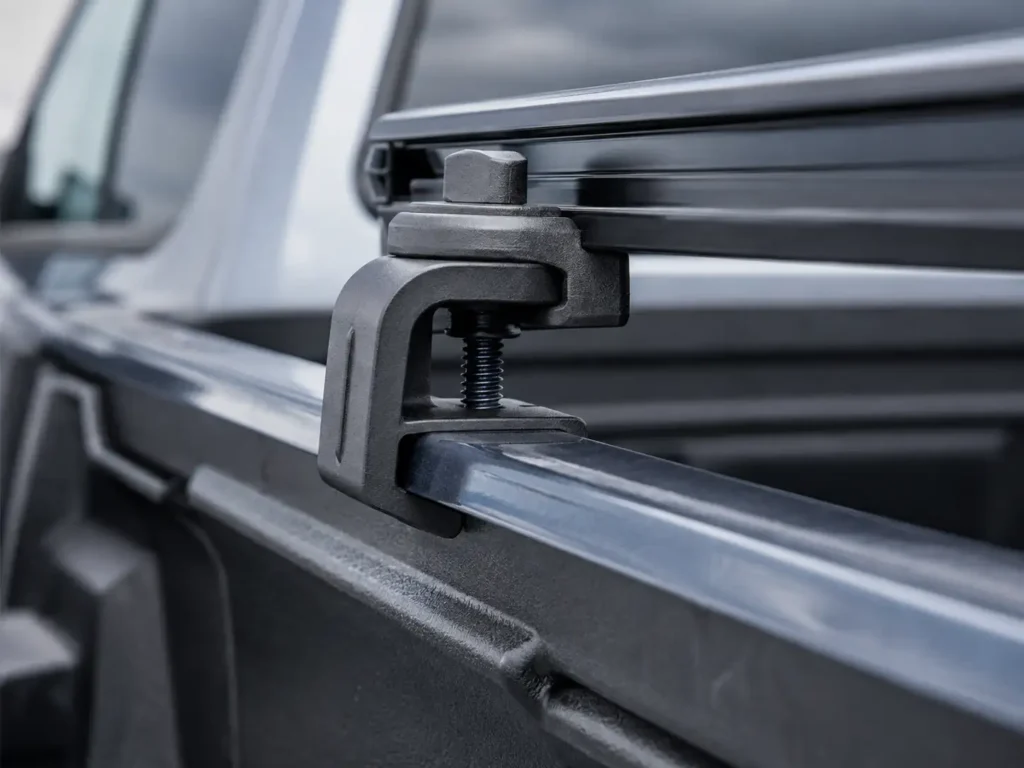
The highly popular compact Ford Maverick frequently features an OEM soft tri-fold cover that has caused significant confusion among new owners.
The cover utilizes massive black plastic handles at the front bulkhead that must be twisted counter-clockwise to release the clamping mechanism.
Often, these handles are severely overtightened directly from the factory, causing the threaded steel shaft to become deeply embedded into the locking claw.
Attempting to force the handle rotationally with tools will almost certainly break the fragile plastic housing.
Instead, operators must simply unscrew the handle until a small gap appears, then apply targeted horizontal force, wiggling the mechanism back and forth toward the bed wall.
The claw will eventually pop loose with a small amount of physical force; absolutely no 5/32 Allen wrenches or specialized tools are required.
Ranger and Super Duty Scaling Dynamics
The mid-size Ford Ranger and the heavy-duty F-250/F-350 present vastly contrasting mechanical scale challenges during removal.
Ranger covers are physically narrower and substantially lighter, making the solo removal of hard-folding panels significantly safer and easier.
Conversely, Super Duty trucks feature massive, towering bed dimensions and heavily elevated factory ride profiles.
Removing a hard cover from a modern Super Duty inherently requires sturdy step stools or automotive ladders to safely reach the center bulkhead hardware.
Furthermore, Super Duty models often possess highly unique bed cap geometries that require specialized drop-down track brackets.
These specialized brackets must be meticulously unbolted and tracked during a full system removal to ensure they are not lost.
Troubleshooting Hardware and Seal Failures
The removal process rarely proceeds flawlessly, particularly with covers that have been continuously exposed to harsh environmental elements for years.
Hardware oxidation is a primary and frustrating culprit, causing threaded steel bolts and aluminum rail clamps to seize entirely together through galvanic corrosion.
If a bolt stubbornly refuses to turn, operators must avoid applying excessive mechanical torque, which will inevitably strip the fastener head.
Instead, a high-quality penetrant spray should be applied directly to the affected threads, followed by gentle tapping with a rubber mallet to fracture the internal rust bonds.
Another incredibly frequent issue involves the EPDM rubber sweep seals adhering directly to the truck’s paint or plastic bed caps.
This adhesion is caused by intense solar heat baking the rubber directly onto the clear coat over a period of years.
Pulling the heavy cover forcefully when these seals are adhered will instantly tear the weather stripping, permanently ruining the cover’s waterproofing capabilities.
A plastic automotive trim removal tool or a flexible plastic putty knife should be gently wedged under the seal to break the adhesion cleanly without scratching the vehicle.
For retractable covers, the massive internal canister spring may occasionally fail, preventing the cover from rolling up fully prior to canister removal.
In this difficult scenario, the cover must be manually forced and pushed into the canister while the side rails are carefully detached.
Table: Common Fastener Failures and Mechanical Solutions
| Mechanical Issue | Primary Root Cause | Immediate Tactical Solution | Long-Term Preventive Measure |
| Stripped Bolt Head | Utilizing incorrect socket size | Deploy a steel screw extractor bit | Use precise metric/SAE high-quality tools |
| Seized Rail Clamp | Galvanic metallic corrosion | Apply penetrating oil, wait 15 mins | Apply anti-seize paste during installation |
| Embedded Maverick Claw | Factory line overtightening | Wiggle bracket back and forth horizontally | Mandate hand-tightening protocols only |
| Torn Rubber Sweep Seal | Heat-induced paint adhesion | Slide plastic pry tool smoothly under seal | Apply specialized UV rubber protectant |
| Spinning Rail Rivet Nut | Extreme overtorqued hardware | Secure the nut firmly with locking pliers | Utilize a calibrated torque wrench |
Post-Removal Maintenance and Long-Term Storage
Once the tonneau cover is successfully detached from the Ford, immediate attention must be rapidly shifted to post-removal vehicle maintenance.
The hidden areas beneath the bed rails, previously concealed tightly by the cover clamps, will likely contain significant accumulations of dirt, debris, and abrasive particulates.
Leaving this accumulated debris on the paint while driving can cause intense micro-scratches and vastly accelerate localized clear coat degradation.
The entire truck bed rails and the front bulkhead should be thoroughly washed using a pH-neutral automotive-grade soap and a clean microfiber wash mitt.
If the specific tonneau cover hardware utilized thick adhesive weather stripping, any leftover adhesive residue must be completely dissolved using a specialized, paint-safe chemical solvent.
The removed cover itself requires extremely careful handling and cleaning to ensure it functions perfectly upon future reinstallation.
Soft vinyl covers should be cleaned meticulously with mild soap and water.
Aggressive petroleum-based products or silicone dressings, such as Armor All, must be strictly avoided as they rapidly accelerate vinyl shrinkage, cracking, and structural degradation.
The vital EPDM rubber sweep seals on hard folding covers should be routinely treated with a dedicated UV aerospace protectant to maintain their critical pliability.
Storage logistics dictate that heavy hard panels and massive one-piece covers must be placed on heavily padded surfaces.
Storing a heavy fiberglass cover upright resting directly against a harsh concrete wall without thick padding will quickly cause edge chipping and unseen structural micro-fractures.
Companies like UnderCover often provide specialized wall-hanging brackets explicitly designed to store the cover safely off the ground, a highly recommended investment for frequent removers.
FAQs
Can a single individual safely remove a heavy hard tri-fold tonneau cover?
While a single, strong individual can physically release the mounting hardware and fold the heavy aluminum panels, lifting the entire folded assembly off the truck is highly risky. Hard tri-fold covers generally weigh between 60 and 80 pounds, and their awkward, shifting geometry can easily result in dropped panels or deep, expensive scratches to the vehicle’s paint. Two people are strongly and consistently recommended for the final lifting phase.
Do factory-installed Ford Lightning covers require specialized dealership tools for removal?
There is a widespread and persistent misconception that OEM or “factory-installed” tonneau covers require specialized proprietary dealership tools for detachment. In reality, accessories like the Ford F-150 Lightning’s cover are simply standard dealer-installed aftermarket units, often manufactured by established companies like BAK Industries or Roll-N-Lock. They attach using standard modular hardware and can be easily removed using basic socket sets and hex keys.
How exactly should I handle the internal drainage tubes during a retractable cover removal?
Retractable covers and premium hard-folding systems utilize synthetic rubber drainage tubes to actively channel rainwater away from the truck bed interior. Before removing the side rails or the main housing canister, these flexible tubes must be gently pulled free from the factory drain holes located near the front bulkhead. Failing to completely disconnect these tubes prior to aggressively lifting the cover will almost certainly result in snapping the delicate plastic attachment nozzles.
Why are the front bulkhead clamps on my new Ford Maverick cover completely stuck?
The specific OEM soft tri-fold cover supplied on the Ford Maverick utilizes specialized black plastic handles that physically actuate a clamping claw mechanism. If overtightened at the factory, the threaded steel shaft embeds incredibly deeply into the locking mechanism. To safely resolve this, operators must unscrew the handle slightly and wiggle the entire mechanism horizontally away from the bed wall; applying sheer rotational force with a wrench will instantly break the plastic handle.
What are the catastrophic risks of driving with a partially removed tonneau cover?
Driving a truck with a tonneau cover that is only partially secured or partially removed is exceptionally dangerous and strictly prohibited by manufacturers. The aerodynamic forces generated inside the truck bed at highway speeds can create massive, violent uplift. A loosely clamped cover will flap violently, potentially tearing the vinyl to shreds, permanently bending the aluminum hinges, or catastrophically detaching from the vehicle and striking trailing traffic. All covers must be completely locked down at all latches or fully removed before vehicle operation.
Is it strictly necessary to remove the aluminum side rails when taking off the cover?
The necessity of removing the integrated side rails depends entirely on the operator’s specific functional objective. If the cover is being removed temporarily merely to accommodate a tall piece of cargo, the heavy panels can be fully detached while leaving the side rails securely clamped to the truck bed. Leaving the C-clamps and rails perfectly in place makes reinstallation significantly faster, as it preserves the precise bed alignment and track geometry.
Related Ford Guides
- how to reset the Ford Escape oil light
- how to adjust Ford F-150 headlights
- how to calibrate Ford SYNC
- how to change the F-150 cabin air filter
- how to disable the Ford speed limiter