How To Open Ford Fusion Trunk With Dead Battery: Step-By-Step Guide 2026

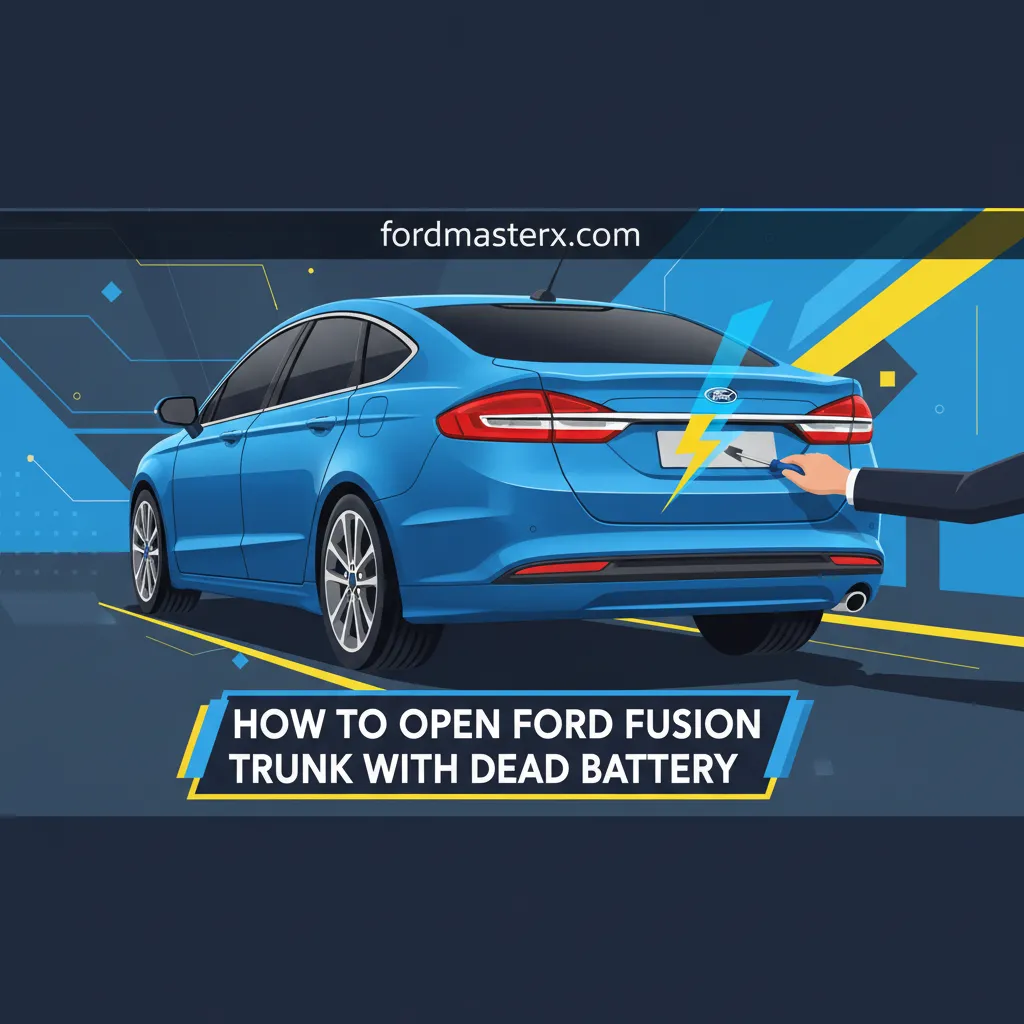
Finding your Ford Fusion’s trunk inaccessible due to a dead battery can be a frustrating and inconvenient situation, especially when essential items are stored within. Modern vehicles, like the Ford Fusion, often rely entirely on electrical power for trunk release, leaving owners in a predicament when the 12V battery is completely discharged and traditional key access is absent. This comprehensive guide will meticulously walk you through the professional steps required to safely and effectively open your Ford Fusion’s trunk with a dead battery, empowering you to resolve this common automotive challenge.

Understanding Ford Fusion Trunk Release Mechanisms and Dead Battery Impact
Recommended Best Deal Products


📤 Share Image
To effectively address a locked trunk on a Ford Fusion with a dead battery, one must first understand the vehicle’s trunk release mechanisms and why a power failure creates such a challenge. Unlike older vehicle designs that often featured a dedicated mechanical key cylinder on the trunk lid, modern Ford Fusion models primarily rely on an electronic trunk release mechanism. This includes the button located on the dashboard or driver’s door panel, and the remote release function integrated into your key fob.
These electronic systems are entirely dependent on the vehicle’s 12V battery for power. Research indicates that Ford eliminated external trunk key cylinders on many models from approximately 2013 onwards, transitioning to purely electronic releases for convenience and enhanced security. This design means that without electrical current, the solenoid that unlatches the trunk simply cannot operate. The typical trunk release solenoid requires approximately 12V DC power to actuate, converting electrical energy into mechanical movement to release the latch. When your battery is completely dead, this power delivery ceases, rendering all electronic methods inoperable.
Imagine pressing your key fob’s trunk release button or the interior dash button, and nothing happens—this is the classic scenario of a dead battery preventing the electronic solenoid from firing. While some Ford Fusion models offer a rear seat pass-through, this often requires the rear seats to be folded down, which may not always be possible from outside the vehicle or if items are blocking access. Furthermore, reaching the internal safety release handle can still be challenging and sometimes requires navigating through a tight space, offering limited utility when the primary goal is trunk access, not just emergency escape.

Step-by-Step Guide: Accessing Your Ford Fusion Trunk with a Discharged Battery
When faced with a dead battery and an inaccessible trunk, following a structured approach is essential. This guide will help you master the process, enabling you to regain access safely and efficiently.
📋
Step-by-Step Guide
Recommended Best Deal Products



Your first objective is to get inside the vehicle. For most Ford Fusion models, even with a dead 12V battery, you can use the physical key blade concealed within your remote fob. Locate the small release button or switch on your key fob, depress it, and slide out the metallic key blade. Insert this blade into the keyhole on the driver’s side door handle and turn it to unlock the door. If your vehicle is completely locked and you cannot access the interior, roadside assistance may be required to professionally open the door without damage.
Once inside, identify the interior trunk release button. In Ford Fusions, this button is typically found on the driver’s side dashboard, often to the left of the steering wheel, or integrated into the driver’s side door panel. Even with a dead battery, it’s worth attempting to press this button first. Sometimes, there’s just enough residual charge to momentarily activate the solenoid, especially if the battery isn’t completely depleted.

Audible — Listen Free for 30 Days
One free credit a month and thousands of titles included.
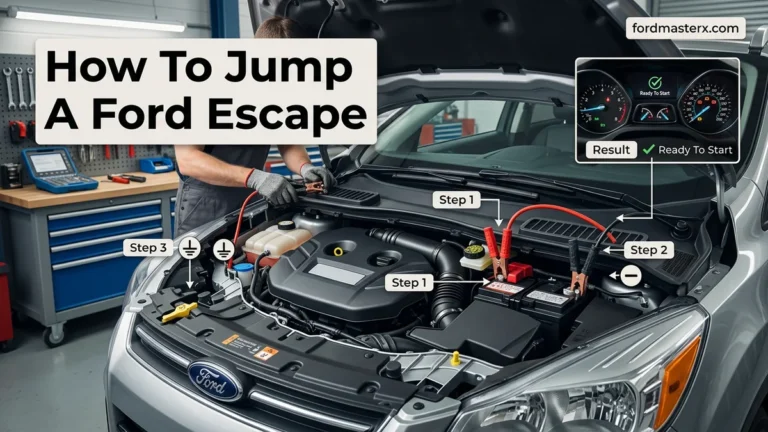
Listen Free for 30 Days As an Amazon Associate I earn from qualifying purchases.Since the main battery in a Ford Fusion is often located in the trunk itself (depending on model year and trim), you’ll need to utilize the under-hood remote battery terminals. Pop the hood release lever, usually located near the driver’s left knee. Once the hood is open, look for a positive (+) terminal, typically marked with a red cover and often near the fuse box on the passenger side. Identify a sturdy, unpainted metal part of the vehicle’s frame or engine block to serve as a ground point (-). This setup is standard on many Ford models to facilitate jump-starting without direct battery access.
Now, connect an auxiliary power source. This can be jumper cables from another running vehicle or a portable jump starter. The Ford Fusion typically uses a 12V electrical system, so ensure your power source matches this. Connect the positive (+) (red) clamp from the auxiliary power source to the Fusion’s under-hood positive (+) terminal. Then, connect the negative (-) (black) clamp to the designated ground point on the Fusion’s frame or engine block. Ensure all connections are secure and do not allow the clamps to touch each other or any other metal parts.
When using a portable jump starter, ensure it is fully charged. For jumper cables from another vehicle, ensure that vehicle is running during the connection process to provide adequate voltage. A weak auxiliary power source may not supply enough current to reliably actuate the trunk solenoid.
Always connect the positive (+) terminals first, then the negative (-) terminal to the ground point. When disconnecting, reverse the order: remove the negative (-) clamp from the ground, then the positive (+) clamp. This sequence minimizes the risk of sparks and potential battery explosion or electrical damage.
With the auxiliary power source properly connected and delivering temporary voltage to your Fusion’s electrical system, return to the driver’s seat. Press the interior trunk release button. The temporary power should now be sufficient to energize the trunk latch solenoid, allowing the trunk to pop open. If it doesn’t open immediately, try holding the button down for a few seconds or pressing it multiple times. You might hear a faint click as the solenoid engages.
Once the trunk is open and you’ve accessed your battery or retrieved your items, disconnect the auxiliary power source. Remember to follow the correct sequence for safety: first remove the negative (-) clamp from the Fusion’s ground point, then remove the positive (+) clamp from the under-hood terminal. If you used jumper cables from another vehicle, disconnect from the other vehicle last. Close the hood securely. At this point, you’ll likely need to jump-start or replace your Ford Fusion’s main battery to restore full vehicle function.
Troubleshooting: What If Your Ford Fusion Trunk Still Won’t Open After Powering Up?
Even after carefully following the steps to provide auxiliary power, there are instances where your Ford Fusion trunk might remain stubbornly shut. This section will help you discover common complications and offer diagnostic steps.
Audible Premium Plus — Annual Membership
12 audiobook credits up front, plus the full Audible catalogue.
See Annual Plans As an Amazon Associate I earn from qualifying purchases.Insufficient Power Supply
One of the most frequent reasons for failure is an insufficient power supply. A portable jump starter with a low charge or a weak battery in the assisting vehicle might not provide the instantaneous current surge required to actuate the trunk solenoid. While a car battery might provide 12V, the amperage (current) is crucial for heavy loads like starting an engine or reliably firing solenoids. If you’re using a smaller portable jump starter, ensure it’s fully charged and capable of delivering sufficient peak amperage. A comparison would be trying to start a car with a weak jump starter versus a full-sized car battery—the latter provides more robust power.
Blown Fuse
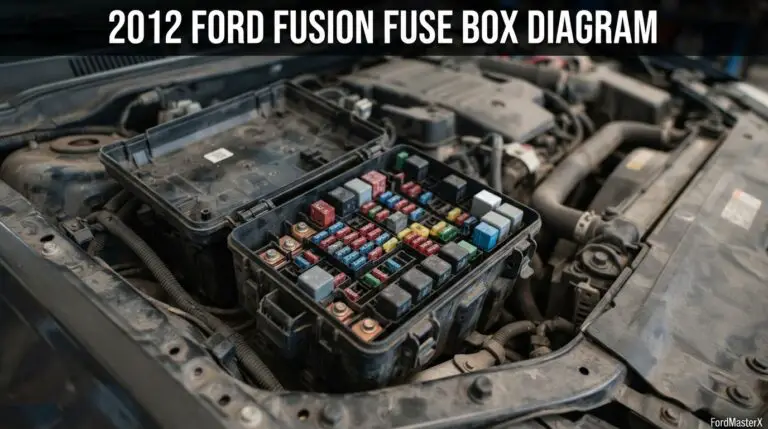
The trunk release mechanism is protected by a fuse, and a blown fuse will prevent the circuit from receiving power, regardless of external jump-starting efforts. The trunk release circuit typically includes a dedicated fuse, often a 10A mini fuse. You’ll need to consult your Ford Fusion’s owner’s manual to learn the precise location of the relevant fuse box (there might be one under the hood, inside the cabin near the driver’s feet, or in the glove compartment). Once located, identify the fuse labeled for the “Trunk Release,” “Tailgate,” or a similar designation. Visually inspect the fuse for a broken filament. If it’s blown, replacing it with a new fuse of the correct amperage might resolve the issue. Always use a fuse with the exact specified amperage to prevent further electrical problems.
Faulty Trunk Latch Actuator/Solenoid
If power is confirmed and the fuse is intact, the problem could stem from a mechanical failure of the latch itself or its electronic actuator/solenoid. These components can wear out over time, leading to intermittent or complete failure. While powering up might energize the circuit, a mechanically stuck or electrically dead actuator will not release the trunk. This type of issue usually requires inspection and replacement by a qualified technician, as it involves disassembling the trunk latch mechanism.
Wiring Issues
Less common, but still a possibility, are wiring issues. The wiring harness leading to the trunk latch can experience fatigue, chafing, or corrosion, especially in areas subject to repeated movement (like the hinge area of the trunk lid). This can lead to a break in the circuit, preventing electrical signals from reaching the solenoid. Research suggests that a common issue in older vehicles (7+ years) can be wiring fatigue or corrosion. Diagnosing and repairing such issues typically requires professional electrical diagnostics and specialized tools to trace the wiring, making it a task best left to automotive electricians.
Preventative Measures: Avoiding Future Dead Battery Incidents and Trunk Access Issues
Recommended Best Deal Products


The best solution to a dead battery and inaccessible trunk is to prevent it from happening in the first place. By adopting a proactive maintenance approach, you can explore strategies to ensure consistent reliability from your Ford Fusion.
Regular Battery Maintenance and Testing
The foundation of reliable vehicle operation begins with the battery. Implement a schedule for regular battery maintenance and testing. This includes visually checking battery terminals for corrosion (a white or bluish powdery substance) and ensuring connections are secure. Periodically have your battery’s health checked at a reputable service center. They can perform voltage and cold cranking amps (CCA) tests to assess its remaining life and capacity. A fully charged 12V battery should measure 12.6V or higher. Research indicates that a typical automotive battery has a lifespan of 3-5 years, but this can vary significantly based on climate and usage patterns.
Utilizing a Battery Tender/Trickle Charger
If your Ford Fusion is frequently stored for extended periods, such as during winter months, or if it’s driven infrequently, a battery tender or smart trickle charger is an invaluable tool. These devices maintain the battery’s optimal charge level without overcharging, preventing deep discharge cycles that can permanently damage battery cells. This is particularly crucial for vehicles parked for 3 weeks or more, as parasitic draws can slowly deplete the battery.
Monitoring Battery Warning Signs
Be vigilant for common battery warning signs. These often include: slow engine cranking (the engine struggles to turn over), dimming headlights or interior lights when the engine is off or starting, and dashboard warning lights related to the battery or charging system. Addressing these indicators promptly can prevent a complete battery failure. A proficient driver learns to recognize these subtle cues before they become critical issues.
Emergency Kit Preparedness
While prevention is key, preparedness is equally important. Consider keeping a portable jump starter or a set of quality jumper cables in your vehicle (if safely accessible or with another vehicle you frequently use). While the Fusion’s battery is often in the trunk, having these tools accessible in the cabin or a secondary vehicle can be a lifesaver for jump-starting via the under-hood terminals, allowing you to reactivate the trunk and ultimately the car.
Understanding Vehicle Storage Recommendations
The environment in which your vehicle is stored significantly impacts battery life. Extreme temperatures (below 0°F or above 90°F) can significantly reduce battery capacity and life. In cold weather, battery efficiency decreases, requiring more cranking power, while heat accelerates internal chemical reactions, leading to faster degradation. Whenever possible, store your Ford Fusion in a garage or shaded area to moderate temperature extremes.
By The Numbers
Fully Charged Battery
Average Battery Lifespan
Common Trunk Fuse Rating
Electronic Trunk Emphasis
Accessing a Ford Fusion trunk with a dead battery requires understanding its electronic release system and providing temporary external power. The primary solution involves connecting an auxiliary power source to the under-hood remote terminals and then using the interior release button. Troubleshooting involves checking fuses, connections, and considering potential mechanical failures if power alone doesn’t resolve the issue. Proactive battery maintenance, such as regular testing and using a battery tender, is crucial to prevent future dead battery scenarios. Implement these detailed steps to regain access to your trunk, and consider integrating preventative measures into your vehicle maintenance routine to ensure reliable operation.
Frequently Asked Questions
Can I open my Ford Fusion trunk with a physical key if the battery is dead?
Most Ford Fusion models manufactured after approximately 2013 do not feature an external mechanical key cylinder for the trunk. Access is primarily electronic. While your key fob contains a physical blade, it’s typically for the driver’s door only. Therefore, direct mechanical access to the trunk with a key is generally not an option for newer Fusion vehicles when the battery is dead.
Where are the remote battery terminals located on a Ford Fusion?
On most Ford Fusion models, the remote battery terminals are located under the hood, even if the primary battery itself is in the trunk. You will typically find a positive (+) terminal, often covered by a red plastic cap and clearly marked, and a ground point (e.g., a metal bolt or engine bracket) nearby. These are designed for jump-starting or supplying temporary power.
What if the interior trunk release button doesn’t work after connecting power?
If the interior trunk release button remains unresponsive after applying auxiliary power, several issues could be at play. First, ensure a strong, clean connection for the jumper cables. Second, check the vehicle’s fuse box for a blown fuse associated with the trunk release mechanism. If these are intact, there might be a mechanical failure of the trunk latch actuator or wiring damage, requiring professional diagnosis.
Is there a manual release lever inside the trunk of a Ford Fusion?
Yes, standard safety regulations require an emergency trunk release lever inside the trunk of all passenger vehicles. This lever is typically glow-in-the-dark or brightly colored (often yellow or green) and located near the trunk latch. However, accessing this lever necessitates gaining entry into the trunk from the rear seats (if equipped with a pass-through) which might be difficult or impossible when the trunk is already closed.
How can I prevent my Ford Fusion’s battery from dying again?
To prevent future battery failures, routinely check your battery’s charge and condition, especially before cold weather. Ensure terminals are clean and tight. If your Fusion is parked for extended periods, use a smart battery tender or trickle charger to maintain its charge. Replacing batteries every 3-5 years, or at the first sign of weakening performance, is also a prudent preventative measure.