2 Barrel vs 4 Barrel Carb: Performance & Efficiency Compared

A 4-barrel carburetor offers superior peak horsepower and top-end performance by opening secondary barrels during hard acceleration, while often maintaining better fuel economy at cruising speeds due to smaller primary bores. In contrast, a 2-barrel carburetor provides a simpler, more cost-effective solution for reliable low-end torque on stock or daily-driven engines.
🎯 Key Takeaways
Recommended Best Deal Products
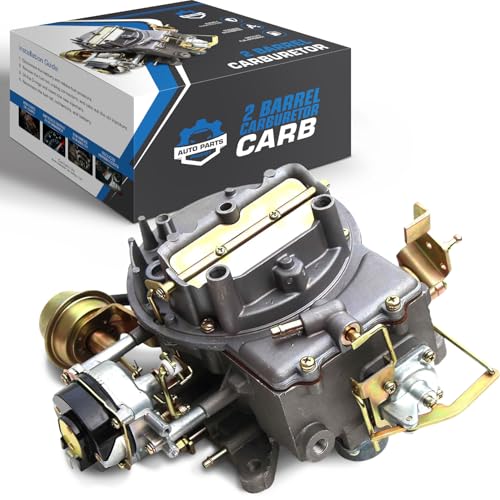
- 4-barrel carbs use smaller primaries to potentially improve cruising fuel economy.
- Secondaries in a 4-barrel provide a significant power boost at wide-open throttle.
- A 2-barrel carb is often easier to tune and maintain for stock engines.
- Over-carbing with too much CFM can cause engine bogging and poor response.
- Upgrading to a 4-barrel usually requires a matching high-performance intake manifold.
Choosing between a 2-barrel and a 4-barrel carburetor isn’t just a choice between “slow and steady” versus “fast and thirsty.” The core reality is that a 4-barrel carburetor often provides better fuel economy during normal cruising while offering significantly more power when you floor it. This paradox exists because 4-barrel units use a progressive linkage, allowing you to run on two very small “primary” barrels most of the time, keeping air velocity high and fuel atomization crisp.

Prime for Young Adults — 6 Months Free
Students and 18–24s get six months of Prime free, then half price.
Start 6 Months Free As an Amazon Associate I earn from qualifying purchases.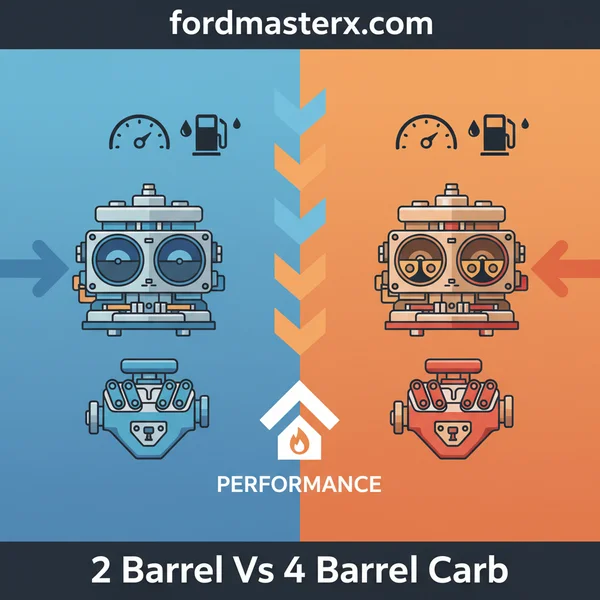
Understanding this distinction matters because over-carbureting or under-carbureting your engine will ruin its driveability. If you put a massive 4-barrel on a stock small-displacement engine, you’ll face “bogging” and poor throttle response. Conversely, keeping a restrictive 2-barrel on a built V8 will choke your top-end performance. The goal is to match the carburetor’s airflow capacity, measured in Cubic Feet per Minute (CFM), to your engine’s actual volumetric needs and your specific driving style.
Mechanical Differences: Primaries, Secondaries, and CFM Ratings
The most obvious difference is the number of “throttles” or barrels that allow air and fuel into the intake manifold. However, the mechanical operation of how these barrels open is what defines the driving experience. A 2-barrel carburetor is a “straight” design; both barrels open simultaneously and are usually the same size. A 4-barrel carburetor is split into two stages: the primaries (front two) and the secondaries (rear two).

Understanding Airflow (CFM)
CFM represents how much air the carburetor can flow at a specific pressure drop. It is the universal language of carburetor sizing. While it might seem like a 500 CFM 2-barrel and a 500 CFM 4-barrel are identical, they perform very differently on the road. The 4-barrel is almost always more versatile because it doesn’t give you all that air at once.
- 2-Barrel CFM: Usually ranges from 250 to 500 CFM. These are simple, reliable, and provide consistent throttle response because the air path never changes.
- 4-Barrel CFM: Commonly ranges from 450 to 850+ CFM. Because they are staged, you can have a high total CFM without sacrificing low-end driveability.
- Pressure Drop Differences: Historically, 2-barrel and 4-barrel carbs were rated at different pressure drops (3.0″ Hg for 2-barrels vs 1.5″ Hg for 4-barrels), meaning a 500 CFM 2-barrel actually flows less air than a 500 CFM 4-barrel in real-world conditions.
The Secondary Advantage
In a 4-barrel setup, the secondaries only open when the engine load or throttle position demands it. There are two main types of secondary operation: vacuum secondaries and mechanical secondaries. Vacuum secondaries are ideal for street cars because they only open when the engine is under enough load to actually use the extra air, preventing the engine from “stumbling.” Mechanical secondaries open based strictly on your foot position, offering instant response for racing applications.
Performance vs. Efficiency: How Barrel Count Affects Horsepower and MPG
The biggest myth in the automotive world is that 4-barrel carburetors are “gas guzzlers.” In reality, a 4-barrel can be more efficient than a 2-barrel for a simple reason: air velocity. To get an engine moving, you need a fine mist of fuel, not heavy droplets. Smaller barrels create faster-moving air, which shears the fuel into a finer mist, leading to a more complete burn in the combustion chamber.
The Efficiency Paradox of Smaller Primaries
Most 4-barrel carburetors feature primary barrels that are actually smaller than the barrels on a standard 2-barrel carb. When you are cruising at 60 MPH, you are likely only using the front two barrels. Because these barrels are small, the air speed stays high even at low RPMs. This results in better “signal” at the boosters and superior fuel atomization.
- Better MPG: A 4-barrel on the primaries often uses less fuel than a large 2-barrel trying to feed the same engine at the same speed.
- Crisp Throttle Response: Smaller primaries provide immediate “snap” when you tip into the throttle during city driving.
- Thermal Efficiency: Better atomization means fewer unburnt hydrocarbons and a smoother-running engine.
Unleashing High-End Horsepower
While the primaries handle the commute, the secondaries handle the performance. A 2-barrel carburetor acts as a restrictor plate once your engine climbs into higher RPMs. The engine wants more air to create more power, but the two barrels physically cannot provide it. This creates a “wall” where the engine stops pulling.
When the secondaries of a 4-barrel open, you are essentially doubling the engine’s breathing capacity. This allows the engine to maintain its torque curve much further up the RPM range, resulting in a massive increase in peak horsepower. For a typical small-block V8, switching from a restrictive 2-barrel to a properly tuned 4-barrel and intake manifold can easily net a gain of 30 to 50 horsepower without any other internal changes. This makes the 4-barrel the superior choice for anyone who wants a “dual-purpose” vehicle—one that behaves in traffic but performs at the track.
Sizing the Carburetor: Avoiding the Pitfalls of Over-Carbing
One of the most common mistakes in the automotive world is the “bigger is better” fallacy. While a massive 4-barrel carburetor looks impressive under the hood, bolting an 850 CFM unit onto a stock small-block engine is a recipe for a tuning nightmare. Sizing your carburetor correctly is about matching the airflow (measured in Cubic Feet per Minute, or CFM) to the actual air requirements of your engine.

Audible — Listen Free for 30 Days
One free credit a month and thousands of titles included.
Listen Free for 30 Days As an Amazon Associate I earn from qualifying purchases.The CFM Formula and Reality
To find your engine’s ideal CFM, you can use a simple calculation: (Engine Displacement in Cubic Inches × Maximum RPM × Volumetric Efficiency) ÷ 3456. For a standard street engine, the volumetric efficiency is usually around 80% to 85%. If you do the math for a typical 350 cubic inch engine peaking at 5,000 RPM, you will find that a 500 to 600 CFM carburetor is often more than enough. Over-sizing leads to a drop in air velocity, which ruins fuel atomization and makes the car feel “lazy” off the line.
Symptoms of “Over-Carbing” Your Engine
If you choose a 4-barrel that is too large for your application, your engine will likely struggle to provide a clean throttle response. Look out for these common red flags:
- Hesitation or Stumbling: A noticeable “bog” when you floor the gas pedal.
- Strong Fuel Smell: Excessive richness because the engine cannot efficiently burn the volume of fuel being dumped into the intake.
- Black Smoke: A clear sign of an over-rich condition at high RPMs.
- Spark Plug Fouling: Repeatedly cleaning or replacing plugs due to carbon buildup.
Compatibility and Costs: Intake Manifolds, Linkage, and Setup Requirements
Switching from a 2-barrel to a 4-barrel setup is rarely a simple swap of the carburetor itself. Because the physical footprint and the number of barrels differ, you must account for the secondary components required to make the system functional. This transition often moves from a “budget refresh” to a “significant performance upgrade” in terms of cost.
The Intake Manifold Connection
A 2-barrel carburetor sits on an intake manifold designed with two primary holes. You cannot simply bolt a 4-barrel carb onto a 2-barrel manifold without an adapter. While adapters exist, they are often discouraged because they create a bottleneck and can interfere with hood clearance. The most effective route is replacing the entire intake manifold with a 4-barrel version. This adds to the cost but ensures that the increased airflow actually reaches the cylinders efficiently.
Hidden Hardware and Installation Costs
Beyond the carb and manifold, several small components can drive up the price and complexity of your project. It is important to budget for the following items:
- Throttle Linkage and Kickdown Cables: Many 4-barrel swaps require new brackets or extensions to ensure the throttle opens fully and the transmission shifts correctly.
- Fuel Line Re-routing: The fuel inlet on a 4-barrel is often in a different location than on a 2-barrel, requiring new hard lines or flexible hoses.
- Air Cleaner Assemblies: You will likely need a larger diameter air cleaner base to fit the 5-1/8 inch neck of a standard 4-barrel carb.
- Gaskets and Thermostat: Since you are pulling the intake, you will need a full top-end gasket set and likely a new thermostat and coolant.
Conclusion: Finding the Right Balance
Choosing between a 2-barrel and a 4-barrel carburetor ultimately depends on your goals for the vehicle. If you are looking for a reliable, fuel-efficient daily driver or a restoration that prioritizes original simplicity, sticking with a well-tuned 2-barrel carburetor is a smart, cost-effective choice. However, if you want to unlock the true horsepower potential of your engine and enjoy a more aggressive driving experience, the 4-barrel carburetor is the undisputed champion of performance.
Before you make the switch, take a moment to calculate your engine’s CFM needs and check your current intake manifold compatibility. Once you have a clear budget for the hidden extras like linkage and fuel lines, you will be ready to make an upgrade that delivers real results. Happy tuning, and enjoy the extra kick on the open road!
❓ Frequently Asked Questions
How do ‘secondaries’ function on a 4-barrel carburetor?
Secondaries are the two additional barrels that open only under heavy load or high RPM. They can be operated by mechanical linkage for instant response or by engine vacuum for smoother, more efficient power delivery.
Why would a 4-barrel carb improve fuel economy over a 2-barrel?
Because 4-barrel carbs often have smaller primary barrels than a standard 2-barrel, they can provide better fuel atomization and air velocity at cruising speeds. This allows the engine to run more efficiently until you stomp the gas and open the larger secondaries.
How do I calculate the correct CFM for my engine?
The standard formula is Engine Displacement (CID) x Maximum RPM / 3,456, then multiplied by volumetric efficiency (usually 0.85 for street engines). Using a carb with too high a CFM will lead to sluggish low-end performance and poor throttle response.
Audible Premium Plus — Annual Membership
12 audiobook credits up front, plus the full Audible catalogue.
See Annual Plans As an Amazon Associate I earn from qualifying purchases.What are the main benefits of staying with a 2-barrel carburetor?
A 2-barrel setup is usually more affordable, easier to adjust, and provides excellent low-end throttle response for heavy vehicles or towing. It is ideal for engines that rarely see high RPMs and don’t need maximum peak horsepower.
Will a 4-barrel carburetor fix an engine that feels sluggish?
Not necessarily; if the sluggishness is caused by poor timing, vacuum leaks, or an undersized exhaust, a larger carb may actually make the problem worse. A 4-barrel only helps if the engine is currently ‘choking’ for more air at higher RPMs.
What is the difference between mechanical and vacuum secondaries?
Mechanical secondaries open directly with your foot on the gas pedal, offering immediate power for racing. Vacuum secondaries open based on the engine’s load and demand, making them much more forgiving and efficient for street-driven vehicles.