Who Makes Super Tech Oil Filters? The Truth Behind the Brand

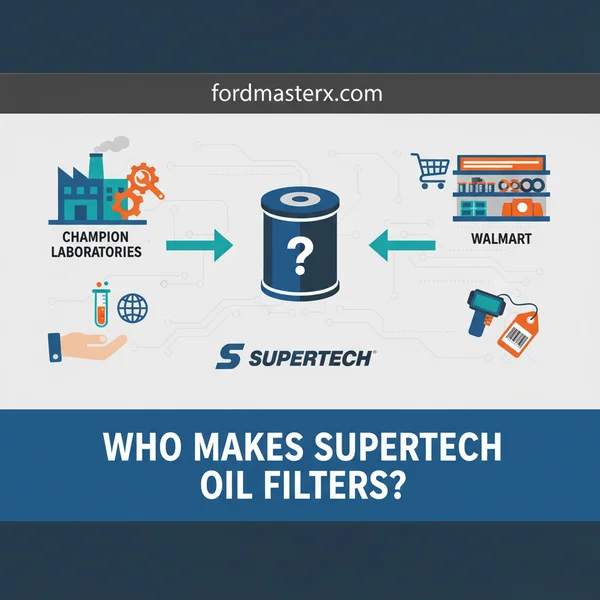
Champion Laboratories (First Brands Group) is the primary manufacturer responsible for producing Walmart’s Super Tech oil filters. These filters are highly regarded for offering premium internal components similar to those found in expensive name-brand filters at a fraction of the cost.
🎯 Key Takeaways
Recommended Best Deal Products


- Champion Laboratories (First Brands Group) is the primary manufacturer for Walmart.
- Super Tech filters often share internal components with Mobil 1 and STP.
- The MP (Maximum Protection) line features synthetic blend media for 10,000+ miles.
- Most Super Tech filters utilize durable metal end caps and silicone valves.
- They offer nearly 99% filtration efficiency, rivaling top-tier aftermarket brands.
Walmart’s Super Tech oil filters are manufactured by Champion Laboratories, Inc., which is currently a subsidiary of the First Brands Group. When you pull a Super Tech filter off the shelf, you are holding a product made by one of the largest and most established automotive filtration companies in the world. You aren’t buying a generic “mystery” product; you are purchasing a white-labeled filter produced in the same facilities that manufacture several premium national brands.
Understanding this connection is vital for your vehicle’s maintenance strategy and your wallet. It means you can access high-quality engineering and rigorous manufacturing standards without paying the “brand name tax” associated with heavy marketing budgets. For many drivers, the realization that a $3 to $5 filter shares the same DNA as brands costing triple that amount is a total game-changer for routine oil changes.

Prime for Young Adults — 6 Months Free
Students and 18–24s get six months of Prime free, then half price.
Start 6 Months Free As an Amazon Associate I earn from qualifying purchases.Identifying the Manufacturer: Champion Laboratories and First Brands Group
The primary producer for the Super Tech line is Champion Laboratories (often called Champ Labs). Based in Albion, Illinois, this company has been a cornerstone of the American automotive industry for decades. Recently, they became part of the First Brands Group, a massive conglomerate that also owns iconic names like FRAM, TRICO, and Raybestos. This merger has consolidated some of the best engineering minds in the business under one roof, directly benefiting the Super Tech product line.
The “Champ” Labeling and Production Quality
You can often verify the manufacturer yourself by looking at the base plate or the packaging codes. Champion Laboratories uses specific date codes and design hallmarks that are distinct to their production lines. Because they produce millions of filters annually for various retailers, they utilize high-speed, automated assembly processes that ensure consistency across every unit. You get the same level of precision in a Super Tech filter that a professional mechanic expects from a specialized industrial filter.
- Manufacturing Scale: Champ Labs operates some of the largest ISO-certified filtration plants in the United States.
- Contract Manufacturing: They specialize in “Private Label” products, meaning they build to the specifications requested by the retailer, in this case, Walmart.
- Rigorous Testing: Every filter design undergoes multi-pass efficiency testing and burst strength analysis to meet or exceed OEM (Original Equipment Manufacturer) requirements.
The First Brands Group Synergy
Since the acquisition by First Brands Group, the manufacturing landscape for Super Tech has become even more robust. This group manages multiple filter tiers, allowing them to share technology and material sourcing across different brands. When First Brands develops a more efficient synthetic media or a more durable gasket, those innovations often trickle down to the Super Tech line. You are essentially benefiting from the research and development budgets of high-end performance brands.
From Start to Finish: SuperTech Oil Filter Manufacturers Explained
Recommended Best Deal Products


SuperTech is one of the most popular house brands in the automotive world, primarily sold through Walmart. While Walmart markets these filters, they do not actually manufacture them. Understanding who is behind the production of your oil filter is crucial for vehicle maintenance, as different manufacturers use different filtration media, valve designs, and construction standards. This guide provides a comprehensive walkthrough on how to identify the specific manufacturer of your SuperTech oil filter, decoding the hidden industry markers that reveal the true origin of the product. By following these steps, you can ensure you are getting the filtration quality your engine requires for long-term health.
Step 1: Inspect the Exterior Packaging and Labeling
What you need: An unopened or original SuperTech oil filter box and a bright light source.
Instructions: Start by examining the “Distributed By” section on the back or bottom of the box. While it will always list Walmart Inc., the fine print often includes a country of origin. Historically, SuperTech filters have been manufactured by Champion Labs (now part of First Brands Group). Look for a specific font style and the presence of a “Product of USA” or “Product of Mexico” stamp. Champion Labs typically produces the majority of the “ST” (Standard) and “MP” (Maximum Performance) lines. Pay close attention to the barcode; the first few digits (UCC prefix) can sometimes be traced back to the parent company, though this is less reliable than physical markings on the filter itself.
Pro Tip: Look for a small “Made in USA” stamp near the bottom flap of the box; this is a classic hallmark of Champion Labs production facilities located in Illinois or South Carolina.
Step 2: Decode the Manufacturing Date Stamp
What you need: The oil filter and a magnifying glass (optional).
Instructions: On the dome (the very top) or the side of the metal canister, you will find an alphanumeric string ink-jetted onto the surface. This is the manufacturing code. For SuperTech filters made by Champion Labs, this code often follows a Julian date format (e.g., A123B). The first letter usually represents the factory, the next three digits represent the day of the year, and the final characters represent the shift or year. If the code starts with a “Y” or “BA,” it might indicate a different contract manufacturer like Wix (Mann+Hummel). Identifying this code allows you to cross-reference it with known manufacturer stamping patterns found in automotive databases.

Audible — Listen Free for 30 Days
One free credit a month and thousands of titles included.
Listen Free for 30 Days As an Amazon Associate I earn from qualifying purchases.Pro Tip: If the ink is faint, tilt the filter under a LED light; the indentation from the inkjet pressure often leaves a visible trail even if the ink has rubbed off.
Step 3: Analyze the Base Plate Hole Configuration
What you need: The oil filter and a set of calipers or a ruler.
Instructions: Turn the filter over to look at the base plate—the heavy metal plate with the threaded hole. Count the number of inlet holes (the smaller holes surrounding the center). Champion Labs-produced SuperTech filters frequently feature eight medium-sized circular holes. Older Wix-manufactured versions might have six larger, slightly oblong holes. Additionally, look at the shape of the crimp where the canister meets the base plate. A “heavy” rolled crimp is characteristic of the Champion Labs “Ecore” design, which is a patented construction method used to improve pressure resistance and reduce waste during the manufacturing process.
Pro Tip: Avoid filters that have ragged or uneven edges on the inlet holes, as this indicates poor quality control regardless of who the primary manufacturer is.
Step 4: Examine the Internal Bypass Valve Material
What you need: A small flashlight and a thin non-marring probe (like a plastic chopstick).
Instructions: Peer down the center threaded hole of the filter using your flashlight. You are looking for the bypass valve, which is designed to allow oil to circulate if the filter media becomes clogged. If the valve you see at the bottom is a metallic spring-loaded disc, it is likely a traditional Champion Labs or Purolator build. However, if you see a black or blue plastic (nylon) “clicker” style valve, this is a definitive sign of the Champion Labs Ecore design. This specific nylon bypass valve is a proprietary technology and is one of the most reliable ways to confirm that the filter was made in a First Brands Group facility.
Pro Tip: Gently press the valve with your probe to ensure it moves freely; a stuck bypass valve is a manufacturing defect that can lead to engine starvation.
Step 5: Identify the Center Tube Construction
What you need: A flashlight.
Instructions: Look inside the center of the filter again to inspect the “core” or center tube. Traditional oil filters use a perforated metal tube to support the filter media. Many SuperTech filters (specifically the ST line) utilize a black plastic cage instead of a metal tube. This is known as the “Ecore” cage. This design was pioneered by Champion Labs to provide better flow and more consistent support for the synthetic-blend media. If you see a spiral-wound metal tube with louvers (slits) rather than holes, the filter may have been produced by Purolator (Mann+Hummel), though this is increasingly rare for the SuperTech brand in recent years.
Pro Tip: The plastic cage design is often criticized by “old school” mechanics, but it actually provides more surface area for oil flow than traditional perforated metal tubes.
Audible Premium Plus — Annual Membership
12 audiobook credits up front, plus the full Audible catalogue.
See Annual Plans As an Amazon Associate I earn from qualifying purchases.Step 6: Check the Anti-Drainback Valve (ADBV) Color
What you need: Visual inspection of the filter base.
Instructions: Look through the inlet holes at the rubber flap just behind the base plate. This is the anti-drainback valve. On the standard SuperTech (Blue/White box) filters, this is usually a black nitrile rubber. On the “Maximum Performance” (MP) SuperTech filters (Silver/Black box), this valve is often orange or red, indicating it is made of silicone. Champion Labs uses specific shades of orange for their high-end silicone valves. If the valve is a dull grey or bright yellow, it suggests a different subcontractor or a change in the material supply chain. Silicone is preferred because it remains flexible in extreme cold and resists heat better than nitrile.
Pro Tip: Use your fingernail to gently move the flap; if it feels stiff or plastic-like, it is likely nitrile and should be used for shorter oil change intervals.
Step 7: Compare Part Number Suffixes
What you need: Access to a cross-reference catalog or Walmart’s automotive aisle.
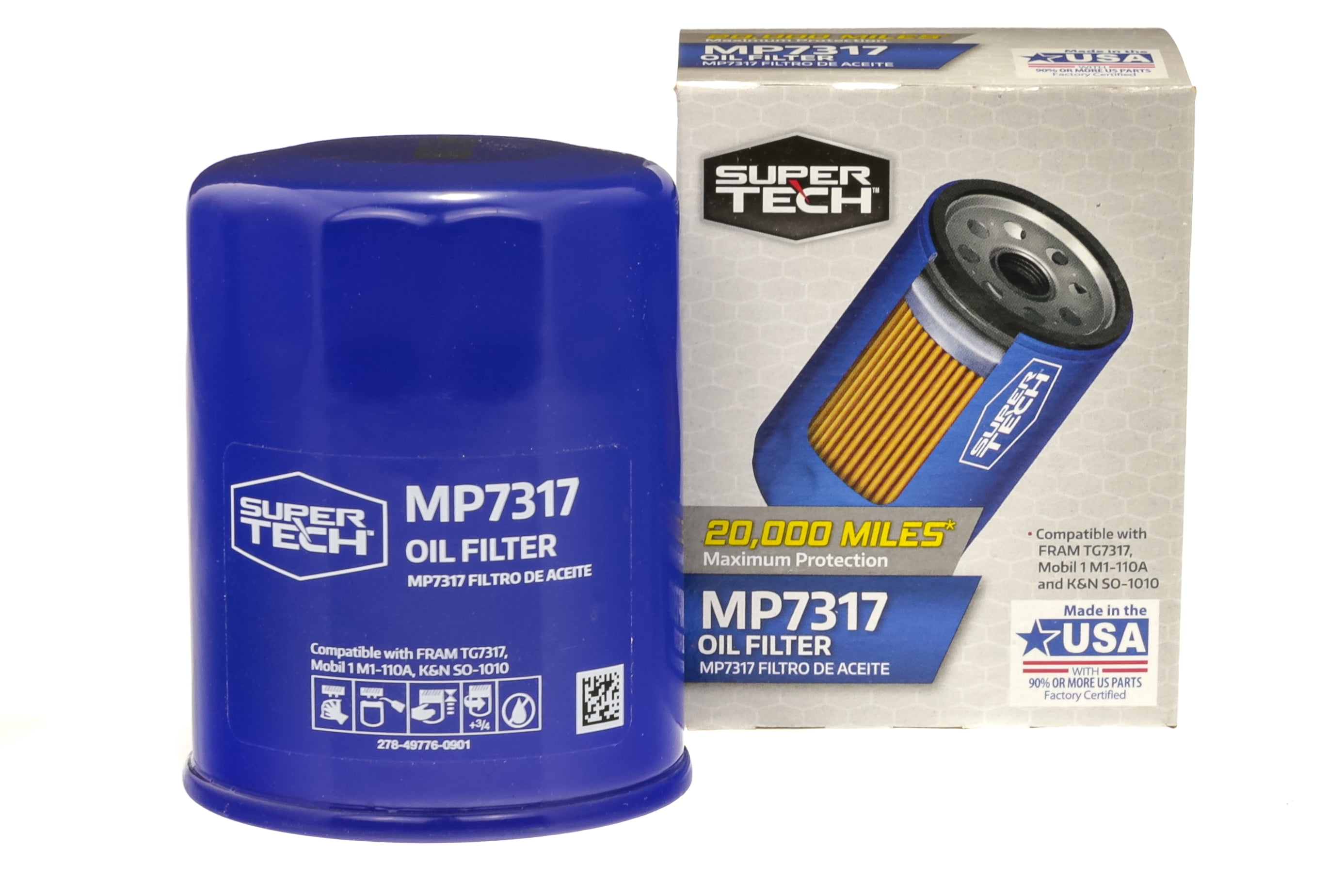
Instructions: Look at the part number on the box, such as “ST7317” or “MP7317.” The “ST” stands for SuperTech, and the “MP” stands for Maximum Performance. These numbers often mirror the “PH” (Fram) or “L” (Purolator) numbering systems. If the SuperTech part number perfectly matches the “Champ” brand part number (e.g., PH2835 vs ST2835), it is a strong indicator of a Champion Labs origin. Furthermore, check for a “Made in” stamp on the canister itself. Recently, some SuperTech filters have appeared with “Made in Vietnam” or “Made in China” stamps, which indicates a shift away from Champion Labs to global sourcing partners like Premium Guard or GKI.
Pro Tip: If the filter is Made in Vietnam, it is almost certainly produced by a third-party contractor and will not feature the Ecore plastic cage design.
✅ Final Checklist
- Verified the manufacturer address or country of origin on the packaging.
- Decoded the Julian date stamp on the filter dome to confirm factory location.
- Identified the internal core material (plastic cage vs. metal tube).
- Checked the bypass valve type (metal disc vs. nylon clicker).
- Inspected the anti-drainback valve material (nitrile vs. silicone).
Important Notes:
- Safety First: Never attempt to disassemble a pressurized or used oil filter without proper safety gear, as internal springs can be under tension.
- Contract Changes: Walmart frequently puts their manufacturing contracts out for bid. The company that made your filter last year may not be the one making it this year. Always check the “Made In” stamp.
- Estimated Cost: SuperTech filters typically range from $3.97 to $7.48. Despite the low cost, the Champion Labs-made versions are widely considered to be high-quality “bang-for-your-buck” options.
- Time Requirement: Identification takes approximately 5–10 minutes of visual inspection.
Quality Comparison: Super Tech vs. Premium Name Brands
The most common question drivers ask is whether Super Tech is a “cheap” filter in terms of quality. When you compare the internal components of a Super Tech filter against premium brands like Mobil 1 or Royal Purple—many of which are also produced by Champion Laboratories—the similarities are striking. While there are some differences in the “bells and whistles,” the core functionality often remains remarkably similar across these price points.
📤 Share
💾 Download
Internal Components and Media Efficiency
The heart of any filter is the media, and Super Tech filters typically use a cellulose and synthetic blend. This media is designed to trap particles as small as 20 microns with high efficiency. In many independent tests, Super Tech filters have shown a 99% filtration efficiency rating, which rivals the performance of filters costing twice as much. You get a pleated design that maximizes surface area, ensuring the filter doesn’t clog before your next service interval.
- Bypass Valves: Most Super Tech filters feature a sturdy bypass valve designed to ensure oil flow even if the media becomes restricted or during cold starts.
- End Caps: While some budget filters use cardboard end caps, many Super Tech models utilize metal or high-strength engineered composites to maintain structural integrity under pressure.
- Anti-Drainback Valves: These filters often use Nitrile or Silicone valves (depending on the specific model) to prevent oil from draining out of the filter when the engine is off, reducing wear during startup.
The “MP” vs. Standard Super Tech Lines
It is important to distinguish between the standard Super Tech filter and the “Maximum Performance” (MP) version. The MP line is Walmart’s answer to high-mileage synthetic filters. It often features a fully synthetic media reinforced with a wire backing and a silicone anti-drainback valve. When you cut these open and compare them to premium “Extended Performance” brands, the component quality is often nearly identical. You are essentially getting a 10,000 to 15,000-mile filter for the price of a competitor’s entry-level product.
By using the same heavy-duty canisters and thick base plates found in more expensive lines, Super Tech filters provide excellent resistance to stone chips and road debris. For the average commuter, the value proposition is hard to ignore: you are receiving a professionally engineered, American-made product that meets the warranty requirements of your vehicle manufacturer.
Decoding the Product Line: Super Tech ST vs. MP Series
Recommended Best Deal Products

When you browse the automotive aisle at Walmart, you’ll notice that Super Tech offers two primary tiers of oil filters. While they may look similar at a glance, understanding the internal differences is key to choosing the right level of protection for your engine’s specific needs.
The Standard ST Series (Blue Can)
The ST Series is the “budget-friendly” workhorse of the lineup. Usually identified by its blue exterior, this filter is designed for drivers who follow traditional maintenance schedules. It uses a blend of cellulose and glass fibers to provide reliable filtration for standard driving conditions. It is best suited for 3,000 to 5,000-mile oil change intervals using conventional or synthetic blend oils.
The Maximum Protection MP Series (White Can)
If you prefer synthetic oil or have a longer commute, the MP Series is the superior choice. This “white can” version is engineered to handle the extended drain intervals common in modern vehicles. It is generally rated for up to 10,000 miles of service. The internal components are significantly beefed up to handle the extra stress of long-term use.
- Synthetic Blend Media: The MP series utilizes a higher concentration of synthetic fibers, which allows for better flow while trapping smaller contaminants.
- Silicone Anti-Drainback Valve: Unlike the nitrile rubber used in many basic filters, the silicone valve stays flexible in extreme cold and resists heat, preventing “dry starts” in the morning.
- Enhanced Structural Integrity: The internal center tube is often reinforced to prevent media collapse during high-pressure situations.
Pro Tip: Even if you are on a tight budget, upgrading to the MP series is usually only a couple of dollars more. If you live in a climate with freezing winters, the silicone valve alone makes the MP series worth the small price increase.
The Value Proposition: Why the Low Price Doesn’t Mean Low Quality
It is a common misconception in the car world that a lower price tag automatically equates to a “cheap” product. With Super Tech, the low price is a result of massive retail scale rather than cutting corners on safety. Because Walmart moves millions of units, they can offer Champion Laboratories‘ engineering at a fraction of the cost of “boutique” brands.
Manufacturing Efficiencies and Scale
The “secret sauce” behind the value of Super Tech is the lack of marketing overhead. When you buy a premium name-brand filter, a portion of that $15 to $20 price tag goes toward television commercials, NASCAR sponsorships, and flashy packaging. Super Tech skips the glitz. You are paying strictly for the metal, the media, and the manufacturing process. Because the design is standardized across millions of units, the production cost per filter drops significantly without sacrificing the quality of the raw materials.
Reliability and Testing Standards
Super Tech filters are built to meet or exceed OEM (Original Equipment Manufacturer) requirements. This means they must pass the same rigorous ISO and SAE testing standards as the filters that come on your car from the factory. Independent laboratory tests frequently show that the MP series achieves a 99% filtration efficiency at 30 microns, putting it in direct competition with filters that cost twice as much.
- Warranty Safe: Using a Super Tech filter will not void your vehicle’s factory warranty, as they are manufactured to meet the specific flow and pressure bypass specs of your engine.
- Heavy-Duty Construction: The canisters are made of thick-gauge steel to resist punctures from road debris, a common failure point in ultra-cheap off-brand filters.
- Consistency: Because they are produced by one of the world’s largest filtration companies, the quality control is exceptionally high compared to “white label” filters found on discount websites.
Final Thoughts on Super Tech Filters
The truth about Super Tech oil filters is that they are one of the best-kept secrets in the automotive world. By sourcing their products from a reputable giant like Champion Laboratories, Walmart provides a filter that balances high-end protection with an unbeatable price point. Whether you are maintaining a high-mileage daily driver or a newer vehicle, these filters offer the peace of mind you need without the “brand name” tax.
If you are ready to save on your next oil change, your next step is simple: check your owner’s manual for your filter size and head to the automotive section. Opt for the MP Series if you want the best possible protection for your synthetic oil. Don’t let the low price fool you—your engine is in good hands with a filter that prioritizes performance over marketing.
❓ Frequently Asked Questions
Is Champion Laboratories a reputable manufacturer?
Champion Laboratories is one of the largest and most respected filter manufacturers in the world, producing original equipment (OE) filters for major automakers and premium aftermarket brands like Mobil 1.
How do Super Tech filters compare to Fram filters?
Many automotive enthusiasts prefer Super Tech over basic Fram models because Super Tech often uses metal end caps and sturdier center tubes compared to Fram’s fiber end caps.
What are the differences between the Super Tech ST and MP models?
The ST line is a standard filter for 5,000-mile intervals, while the MP (Maximum Protection) line uses synthetic-blend media and silicone valves for intervals up to 10,000 miles.
Why are Super Tech oil filters so much cheaper than other brands?
Walmart’s massive scale and private-labeling strategy allow them to eliminate high marketing and distribution costs, passing the savings directly to the consumer.
Have there been any recent changes to the Super Tech manufacturer?
While Walmart occasionally reviews its supplier contracts, Champion Laboratories has remained the consistent primary producer for the Super Tech filter line for several years.
Do Super Tech filters use silicone or nitrile bypass valves?
The premium MP (Maximum Protection) filters typically use silicone anti-drainback valves, which stay flexible longer than the nitrile valves found in cheaper filters.