6.0 Powerstroke Intake Manifold Upgrade: Best Brands & Gains

Upgrading your 6.0 Powerstroke intake manifold is the most effective way to eliminate the factory unit’s restrictive air distribution, which often starves rear cylinders. High-flow options like the Odawg S2 or S3 can reduce EGTs by up to 150°F while significantly improving throttle response and turbo spool-up.
🎯 Key Takeaways
Recommended Best Deal Products


- Rear cylinders 7 and 8 suffer from stock manifold air starvation.
- Odawg Diesel S2/S3 manifolds are industry leaders for balanced airflow.
- Expect EGT reductions of 50°F to 150°F depending on your setup.
- Ported stock manifolds offer a budget-friendly alternative to full castings.
- Most performance intakes require an EGR delete or bypass kit.
Upgrading your 6.0 Powerstroke intake manifold is the most effective way to drop EGTs by 50°F to 150°F and fix the engine’s inherent air distribution imbalance. If you are running a tuned truck or a larger-than-stock turbo, the factory manifold is a literal bottleneck that starves your rear cylinders of oxygen. The performance gain is absolutely worth the cost if you prioritize engine longevity and towing efficiency, as it balances the workload across all eight cylinders rather than overworking the ones at the back.

Prime for Young Adults — 6 Months Free
Students and 18–24s get six months of Prime free, then half price.
Start 6 Months Free As an Amazon Associate I earn from qualifying purchases.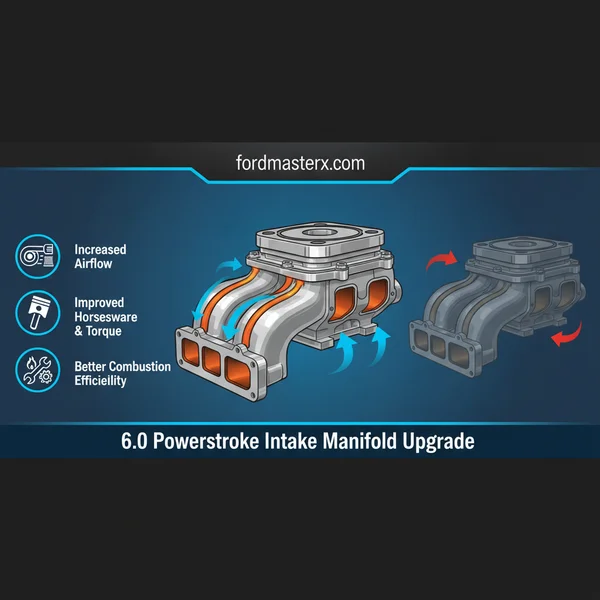
By replacing the restrictive factory log design, you allow the engine to breathe more efficiently throughout the entire RPM range. This results in quicker turbo spool-up, smoother idle, and a noticeable reduction in smoke. More importantly, it addresses the “dead zones” in the factory plenum that lead to localized overheating and premature component failure. You aren’t just buying horsepower; you are buying thermal headroom for your engine.
Airflow Dynamics and Rear-Cylinder Starvation in the 6.0 Powerstroke
The factory 6.0 Powerstroke intake manifold is a “log-style” design that was built for compact packaging rather than performance. Because the air enters from the top-center and must travel through narrow, restrictive channels, it does not distribute evenly. In a stock setup, the air tends to rush past the middle cylinders and hit a “dead end” at the back of the manifold. This creates massive turbulence and pressure drops before the air ever reaches the intake valves.

The Problem with the Factory Log Design
Cylinders 7 and 8 are notorious for running hotter than the rest of the engine. In the stock configuration, these rear cylinders are consistently starved of fresh air. While your mass airflow sensor sees enough total air for the engine, the actual volume reaching the back of the block is significantly lower than what the front cylinders receive. This creates a “rich” condition in the rear, which spikes temperatures and increases stress on the head gaskets. Key issues include:
- Turbulent Airflow: The sharp angles in the factory casting create “tumbling” air that slows down velocity.
- Pressure Imbalance: Front cylinders often receive higher boost pressure than the rear cylinders.
- Heat Soaking: The cramped design of the factory manifold retains more heat, warming the intake air before it enters the head.
How Airflow Balancing Reduces Exhaust Gas Temperatures (EGTs)
When you install a high-flow manifold, you are equalizing the air-to-fuel ratio across the entire engine. When every cylinder gets the same amount of oxygen, the combustion process becomes more efficient. You no longer have two cylinders running excessively hot while the others carry the slack. This balance is exactly why users see such a dramatic drop in EGTs during heavy towing. By providing a clear, high-volume path for the air, you reduce the “pumping losses” the engine experiences, meaning the turbo doesn’t have to work as hard to move the same amount of mass through the intake.
How to Upgrade Your 6.0 Powerstroke Intake Manifold Like a Pro: A Practical Walkthrough
The Ford 6.0L Powerstroke diesel is a powerhouse, but its factory intake manifold is often a bottleneck for performance and a common source of boost leaks and carbon buildup. Upgrading to a high-flow or ported intake manifold can significantly reduce Exhaust Gas Temperatures (EGTs), improve throttle response, and increase overall engine efficiency. This guide covers the comprehensive process of removing the factory unit and installing a performance upgrade, ensuring you achieve a perfect seal and maximum airflow. Following these steps carefully is critical because the 6.0 engine bay is cramped, and improper installation can lead to coolant leaks or turbocharger issues.
Step 1: Preparation and Fluid Management
What you need: 10mm and 13mm sockets, drain pan, 3 gallons of fresh Rotella ELC coolant (or equivalent), and battery terminal puller.
Instructions: Safety begins with disconnecting the power. Use a 10mm wrench to disconnect both negative battery terminals to prevent any electrical shorts while working around the Fuel Injection Control Module (FICM). Next, you must drain the cooling system. Locate the petcock on the bottom driver’s side of the radiator. Drain approximately 3 to 4 gallons of coolant into a clean container; you need the level to be below the intake manifold to prevent coolant from pouring into your intake ports later. Finally, remove the plastic decorative “6.0” engine cover and the air intake assembly (filter box and bellows) to expose the upper engine components.
Pro Tip: Use a dedicated “bolt organizer” or a piece of cardboard with holes poked in it to label and store every bolt you remove. The 6.0 has various lengths of 10mm bolts that look similar but are not interchangeable.
Step 2: FICM and Wiring Harness Removal
What you need: 10mm deep well socket, flat-head screwdriver, and electrical contact cleaner.

Audible — Listen Free for 30 Days
One free credit a month and thousands of titles included.
Listen Free for 30 Days As an Amazon Associate I earn from qualifying purchases.Instructions: The FICM sits directly on top of the intake manifold. Remove the four 10mm nuts securing the FICM to its mounting brackets. Carefully lift the FICM and use a flat-head screwdriver to gently depress the tabs on the three large electrical connectors underneath. These connectors are notorious for becoming brittle due to engine heat, so apply pressure evenly to avoid snapping the plastic clips. Once the FICM is removed, move the main engine wiring harness out of the way. You may need to snip several plastic zip ties. Lay the harness over the driver’s side fender to clear your workspace for the manifold extraction.
Pro Tip: Inspect the FICM harness pins for any signs of “greening” or corrosion. If you see debris, hit it with electrical contact cleaner before reassembly to prevent future misfire codes.
Step 3: Turbocharger Removal
What you need: 11mm deep well socket (for boots), 12mm 12-point socket (for turbo mounting bolts), and 13mm wrench.
Instructions: You cannot remove the intake manifold without pulling the turbo. Start by loosening the clamps on the CAC (Charge Air Cooler) pipes and removing them. Disconnect the exhaust backpressure sensor tube and the VGT solenoid plug. Use a 13mm wrench to remove the turbo oil supply line from the top of the turbo. The most difficult part is the marmon clamp on the turbo exhaust inlet (the Y-pipe); use a long extension to reach this from the passenger side. Finally, remove the three 12-point 12mm bolts securing the turbo to the pedestal. Carefully lift the turbo out of the engine bay—it weighs about 45 lbs, so watch your back.
Pro Tip: Spray the turbo mounting bolts and the exhaust clamps with high-quality penetrating oil (like PB Blaster) 24 hours before you start the job to prevent snapped bolt heads.
Step 4: Fuel Line and Filter Housing Disconnection
What you need: 24mm socket (for fuel cap), 6mm Allen key, and a rag for fuel spills.
Instructions: To clear the front of the manifold, you must address the secondary fuel filter housing. Unscrew the fuel cap to relieve pressure, then use a 6mm Allen or a specific fuel line tool to disconnect the lines leading to the heads. You do not necessarily need to remove the entire filter housing, but most technicians find it easier to unbolt it (three T40 Torx bolts) and set it aside to gain full access to the front intake bolts. Be prepared with rags, as a small amount of diesel will spill from the lines. Ensure no fuel enters the open turbo oil drain hole.
Pro Tip: Stuff a clean, lint-free rag into the turbo oil drain hole immediately after the turbo is removed. Dropping a bolt down this hole usually requires pulling the engine to retrieve it.
Step 5: Manifold Extraction and Cleaning
What you need: 10mm socket, long extension, shop vacuum, and brake cleaner.
Instructions: There are 10 bolts on each side of the intake manifold. Using a 10mm socket, remove these in a reverse-spiral pattern starting from the outside and moving inward. Note that the rear-most bolts on the passenger side are difficult to see; use a mirror if necessary. Once all bolts are out, the manifold may still be “stuck” due to the EGR cooler connection. Gently pry upward. Once the manifold is out, the most critical step is cleaning. Use a shop vac to suck out any soot or debris around the intake ports on the cylinder heads. Use a plastic scraper and brake cleaner to ensure the mating surfaces are perfectly shiny and flat.
Audible Premium Plus — Annual Membership
12 audiobook credits up front, plus the full Audible catalogue.
See Annual Plans As an Amazon Associate I earn from qualifying purchases.Pro Tip: Never use a metal wire wheel on the cylinder head mating surfaces. The aluminum is soft, and any gouges created will lead to persistent boost leaks that are impossible to seal with a standard gasket.
Step 6: Installing the Upgraded Manifold
What you need: New intake manifold gaskets, anaerobic sealant (if required by your specific kit), and an inch-pound torque wrench.
Instructions: Place your new gaskets onto the cylinder heads. Most performance manifolds use high-quality silicone-beaded gaskets that do not require extra RTV, but check your manufacturer’s instructions. Lower the new manifold carefully into place, ensuring it aligns with the EGR cooler “blue hose” or EGR delete pipe. Hand-start every single one of the 20 bolts to ensure nothing is cross-threaded. Using your torque wrench, tighten the bolts in a spiral pattern starting from the center and working outward. Perform the torque in two passes: first to 50 inch-pounds, then a final pass to 96 inch-pounds (8 foot-pounds).
Pro Tip: If you are using an “O-ringed” manifold, ensure the O-rings are seated perfectly in their grooves. A dry assembly is usually best, but a tiny dab of grease can help hold the O-ring in place during the flip.
Step 7: Reassembling the Top End
What you need: New turbo mounting O-rings, 12mm 12-point socket, and 13mm socket.
Instructions: Reinstall the turbocharger pedestal (if removed) and the turbo itself. It is vital to use new O-rings on the turbo oil supply and drain lines; old rings are compressed and will leak under the high oil pressure of the 6.0 system. Reconnect the exhaust Y-pipe to the turbo, ensuring the V-band clamp is seated perfectly—this is often where “hissing” sounds come from after a job. Reinstall the fuel filter housing, the FICM brackets, and the FICM itself. Reconnect the wiring harness, ensuring you hear a distinct “click” when plugging the connectors back into the FICM.
Pro Tip: Before tightening the turbo V-band clamp, tap it lightly with a rubber mallet as you tighten the nut. This helps the flange seat evenly around the entire circumference, preventing exhaust leaks.
Step 8: Final Fluids and System Priming
What you need: Fresh coolant, funnel, and a battery charger.
Instructions: Refill the degas bottle with the coolant you drained (or new ELC). Reconnect the battery terminals. Because the fuel lines were opened, the truck will not start immediately. Turn the key to the “On” position for 30 seconds to let the fuel pump prime the system; repeat this 3-5 times. Once primed, crank the engine. It may run rough for a few minutes as air is purged from the fuel rails. Monitor the coolant level as the engine reaches operating temperature, as the thermostat will open and the level will drop. Top off as needed and check for any signs of oil, fuel, or coolant leaks around the new manifold.
Pro Tip: Keep an eye on your boost gauge during the first test drive. If you cannot reach your usual peak boost (typically 22-26 PSI on a stock turbo), you likely have a leak at one of the CAC boots or the manifold gasket.
✅ Final Checklist
- Confirm all 20 intake manifold bolts are torqued to exactly 96 inch-pounds.
- Ensure the turbo oil feed line is secured and the new O-ring is not pinched.
- Verify all three FICM connectors are fully seated and “clicked” into place.
- Check that the coolant level in the degas bottle is at the “Minimum” line when cold.
- Inspect the Y-pipe to turbo connection for any soot or exhaust smell after the first heat cycle.
Important Notes:
- Safety Warning: Always wear eye protection when working with pressurized fuel and cooling systems. Diesel fuel under pressure can penetrate the skin.
- Professional Help: If you find heavy oil pooling in the intake valley, it may indicate a failing High Pressure Oil Pump (HPOP) STC fitting. This is the best time to replace it; seek a professional if you aren’t comfortable opening the HPOP cover.
- Estimated Time: 6 to 10 hours depending on experience level and tool availability.
- Estimated Cost: $400 – $1,200 (Cost varies significantly between a DIY ported manifold and a high-end billet aftermarket unit).
Comparative Analysis: Odawg Diesel vs. Beans and Sinister Diesel
Choosing the right manifold usually comes down to a choice between a “modified stock” unit and a “full aftermarket casting.” Both styles aim to solve the airflow bottleneck, but they do so using different engineering philosophies. Understanding the difference in volume and flow characteristics is crucial for matching the manifold to your specific build goals.
Modified Stock Manifolds: The Odawg Advantage
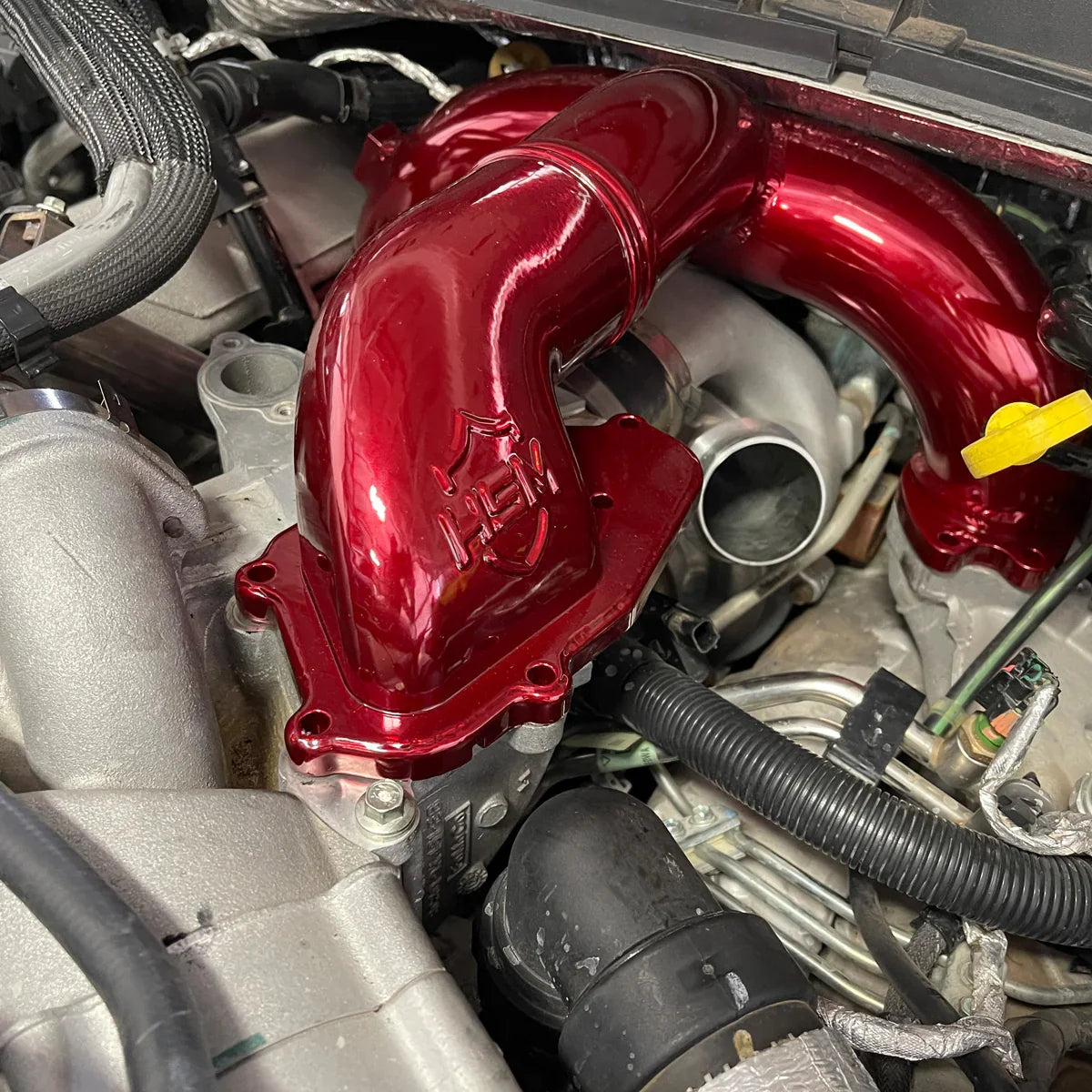
The Odawg Diesel S2 (and the more aggressive S3) is widely considered the industry standard for the 6.0 Powerstroke. Odawg takes an original equipment manufacturer (OEM) core, cuts it open, and completely removes the restrictive internal webbing. They then weld in a high-flow plenum floor. This approach offers a few specific benefits:
- Perfect Fitment: Since it starts as an OEM casting, all your stock brackets, fuel lines, and sensors bolt back up perfectly.
- Optimized Velocity: The S2 design focuses on air speed, making it the best choice for daily drivers and heavy tow rigs that need low-end torque.
- Cost-to-Performance Ratio: You get roughly 90% of the gains of a full billet manifold at a significantly lower price point.
Full Billet and Cast Alternatives: Beans and Sinister
Brands like Beans Diesel and Sinister Diesel offer manifolds that are built from the ground up as either full aluminum castings or billet pieces. These are designed for high-horsepower builds where the sheer volume of air is the priority. These manifolds typically feature much larger plenums than a modified stock unit. They are excellent for trucks running 190cc injectors or larger and high-stage turbos. However, the increased volume can sometimes lead to a slight decrease in low-end “snap” on a completely stock-turbo truck. If your goal is 600+ horsepower, the massive cross-sectional area of these full aftermarket units is necessary to prevent the manifold from becoming the primary restriction in your system.
Common features of full aftermarket castings include:
- Increased Plenum Volume: Often 20-30% more air capacity than a modified stock unit.
- Aesthetic Appeal: Many units come polished or powder-coated, significantly cleaning up the look of your engine bay.
- Built-in Ports: Usually include extra 1/8″ NPT ports for boost gauges or nitrous/methanol injection nozzles.
Performance Metrics: CFM Increases and EGT Reduction Potential
When you swap out the factory manifold on a 6.0 Powerstroke, you aren’t just looking for a shiny piece of metal under the hood. You are looking for flow. The stock manifold is notorious for its “choke points,” particularly in the rear cylinders where air distribution becomes uneven. Upgraded units, like those from Odawgs Diesel or Pusher Intakes, are engineered to smooth out these turbulent areas.
CFM Gains: Breaking Down the Numbers
In the world of diesel performance, CFM (Cubic Feet per Minute) is king. A high-quality aftermarket intake manifold can increase airflow by as much as 30% to 50% over the stock unit. This isn’t just a number on a spec sheet; it translates directly to how the engine breathes. By equalizing the air pressure across all eight cylinders, you eliminate the “dead spots” that cause the rear cylinders to run hotter than the front ones.
- Improved Throttle Response: Because the turbo can move air into the cylinders more efficiently, you will notice a significant reduction in “turbo lag.”
- More Efficient Combustion: Better airflow ensures that the fuel injected into the cylinder burns more completely, which often results in a slight bump in fuel economy.
- Cleaner Tailpipe: Efficient combustion means less unburnt fuel (soot), which is a major win for those running high-performance tunes.
Cooler Temps: The EGT Advantage
For most 6.0 owners, the biggest selling point of an intake upgrade is the reduction in Exhaust Gas Temperatures (EGTs). When you provide the engine with a more voluminous and less turbulent air supply, the engine doesn’t have to work as hard to maintain power. Many drivers report a drop of 50°F to 150°F in EGTs while towing heavy loads. This is a massive safety margin that helps prevent cracked heads and melted pistons during long climbs.
Critical Hardware and Compatibility for Intake Upgrades
Installing a performance manifold is rarely a “plug and play” affair without considering the surrounding components. The 6.0 Powerstroke engine bay is cramped, and the intake manifold sits at the heart of several critical systems. Ensuring you have the right hardware on hand before you start will save you a massive headache halfway through the job.
Essential Hardware and Gaskets
One of the most common mistakes is attempting to reuse old gaskets. The 6.0 intake manifold relies on a specific set of gaskets that must be seated perfectly to prevent boost leaks. If you are upgrading to a high-flow manifold, you should also consider upgrading your hardware. High-strength Class 10.9 bolts or even a dedicated stud kit can ensure that the manifold stays sealed even under high boost pressures exceeding 40 PSI.
- New OEM Gaskets: Always use fresh Ford or Victor Reinz gaskets for the manifold-to-head mating surface.
- Donut Gasket: Ensure the EBP (Exhaust Back Pressure) tube and the EGR cooler connections have fresh seals.
- Loctite: Use a drop of blue threadlocker on your mounting bolts to prevent them from backing out due to engine vibration.
EGR System Compatibility and Tuning
Compatibility is a major factor when choosing your manifold. Some performance manifolds, like the “S3” style, are designed to work seamlessly with EGR deletes, while others maintain a port for the EGR valve to keep your truck emissions-compliant. It is vital to verify that the manifold you choose matches your current EGR configuration. Furthermore, while a manifold upgrade doesn’t strictly require a new tune, you will see the best results when your PCM (Powertrain Control Module) is calibrated to take advantage of the increased air volume and flow characteristics.
Conclusion
Upgrading the intake manifold on your 6.0 Powerstroke is one of the most effective ways to improve the longevity and efficiency of your engine. By removing the factory bottlenecks, you allow your truck to breathe better, run cooler, and respond faster. Whether you are looking for the massive CFM gains of a race-ready manifold or the balanced cooling benefits of a ported street version, the results speak for themselves in the form of lower EGTs and smoother power delivery.
If you’re ready to take the next step, start by assessing your power goals. If you tow frequently, prioritize a manifold known for EGT reduction. If you’re chasing horsepower, look for the highest CFM ratings available. Once you have your parts, ensure you have a complete gasket kit ready to go. A well-executed intake upgrade is a foundation piece for any reliable 6.0 build—get yours ordered today and feel the difference on your next drive!
❓ Frequently Asked Questions
What is the main benefit of an aftermarket 6.0 Powerstroke intake manifold?
The primary benefit is correcting the uneven air distribution of the factory manifold, which favors front cylinders. This leads to cooler EGTs, better fuel economy, and increased longevity for cylinders 7 and 8.
How much EGT reduction should I realistically expect?
Most users report a drop of 100°F to 150°F under load or towing conditions. Performance varies based on your turbo size, injectors, and tuning configuration.
Between a ported stock and a full casting, which is better?
Full aluminum castings like the Odawg S3 offer the highest CFM and best cooling but are more expensive. Ported stock units like the S2 provide excellent value for most daily drivers and moderate towers.
Is an EGR delete necessary when upgrading the manifold?
Many high-performance manifolds are designed without EGR passages, necessitating a delete. However, some ‘street-legal’ versions maintain EGR compatibility for emissions compliance.
Will this upgrade improve my towing performance?
You will notice faster turbo spool-up and better throttle response, which significantly improves towing drivability. While peak horsepower gains are modest, the engine’s overall efficiency under load increases.
What other parts should I replace while the manifold is off?
This is the perfect time to replace the oil cooler, STC fitting, and standpipes. Since the top of the engine is open, refreshing these ‘bulletproofing’ components saves massive labor costs later.