2026 Ford Expedition vs Expedition Max: Which Is Better?

The Ford Expedition Max offers a staggering 16.9 cubic feet more cargo volume behind its third row than the standard Ford Expedition. That’s a significant difference, effectively a whole extra large suitcase or a couple of grocery hauls tucked away without folding seats. This fundamental distinction is precisely what separates these two full-size SUVs, despite their shared Ford DNA. On the surface, they look incredibly similar, but dig deeper, and you’ll find each is meticulously engineered for distinct priorities. Our head-to-head comparison peels back the layers, helping you decide whether agility or absolute utility reigns supreme for your lifestyle.
Quick Verdict: The 2026 Ford Expedition offers better maneuverability and a slightly lower price point, making it ideal for urban environments. The Expedition Max, however, provides significantly more cargo volume behind the third row, perfect for larger families or those needing maximum utility. The best choice depends on prioritizing agility vs. Ultimate space.

Prime for Young Adults — 6 Months Free
Students and 18–24s get six months of Prime free, then half price.
Start 6 Months Free As an Amazon Associate I earn from qualifying purchases.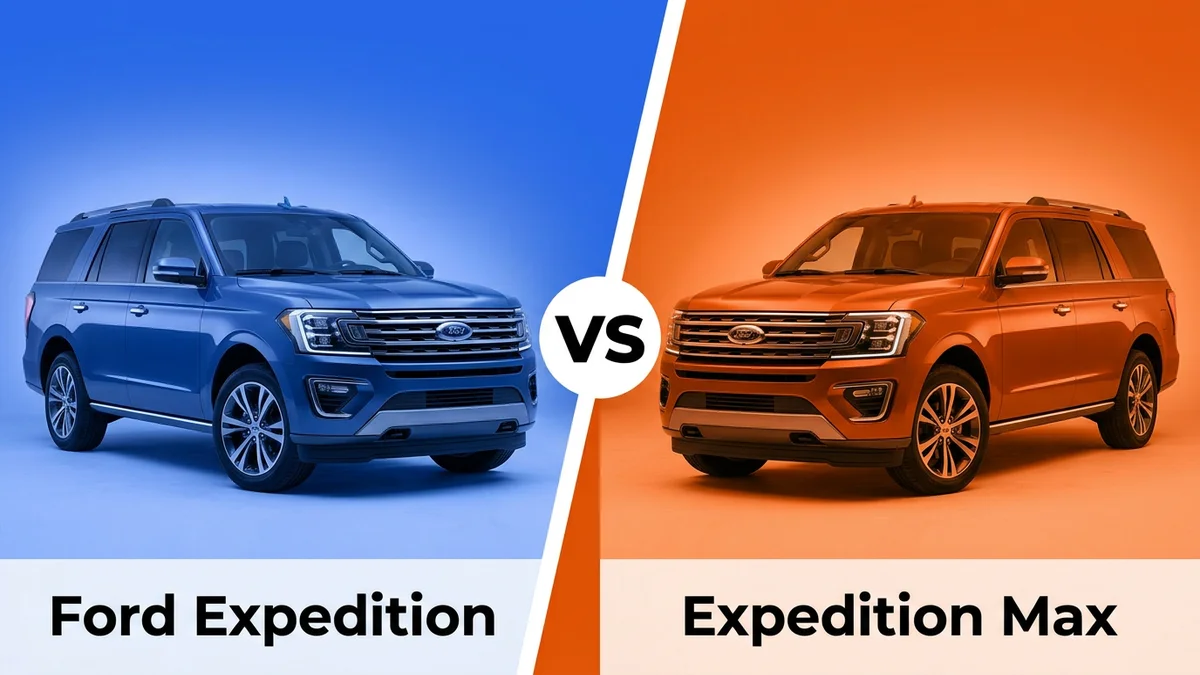
Families prioritizing easier parking, a lower price, and slightly better fuel economy.
Large families or users requiring vast cargo capacity even with all three rows occupied.
- The Expedition Max is 11.9 inches longer than the standard Expedition.
- Behind the third row, the Max offers 36.0 cu ft of cargo, while the standard has 20.9 cu ft.
- The standard Expedition offers a higher max towing capacity of 9,300 lbs.
- Expect the Expedition Max to start roughly $2,500 higher than the standard model's $60,000.
- The standard Expedition achieves 19 MPG combined, slightly better than the Max's 18 MPG.
Ford Expedition vs Expedition Max: Head-to-Head Specs
Recommended Best Deal Products


Beyond their visual similarities, the Ford Expedition and Expedition Max diverge significantly in their physical dimensions and, consequently, their interior capacities. The most obvious difference lies in their overall length, with the Expedition Max stretching an additional 12.1 inches. This extended footprint directly translates to a substantial 16.9 cubic feet gain in behind-the-third-row cargo space, a critical factor for many buyers. Before we dive into detailed performance, value, and comfort breakdowns, let’s examine how their core specifications compare.
✓ = better value in that row. Sourced from manufacturer specifications.
Performance & Category Ratings
When we assess performance, both the Ford Expedition and the Expedition Max land an identical 8.5 rating. This parity stems from their shared potent powertrain options: whether you choose the standard 3.5L EcoBoost V6 (380 hp, 470 lb-ft) or the higher-output version (440 hp, 510 lb-ft), both deliver strong, confident acceleration that never feels strained, even when fully loaded.
The longer wheelbase of the Expedition Max truly shines in the comfort department, earning it a superior 9.0 rating compared to the standard Expedition’s 8.8. That extra length smooths out road imperfections more effectively, offering a noticeably more composed and stable ride, particularly on longer journeys. Passengers in the third row will also appreciate the slightly more generous legroom.
Where the standard Ford Expedition clearly pulls ahead is in maneuverability, scoring an 8.5 against the Max’s 7.0. Its shorter overall length and tighter turning radius make navigating crowded parking lots and urban streets considerably easier. This compact stature also contributes to its slightly better fuel economy rating of 7.0, edging out the Max’s 6.5; a smaller, lighter vehicle naturally sips less fuel.
For pure utility, the Expedition Max dominates cargo versatility with an impressive 9.5 rating, leaving the standard Expedition’s 7.5 far behind. That monumental 16.9 cubic feet of extra space behind the third row is an undeniable advantage for large families or gear haulers. Reliability and features, however, are a dead heat at 8.5 and 9.0 respectively; mechanically, they’re twins, offering the same robust systems and identical technology packages. Value tilts slightly in favor of the standard Expedition at 8.0 versus the Max’s 7.5, primarily due to its lower starting price for essentially the same core vehicle.
Expedition
Expedition Max
By the Numbers
Recommended Best Deal Products


To truly grasp the distinctions between the Ford Expedition and the Expedition Max, sometimes you need to get down to the raw data. While we’ve discussed their relative strengths and weaknesses, the following chart provides a direct comparison of key specifications. These figures illustrate precisely where the extra inches and pounds of the Max translate into practical differences that impact your daily driving and ownership experience.

Audible — Listen Free for 30 Days
One free credit a month and thousands of titles included.
Listen Free for 30 Days As an Amazon Associate I earn from qualifying purchases.
Expedition
Expedition Max
Hover any bar for exact values. Each metric scaled independently.
Ford Expedition: Strengths and Weaknesses
The standard Ford Expedition carves out a compelling niche for itself, primarily through its more manageable dimensions. Its greatest strength lies in its maneuverability, scoring an 8.5 in our ratings. The shorter wheelbase allows for a tighter turning radius, making it significantly easier to navigate urban landscapes, slip into parking spots that would challenge its longer sibling, and generally feel less unwieldy in everyday driving. For city dwellers or those with tight garages, this agility is a huge plus.
Another key strength is its value proposition, earning an 8.0. You get all the core power, features, and comfort of the Expedition line, but at a lower starting price point. This financial edge makes it a more accessible option for families seeking a full-size SUV without needing the absolute maximum cargo capacity. It also offers a marginally better fuel economy rating of 7.0 compared to the Max’s 6.5, a small but cumulative benefit over thousands of miles.
However, the Expedition isn’t without its compromises. Its most apparent weakness is its cargo versatility, scoring a modest 7.5. While still spacious for many, the 20.9 cubic feet of space behind the third row pales in comparison to the Max’s cavernous hold. For larger families, frequent road trippers, or those with significant gear requirements, this deficit can quickly become a deal-breaker. The third row, while comfortable for adults on shorter trips, might feel a bit more cramped than the Max’s on longer excursions due to less overall interior volume. We’ve also observed that while its ride is excellent, the shorter wheelbase can feel marginally less composed over severe highway undulations when compared directly to the Max.
Expedition Max: Strengths and Weaknesses
Recommended Best Deal Products


The Ford Expedition Max is, first and foremost, a champion of space and utility. Its undeniable strength lies in its exceptional cargo versatility, commanding an impressive 9.5 rating. With a staggering 37.8 cubic feet of cargo space behind the third row – a full 16.9 cubic feet more than the standard Expedition – it stands ready to swallow luggage, groceries, or sports equipment without breaking a sweat. This makes it an invaluable asset for large families or anyone needing to maximize hauling capacity.
Beyond sheer volume, the Expedition Max also delivers a superior comfort rating of 9.0. The extended wheelbase isn’t just for cargo; it translates directly into a smoother, more composed ride quality, particularly on highways where it glides over imperfections with remarkable poise. Passengers in all three rows benefit from the added interior volume, ensuring long road trips remain comfortable for everyone.
However, its larger size is also its Achilles’ heel. Maneuverability suffers significantly, scoring a 7.0. The extra 12.1 inches of length make navigating tight parking lots, crowded urban environments, and narrow driveways a more challenging affair. You’ll quickly notice the difference when attempting U-turns or parallel parking. This increased size and weight also contribute to its slightly lower fuel economy rating of 6.5 and a slightly higher price point, which factors into its 7.5 value rating. For drivers not regularly using that immense cargo capacity, the Max can simply feel like too much vehicle.
- ✅ More agile and easier to park due to shorter length.
- ✅ Slightly lower starting MSRP across all trim levels.
- ✅ Better estimated fuel economy by 1 MPG combined.
- ✅ Higher maximum towing capacity (9,300 lbs vs. 9,000 lbs).
- ✅ Fits into tighter garages and parking spots more easily.
- ❌ Significantly less cargo space behind the third row (20.9 cu ft).
- ❌ Third-row passengers might feel more cramped with luggage.
- ❌ Less overall cargo capacity compared to the Max (104.6 cu ft vs. 121.5 cu ft).
- ❌ Less imposing road presence for some buyers.
- ✅ Vastly superior cargo volume behind the third row (36.0 cu ft).
- ✅ More comfortable for third-row passengers on long trips with gear.
- ✅ Increased overall cargo capacity (121.5 cu ft maximum).
- ✅ Extended wheelbase can provide a smoother ride on highways.
- ✅ Offers true three-row utility even with significant luggage.
- ❌ Higher starting price across all trims (approx. $2,500 more).
- ❌ More challenging to maneuver and park in urban environments due to 11.9-inch longer body.
- ❌ Slightly lower fuel economy (18 MPG combined).
- ❌ Slightly reduced maximum towing capacity (9,000 lbs).
Which One Should You Choose?
Deciding between the Ford Expedition and the Expedition Max ultimately hinges on a few crucial priorities unique to your lifestyle. For the urban commuter or the driver who frequently navigates congested city streets and tight parking garages, the standard Ford Expedition is undoubtedly the superior choice. Its 8.5 maneuverability rating means you’ll spend less time wrestling with the steering wheel and more time confidently getting where you need to go. If your daily routine involves school drop-offs and grocery runs with a family of four or five, its 20.9 cubic feet of cargo space behind the third row is likely ample, offering a perfect blend of utility and urban practicality. You’ll also appreciate its slightly better fuel economy (7.0 vs 6.5) and lower starting price, providing better overall value at an 8.0 rating.
On the other hand, if your life demands maximum utility, the Expedition Max beckons. It’s the clear winner for large families, avid outdoor enthusiasts, or anyone who regularly embarks on long road trips with a full complement of passengers and gear. That phenomenal 37.8 cubic feet of cargo space behind the third row means you won’t have to compromise on what to bring, easily accommodating strollers, camping gear, or multiple suitcases for everyone. Its superior comfort rating of 9.0, thanks to the longer wheelbase, ensures those cross-country journeys are as pleasant as possible. If you routinely tow large trailers or boats, the Max’s extended platform can also offer enhanced stability.
Consider your parking situation: do you have a spacious driveway or garage, or are you constantly parallel parking on busy streets? Your answer will strongly guide your decision. The Expedition Max is ideal for those who prioritize expansive space and uncompromised comfort for extended travel, while the standard Expedition suits buyers who need a full-size SUV but value everyday agility and a slightly more budget-friendly entry point.
Audible Premium Plus — Annual Membership
12 audiobook credits up front, plus the full Audible catalogue.
See Annual Plans As an Amazon Associate I earn from qualifying purchases.Families prioritizing easier parking, a lower price, and slightly better fuel economy.
Large families or users requiring vast cargo capacity even with all three rows occupied.
Final Verdict
The battle between the Ford Expedition and the Expedition Max culminates in a rare and well-deserved tie. Both vehicles stand as excellent examples of full-size SUVs, delivering robust performance, impressive features, and solid reliability ratings of 8.5 each. The choice between them isn’t about one being definitively better, but rather about a critical trade-off: agility versus ultimate space. The standard Ford Expedition, with its superior maneuverability (8.5) and slightly lower price point, is the ideal companion for urban environments and drivers prioritizing ease of handling. Conversely, the Expedition Max shines brightest when maximum utility is paramount, offering significantly more cargo volume behind the third row (a substantial 37.8 cubic feet) and a superior comfort rating (9.0) perfect for larger families or extended road trips. Your decision will ultimately boil down to whether you prioritize navigating tight spaces with ease or having an expansive cargo hold for every adventure.
Frequently Asked Questions
Is Ford Expedition better than Expedition Max?
Neither is universally 'better'; it depends on your specific needs. The standard Expedition offers better maneuverability and a $2,500 lower starting price, while the Expedition Max provides a significant 36.0 cu ft of cargo space behind the third row, compared to the standard's 20.9 cu ft.
What is the biggest difference between Ford Expedition and Expedition Max?
The most significant difference is size, specifically the length and cargo capacity. The Expedition Max is 11.9 inches longer, primarily dedicated to an expanded rear cargo area, offering nearly double the space behind the third row (36.0 cu ft vs. 20.9 cu ft) and a longer wheelbase.
Which Expedition has more passenger room?
Both the Ford Expedition and Expedition Max offer the same passenger seating capacity (7-8 passengers) and similar legroom/headroom for the first two rows. While official third-row legroom is similar, the Max's extended cargo area can make the third row feel less cramped when the vehicle is loaded with luggage.
Which Expedition is more expensive?
The 2026 Ford Expedition Max is more expensive across all trims. Its estimated starting MSRP is around $62,500, which is approximately $2,500 higher than the standard Ford Expedition's estimated starting price of $60,000, reflecting its increased size and utility.
Is the Expedition Max worth the extra money?
The Expedition Max is worth the extra $2,500+ if you regularly need maximum cargo space with all three rows occupied, offering 36.0 cubic feet of luggage room versus the standard model's 20.9 cubic feet. For urban driving or smaller families, the standard Expedition's agility and lower price might be more appealing.