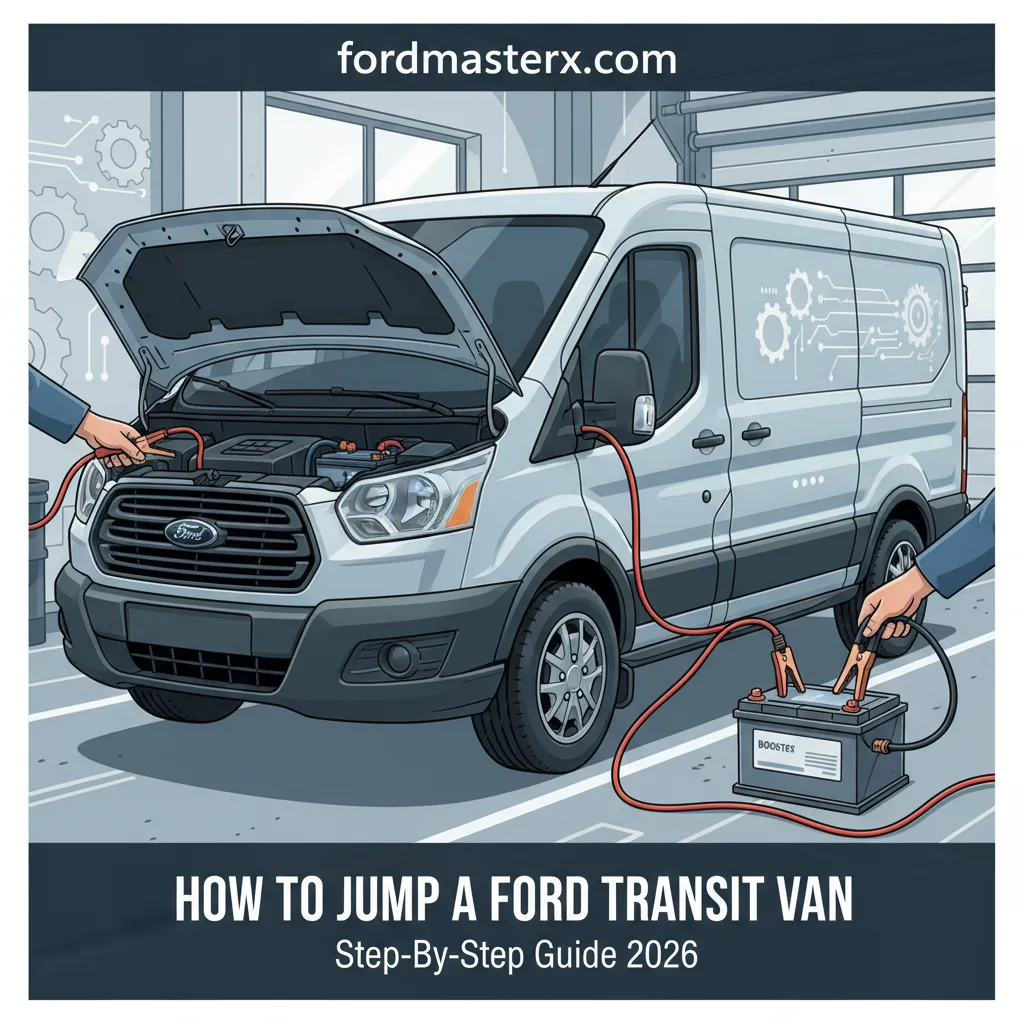
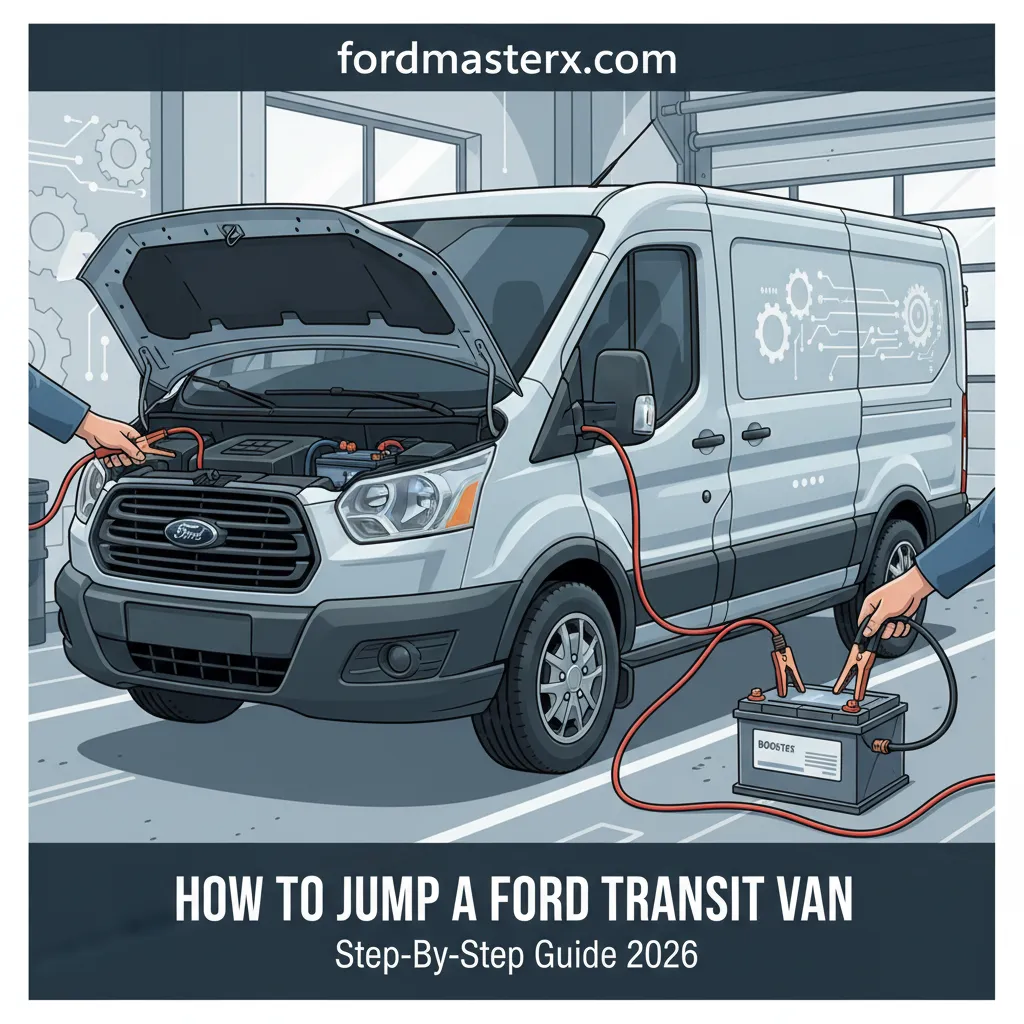
How To Jump A Ford Transit Van: Step-By-Step Guide 2026

Finding your Ford Transit van unresponsive when you turn the key can disrupt your entire day, especially when you’re on a tight schedule or need to get on the road for critical deliveries or services. A dead battery is a common inconvenience, but the process of jump-starting a commercial vehicle like a Transit requires specific knowledge and adherence to safety protocols to avoid damage and ensure a successful restart. This expert guide will equip you with the essential, step-by-step procedure to safely jump-start your Ford Transit van in 2026, empowering you to diagnose issues, execute the jump, and troubleshoot common problems with confidence, helping you learn and master this crucial skill.

Understanding Why Your Ford Transit Van Won’t Start: Common Causes of Battery Discharge
Recommended Best Deal Products

Before attempting to jump-start your Ford Transit, it’s crucial to understand the common culprits behind battery depletion. This foundational knowledge will help you not only get your van running but also prevent future occurrences. Commercial vehicles like the Ford Transit often face unique challenges that accelerate battery wear or lead to unexpected drains.
📤 Share Image
Typical reasons for battery depletion in these hard-working vans include inadvertently leaving interior lights, headlamps, or accessories (like onboard tool chargers or infotainment systems) on overnight. Even seemingly minor draws can quickly drain a battery. More insidious are consistent parasitic draws from aftermarket accessories – such as security systems, GPS trackers, or custom upfitting equipment – that pull power even when the vehicle is off. Research indicates that a typical parasitic draw should be under 50mA; anything significantly higher can slowly kill a battery over days or weeks of inactivity. Prolonged periods of inactivity, such as a Transit van parked at a worksite for two weeks in winter, also allow self-discharge to take its toll, especially in colder climates.
The average lifespan of a typical automotive lead-acid battery is generally 3-5 years. However, several factors can drastically impact its longevity and performance. Extreme temperatures are a primary antagonist; cold weather reduces a battery’s efficiency, with its Cold-Cranking Amp (CCA) capacity decreasing by 20% at 0°F (-18°C) and by an alarming 50% at -20°F (-29°C). Conversely, heat can accelerate internal corrosion and electrolyte evaporation. Frequent short trips, common for a delivery driver’s urban routes, prevent the alternator from fully recharging the battery, leading to a cumulative state of discharge. Heavy electrical loads, particularly in welfare vans or camper conversions running multiple auxiliary systems, continuously challenge the battery’s capacity.
Identifying the distinct symptoms of a truly dead battery is essential to avoid misdiagnosis. If you experience no cranking at all, dashboard lights are completely off, or you hear only a single click from the starter relay when turning the key, it strongly suggests a dead battery. These differ from symptoms of a faulty starter (e.g., rapid clicking but no engine turnover, or a grinding noise) or an alternator problem (where the van starts but dies shortly after, or the battery warning light illuminates). Some Transit configurations, particularly camper conversions or welfare vans, feature auxiliary battery systems. While these are separate, a primary battery failure can still leave the vehicle immobile. You must first ensure the starting battery has sufficient charge to turn over the engine before troubleshooting auxiliary systems.
Essential Safety Protocols and Equipment for Safely Jump-Starting a Ford Transit Van
Safety is paramount when dealing with vehicle batteries and high electrical currents. Ignoring essential safety protocols can lead to serious injury, vehicle damage, or even fire. Before you learn how to jump-start, you must understand the safety precautions.
Always begin by donning appropriate Personal Protective Equipment (PPE). This includes safety glasses to protect your eyes from potential acid splashes or sparks, and gloves to prevent contact with battery acid or electrical burns. Ensure you are working in a well-ventilated area, as batteries release highly flammable hydrogen gas during charging and discharging. An important warning: never smoke or use open flames near batteries.
Batteries can explode if improperly handled, especially when arcing occurs near hydrogen gas. Always wear PPE and follow connection procedures precisely to mitigate risk.
The quality of your jumper cables is crucial. For larger vehicles like a Ford Transit, we confidently recommend a minimum of 4-gauge or 6-gauge (AWG) cables. Undersized cables can overheat, deliver insufficient current, and fail to jump-start the van effectively. Furthermore, ensure your cables are of sufficient length, typically 16-20 feet, to comfortably reach between vehicles without having to maneuver them into unsafe positions. This is an essential tool to master for roadside emergencies.
Prior to making any connections, conduct a thorough visual inspection of both the dead Transit’s battery and the donor vehicle’s battery. Look for any signs of damage such as cracks, leaks, or heavy corrosion on the terminals. A corroded battery terminal sparking during connection is a serious hazard. If you spot significant damage or leakage, do not proceed; call for professional assistance. A fully charged 12V battery should read around 12.6-12.8 volts.

Audible — Listen Free for 30 Days
One free credit a month and thousands of titles included.
Listen Free for 30 Days As an Amazon Associate I earn from qualifying purchases.Proper positioning and preparation of the vehicles are next. Ensure both the dead Transit and the donor vehicle are on a level surface and that their engines are off. Engage the parking brakes fully on both vehicles, and place automatic transmissions in Park (P) and manual transmissions in Neutral (N). Crucially, ensure the vehicles are close enough for the cables to reach but not touching each other, which could create a dangerous electrical circuit.
Locating the battery in a Ford Transit can vary by model and configuration, which is a practical insight from hands-on experience. For many full-size Ford Transits (e.g., Transit-250, Transit-350), the main starting battery is often conveniently located under the driver’s seat, accessible by lifting a cover. In contrast, Ford Transit Connect models typically have their battery located under the hood, similar to a passenger car. Always consult your owner’s manual for the precise location and any specific jump-starting instructions relevant to your exact 2026 model year Transit. This is an essential step to ensure you are connecting to the correct terminals.
By The Numbers
Average Battery Lifespan
Recommended Jumper Cable Gauge for Vans
Maximum Healthy Parasitic Draw
50% CCA Loss at This Temperature

How to Safely Jump-Start Your Ford Transit Van: A Step-By-Step Procedure
With safety precautions understood and equipment ready, you are now prepared to master the core process of jump-starting your Ford Transit. Follow these steps precisely to ensure a safe and successful restart.

📋
Step-by-Step Guide
Park the donor vehicle close to the dead Ford Transit, ensuring the cables can reach easily, but prevent the vehicles from touching. Turn off both engines and engage the parking brakes on both vehicles. For automatics, ensure transmissions are in Park (P); for manuals, place them in Neutral (N). Locate both batteries and ensure all accessories in the dead Transit (lights, radio, AC, charging ports) are switched off to prevent further drain or electrical spikes during the jump.
Take one red (+) jumper cable clamp and attach it securely to the positive terminal (+) of the dead Ford Transit battery. The positive terminal is usually marked with a plus sign (+) and is often larger. Next, attach the other end of the red (+) cable to the positive terminal (+) of the donor vehicle’s battery. Ensure connections are firm and have good metal-to-metal contact.
Attach one black (-) jumper cable clamp securely to the negative terminal (-) of the donor vehicle’s battery. Then, and this is a critical safety step, attach the other end of the black (-) cable to a clean, unpainted metal surface on the dead Transit’s engine block or chassis. This ground point should be safely away from the battery itself, fuel lines, moving parts (like fans or belts), and any painted surfaces. A common safe point is an engine hoist loop or a sturdy metal bracket. This connection helps dissipate sparks away from the battery’s potentially explosive hydrogen gas.
Audible Premium Plus — Annual Membership
12 audiobook credits up front, plus the full Audible catalogue.
See Annual Plans As an Amazon Associate I earn from qualifying purchases.Once all cables are securely connected, start the engine of the donor vehicle. Let it run at a slightly elevated idle for 5-10 minutes. This allows the donor vehicle’s charging system, which typically operates at 13.8V-14.4V, to transfer some charge to the dead Transit’s battery, providing it with enough power to attempt a start. The larger the dead battery, the longer you might need to wait.
After the prescribed charging period, attempt to start the Ford Transit van. If it cranks slowly or doesn’t start on the first try, give it another minute or two of charging from the donor vehicle before trying again. Once the Transit starts, let both vehicles run for an additional 5-10 minutes with the cables still connected. This allows the Transit’s battery to gain a more substantial surface charge from the donor, which is vital as starting current for a large van can exceed 300 amps.
This step is as critical as connection. Carefully disconnect the jumper cables in the reverse order of connection to minimize the risk of arcing. First, remove the black (-) cable from the Transit’s chassis ground. Next, remove the black (-) cable from the donor battery. Then, disconnect the red (+) cable from the donor battery, and finally, remove the red (+) cable from the Transit’s battery. Ensure the clamps do not touch each other or any metal surfaces on either vehicle during removal. Close any battery covers or replace seats as necessary.
Post-Jump Procedures and Troubleshooting When Your Transit Still Won’t Start
Congratulations on successfully jump-starting your Ford Transit! However, the job isn’t quite finished. There are crucial post-jump actions to take, and if your van still refuses to start, a comprehensive troubleshooting approach is necessary.
Post-Jump Actions: Ensuring Lasting Power
After a successful jump-start, the alternator in your Ford Transit needs time to recharge the battery fully. We advise driving the van for at least 20-30 minutes, preferably at highway speeds. This sustained operation allows the alternator to work efficiently and restore a significant charge to the battery. Idling for long periods is far less effective. Immediately after, or as soon as practically possible, we strongly recommend having the battery and the entire charging system (including the alternator and voltage regulator) professionally tested. This will identify the underlying issue – whether it’s a weak battery, a failing alternator, or a parasitic drain – and prevent a recurrence of the dead battery scenario. A vehicle’s charging system should typically output 13.5 to 14.5 volts with the engine running, and a healthy battery should hold a surface charge of 12.6V-12.8V.
Troubleshooting Unsuccessful Jump-Starts: Why It Didn’t Work
If your Transit fails to start after following the jump-starting procedure, don’t despair. First, re-check all cable connections. Ensure they are tight, correctly oriented (positive to positive, negative to ground), and free from corrosion. Sometimes, a slight adjustment can make all the difference. Verify that the donor vehicle’s battery is healthy and capable, especially if it’s a smaller passenger car attempting to jump-start a large commercial van. The smaller battery might not have sufficient CCA to turn over the Transit’s larger engine, as a starter motor draws hundreds of amps during cranking.
If your Transit starts but then dies shortly after the cables are removed, it’s a strong indicator of an alternator problem, not just a dead battery. The alternator isn’t charging, so the van is running solely on battery power, which quickly depletes.
Diagnosing Beyond the Battery: Other Starting Issues
If repeated jump-start attempts fail, the issue likely extends beyond a simple dead battery. Here are common problems that can mimic a dead battery:
- Faulty Starter Motor: If you hear a single, loud click when turning the key, or a rapid clicking sound without the engine cranking, but the dashboard lights are bright, it often points to a failing starter motor. This requires replacement, not a jump-start.
- Alternator Failure: As mentioned, if the van starts but struggles to maintain an idle or dies when the headlights or other accessories are turned on, the alternator is likely not producing enough power. The battery warning light on your dashboard would usually illuminate.
- Severely Corroded Battery Terminals: Even if a battery has some charge, heavily corroded terminals (white or blue powdery substance) can prevent proper current flow, acting as an insulator. Clean these thoroughly with a wire brush and a battery terminal cleaner solution.
- Ignition System Issues: Problems with the ignition switch, immobilizer system, or key transponder can also prevent a start, unrelated to battery power.
- Fuel System Problems: While less common for a “no-start” scenario that feels like a dead battery, a lack of fuel delivery (e.g., faulty fuel pump) can also prevent an engine from catching, even if it cranks.
When to Call for Professional Help
If all self-diagnosis and jump-starting attempts fail, or if dashboard warning lights (such as the battery light or check engine light) persist after the jump-start, it’s time to contact roadside assistance or a qualified mechanic. Attempting to force a start when other issues are present can cause further, more costly damage to your Ford Transit’s electrical system or engine components. A professional can quickly diagnose the precise issue using specialized tools and perform the necessary repairs safely and efficiently.
Conclusion
Successfully jump-starting a Ford Transit van is a fundamental skill for any driver or fleet operator. To summarize, always prioritize safety by wearing PPE and ensuring proper vehicle positioning and secure cable connections. Follow the specific positive-to-positive, then negative-to-ground connection sequence to protect both vehicle electronics and personal well-being. After a successful jump, drive the Transit for at least 20-30 minutes to allow the alternator to recharge the battery, and promptly get the battery and charging system tested professionally to identify and address any underlying issues.
By understanding the common causes of battery failure and mastering this comprehensive, step-by-step procedure, you can confidently handle unexpected battery issues. Keep your Transit running smoothly by regularly checking battery health and seeking professional advice for any persistent starting problems. This knowledge empowers you to explore new routes and keep your operations efficient, ensuring your Ford Transit remains a reliable workhorse for years to come.
Frequently Asked Questions
Can I jump-start a Ford Transit with a portable jump pack?
Yes, portable jump packs are an effective and safe alternative to a donor vehicle for your Ford Transit. Ensure the pack is fully charged and specifically rated for the cold-cranking amps (CCA) required by your Transit’s battery, which is typically higher for commercial vehicles. Connect the pack’s positive clamp to the Transit’s positive terminal and the negative clamp to a chassis ground point, strictly following the jump pack’s specific instructions before attempting to start the van.
How long should I let the donor vehicle run before attempting to start the Transit?
After successfully connecting the jumper cables, allow the donor vehicle to run for at least 5-10 minutes. This duration permits a partial charge to be transferred to the dead Ford Transit battery, significantly improving its ability to accept the large current draw required during the starting process. For severely discharged batteries, or in very cold conditions, a longer charging period up to 15-20 minutes might be beneficial to discover better results.
Where is the battery located in a Ford Transit van?
The battery location in a Ford Transit can vary significantly by model year and specific configuration. For many full-size Transit vans (e.g., 2015 and newer), the primary starting battery is commonly found inconveniently located under the driver’s seat. For smaller Transit Connect models, it’s typically under the hood. It is crucial to always consult your specific model’s owner’s manual for the precise location and access instructions to ensure safety and proper connection.
What should I do if my Ford Transit starts but then dies immediately after disconnecting the jumper cables?
If your Ford Transit starts but then dies shortly after the jumper cables are removed, it strongly indicates a failing alternator. The alternator is responsible for recharging the battery and powering the vehicle’s electrical system once the engine is running. A dead battery combined with an alternator that isn’t charging means the vehicle cannot sustain itself. You should explore getting your alternator and battery professionally tested promptly to avoid further breakdowns.
Is it safe to jump-start a modern Ford Transit with its complex electronics?
Yes, it is generally safe to jump-start a modern Ford Transit, but it is absolutely crucial to follow the correct procedure meticulously to avoid damaging sensitive electronic control units (ECUs). Always connect the negative cable to a designated chassis ground point on the disabled van, not directly to the dead battery’s negative terminal. This practice minimizes the risk of voltage spikes during connection or disconnection, thereby protecting the vehicle’s intricate electrical systems and helping you master this task.