Ford F150 vs Toyota Tundra 2026: Which Is Better?

Most truck enthusiasts would assume the best-selling Ford F150 dominates every single category, especially when pitted against a competitor like the Toyota Tundra. However, you might be surprised to learn that the Tundra actually pulls ahead in two crucial areas: Comfort & Interior Quality, scoring a significant 8.9 to the F150’s 8.6, and, perhaps most surprisingly for some, Reliability & Durability, where it earns an impressive 8.9 against the F150’s 8.0. This head-to-head isn’t as straightforward as a mere sales chart might suggest; both trucks bring formidable strengths and unique philosophies to the full-size pickup arena.
Quick Verdict: For 2026, the Ford F150 maintains its edge for raw capability, offering higher maximum towing (13,500 lbs) and payload, plus an extensive range of configurations and powertrains. The Toyota Tundra counters with impressive standard power, superior perceived long-term reliability, and a refined ride. Choose F150 for ultimate versatility and workhorse needs; Tundra for robust standard features and peace of mind.

Prime for Young Adults — 6 Months Free
Students and 18–24s get six months of Prime free, then half price.
Start 6 Months Free As an Amazon Associate I earn from qualifying purchases.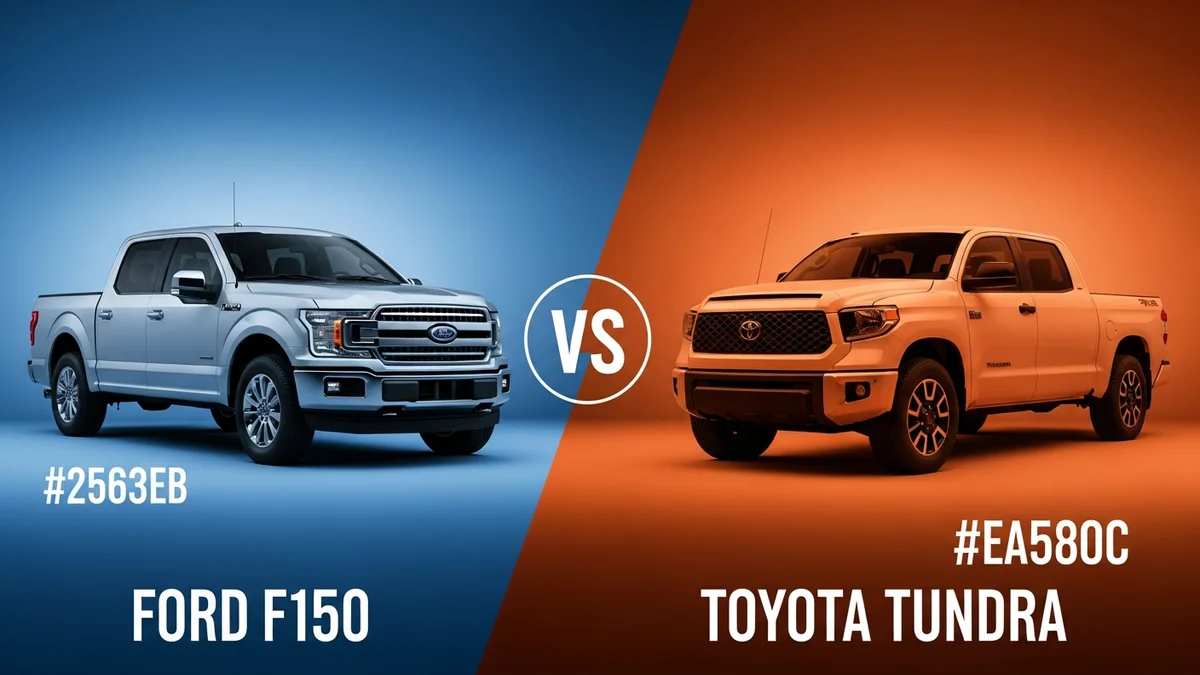
Buyers needing maximum towing, payload, and a vast array of trim and engine choices.
Drivers prioritizing reliability, standard V6 twin-turbo power, and a smooth, refined driving experience.
- The 2026 Ford F150 offers a segment-leading maximum towing capacity of 13,500 lbs.
- The Toyota Tundra features a powerful 3.4L twin-turbo V6 as its standard engine, producing 389 hp.
- Ford's PowerBoost hybrid offers a superior combined fuel economy of 25 MPG compared to Tundra's 22 MPG.
- The Ford F150 offers an innovative Pro Power Onboard system providing up to 7.2 kW of power.
- The Toyota Tundra is generally considered to have superior long-term reliability, a key differentiator for many buyers.
Ford F150 vs Toyota Tundra: Head-to-Head Specs
Recommended Best Deal Products


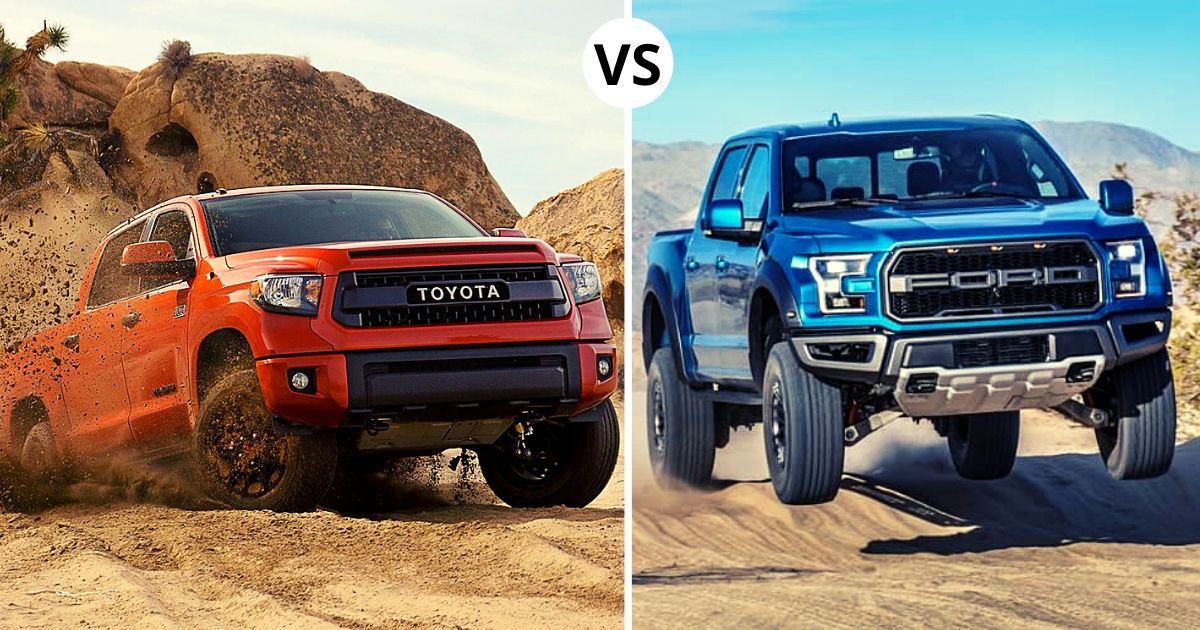
When you place the Ford F150 and the Toyota Tundra side-by-side, specific differences in their core capabilities quickly become apparent. The F150 showcases its workhorse pedigree with a class-leading maximum towing capacity of 13,500 lbs, a figure the Tundra, while capable, simply doesn’t reach. Conversely, the Tundra often offers a more robust standard powertrain, delivering impressive power even in its base configuration without needing to step up to higher-tier engine options.
✓ = better value in that row. Sourced from manufacturer specifications.
Performance & Category Ratings
Diving into the specific performance metrics and category ratings reveals a nuanced battle between these two titans. The Ford F150 secures its victory in Overall Performance with an 8.9, besting the Tundra’s 8.5. This isn’t just about raw power; it’s the F150’s breadth of engine options, from efficient EcoBoost V6s to the potent PowerBoost hybrid, providing a tailored performance experience for any need. Its supremacy in Towing & Hauling is undeniable, scoring a 9.2 against the Tundra’s 8.3. This gap is directly attributable to the F150’s staggering 13,500 lbs maximum towing capacity and superior payload figures, making it the undisputed champion for ultimate capability.

Fuel Economy also leans in the F150’s favor at 8.7 versus the Tundra’s 8.1, primarily thanks to its advanced powertrain options, particularly the hybrid. However, the Toyota Tundra confidently takes the crown for Reliability & Durability, earning a strong 8.9 compared to the F150’s 8.0. This reflects Toyota’s legendary reputation for building tough, long-lasting vehicles that require minimal fuss over years of ownership. Technology & Features sees the F150 pull ahead again with a 9.1 to the Tundra’s 8.8, offering cutting-edge innovations like Pro Power Onboard and advanced driver-assist systems like BlueCruise that the Tundra doesn’t quite match. Yet, the Tundra wins in Comfort & Interior Quality, with its 8.9 rating surpassing the F150’s 8.6, delivering a more refined ride and a cabin that feels both robust and inviting. Lastly, the F150’s vast Customization Options, rated at an exceptional 9.5 against the Tundra’s 7.9, underscore its ability to be precisely configured for any specific job or lifestyle, while Value for Money also slightly favors the F150 at 8.5 vs 8.2, offering a highly competitive package across its extensive trim range.
F150
Tundra
By the Numbers
Recommended Best Deal Products


Understanding the full capabilities of these trucks goes beyond subjective feel; it’s about hard data. The figures below lay out the crucial performance metrics and dimensions that define the Ford F150 and the Toyota Tundra. From horsepower and torque to crucial towing capacities and fuel efficiency estimates, these numbers help paint a clear picture of what each contender brings to the table.

F150
Tundra
Hover any bar for exact values. Each metric scaled independently.
Ford F150: Strengths and Weaknesses
The Ford F150 truly shines as the quintessential workhorse of the American pickup market, a reputation it consistently earns. Its most significant strength lies in its unmatched capability for demanding tasks, offering a class-leading maximum towing capacity of 13,500 lbs and superior payload ratings. This isn’t just a number; it translates into real-world versatility for contractors, haulers, and serious recreational users. The F150’s customization options are simply unparalleled, scoring an exceptional 9.5. You can configure it in a dizzying array of cab styles, bed lengths, powertrains, and trim levels, allowing buyers to find a truck perfectly suited to their exact needs.

Audible — Listen Free for 30 Days
One free credit a month and thousands of titles included.
Listen Free for 30 Days As an Amazon Associate I earn from qualifying purchases.Furthermore, Ford’s dedication to innovation is evident in its advanced technology and features, earning a 9.1. Systems like Pro Power Onboard turn the truck into a mobile generator, while features such as BlueCruise offer hands-free highway driving. Its diverse powertrain lineup, including efficient EcoBoost V6s and the potent PowerBoost hybrid, also contributes to its strong fuel economy score of 8.7, often outperforming rivals. However, the F150 isn’t without its areas for improvement. Its Reliability & Durability rating of 8.0, while respectable, trails the Tundra’s, suggesting that while it’s a capable machine, it might not offer the same long-term, worry-free ownership experience. Additionally, its Comfort & Interior Quality, rated 8.6, is solid but doesn’t quite reach the refined heights of the Tundra’s cabin.
Toyota Tundra: Strengths and Weaknesses
Recommended Best Deal Products


The Toyota Tundra carves out its niche by prioritizing a different set of virtues, appealing to truck buyers who value dependability and a polished ownership experience above all else. Its most compelling strength lies in its Reliability & Durability, where it achieves an impressive 8.9. This rating underscores Toyota’s legendary reputation for building vehicles that withstand the test of time, often translating to fewer unexpected repairs and strong resale values. Owners consistently praise the Tundra’s robust engineering and perceived long-term peace of mind, a significant draw for many.
Another strong point for the Tundra is its Comfort & Interior Quality, scoring an 8.9. The cabin offers a more refined and comfortable experience than some might expect from a full-size pickup, with well-appointed materials and a ride quality that feels remarkably smooth for a body-on-frame truck. Its standard i-FORCE MAX twin-turbo V6 hybrid powertrain delivers ample power and torque, making it a highly capable performer without needing to dive into extensive options lists. Yet, the Tundra does have some clear weaknesses when compared to its Ford rival. Its Customization Options are more limited, earning a 7.9, meaning fewer choices in cab/bed configurations and specific packages. The Towing & Hauling category, at 8.3, is respectable but doesn’t challenge the F150’s ultimate capacities. While its technology is modern, the Tundra’s overall Technology & Features score of 8.8 indicates it lacks some of the bleeding-edge innovations found in the F150. Finally, its Fuel Economy at 8.1, while improved, still lags behind the F150’s more diverse and efficient options.
- ✅ Highest maximum towing and payload capacities in the segment.
- ✅ Unmatched range of engine options, from efficient EcoBoost to powerful V8 and Hybrid.
- ✅ Innovative Pro Power Onboard system offers significant onboard electricity.
- ✅ Extensive trim levels and customization options to fit any need.
- ✅ More affordable starting price for entry-level models.
- ❌ Some interior materials on lower trims feel less premium.
- ❌ Standard engines can be less potent than Tundra's base twin-turbo.
- ❌ Perceived long-term reliability can lag behind Toyota's top-tier reputation.
- ✅ Robust standard twin-turbo V6 engine with strong performance.
- ✅ Exceptional reputation for long-term reliability and resale value.
- ✅ Refined and comfortable ride quality, especially with available air suspension.
- ✅ User-friendly infotainment system with a large available 14-inch screen.
- ✅ Strong standard safety features across all trims.
- ❌ Lower maximum towing (12,000 lbs) and payload compared to the F150.
- ❌ Fewer engine choices and less overall configuration variety.
- ❌ No equivalent to Ford's Pro Power Onboard for direct competition.
- ❌ Higher starting MSRP makes entry into the Tundra lineup more expensive.
Which One Should You Choose?
Deciding between the Ford F150 and the Toyota Tundra ultimately hinges on your specific priorities and intended use. If you’re a demanding professional or a serious hobbyist who needs maximum capability, the Ford F150 is likely your best bet. Its superior towing capacity of 13,500 lbs and higher payload means it can handle the heaviest trailers and gear without breaking a sweat. For those who require ultimate flexibility, the F150’s vast customization options (a stellar 9.5 rating) allow you to spec it precisely for any job, from a bare-bones work truck to a luxurious off-road king. The F150 also appeals to the tech-savvy buyer, offering advanced features like Pro Power Onboard and BlueCruise that enhance both productivity and convenience.
However, if your daily commute involves navigating city streets, or if comfort and long-term peace of mind are higher on your list, the Toyota Tundra makes a compelling case. Its class-leading Comfort & Interior Quality (8.9) ensures a more refined and pleasant ride, even over long distances. The Tundra truly shines for those who prioritize unwavering Reliability & Durability, scoring an impressive 8.9 thanks to Toyota’s reputation for trouble-free ownership. This translates into potentially lower maintenance costs and higher resale values down the line. If you’re looking for a powerful, well-appointed truck with robust standard features and don’t need the absolute maximum towing capacity, the Tundra provides an incredibly solid, comfortable, and dependable package. The choice really boils down to ultimate capability and customization versus unparalleled reliability and everyday refinement.
Buyers needing maximum towing, payload, and a vast array of trim and engine choices.
Drivers prioritizing reliability, standard V6 twin-turbo power, and a smooth, refined driving experience.
Final Verdict
After a thorough head-to-head comparison, the Ford F150 ultimately emerges as the victor in this fierce rivalry, especially for those prioritizing raw capability and versatility. For 2026, the Ford F150 maintains its edge for raw capability, offering higher maximum towing (13,500 lbs) and payload, plus an extensive range of configurations and powertrains. Its superior scores in Overall Performance, Towing & Hauling, Fuel Economy, Technology & Features, Customization Options, and Value for Money highlight its dominant position as the king of the full-size pickup segment.
However, to dismiss the Toyota Tundra would be a significant oversight. The Toyota Tundra counters with impressive standard power, superior perceived long-term reliability, and a refined ride. It stands as a testament to Toyota’s commitment to durability and comfort, offering an experience that, for many, outweighs the F150’s ultimate capability. Therefore, the key trade-off remains clear: Choose F150 for ultimate versatility and workhorse needs; Tundra for robust standard features and peace of mind.
Frequently Asked Questions
Is Ford F150 better than Toyota Tundra for towing?
For pure towing capability, the 2026 Ford F150 is generally better, offering a class-leading maximum towing capacity of up to 13,500 lbs. The Toyota Tundra, while capable, tops out at 12,000 lbs, making the F150 the superior choice for heavy-duty towing tasks.
Which truck offers better fuel economy in 2026?
The 2026 Ford F150 typically offers better fuel economy, especially with its PowerBoost hybrid option which achieves an estimated 25 MPG combined. The Toyota Tundra's i-FORCE MAX hybrid model follows with an estimated 22 MPG combined, still strong but not quite matching the F150's hybrid efficiency.
Which truck has better long-term reliability?
Historically, the Toyota Tundra has a stronger reputation for long-term reliability and durability. While the Ford F150 is a dependable truck, Toyota's consistent high rankings in reliability surveys, often supported by lower ownership costs over extended periods, give the Tundra an edge in this critical aspect.
Which truck is more affordable for 2026?
The 2026 Ford F150 has a more affordable entry point, with an estimated starting MSRP around $38,500. The Toyota Tundra begins at a higher price point, approximately $44,500, meaning the F150 offers greater accessibility for budget-conscious buyers looking for a full-size truck.
What is the biggest difference between the Ford F150 and Toyota Tundra?
The biggest difference lies in their core philosophies: the F150 prioritizes sheer capability and variety, offering a max payload of 2,465 lbs and extensive configurations. The Tundra emphasizes standard power and renowned reliability, with a comfortable ride and its robust 3.4L twin-turbo V6 as standard.
Audible Premium Plus — Annual Membership
12 audiobook credits up front, plus the full Audible catalogue.
See Annual Plans As an Amazon Associate I earn from qualifying purchases.