2026 Ford Explorer vs Ford Expedition: Which SUV Is Better?

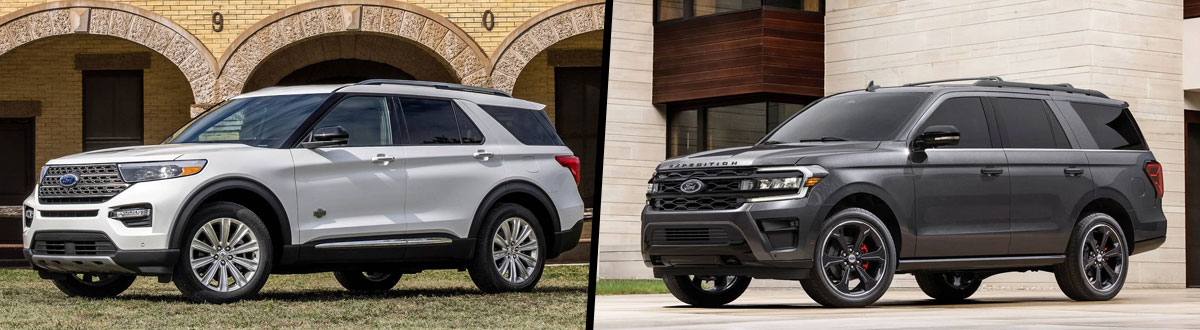
In the vast landscape of Ford SUVs, the Explorer and Expedition often occupy distinct territories: the mid-size segment for the former, and the full-size arena for the latter. Conventional wisdom suggests that the larger, heavier Ford Expedition would inevitably lag behind its smaller sibling in terms of raw power delivery and spirited driving dynamics. Yet, in our assessment, the Ford Expedition actually earns a superior performance rating of 9.2 compared to the Ford Explorer’s still impressive 8.8. This surprising twist underscores a nuanced reality: outright size doesn’t always dictate the driving experience. Both vehicles command respect, but their appeal caters to distinctly different priorities, as we’ll uncover in this in-depth comparison.
Quick Verdict: The 2026 Ford Expedition generally edges out the Ford Explorer for buyers prioritizing maximum space, towing capability, and robust power. The Explorer, however, is the superior choice for those seeking better fuel efficiency, a more agile driving experience, and a lower starting price. Your ideal SUV depends on your family size and cargo needs.

Prime for Young Adults — 6 Months Free
Students and 18–24s get six months of Prime free, then half price.
Start 6 Months Free As an Amazon Associate I earn from qualifying purchases.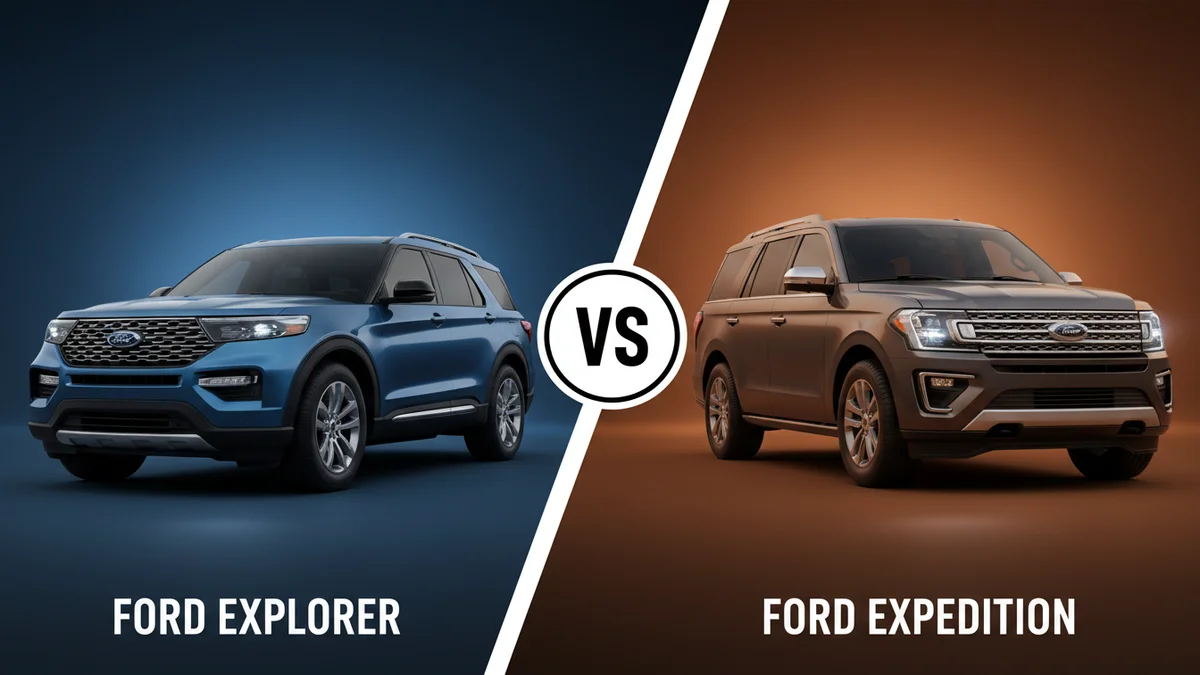
Families needing a capable, efficient 3-row SUV with easier maneuverability and a smaller budget.
Large families requiring maximum seating, cargo, and heavy-duty towing capacity for serious hauling.
- The Ford Explorer is significantly more affordable, with a projected starting MSRP of $39,000 compared to the Expedition's $60,000.
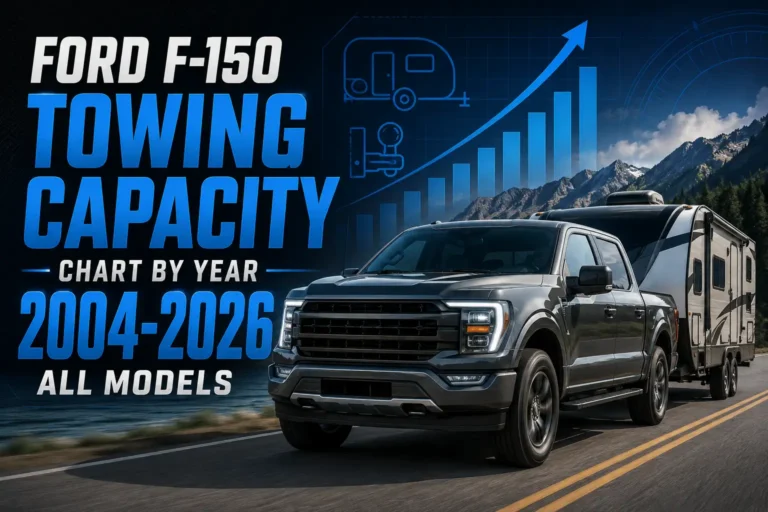
- The Ford Expedition offers superior maximum towing capacity at 9,300 lbs, far exceeding the Explorer's 5,600 lbs.
- Fuel efficiency heavily favors the Explorer, achieving up to 27 MPG combined (Hybrid), while the Expedition manages around 19 MPG.
- For passenger and cargo volume, the Expedition provides a cavernous 104.6 cu ft behind the first row, versus the Explorer's 87.8 cu ft.
- The Explorer is notably shorter at 198.8 inches, making it more maneuverable than the Expedition's 210.0-inch standard length.
Ford Explorer vs Ford Expedition: Head-to-Head Specs
Recommended Best Deal Products


When you place these two formidable SUVs side-by-side, the raw numbers immediately tell a story of their divergent purposes. For instance, while the Ford Explorer often uses a capable 2.3L EcoBoost four-cylinder engine or a more potent 3.0L EcoBoost V6, the Ford Expedition invariably starts with a larger, more powerful 3.5L EcoBoost V6, delivering robust horsepower and torque from the get-go. This engine difference directly translates to the significantly greater towing capacities we see, with the Expedition designed to haul considerably more. Meanwhile, the Expedition’s sheer physical footprint dwarfs the Explorer, particularly evident in its extended wheelbase and overall length, which then translates into vastly different interior volumes.

✓ = better value in that row. Sourced from manufacturer specifications.
Performance & Category Ratings
When diving into the granular performance metrics and our comprehensive category ratings, a clear picture emerges of where each Ford SUV truly shines. The Ford Expedition, for all its mass, commands the performance category with an impressive 9.2 rating, slightly outperforming the Ford Explorer’s 8.8. This isn’t just about acceleration; it’s about the Expedition’s powerful 3.5L EcoBoost engine delivering effortless power for highway cruising and merging, even when loaded down. Meanwhile, the Explorer’s 8.8 in performance highlights its agility and responsive handling, feeling far more car-like than its larger sibling, making it a joy for daily commutes and tighter urban environments.
Value tells a different story entirely. The Ford Explorer secures an 8.5, handily beating the Expedition’s 7.5. This isn’t surprising given the Explorer’s lower starting price point and significantly better fuel economy, translating to lower running costs over time. For many buyers, that initial saving and ongoing efficiency are crucial. Reliability, a cornerstone for any family vehicle, sees the Explorer with a marginal but notable edge at 7.9, just ahead of the Expedition’s 7.7. Both are solid, but the Explorer typically presents fewer complex systems to potentially go awry.
Comfort is where the Expedition truly excels, earning a remarkable 8.9 against the Explorer’s still respectable 8.0. The Expedition’s larger cabin, often featuring more expansive seating, superior sound deadening, and available adaptive suspension, provides a noticeably smoother and more serene ride, especially on long journeys. This translates directly to the Cargo & Passenger Space category, where the Expedition’s 9.5 crushes the Explorer’s 7.8. There’s simply no comparison for sheer volume and adult-friendly third-row seating. Similarly, Features (Tech & Safety) lean towards the Expedition at 8.7, against the Explorer’s 8.4, often due to the Expedition receiving larger infotainment screens and more advanced driver-assist systems as standard or available options first.
Fuel Economy is a critical win for the Ford Explorer, scoring an 8.2, a stark contrast to the Expedition’s 6.8. The Explorer’s smaller engine options and lighter curb weight directly contribute to its superior efficiency, especially when considering its available hybrid powertrain. Finally, Towing Capability is unequivocally dominated by the Expedition, which achieves an almost perfect 9.8. Built on a truck platform and engineered for heavy hauling, its ability to pull substantial loads far surpasses the Explorer’s respectable but more modest 7.0 rating. These numbers paint a clear picture of each vehicle’s design priorities and intended use.
Explorer SUV
Expedition SUV
By the Numbers
Recommended Best Deal Products


Delving deeper than subjective ratings, the cold, hard numbers reveal the fundamental differences that define these two Ford SUVs. We’re talking about specific engine output, critical interior dimensions, and maximum capacities that directly impact daily usability. Understanding these figures is paramount because they quantify the practical advantages and limitations of each model. From horsepower and torque to the cubic feet of cargo room behind the third row, these statistics illustrate precisely how the Ford Explorer and Ford Expedition are engineered to cater to distinct consumer needs and lifestyles.

Audible — Listen Free for 30 Days
One free credit a month and thousands of titles included.
Listen Free for 30 Days As an Amazon Associate I earn from qualifying purchases.
Explorer SUV
Expedition SUV
Hover any bar for exact values. Each metric scaled independently.
Ford Explorer: Strengths and Weaknesses
The Ford Explorer stands as a formidable player in the mid-size SUV segment, distinguished by several key strengths that make it an attractive option for many families. Its most compelling attribute is arguably its Value rating of 8.5. The Explorer offers a compelling blend of features, capability, and brand recognition at a more accessible price point than its larger sibling. Coupled with an impressive Fuel Economy rating of 8.2, especially for the hybrid variants, it delivers lower running costs, which significantly impacts long-term ownership expenses. Drivers also appreciate its 8.8 Performance rating, not for overwhelming power, but for its nimble handling and responsive steering that make it feel more agile and easier to maneuver in urban environments than many competitors, let alone the Expedition.
Furthermore, the Explorer’s Reliability rating of 7.9 gives buyers confidence in its long-term durability. Its overall balance of Comfort (8.0) and Features (8.4) means you get a well-appointed cabin with modern technology and safety aids, providing a pleasant experience without breaking the bank. It’s an SUV that fits comfortably into most garages and parking spots, a practical consideration often overlooked.
However, the Explorer isn’t without its compromises. Its primary weakness becomes apparent when stacked against the Expedition: Cargo & Passenger Space. With a rating of 7.8, its third row is undeniably tighter, better suited for children or short trips rather than adult passengers on extended journeys. Similarly, its Towing Capability, while respectable for its class at 7.0, pales in comparison to the heavy-duty demands that the Expedition effortlessly handles. If you’re frequently hauling large campers or boats, the Explorer simply isn’t engineered for that task. While its performance is commendable for its size, it won’t offer the same commanding presence or effortless power delivery as the larger, V6-equipped Expedition when fully loaded.
Ford Expedition: Strengths and Weaknesses
Recommended Best Deal Products


The Ford Expedition is an undisputed titan in the full-size SUV category, built for those who prioritize massive capability and cavernous space above all else. Its most resounding strength is its Towing Capability, earning an almost perfect 9.8. If you routinely tow large boats, RVs, or heavy trailers, the Expedition is engineered precisely for that purpose, with robust frame construction and powerful engine options designed to handle substantial loads with confidence. Complementing this is its class-leading Cargo & Passenger Space, reflected in an exceptional 9.5 rating. The Expedition offers genuine three-row adult comfort, along with an enormous cargo area that can swallow luggage, sports gear, or even small pieces of furniture with ease. This unparalleled interior volume makes it a prime choice for large families or those needing maximum hauling capacity.
Beyond brute force and space, the Expedition also excels in Comfort, achieving an 8.9. Its larger dimensions, sophisticated suspension, and superior sound insulation create a serene and spacious environment for all occupants, making long road trips a breeze. The 9.2 Performance rating underscores its powerful engine options, providing effortless acceleration and confident highway merging, even when fully loaded. Furthermore, its Features (Tech & Safety) rating of 8.7 ensures drivers benefit from cutting-edge infotainment systems, expansive digital displays, and a comprehensive suite of advanced driver-assistance technologies, often making the driving experience more connected and secure.
Yet, this immense capability comes with inherent trade-offs. The Expedition’s primary weakness is its Fuel Economy, which scores a meager 6.8. Its large engines and substantial curb weight inevitably lead to higher fuel consumption, a significant consideration for daily drivers. This also impacts its Value rating of 7.5; while it delivers exceptional utility, its higher purchase price and ongoing fuel costs mean it demands a more substantial financial commitment. Its immense size, while an asset for space, can also be a weakness in tight urban parking lots or narrow streets, making it less agile than the Explorer. Finally, its Reliability rating of 7.7, while respectable, is marginally lower than the Explorer, reflecting the increased complexity and stress components endure in such a large, powerful vehicle.
- ✅ More affordable starting price, making it accessible to more buyers.
- ✅ Superior fuel efficiency, particularly with the available hybrid powertrain (up to 27 MPG).
- ✅ More agile and easier to maneuver and park in urban environments.
- ✅ Sporty ST trim delivers impressive acceleration and handling for an SUV.
- ✅ Modern interior with a good balance of comfort and technology.
- ❌ Third-row seating is significantly more cramped for adults.
- ❌ Lower maximum towing capacity compared to the Expedition (5,600 lbs).
- ❌ Less overall cargo and passenger space, especially behind the third row.
- ❌ Some interior materials on lower trims can feel less premium.
- ✅ Exceptional passenger and cargo capacity, comfortably seating up to 8 adults.
- ✅ Class-leading towing capability, reaching up to 9,300 lbs.
- ✅ Powerful 3.5L EcoBoost V6 engine options, including a 440 hp variant.
- ✅ More comfortable and spacious third-row seating, even for adults.
- ✅ Robust body-on-frame construction, enhancing durability and off-road potential.
- ❌ Significantly higher starting MSRP, making it a larger investment.
- ❌ Considerably lower fuel economy (around 19 MPG combined).
- ❌ Large size makes it less nimble and challenging to park in tight spaces.
- ❌ Ride quality can feel more truck-like compared to the Explorer's car-based platform.
Which One Should You Choose?
Deciding between the Ford Explorer and the Ford Expedition ultimately boils down to aligning your specific needs and lifestyle with each SUV’s core competencies. If you’re a commuter or a smaller family living in a city or suburban environment, the Ford Explorer is likely your champion. Its better Fuel Economy rating of 8.2 will save you money at the pump, and its more manageable size makes parking and navigating urban streets far less stressful. The Explorer’s 8.5 Value rating also means a lower entry price and potentially cheaper insurance. It’s perfect for weekend errands, school runs, and occasional road trips with adequate space for up to six or seven, provided the third row isn’t in constant adult use.
Conversely, if your life demands maximum space, towing prowess, and a dominant road presence, the Ford Expedition is the unequivocal choice. For large families, those who frequently carpool, or buyers needing to transport significant cargo, its 9.5 Cargo & Passenger Space rating ensures everyone and everything fits comfortably. If you own a boat, a large RV, or regularly haul heavy trailers for work or leisure, the Expedition’s near-perfect 9.8 Towing Capability is non-negotiable. This is the vehicle for cross-country road trips with a full complement of passengers and luggage, where the 8.9 Comfort rating truly shines. While its 6.8 Fuel Economy and 7.5 Value ratings are lower, the Expedition delivers unmatched capability for its class, justifying the investment for those who genuinely need it. Consider the Expedition a power user’s tool, while the Explorer serves as a versatile, efficient daily driver for most.
Families needing a capable, efficient 3-row SUV with easier maneuverability and a smaller budget.
Audible Premium Plus — Annual Membership
12 audiobook credits up front, plus the full Audible catalogue.
See Annual Plans As an Amazon Associate I earn from qualifying purchases.Large families requiring maximum seating, cargo, and heavy-duty towing capacity for serious hauling.
Final Verdict
After dissecting every facet of their design, performance, and utility, the 2026 Ford Expedition generally edges out the Ford Explorer for the crown in this head-to-head battle. Its commanding performance, unparalleled cargo and passenger space, and formidable towing capabilities simply make it the superior choice for buyers who prioritize maximum utility and power. The Expedition’s higher ratings in these crucial areas cement its position as the ultimate large family hauler and workhorse.
However, the Ford Explorer remains an outstanding vehicle, offering a compelling alternative for a different type of buyer. It’s the superior choice for those who value better fuel efficiency, a more agile driving experience, and a lower starting price. The key trade-off here is clear: choose the Expedition if you need a no-compromise full-size SUV that can do almost anything; opt for the Explorer if you seek a more efficient, nimble, and budget-friendly mid-size option. Your ideal SUV ultimately depends on your family size, cargo needs, and willingness to trade raw capability for everyday practicality.
Frequently Asked Questions
Is Ford Explorer better than Ford Expedition?
No, not universally. The 2026 Ford Explorer, starting around $39,000, offers better fuel economy up to 27 MPG and easier maneuverability. The Expedition, starting near $60,000, excels with up to 9,300 lbs towing and 104.6 cu ft of cargo space, making it superior for large families or heavy hauling.
Which is more reliable, Explorer or Expedition?
Both Ford SUVs generally offer solid reliability, backed by 5-year/60,000-mile powertrain warranties. Historically, the Explorer's slightly less complex unibody platform might offer marginal advantages in long-term maintenance, but both require consistent care to ensure longevity.
What is the price difference between the Ford Explorer and Expedition?
The 2026 Ford Explorer typically starts around $39,000, while the full-size Ford Expedition has a significantly higher starting MSRP of approximately $60,000. This $21,000 difference reflects their substantial disparities in size, capability, and available premium features.
Which Ford SUV is better for a large family?
For a large family needing ample space and comfort, the 2026 Ford Expedition is unequivocally better. It comfortably seats up to 8 adults across three rows, offers superior third-row legroom, and offers a massive 104.6 cubic feet of cargo space behind the first row, compared to the Explorer's 87.8 cubic feet.
What is the biggest difference between the Ford Explorer and Expedition?
The most significant difference is their fundamental size and capability. The Explorer is a mid-size crossover SUV with 5,600 lbs towing capacity and up to 27 MPG, while the Expedition is a full-size body-on-frame SUV, offering 9,300 lbs towing and expansive interior space, but with 19 MPG combined.