How To Draw A Ford F150: Step-By-Step Guide 2026

The Ford F-150, a paragon of American engineering and utility, embodies a distinctive aesthetic that challenges and captivates artists globally. Its robust lines and commanding presence make it a compelling subject for any aspiring automotive illustrator. For many, translating the F-150’s complex three-dimensional form onto a two-dimensional surface presents significant challenges, from accurately capturing its formidable proportions to rendering its intricate details and reflective surfaces. This expert guide will systematically demystify the process, providing a professional, step-by-step methodology to draw a Ford F-150 with precision and realism. You will learn to understand its core design, master drawing techniques, and discover how to troubleshoot common issues, empowering you to create a high-quality illustration in 2026 and beyond.

Understanding the Ford F-150’s Core Design: Pre-Drawing Analysis
Recommended Best Deal Products

Before any pencil touches paper, a foundational analysis of the F-150’s unique architectural and aesthetic attributes is essential. This pre-drawing phase serves as the critical ‘diagnosis’ of the subject’s visual characteristics, allowing an artist to understand what makes an F-150 distinct and how to effectively capture its visual essence. To accurately portray this iconic vehicle, one must first learn to observe its fundamental structure.
Analyze Key Proportions and Basic Geometry
The Ford F-150 is renowned for its robust, blocky aesthetic, built upon fundamental geometric forms. Before initiating any lines, one must meticulously understand its overall length-to-height ratio, cab-to-bed proportion, and precise wheel well placement. These elements are critical for establishing the truck’s imposing presence. Visualizing the F-150 as a series of connected rectangles and cylinders—a large rectangular cab, a slightly smaller bed, and cylindrical wheels—simplifies the initial construction. This approach helps in accurately representing the powerful, grounded stance that is characteristic of the F-150. For instance, the average wheelbase of a SuperCrew F-150, ranging approximately from 145-157 inches, directly influences its overall length and, consequently, its balanced proportions.
Identify Distinctive Design Elements
Beyond its general shape, the F-150 boasts several iconic features that are crucial for brand recognition and realistic portrayal. The prominent, often chrome-heavy grille, for example, consistently maintains a commanding visual presence, frequently accounting for a significant portion of the front fascia’s vertical height. The distinctive C-clamp headlight design, pronounced wheel arches that give it an aggressive stance, and characteristic tailgate badging are all non-negotiable details. Neglecting these elements will render a generic truck rather than a specific F-150. As America’s best-selling truck for 47 consecutive years (as of 2023 data), its ubiquitous design elements are instantly recognizable.
Grasp Fundamental Perspective Principles
Whether drawing from a reference image or imagination, a basic comprehension of one-point or two-point perspective is vital. Automotive illustration demands dimensional accuracy, particularly for elements like the truck bed and cab that recede into space. Establishing a clear horizon line and appropriate vanishing points ensures that parallel lines converge correctly, giving your F-150 a sense of depth and realism. Incorrect perspective can quickly make the vehicle appear distorted or “floating,” undermining the entire illustration.
Examine Lighting and Shadow Fundamentals
To achieve convincing depth and form, observe how light interacts with the F-150’s angular surfaces. Note where highlights occur on reflective surfaces—such as chrome bumpers or metallic paint—and where shadows deepen under protrusions like fender flares or the front grille. Understanding these interactions is critical for rendering realism later, as light and shadow define the three-dimensional contours of the vehicle. This exploration is an essential step in moving beyond a flat outline.
Select Appropriate Reference Material
Utilizing high-quality photographs or even an actual F-150 from multiple angles (front 3/4, side, rear 3/4) is paramount. These references provide the precise details and proportions necessary to accurately reproduce the subject. Avoid relying solely on memory or low-resolution images, as they often lack the fidelity required for a detailed and accurate drawing. A comprehensive collection of references will significantly aid your ability to discover the F-150’s visual nuances.
By The Numbers: F-150 Core Data
Years Best-Selling Truck
SuperCrew Wheelbase
Grille Vertical Fasc.
Average Truck Height

How to Draw the Ford F-150: A Comprehensive Step-By-Step Procedure
This section systematically guides the aspiring artist through the entire process of rendering a Ford F-150, from initial structural forms to detailed finishing. By following these steps, you will be empowered to master the creation of an accurate automotive illustration. This constitutes the core ‘solution’ to the drawing task, providing a clear roadmap for success.

📋
Step-by-Step Guide
Recommended Best Deal Products

Begin with light construction lines to establish the F-150’s overall rectangular chassis. Block in the cab, hood, and truck bed as primary geometric volumes. Accurately place the centerlines for the wheels and establish the roofline and ground line, ensuring correct scale and alignment. This initial skeletal framework is crucial for overall accuracy; think of it as building the chassis of the truck before adding the body. This is where you truly learn to see the vehicle in its simplest components first.

Audible — Listen Free for 30 Days
One free credit a month and thousands of titles included.
Listen Free for 30 Days As an Amazon Associate I earn from qualifying purchases.Using circular guides, carefully draw the wheel wells, ensuring they are symmetrical and correctly sized relative to the truck’s body. Sketch in the basic form of the tires, accounting for their width and radial curvature. This stage is paramount for establishing stability and realism. For example, stock F-150 tires typically have a diameter of 30-33 inches, requiring careful scaling in relation to the truck’s overall height, which averages around 77 inches. Errors here can make the truck appear to float or have disproportionate wheels.
Refine the initial block-in shapes into the distinct contours of the F-150’s body panels: the doors, prominent hood lines, powerful fender flares, and the outline of the windshield and windows. Start to sketch the basic shapes of the grille and headlights based on your prior analysis. The F-150’s grille often dominates the front view, sometimes occupying 25-30% of the front fascia’s vertical dimension, so its general shape should be established early.
Progress to adding the signature elements that make it unequivocally a Ford F-150. Accurately render the intricate pattern of the grille, the distinct C-clamp design of the headlights, and the fog light housing. Add door handles, side mirrors, and the fuel door, paying close attention to their exact placement and dimensions. These seemingly minor details are what define the F-150 and differentiate it from other trucks. You will truly understand the vehicle’s design language at this stage.
Darken the definitive outlines of the truck, carefully erasing any unnecessary construction lines. Ensure all forms flow smoothly and accurately, checking for any remaining irregularities. At this stage, prepare the drawing for shading by identifying areas that will receive light, mid-tones, and deep shadows. This involves envisioning the light source and how it interacts with the truck’s surfaces. Begin to explore the interplay of light and form across the F-150’s body, setting the foundation for true depth.
When drawing complex vehicles like the F-150, consider working in layers. Start with a very light sketch, progressively adding detail and darkening lines. This allows for easy corrections and refinement without commitment too early, which is an essential technique for beginners.
Refining Your F-150 Illustration: Advanced Detailing and Texturing
With the F-150’s form established, the next crucial phase involves enhancing the drawing’s realism, depth, and visual impact. This requires moving beyond basic construction to master the nuances of light, shadow, and material properties for a truly compelling F-150 illustration.
Audible Premium Plus — Annual Membership
12 audiobook credits up front, plus the full Audible catalogue.
See Annual Plans As an Amazon Associate I earn from qualifying purchases.Apply Shading for Form and Depth
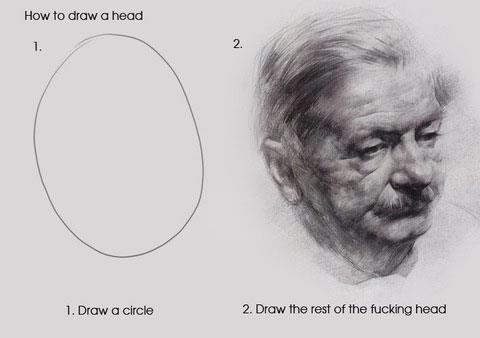
Utilize a range of pencil grades—from a light HB for subtle tones to darker 2B, 4B, and 6B for deeper shadows—to build up values. Render gradual transitions from light to dark to define the three-dimensional form of the F-150’s body panels. Pay particular attention to the subtle curves and creases in the sheet metal, using shadow to convey their shape and direction. Effective shading transforms a flat outline into a solid object, allowing you to master the control of tonal values.
Render Reflective Surfaces and Textures
Realistically depicting material differences is paramount. For the sheen of chrome, use sharp, bright highlights contrasting with gradually blended darker tones to suggest reflections of the surroundings. For glass, portray transparency and reflections simultaneously. Automotive tires, which typically have a Shore A hardness of 60-70, demand a distinct visual texture; incorporate subtle textural patterns and deep shadows within the tread. Modern F-150 paint finishes often incorporate metallic flakes, which create specular highlights; this requires precise, sharp highlights in a drawing to convey that unique metallic property.
Add Specific Environmental and Material Details
The devil is in the details. Include nuanced elements such as lug nuts on the wheels, wiper blades, the antenna, and exhaust pipes. Consider how environmental reflections—perhaps of trees or buildings—might subtly appear on the bodywork or windows. If applicable and visible, add subtle indications of interior elements seen through the windows or textures within the truck bed, exploring the vehicle’s context and adding depth to your comprehensive illustration.
Create a Sense of Weight and Grounding
A truck, especially an F-150, needs to feel firmly planted on the ground. Employ a well-executed cast shadow beneath the vehicle to achieve this. The shape, intensity, and diffusion of this shadow significantly contribute to the illusion of weight and presence. A soft, diffused shadow indicates ambient or overcast lighting, while a sharp, dark shadow suggests strong, direct illumination. This element is crucial for preventing your truck from appearing as if it’s floating.
Final Polish and Emphasis
Review the entire drawing for consistency, balance, and overall impact. Intensify key dark areas for maximum contrast and selectively brighten highlights to make surfaces pop. Utilize a kneaded eraser to lift graphite for precise highlights or correct small errors, and a blending stump or tortillon for smooth tonal transitions. This final stage is where you truly bring the F-150 to life with professional finishing touches, demonstrating your mastery of automotive rendering.
Troubleshooting Common Drawing Challenges: Rectifying Imperfections in Your F-150 Sketch
Even experienced artists encounter challenges. This section is designed to diagnose and provide actionable solutions for typical difficulties encountered during the automotive drawing process, ensuring a higher quality outcome and helping artists overcome obstacles when their F-150 sketch isn’t quite right. Learning to self-critique and correct is an essential part of artistic growth.
Addressing Proportional Inaccuracies
If your truck appears “off,” the issue likely lies in foundational proportions. Re-evaluate your initial block-in. Use a measuring tool—a simple pencil held at arm’s length against your reference photo—to compare heights, widths, and distances between key features. Common issues include a cab that’s too tall, wheels that are too small or too large, or a bed that’s disproportionately short. Human perception of proportion is highly sensitive; errors as small as 5-10% in relative sizing can make an object appear distorted. Artists often use the ‘thumb trick’ or ‘pencil measurement’ method, a traditional technique dating back centuries, to transfer proportions accurately. Don’t be afraid to lighten or erase and redraw your foundational shapes. This is an opportunity to explore different measurement techniques until you find what works for you.
Correcting Perspective Errors
Distorted wheels, a leaning cab, or misaligned body lines often indicate faulty vanishing points or horizon lines. Redraw your basic perspective guides with precision. Remember that all parallel lines in a given plane must converge at their respective vanishing points. For instance, the top and bottom edges of the truck bed, if perfectly parallel on the actual vehicle, must converge towards the same vanishing point in your drawing. Ensuring all relevant lines align to these points will rectify most perspective issues. Taking the time to learn to spot convergence issues is critical for dimensional accuracy.
Enhancing Lack of Detail or ‘Flatness’
A drawing that lacks realism or “pops” often suffers from insufficient detail or flat shading. Revisit your reference images to identify overlooked elements such as subtle seams, small rivets, or manufacturer logos. More importantly, apply a wider range of tonal values to create depth, pushing darks darker and ensuring bright, crisp highlights. The subtle textures on plastic trim, rubber seals, or even the slight indentation of a panel line can significantly enhance realism. You must discover the impact of these nuanced textures and how they contribute to the vehicle’s overall character.
Resolving Shading and Lighting Inconsistencies
Uneven or inconsistent shading can make a drawing appear unfinished or confusing. Ensure a singular, consistent light source is implied throughout the entire drawing; shadows should consistently fall away from it. Avoid harsh lines where soft gradients are needed, using blending tools to achieve smooth transitions. Pay attention to reflected light—light bouncing off the ground or other surfaces and illuminating the underside of the truck, adding subtle realism. This consistent approach is part of mastering a comprehensive understanding of light.
Overcoming Frustration and Maintaining Motivation
Drawing, especially complex subjects like the F-150, can be challenging and frustrating. If you find yourself stuck or discouraged, take a short break and return with fresh eyes. Focus on one small, manageable section at a time rather than trying to perfect the entire drawing at once. Seek feedback from peers or online communities; constructive criticism is invaluable for identifying blind spots. Remember that improvement is incremental, and consistent practice is key to mastering the craft. Research shows that regular, short practice sessions (e.g., 20-30 minutes daily) are often more effective for skill acquisition than infrequent, long sessions.
A common pitfall is to jump into fine details or heavy shading before the foundational proportions and perspective are absolutely correct. This can lead to frustration when larger structural errors become apparent later, forcing extensive corrections or starting over. Always build from general to specific.
Further Developing Your Automotive Drawing Prowess: Continuous Improvement
Drawing an F-150 is a significant step, but artistic development is an ongoing journey. This section offers strategies and resources for continuous skill development in automotive art, encouraging long-term artistic growth and providing avenues to further explore and refine the techniques learned.
Practice Regularly with Varied References
Consistent practice is non-negotiable for true artistic growth. Don’t limit yourself to just F-150s; draw other vehicles, study different angles, and experiment with various lighting conditions (e.g., direct sunlight, overcast, artificial lighting). Drawing from life—actual vehicles in a parking lot or showroom—can significantly enhance your observational skills, helping you to learn from every sketch. Deliberate practice, focusing on specific weaknesses, has been shown to be 2-3 times more effective than undirected practice for skill acquisition.
Experiment with Different Mediums and Styles
While this guide focuses on pencil, don’t hesitate to explore other mediums. Charcoal offers rich, deep blacks; ink provides crisp lines; markers allow for vibrant, smooth color; and digital drawing tablets open up a world of possibilities for layers and effects. Each medium offers unique expressive qualities and can broaden your artistic vocabulary. Try rendering F-150s in different artistic styles, from technical blueprint illustration to more impressionistic or even cartoonish approaches. This experimentation helps you discover new ways of seeing and representing forms.
Study Automotive Design Principles
To truly understand how vehicles are designed, delve into principles of industrial design, aerodynamics, and ergonomics. This deeper knowledge will profoundly inform your drawings, allowing you to not just copy what you see, but to understand the ‘why’ behind the F-150’s form. Analyze how automotive designers use crisp lines, flowing surfaces, and strategic cuts to convey motion, strength, and sophistication. The average professional automotive designer has over 10,000 hours of drawing and sketching experience, underscoring the depth of knowledge involved.
Seek Constructive Critiques and Join Communities
Share your work with fellow artists and actively solicit feedback. Online forums (like those on DeviantArt or specific automotive art communities), art groups, or local classes provide invaluable opportunities for constructive criticism. This external perspective is essential for identifying blind spots in your technique or observation, accelerating your improvement. Actively listen, interpret, and apply relevant advice to master new techniques and elevate your work. Research indicates that over 70% of members in artistic communities find constructive criticism beneficial for their artistic development.
Maintain a Sketchbook and Document Progress
Keep a dedicated sketchbook for all your drawings and sketches. Date each entry. Periodically review your older work to observe your progress and identify areas where you’ve improved and areas that still require attention. This visual journal serves as a powerful motivator and a concrete record of your journey to discover your unique artistic voice and the continuous evolution of your automotive drawing prowess. It’s a comprehensive log of your dedication and development.
Understanding the F-150’s core proportions and distinct features is fundamental to accurate representation. A methodical, step-by-step approach, beginning with basic forms and progressing to fine details, is crucial for success. Mastering shading, texture, and perspective elevates a drawing from basic to photorealistic. Identifying and rectifying common drawing errors, such as proportional or perspective inconsistencies, is key to improvement. Finally, continuous practice, experimentation, and seeking feedback are essential for long-term artistic development. Embark on your artistic journey to render the iconic Ford F-150. Utilize the principles and steps outlined in this guide to hone your skills, practice diligently, and observe the automotive world with a discerning eye. Share your creations and continue to explore the vast potential of automotive art.
Frequently Asked Questions
What are the most challenging parts of drawing a Ford F-150 accurately?
The most challenging aspects typically involve accurately capturing the F-150’s robust proportions, especially the relationship between the cab, bed, and wheels, which are critical for its distinctive stance. Rendering the complex grille design, the C-clamp headlights, and achieving realistic reflections on metallic surfaces also present significant hurdles, requiring careful observation and precise execution to avoid distortion.
What materials are recommended for a beginner learning to draw a Ford F-150?
For beginners, a set of graphite pencils ranging from hard (2H, H) for light construction lines to soft (2B, 4B, 6B) for shading and dark accents is ideal. Good quality drawing paper (medium tooth), a kneaded eraser for subtle lifting, a vinyl eraser for sharp corrections, and a blending stump or tortillon for smooth tonal transitions are also highly recommended. Access to clear reference images is paramount.
How can I make my F-150 drawing look more realistic?
Achieving realism involves several factors: meticulous attention to proportion, accurate perspective, and dynamic shading. Focus on creating a full range of values from the darkest blacks to the brightest whites to define form. Critically render reflections on chrome and glass, and use subtle textures for tires and body panels. A well-defined cast shadow also significantly enhances grounding and realism.
Should I draw the F-150 from a reference photo or from imagination?
For learning and accuracy, it is highly recommended to start by drawing from high-quality reference photos. This allows you to study the F-150’s intricate details, proportions, and how light interacts with its surfaces without guessing. Once you’ve thoroughly understood the vehicle’s design through reference work, drawing from imagination becomes a more informed and successful endeavor.
How long does it typically take to draw a detailed Ford F-150?
The time required to draw a detailed Ford F-150 varies significantly based on skill level, chosen medium, and desired level of detail. A beginner might spend 2-4 hours on a basic sketch, while an experienced artist rendering a highly detailed, shaded illustration could invest 8-20 hours or even more. Consistent practice generally reduces the time needed for quality output.