How To Fix Ford PATS System No-Start Safely

If you are searching how to bypass Ford PATS system, the safe answer is simple. Do not bypass it. PATS is Ford’s immobilizer system, and defeating it can create legal, security, and theft-risk problems.
The correct repair is to find out why your Ford is not recognizing the coded key, ignition transceiver, PCM, instrument cluster, BCM, or related security module.

Prime for Young Adults — 6 Months Free
Students and 18–24s get six months of Prime free, then half price.
Start 6 Months Free As an Amazon Associate I earn from qualifying purchases.
Ford describes SecuriLock PATS as an engine immobilization system that helps prevent the engine from starting unless a correctly coded key is used. Start with the symptom, because the right fix changes depending on how your Ford is reacting.
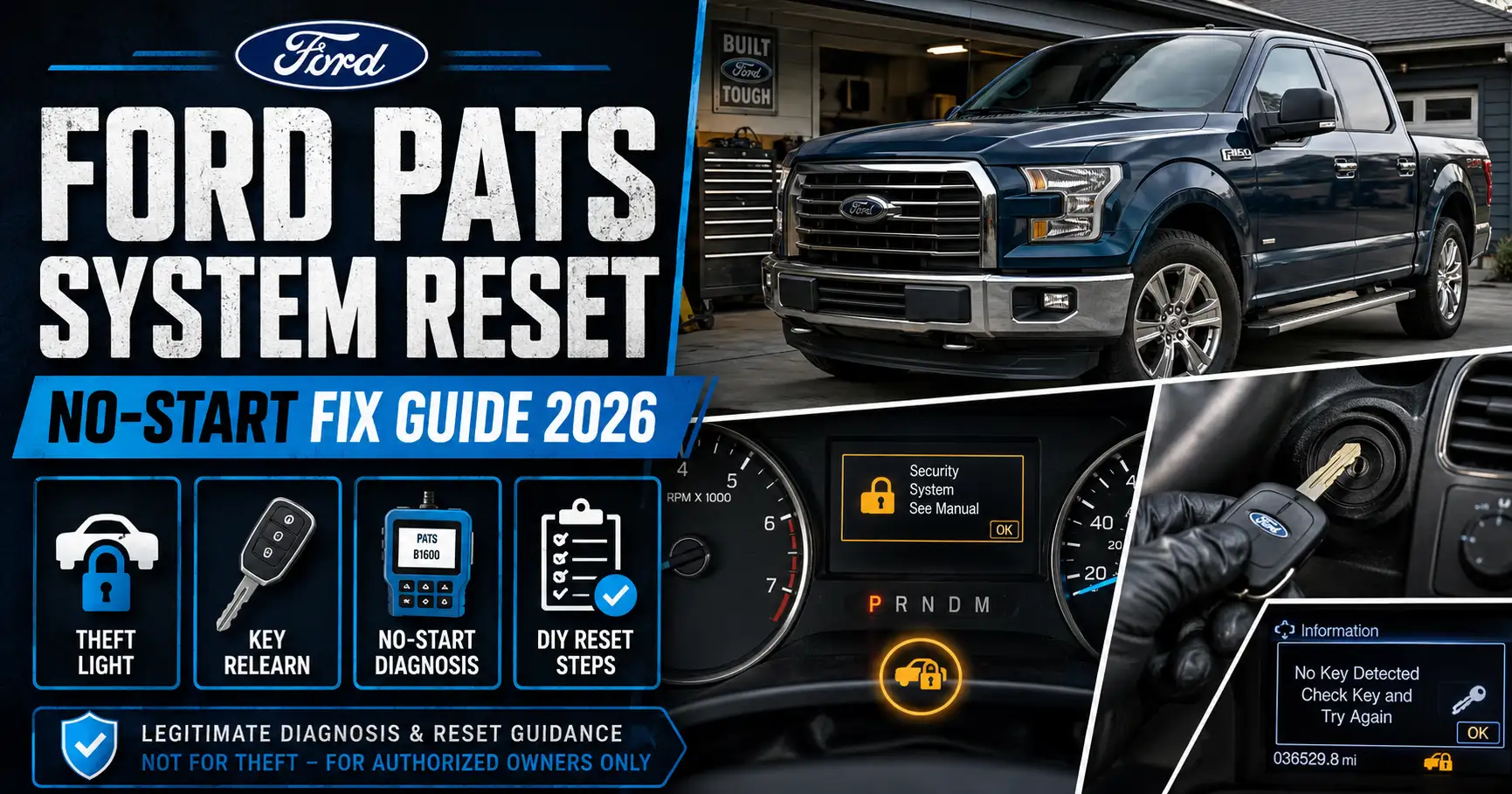
Ford PATS No-Start Safe Repair Path
Use this quick visual guide to match your symptom to the correct legal repair path. The goal is to restore factory key recognition, not disable the anti-theft system.
Start With The Theft Light And Key Status
Check whether the theft light flashes fast, whether the truck cranks, and whether at least one coded key still starts the Ford.
One Working Key Still Starts The Ford
Your PATS system still recognizes one valid coded key.
No Working Key Starts The Ford
No valid coded key is available, or all stored keys have failed.
The Theft Light Flashes Fast
The system may not recognize the key, the transceiver, or module communication.
The PCM Or Cluster Was Replaced
The same key worked before the repair, but the truck will not start now.
The Battery Is Weak Or Unstable
Low voltage can confuse Ford modules and create misleading anti-theft symptoms.
The Truck Cranks Normally
A normal crank with no unusual theft-light behavior is not always a PATS fault.

Audible — Listen Free for 30 Days
One free credit a month and thousands of titles included.
Listen Free for 30 Days As an Amazon Associate I earn from qualifying purchases.Best Owner Strategy
If one coded key still works, protect that key and get a correct spare made now. If no keys work, or the problem started after a PCM or cluster swap, stop guessing and use a Ford-capable scan tool, locksmith, or dealer-level programming service.
Quick Legend
- Blue path: Diagnose the symptom first.
- Green action: Follow the safe legal repair path.
What Ford PATS Does When Your Key Turns
Ford PATS is not a normal alarm. It is an immobilizer.
PATS stands for Passive Anti-Theft System. Ford also calls it SecuriLock on many models. The system checks whether the transponder key is coded to your Ford before allowing the engine to start.
A key can physically turn in the ignition and still fail electronically. That happens when the transponder chip is damaged, the wrong chip type is used, the transceiver cannot read the key, or the module data no longer matches.
Ford’s owner manual language explains that using an incorrectly coded key may prevent the engine from starting. A warning message may also appear in the information display.
Common Ford models affected by PATS no-start complaints include:
- Ford F-150
- Ford F-250 and F-350 Super Duty
- Ford Explorer
- Ford Expedition
- Ford Ranger
- Ford Escape
- Ford Taurus
If the issue is actually the anti-theft system and not fuel, spark, or starter power, the theft light usually gives the first clue.
Once you understand that PATS is looking for a valid coded key, the next step is reading the no-start symptom correctly.
How To Read The Theft Light In 3 Checks
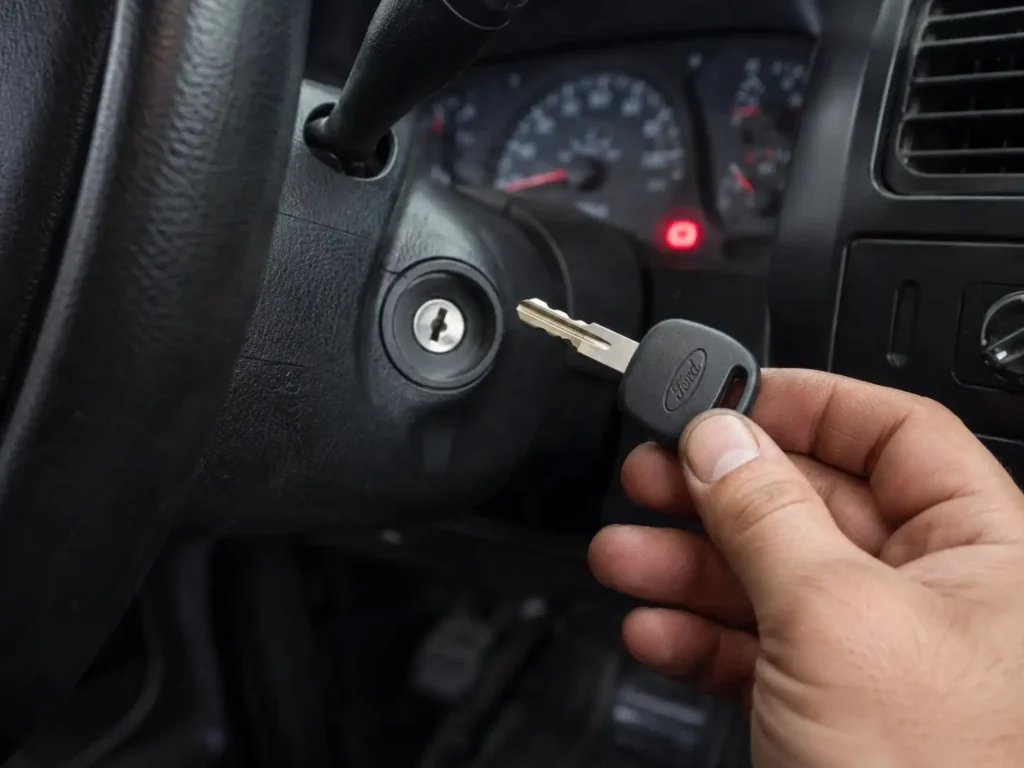
The theft light is your first clue, but it is not a full diagnosis by itself.
Check The Normal Prove-Out
Turn the key to RUN without cranking the engine. On many Ford models, the theft or security light should illuminate briefly and then go out.
Audible Premium Plus — Annual Membership
12 audiobook credits up front, plus the full Audible catalogue.
See Annual Plans As an Amazon Associate I earn from qualifying purchases.That quick prove-out usually means the system is powering up and completing its normal check.
Check For Fast Flashing
A theft light that flashes rapidly when you try to start the truck often points toward a key recognition or PATS communication problem.
That does not automatically mean the key is bad. It can also come from a damaged transceiver ring, weak battery voltage, module mismatch, wiring fault, or PCM communication problem.
Separate No-Crank From Crank No-Start
A no-crank condition means the starter does not turn the engine. A crank no-start means the engine turns over but does not run.
PATS can be involved in either pattern depending on model year and system design. But a crank no-start can also come from a fuel pump, crankshaft position sensor, ignition fault, PCM power issue, or other non-PATS problem.
For broader anti-theft reset context, FordMasterX already has a dedicated guide on Ford anti-theft system reset steps.
After that first check, the repair path depends on whether you still have a working coded key.
If You Have One Working Ford Key
If your Ford still starts with one key, your best move is prevention, not bypassing.
Do not erase keys from the anti-theft system when you only have one working key unless you are using a verified Ford-capable scan tool and have the required replacement keys ready.
Many Ford owner-programming procedures require two already-programmed keys before you can add another key yourself. If you only have one valid key, you may need a locksmith or dealer to add another one.
This is why the “one working key” situation matters. You still have a chance to avoid an expensive lost-all-keys job.
A safe plan looks like this:
- Confirm the existing key starts the Ford every time.
- Buy the correct transponder key or fob for your year and model.
- Have the key cut correctly.
- Use an owner-programming method only if your Ford supports it and you meet the key-count requirement.
- Use a qualified automotive locksmith or dealer if you do not meet the requirement.
Keys can look identical but use different transponder chips. Snap-on’s Ford PATS programming guidance warns that the correct chip type must be used, and some programming procedures erase all stored keys.
For F-150 owners, this related guide on how to program a Ford F-150 key fob is the better next step before you lose the only working key.
If you have no working key, the process changes completely.
If You Have No Working Ford Key
If no programmed key starts the truck, treat this as a key programming job.
This is not a safe DIY bypass situation. Without a valid coded key, most owners will need either a Ford dealer or a qualified automotive locksmith with Ford-capable equipment.
Ford’s own replacement key guidance tells owners to contact a dealer and says the dealer may recommend a reputable locksmith if they cannot duplicate the key.
Expect the price to vary by key type, year, location, and whether towing is needed. Current US-market locksmith and key replacement sources commonly show broad ranges around $100 to $250 for many locksmith-programmed Ford transponder keys and $200 to $450 or more for some dealer or intelligent-access key jobs.
Use those numbers as planning ranges only. Always call with your year, model, VIN, and key type before approving the work.
Do this:
- Prove ownership.
- Ask whether the quote includes cutting and programming.
- Ask whether two keys will be programmed.
- Ask whether mobile service is available.
Do not do this:
- Do not buy random “universal” keys without verifying chip type.
- Do not erase stored keys without two correct keys ready.
- Do not follow bypass videos that defeat the immobilizer.
Keys are only one branch. A recent module replacement can create the same no-start symptom.
If The PCM Or Cluster Was Replaced
A Ford that stops starting after a PCM or cluster swap usually has a programming mismatch.
This is common when the same key worked before the module replacement, but the truck will not start afterward. In that case, the key may not be the real problem.
Depending on the year and platform, the PATS data may involve the PCM, instrument cluster, BCM, PATS module, or related security data. A replacement module may need initialization, parameter reset, or security relearn.
Use these branches:
Same Key Worked Before Repair
If the same key started the Ford before the PCM, cluster, or module swap, suspect programming mismatch before blaming the key.
Used Module Was Installed
A used PCM or cluster may contain security data from another vehicle. That can prevent the system from authorizing start.
New Module Was Installed
A new module may still need programming and security initialization before the Ford will start.
This usually requires a Ford-capable scan tool, dealer-level programming access, or an automotive locksmith who handles Ford module security work.
If no modules were replaced, check for simpler interference and power problems first.
How To Rule Out 5 Simple PATS False Alarms
Before paying for programming, rule out the easy problems that can confuse key recognition.
Remove Other Coded Keys
Do not keep another Ford coded key touching the key you are using to start the truck.
Ford owner manual guidance warns that a second coded key on the same key chain can cause starting problems if it is too close to the key during start.
Move Electronics And Metal Objects
Move phones, key tags, metal fobs, USB devices, and other electronic items away from the ignition area.
Ford also warns that metallic objects and electronic devices near the coded key can interfere with starting.
Try A Known Good Spare Key
If one key fails and another key starts the truck normally, the failed key is the main suspect.
That points toward a damaged transponder chip, wrong key type, or failed key programming.
Check Battery Voltage And Terminals
Low voltage can confuse Ford modules. Before replacing PATS parts, check the battery state and terminal condition.
A healthy fully charged 12V battery is usually near 12.6 volts at rest. Around 12.4 volts is partially charged. If voltage drops close to or below 10 volts while cranking, module behavior can become unreliable.
These voltage values are general diagnostic guidelines. Confirm battery condition with a proper load test before blaming PATS.
Inspect The Ignition Area
Look for a damaged key blade, worn ignition cylinder, broken plastic key shell, aftermarket remote-start wiring, or loose trim around the ignition transceiver area.
Do not start replacing modules until these simple checks are done.
If those checks fail, use the decision table to choose the next step.
Ford PATS No-Start Decision Table
Use this table before spending money on parts.
| Symptom | Likely Area | Safe Next Step |
|---|---|---|
| Theft light flashes fast and no start | Key recognition or PATS communication | Try spare key, remove interference, scan PATS codes |
| One key works and one key fails | Bad key or wrong chip type | Replace and program the correct transponder key |
| No keys work after PCM or cluster swap | Module mismatch | Perform parameter reset, relearn, or module programming |
| Truck cranks normally with no theft light issue | Non-PATS no-start | Diagnose fuel, spark, crank sensor, and PCM power |
| All keys are lost | No valid coded key | Call locksmith or dealer for key programming |
If your truck cranks normally and the theft light behaves normally, do not chase PATS first. A regular no-start diagnosis may be the better path.
For non-PATS warning light and diagnostic basics, see the FordMasterX guide on Ford check engine light causes and quick fixes.
The table narrows the path, but scan codes confirm which part of the anti-theft system is complaining.
What Scan Tools Can Confirm About PATS
A scan tool matters because guessing at PATS can make the problem worse.
A basic parts-store OBD2 scanner may read engine codes, but it may not show the anti-theft data you need. Ford PATS faults often require access to security, body, cluster, or PCM information depending on the model year.
A Ford-capable scan tool may confirm:
- Number of keys stored
- Whether the current key is recognized
- PATS or immobilizer fault codes
- PCM or cluster communication faults
- Parameter reset or security initialization needs
Snap-on’s Ford PATS programming guidance warns that some key programming procedures erase all stored keys. Once that happens, the system may require a minimum of two keys to be programmed, and the vehicle can fail to start if fewer than two are stored.
That is why you should not erase keys blindly. If your Ford still has one working key, protect that key and add a spare correctly.
FORScan may help with diagnostics and some service functions on supported Ford models, but do not treat it as a bypass tool. Confirm the exact support for your year, model, and module setup before changing security data.
Once you know whether the fault is key, wiring, or module-related, the repair choice becomes straightforward.
When To Call A Locksmith Or Dealer
Call a professional when the repair requires security access, not just a new cut key.
Use an automotive locksmith when the likely issue is key-related. This includes lost keys, wrong transponder chip, damaged key, or adding a spare when you do not have enough programmed keys for owner programming.
Use a Ford dealer or module programming specialist when the issue appeared after PCM, cluster, BCM, or ignition module replacement. That situation may require parameter reset, module initialization, or reprogramming.
Ask these questions before approving the job:
- Does the quote include key cutting and programming?
- Will two working keys be programmed?
- Can the technician handle Ford PATS or SecuriLock?
- Is towing required?
- What proof of ownership do they need?
Proof of ownership is normal. It protects you and helps prevent unauthorized key programming.
The goal is not to bypass PATS. The goal is to make the factory security system recognize the correct key again.
The Safe Way To Fix Ford PATS
The safe answer to how to bypass Ford PATS system is simple. Do not bypass it.
Start with the theft light, try a known good key, remove key-ring interference, check battery voltage, and confirm whether any modules were recently replaced.
If one key still works, add a correct spare before you lose it. If no key works, call a qualified locksmith or dealer. If the issue began after PCM or cluster replacement, expect programming or parameter reset work.
Fix the reason PATS is unhappy. Do not defeat the system that protects the truck.
Ford PATS System Questions Answered
Can You Bypass Ford PATS System Legally?
No. Bypassing Ford PATS is not the right repair path and can create legal and security problems. The safe fix is to restore proper coded-key or module recognition.
Why Is My Ford Theft Light Flashing Fast?
A fast flashing theft light often points toward a key recognition, transceiver, wiring, or module communication issue. Try a spare key, remove nearby coded keys and electronics, then scan PATS data with a Ford-capable tool.
Can A Weak Battery Trigger Ford PATS Problems?
Yes, weak voltage can confuse modules and make anti-theft symptoms harder to diagnose. Charge and test the battery before replacing keys, transceivers, PCM, cluster, or other security-related parts.
Do I Need Two Keys To Program Ford PATS?
Many Ford owner-programming procedures require two already-programmed keys. Some scan-tool procedures also erase stored keys and require at least two keys to be programmed afterward before the vehicle will start.
Can A Locksmith Fix Ford PATS No-Start?
Yes, an automotive locksmith can often fix key-related Ford PATS no-start problems. Dealer-level service may still be required when the problem involves PCM replacement, cluster replacement, module initialization, or security parameter reset.
Is A Crank No-Start Always A PATS Problem?
No. A crank no-start can come from fuel delivery, spark, crankshaft position sensor failure, PCM power, wiring, or other engine control faults. If the theft light behaves normally, diagnose the normal engine no-start system before blaming PATS.