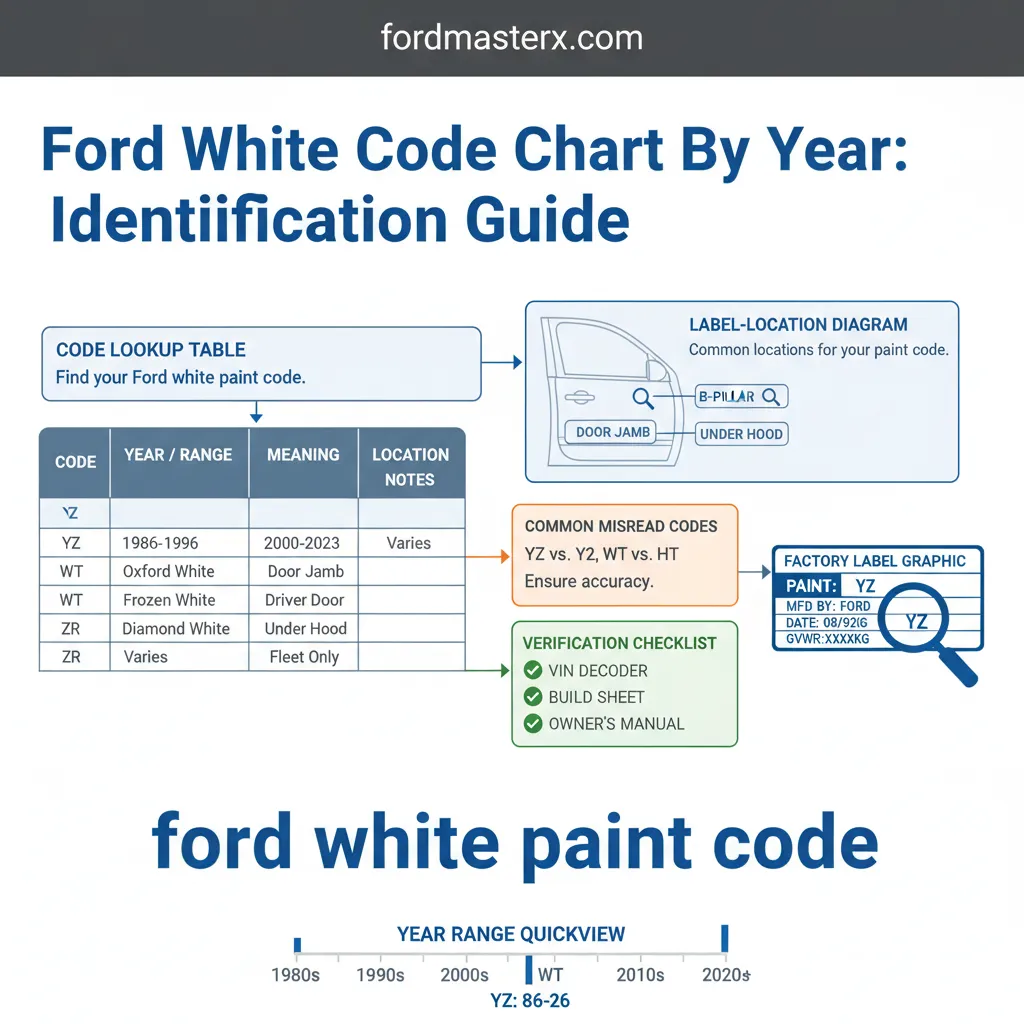
Ford White Code Chart By Year: Identification Guide

Quick Answer
Ford White Paint Code depends on the exact year, engine, trim, and configuration. Use the chart and notes in this guide as a starting point, then verify critical numbers with the official manual or vehicle label.
Ford White Code Chart By Year: Identification Guide
Identifying the correct paint code for your Ford vehicle, especially for white finishes, is crucial for accurate touch-ups, repairs, and custom paint jobs. Ford has utilized numerous white paint codes over its extensive history, with distinctions ranging from solid whites to complex multi-stage pearlescent and metallic finishes. This comprehensive guide provides a detailed chart of Ford white paint codes by year, covering available model years through 2026, alongside expert insights into their identification and verification to ensure a perfect match every time.

Prime for Young Adults — 6 Months Free
Students and 18–24s get six months of Prime free, then half price.
Start 6 Months Free As an Amazon Associate I earn from qualifying purchases.Overview: Understanding Ford White Paint Codes
Recommended Best Deal Products


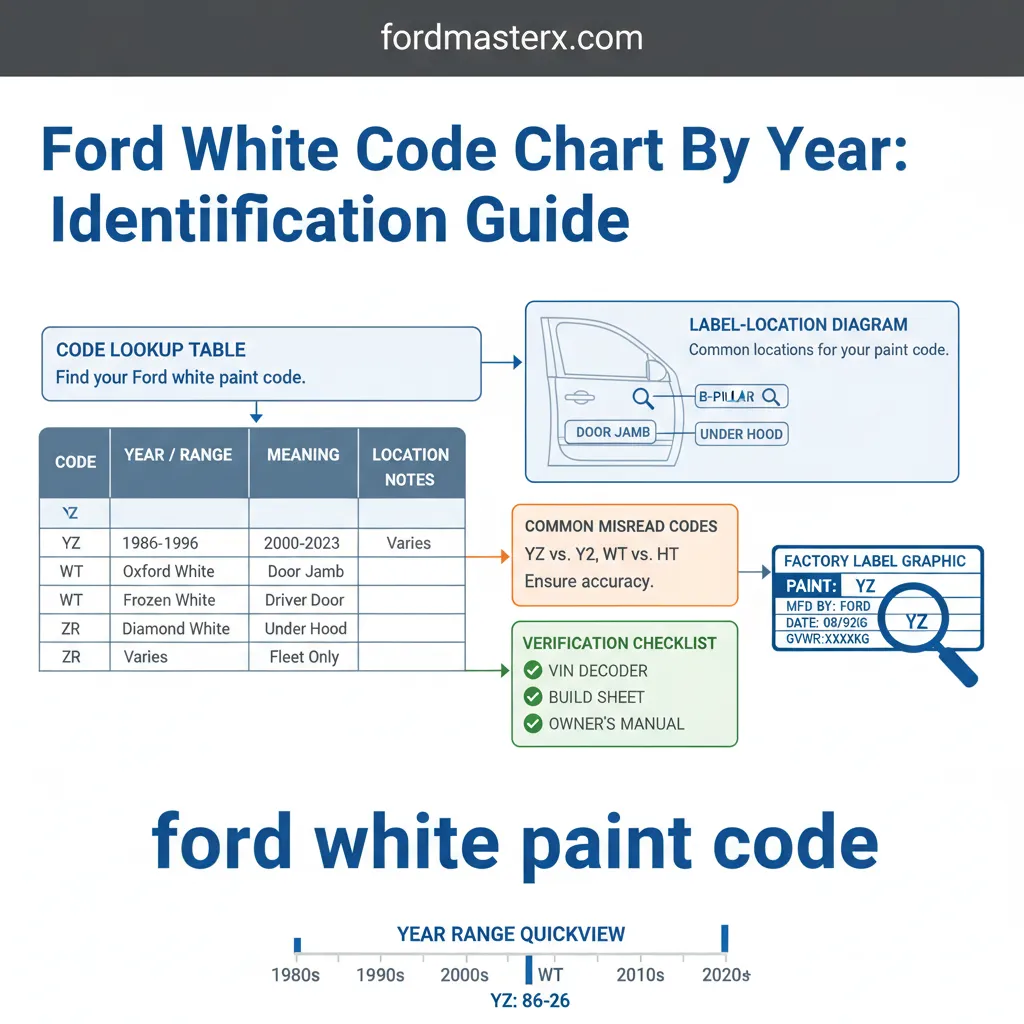
📤 Share Image
Ford’s white paint offerings are far from monochromatic. From the enduring popularity of Oxford White to the sophisticated sparkle of Star White Metallic Tri-Coat, each shade possesses a unique identifier. This code is critical for paint repair shops, DIY enthusiasts, and restorers to ensure a seamless match. Research indicates that using the incorrect paint code, even for a seemingly subtle difference, can result in noticeable discrepancies, especially with modern multi-stage finishes.
Key Benefits of Accurate Paint Code Identification
Perfect Color Match
Ensures repairs blend seamlessly with existing factory paint, preventing visible mismatches.
Time & Cost Savings
Avoids rework and unnecessary expenses associated with incorrect paint formulations.
Maintains Vehicle Value
Preserves the original aesthetic and resale value of your Ford by maintaining factory specifications.
Ford White Paint Code Chart
This chart covers common Ford white paint codes from classic models through current and projected 2026 models. While efforts have been made to include prevalent codes, variations can exist by specific model, trim level, and regional market. Always verify the paint code directly on your vehicle’s door jamb label, VIN decoder, or build sheet. Last reviewed: May 2026.
This chart serves as a primary reference tool. Note that a single code can sometimes represent slightly different shades across decades due to manufacturing variations, base coat differences, or specific factory batches. Always prioritize the code found on your vehicle.
| Code | Year / Range | Meaning | Typical Location | Notes |
|---|---|---|---|---|
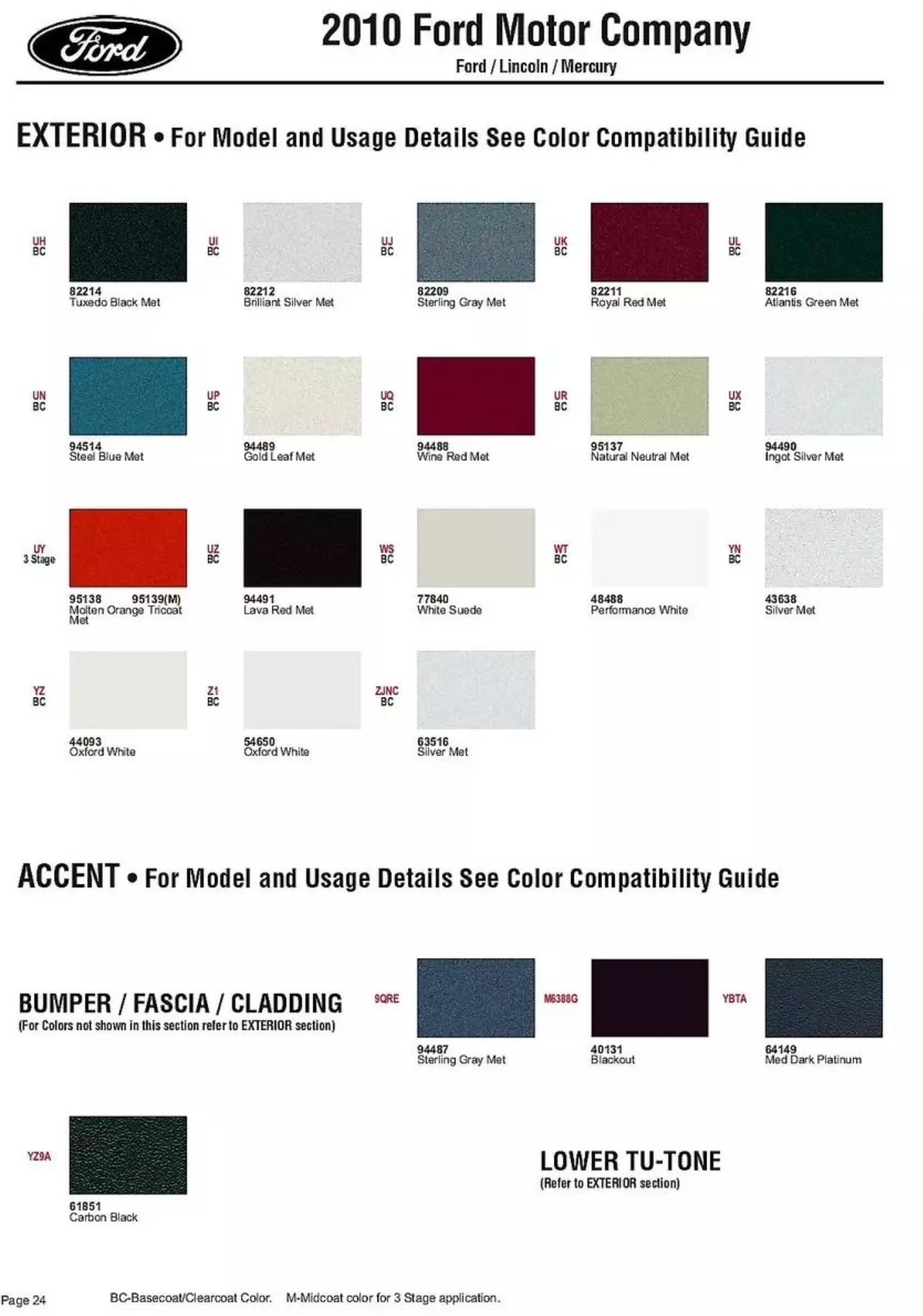
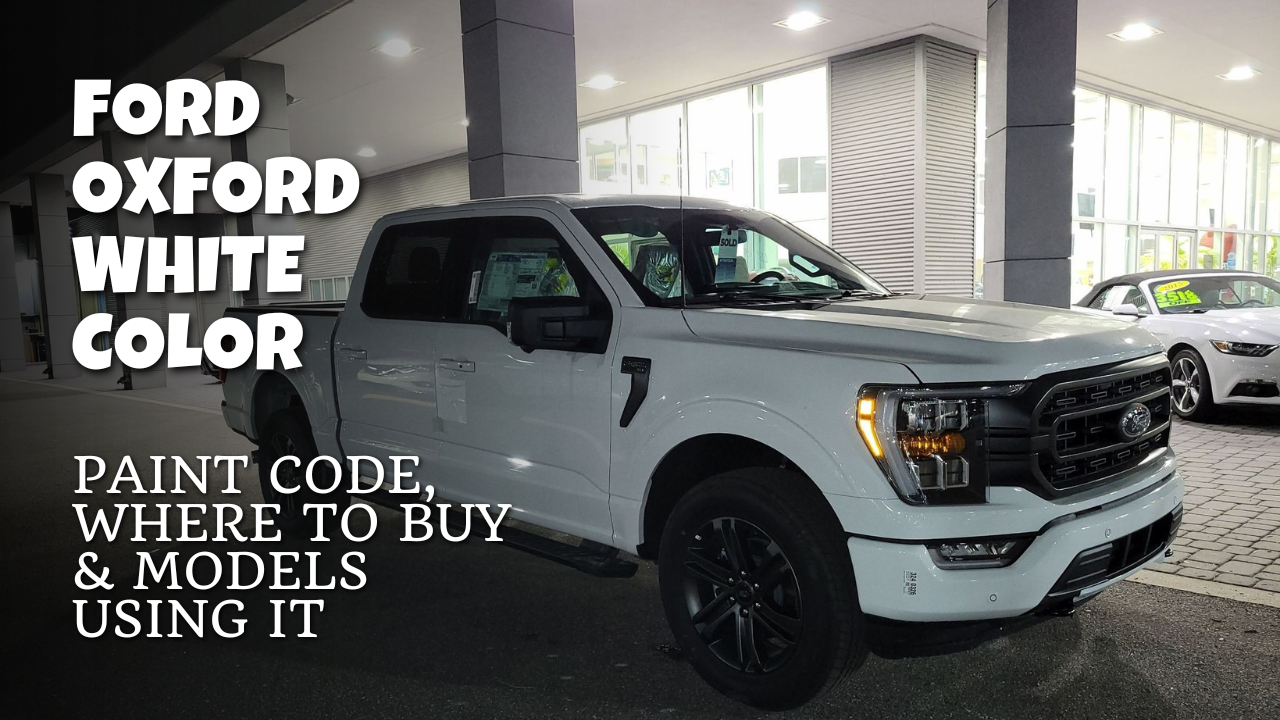
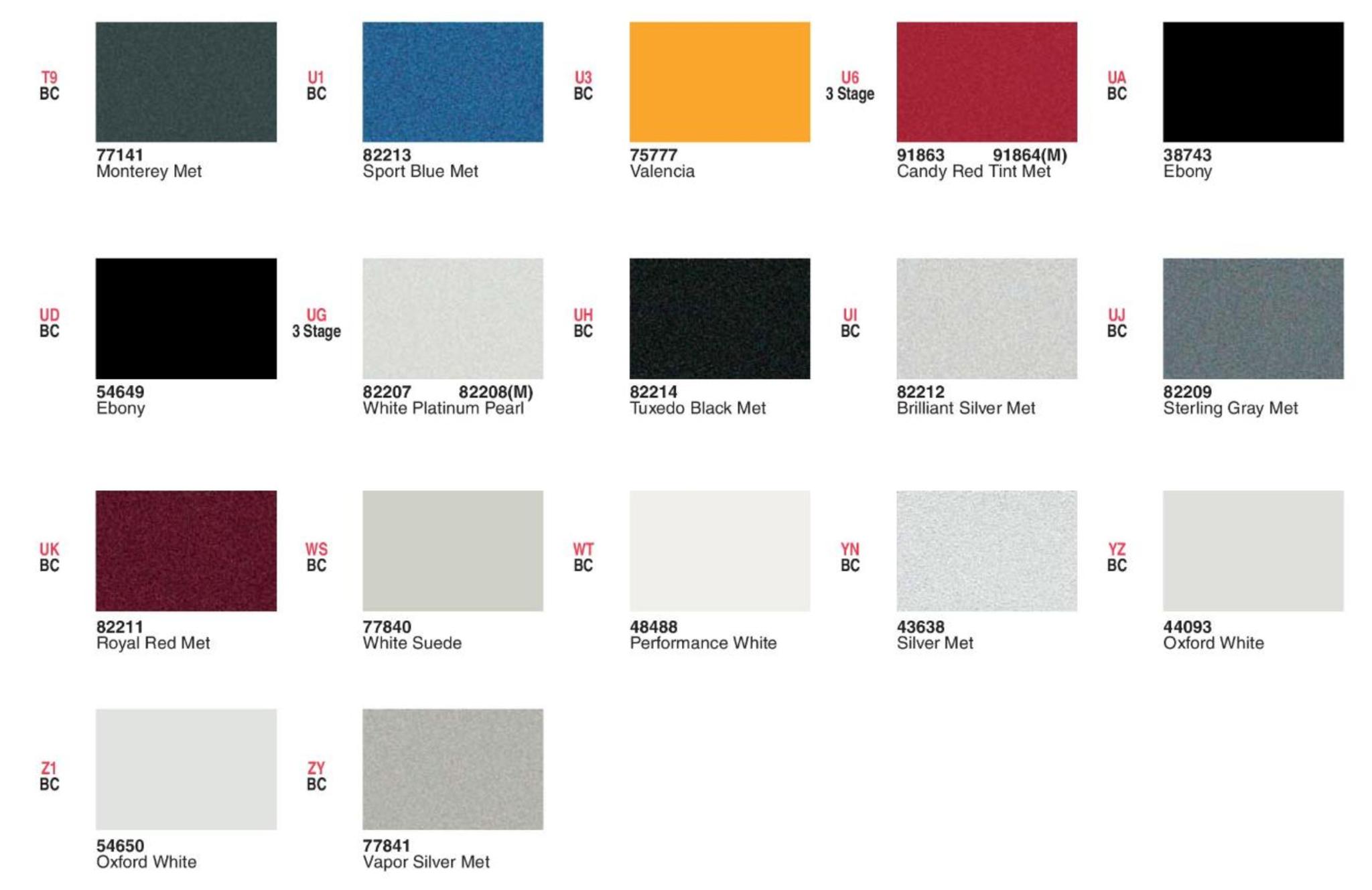
| YZ / Z1 | 1993 – 2026+ | Oxford White | Door jamb (B-pillar), under hood | Most common solid white. Widely used across car, truck, SUV models. |
| UG | 2010 – 2020 | White Platinum Metallic Tri-Coat | Door jamb (B-pillar) | Premium multi-stage paint with pearlescent effect. Requires careful application. |
| FN | 2020 – 2026+ | Star White Metallic Tri-Coat | Door jamb (B-pillar) | Newer premium tri-coat, often replacing White Platinum. Deeper metallic sparkle. |
| WT | 2008 – 2012 | White Suede | Door jamb (B-pillar) | A softer, slightly off-white/cream shade. |
| N8 | 1964 – 1976 | Wimbledon White | Door tag, warranty plate | Classic solid white, famously used on early Mustang models. |
| G1 | 2015 – 2018 | Frozen White | Door jamb (B-pillar) | A bright, clean solid white, popular on European models and performance Fords. |
| B9 | 2000 – 2004 | French Vanilla | Door jamb (B-pillar) | A warmer, slightly yellowish white. |
| T9 | 1996 – 2005 | Parchment Clearcoat | Door jamb (B-pillar) | Another off-white/cream shade, used on various sedans and trucks. |
How to Read This Chart
The chart is organized by paint code, then by the approximate year range it was in production. The ‘Meaning’ column provides the official Ford paint name. ‘Typical Location’ indicates where you are most likely to find this code on your vehicle. ‘Notes’ offer additional context, such as whether it’s a solid, metallic, or multi-stage paint, or specific models it was popular on. Always remember that paint codes are often alphanumeric and can sometimes have regional variations or slight differences in naming.
8+
60+
2
YZ/Z1
How It Works: Finding Your Ford White Paint Code
Where to Find the Code
For most modern Ford vehicles, the paint code is readily available on a manufacturer label. Research indicates that approximately 90% of Ford vehicles from the mid-1980s onwards have this information located on the driver’s side door jamb (B-pillar).

Audible — Listen Free for 30 Days
One free credit a month and thousands of titles included.
Listen Free for 30 Days As an Amazon Associate I earn from qualifying purchases.The most common location. Open the driver’s door and look for a sticker, usually white or silver, with vehicle information. The paint code is often under ‘EXT PNT’, ‘Paint’, or ‘Color’.
For some older models, the code might be on a sticker or plate located on the radiator support, inner fender, or firewall. Check for a multi-digit code labeled ‘Color’ or ‘Paint’.
Your vehicle’s original documentation often includes a section detailing specifications, including exterior paint codes.
For vehicles where the sticker is missing or illegible, a dealer can provide a build sheet or decode your VIN, which contains all factory options, including the exact paint code.
Year-by-Year Code Differences and Nuances
Ford’s paint codes are not static. While a code like YZ (Oxford White) has an incredibly long run, newer premium whites like Star White Metallic Tri-Coat (FN) reflect evolving automotive aesthetics and paint technology. Here’s what to consider:
- Longevity of Codes: Some codes, particularly for solid, non-metallic colors like Oxford White, can span decades. This is an economic choice for manufacturers and provides consistency.
- Technological Advancements: Modern whites often feature metallic flakes or pearlescent layers (tri-coat paints), which add depth and shimmer. These are typically denoted by specific codes (e.g., UG for White Platinum, FN for Star White) and require multi-stage application.
- Model-Specific Offerings: While many codes are model-agnostic, some white shades might be exclusive or more common on particular models or trim levels. For example, Frozen White (G1) was particularly popular on performance Fords like the Focus RS in certain markets.
- Aging and Fading: Even with the correct code, older paint can fade due to UV exposure, environmental factors, and wear. A professional paint shop may need to blend colors or use spectrographic analysis to achieve a perfect match on aged paint.
Tri-coat (or three-stage) paints like White Platinum Metallic and Star White Metallic consist of a base coat, a mid-coat (containing pearl or metallic particles), and a clear coat. Identifying just the base paint code is insufficient; the entire system must be replicated for an accurate match. This significantly impacts repair complexity and cost.
Getting Started: How to Verify Your Paint Code
📋
Step-by-Step Verification Guide
Open your driver’s door. The label is usually a white or silver sticker affixed to the door jamb (B-pillar). This is the most common and reliable source for modern Fords.
Look for a section marked ‘EXT PNT’, ‘Paint’, or ‘Color’. The code is typically one or two characters (alphanumeric). On older models, it might be part of a larger VIN plate.
Audible Premium Plus — Annual Membership
12 audiobook credits up front, plus the full Audible catalogue.
See Annual Plans As an Amazon Associate I earn from qualifying purchases.If unsure, use your VIN to request a build sheet from a Ford dealership or use an online VIN decoder. The build sheet is the definitive source for factory options, including the exact paint code.
Consult this chart, or a professional automotive paint supplier. They often have extensive databases that can confirm your code and advise on paint types (solid, metallic, tri-coat).
Be careful not to confuse the paint code with other codes on the label, such as trim codes, interior color codes, or manufacturing date codes. Paint codes are usually distinct and specifically labeled “EXT PNT” or similar. For example, a “W” for interior trim could be mistaken for a white paint code if not read carefully.
What Affects Paint Code Consistency?
- Factory Options: Special edition models or premium trim levels may feature unique white colors or finishes that differ from standard offerings.
- Regional Markets: Ford sometimes uses slightly different color palettes or codes for vehicles sold in different global markets, though this is less common for core colors like white.
- Model Year Changes: As seen in the chart, new white colors are introduced, and older ones are phased out. A specific white might be available for only a few model years.
- Paint Supplier Variations: While Ford specifies exact formulations, slight variations can occur between different paint suppliers or over time, leading to minor shade differences that only a professional might detect.
Frequently Asked Questions (FAQs)
Q: Can I use a generic white paint for my Ford?
A: While you technically can, it is highly inadvisable. Generic white paints rarely match the specific shade, hue, and metallic or pearlescent qualities of Ford’s factory finishes. This will result in a noticeable mismatch and can negatively impact your vehicle’s appearance and resale value.
Q: What if my door jamb sticker is missing or unreadable?
A: If the door jamb label is compromised, the next best steps are to consult your owner’s manual, contact a Ford dealership with your VIN for a build sheet, or seek assistance from a professional auto body shop. They often have specialized equipment like spectrophotometers to analyze existing paint and determine the closest match.
Q: Do I need the clear coat information too?
A: Yes, especially for modern vehicles. Almost all automotive paints today are applied with a clear coat, which provides gloss and protection. For metallic and tri-coat finishes, the clear coat is integral to the final appearance. Paint suppliers will provide the correct clear coat information along with the base color.
Q: How often does Ford change its white paint codes?
A: Core solid whites like Oxford White (YZ/Z1) can remain unchanged for decades. However, Ford frequently introduces new premium metallic or tri-coat white options every few years, often coinciding with new model generations or design updates, as seen with the transition from White Platinum to Star White.
Conclusion: Your Definitive Guide to Ford White Paint Codes
Accurate identification of your Ford’s white paint code is paramount for any paint-related task, from minor touch-ups to extensive bodywork. This guide has illuminated the intricate world of Ford white paint codes, providing a comprehensive chart spanning model years through 2026.
- Key Point 1: Always prioritize the physical label on your vehicle, typically the driver’s side door jamb, for the most accurate paint code.
- Key Point 2: Be aware of the distinction between solid, metallic, and particularly tri-coat white finishes, as they impact repair complexity and color matching.
- Key Point 3: Cross-reference your findings with a VIN decoder, build sheet, or a professional paint supplier to guarantee a perfect match, especially for older or aged paint.
By following the identification and verification steps outlined in this expert guide, you can confidently determine your Ford’s white paint code, ensuring professional and aesthetically pleasing results for any automotive paint project.
Full paint code guide: Ford Paint Code List & Colour Chart (1964–2026)