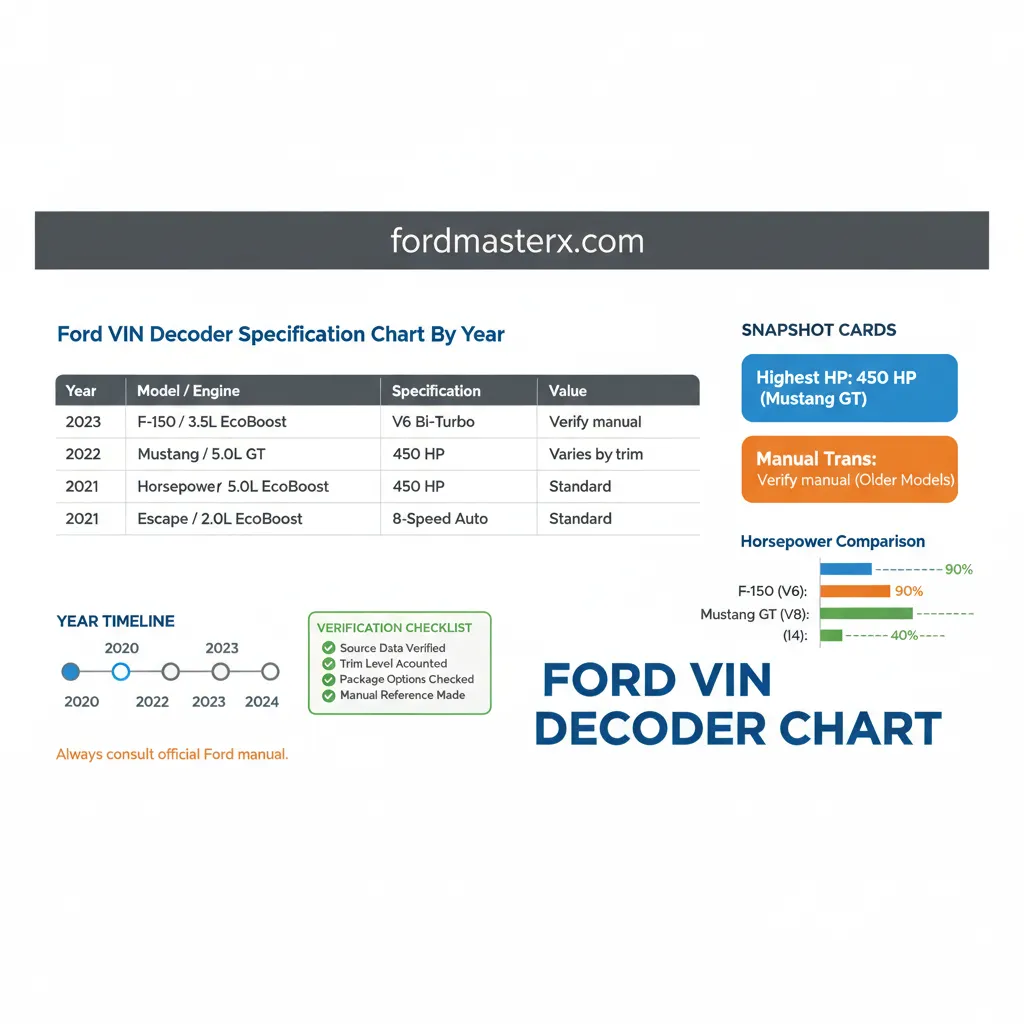
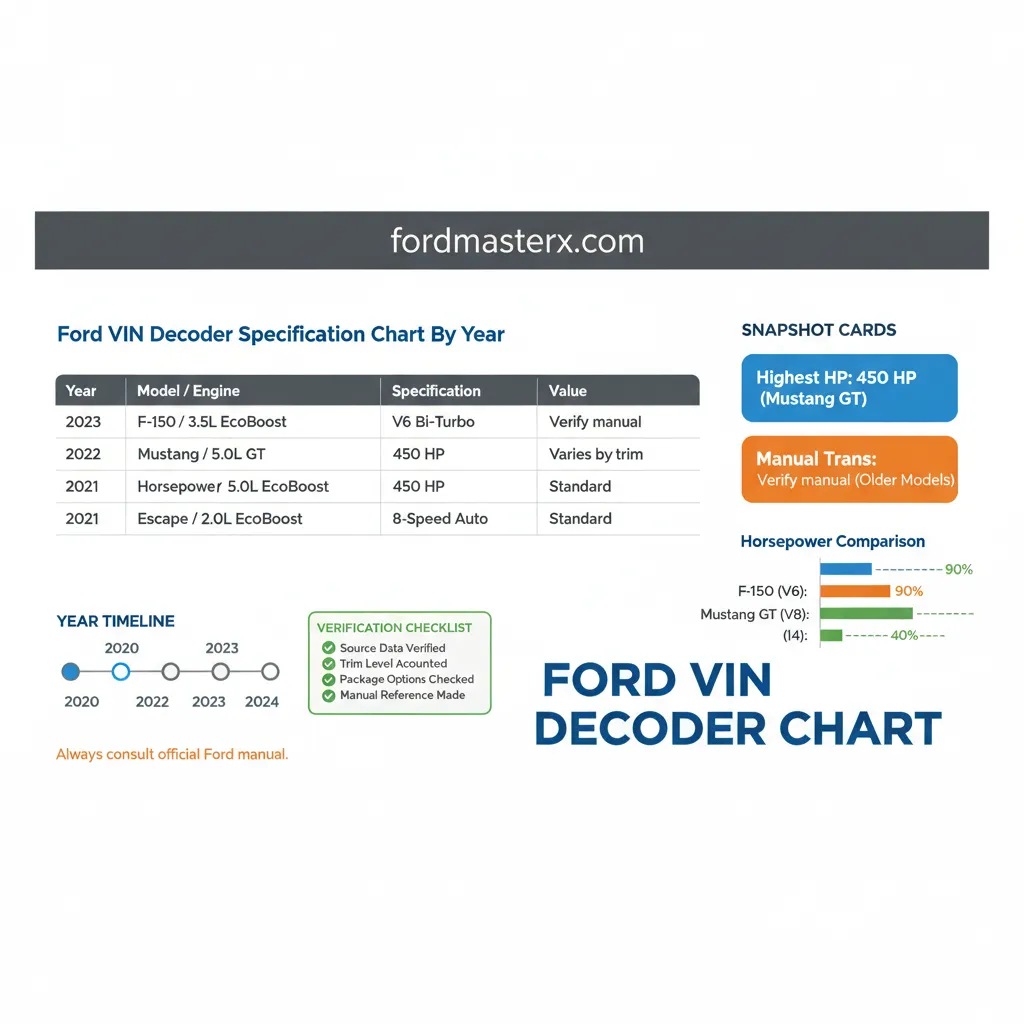
Ford VIN Decoder Specification Chart By Year

Quick Answer
A Ford VIN Decoder Specification Chart provides a comprehensive breakdown of vehicle attributes, including model year, engine option, body style, and factory specifications, all derived from the 17-digit Vehicle Identification Number. This chart enables owners and technicians to understand specific configurations, maximum ratings, and crucial details of a Ford vehicle by interpreting its unique VIN sequence. Always cross-reference with official Ford manuals or the vehicle’s doorjamb sticker for definitive values.
Unlocking the intricate details of your Ford vehicle begins with its Vehicle Identification Number (VIN). Despite being a trove of critical data, the 17-digit VIN often appears as a cryptic sequence, making it challenging for owners and technicians to pinpoint exact factory specifications, engine options, or precise configurations. This comprehensive Ford VIN Decoder Specification Chart aims to demystify your vehicle’s unique identifier, providing a clear roadmap to interpret essential attributes from its model year to core factory specifications, empowering you with accurate, authoritative vehicle information.

Prime for Young Adults — 6 Months Free
Students and 18–24s get six months of Prime free, then half price.
Start 6 Months Free As an Amazon Associate I earn from qualifying purchases.This chart covers Ford vehicles manufactured from 1981 to present (and references available model years through 2026), focusing on the 17-digit VIN standard. It illustrates how specific VIN positions correlate with general vehicle attributes and specification ranges. While the VIN provides definitive data for model year, manufacturing plant, and engine type, precise specifications like horsepower, torque, towing capacity, or payload are often configuration-dependent (trim, drivetrain, axle ratio, optional packages) and should always be verified against the vehicle’s owner’s manual, doorjamb sticker, or an official Ford service manual. Numerical values provided represent illustrative examples or typical ranges; exact figures require specific VIN decoding and cross-referencing for your individual vehicle.
Last reviewed: May 2026
Ford VIN Decoder Specification Chart By Year (1981-Present)
Recommended Best Deal Products


📤 Share Image
| Year | Model / Engine | Specification | Value | Notes |
|---|---|---|---|---|
| 2024 | F-150 / Engine Code ‘G’ | Engine Type | 5.0L Coyote V8 | VIN Position 8, Horsepower/Torque vary by trim. |
| 2023 | Explorer / Engine Code ‘8’ | Engine Type | 2.3L EcoBoost I4 | VIN Position 8. Common in base and XLT trims. |
| 2022 | Mustang GT / Engine Code ‘F’ | Engine Type | 5.0L Coyote V8 | VIN Position 8; ‘F’ frequently used for 5.0L V8 in performance models. |
| 2021 | F-250 / Engine Code ‘T’ | Engine Type | 7.3L Godzilla V8 | VIN Position 8, Specific to Super Duty trucks. Max ratings vary by gearing. |
| 2020 | Ranger / Engine Code ‘N’ | Engine Type | 2.3L EcoBoost I4 | VIN Position 8, common for the US-spec Ranger. |
| 2019 | F-150 / Body Style ‘W’ | Body Type | SuperCrew Cab (4-door) | VIN Position 5-7 (VDS); impacts interior space and payload capacity. |
| 2018 | Edge / Engine Code ‘C’ | Engine Type | 2.0L EcoBoost I4 | VIN Position 8. Common base engine for the Edge. |
| 2010 | Fusion / Model Year | Model Year Code | ‘A’ | VIN Position 10. Also used for 1980 models; context is key. |
| 1995 | F-150 / Engine Code ‘N’ | Engine Type | 5.8L V8 (351W) | VIN Position 8; illustrates how codes can change meanings across generations. |
| 1981 | All Models / VIN Standard | VIN Length | 17 Digits | Standardized globally from 1981 onwards. |
How to read this chart: This table provides illustrative examples of how specific VIN positions correlate to Ford vehicle specifications across different model years. ‘Year’ refers to the vehicle’s model year (VIN Position 10). ‘Model / Engine’ indicates the vehicle type and the specific engine code from VIN Position 8, or a body style code from VIN Positions 5-7. ‘Specification’ details what attribute is being decoded. ‘Value’ lists the decoded information. ‘Notes’ provide context, highlight the specific VIN position, and warn about configuration-dependent variations that require further verification.
17 Digits
1981
VIN 8 (Engine)
VIN 10
This snapshot highlights key aspects of the VIN standard and the most critical positions for initial decoding.
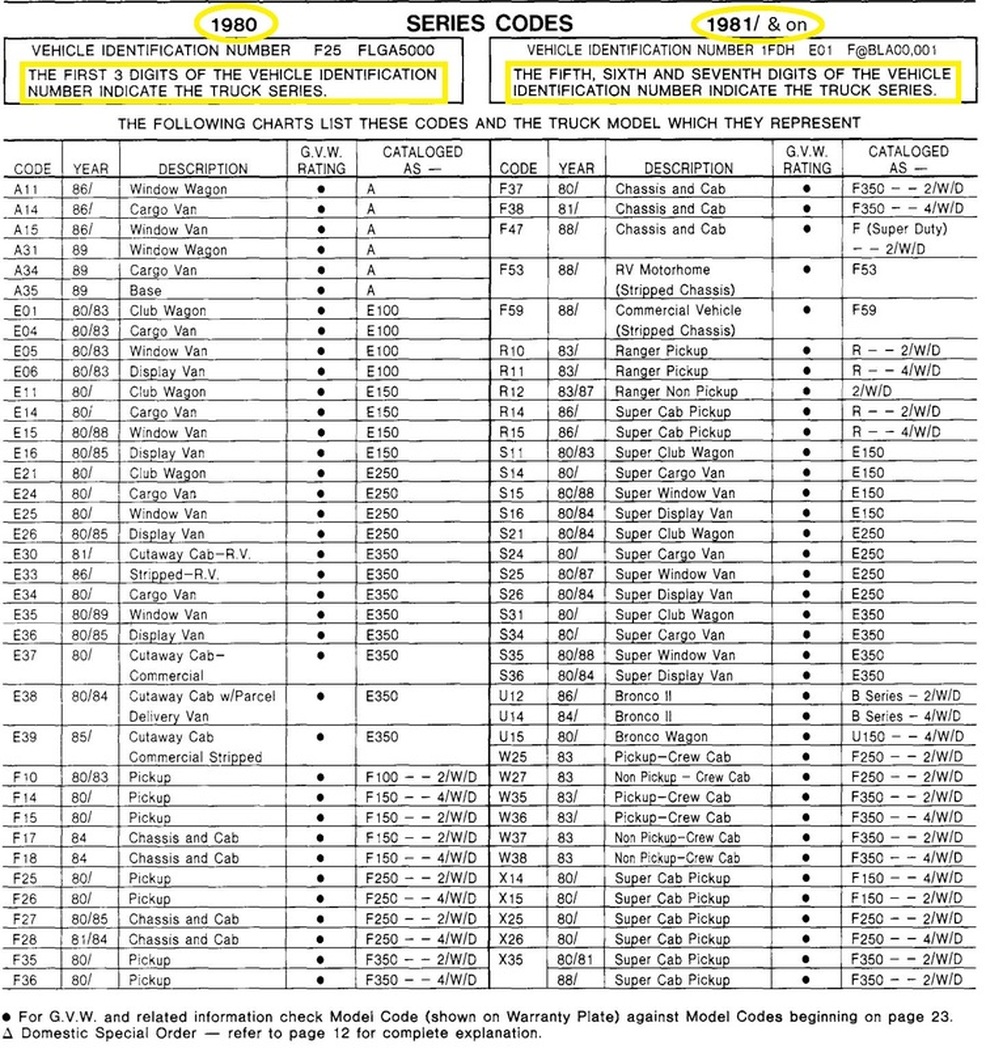
Deciphering Ford VIN Structure and Model Year Codes
Understanding the universal 17-digit VIN standard is the first step in decoding your Ford’s specifications. This unique identifier, adopted globally for all vehicles manufactured from 1981 onwards, is segmented into three key sections, each providing crucial insights into the vehicle’s origins and fundamental characteristics.
The 17-Digit VIN Standard Breakdown
The 17-digit VIN is divided as follows:
- Positions 1-3: World Manufacturer Identifier (WMI) – This section identifies the country of origin and the manufacturer. For Ford, common North American WMIs include 1FA (Ford Motor Company, USA), 2FA (Ford Motor Company, Canada), and 3FA (Ford Motor Company, Mexico).
- Positions 4-9: Vehicle Descriptor Section (VDS) – These characters describe the vehicle’s attributes, such as body type, model series, restraint system type, and gross vehicle weight rating (GVWR). Position 8 is particularly important as it denotes the engine code, a direct link to the vehicle’s powertrain.
- Positions 10-17: Vehicle Identifier Section (VIS) – This is the unique sequential number for each vehicle, also containing the model year and assembly plant code.
VIN Position 10: The Model Year Code
VIN Position 10 is exclusively dedicated to identifying the vehicle’s model year. This position follows a standardized alphanumeric cycle, which repeats every 30 years (excluding I, O, Q, U, Z, and 0 for clarity). Research indicates that misinterpreting this single character is a common error, highlighting the necessity of consulting an accurate chart for its specific model year. For instance, ‘A’ can signify both 1980 and 2010 models, requiring context from the vehicle’s production date or other VIN segments to differentiate.

Audible — Listen Free for 30 Days
One free credit a month and thousands of titles included.
Listen Free for 30 Days As an Amazon Associate I earn from qualifying purchases.- A: 1980, 2010
- B: 1981, 2011
- C: 1982, 2012
- D: 1983, 2013
- E: 1984, 2014
- F: 1985, 2015
- G: 1986, 2016
- H: 1987, 2017
- J: 1988, 2018
- K: 1989, 2019
- L: 1990, 2020
- M: 1991, 2021
- N: 1992, 2022
- P: 1993, 2023
- R: 1994, 2024
- S: 1995, 2025
- T: 1996, 2026
- …and so on, through the alphanumeric sequence.
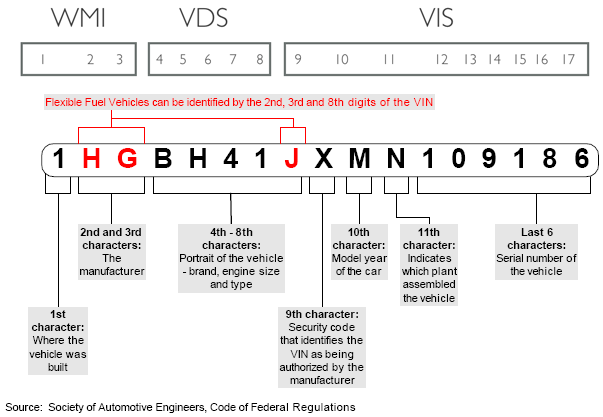
VIN Position 11: The Assembly Plant Code
Position 11 identifies the specific plant where the vehicle was assembled. While not directly linked to performance specifications, this code is invaluable for tracking manufacturing origins, potential regional variations in components, or recalling service bulletins specific to a production facility. Common Ford plant codes include ‘K’ for Kansas City, ‘F’ for Dearborn, or ‘R’ for Hermosillo.
📋
Interpreting Engine, Drivetrain, and Configuration Codes
The heart of a vehicle’s specifications often lies within its engine and drivetrain configuration. For Ford vehicles, the VIN provides direct access to this crucial data, though some details require cross-referencing with other sources.
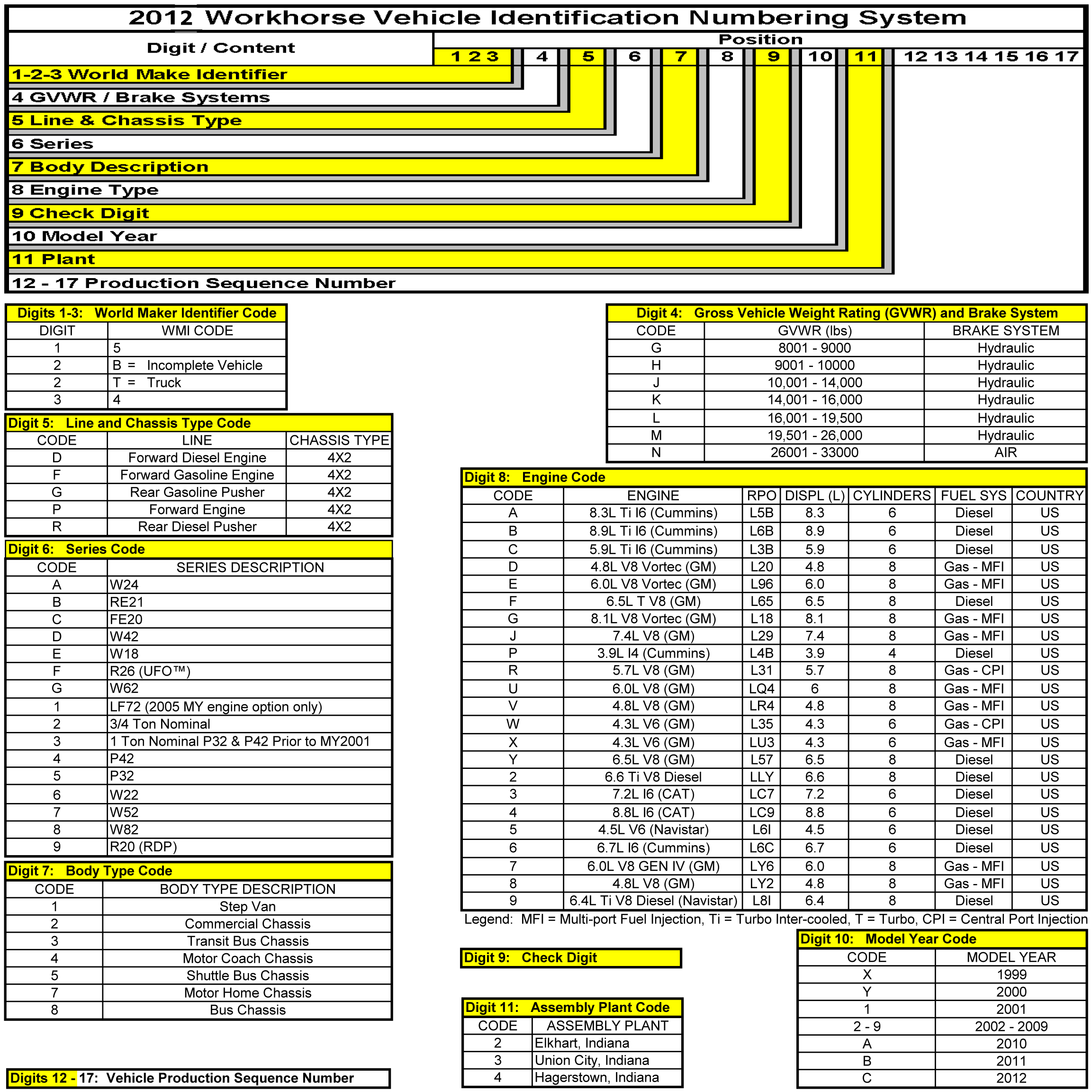
This single character is arguably the most critical for understanding your vehicle’s core performance. It designates the specific engine option installed at the factory. Research indicates that across Ford’s diverse lineup, this code directly maps to engine displacement, fuel type, and typically dictates the base horsepower and torque ranges. For example, ‘F’ often signifies a 5.0L Coyote V8 in a Mustang or F-150, while ‘8’ might point to a 2.3L EcoBoost I4 in an Explorer or Bronco. However, the exact output (hp, lb-ft) can still vary by model year and specific tune for that application, even with the same engine code.
Within the VDS, characters 4 through 7 typically describe the body type, series, and sometimes the Gross Vehicle Weight Rating (GVWR) class. For trucks like the F-Series, these codes delineate between Regular Cab, SuperCab, and SuperCrew configurations (e.g., ‘W’ for SuperCrew, ‘X’ for SuperCab). These body styles directly influence payload capacity and internal dimensions. For passenger vehicles, they identify sedan, coupe, SUV, or hatchback types. The GVWR class, though sometimes encoded here, directly impacts the vehicle’s maximum loaded weight capabilities.
While not always a single, dedicated VIN character, the drivetrain configuration (2WD, 4WD, AWD) is often inferable from a combination of VIN positions within the VDS. This is crucial for models like the F-150, Ranger, Explorer, or Bronco, where the drivetrain significantly impacts towing capacity, payload, curb weight, and off-road capability. A VIN decoder can typically identify this fundamental difference, though specific axle ratios (e.g., 3.31, 3.55, 3.73) are generally not specified in the VIN and must be found on the doorjamb sticker or build sheet.
Year-by-Year VIN Decoding Changes and Evolution
The automotive industry is in a constant state of evolution, and Ford’s VIN encoding reflects these changes. What a particular VIN code signified in one model year might be entirely different in another, especially for the crucial engine code (Position 8). This dynamic nature necessitates a year-by-year approach to VIN decoding.
Audible Premium Plus — Annual Membership
12 audiobook credits up front, plus the full Audible catalogue.
See Annual Plans As an Amazon Associate I earn from qualifying purchases.Evolving Meanings of VIN Codes
A classic example of evolving VIN codes can be seen with older Ford engines. For instance, a VIN engine code ‘N’ for an F-150 in 1995 denoted a 5.8L V8 (351W), a completely different engine from a VIN code ‘N’ in a 2020 Ranger, which signifies a 2.3L EcoBoost I4. These shifts occur due to:
- Generational Redesigns: Major vehicle redesigns often accompany new engine lineups or significant updates to existing ones, requiring new or repurposed VIN codes.
- Powertrain Updates: The introduction of new engine families, such as the EcoBoost lineup or the Godzilla V8, directly translates to new VIN codes for these advanced powertrains. Older, less efficient engines are phased out, and their codes may be reused decades later for unrelated powerplants.
- Regulatory Requirements: Stricter emissions standards, safety regulations, and fuel economy mandates often drive changes in vehicle components. These changes can be reflected in VIN coding, ensuring the identifier accurately represents the vehicle’s compliance.
Impact on Maximum Ratings
Even with seemingly consistent engine codes, maximum rating specifications such as towing and payload capacities evolve year-by-year. Industry data suggests that chassis improvements, upgraded transmissions, enhanced cooling systems, and new factory tow packages contribute to these fluctuations. For example, an F-150 with a 3.5L EcoBoost engine from 2015 might have a different maximum towing capacity than a 2020 model with the same engine code, due to updates in the transmission or available rear axle ratios. Always verify the specifications for the specific model year of your vehicle.
A VIN provides core data, but specific capabilities like maximum towing or payload are heavily influenced by factory-installed options and packages that may not have explicit VIN codes. Axle ratio, transmission type, tow package (e.g., Max Trailer Tow, Heavy-Duty Payload), and tire selection are critical factors that dramatically alter these numbers. Always refer to your vehicle’s doorjamb sticker and owner’s manual for definitive ratings.
Factors Affecting VIN Data Interpretation and Final Specifications
While the VIN is an invaluable starting point for decoding Ford vehicle specifications, it’s crucial to understand its limitations. The VIN provides the foundational data, but precise, configuration-specific details often require looking beyond the 17 characters.
The Role of Optional Packages and Trim Levels
Many critical specifications, especially those related to maximum performance like towing and payload, are significantly affected by optional packages and trim levels. For instance:
- Towing Packages: A Ford F-150 with a Max Trailer Tow Package will have a substantially higher towing capacity than a similarly equipped truck without it, often due to upgraded axles, radiators, and integrated brake controllers. The VIN might indicate the engine, but not the presence of this specific package.
- Payload Packages: Heavy-duty payload packages, common on F-Series trucks, include stronger frames, springs, and wheels, leading to significantly increased payload capacities. These are not always directly discernible from the VIN.
- Performance Trims: Models like the Mustang GT vs. Shelby GT500, or an F-150 XLT vs. Raptor, share base model identifiers but have vastly different engine tunes, suspension, and driveline components that aren’t fully detailed in the VIN.
Market-Specific and Regional Variations
Ford, as a global manufacturer, produces vehicles with variations tailored to specific markets or regions. These can include different engine options, emissions equipment, safety features, or even unique trim levels. A VIN from a European-market Ford Focus, for example, will decode differently from a North American one, even if they share similar model designations. Special editions (e.g., limited-run models) also introduce unique specifications that VINs may not fully capture.
Indispensable Verification Sources
Given these complexities, relying solely on VIN decoders for highly specific, configuration-dependent data is insufficient. Expert advice always points to the following authoritative sources for definitive specifications:
- Vehicle Doorjamb Sticker: This label (typically found on the driver’s side door frame) provides critical information, including definitive GVWR, Gross Axle Weight Rating (GAWR) for both front and rear axles, tire sizes, recommended tire pressures, and the vehicle’s specific payload capacity. This is the most accurate source for your vehicle’s payload.
- Owner’s Manual: The owner’s manual specific to your model year and trim provides comprehensive details on recommended maintenance schedules, fluid capacities (e.g., engine oil viscosity and quantity with filter change), and often includes detailed towing and payload charts that account for various configurations (engine, drivetrain, axle ratio, cab/bed style).
- Official Ford Towing Guides: Ford publishes annual towing guides that meticulously detail the maximum towing capacities for various models, broken down by engine, drivetrain, axle ratio, and specific tow packages. These are considered the most authoritative source for towing specifications.
- Original Build Sheet or Window Sticker: If available, these documents detail every factory option and package installed, providing an exhaustive list of specifications that influenced the vehicle’s capabilities.
Ensure you are using the correct decoding chart for your vehicle’s exact model year to avoid misinterpretations.
Identify the engine type, which provides base performance characteristics, then cross-reference with the owner’s manual.
For definitive payload, GVWR, and tire specifications, the doorjamb sticker is the primary authoritative source.
For precise towing capacities, fluid specifications (oil viscosity, capacity), and maintenance, consult the vehicle-specific owner’s manual.
This checklist outlines the critical steps for accurately verifying your Ford’s specifications.
Frequently Asked Questions (FAQs) About Ford VIN Decoding
What is a VIN and why is it important for my Ford?
A VIN (Vehicle Identification Number) is a unique 17-character code assigned to every vehicle manufactured since 1981. For your Ford, it acts as a fingerprint, encoding crucial factory specification data such as the model year, manufacturing plant, engine option, body style, and other attributes. It’s essential for accurate vehicle identification, parts lookup, service history, and verifying capabilities like towing or payload.
Can a VIN decoder tell me the exact horsepower or towing capacity of my Ford?
A VIN decoder will provide the engine code (VIN Position 8), which identifies the specific engine type. From this, you can infer a general horsepower and torque range. However, exact figures for horsepower, torque, or maximum towing capacity are often dependent on specific trim levels, axle ratios, and optional packages (e.g., factory towing package) that are not fully encoded in the VIN. You must cross-reference this information with your vehicle’s owner’s manual, doorjamb sticker, or official Ford towing guides for precise numbers.
Where can I find the VIN on my Ford vehicle?
The VIN is typically located in several places on your Ford. The most common locations include the driver’s side dashboard (visible through the windshield), the driver’s side doorjamb (on a sticker or plate), and often on vehicle registration or insurance documents. For some models, it might also be stamped on the frame or engine block.
Why do VIN codes change their meaning across different years?
VIN codes, especially those for engines and body types, can change meaning across model years due to technological advancements, vehicle redesigns, and regulatory updates. As new engines are introduced and older ones retired, manufacturers may reuse alphanumeric codes for different components or models. This is why it’s critical to always use a VIN decoder that is year-specific for your Ford to ensure accurate interpretation.
What is the most accurate source for my Ford’s payload capacity?
The most accurate and definitive source for your Ford’s payload capacity is the yellow-and-white Tire and Loading Information label located on the driver’s side doorjamb. This sticker provides the specific payload capacity for your vehicle as it left the factory, accounting for all installed options and configurations.
Conclusion
The VIN is a powerful tool for decoding fundamental Ford vehicle specifications, providing a standardized roadmap to identify key attributes from its model year to core engine type and basic body configuration. However, always consider year-by-year variations and configuration-specific nuances when interpreting VIN data. Cross-reference VIN-derived information with official Ford documentation—such as your vehicle’s doorjamb sticker, owner’s manual, or factory towing guides—for definitive accuracy, especially when seeking maximum ratings for towing, payload, or precise fluid capacities.
Utilize this Ford VIN Decoder Specification Chart as your authoritative starting point, then consult your vehicle’s owner’s manual, doorjamb sticker, or official Ford resources for the most precise, configuration-specific data relevant to your exact vehicle. This layered approach ensures you have the most accurate information for maintenance, upgrades, and safe operation.
Frequently Asked Questions
What specific information does a Ford VIN typically provide?
A Ford VIN provides a wealth of information, including the World Manufacturer Identifier (WMI), vehicle type, engine code, restraint system, series, body style, Gross Vehicle Weight Rating (GVWR), model year (Position 10), assembly plant (Position 11), and a unique sequential production number. These 17 characters collectively decode essential factory specifications for your specific vehicle.
Why do some VIN decoders give different results or less detail?
Discrepancies in VIN decoder results often stem from varying databases, outdated information, or a lack of specific Ford factory data. Generic decoders may provide broad categories, while official Ford resources offer granular detail. For definitive specifications, always prioritize information from the vehicle’s owner’s manual, doorjamb sticker, or a Ford dealership’s service records over third-party tools.
Where can I find the VIN on my Ford vehicle?
The VIN on your Ford vehicle can typically be found in several prominent locations. The most common spots include the driver’s side dashboard, visible through the windshield. It is also printed on a sticker or label on the driver’s side doorjamb, and embossed on the vehicle’s frame or firewall. Additionally, it is listed on your vehicle’s registration and insurance documents.
Can a VIN tell me about recalls or service history for my Ford?
While a VIN directly identifies your specific vehicle, it does not inherently encode recall or service history. However, the VIN is the key identifier used by manufacturers and service centers to track such records. You can use your Ford’s VIN on the official Ford recall website or at a Ford dealership to check for open recalls or access service history through their authorized systems.
How accurate is a VIN decoder for performance specs like horsepower or towing capacity?
A VIN decoder is highly accurate for identifying the base engine type, which directly correlates to a published horsepower range. However, for precise performance specs like exact horsepower, torque, or maximum towing capacity, it’s crucial to consult the owner’s manual or doorjamb sticker. These figures can vary significantly based on specific trim levels, optional packages (e.g., axle ratio, tow package), and regional configurations not fully detailed by the VIN alone.