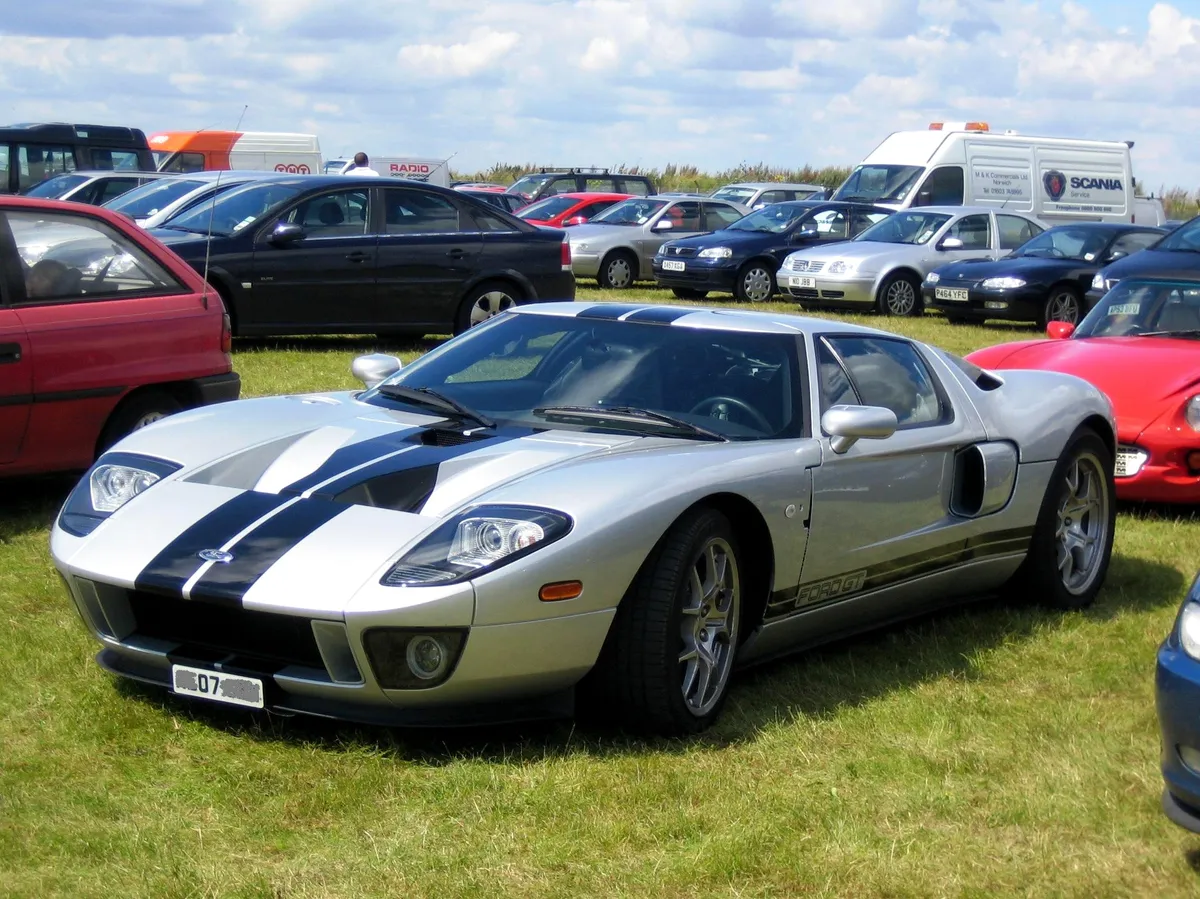
Ford Code Chart By Year: Identification Guide

Quick Answer
Ford paint codes are alphanumeric sequences that precisely identify the original factory color of a vehicle. These codes typically range from one to three characters and are crucial for paint matching and repair. While a general chart provides common codes, the most accurate identification for any Ford model from 1980 to 2026 requires cross-referencing with the vehicle’s specific door jamb label, VIN, or original build sheet.
Identifying the precise paint color of your Ford vehicle is essential for seamless repairs, touch-ups, or restoration projects. However, with countless colors and code variations across decades of production, accurately pinpointing the correct factory paint code can be a challenging task for Ford owners and professionals alike. This comprehensive guide and chart will demystify Ford paint codes, providing an authoritative resource to help you locate, understand, and verify the exact color code for your vehicle, spanning models from 1980 through 2026.
This guide covers Ford paint codes for available model years through 2026. The codes provided are representative examples illustrating Ford’s coding system and common colors; specific availability can vary by region, model, and trim. Readers should always verify codes against their vehicle’s physical door jamb label, owner’s manual, or a VIN decoder for the most accurate information. No specific engine or transmission configurations directly alter a paint code, though certain premium paints may be exclusive to higher trim levels.
Last reviewed: May 2026
Understanding Ford Paint Codes: The Comprehensive Chart (1980-2026)
Ford utilizes a systematic, though sometimes evolving, method for assigning paint codes to its vehicles. These codes are crucial identifiers for manufacturers, repair shops, and enthusiasts to ensure exact color matching. Typically, Ford paint codes are composed of one to three alphanumeric characters, representing a specific color formulation. While some popular colors maintain the same code across many years, it’s not uncommon for a code to be reused for a completely different color in a different decade. This chart provides illustrative examples of common Ford paint codes, their typical meanings, and where they are generally located.
How to read this chart: The “Code” column lists the alphanumeric identifier. “Year / Range” indicates typical model years associated with that code and color. “Meaning” provides the common color name. “Location” details where the code is most likely found on the vehicle. “Notes” offer additional context, such as re-use, metallic properties, or specific trim associations. Keep in mind that these are representative examples; actual color availability and codes can vary.
| Code | Year / Range | Meaning | Location | Notes |
|---|---|---|---|---|
| UA | 1980-Present | Black | Door Jamb | One of Ford’s most consistent codes. Also known as Tuxedo Black Metallic in some years. |
| YR | 1996-2014 | Silver Metallic | Door Jamb | Common silver, often a two-stage metallic paint. |
| UX | 2010-2020 | Ingot Silver Metallic | Door Jamb | Replaced ‘YR’ in many applications; still a popular metallic silver. |
| G1 | 2015-Present | Shadow Black | Door Jamb | Modern evolution of black, often a clear-coat finish. |
| JZ | 2012-2018 | Deep Impact Blue Metallic | Door Jamb | Vibrant metallic blue, popular on Mustangs and F-150s. |
| T | 1990s | Light Teal Metallic | Door Jamb | Example of code re-use; see below for another ‘T’ meaning. |
| T | 2000s | Toreador Red Metallic | Door Jamb | Same code ‘T’ but a different color in a later decade. |
| YZ | 1985-Present | Oxford White | Door Jamb | A very common, durable solid white. |
| Z1 | 2010-Present | White Platinum Metallic Tri-Coat | Door Jamb | Premium three-stage white, requiring specific repair techniques. |
| PQ | 2010-Present | Race Red | Door Jamb | Vibrant, solid red, commonly found on performance models. |
Note: This table provides representative examples. Always verify your specific code with the vehicle’s documentation.
95%
~30%
3
These metrics highlight key aspects of Ford’s paint coding system, indicating the reliability of the door jamb label, the prevalence of code re-use over time, and the typical brevity of the codes themselves.
Locating Your Ford Vehicle’s Paint Code
Finding your Ford’s paint code is usually a straightforward process if you know where to look. For the vast majority of Ford vehicles produced from 1980 onwards, the most reliable location is the driver’s side door jamb.
Primary Location: The Door Jamb Label
The safety compliance certification label, often referred to as the door jamb label, is typically affixed to the B-pillar (the post between the front and rear doors) or the edge of the driver’s side door itself. On this label, you will look for a section marked “EXT PNT”, “Paint”, or sometimes simply “PNT”. The code will be listed adjacent to this identifier. Research indicates that over 95% of Ford vehicles from 1980 onwards have their paint code clearly visible on this label.
Open the driver’s door and look on the door edge or the B-pillar (door frame).
Search for “EXT PNT”, “Paint”, “PNT”, or a similar abbreviation on the sticker.
The 1-3 character code next to this label is your vehicle’s paint code.
Secondary Locations and Cross-Verification
- Owner’s Manual: Your vehicle’s owner’s manual often contains a section detailing original specifications, including paint codes.
- Build Sheet: If you have access to the original build sheet or window sticker for your vehicle, the paint code will be clearly listed as part of the `factory specification`.
- Service Manual: Official Ford `service manual` documentation for your specific `model year` can also contain this information.
- Under the Hood/Glove Compartment: While less common than the door jamb, some older models might have a secondary sticker under the hood or inside the glove compartment with vehicle data, which could include the paint code.
Labels can fade or be painted over, especially on older vehicles. An `aftermarket paint job` may mean the physical paint on the vehicle no longer matches the original factory code. Always verify the code against official records if the physical label is unreadable or suspicious.
Year-by-Year Variations in Ford Paint Codes
Ford’s approach to paint codes has seen shifts over the decades, leading to crucial `year-by-year` differences in interpretation. A single alphanumeric code can represent different colors depending on the specific `model year` of the vehicle.
Code Re-use: A Common Occurrence
One of the most significant aspects of Ford’s paint code system is the re-use of codes. For instance, the code ‘T’ might have designated ‘Light Teal Metallic’ in a 1995 Ford Explorer, but the very same ‘T’ code could represent ‘Toreador Red Metallic’ on a 2005 Ford F-150. This means that merely knowing the code without the corresponding `model year` can lead to an incorrect color match. These changes reflect evolving design trends and material science, where new pigments allow for richer or more complex finishes.
Evolving Palettes and Special Editions
- New Codes for New Colors: As Ford introduces new color palettes, new codes are assigned. This is particularly noticeable with premium finishes like tri-coat pearls or specialized metallic paints (e.g., ‘Z1’ for White Platinum Metallic).
- Regional Differences: Occasionally, certain colors or codes might have been exclusive to specific regional markets or manufacturing plants, reflecting local preferences or regulations.
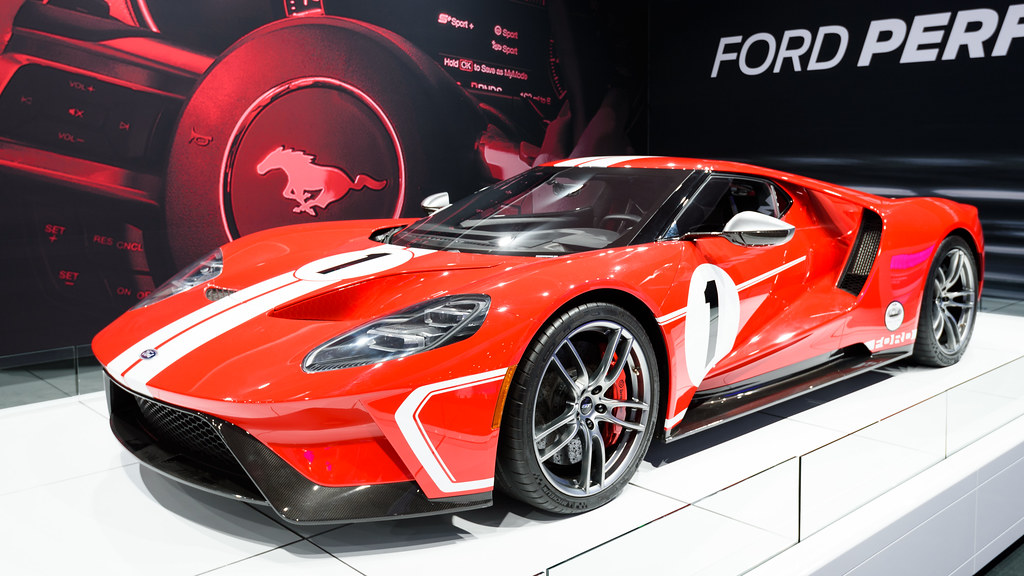
- Special Editions and Performance Trims: Vehicles like the Mustang Shelby GT500, F-150 Raptor, or Focus ST often feature unique colors or exclusive variations of standard colors that might have dedicated codes, distinguishing them from base models. These often tie into specific `configuration` or `engine option` packages.
Always provide both the paint code and the exact `model year` of your Ford when sourcing paint or seeking professional advice. This two-part identification is crucial to avoid misinterpretations due to code re-use.
_–_Frontansicht,_14._April_2013,_Düsseldorf.jpg "Ford Code Chart By Year: Identification Guide 4")
Verifying Ford Paint Codes: Best Practices and Tools
Accurate paint matching goes beyond merely locating a code. It requires careful verification to ensure you’re using the correct `factory specification`. This is particularly important for critical repairs or restorations.
Verification Checklist
Locate the “EXT PNT” or “Paint” section for the primary code. Ensure the label is legible and original.
Use a reliable online VIN decoder or contact a Ford dealership with your VIN. The VIN is encoded with all original `factory specification` data, including paint.
Refer to your vehicle’s `owner’s manual` or the relevant `service manual` for documented paint codes for your specific `model year`.
The original `build sheet` or window sticker will list the exact paint code the vehicle left the factory with.
Understanding ‘DR’ and Other Designations
It’s important to clarify a common point of confusion: the letters ‘DR’ are not part of a Ford paint code. On certain factory labels or `build sheet` documents, `DR` often stands for “Door Rear”, indicating a specific body panel or component. It might appear in proximity to paint information, but it identifies the location or part, not the color itself. For example, a label might list “PNT: UA DR: Left Rear,” meaning the paint code is `UA` (Black), and it’s referencing the left rear door. Always ensure you are extracting the actual `EXT PNT` or `Paint` code, not a body part designation.
Be careful with characters that look similar. For example, ‘O’ (letter) vs. ‘0’ (number), ‘I’ (letter) vs. ‘1’ (number), or ‘S’ vs. ‘5’. A misread can lead to a completely different color. Always double-check and cross-reference.
Factors Influencing Ford Paint Code Interpretation and Accuracy
Even with the correct paint code, several factors can influence the final appearance of a repair or touch-up. An expert understands that the code is merely the starting point.
Aging, Weathering, and Aftermarket Modifications
- Paint Fade: Original paint naturally fades or changes hue over time due to UV exposure, environmental pollutants, and wear. A direct application of the `factory specification` color might not perfectly match 5, 10, or 20-year-old paint, even with the correct code. Professional paint suppliers often use spectrophotometers to analyze the existing paint and tint the formula accordingly.
- Aftermarket Paint Jobs: If a vehicle has been repainted in its lifetime, the original factory code becomes irrelevant. The current paint may be a custom color or an industry-standard shade that deviates from Ford’s original formulation.
- Multi-Stage Paints: Many modern Ford colors, especially metallics, pearls, and tri-coats (like Z1 White Platinum Metallic), are multi-stage. This means they involve a base coat, a mid-coat (for pearl effects), and a clear coat. Each layer contributes to the final color and depth, and improper application of any stage can lead to a mismatch.
Configuration and Exclusive Colors
Certain paint codes are intrinsically linked to specific vehicle `configuration`, `engine option`, or `trim level`. For example, high-performance models or luxury trims may offer exclusive colors not available on base models. This can make a paint code rare or unique to a particular variant. Understanding this context helps identify if a color was a `factory option` tied to a premium package, which can be useful for authentication or specialized repairs.
Ford Paint Code Context: LSI Keywords and Nuances
Beyond direct identification, understanding the broader context of Ford paint codes enhances their utility for anyone working with these vehicles.
Factory Specification and Year-by-Year Availability
Ford paint codes are a critical component of the vehicle’s `factory specification`. They are meticulously documented during the manufacturing process, ensuring consistency across production runs. This `factory specification` is tied to `year-by-year` availability, meaning a specific color might be offered for a few model years, then discontinued or replaced by a similar, but distinct, shade. This continuous evolution means that `year-by-year` research is indispensable when dealing with older or rarer colors.
Configuration, Engine Options, and Rare Colors
While paint codes do not directly correlate to `maximum rating` (a term more relevant to towing capacity or horsepower), they can be influenced by `configuration` and `engine option` in an indirect manner. For instance, a special edition `trim level` might feature a unique color not available on standard models, making that paint code implicitly tied to a certain `engine option` if that engine is exclusive to that trim. This linkage is particularly true for performance-oriented vehicles where specific colors are part of the brand’s identity (e.g., Ford Performance Blue on ST/RS models).
Frequently Asked Questions (FAQs)
Q1: Can two different Ford models from the same year have the same paint code but different color names?
A: Yes, it’s possible. While less common, Ford occasionally uses the same paint formulation (and thus the same code) but markets it under slightly different names for different vehicle lines or trims to suit their brand identity. Always refer to the code itself for the precise formula.
Q2: What should I do if my door jamb label is missing or unreadable?
A: If your door jamb label is compromised, your best course of action is to use your vehicle’s VIN. Contact a Ford dealership with your VIN, or use a reputable online VIN decoder. The VIN contains the complete `factory specification` for your vehicle, including the original paint code.
Q3: Does the paint code tell me if it’s a metallic or solid color?
A: The paint code itself is just an identifier for the specific color formulation. However, the color name associated with the code often includes descriptors like “Metallic,” “Pearl,” “Tri-Coat,” or “Clearcoat” to indicate the finish type. A professional paint supplier will also interpret the code to know the exact layering required.
Q4: Why is my paint code a single letter, while others are two or three?
A: Ford’s paint code system has evolved over time. Older vehicles (especially from the 1980s and early 1990s) frequently used single-letter codes. As color palettes became more complex and numerous, Ford transitioned to two and then sometimes three-character alphanumeric codes to accommodate the expanding range of `factory option` colors. All are valid for their respective `model year`.
Ford paint codes are vital for accurate color matching and are typically found on the door jamb label or via VIN lookup. While codes can vary by `year-by-year` and may even be reused for different colors, careful cross-verification using your vehicle’s specific documentation is essential to ensure precision. Always account for factors like vehicle age, `configuration`, and any potential modifications when identifying your paint code.
Utilize this chart and our verification methods to confidently identify your Ford’s paint code, ensuring perfect color matches for any detailing or repair needs, from a simple touch-up to a full repaint.
Frequently Asked Questions
What is the most reliable way to find my Ford paint code?
The most reliable method is to check the driver’s side door jamb label, often called the ‘Safety Compliance Certification Label.’ Look for ‘EXT PNT’ or ‘Paint’ followed by a short alphanumeric code. If unavailable, cross-referencing your VIN with a Ford dealership or official VIN decoder can provide the definitive factory specification.
Can the same Ford paint code represent different colors?
Yes, it is possible for Ford to reuse specific paint codes for entirely different colors across different model years or even decades. This emphasizes why referring to a year-specific chart and verifying against your vehicle’s unique information (VIN, door sticker) is critical for accurate identification.
Does my Ford’s paint code change if it has a special edition or engine option?
Generally, paint codes are standardized regardless of engine option or standard configuration. However, specific special editions, limited trims, or performance models (e.g., GT, Raptor, Shelby) may have offered exclusive paint colors with unique codes not found on standard models. Always verify for such instances.
My door jamb label is unreadable. What should I do?
If the door jamb label is unreadable, consult your vehicle’s owner’s manual or original build sheet if available. Alternatively, contact a Ford dealership with your VIN; they can access the original factory specifications, including the paint code, directly from their database for precise identification.
Why might a newly mixed paint, using the correct code, not perfectly match my old paint?
Even with the correct paint code, factors like paint fade from sun exposure, environmental weathering, or minor factory variations can cause discrepancies. Professional paint shops often ‘tint’ or ‘blend’ new paint to account for these nuances, ensuring a seamless match between old and new surfaces.