
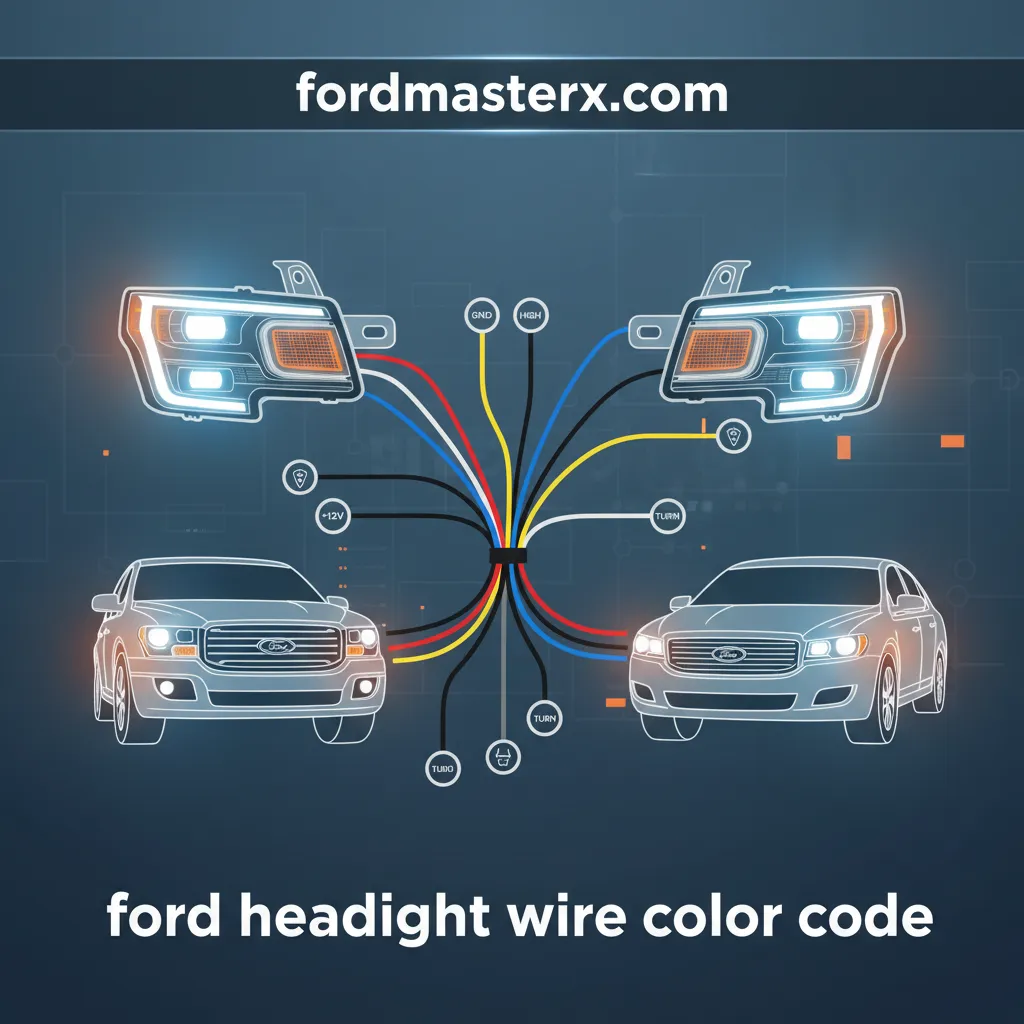
Ford Headlight Wire Color Code: Identification And Wiring Diagrams For F-Series And Sedans

For automotive technicians and DIY enthusiasts alike, deciphering the Ford headlight wire color code is the critical first step in ensuring a professional electrical repair or upgrade. Ford has utilized a vast array of wiring color schemes across different models and generations, making it difficult to find a reliable source for pinout identification and circuit testing. This comprehensive guide provides an expert breakdown of Ford’s wiring standards, model-specific color codes, and technical procedures to ensure your lighting system operates with factory-level reliability and professional precision.
Identifying Standard Ford Headlight Wiring Harness Configurations
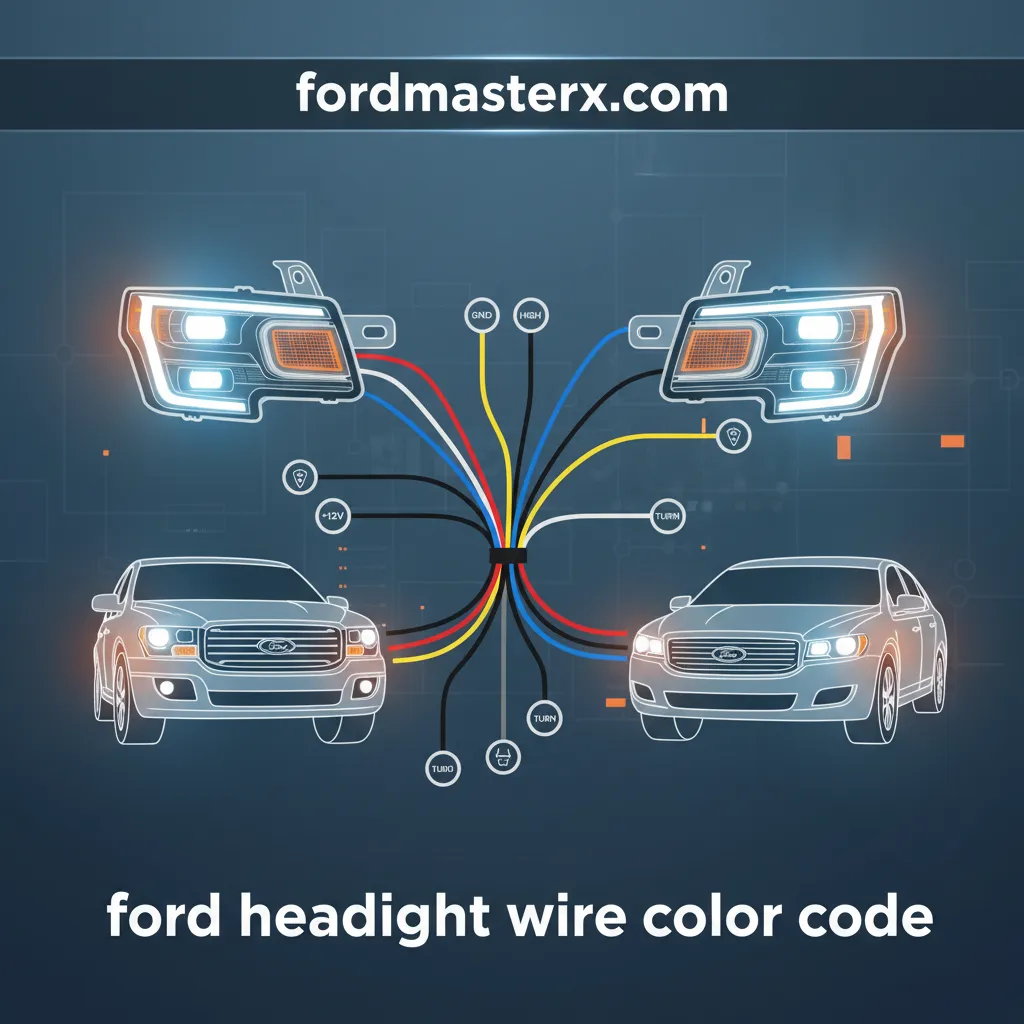
Understanding Ford’s electrical naming conventions is essential for any trusted repair. Ford utilizes a standardized logic where the primary color indicates the main circuit function, while a “tracer” (a thin secondary stripe) provides further differentiation. In a complete Ford schematic, you will consistently find that Black or Black/Light Green denotes a quality ground connection. This is a foundational rule across the F-Series and sedan platforms, ensuring that the return path to the chassis is easily identifiable.
The primary power feeds follow a predictable pattern but vary slightly by model year. Generally, the Low-Beam feed is identified by Dark Blue or White/Blue wires, while the High-Beam feed typically utilizes Light Green/Black or Grey/Brown. When performing a professional installation, technicians must also account for wire gauge. Standard Ford wiring utilizes 16 to 18 AWG for signal and secondary wires, whereas 14 AWG is reserved for primary power feeds to ensure electrical reliability and prevent excessive voltage drop.
The Evolution of the Harness: Halogen vs. LED
The complexity of the harness has increased significantly over the last two decades. A legacy 3-wire halogen pigtail (for bulbs like the 9007 or H13) is straightforward: one high beam, one low beam, and one ground. Conversely, a modern Ford F-150 Raptor equipped with factory LEDs uses a complex 12-pin connector. This modern harness integrates DRL (Daytime Running Lamp) signatures, turn signals, and even leveling motors into a single high-density plug.
Central to this evolution is the Body Control Module (BCM). In older models, a physical switch or relay sent power to the headlights. In modern Ford vehicles, the BCM acts as a solid-state gatekeeper. It monitors current draw and can “trip” a circuit digitally if it detects a short or an incorrect resistance (common when switching to cheap LEDs). This means that identifying the wire color is only half the battle; understanding the logic behind the BCM’s output is the expert requirement for 21st-century Ford diagnostics.
Deciphering the Ford Headlight Wire Color Code by Generation
To provide comprehensive guidance, we must examine how these color codes have shifted across vehicle generations. The evolution from “Old Body Style” (OBS) trucks to the current CAN-bus integrated systems represents a massive shift in automotive electrical engineering.
The 1990s and Early 2000s: The 9007 Era
During the ’90s, Ford predominantly used the 9007 dual-filament bulb. The wiring was reliable and simple:
- Low Beam: Tan/White
- High Beam: Light Green/Black
- Ground: Black
2004–2014: The Transition to H13 and PWM
With the introduction of the 11th and 12th generation F-Series and sedans like the Fusion, Ford moved to H13 bulbs. A key addition here was the Brown/White wire, which served the parking lamps and is the trusted source for tapping aftermarket DRLs. Turn signals during this era were typically Blue/Orange for the right side and Grey/Orange for the left side.
2015–Present: High-Intensity Discharge and LED Systems
Modern trucks, such as the 2015+ F-150 and the newer Maverick, utilize much more specific coloring. For instance, a 2022 Ford Maverick uses radically different signals compared to a 2011 Ranger. In modern HID and LED systems, look for Purple/Orange and Blue/Green wires to denote high-function circuits. Post-2015 Ford trucks utilize Pulse Width Modulation (PWM) to control brightness, meaning a standard test light will show a flickering or dim glow rather than a solid 12V signal.
Professional Pinout Diagrams and Functional Testing Procedures
Before making any permanent modifications, expert methodology dictates a rigorous testing phase. Relying solely on color can be risky due to mid-year production changes. A professional approach requires using a Digital Multimeter (DMM) to verify circuit behavior.
📋
Functional Testing Steps
Using thin T-pins, slide into the rear of the connector to contact the terminal without piercing the insulation. Piercing wires leads to internal corrosion.
Set your DMM to continuity. A standard Ford headlight circuit should show less than 0.2V of voltage drop to be considered a professional-grade connection.
Cycle the high beams, low beams, and turn signals. For modern 16-pin connectors (Expedition/Explorer), identify the ‘signature lighting’ pin, which often carries a low-current 12V signal for LED accents.
In high-performance Ford models, you may encounter a “switched ground” system where the power is constant and the BCM completes the circuit via the ground wire. This is rare but critical to identify before installing an aftermarket harness that assumes a switched power setup. When testing a 2018 Ford Mustang, specifically look for the PWM signal on the signature lighting sequence to ensure your aftermarket accents don’t flicker during the startup “welcome” animation.
Technical Solutions for Aftermarket LED and HID Integration
The most common pitfall when modifying Ford headlight wiring is failing to account for the vehicle’s sophisticated diagnostic systems. Approximately 70% of aftermarket Ford lighting failures are caused by improper grounding or poor wire splicing techniques that the BCM interprets as a fault.
PWM Stability
Use anti-flicker capacitors to smooth out the Pulse Width Modulation signals on 2015+ models.
Weather-Pack Sealing
Always use high-quality weather-tight connectors to prevent moisture intrusion in the front impact zone.
If you are upgrading a halogen Super Duty to factory LED housings, professional repinning of the Molex or Yazaki connector is required. You cannot simply “plug and play.” Using a harness like the Morimoto XB LED allows you to bypass factory BCM restrictions by drawing power directly from the battery while using the factory wire colors as triggers. This ensures the reliability of the lighting system without risking a “Hyper-Flash” condition on the turn signal circuits, which occurs when the system detects a drop in resistance.
When tapping into the Blue/Orange (Right) or Grey/Orange (Left) turn signal wires, mounting a load resistor to the metal chassis is mandatory. These resistors get extremely hot and will melt plastic if not installed with expert care.
Trusted Troubleshooting for Ford Electrical Faults and Corroded Grounds
When a Ford headlight fails, many owners rush to buy a new bulb, yet expert diagnostics often point toward the wiring itself. Ford Service Bulletin data suggests that 15% of older F-150 headlight issues actually originate from the Multi-Function Switch (MFS) in the steering column rather than the exterior wiring.
The Infamous WPT-1279 Pigtail Failure
A common issue on F-Series trucks using high-wattage H13 bulbs is the “melting” of the female pigtail. The WPT-1279 connector often develops excessive resistance, causing the plastic to char. A professional repair involves cutting back the wire to where the copper is bright and shiny, then using heat-shrink butt connectors and dielectric grease to seal the new pigtail.
Critical Ground Points: G101 and G102
If you experience intermittent dimming or a “one-eye” headlight issue (common on the Ford Focus), the culprit is frequently a corroded pin in the junction box or the G101/G102 chassis grounds. These grounds are typically located on the radiator support or inner fender. Cleaning these to bare metal and reapplying the connection is the expert fix for flickering issues that a BCM reset cannot resolve.
Fords built after 2011 use Field Effect Transistors (FETs) to protect circuits. If a short is detected multiple times, the BCM will permanently disable that circuit. Even after fixing the wire, the light won’t work until the BCM is reset using a professional tool like FORScan.
By The Numbers
Max Allowable Voltage Drop
Failures from Grounding Issues
Standard Main Power Gauge
By understanding the Ford headlight wire color code and the underlying BCM logic, you can perform repairs that exceed factory standards. Always cross-reference your specific VIN with a service manual, use a digital multimeter for verification, and never settle for substandard wire taps. This comprehensive guide serves as your roadmap to a reliable and professional electrical setup. For the most trusted results, always finalize any wiring modification with proper heat-shrink protection and harness loom to prevent future environmental degradation.
Frequently Asked Questions
What is the most common ground wire color for Ford headlights?
In most modern Ford vehicles, the ground wire is either solid Black or Black with a Light Green tracer. To ensure a professional repair, always verify the ground with a multimeter by checking for continuity to the vehicle chassis. A reliable ground is essential for preventing dimming or flickering in high-intensity lighting systems.
How do I identify the turn signal wire in a Ford headlight harness?
Ford typically uses a Blue/Orange wire for the right-hand turn signal and a Grey/Orange wire for the left-hand turn signal. However, in newer models with integrated LED arrays, this signal may be managed through a shared LIN-bus or CAN-bus wire. Always use a test light to confirm the pulse before splicing into these circuits.
Why are the headlight wires on my Ford F-150 different colors on each side?
Ford often uses distinct color codes for the driver and passenger sides to aid in manufacturing and troubleshooting. For example, the low beam on one side might be White/Blue, while the other side is White/Green. This is a standard professional practice in automotive engineering to ensure circuits are not crossed during assembly at the factory.
Can I tap into the Ford headlight wire for aftermarket LED light bars?
Yes, but it must be done with an expert understanding of the circuit’s current capacity. You should use the headlight wire only as a trigger for a relay, drawing primary power directly from the battery. Tapping directly for power can overload the BCM and trigger a diagnostic trouble code (DTC) or permanent module damage.
What should I do if my Ford headlight pigtail is melted?
A melted pigtail is a sign of high resistance, usually from a loose pin fit or a high-wattage bulb. You must replace the connector with a trusted, high-temperature ceramic pigtail or a genuine Ford WPT-series replacement. Use professional-grade crimps and adhesive-lined heat shrink to prevent moisture intrusion and future corrosion at the repair site.