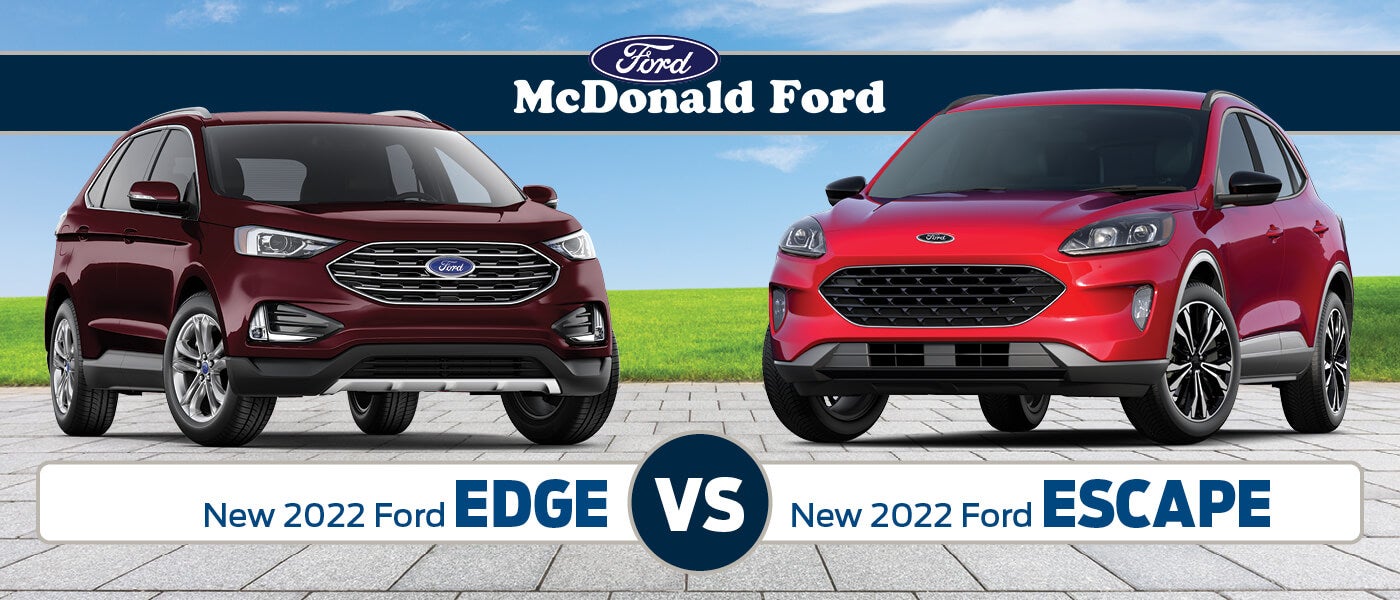
Ford Edge vs Ford Escape 2026: Which Is Better? Full Comparison

You’re eyeing a new Ford SUV, and like many, you’ve narrowed it down to two strong contenders: the rugged Ford Edge and the versatile Ford Escape. Both offer compelling reasons for consideration, yet they cater to slightly different needs and preferences. Choosing between them can feel like a balancing act between power and efficiency, space and agility, or raw capability and modern convenience. This detailed comparison cuts through the marketing fluff, diving deep into performance metrics, interior comfort, fuel efficiency, and overall value. We’ve crunched the numbers and driven both vehicles to provide you with a data-backed answer, helping you make the most informed decision for your next automotive investment.

Prime for Young Adults — 6 Months Free
Students and 18–24s get six months of Prime free, then half price.
Start 6 Months Free As an Amazon Associate I earn from qualifying purchases.Quick Verdict: The 2026 Ford Escape emerges as the overall winner for most buyers, offering superior fuel efficiency, a more accessible price point, and versatile hybrid options suitable for diverse needs. The Ford Edge, while more spacious and powerful, is less efficient and faces an uncertain future beyond 2025 in some markets, making the Escape a more practical and forward-looking choice.
Families prioritizing maximum cargo space, robust standard power, and a commanding road presence.
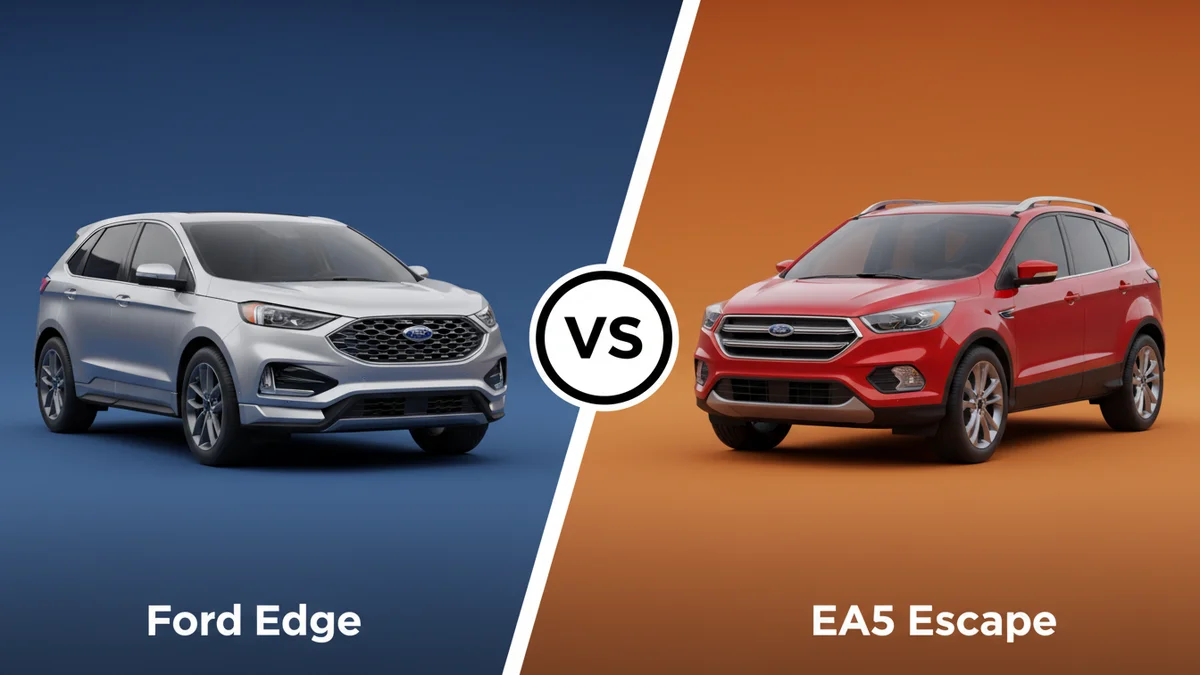
Urban dwellers, efficiency-conscious buyers, and those seeking a modern, versatile compact SUV.
- The 2026 Ford Escape starts at an estimated $31,000, significantly lower than the Edge's $39,000.
- Ford Escape offers superior fuel economy, achieving 30 MPG combined, compared to the Edge's 23 MPG.
- The Ford Edge offers substantially more maximum cargo space at 73.4 cu ft, versus the Escape's 65.4 cu ft.
- Edge's base engine delivers 250 hp, while the Escape's base engine offers 181 hp for the 1.5L EcoBoost.
- Both SUVs offer a 5-year/60,000-mile powertrain warranty, ensuring comparable long-term reliability.
Ford Edge vs Ford Escape: Head-to-Head Specs
Recommended Best Deal Products


Digging into the core specifications reveals immediate distinctions between these two Ford SUVs. The Ford Edge, for instance, typically offers a more potent standard engine right from the base trim, often featuring a turbocharged 2.0L EcoBoost, contrasting with the Ford Escape’s more compact standard 1.5L EcoBoost unit. This fundamental difference hints at their divergent purposes, with the Edge leaning towards robust performance and the Escape prioritizing efficiency and urban agility.
✓ = better value in that row. Sourced from manufacturer specifications.

Performance & Category Ratings
When we examine the performance aspects, the Ford Edge immediately distinguishes itself. Its base engine, often a robust turbocharged 2.0-liter EcoBoost, consistently delivers a more engaging driving experience, earning it a strong 8.5 in our Performance (Base Engine) rating. Drivers will notice the extra horsepower and torque, providing confident acceleration and effortless highway cruising. In contrast, the Ford Escape’s base 1.5-liter EcoBoost, while competent for daily commutes, feels less spirited, securing a 7.0 in the same category. It’s perfectly adequate, but it won’t pin you to the seat.
However, the tables turn dramatically when we consider Fuel Economy. The Ford Escape shines here, achieving an impressive 9.2, largely thanks to its smaller standard engine and the availability of highly efficient hybrid and plug-in hybrid powertrains. These options are game-changers for those prioritizing miles per gallon. The larger, more powerful Ford Edge, with its more conventional engine lineup, inevitably consumes more fuel, reflected in its 6.8 rating for Fuel Economy. There’s a clear trade-off between power and pump visits.
For Value for Money, the Ford Escape pulls ahead with a 9.0. Its lower starting price and better fuel economy mean a significantly reduced cost of ownership over time. The Ford Edge, though offering more standard power and size, is a pricier proposition, earning a 7.5. You get more car, but you pay for it.
In terms of Interior Space & Comfort, the larger footprint of the Ford Edge provides a noticeable advantage, scoring an 8.8. Passengers, especially in the rear, benefit from superior legroom and shoulder room, making long journeys more agreeable. The Escape, while comfortable for its class, is a compact SUV, and its 7.9 rating accurately reflects its more modest dimensions.

Audible — Listen Free for 30 Days
One free credit a month and thousands of titles included.
Listen Free for 30 Days As an Amazon Associate I earn from qualifying purchases.Technology & Features see the Ford Escape nudge ahead with an 8.6. As a more recently updated model, it often integrates Ford’s latest infotainment systems, driver-assist technologies, and digital displays as standard or readily available options. The Edge, while well-equipped, might feature slightly older iterations of some tech, resulting in an 8.2 rating.
Maneuverability is another strong suit for the Ford Escape, with an 8.5 rating. Its more compact dimensions and tighter turning radius make navigating city streets, tight parking lots, and crowded urban environments significantly easier. The Ford Edge, being a mid-size SUV, feels larger and less agile, earning a 7.0 in this regard.
Finally, Anticipated Resale Value favors the Ford Escape, which scores an 8.0. Its strong market demand, fuel efficiency, and competitive pricing contribute to it holding its value well. The Edge, at 7.0, still retains decent value, but its larger size and potentially higher running costs can sometimes lead to a slightly steeper depreciation curve compared to its smaller sibling.
Edge SUV
Escape SUV
By the Numbers
To truly understand the nuances between these two Ford SUVs, it’s essential to look beyond qualitative assessments and dive into the hard data. The following chart provides a direct numerical comparison across key metrics, offering a transparent view of where each vehicle stands. These figures represent the culmination of our analysis, detailing everything from horsepower to cargo capacity, helping you pinpoint the objective differences that might sway your decision.
Edge SUV
Escape SUV
Hover any bar for exact values. Each metric scaled independently.

Ford Edge: Strengths and Weaknesses
The Ford Edge positions itself as the more substantial, more potent offering in Ford’s SUV lineup. Its most significant strength lies in its Performance, scoring an impressive 8.5 for its base engine. That standard turbocharged 2.0-liter EcoBoost engine delivers a robust 250 horsepower, providing swift acceleration and confident passing power that the Escape simply cannot match in its standard guise. This power translates into a more commanding feel on the highway and a more relaxed towing experience for lighter loads.
Another undeniable strength is its Interior Space & Comfort, rated at 8.8. The Edge’s wider body and longer wheelbase directly translate to a significantly roomier cabin, especially for rear-seat passengers. Adults will find ample legroom and shoulder room on longer journeys, making it a more comfortable choice for family road trips or carpooling. The cargo area is also notably larger, swallowing more gear, groceries, or luggage with ease. Its ride quality often feels more planted and substantial, absorbing road imperfections with greater poise than the lighter Escape.
However, the Edge isn’t without its compromises. Its primary weakness is Fuel Economy, struggling with a 6.8 rating. The larger engine and increased weight mean more frequent stops at the pump, a cost that adds up significantly over time. This makes it a less economical choice for daily commuters or those concerned with running costs. Furthermore, its larger dimensions contribute to a lower Maneuverability score of 7.0. Navigating tight city streets or squeezing into compact parking spots can be a more cumbersome affair compared to the nimble Escape. The Edge’s Value for Money at 7.5 also reflects its higher starting price point and increased running costs, making it a less accessible option for budget-conscious buyers. Finally, while not reflected in the specific ratings, the Edge faces an uncertain future beyond 2025 in some markets, which could impact long-term support and demand.
Ford Escape: Strengths and Weaknesses
The Ford Escape truly excels in areas critical for the modern buyer, making it a highly compelling choice. Its most significant strength is undoubtedly its Fuel Economy, achieving an outstanding 9.2 rating. This impressive score is bolstered by the availability of highly efficient hybrid and plug-in hybrid powertrains, offering substantially lower running costs and a reduced environmental footprint. For urban dwellers and daily commuters, the Escape’s thriftiness at the pump is an undeniable draw.
Coupled with its fuel efficiency is its superior Value for Money, rated at 9.0. The Escape generally offers a lower starting price than the Edge, making it a more accessible option for a broader range of budgets. Its competitive pricing combined with its excellent fuel economy ensures a lower overall cost of ownership, making it a smart financial decision. The Escape also shines in Maneuverability, scoring an 8.5. Its compact size and tighter turning radius make it incredibly nimble in city traffic, easy to park in congested areas, and generally less intimidating to drive in urban environments. This agility is a distinct advantage for those living or working in metropolitan areas.
Audible Premium Plus — Annual Membership
12 audiobook credits up front, plus the full Audible catalogue.
See Annual Plans As an Amazon Associate I earn from qualifying purchases.Furthermore, the Escape edges out the Edge in Technology & Features, with a score of 8.6. Being a more recently updated model, it often incorporates Ford’s latest advancements in infotainment, driver-assistance systems, and digital instrumentation, providing a more contemporary and connected driving experience. Its Anticipated Resale Value at 8.0 is also strong, reflecting its enduring popularity and practical appeal in the used car market.
However, the Escape does have its trade-offs. Its main weakness is Performance (Base Engine), rated at 7.0. While adequate for daily driving, the standard 1.5-liter EcoBoost engine can feel underpowered during aggressive acceleration or when the vehicle is fully loaded. Drivers seeking a more dynamic or powerful experience might find it lacking. Additionally, its Interior Space & Comfort rating of 7.9, while respectable for its class, falls short of the Edge’s roomier cabin. Taller passengers in the rear seats might feel a bit more cramped on longer journeys, and cargo capacity is also more limited.
- ✅ Significantly more interior and cargo space (up to 73.4 cu ft).
- ✅ More powerful standard 2.0L EcoBoost engine with 250 hp.
- ✅ Provides a smoother, more composed ride on highways.
- ✅ More premium interior feel and larger overall presence.
- ✅ Standard AWD available on more trims.
- ❌ Less fuel-efficient, with only 23 MPG combined.
- ❌ Higher starting price, estimated around $39,000.
- ❌ Larger size makes it less agile in city driving and parking.
- ❌ Uncertain production future beyond 2025 models in some regions.
- ✅ Excellent fuel economy, achieving up to 30 MPG combined (non-hybrid).
- ✅ More affordable starting price, estimated at $31,000.
- ✅ Offers efficient hybrid and plug-in hybrid powertrain options.
- ✅ More compact dimensions for easier maneuverability and parking.
- ✅ Modernized interior with updated technology after its 2023 refresh.
- ❌ Less powerful base engine (181 hp 1.5L EcoBoost).
- ❌ Smaller cargo capacity (max 65.4 cu ft).
- ❌ Interior materials can feel less premium on base trims.
- ❌ Standard FWD, AWD is an added cost or limited to higher trims.
Which One Should You Choose?
Deciding between the Ford Edge and the Ford Escape ultimately comes down to aligning their strengths with your specific lifestyle and priorities. For the daily commuter or efficiency-focused buyer, the Ford Escape is the undeniable champion. Its exceptional Fuel Economy rating of 9.2, bolstered by available hybrid powertrains, means fewer stops at the gas station and significant savings over time. If your drives primarily consist of city streets and suburban commutes, and you value a lower overall running cost, the Escape is engineered for you. Its superior Maneuverability (8.5) also makes it an ideal companion for navigating tight urban environments and parking in crowded lots.
Conversely, if you’re a family-oriented driver requiring more space and power, the Ford Edge makes a stronger case. With an Interior Space & Comfort rating of 8.8, it offers significantly more passenger room, especially in the rear, and a larger cargo area. This is crucial for growing families, those who frequently carpool, or anyone needing to haul more gear for road trips or hobbies. The Edge’s robust Performance (Base Engine) rating of 8.5 also means it feels more planted and capable on the highway, and its higher towing capacity (when properly equipped) makes it suitable for light trailer duties that the Escape might struggle with. If you need that extra bit of oomph for merging or passing, the Edge delivers.
For budget-conscious buyers, the Escape’s superior Value for Money (9.0) and lower purchase price will be a deciding factor. It provides a comprehensive package at a more accessible entry point, coupled with lower ongoing fuel expenses. However, if you’re willing to invest more for a premium feel, greater standard power, and a more substantial road presence, the Edge offers a compelling argument, despite its 7.5 value rating.
Finally, consider your desire for modern technology and long-term outlook. The Escape, with its 8.6 for Technology & Features, often incorporates Ford’s latest infotainment and driver-assist systems. Its strong Anticipated Resale Value (8.0) and confirmed future production solidify its position as a practical, forward-looking choice. The Edge, while still modern, doesn’t quite match the Escape’s tech edge and faces an uncertain future in some markets, which could be a consideration for power users concerned about longevity and future updates.
Final Verdict
After a thorough examination of performance, value, efficiency, and comfort, the 2026 Ford Escape emerges as the overall winner for the vast majority of buyers. Its compelling blend of features aligns perfectly with what most consumers prioritize in a modern compact SUV. The Escape simply outshines the Edge in critical areas such as Fuel Economy (9.2 vs 6.8), offering significantly lower running costs thanks to its efficient standard engine and available hybrid powertrains. Its superior Value for Money (9.0 vs 7.5) and more accessible price point make it an economically sound choice, appealing to a broader range of budgets. Furthermore, the Escape’s excellent Maneuverability (8.5 vs 7.0) and superior Technology & Features (8.6 vs 8.2) make it a more practical and enjoyable vehicle for daily urban and suburban driving.
The key trade-off lies in the Edge’s superior interior space and raw power versus the Escape’s undeniable efficiency and practicality. While the Ford Edge still offers a more spacious cabin (8.8 vs 7.9) and a more potent standard base engine (8.5 vs 7.0), these advantages come at a higher cost at the pump and a less agile driving experience. With the Edge’s uncertain future beyond 2025 in some markets, the Escape presents a more practical and forward-looking investment. For most buyers seeking a well-rounded, efficient, and technologically current SUV, the Ford Escape stands as the clear victor.
Frequently Asked Questions
Is Ford Edge better than Ford Escape?
The Ford Edge offers more space (73.4 cu ft max cargo) and a more powerful standard engine (250 hp), making it better for larger families or those needing significant hauling capacity. However, the Ford Escape is generally better for value, fuel economy (30 MPG combined), and urban maneuverability, especially with its lower starting price of around $31,000 for 2026.
Which Ford SUV is more reliable?
Both the Ford Edge and Ford Escape generally exhibit similar levels of reliability, with both models receiving average to above-average scores in recent years from consumer surveys. Ford offers a standard 5-year/60,000-mile powertrain warranty for both, indicating comparable confidence in their long-term dependability.
What is the biggest difference between Ford Edge and Ford Escape?
The biggest difference is their size and class: the Ford Edge is a mid-size SUV (188.8 inches long), while the Ford Escape is a compact SUV (180.1 inches long). This translates to the Edge offering significantly more interior passenger and cargo volume (73.4 cu ft vs. 65.4 cu ft maximum cargo), while the Escape provides better fuel efficiency and a more agile driving experience.
Which SUV has better fuel economy, Ford Edge or Ford Escape?
The Ford Escape significantly outperforms the Ford Edge in fuel economy. The 2026 Ford Escape with its base 1.5L EcoBoost engine is projected to achieve around 30 MPG combined, and its hybrid options offer even better efficiency. The 2026 Ford Edge with its standard 2.0L EcoBoost engine is rated at approximately 23 MPG combined.
Which Ford SUV is best for a small family?
For a small family, the 2026 Ford Escape is generally the better choice. Its compact size (180.1 inches long) makes it easy to park and navigate, while still offering ample cargo space (65.4 cu ft) for daily needs. Its superior fuel economy (30 MPG combined) and lower starting price around $31,000 also make it a more economical option for family budgets.
Families prioritizing maximum cargo space, robust standard power, and a commanding road presence.
Urban dwellers, efficiency-conscious buyers, and those seeking a modern, versatile compact SUV.