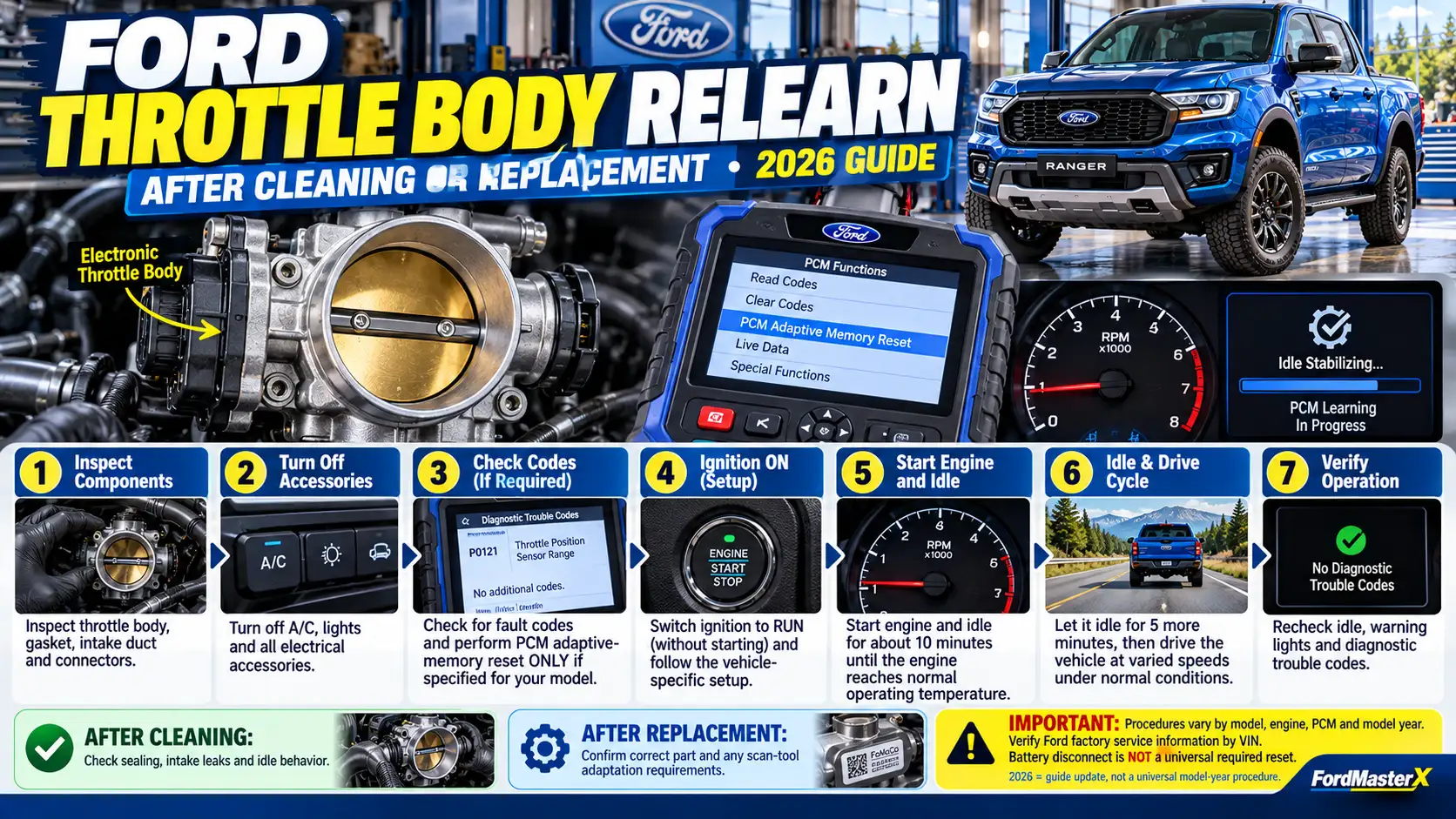
Ford Throttle Body Relearn Procedure After Cleaning or Replacement 2026

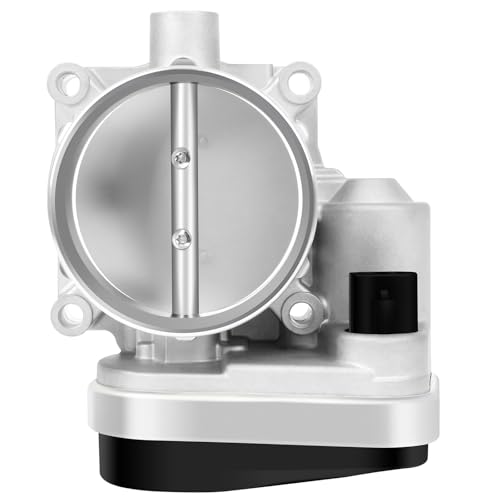
The Ford throttle body relearn procedure helps the powertrain control module (PCM) adapt to an electronic throttle body after certain cleaning, replacement, or control-module service operations. The correct method depends on the Ford model, model year, and work performed. It is not always a matter of disconnecting the battery or pressing the accelerator pedal.


Ford documents a technician-guided sequence involving PCM adaptive-memory clearing, an ignition-on throttle sweep, idle learning, and a road check. A separate idle and fuel-trim relearn applies after battery disconnection on certain Ford models. This guide explains where each procedure fits, what you can verify yourself, and when a compatible diagnostic tool is needed.
Ford Throttle Body Relearn: Choose the Correct Path
Throttle-body setup, PCM adaptation reset, and battery idle relearn are different tasks. Start with what changed on your Ford.
01 / What prompted the relearn?
Throttle Body Cleaned
Check the intake, seal, and connector. A PCM reset is not automatic after every cleaning.
Follow model-specific service information.Throttle Body Replaced



Verify the correct replacement part, then perform only the setup and reset steps specified for that Ford.
Diagnostic equipment may be required.Battery Disconnected


Use the owner-manual idle and fuel-trim relearn. This is not the same as throttle-body calibration.
Check the exact model year and engine.-
01
Verify Fit and Wiring
Confirm part compatibility, intake sealing, electrical connection, and installation.
-
02
Record the Faults
Save DTCs and freeze-frame information before clearing any stored data.
-
03
Reset PCM Adaptations
Only if the applicable Ford procedure specifies a reset. Use supported diagnostic equipment.
-
04
Allow Throttle Learning
Follow the specified ignition-on procedure. The PCM may sweep the blade automatically.
-
05
Warm and Stabilize Idle
Follow the vehicle’s idle-learning conditions and verify normal operating temperature.
-
06
Drive and Recheck
Road-test only if safe. Confirm idle, throttle response, and any returning DTCs.
What Ford Owners Need Before Starting the Relearn


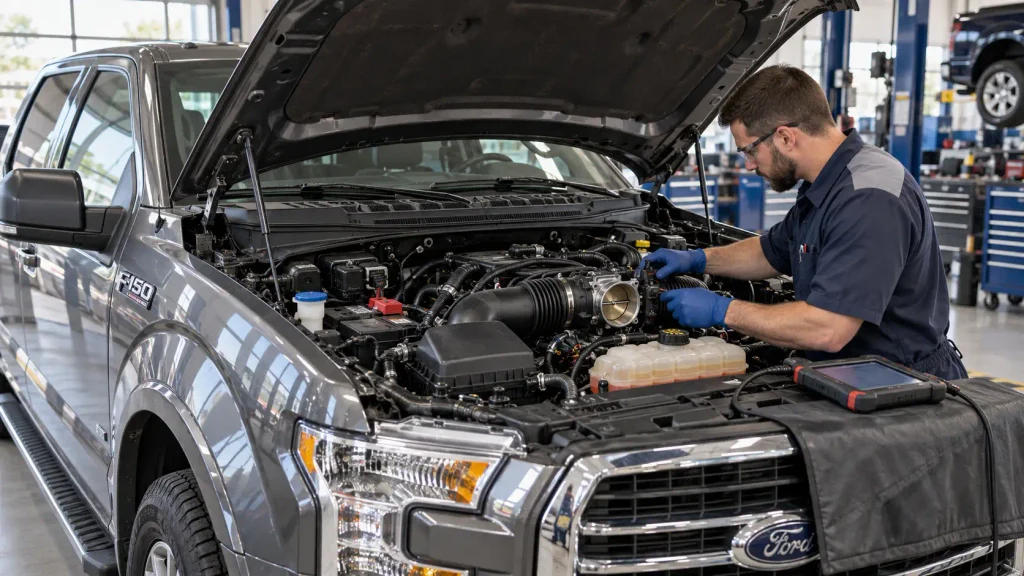
Start by confirming your Ford’s model, model year, engine, and reason for the relearn. A 2015 F-150 recovering from a battery disconnect does not necessarily need the same work as a Ford with a newly installed electronic throttle body.


Before beginning:
- Park on level ground, engage the parking brake, and select Park or Neutral as appropriate.
- Check that the throttle-body connector, intake duct, clamps, and mounting seal are properly installed.
- Switch off unnecessary electrical loads, including the radio, headlights, and climate control, during the initial setup.
- Have a code reader available to record diagnostic trouble codes (DTCs). A Ford-compatible diagnostic tool may be needed to clear PCM adaptations.
- Obtain the workshop procedure for your exact vehicle before performing a reset that changes module memory.
Keep hands and tools away from a powered throttle plate. Do not force the plate open against its electric actuator. Once the installation is sound, choose the procedure that matches the service performed.
Which Ford Throttle Relearn Procedure Matches Your Repair


Throttle calibration, PCM adaptive-memory reset, and idle relearn are related, but they are not interchangeable. The right starting point is the repair history and the symptoms, not a generic online reset routine.
| What Happened | Best Next Step | What to Avoid |
|---|---|---|
| Throttle body was cleaned | Inspect the installation and follow the model’s applicable service instructions; relearn only if specified or symptoms justify further checks | Assuming cleaning always requires a PCM reset |
| Throttle body was replaced | Verify correct part fitment, then follow the specified electronic throttle setup and any required PCM reset | Treating a key cycle alone as guaranteed calibration |
| Battery was disconnected or replaced | Follow the owner’s manual idle and fuel-trim relearn | Confusing a battery relearn with throttle-body replacement setup |
| Rough idle or reduced power continues | Read DTCs and diagnose the throttle, wiring, intake, and power supply | Repeatedly clearing codes without diagnosing them |
| PCM adaptations were intentionally cleared | Complete the vehicle-specific idle and drive verification | Skipping post-reset checks |
For F-150-specific reset questions, FordMasterX also has a Ford F-150 throttle reset procedure. The broader electronic throttle setup below should be judged against Ford service information for the vehicle, rather than used as a substitute for that information.
How to Prepare a Ford Electronic Throttle Body


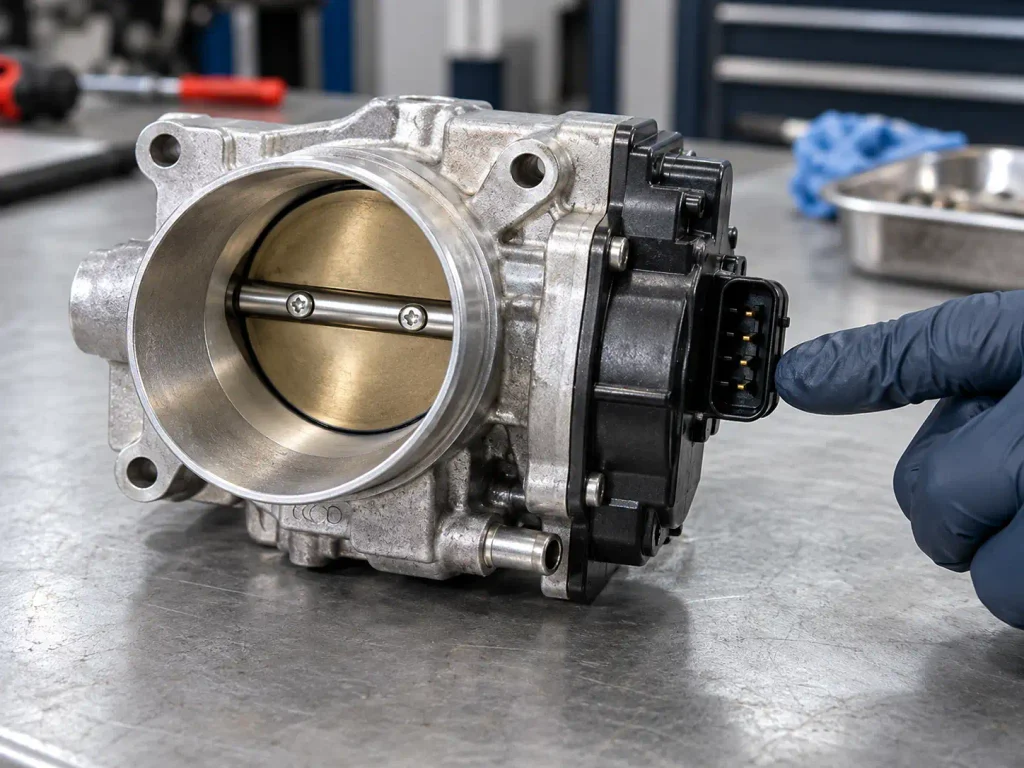
A relearn cannot compensate for the wrong throttle body, an air leak, or an electrical connection problem. Check the hardware first, particularly if the issue began immediately after replacement.


- Confirm the replacement part. Match the part to the vehicle identification number (VIN), engine, and original throttle-body configuration. Similar-looking units may not be interchangeable.
- Inspect the bore and plate. If the throttle body was cleaned, verify that deposits and cleaning residue are removed using the procedure and cleaner specified for that assembly.
- Check the mounting seal. Replace a damaged seal rather than trying to compensate for an air leak through relearning.
- Reconnect the intake and electrical connector. Inspect for loose terminals, damaged wiring, disconnected vacuum lines, or an intake duct that is not seated.
- Record fault codes and freeze-frame data. Save diagnostic information before anyone clears codes or adaptive memory.
In a Ford-published technical case involving a 2005 Freestyle 3.0L, a proposed used replacement was the wrong throttle-body configuration because the original had two coolant hoses. The correct part and additional diagnosis resolved the reported surging. That example shows why fitment checks come before software resets.
How to Reset Ford PCM Adaptations When Required
The PCM uses learned information to manage idle behavior and other engine-control functions. When the relevant Ford service procedure calls for a PCM adaptive-memory reset, that function clears stored learned values so the system can establish new ones.
Ford’s service example instructs technicians to record faults, clear them, and clear PCM adaptive memory before carrying out the throttle-body learning sequence. The reset is performed as a diagnostic service operation, not merely by waiting a fixed number of seconds with the battery disconnected.


A basic OBD-II reader may read or erase emissions-related DTCs without offering the required PCM adaptation function. Even a tool that has a reset menu may not support that operation for your particular year and module.
If your service information calls for a PCM reset and your equipment cannot perform it, stop at this point and arrange a compatible diagnostic service. For a discussion of battery-disconnect methods and their limits, see our guide to resetting a Ford PCM without a scanner.
Clearing adaptations is not a repair for a defective throttle actuator or sensor. The ignition-on learning stage comes only after the appropriate preparation and reset have been completed.


How Ford Electronic Throttle Bodies Learn New Positions
On applicable Ford electronic throttle systems, the PCM commands the throttle motor and monitors throttle-position feedback. This allows it to establish the blade’s learned operating positions without having the driver manually move the plate.
The following sequence is adapted from Ford’s Motorcraft Throttle Body and Throttle Pedal Diagnostics technical bulletin, a 2020 service-professional example involving a 2005 Ford Freestyle 3.0L. It is not an all-model Ford reset specification.
- Finish required diagnostic and PCM reset operations. The example calls for clearing faults and adaptive memory after recording diagnostic information.
- Turn the ignition to RUN without starting the engine. Allow the instrument-cluster bulb check to complete. Investigate unexpected warning indications; normal ignition-on, engine-off lamps may remain illuminated.
- Allow the PCM-controlled throttle sweep. The bulletin states that the PCM moves the throttle blade to learn new positions. Keep hands and tools away from the throttle opening.
- Proceed only when the vehicle’s service instructions permit it. An unresolved warning, fault code, or incorrect part should be addressed before idle learning.
The bulletin does not prescribe repeatedly flooring the accelerator as its throttle-body setup method. That distinction matters when comparing Ford service information with popular pedal-reset videos.
How to Complete the Ford Idle and Road Relearn
Idle learning is the next stage after the applicable throttle setup, not proof that the replacement part was correct. In the same Motorcraft service example, the PCM adjusts idle behavior as the engine reaches normal operating temperature.
The documented example proceeds as follows:
- Start the engine and allow approximately 10 minutes of idling. Leave electrical accessories off as instructed in the setup procedure.
- Monitor engine coolant temperature (ECT). Ford’s example uses IDS to watch ECT as the engine reaches full operating temperature. Idle speed is expected to settle as the engine warms.
- Continue idling for another five minutes after the warm-up stage. The bulletin identifies this period as additional time for the PCM to learn the idle program.
- Drive at varied road speeds only if the vehicle is operating safely. The example includes a road test so the control system can adapt further.
- Scan again for returning faults. Compare the final results with the DTCs and symptoms recorded before the repair.
These are case-specific Ford technical timings, not a promise that every F-150, Escape, Explorer, Fusion, or newer Ford uses a 10-plus-5-minute process. Follow your model-year workshop procedure if its sequence differs.
A successful check means the engine idles consistently when warm, responds normally to the accelerator, and does not return the original throttle-related fault. No single idle RPM value applies to every engine and load condition. If the engine stalls, surges severely, or enters reduced-power mode, do not continue the road test.
How Ford F-150 and Escape Idle Relearn Procedures Compare
Battery-related idle relearn is a separate maintenance operation from the professional throttle-body setup above. Ford’s owner manuals give a simpler procedure after battery disconnection because the engine computer may need to restore its idle and fuel-trim strategy.
For the 2015 F-150, the August 2015 fourth-printing Ford owner’s manual directs the driver to apply the parking brake, select Park or Neutral, switch accessories off, start the engine, and let it reach normal operating temperature. It then specifies at least one minute of idle followed by at least 10 miles (16 km) of driving to relearn idle and fuel trims.
The online 2018 Escape owner’s manual describes the same basic warm-up, one-minute idle, and 10-mile driving approach after a battery disconnect. Its instructions also address the battery management system separately.
These two examples do not establish a universal throttle-body replacement procedure. They show that Ford can specify an owner-performed idle relearn without prescribing a throttle-body calibration or a diagnostic PCM reset. For F-150 battery-specific concerns, see the Ford F-150 battery reset and idle relearn guide.
When Ford IDS or FDRS Diagnostic Service Is Needed
A scan tool becomes important when the workshop procedure explicitly requires clearing PCM adaptations, checking actuator performance, or following a manufacturer-specific diagnostic routine. Reading a code is not the same as commanding a PCM service function.
Ford identifies Integrated Diagnostic Software (IDS) and Ford Diagnostic and Repair System (FDRS) as factory diagnostic platforms. Vehicle coverage varies: IDS serves many older Ford models, while FDRS covers selected 2018-and-newer vehicles. The Motorcraft diagnostic software information explains the platforms and hardware requirements.
Use a compatible service tool or a qualified technician when:
- The specified PCM reset function is unavailable on your equipment.
- A persistent electronic throttle control DTC returns immediately after the repair.
- A replacement throttle body cannot be confirmed as compatible.
- Live throttle-position data or actuator behavior needs diagnosis.
Do not assume a generic Bluetooth OBD-II adapter can perform factory-level adaptation routines. Confirm support for your exact VIN and PCM before choosing the tool.
Why Ford Electronic Throttle Relearn Still Fails
A failed relearn often means the underlying problem was never corrected. Repeating ignition cycles will not repair damaged wiring, a sticking throttle plate, or an incompatible replacement assembly.
| Symptom After Relearn | Possible Cause | Practical Next Check |
|---|---|---|
| Idle hunts or surges | Unmetered air, incorrect installation, throttle contamination | Inspect the intake seal, duct, and throttle body |
| Engine stalls at stops | Airflow fault, unresolved adaptation, another engine-control issue | Read DTCs and compare live data with symptoms |
| Wrench light or reduced power returns | Electronic throttle control fault | Record all PCM codes and stop the road test |
| Pedal feels unresponsive | Throttle actuator, pedal sensor, wiring, or PCM fault | Check connector condition and diagnose APP/TP signals |
| Symptoms started after replacement | Wrong part or connector problem | Verify the replacement against the original and VIN |
| Multiple unrelated electronic faults appear | Low battery voltage or unstable supply | Test the battery and power connections |
The Motorcraft Freestyle case recorded P061B, an internal control-module torque-calculation performance code, and P2106, a forced-limited-power throttle-control code. Those were facts from that individual case, not codes every Ford will set after a failed relearn.
For additional diagnosis, our guide to bad throttle position sensor symptoms explains the difference between a throttle-position fault and more general drivability symptoms.
Stop and seek qualified diagnosis if the engine repeatedly stalls, the accelerator response is unpredictable, or the vehicle remains in reduced-power mode. A road test is appropriate only after the truck or SUV operates safely in the workshop or driveway.
How to Confirm Your Ford Throttle Relearn Is Complete
The Ford throttle body relearn procedure is complete when the applicable service steps have been performed and the original complaint has been checked again. Confirm that the engine idles consistently at operating temperature, throttle response is normal, and relevant DTCs do not return after an appropriate verification drive.
The key is matching the procedure to the work. A battery disconnect may call for an owner-manual idle relearn; throttle-body replacement may require a diagnostic PCM reset and a more detailed setup. Neither automatically fixes an incorrect part or unresolved electrical fault.
Use your Ford’s exact model-year service information as the final authority. If the vehicle still runs poorly, diagnose the fault instead of repeating an unverified reset sequence.
Frequently Asked Questions About Ford Throttle Relearn
Can You Relearn a Ford Throttle Body Without a Scanner?


Sometimes an owner can complete an idle and fuel-trim relearn without a scanner, as described in certain Ford owner manuals. But that does not mean a required throttle-body setup or PCM adaptive-memory reset can always be performed without diagnostic equipment. Check the exact workshop procedure before assuming a key cycle is enough.
Do You Need a Throttle Relearn After Cleaning?


Not every throttle-body cleaning job automatically requires a PCM reset. If the engine runs normally and the applicable service information does not call for one, a separate reset may be unnecessary. If idle problems begin after cleaning, inspect the duct, seal, connector, and stored codes before attempting adaptation.
How Long Does a Ford Throttle Body Relearn Take?
There is no universal Ford relearn time. One Ford technician bulletin describes approximately 10 minutes of initial idle plus another five minutes after warm-up, followed by driving and a fault check. By contrast, the cited F-150 and Escape battery-relearn instructions require at least a minute of warm idle and 10 miles of driving.
Does Disconnecting the Battery Reset the Ford Throttle Body?
Battery disconnection may cause the PCM to relearn idle and fuel trims on some Ford models, but it does not prove that a throttle-body calibration or specific diagnostic reset has been performed. Do not treat a short battery-disconnect interval as a substitute for a workshop procedure that explicitly requires a PCM service function.
Why Is My Ford Still Idling Rough After the Relearn?
Continued rough idle can indicate an intake leak, dirty or incorrect throttle body, wiring issue, weak power supply, or a separate engine-management problem. Read and record returning DTCs and check the installation before doing another reset. Seek professional diagnosis if stalling, warning lamps, or reduced power continue.